
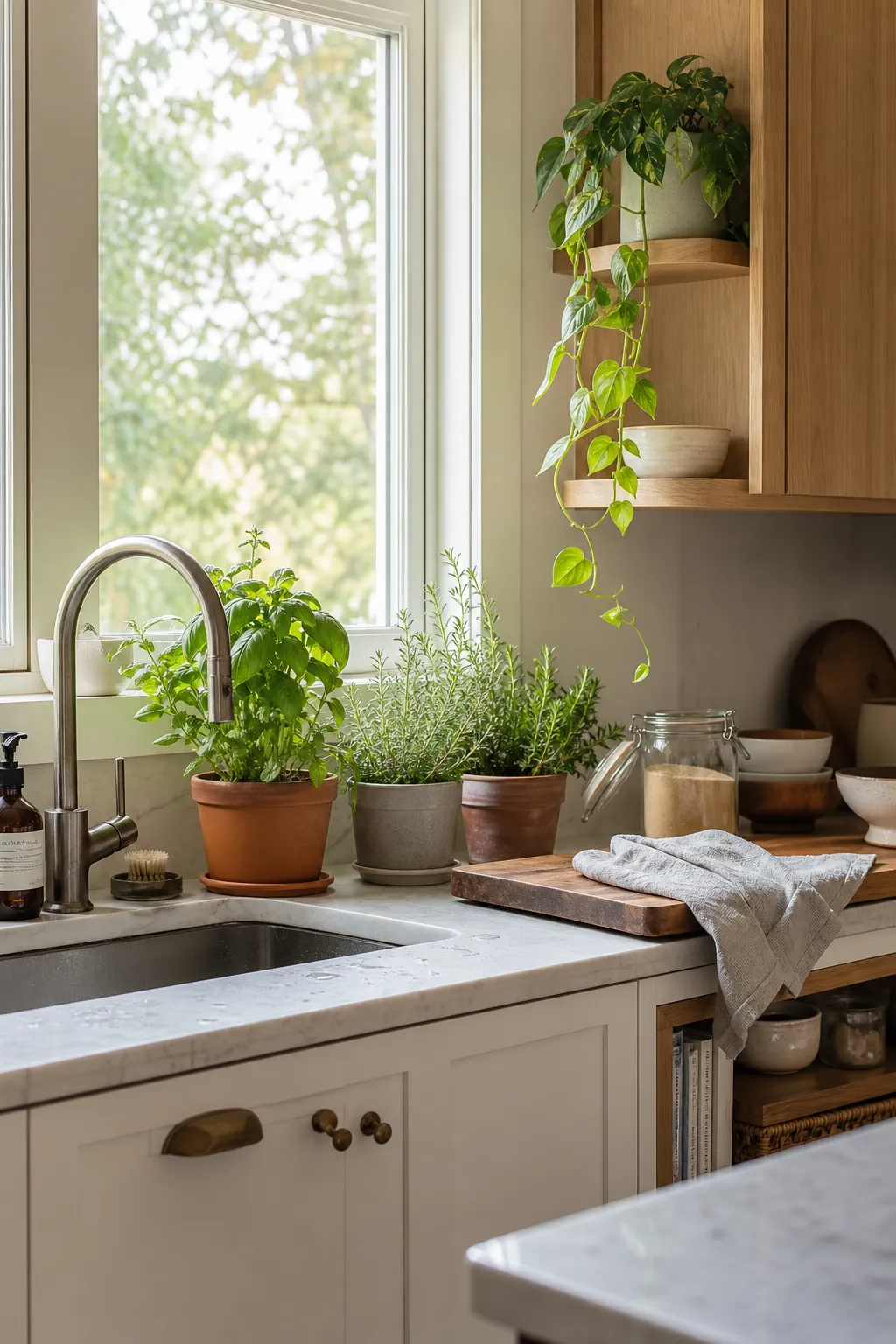
A kitchen feels different when something green is living in it. Not styled for a photo. Not squeezed into a corner where it will slowly fail. Actually living: a pot of basil you trim while cooking, a pothos cutting rooting beside the sink, a fern catching steam near the window, a small plant breaking up a row of mugs on an open shelf.
The trick is to treat kitchen plants like part of the room’s working layout. A kitchen already has heat, splashes, food prep, cabinet doors, grease, and busy counters. The best plant decor makes the room feel warmer without making dinner harder. That means choosing the right zone first, then choosing the plant.
These kitchen plant ideas focus on real-life placement, low-clutter styling, and plants that match the light and moisture of the space. Use them as small upgrades: one window plant, one shelf vine, one herb pot, one sink-side cutting. The room will feel alive faster than you think.
Let the Window Decide the Plant
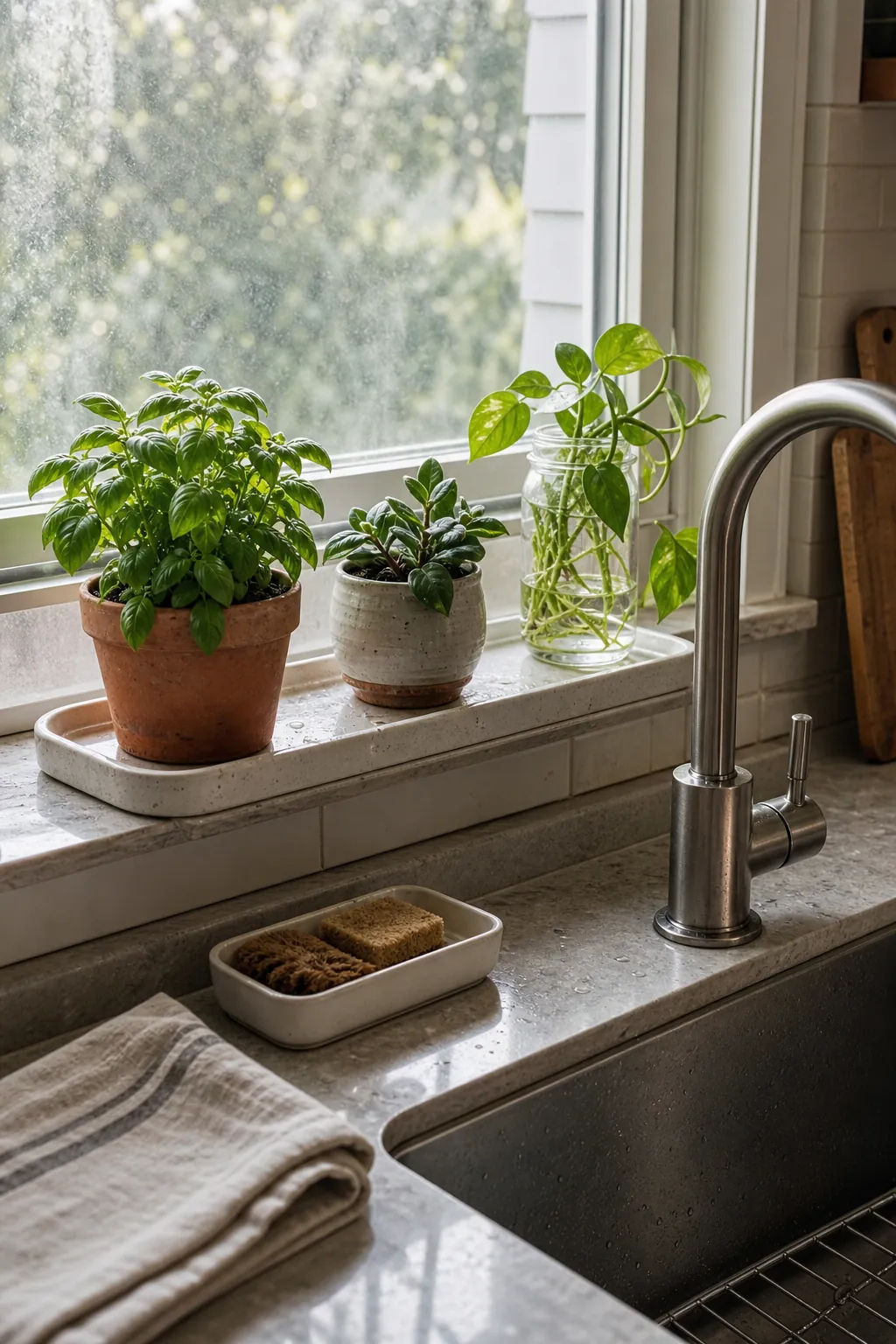
The kitchen window is the obvious place to start, but it should not be treated as one generic plant shelf. A bright south or southwest-facing window can handle sun-loving herbs and many succulents. An east-facing window is often gentler and better for orchids, pothos, philodendron, peperomia, and begonias. A dim north-facing window may need shade-tolerant plants or a small grow light if you want herbs to do more than survive.
Before buying anything, watch the window for a day. Notice when direct sun hits the sill, how hot the glass gets, and whether cold drafts reach the leaves at night. This is where many kitchen plant mistakes begin: the plant looks perfect in the window on day one, then the glass bakes it in summer or chills it in winter.
For a window over the sink, choose plants that can handle being checked often. Herbs, pothos, spider plants, small orchids, peperomia, and compact begonias all make sense in the right light. Keep pots in a tray so water does not damage wood trim or the sill, and leave enough space to open the window, wipe the counter, and wash dishes without knocking leaves into the basin.
Build a Useful Herb Moment
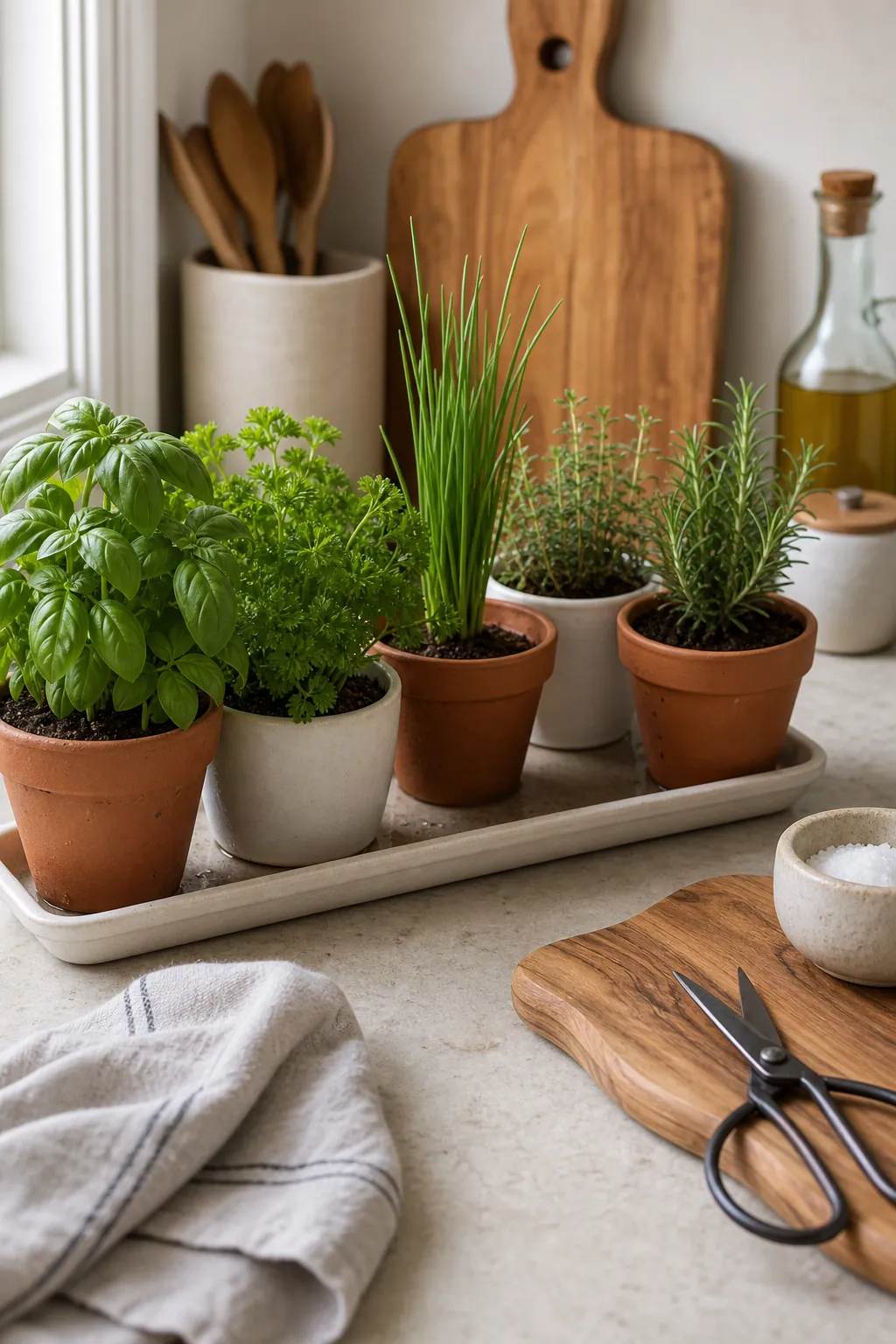
A kitchen herb garden works best when it is useful, not just cute. Basil, parsley, mint, rosemary, thyme, chives, and cilantro all look good in small pots, but they do not all want the same care. Basil wants more warmth. Rosemary wants strong light and faster drainage. Mint is forgiving, but it can get leggy indoors. Parsley and chives are often easier for a neat windowsill row.
Keep the setup simple: three to five small pots, a waterproof tray, and scissors within reach. The tray matters. A plant that drains onto a wood windowsill or stone counter turns a pretty idea into a maintenance problem. If the window is not bright enough, place herbs where they look good for a dinner party, then move them back to the brightest spot afterward.
The most natural kitchen styling is the kind you actually touch. A small row of herbs beside a cutting board instantly makes the kitchen feel cared for because it connects decor to cooking. It also keeps the plant count under control. Five healthy herbs look better than twelve struggling ones.
Use Open Shelving for One Soft Break
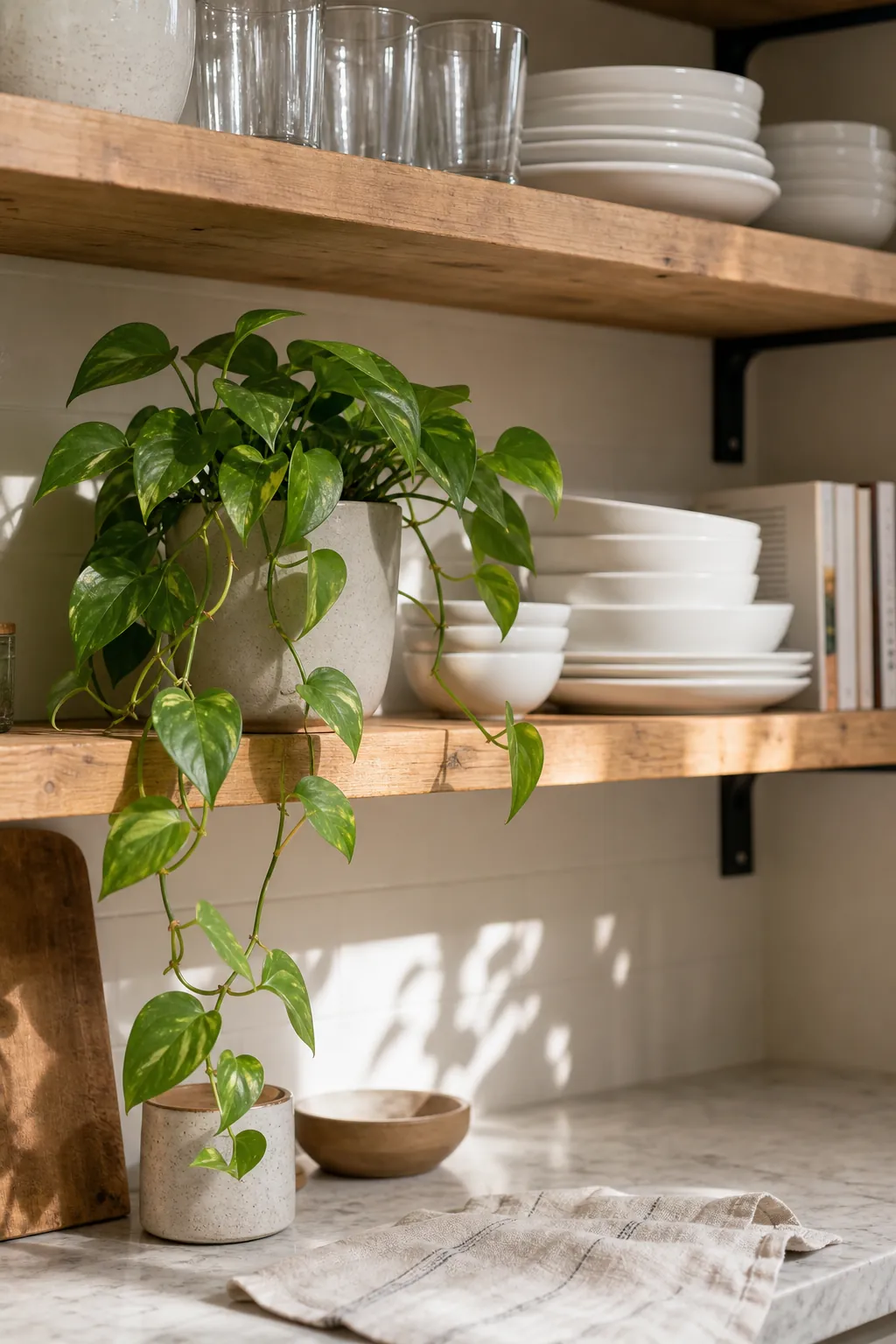
Open shelving can look cold when every object is hard: plates, glasses, pitchers, jars, cookbooks, metal canisters. One plant softens that line. The goal is not to turn the shelf into a jungle. It is to add one living shape that interrupts all the straight edges.
A trailing pothos, heartleaf philodendron, small peperomia, or compact ivy-style plant can sit beside everyday dishes and make the whole shelf feel more relaxed. Place the plant where you can remove it for watering without unloading half the shelf. Keep vines away from cabinet doors, range heat, and frequently grabbed mugs.
For kitchen decor, the container matters as much as the plant. A matte ceramic pot, small terracotta planter, woven cachepot, or simple glass jar can tie greenery into warm home decor instead of making it feel random. Repeat one material from the room, such as wood, clay, stone, brass, or white ceramic, so the plant looks intentional.
Turn the Sink Area Into a Small Green Pause
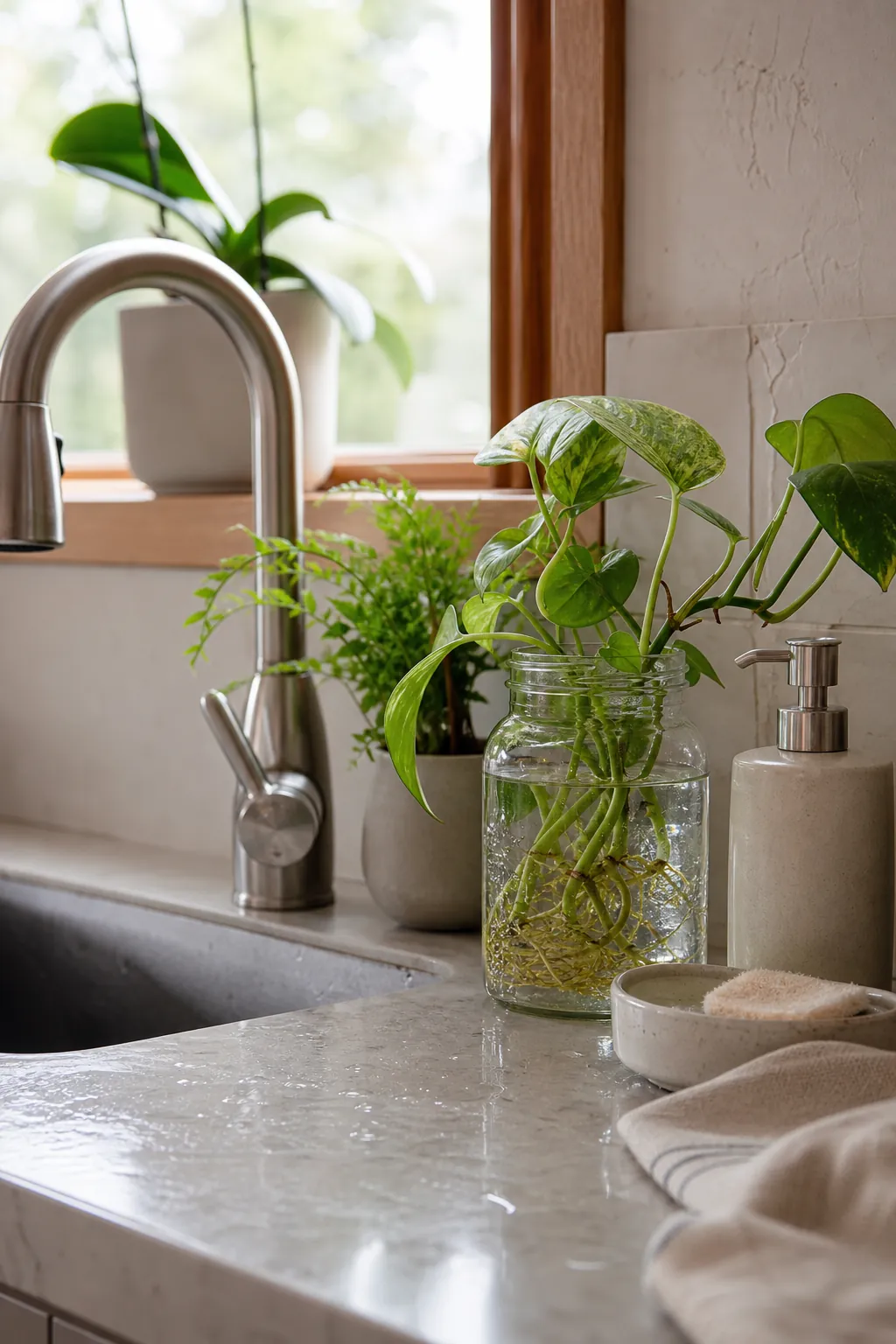
The sink is one of the most underrated places for plant decor because it is where you stand still. A tiny plant beside the faucet can change the mood of washing dishes more than a large plant across the room. It is also a forgiving zone for plants that like a little humidity.
Try a pothos cutting in a glass jar, a small aloe in a bright spot, an orchid near indirect light, or a fern if the area stays bright but not harsh. If your kitchen sink gets splashed often, avoid fuzzy leaves and delicate soil surfaces that stay wet. A clear glass propagation jar is especially good here because the water level is visible and the roots become part of the display.
Keep the area functional. Leave a clear landing space for sponges, soap, and dishes. The best sink plant is small enough that you can wipe around it in five seconds. If a plant makes cleanup annoying, it will eventually feel like clutter, no matter how pretty it looked on the first day.
Let a Trailing Plant Warm the High Spots
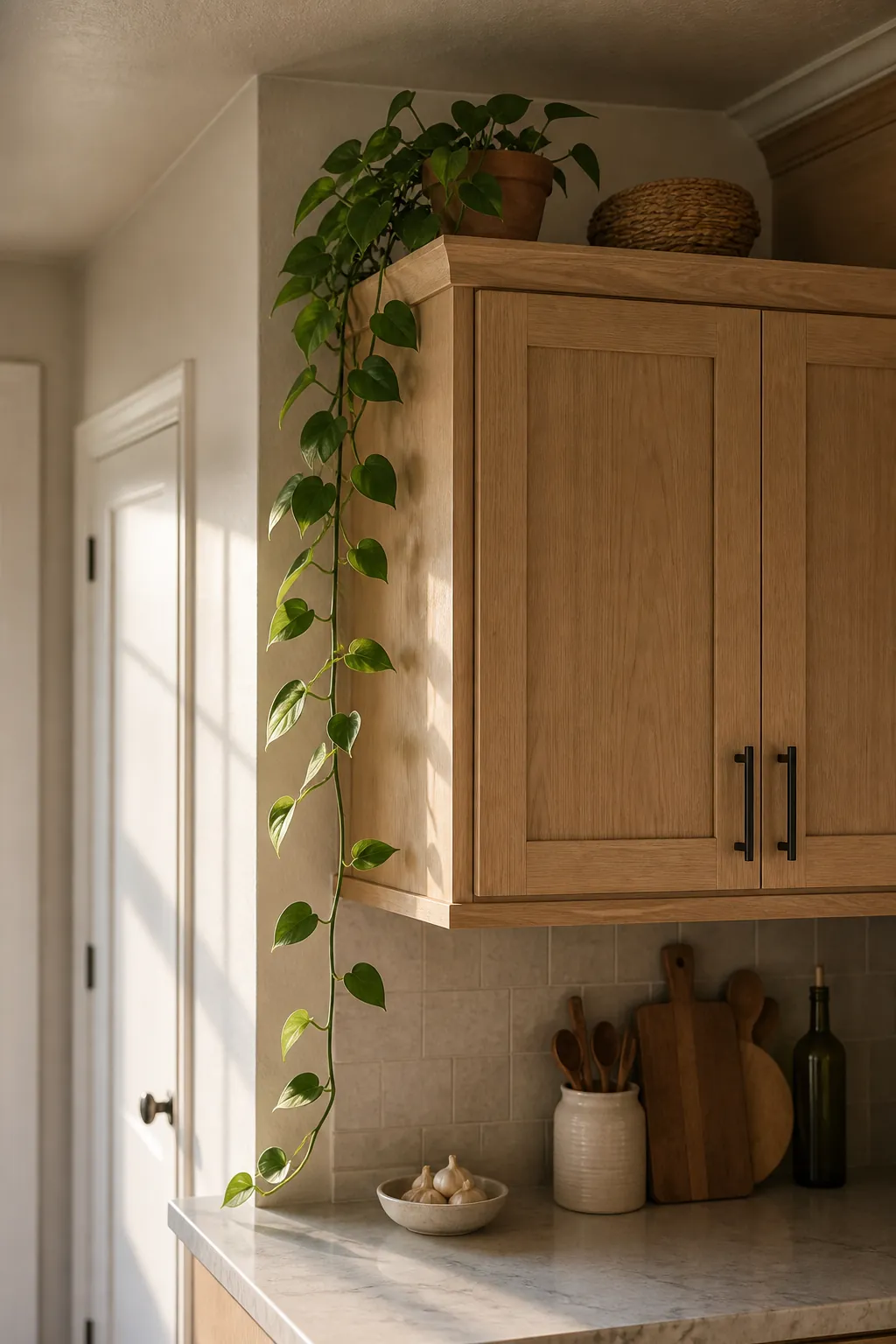
The space above cabinets, on top of the refrigerator, or near a high shelf can feel empty and dusty. A trailing plant can make that zone feel finished without taking up a single inch of prep space. This is especially useful in small kitchens where every counter corner already has a job.
Pothos and heartleaf philodendron are the classic choices because they trail beautifully and tolerate a range of indoor conditions. Still, high spots need honest assessment. If the top of the cabinet is dark, greasy, and hard to reach, a real plant will be difficult to water and clean. In that case, place the real plant on a nearby open shelf instead of forcing it into a bad zone.
When it works, keep the styling loose. Let one vine fall along the side of a cabinet or down the edge of a shelf. Do not drape foliage across doors, light fixtures, or anything near heat. The effect should be soft and natural, not tangled into the kitchen’s moving parts.
Make a Plant Corner Beside the Dining Nook
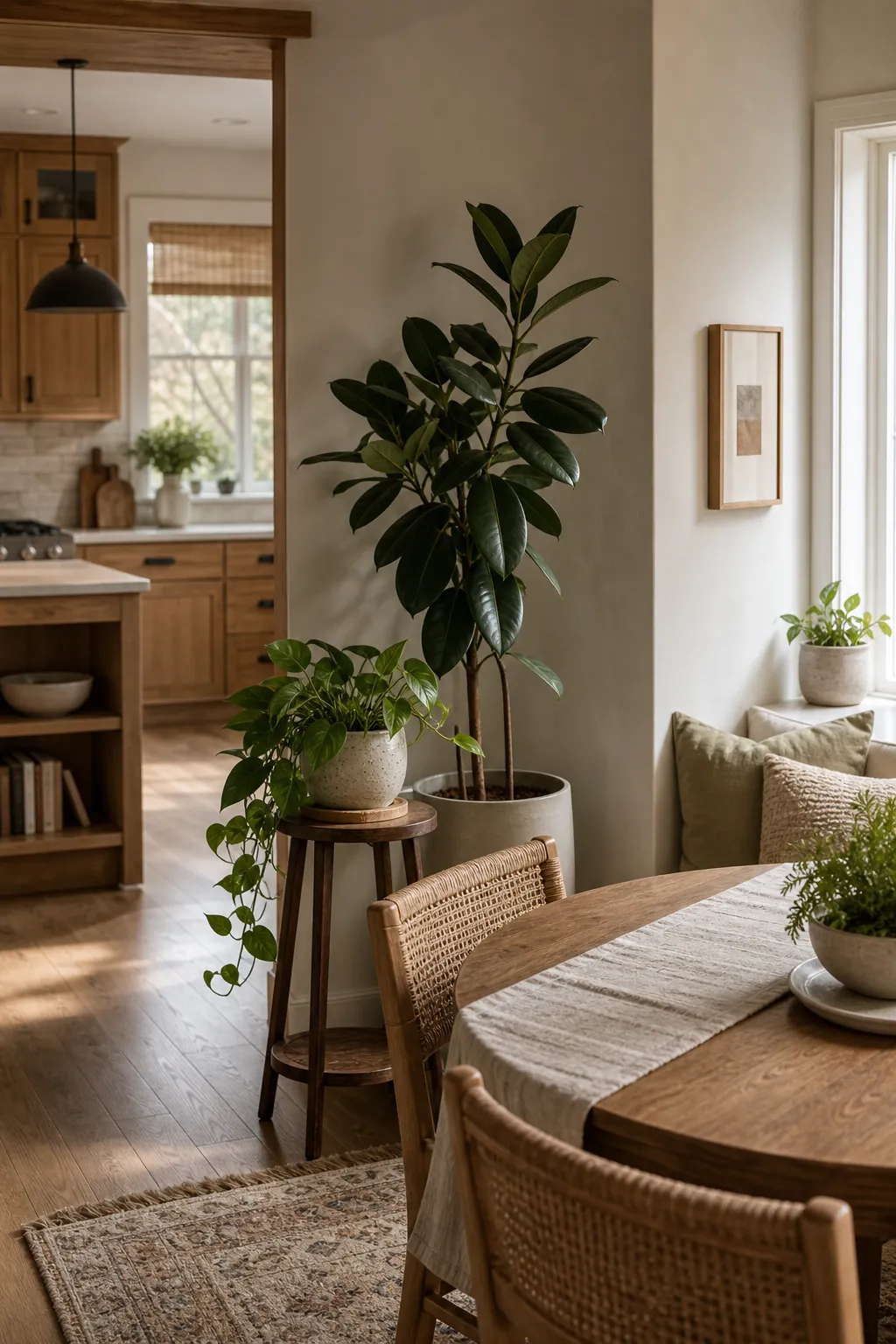
If your kitchen opens into a breakfast table or dining room, the plant moment does not have to live on the counter. A small plant corner near the dining nook can make the whole kitchen feel warmer while keeping the work zone clear. This is where a larger plant, plant stand, or layered grouping makes more sense.
Choose plants that match the light near the table. A rubber plant, parlor palm, dracaena, ficus, or large snake plant can add height. A pothos or philodendron on a stand can bring movement. A small cluster of two or three pots at different heights feels more designed than a line of unrelated plants spread across every surface.
This idea works especially well with boho kitchen decor, natural kitchen textures, rattan chairs, wood tables, linen runners, and warm ceramics. The plant becomes a bridge between kitchen styling and dining room decor, so the open-plan area feels connected instead of divided into separate little scenes.
Style Plants With Kitchen Objects, Not Around Them
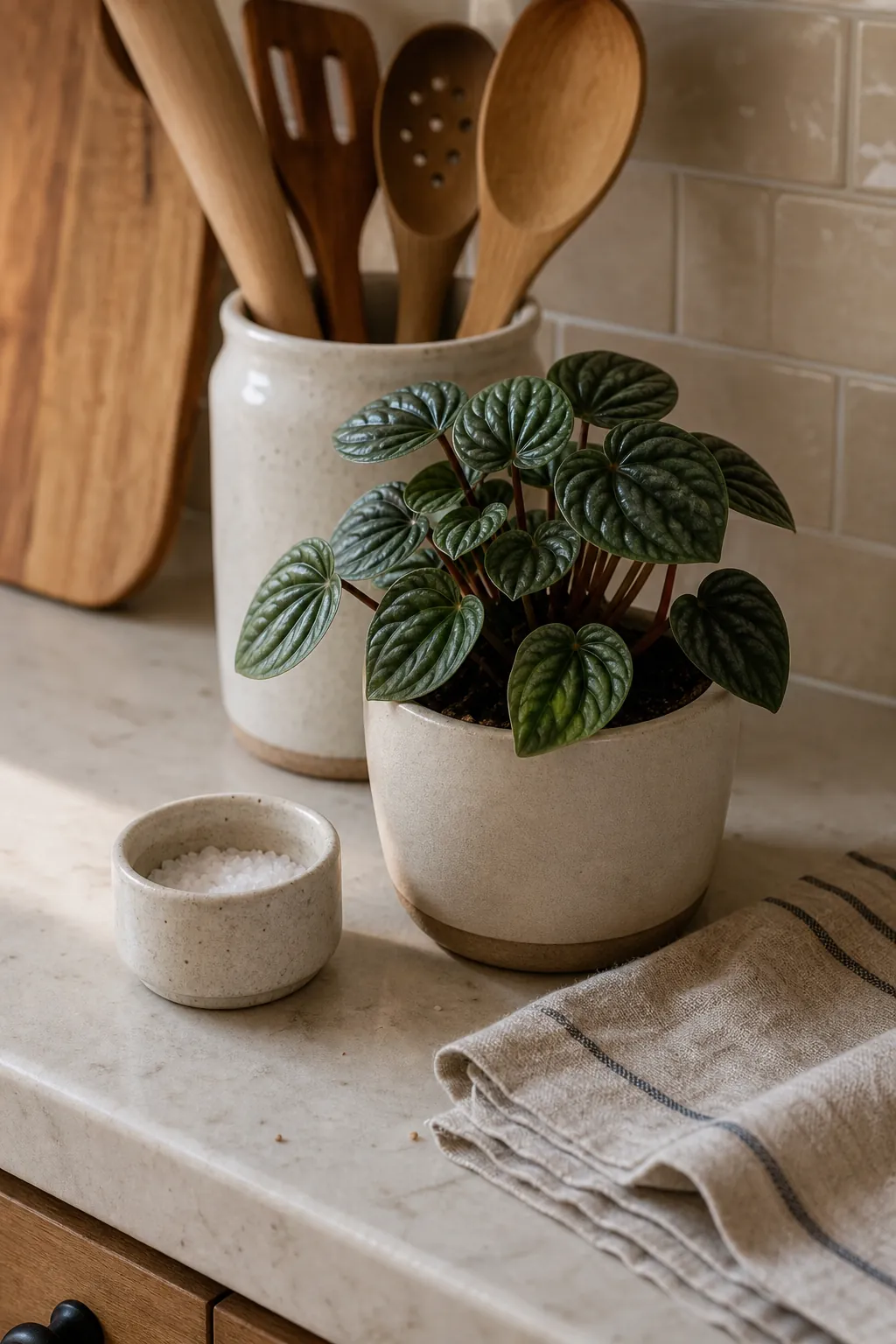
Plants look more natural in a kitchen when they are styled with kitchen objects. A basil pot beside olive oil. A small fern next to stacked bowls. A trailing vine near cookbooks. A propagation jar beside a wooden spoon crock. These pairings make the greenery feel like part of daily life instead of a decorative afterthought.
Use the rule of three for small vignettes: one plant, one useful object, one textural object. For example, a peperomia, a ceramic salt cellar, and a folded linen cloth. Or a rosemary pot, a cutting board, and a small brass spoon rest. Keep the shapes varied so the setup does not look flat.
The restraint is important. A kitchen already has visual noise: handles, appliances, tile lines, jars, labels, faucets, and lights. One well-placed plant vignette can do more than plants scattered everywhere. If you are unsure, remove one object from the counter before adding a plant.
Choose Easy Plants for the Messy Reality of Cooking
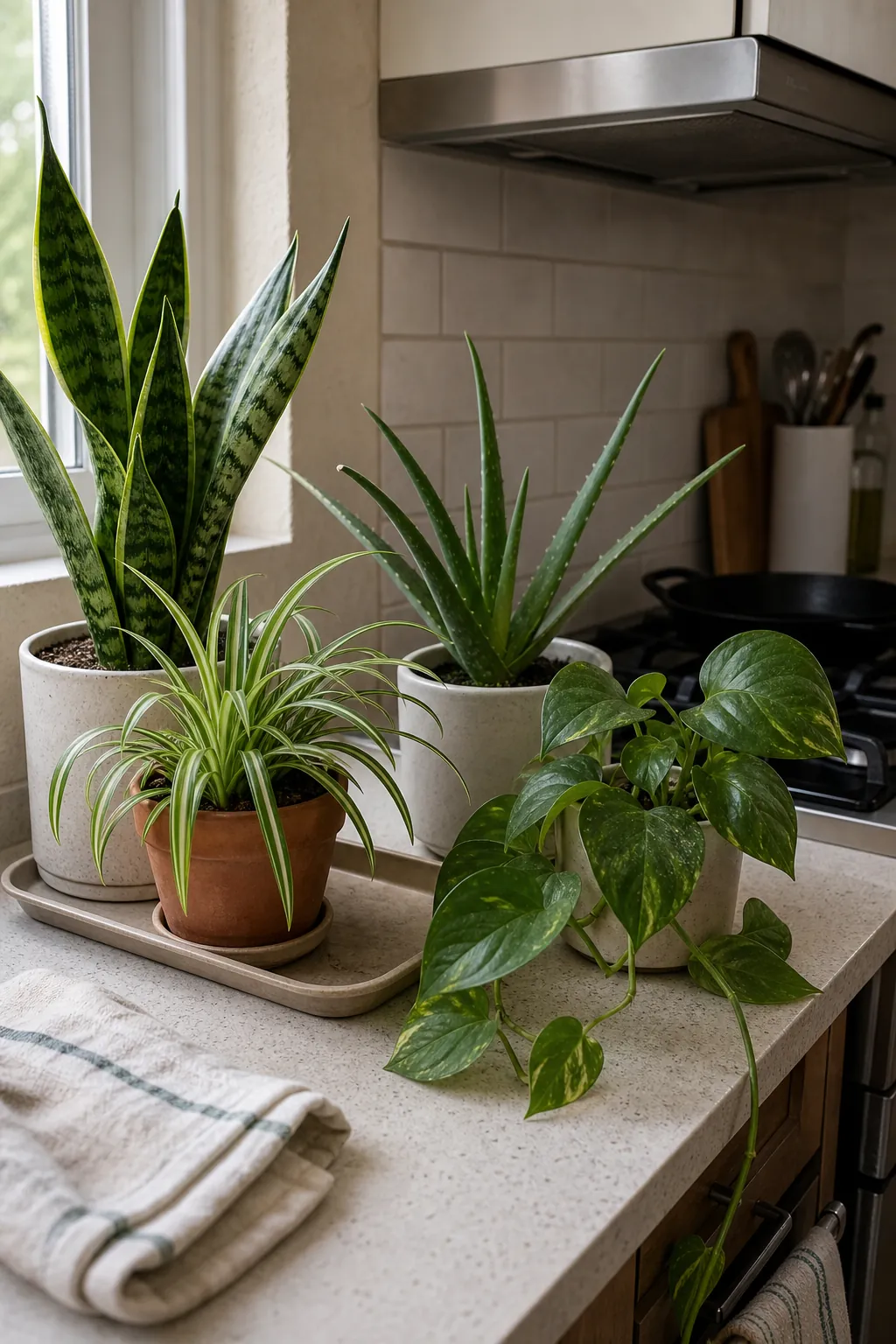
The plants that survive in a kitchen are not always the plants that look best in a styled photo. Kitchens have grease in the air, warm zones near appliances, dry blasts from vents, steam near the stove, and changing light through the day. That does not mean plants cannot thrive there. It means you should choose forgiving plants and give them a practical care routine.
For beginners, start with pothos, heartleaf philodendron, snake plant, spider plant, ZZ plant, peperomia, aloe, or herbs you already use. Keep plants away from direct stove heat and avoid placing leaves where they will touch cold glass at night. Wipe broad leaves occasionally so cooking film does not build up. Rotate pots every week or two if the plant leans toward the window.
Most importantly, match the plant to your habits. If you forget to water, choose tougher foliage plants over thirsty herbs. If you cook often and wipe counters daily, use a tray so every pot can move at once. If your kitchen is dim, do not buy a sun-hungry herb garden and hope enthusiasm will replace light. The most alive-looking kitchen is the one where the plants are actually set up to live.