A wreath can look lovely on its own and still make a room feel busy when it sits beside a bright tree, a crowded island, and a table full of candles. In a connected living space, you see all those choices at once. The useful question is how much attention each area needs, not how many decorations each area can hold.
Start from the places you cook, sit, eat, and walk through every day. Keep those jobs easy, then give the season a few clear places to show up. You can make a home feel festive with one strong display and several quieter echoes.
Choose a focal point from the entrance
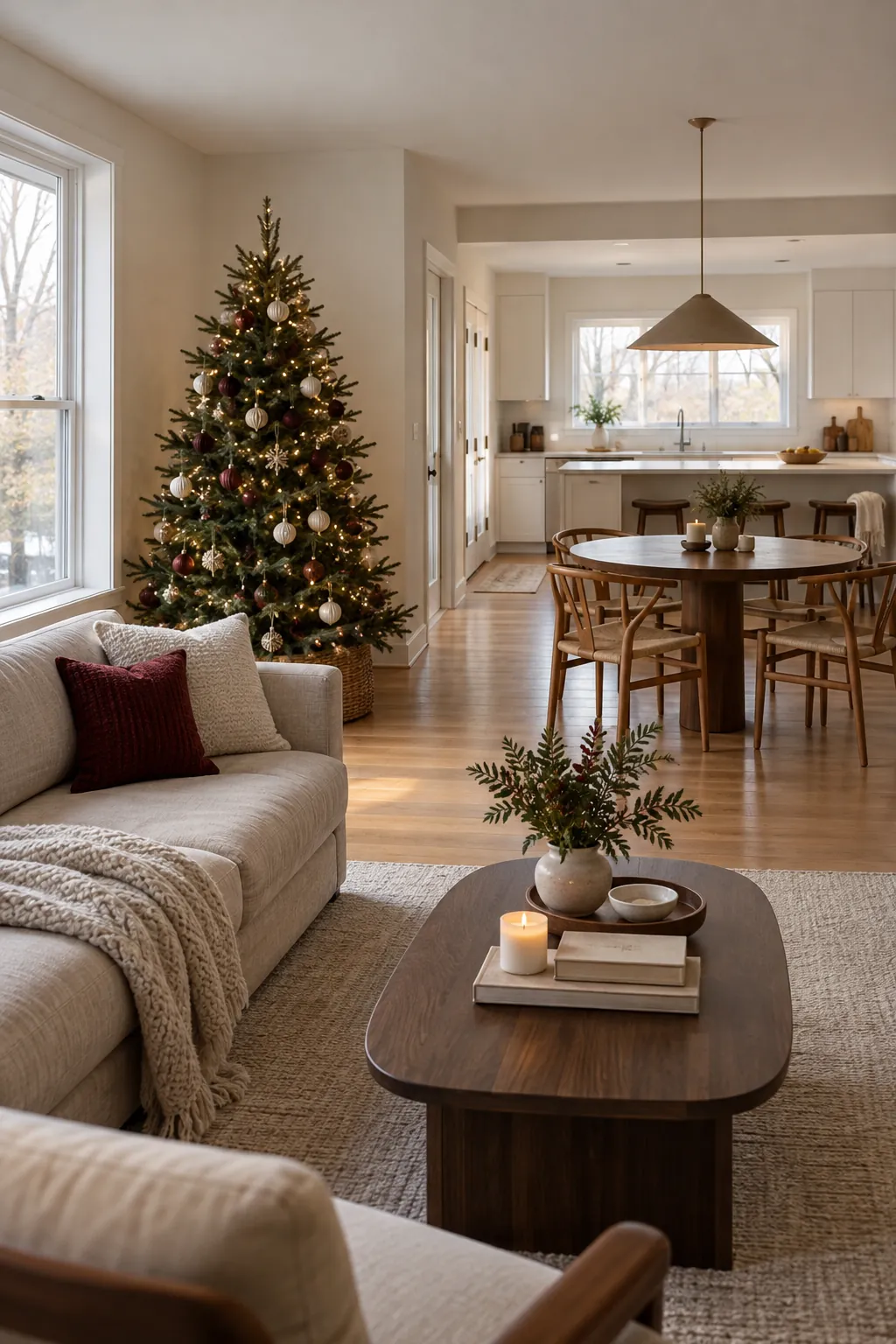
Stand where you first see the living room, dining area, and kitchen together. Pick the feature you want your eyes to find first, whether that is a tree beside a window or a mantel that already anchors the room. Give that feature the largest share of your decorations, then let nearby surfaces stay quieter. A tree with colorful family ornaments does not also need a bright garland on every visible cabinet.
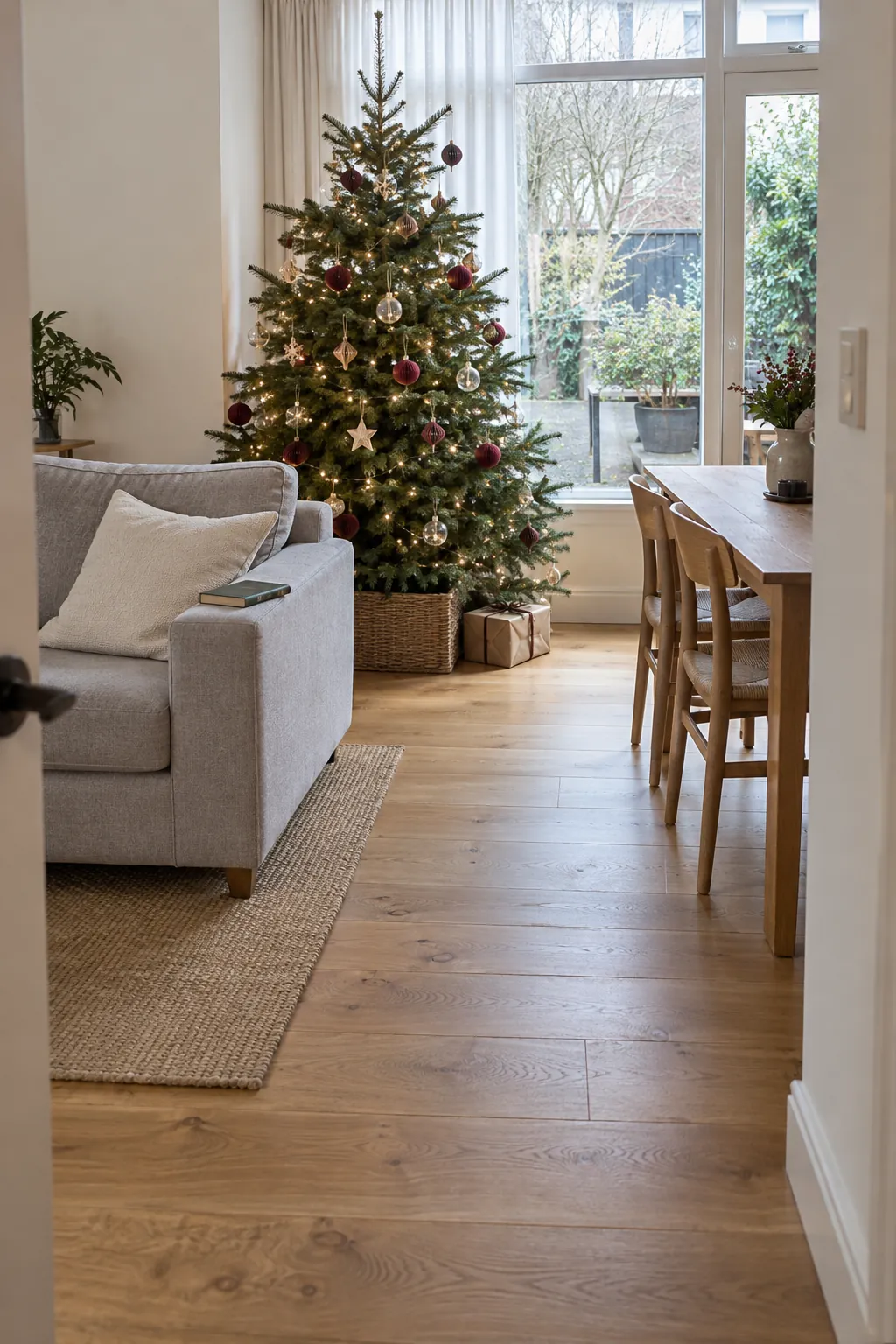
Check the view from the sofa as well, because the entrance view is only one way you experience the space. If the tree blocks a television, a doorway, or the route to the dining chairs, choose a smaller tree or move it to a less active corner. Treat the tree base and the gifts as part of its footprint. Avoid placing branches near heaters or exits, and follow the tree and light manufacturers’ clearance instructions.
Give each zone a different level of decoration
Christmas decorating zones work best when they reflect what happens in each part of the home. The living area can carry the main display, the dining area can hold one low arrangement, and the kitchen can use a small seasonal detail outside the work area. You do not need three equally elaborate scenes to make the rooms feel connected. An empty stretch of wall or counter gives your eyes a place to pause and makes the decorated areas easier to notice.
Repeat a small palette in different amounts
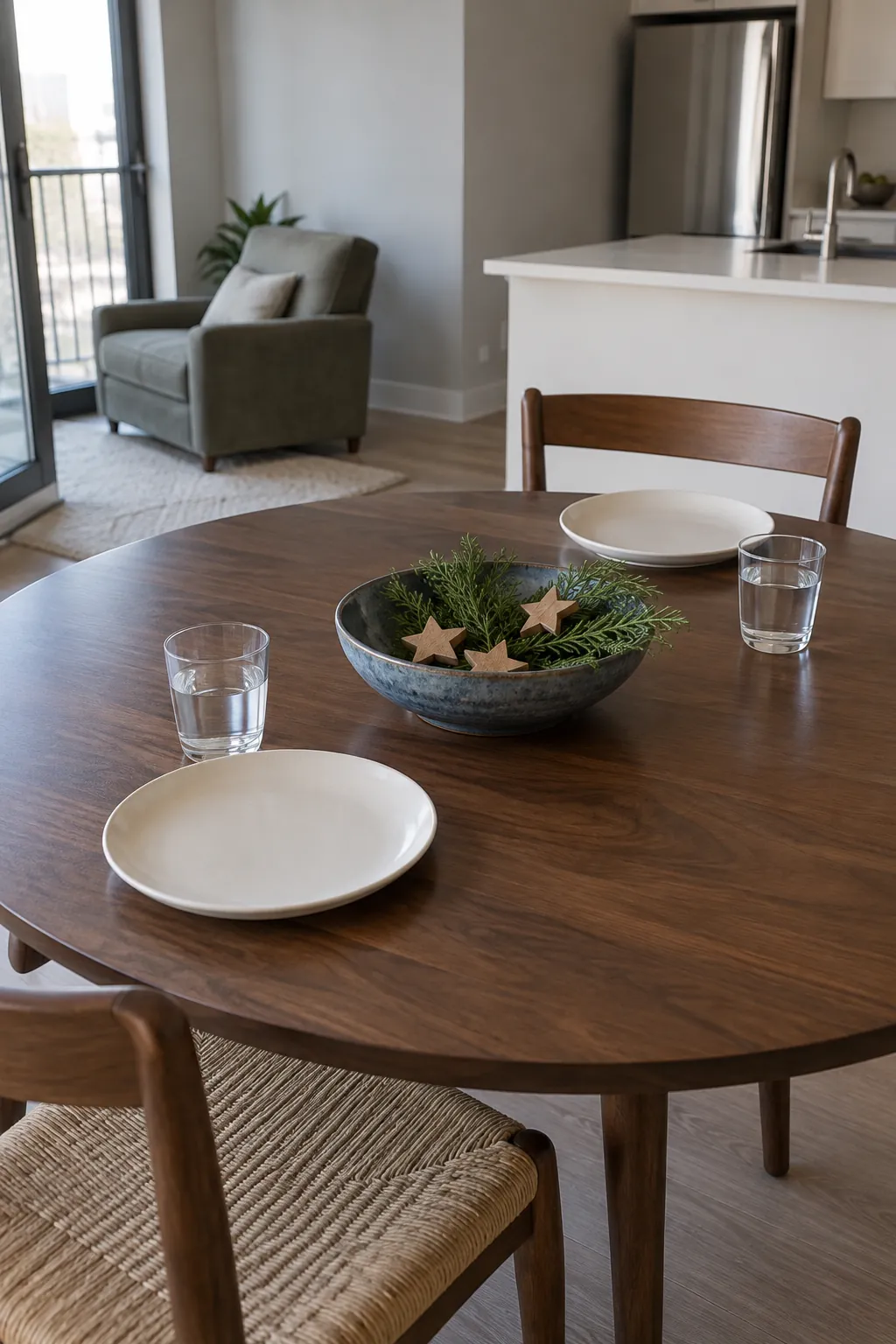
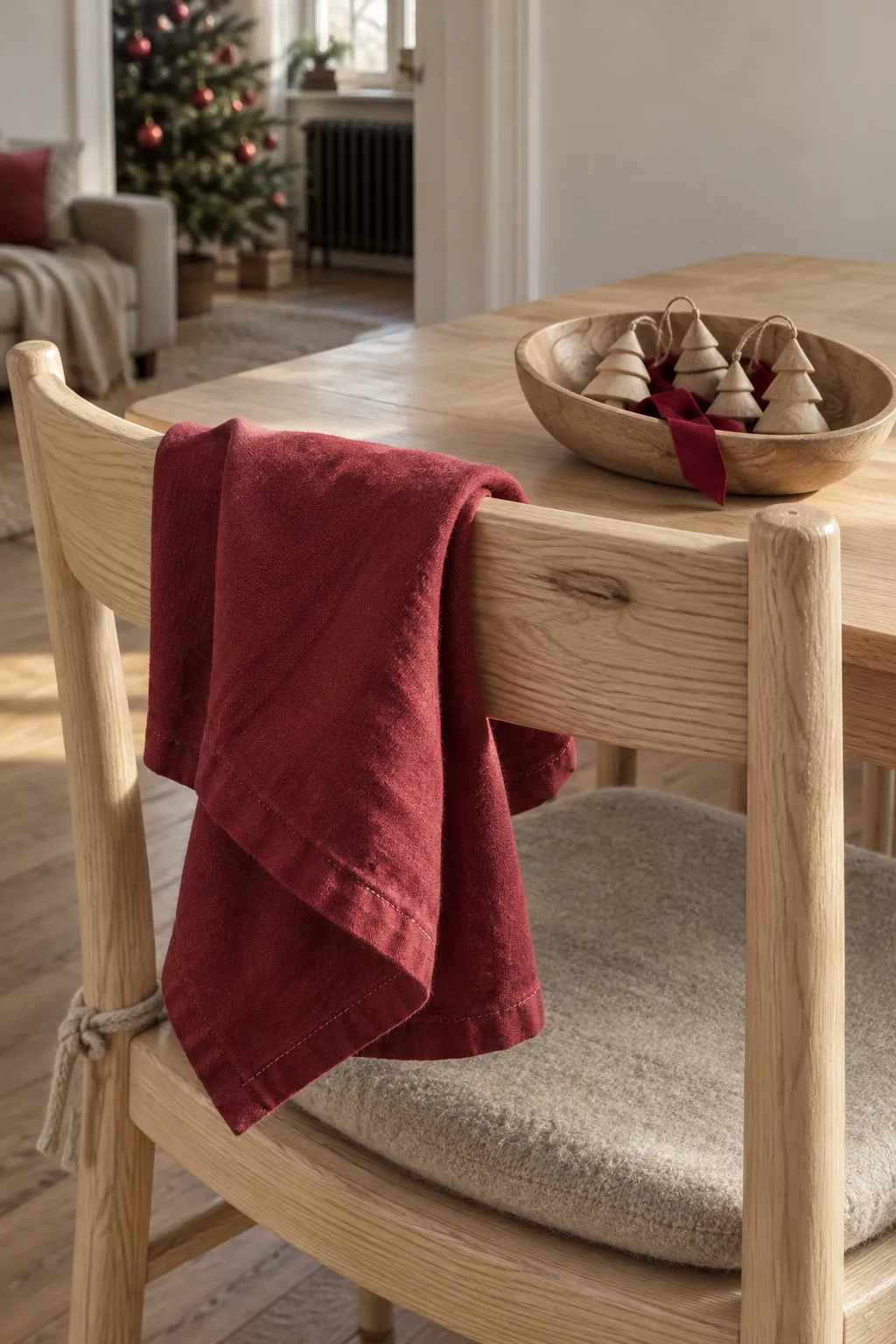
Look at the colors already in your furniture before buying a matching set of holiday accessories. Green foliage, cream fabric, and one accent such as cranberry can connect a room without hiding its existing character. Use the accent strongly at the focal point and more sparingly elsewhere. For example, red ornaments on the tree can relate to a single red napkin or a ribbon on a small kitchen wreath.
Materials can supply the same connection when you prefer a quieter palette. Repeat the warmth of wood or the softness of linen in a few places, rather than repeating an identical object throughout the home. A wooden bowl at the dining table and a wooden ornament on the tree have enough in common to relate. Leave favorite mismatched ornaments in the main display if they matter to you; cohesion does not require throwing away family pieces.
Keep the amount of shine in mind too. Glass, metallic ornaments, string lights, and glossy kitchen surfaces can produce more visual activity together than you expect. If the room feels restless at night, remove one reflective layer before changing the whole color scheme. This is an inexpensive way to improve Christmas visual balance while preserving the pieces you enjoy.
Protect the surfaces that do real work
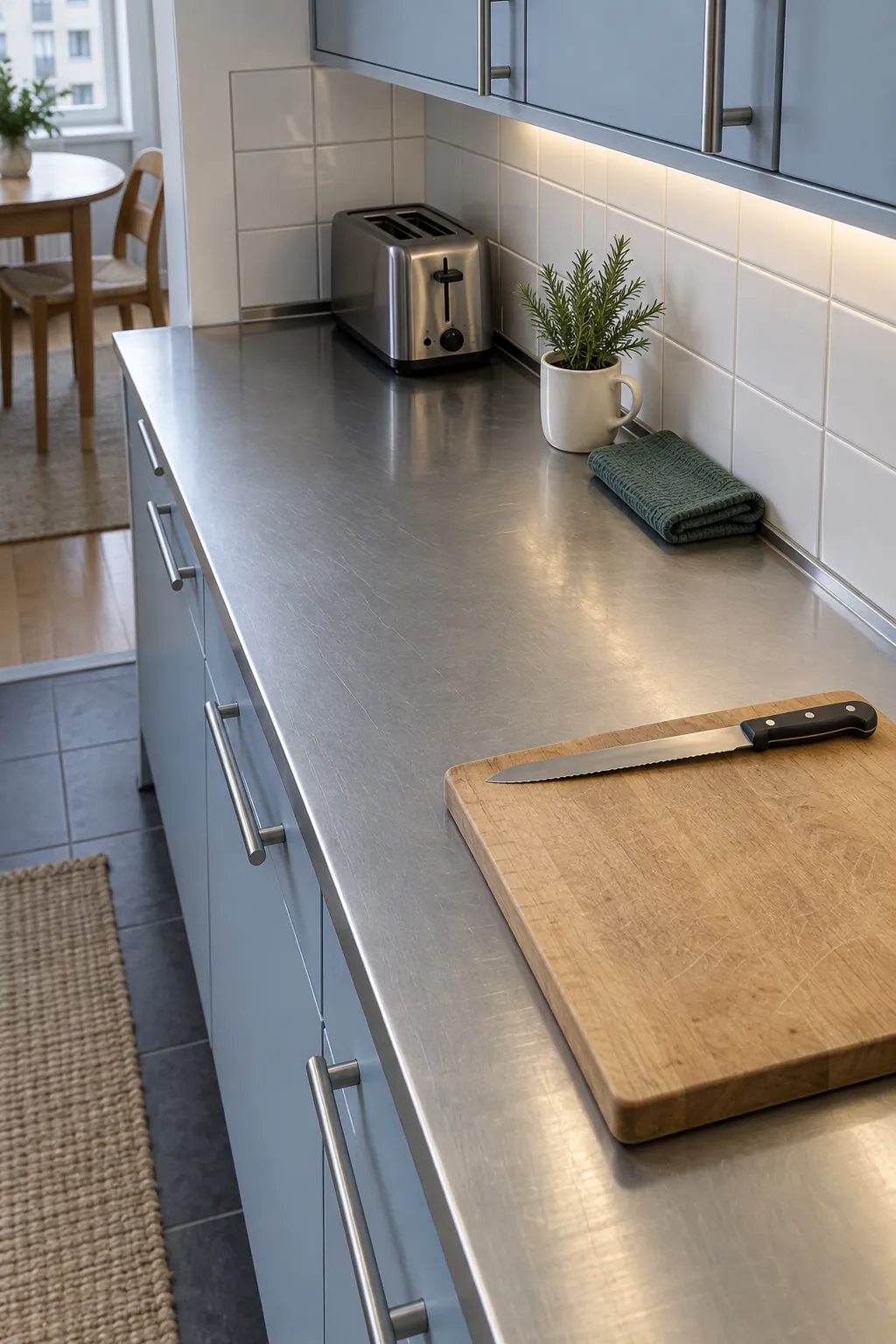
An island looks spacious in a photograph when no one needs to make dinner on it. In a working kitchen, seasonal objects compete with chopping boards, groceries, and the dishes waiting to be put away. Keep the preparation area clear and put any small display at a dry, unused end of the counter. Decorations should stay away from cooking heat, sinks, and appliances that need ventilation.
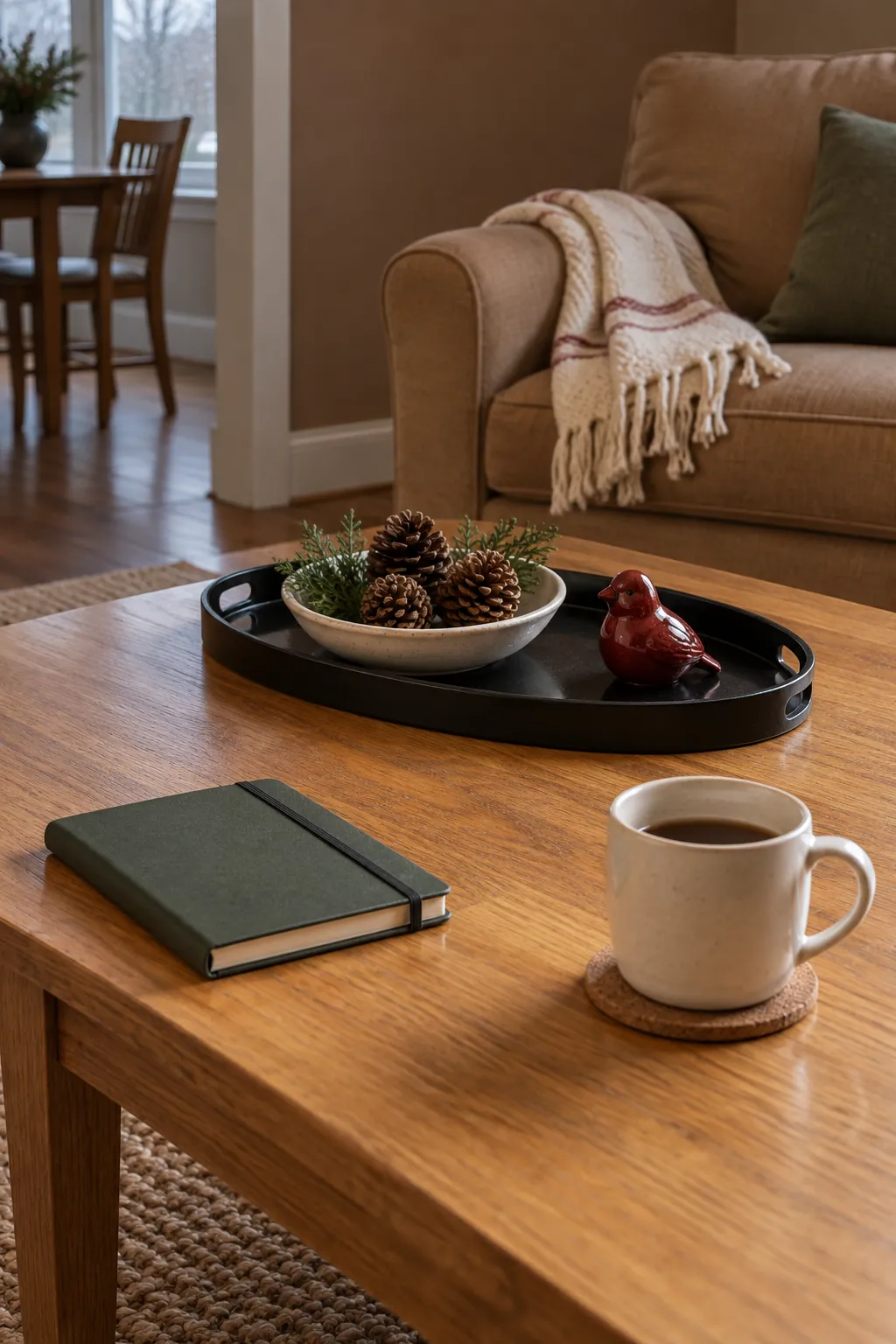
A tray can make a dining or coffee table arrangement easier to lift away, but its size still matters. Choose one that leaves room for the actual meal, a laptop, or a cup without forcing everything onto the floor. Store the ordinary accessories you replace in the same box that held the seasonal pieces. Swapping instead of stacking prevents everyday decor from becoming the hidden second layer of clutter.
Keep routes and evening light calm
Walk from the entrance to the sofa, then to the kitchen and dining chairs, while carrying something the size of a shopping bag. Notice where a basket, branch, or gift pile makes you turn sideways. Open concept holiday interiors need those everyday routes as much as they need a good view. Move the obstruction rather than asking everyone to navigate around it for a month.
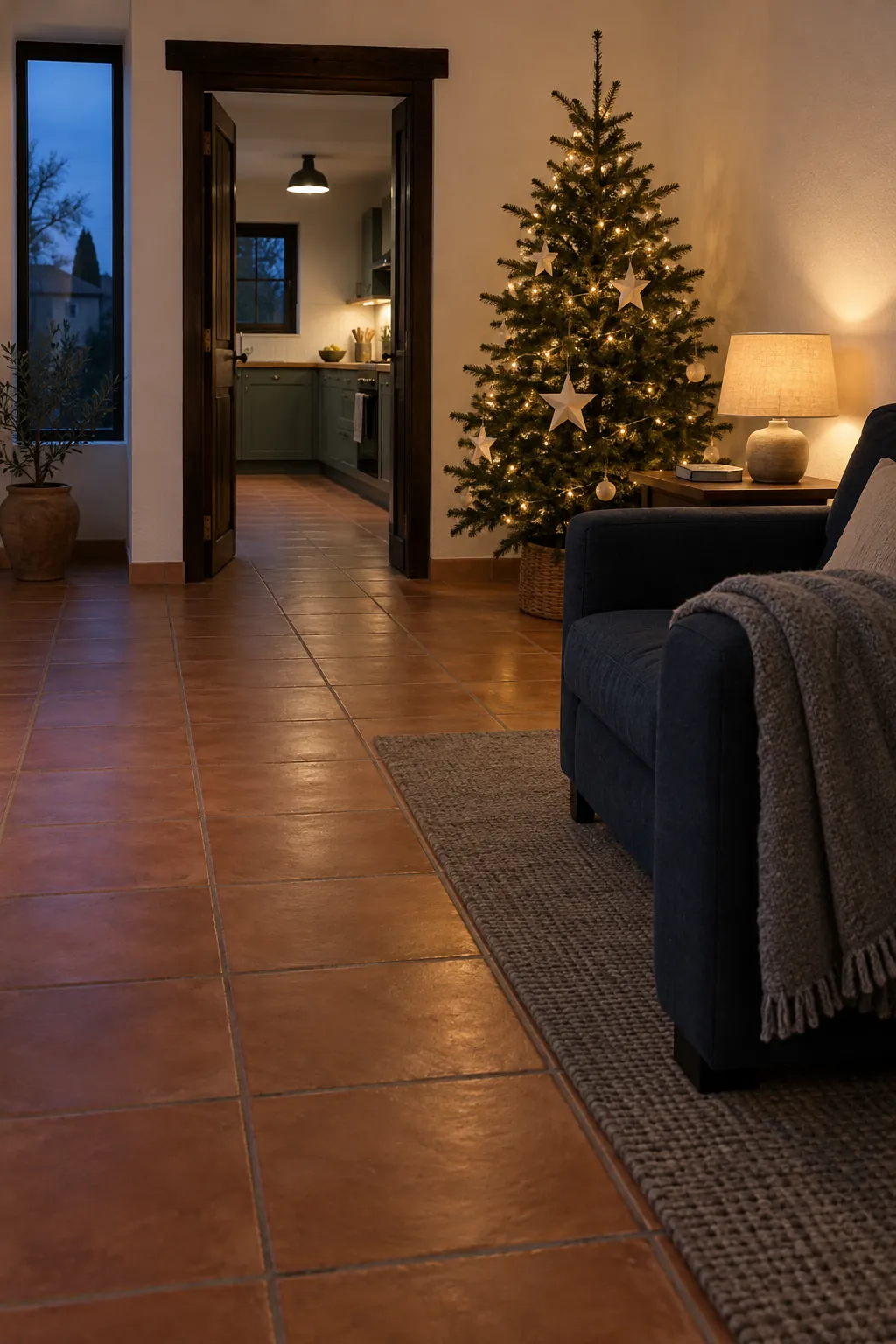
After dark, turn on the lights you normally use before adding the festive ones. A tree and a table lamp may already give the seating area enough glow, while the kitchen still needs clear task light. Keep decorative light strings out of walkways and secure cords according to their instructions. If several light sets compete, switch off the least useful one and assess the room from your usual chair.
Edit the room after an ordinary day
Live with the first version through dinner, a quiet evening, and the next morning before adding more. A display that keeps moving out of the way has told you its position is wrong. Remove or relocate that piece, then take a quick photo from the entrance to check what remains. A small screen can help you spot competing clusters that blend into the background when you are standing among them.
For a simple festive home, stop when the main display feels complete and the other zones still work comfortably. Put unused decorations back in storage instead of finding a place for them out of obligation. At packing time, note which pieces earned their space and which stayed in the box. Those notes make next year’s whole home holiday planning easier and keep the collection tied to how you actually live.