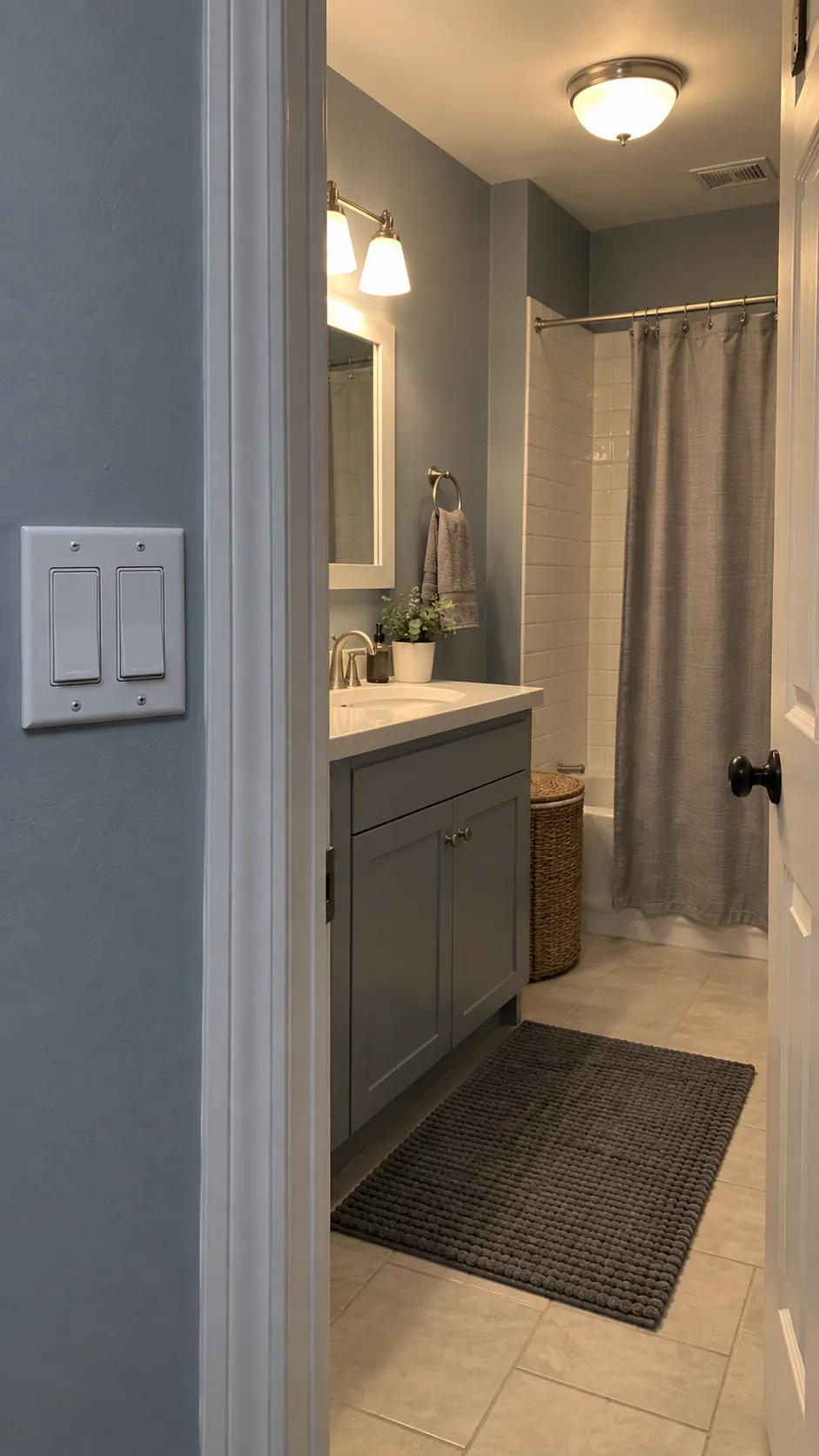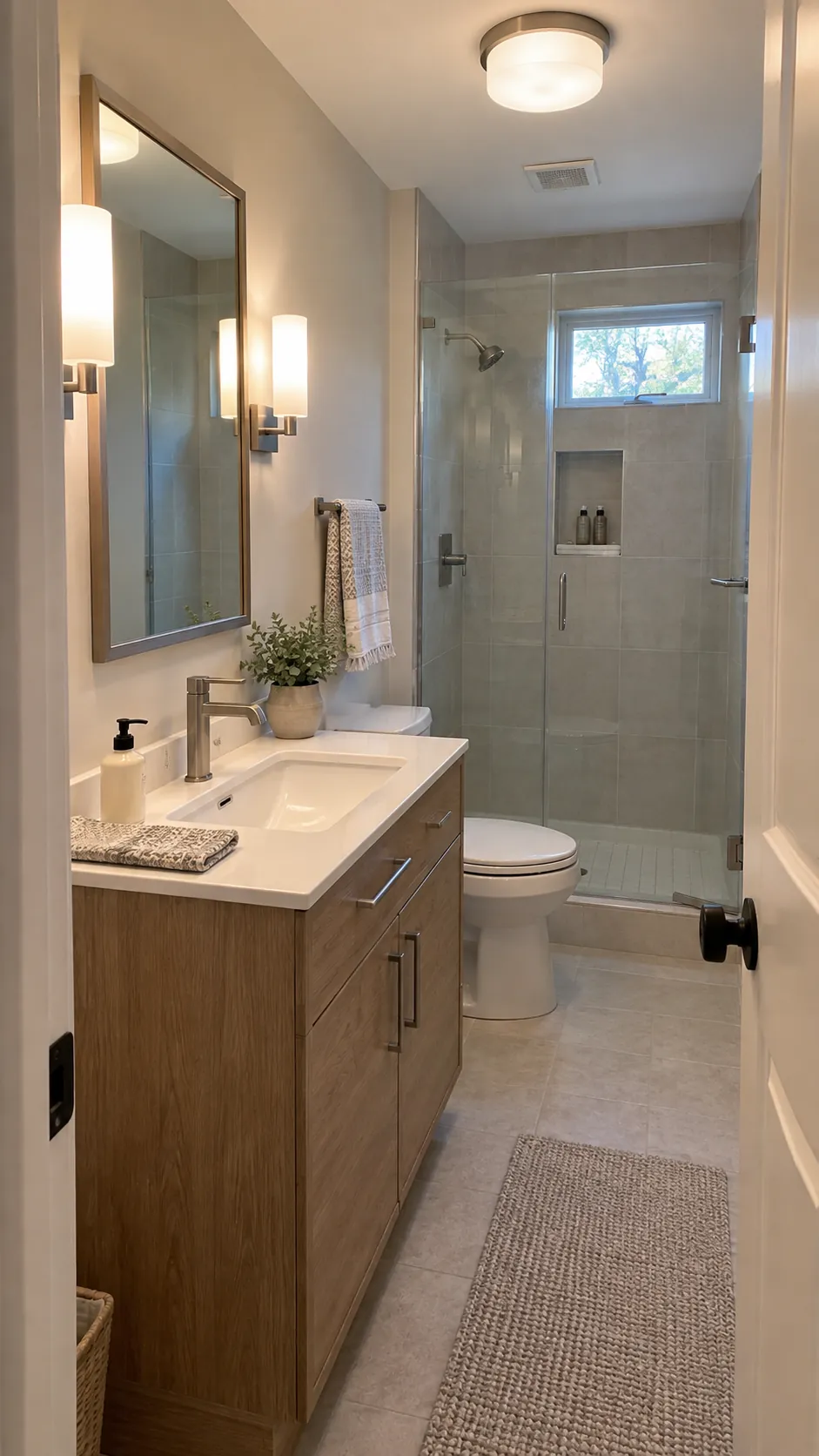
A single bright ceiling fixture can leave your face in shadow while making every tile feel harsh. In a compact bathroom, the best improvement is usually to put the right light where a person actually uses it, then let a gentler source fill the rest of the room. Before buying a fixture, stand at the mirror and in the shower at the times you use them most. Notice which surfaces block light and which corners stay dim.
Start With Light at the Mirror
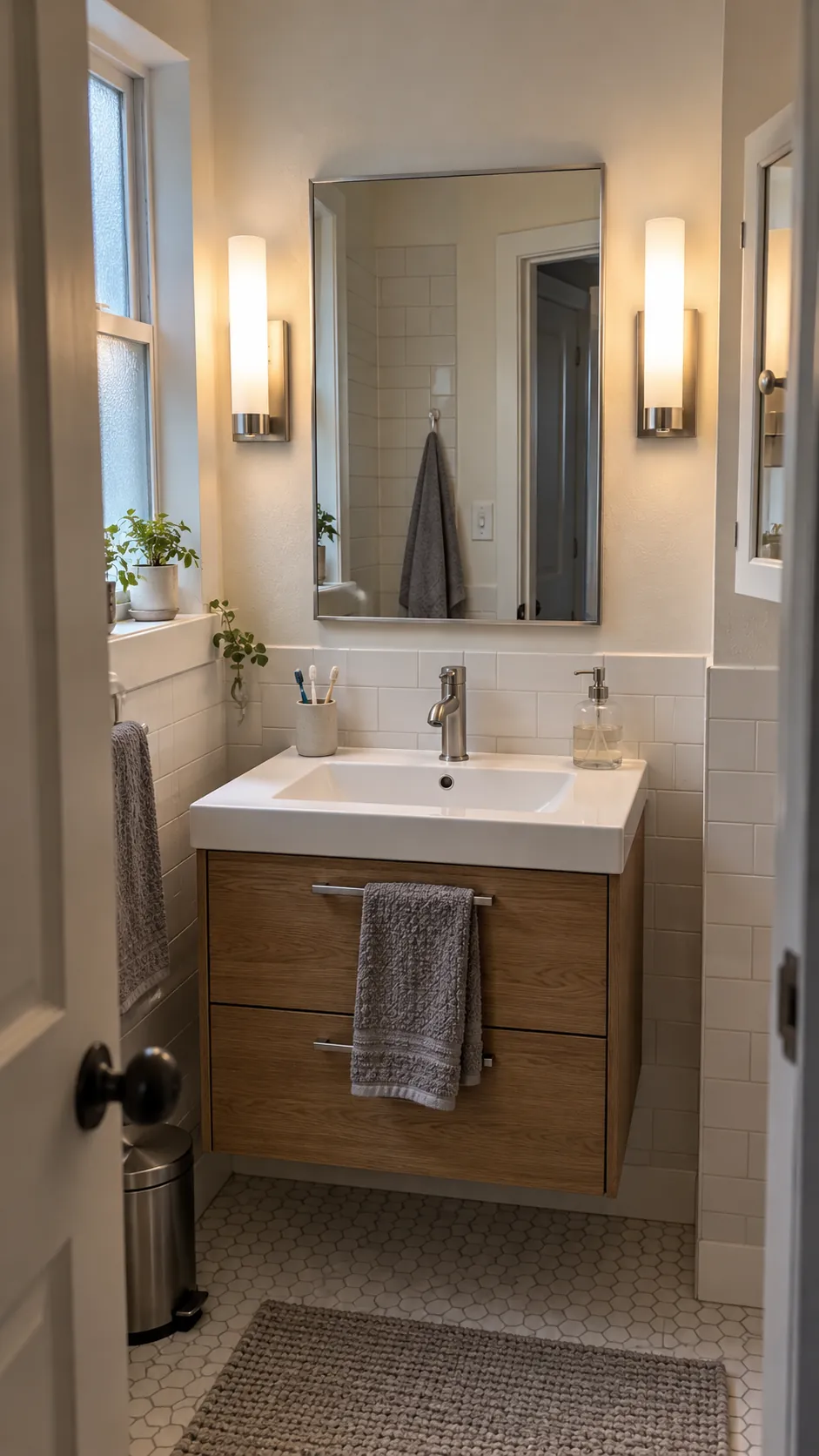
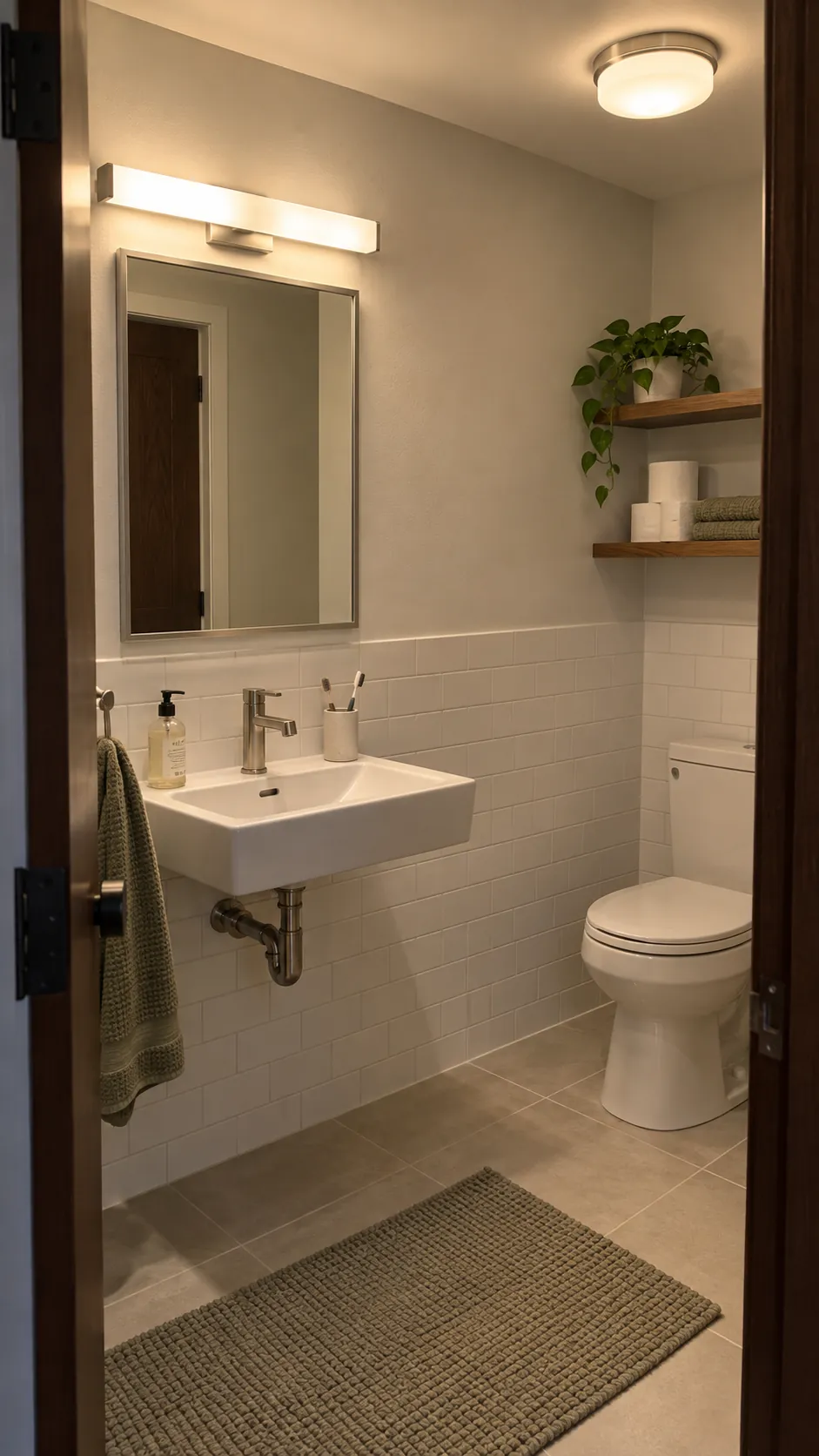
The mirror is where poor lighting becomes personal. A fixture directly above it may brighten the basin while casting shadows under your eyes and chin. If the wall has room, a pair of vertical sconces on either side sends light across the face more evenly. Choose shades that diffuse the bulb rather than exposing a bright point at eye level.
A narrow vanity may not allow two sconces. In that case, use a wide, diffused fixture above the mirror and bring it forward enough that the mirror frame does not block the beam. Check the actual standing position, not only the centered photograph on a product page. If two people of different heights use the bathroom, test how both see their faces before fixing the final position.
Give the Whole Room a Soft Base Layer
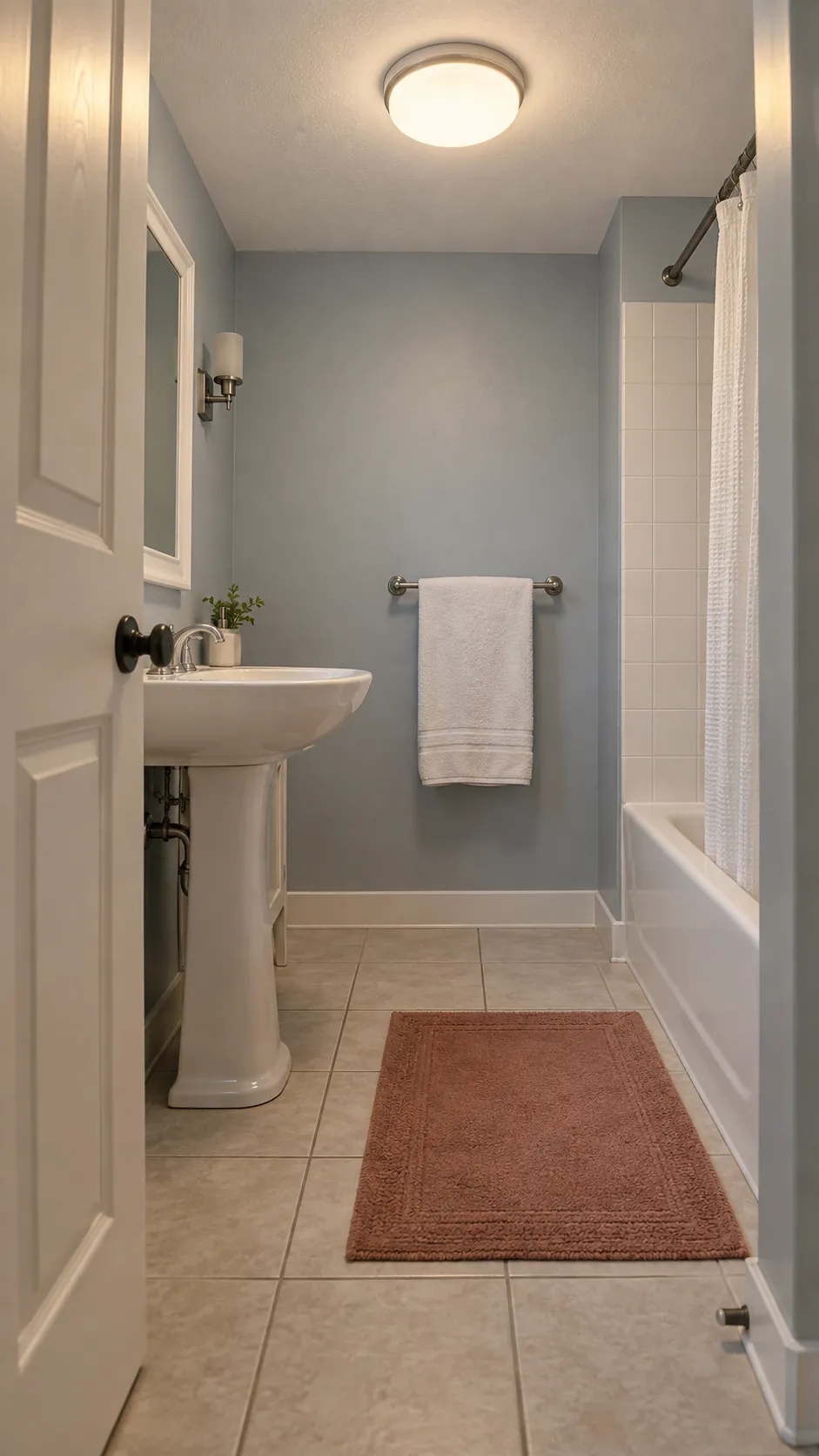
Mirror light does not need to illuminate the toilet, floor, and doorway by itself. A compact ceiling fixture or a carefully placed recessed light can provide a soft base layer that makes it comfortable to enter and clean the room. Place it with the vanity light in mind so the two sources overlap rather than leaving a dark strip between them.
Look at the ceiling height, door swing, and where you stand after stepping out of the shower. A low pendant may make a tiny room feel crowded and may be unsuitable near water. A flush fixture often keeps the sight line calmer. Select a diffused cover so a small space does not become a box of glare, and use a dimmer where the fixture and electrical setup support it.
Check the Shower as Its Own Zone
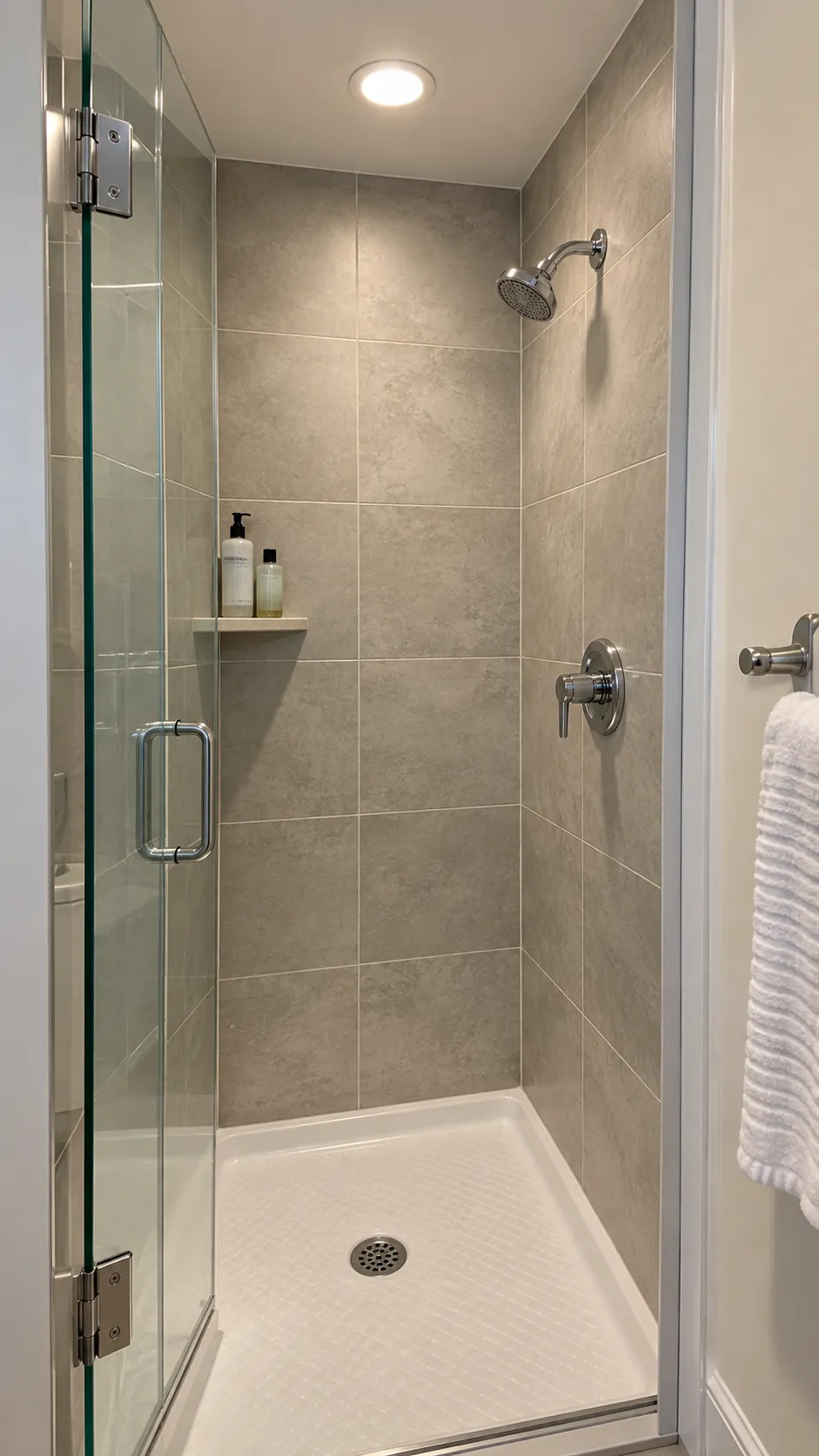
A shower behind a curtain or framed glass can remain gloomy even when the rest of the bathroom looks bright. Open and close the curtain while the lights are on; the change is often larger than expected. A suitable ceiling light over the shower can make the floor easier to see and reveal soap residue before it builds up. Position it to light the washing area rather than aim a harsh beam into your eyes.
Water changes the fixture decision. The exact location and local electrical rules determine what rating and installation are appropriate, so have a qualified electrician confirm the choice before work begins. Do not assume that a recessed fixture used elsewhere in the room belongs above the shower. A diffused, properly rated light is more useful than a dramatic fitting that leaves the corners dark.
Make a Windowless Bathroom Feel Clear
Without daylight, every surface depends on the lamps you choose. Light walls and a mirror can help spread illumination, but they cannot repair a fixture that points only at the floor. Layer a diffused vanity source with a modest ceiling source, then switch each separately if possible. That lets morning grooming feel clear without making a late night visit startlingly bright.
Choose bulbs with a consistent, comfortable color across fixtures. Mixing a very cool lamp at the mirror with a very warm lamp overhead can make skin and finishes look odd. Warm white bathroom lights can feel welcoming, while a slightly cleaner white may help detailed grooming; the important test is how the actual room and face look together. Check labels for color temperature and color rendering, then compare samples before committing to a whole set.
Use the Mirror to Reflect, Not Dazzle
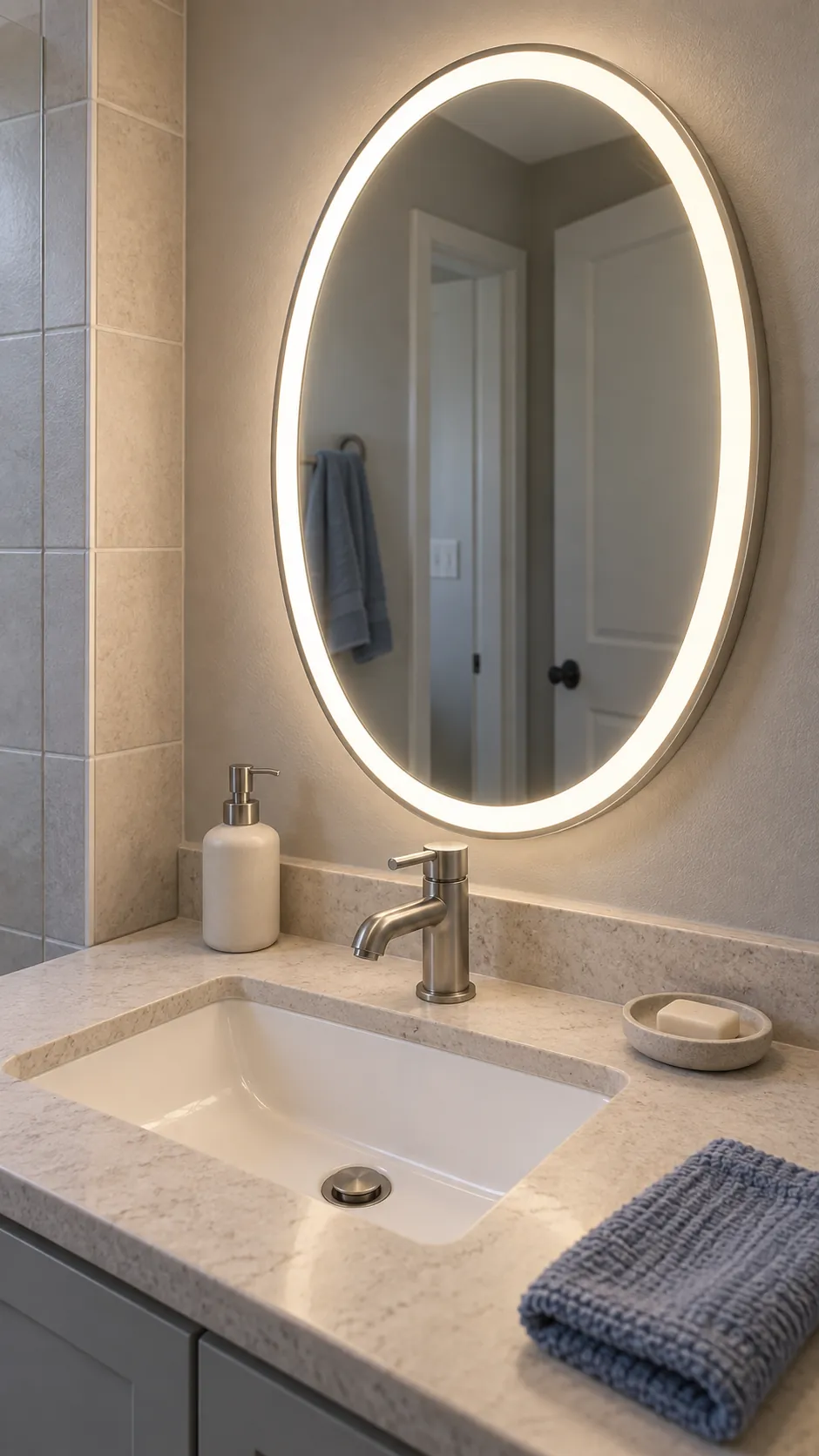
A bright bathroom mirror is useful when the light lands on your face, but a bare bulb reflected at eye level makes the room tiring. Stand where you brush your teeth and check what appears in the glass. If you see the glowing bulb instead of a softly lit wall, adjust the fixture position or choose a more diffused shade. A mirror with integrated lighting can work well in a narrow space when its light is broad enough for the task.
Keep a little visual breathing room around the mirror. Crowding it with shiny accessories can create extra reflections without adding useful light. A matte backsplash, clean glass, and one small tray often make the illumination feel more deliberate. If the mirror light is the only source, however, the doorway and shower may still need the base layer described earlier.
Plan Controls Around Daily Routines
Good layered bathroom lighting is easier to appreciate when each layer has a purpose. Put grooming light and general light on separate controls if a renovation allows it. You can then use both while cleaning, the mirror light for detailed tasks, and a gentler setting for a quick visit at night. A compatible dimmer can add flexibility, but check the bulb and fixture specifications before buying it.
For a rented bathroom, begin with what can be changed safely: a better bulb in the approved fixture, a clean diffuser, and a mirror that reflects the existing light well. Do not crowd outlets or run loose cords near water to imitate a permanent installation. If you are renovating, mark the mirror, shower, and entry positions on a simple floor plan and test the lighting at each position before the walls close. The useful question is whether every routine has enough comfortable light, not whether the ceiling looks perfectly symmetrical.