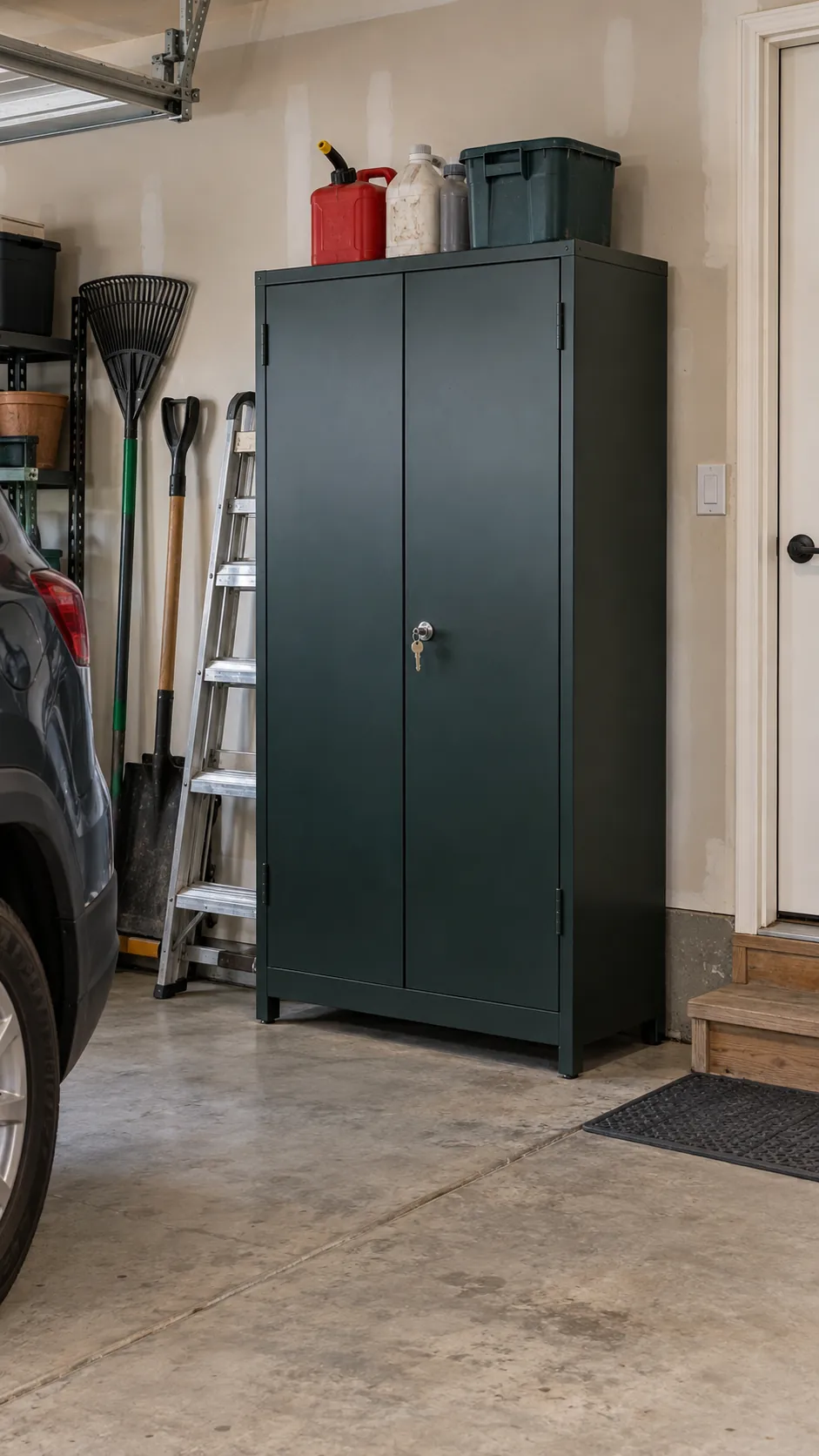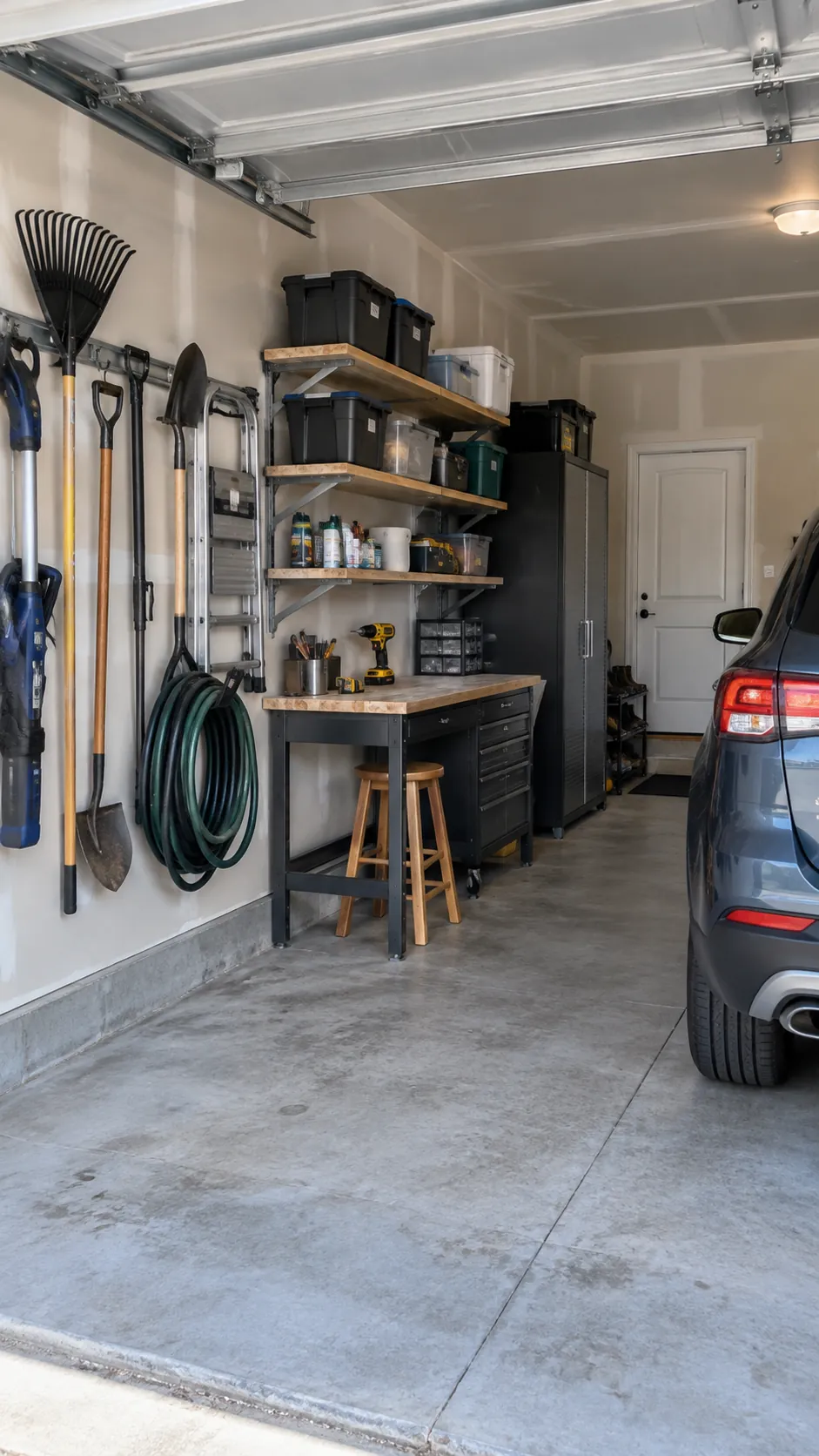
A garage fails as storage when every clear patch of floor becomes a temporary pile. Before installing a system, park the car, open its doors, and mark the routes you actually walk. Then assign wall, shelf, and ceiling space by weight, frequency of use, and the conditions each item can tolerate.
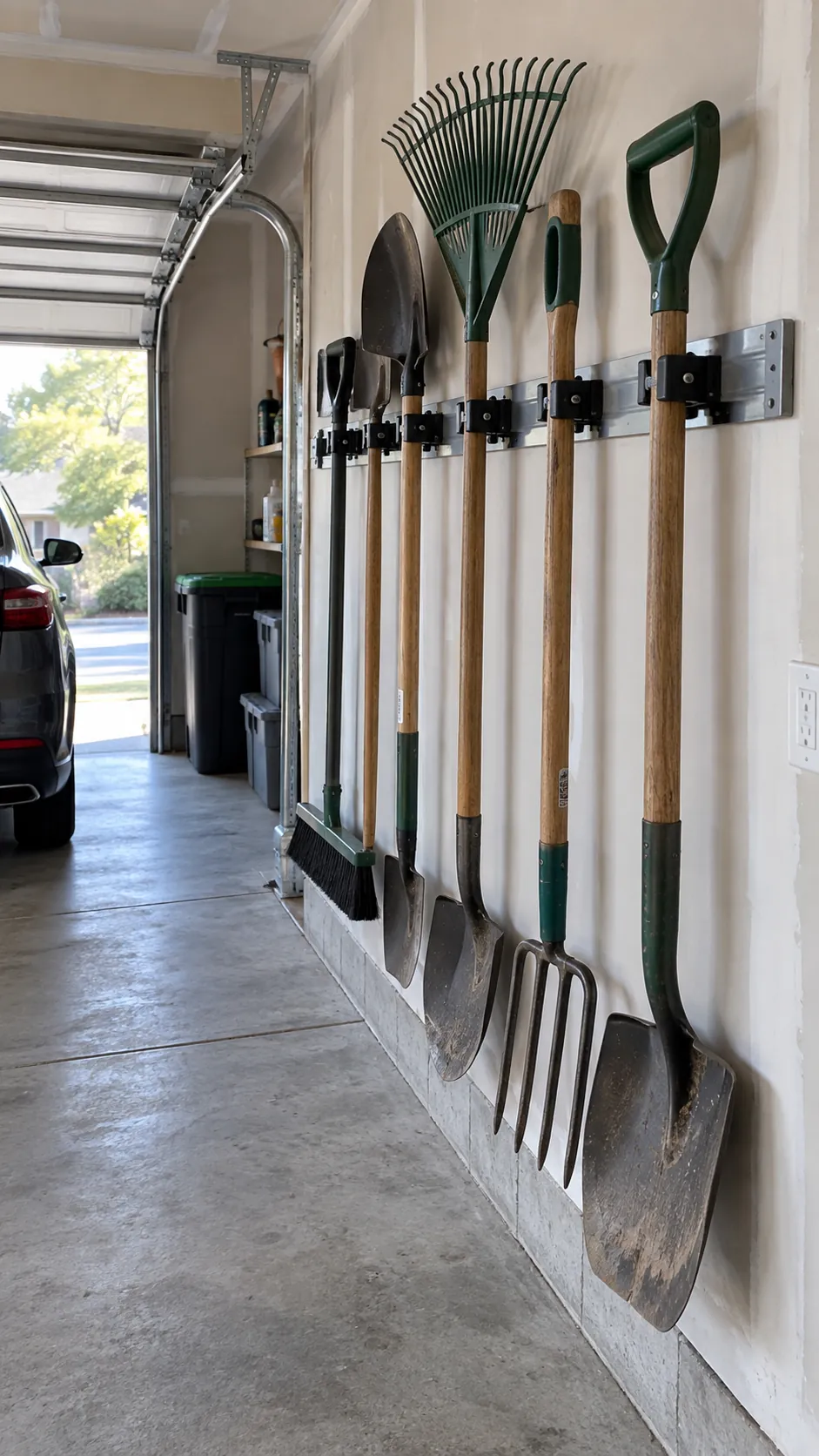
Wall Rail for Long Hand Tools
A wall rail can hold rakes and shovels where they are visible and easy to lift. Put the heaviest tools on hooks suited to their weight and anchor the rail to suitable structure. Keep pointed ends above the walking route rather than projecting toward a car door.
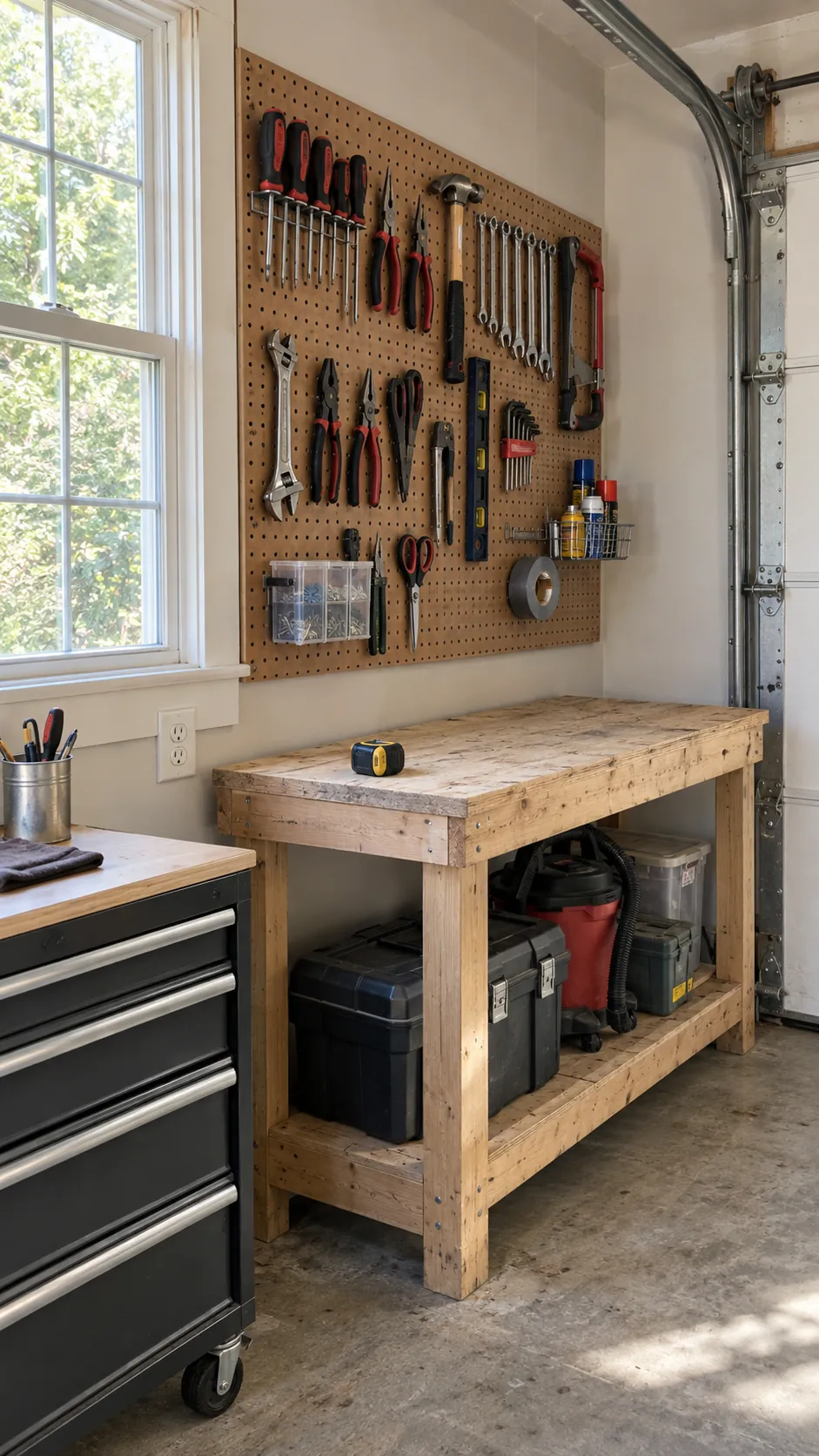
Pegboard Above a Compact Workbench
Pegboard turns the wall behind a bench into a map of often used hand tools. Arrange tools by task and leave open space for changes instead of filling every hole. Check the board and hook ratings before hanging heavy equipment.
French Cleat Tool Wall
A French cleat system lets holders move as tool needs change. Build each holder for its actual load and secure the wall rails properly. Keep heavier items low so removing them does not require reaching above shoulder height.
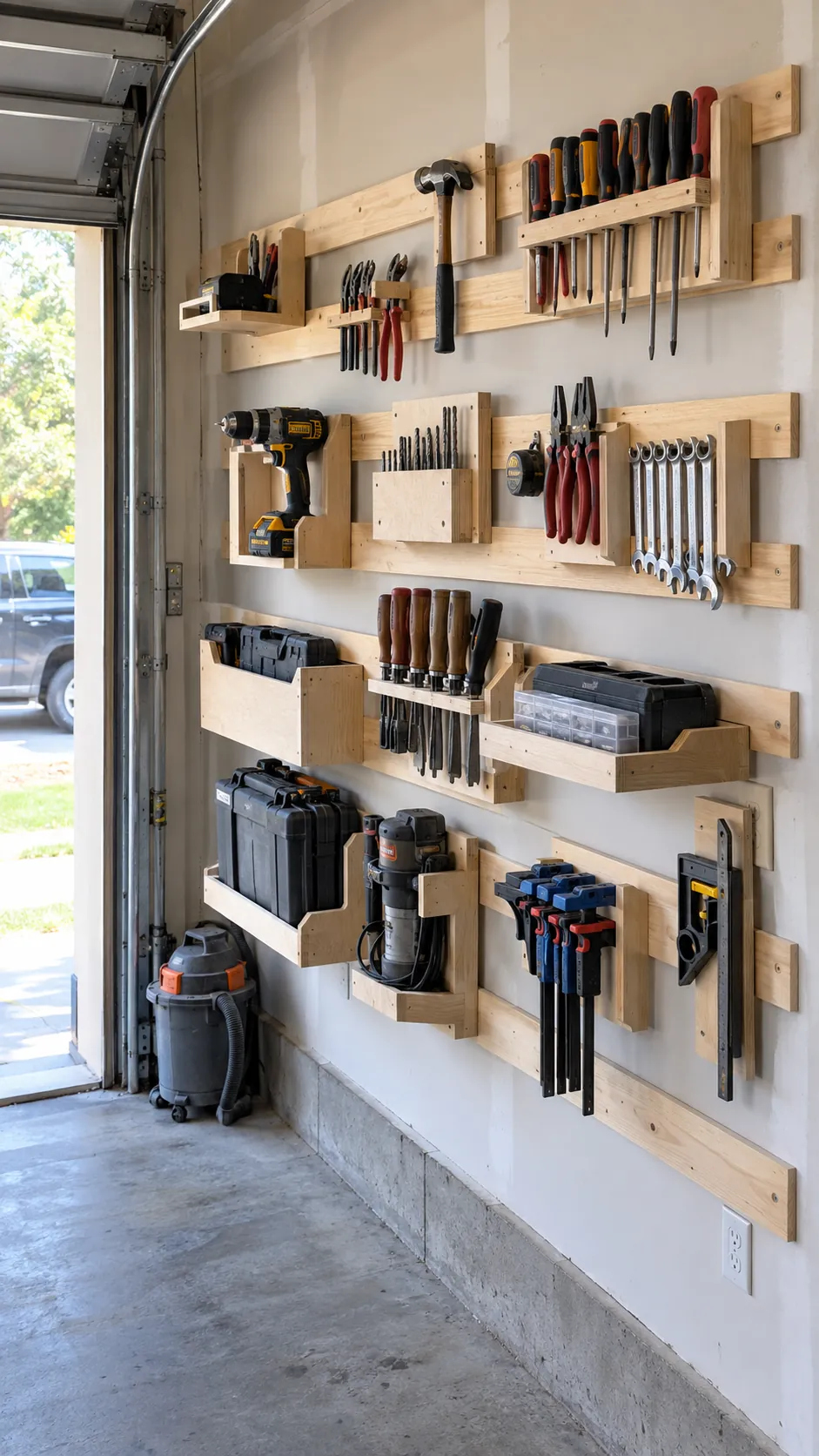
Closed Cabinets for Messy Supplies
Closed cabinets hide irregular cans and packages that make open shelves look chaotic. Sort products by type inside and keep incompatible materials separated according to their labels. Install cabinets where doors can open without hitting a parked vehicle.
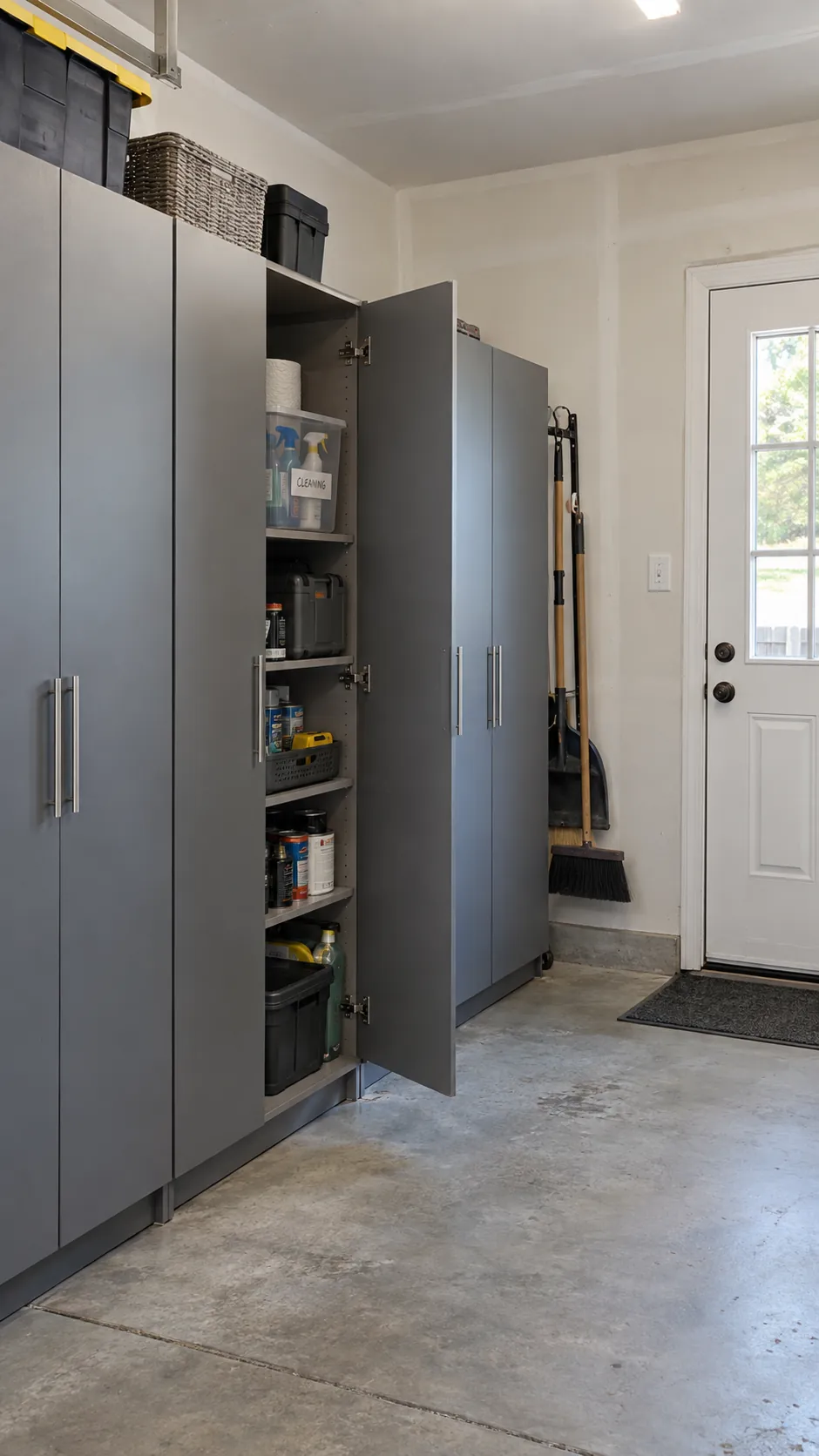
Heavy Duty Freestanding Shelves
A robust shelf unit suits bins and equipment that are too large for wall hooks. Put dense items on lower levels and follow the shelf maker’s load limits. Anchor tall units where appropriate so a pulled bin cannot make the whole rack unstable.
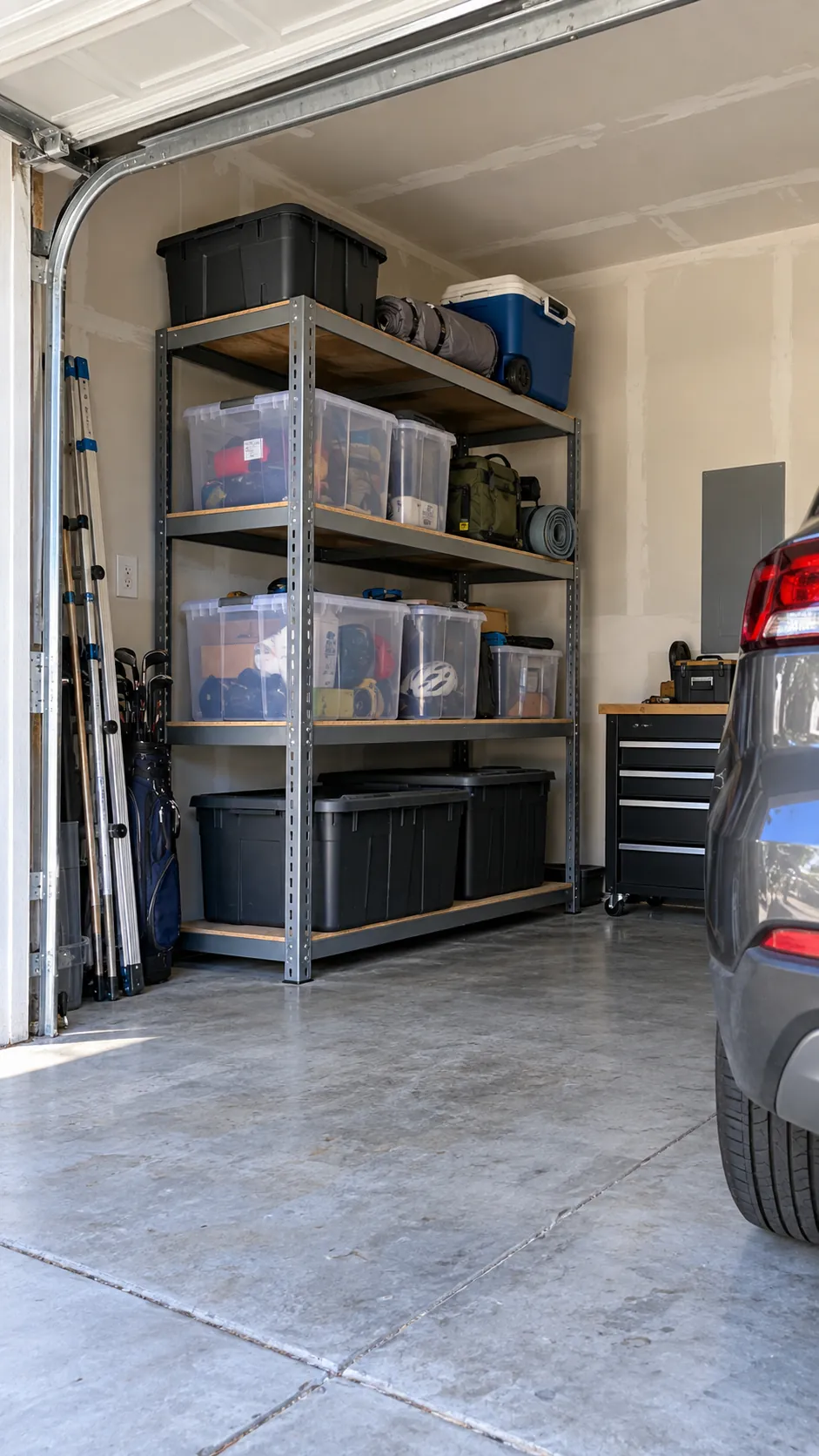
Clear Bins for Seasonal Gear
Transparent bins make holiday lights or camping supplies easier to identify. Add a simple label anyway, because contents may be hidden behind the first layer. Use lidded containers that protect the contents from dust and moisture in the actual garage climate.
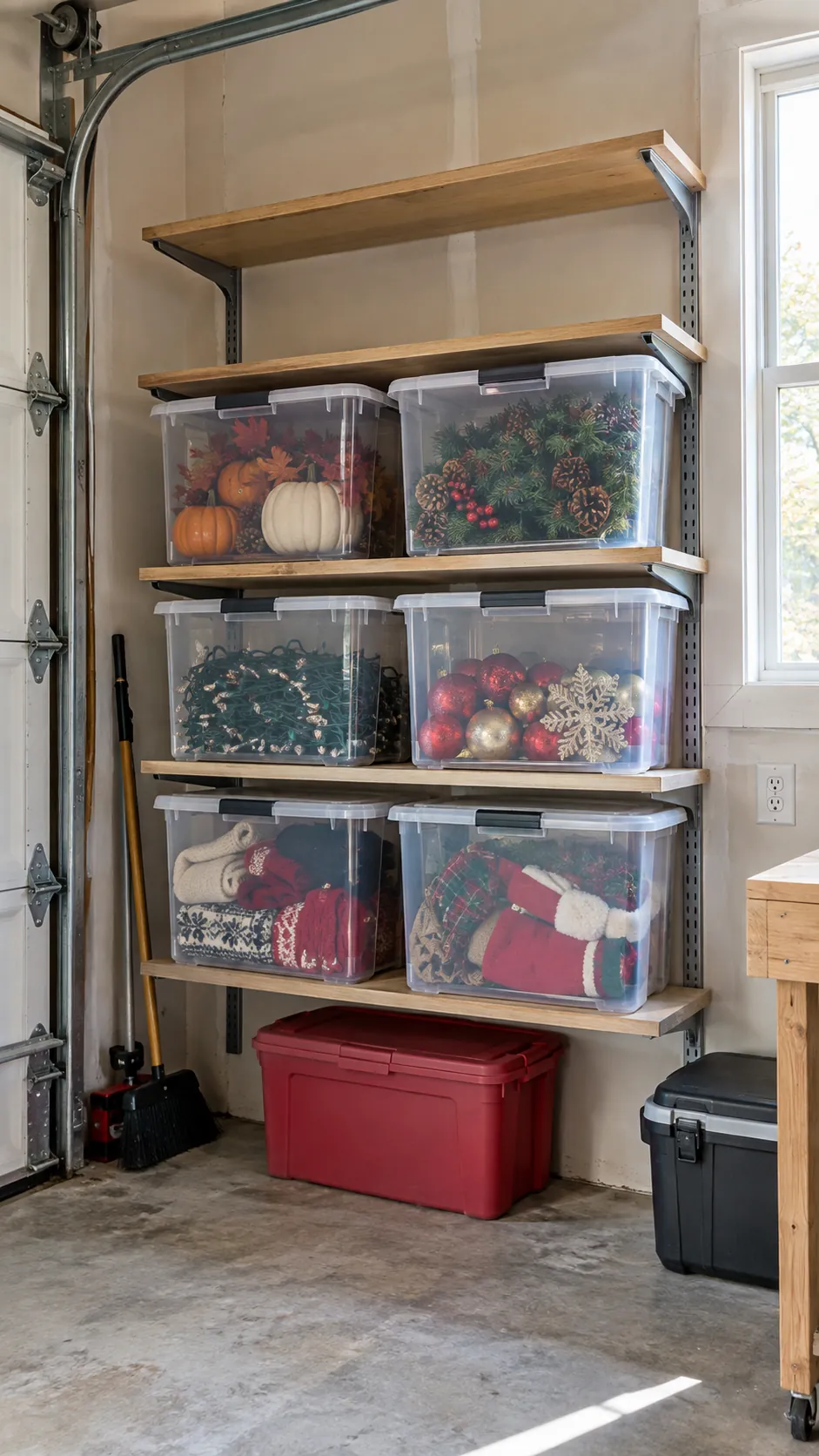
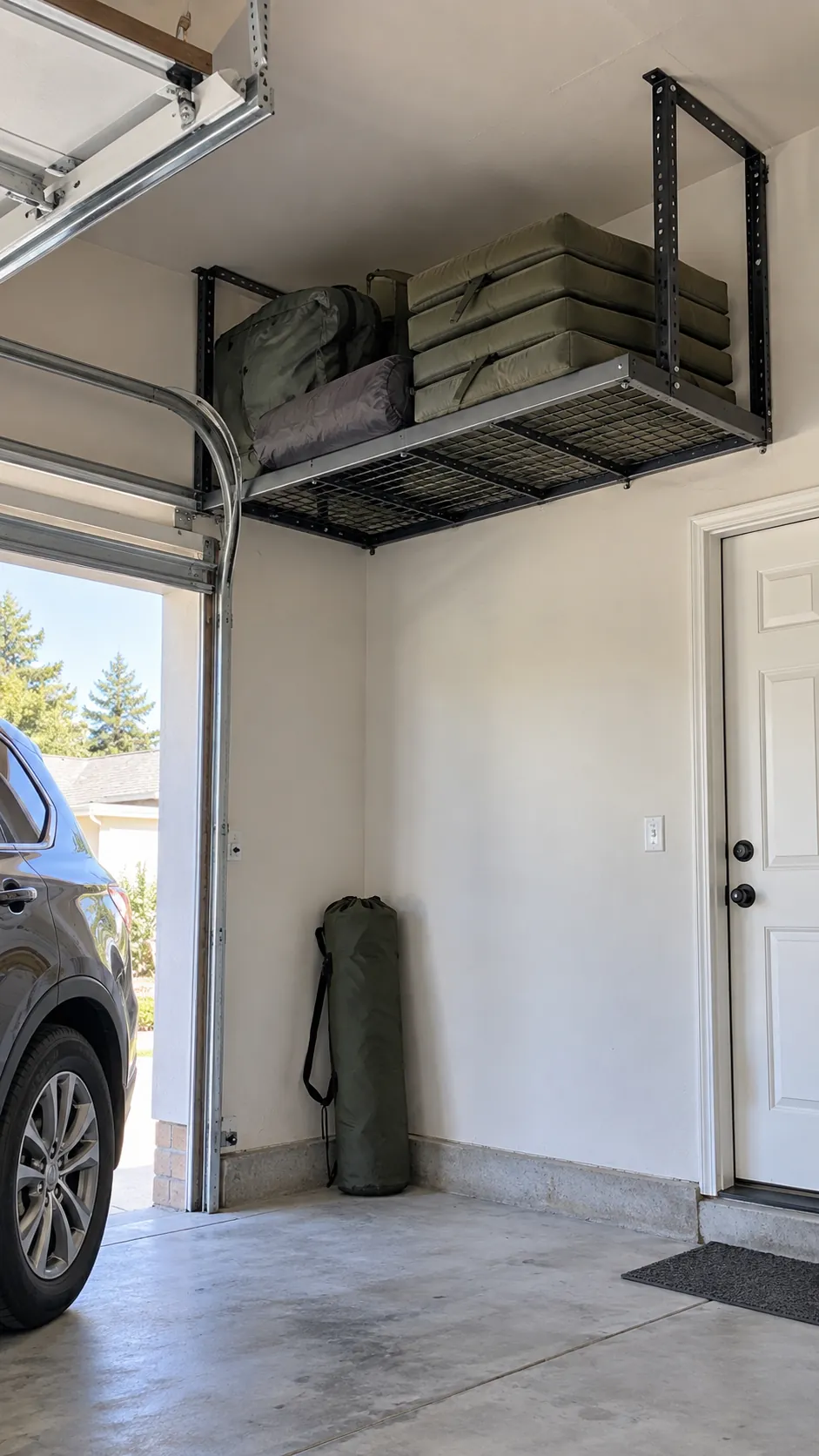
Overhead Rack for Light Bulky Items
An overhead rack can free floor area for a car or workbench. Reserve it for light bulky items and respect the rack, ceiling structure, and installer guidance. Check garage door travel and vehicle height before choosing a position.
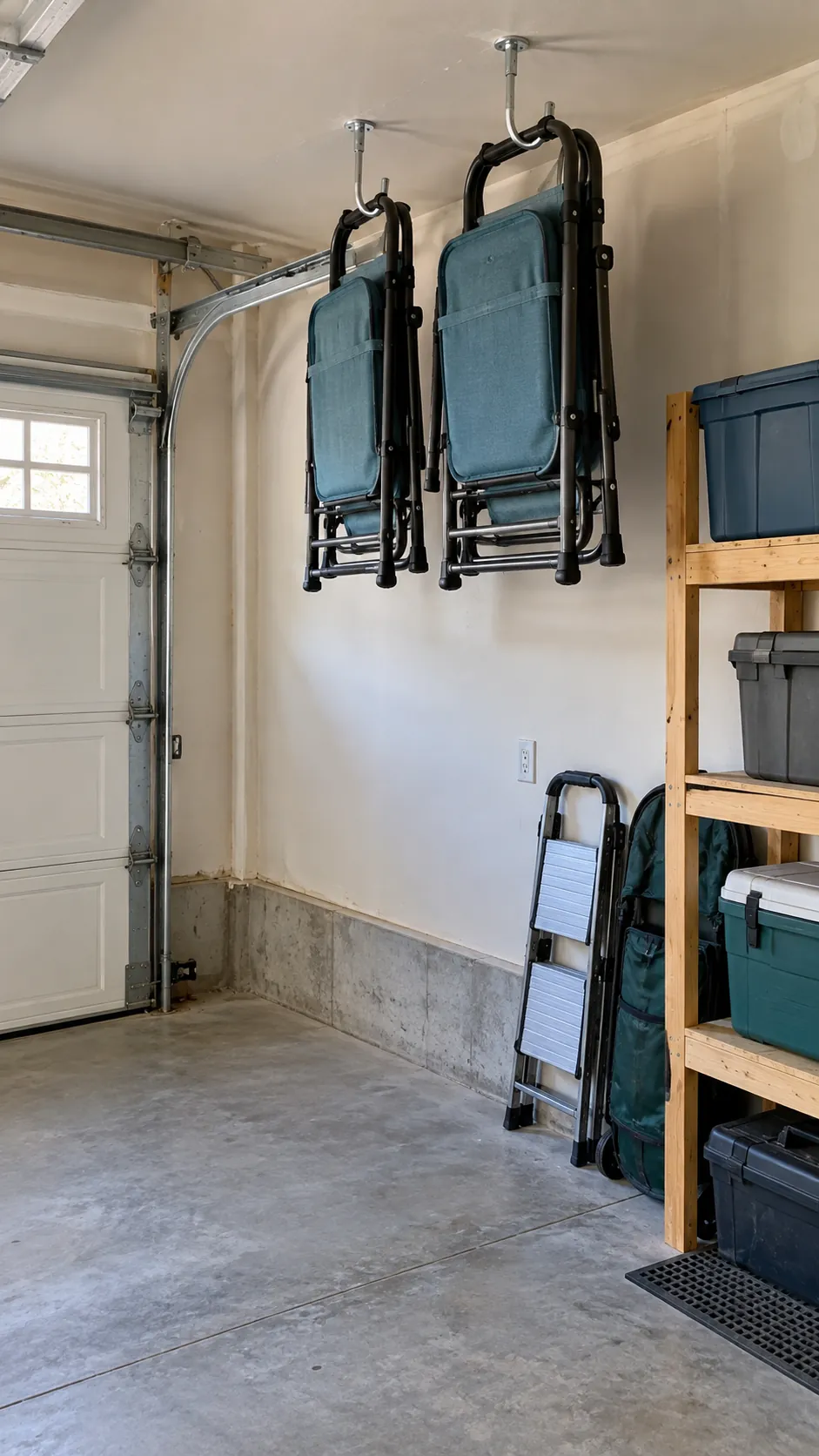
Ceiling Hooks for Folding Chairs
Pairs of suitable ceiling hooks can store folding chairs that otherwise lean against a wall. Verify the structure and load rating before installation. Put them outside the garage door mechanism and any path where a person must walk beneath them.
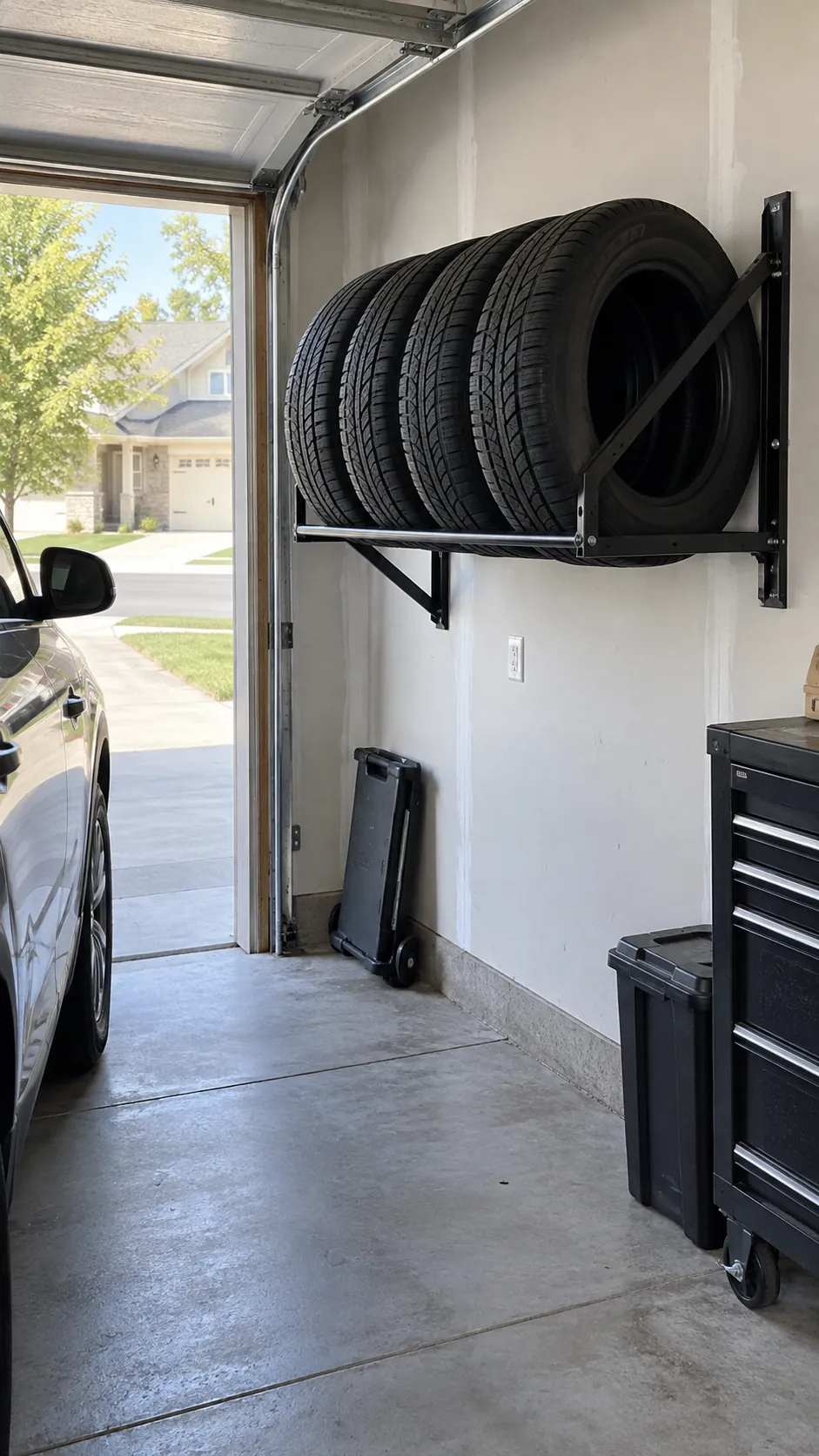
Tire Rack Along a Side Wall
A dedicated tire rack keeps spare tires from spreading across the floor. Choose a location that leaves room to open the vehicle doors. Follow the tire and rack makers’ storage guidance, including support and conditions, rather than balancing tires on improvised hooks.
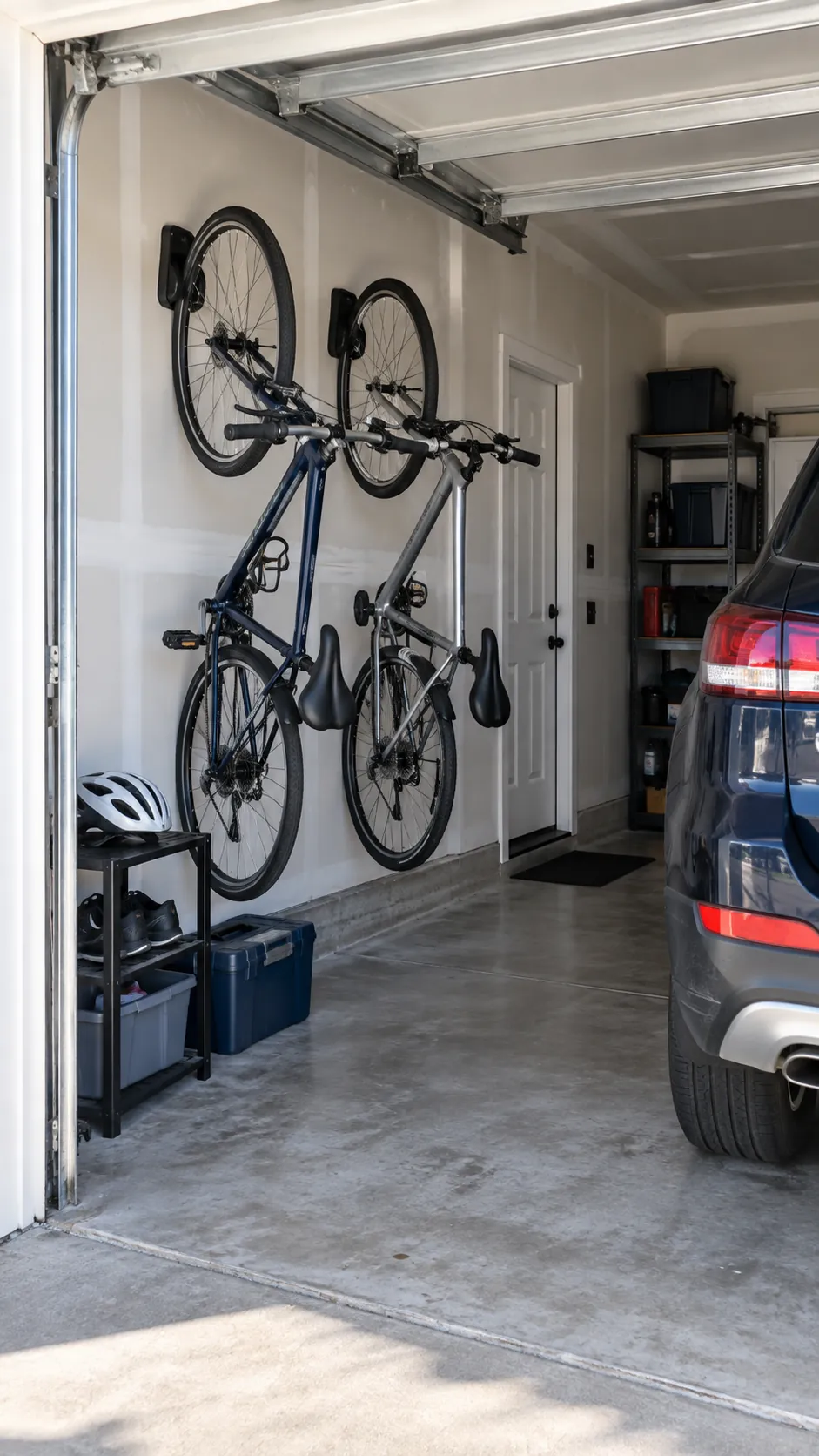
Vertical Bike Storage
Vertical bike mounts use wall height when floor space is scarce. Confirm that the wall, hook, and wheel are suitable for the bicycle’s weight and design. Leave enough space to lift and lower the bike without striking a vehicle or another bike.
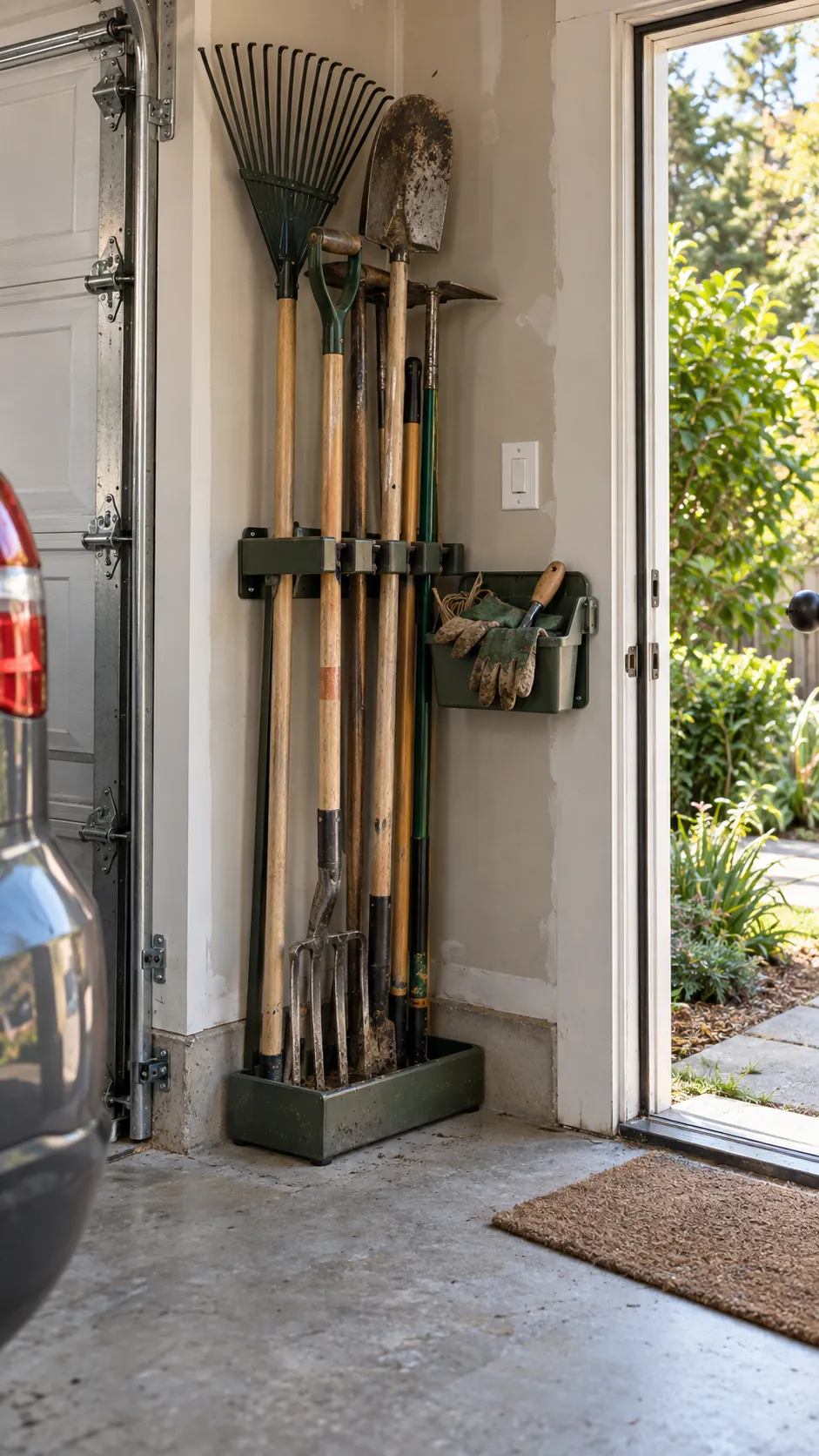
Garden Tool Corner
A narrow corner can become a garden tool zone with a rack for handled equipment. Keep small trowels and gloves in one nearby bin rather than scattering them among long tools. Let wet gear dry appropriately before enclosing it.
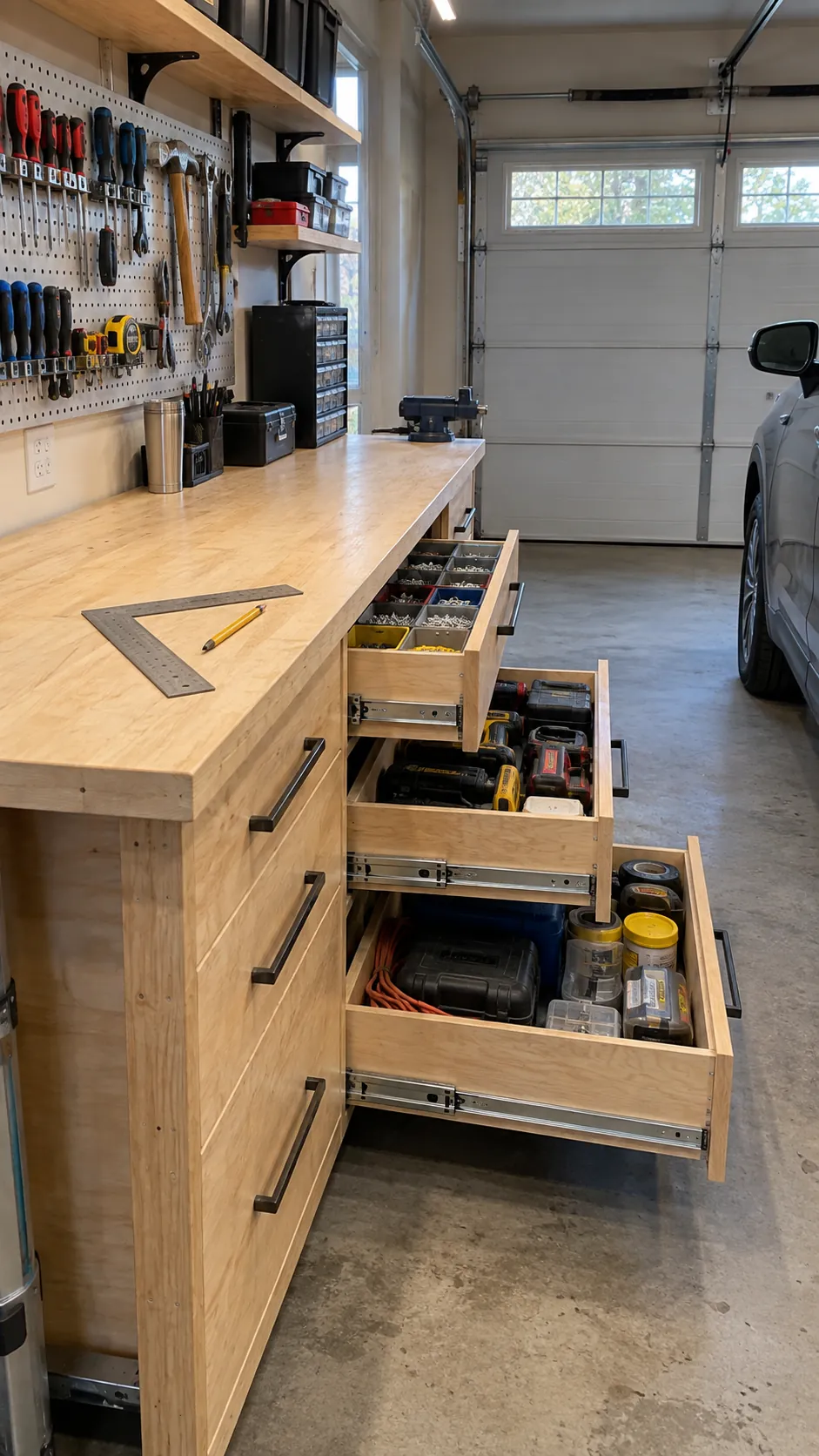
Workbench With Drawers Below
A workbench with drawers puts frequently used tools close to the work surface. Plan drawer depth around actual tools and keep the bench clear for projects. Test that drawers can open while a car is parked in its normal position.
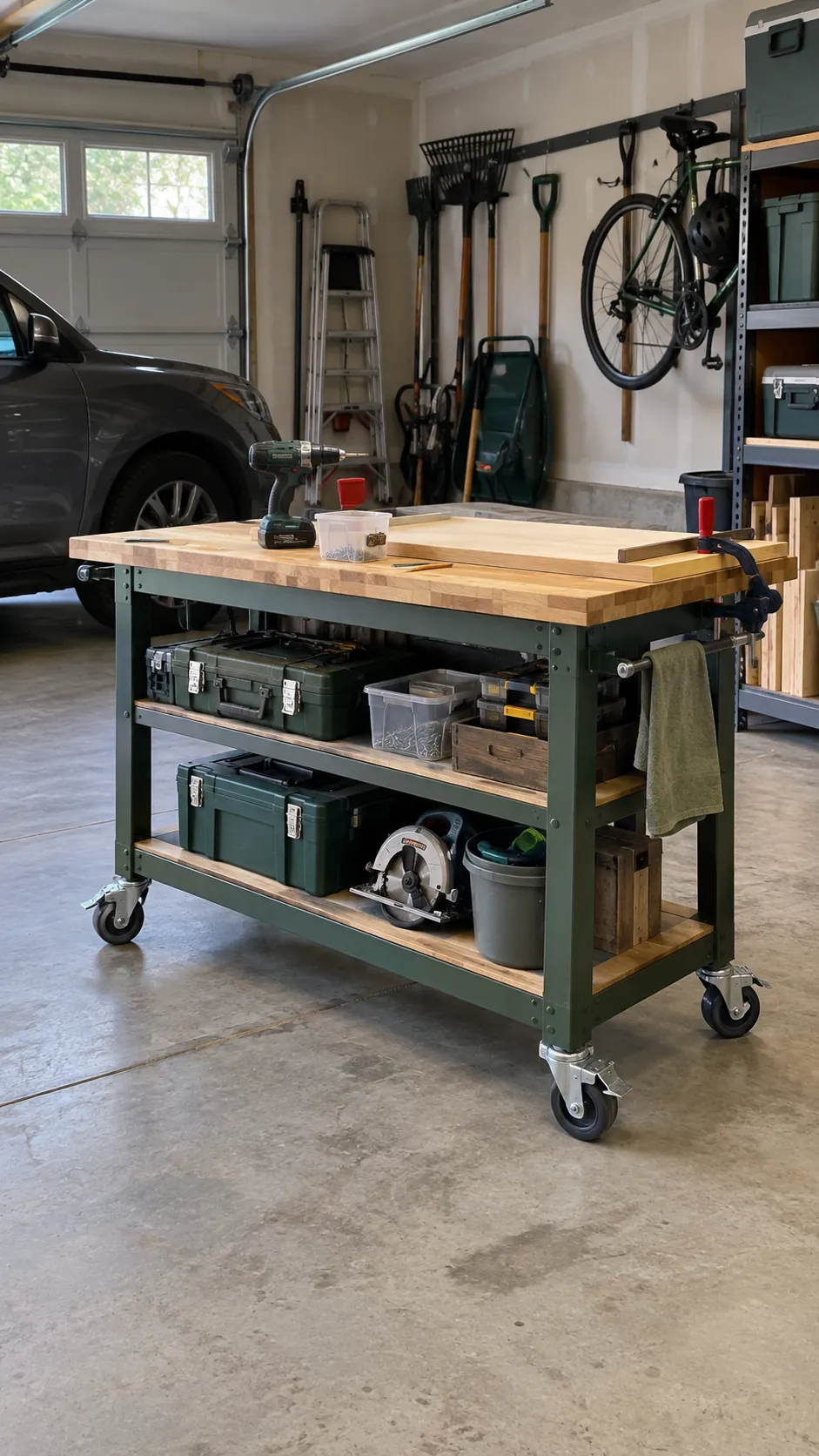
Mobile Workbench on Locking Casters
A mobile bench can shift into the center for a project and park against a wall afterward. Lock the casters before work and follow the bench’s load guidance. Store only what the bench can carry safely during movement.
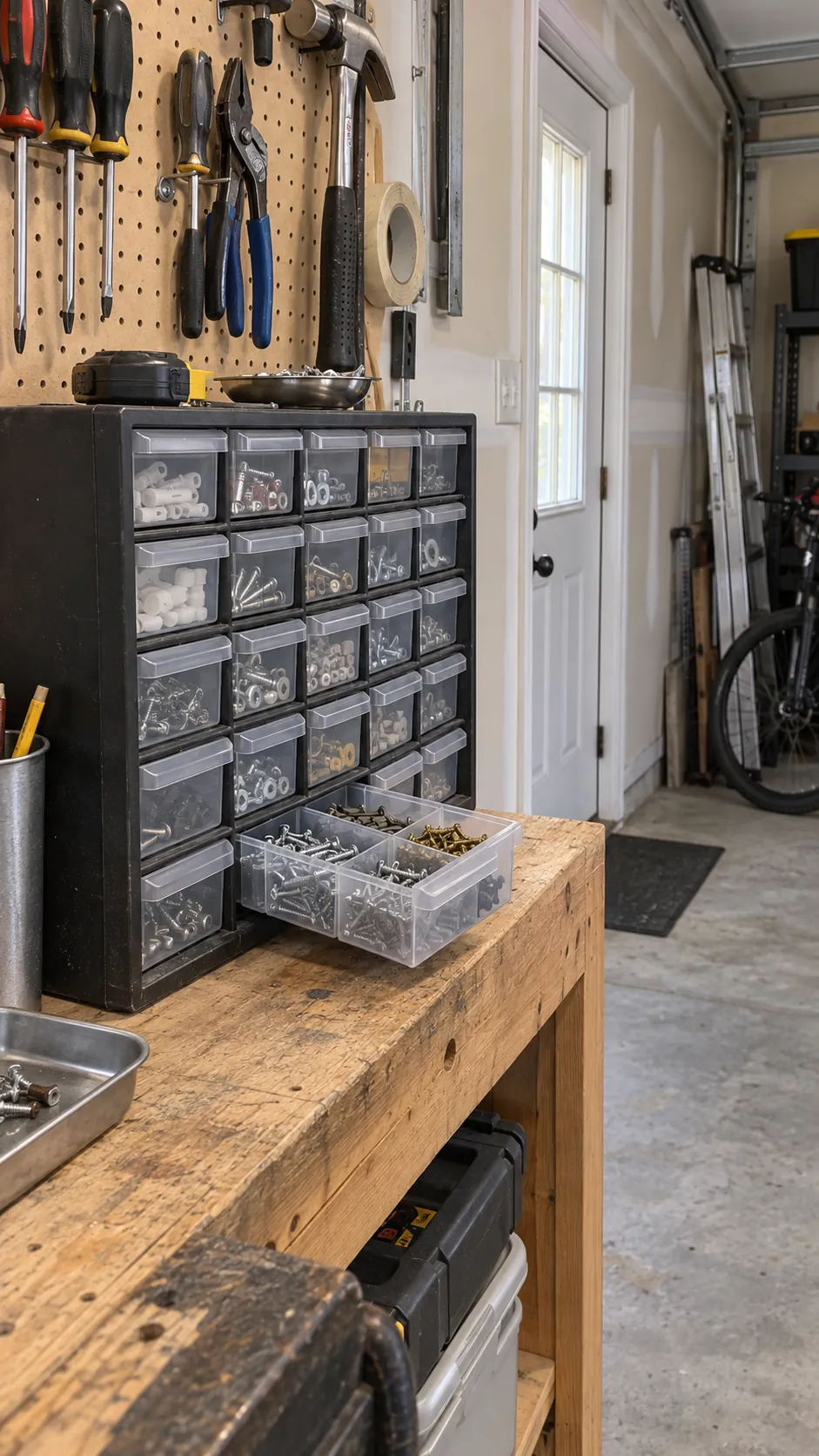
Small Parts Drawer Cabinet
A divided drawer cabinet prevents screws, anchors, and fittings from mixing. Label each drawer with a useful category rather than an item count that changes. Keep the cabinet near the bench but outside the area where dust or water routinely lands.
Open Bin for Sports Equipment
A broad open bin gives balls and protective gear an obvious return point. Choose one children can reach without pulling down a high shelf. Keep damp equipment ventilated before storing it to limit odors.
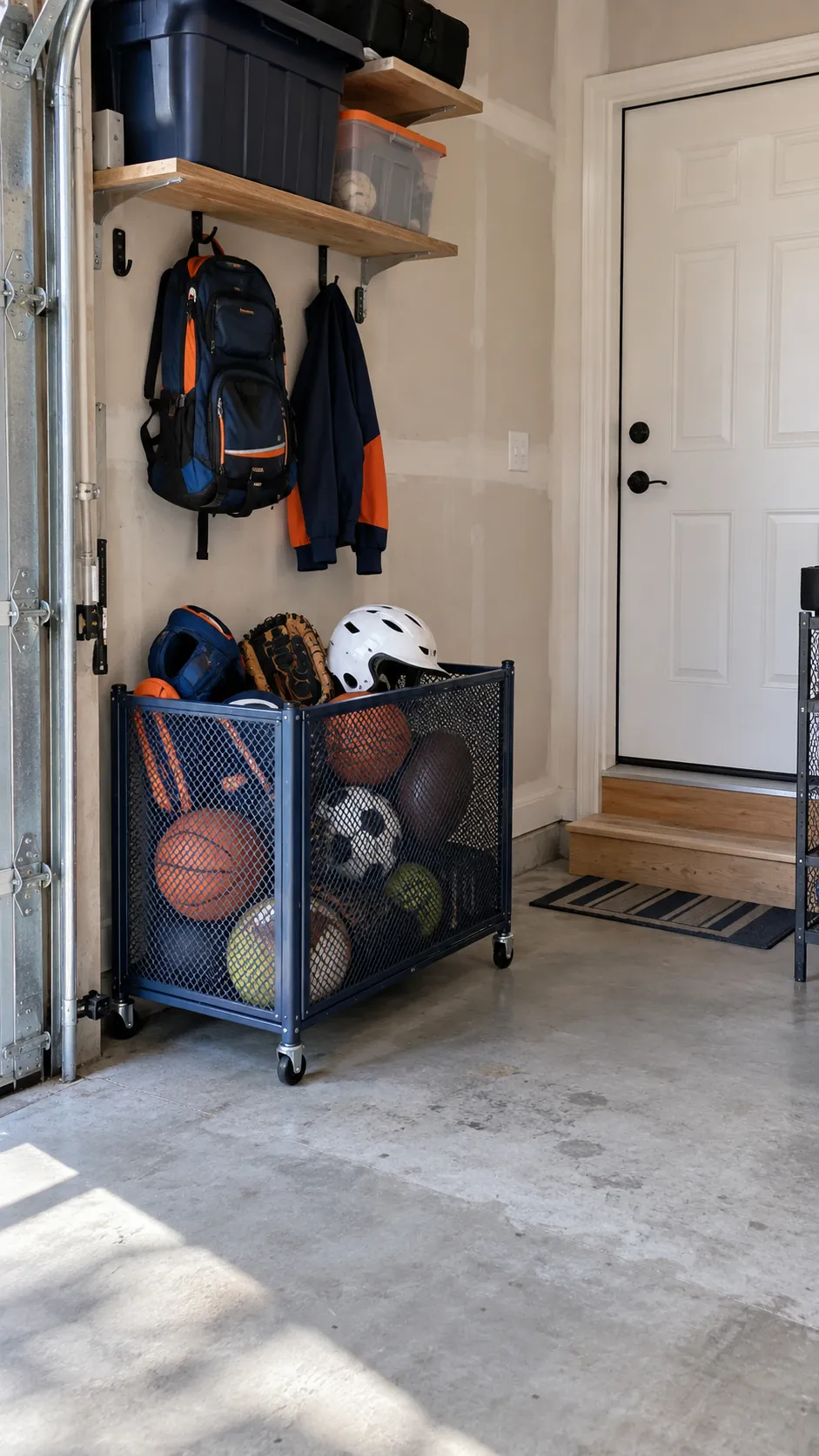
Shelves for Seasonal Rotation
Put current season supplies at comfortable reach and move occasional items higher. Reassess the arrangement when seasons change instead of adding more bins to the floor. Use clear labels so the upper shelf does not become forgotten storage.
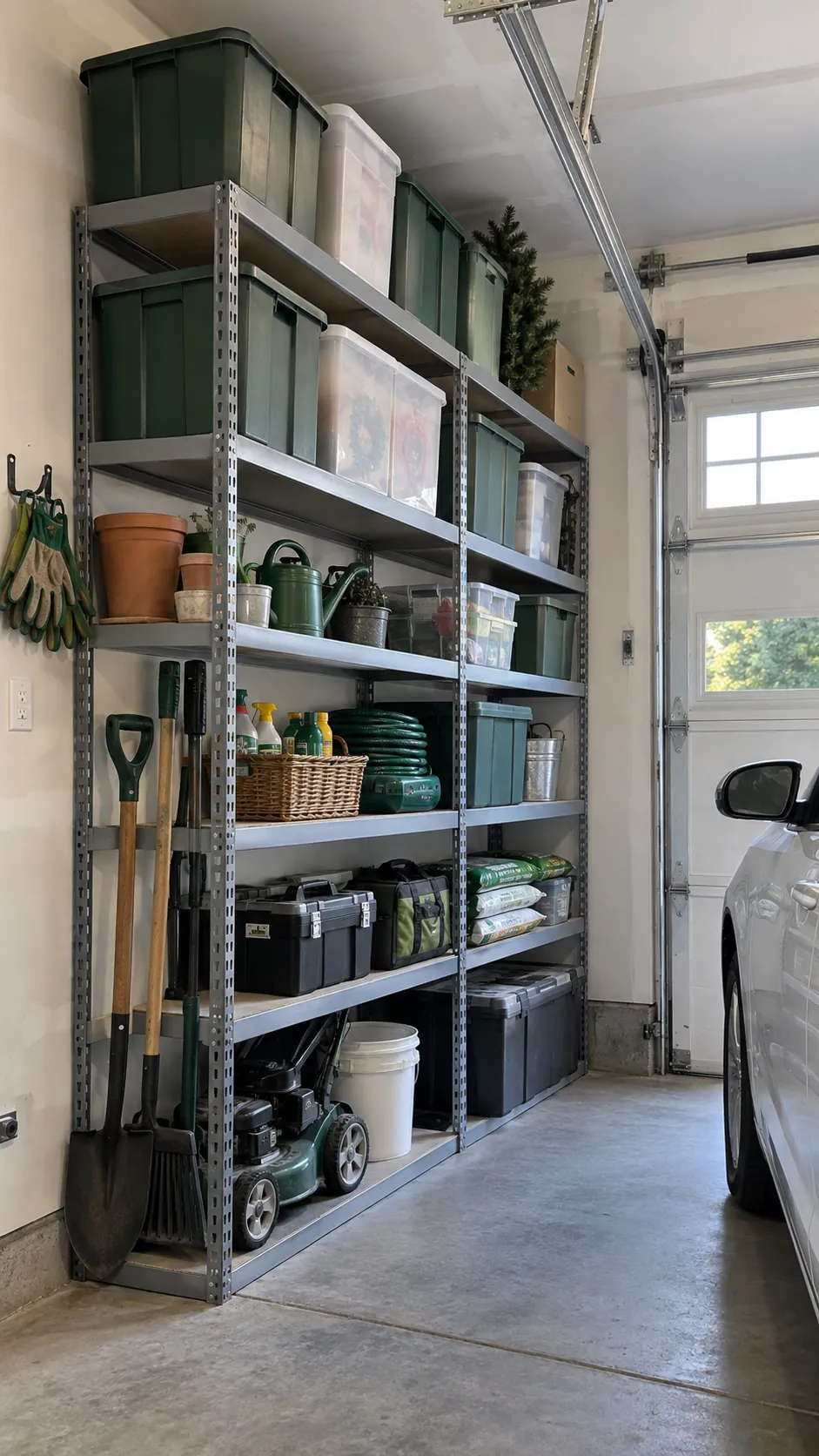
Wall Brackets for a Folding Ladder
Wall brackets can keep a folding ladder off the floor and out of the car’s path. Select brackets for its actual weight and fasten them into suitable structure. Place the ladder where it can be removed without crossing a narrow work area.
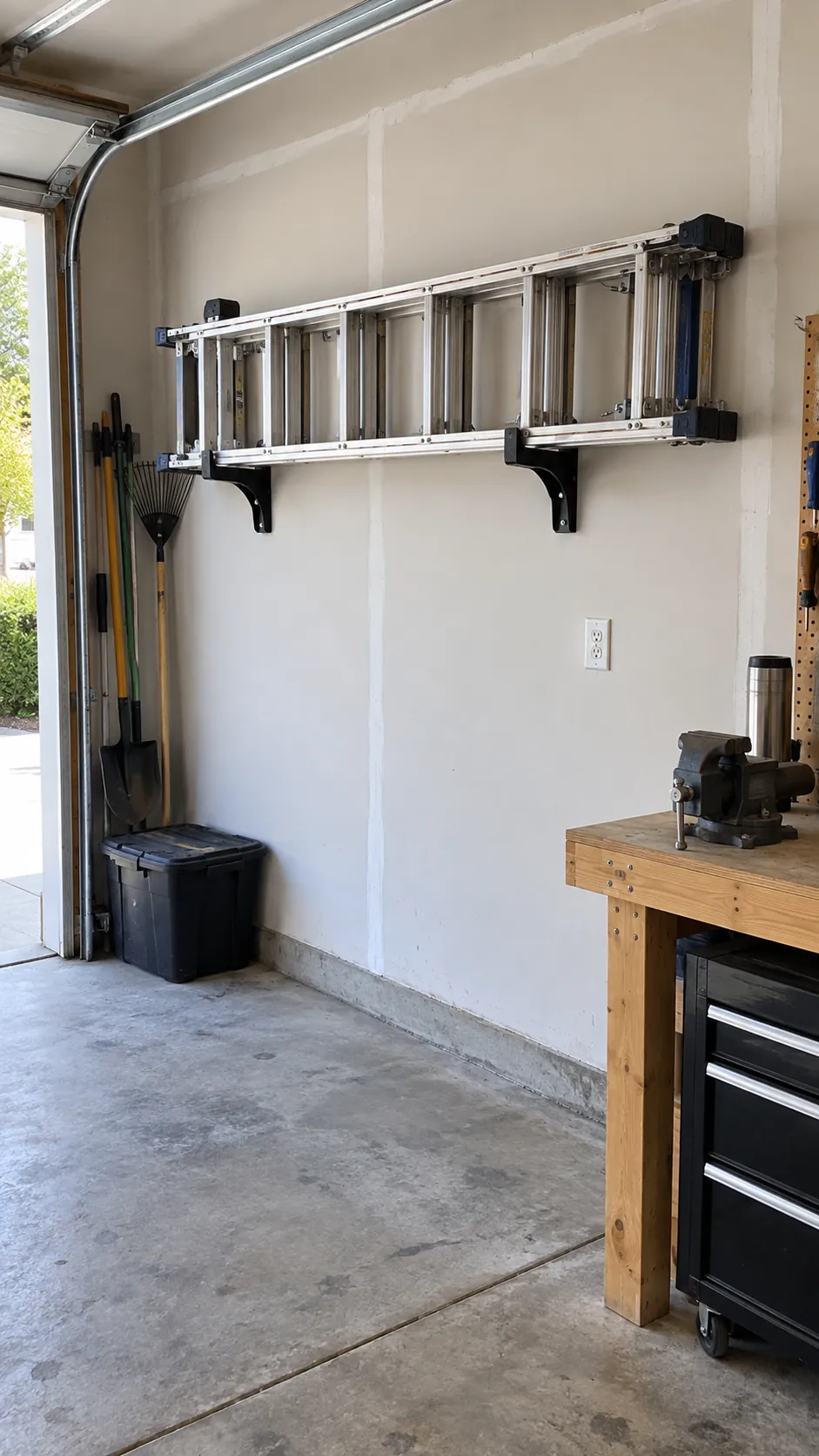
Horizontal Lumber Rack
A level lumber rack keeps long boards sorted by size and off damp concrete. Observe the rack’s load limits and support pieces along their length. Keep the lowest tier high enough to clean beneath it but not so high that heavy boards are awkward to lift.
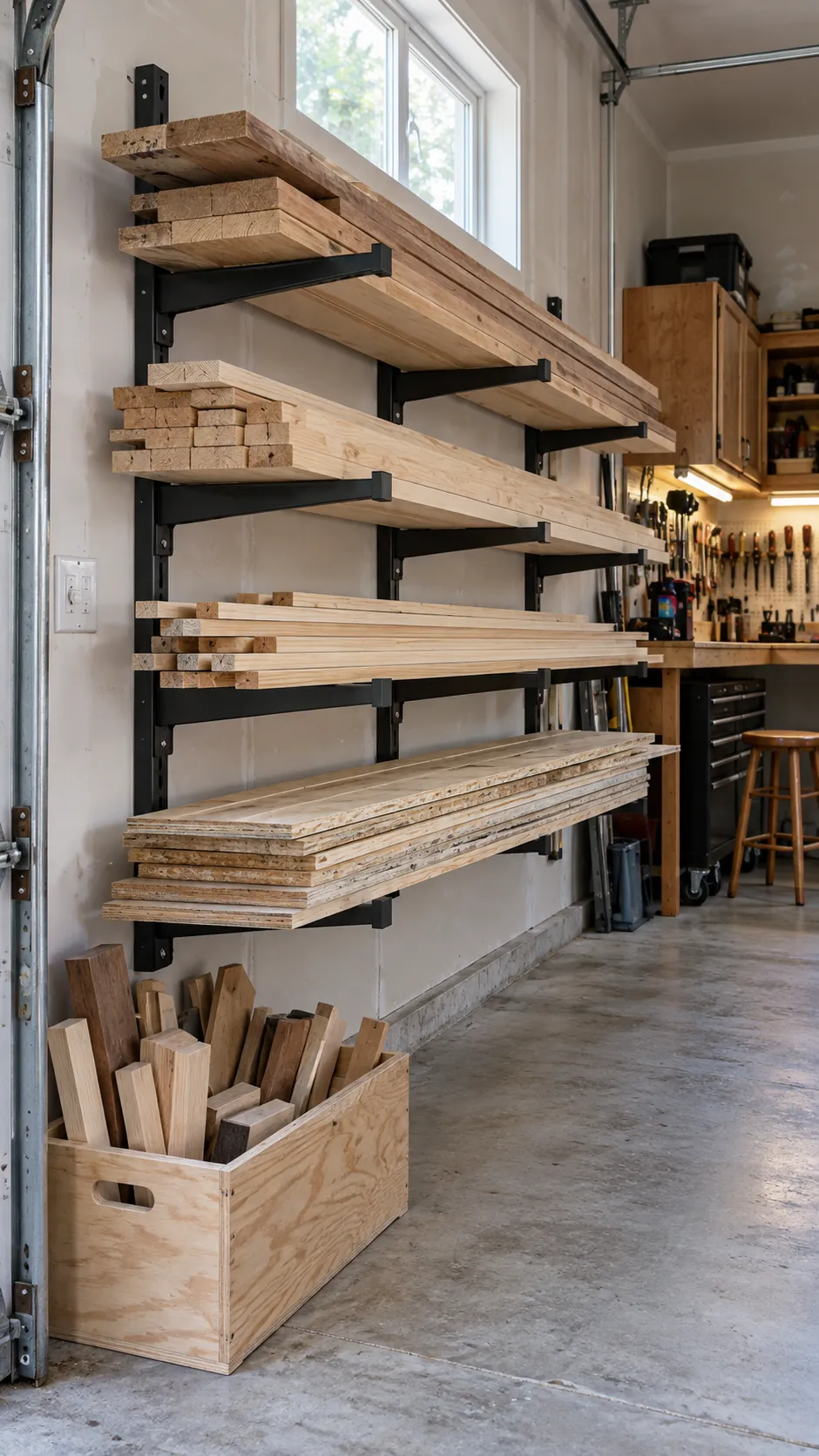
Cord and Hose Reels
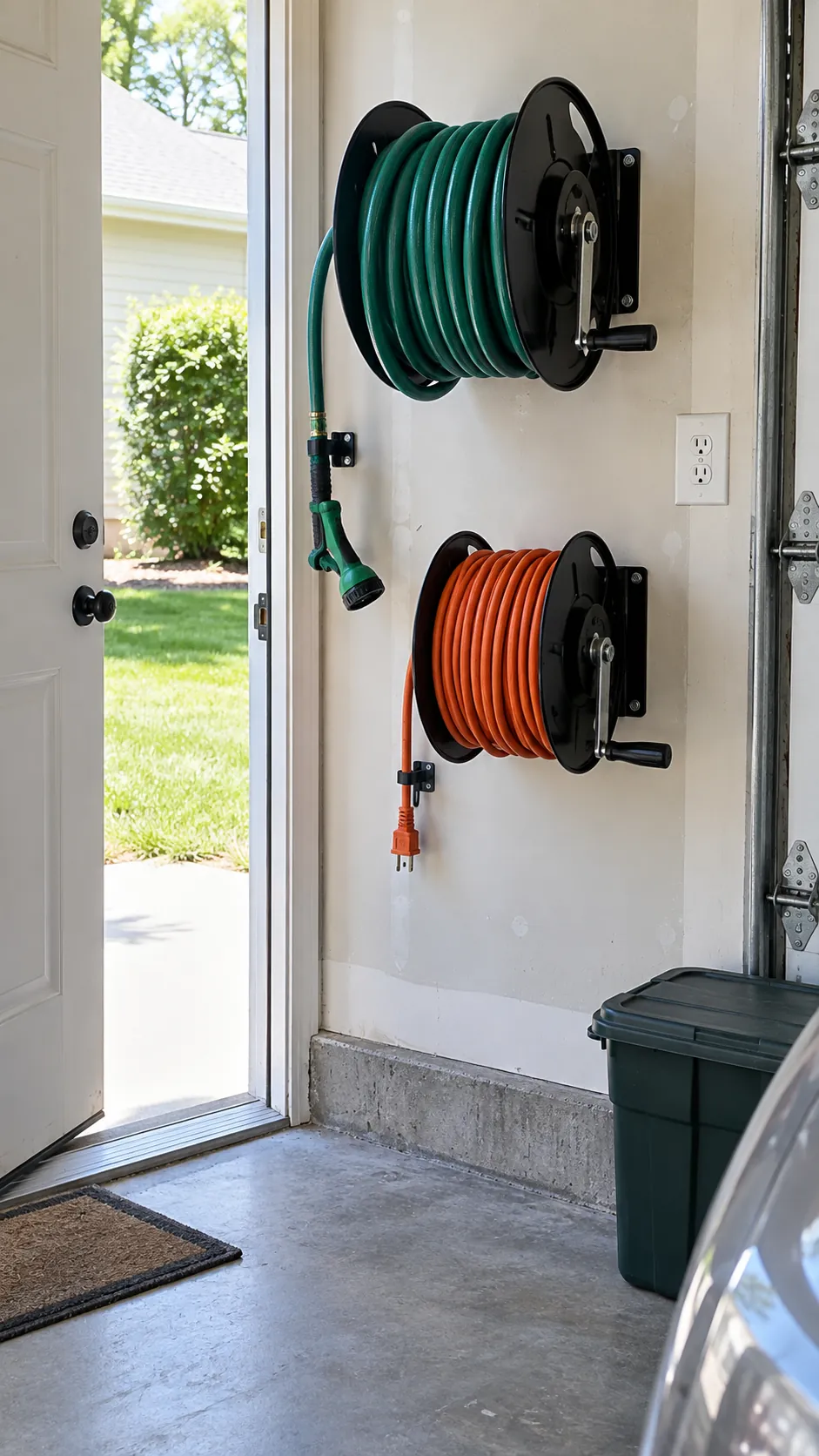
Reels stop extension cords and hoses from tangling underfoot. Mount them near where the items are used, while leaving required electrical clearances and door travel free. Wind cords loosely and follow the manufacturer’s use and storage instructions.
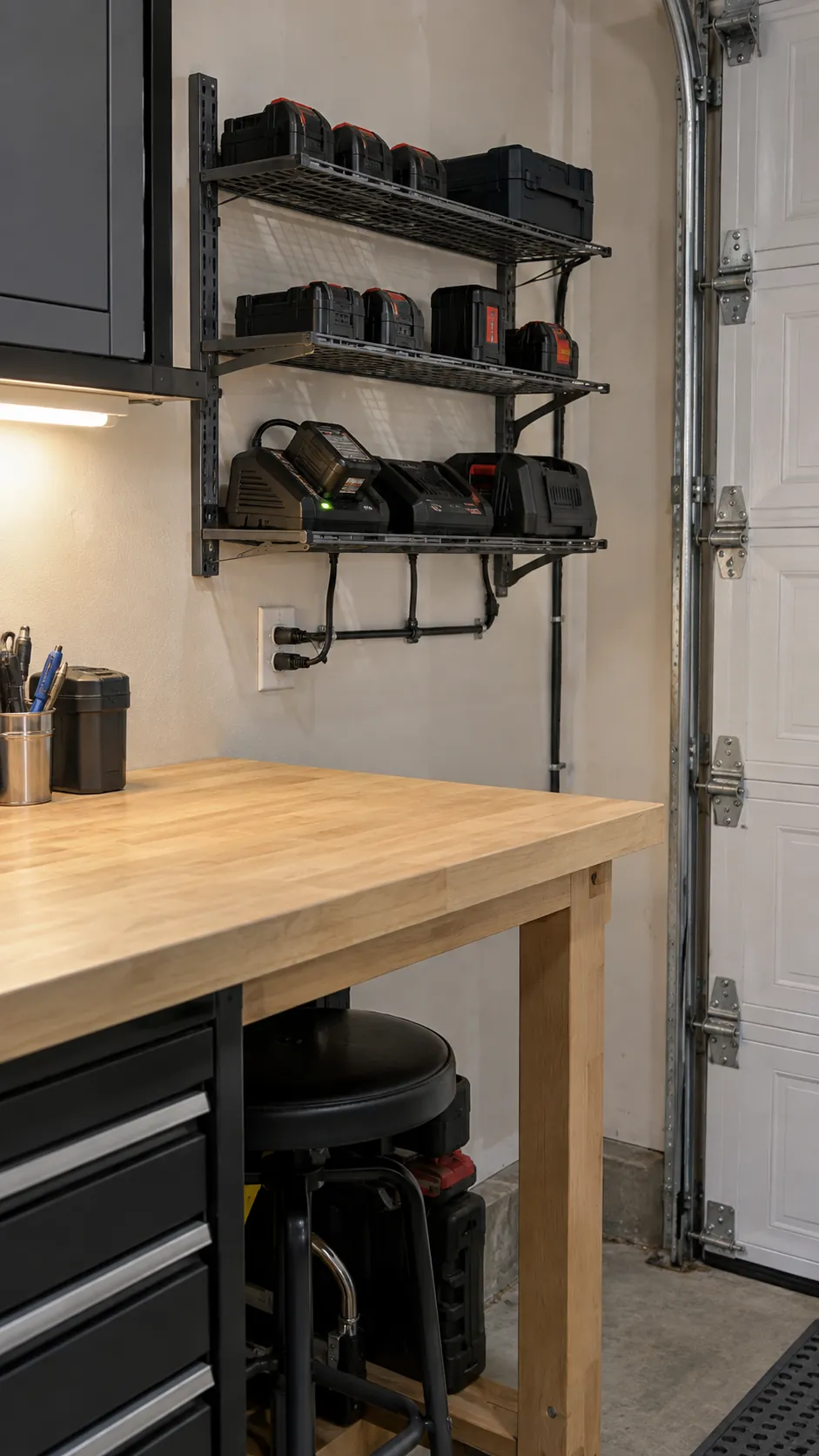
Charging Shelf for Battery Tools
A dedicated shelf can keep tool chargers in one predictable place. Follow each charger’s ventilation and temperature guidance and avoid burying it under other supplies. Route cords away from the work surface and walking line.
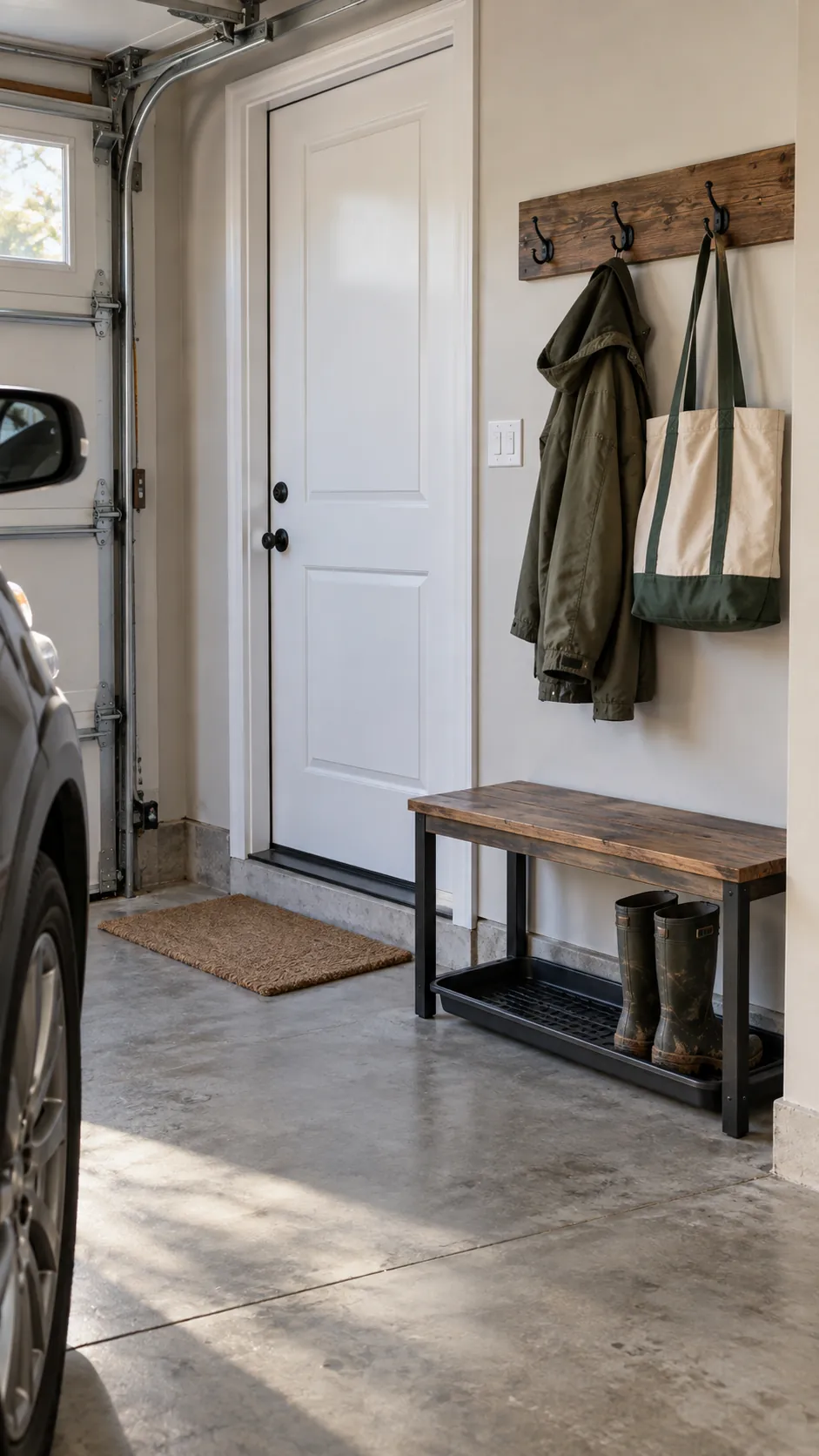
Garage Mudroom Drop Zone
A small bench, hooks, and boot tray near the house door can catch everyday gear before it reaches the kitchen. Give each household member a realistic amount of hook and shelf space. Keep the doorway and any required exit route unobstructed.
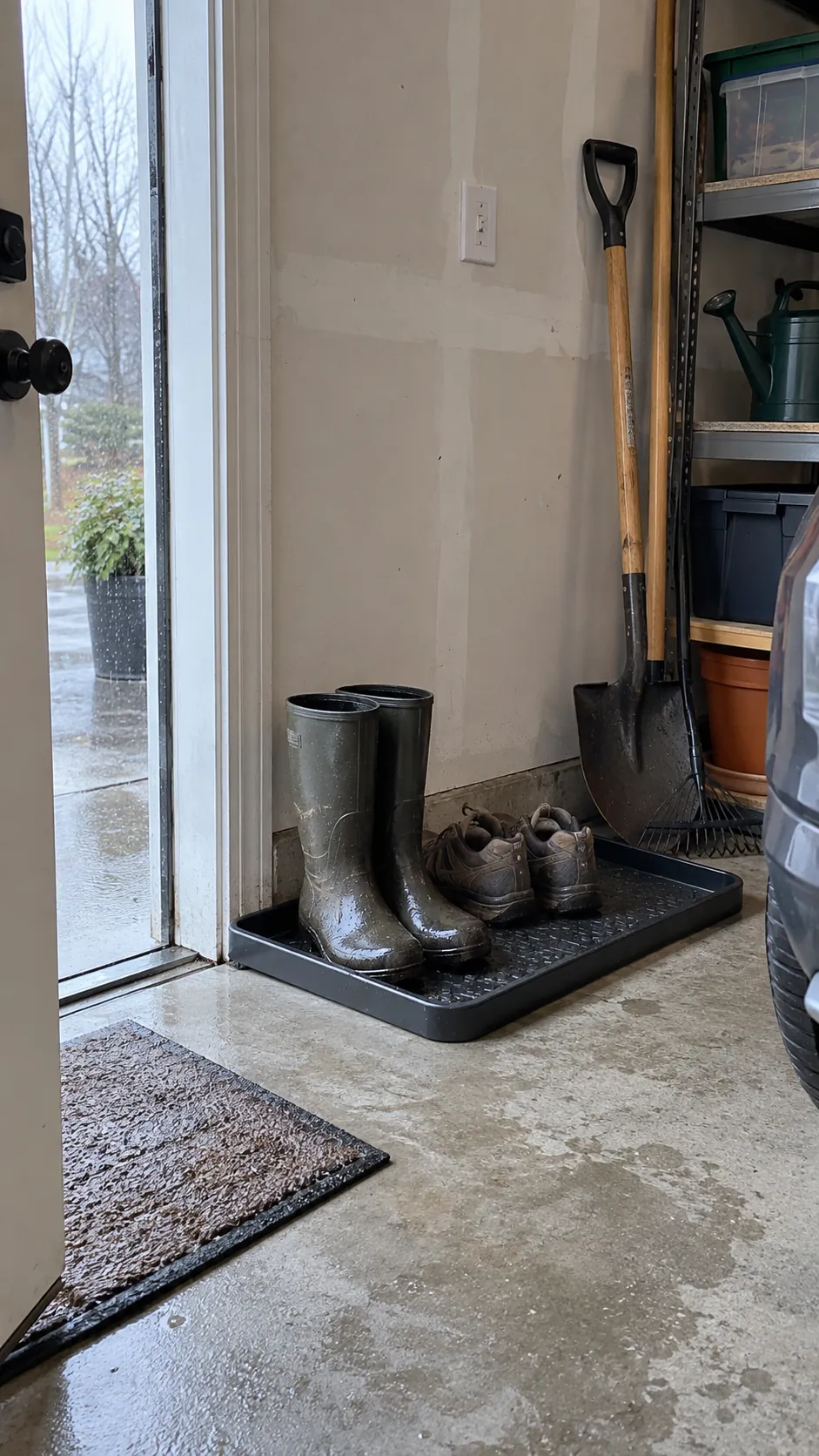
Boot Tray for Wet Footwear
A washable tray contains water and grit from shoes or garden boots. Put it where people naturally step inside, not behind stored equipment. Empty and dry it regularly so the floor beneath stays sound.
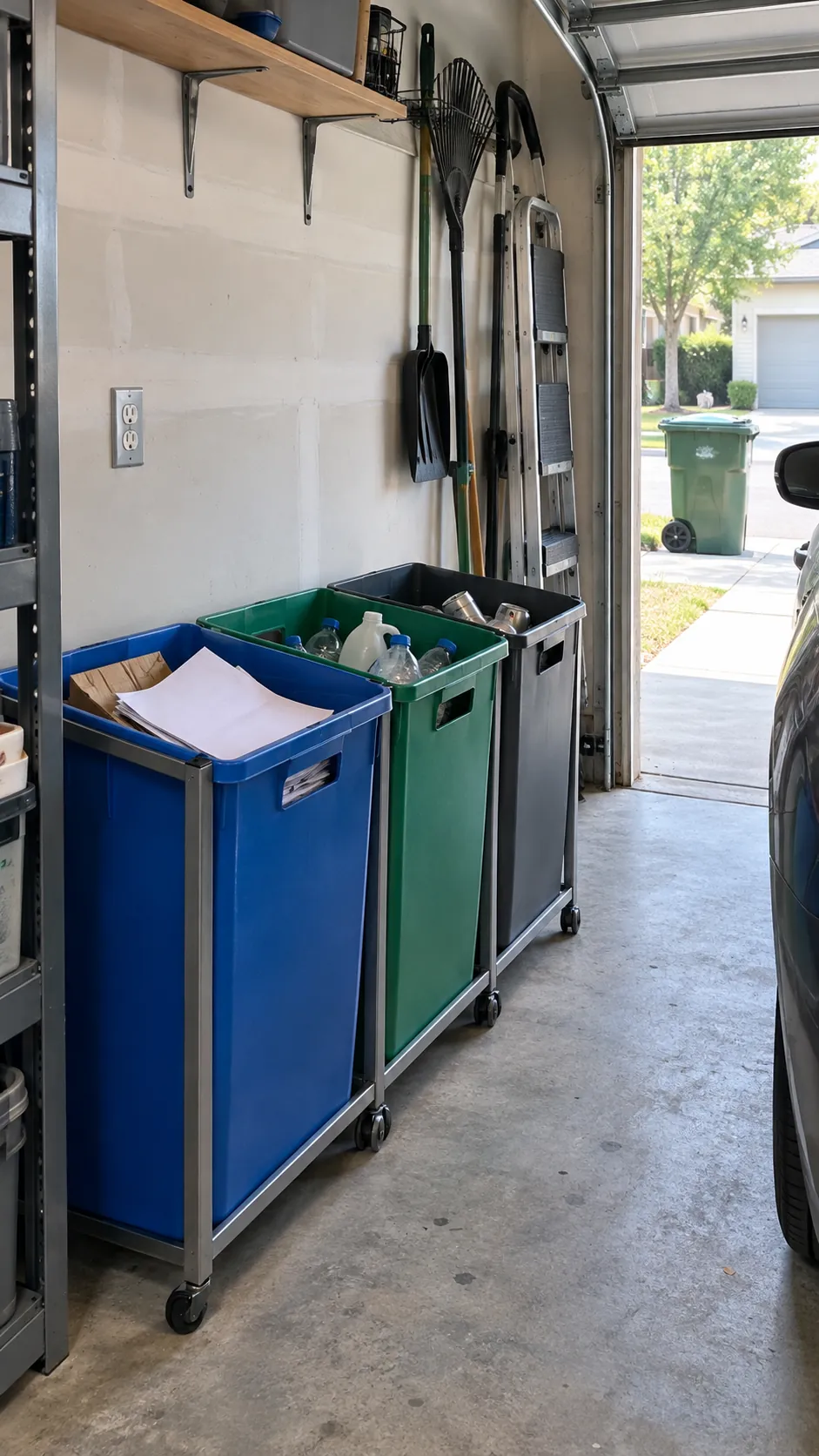
Recycling Sort Station
A compact set of clearly marked bins makes recycling easier to maintain. Choose containers that fit the local collection rules and leave space to remove each bin. Keep the station away from the vehicle door swing.
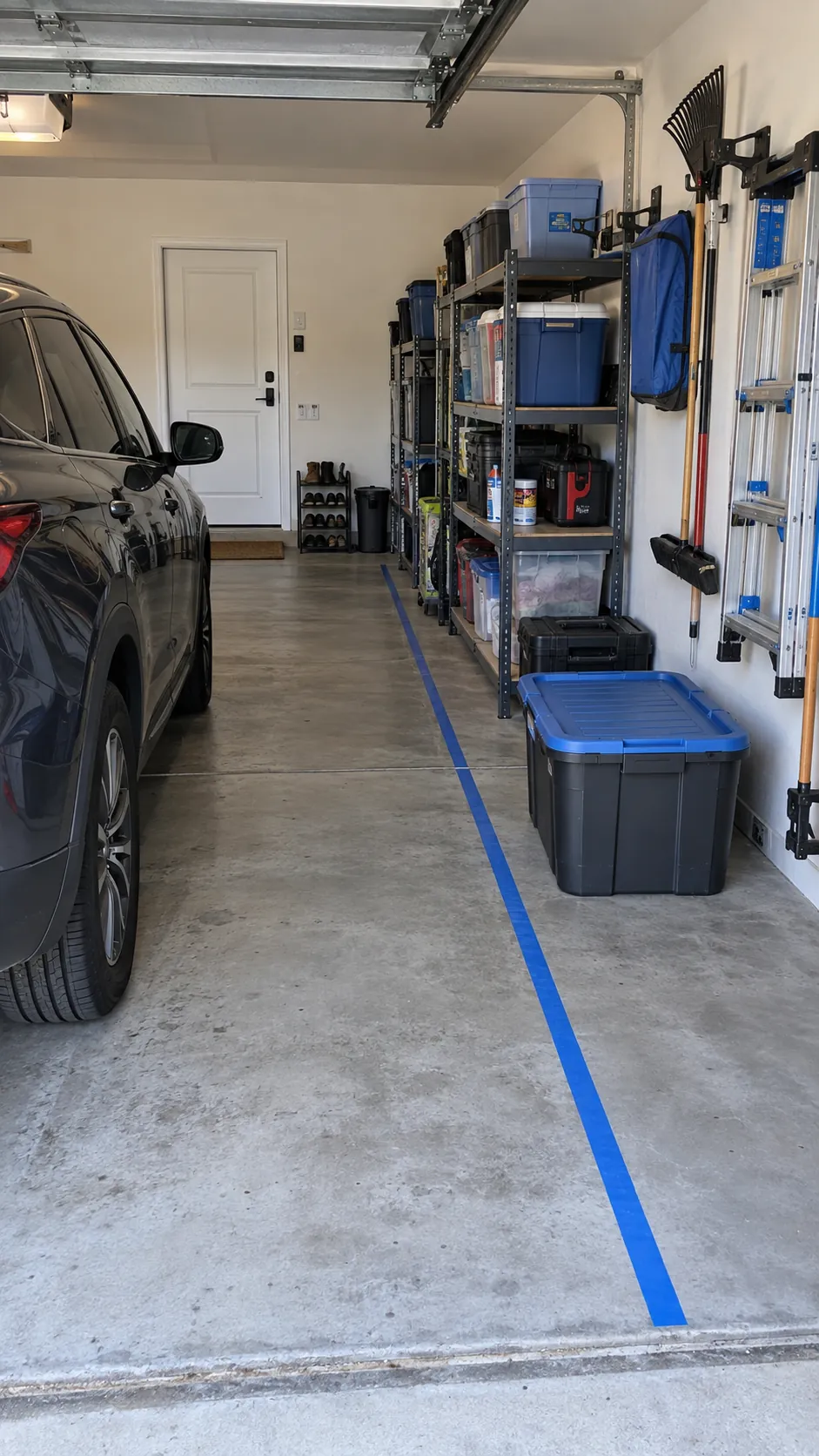
Floor Tape for Parking and Storage Zones
A visible floor boundary can separate parking clearance from the storage wall. Test the layout with the car fully parked and every passenger door open before marking it. Use the line as a cue to return loose items to their assigned shelves.
Lockable Cabinet for Hazardous Products
A lockable cabinet can keep chemicals and sharp items away from children and pets. Follow product labels for storage temperature, ventilation, and separation rather than assuming one cabinet suits everything. Place it where it remains accessible to adults without blocking an exit.