
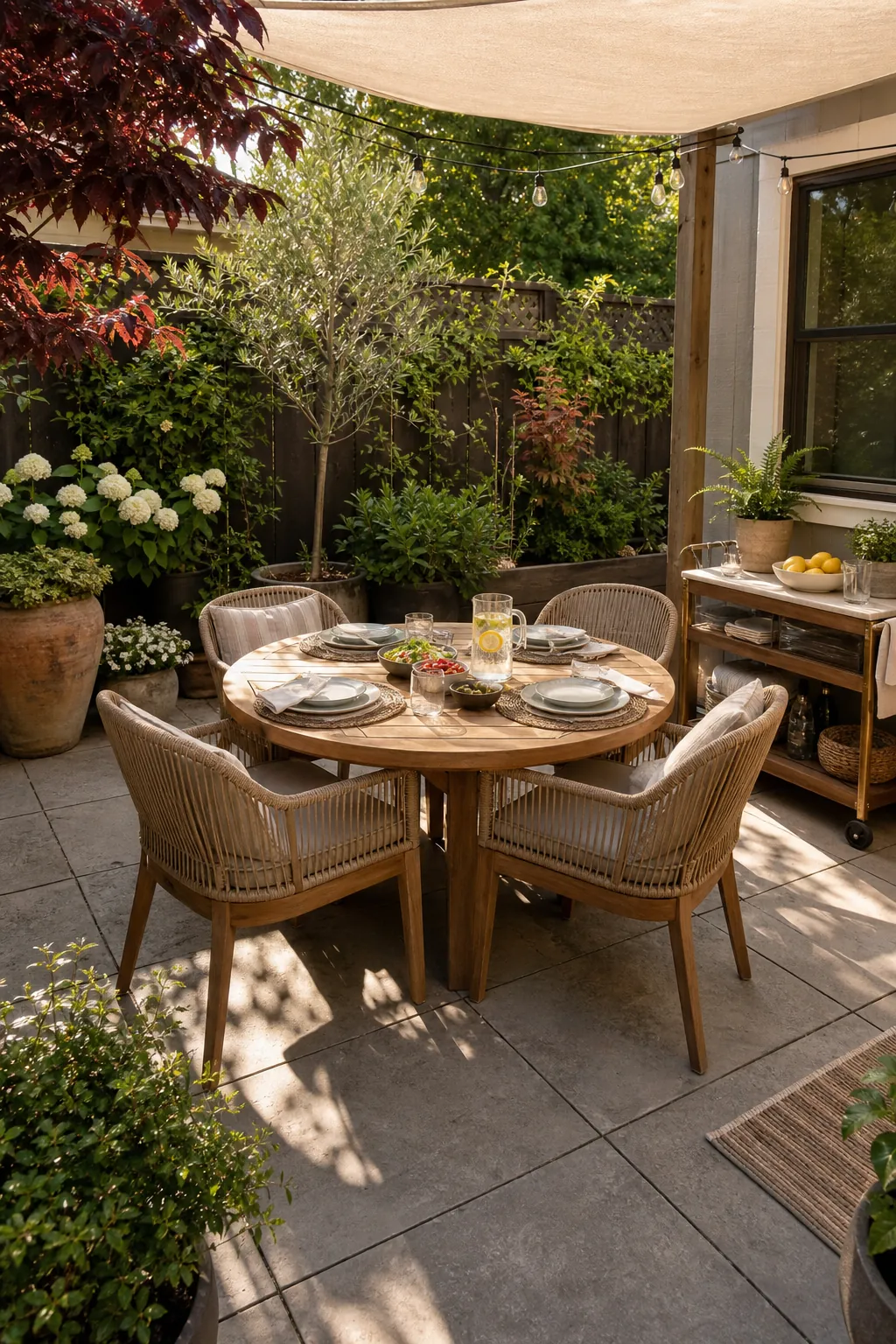
The easiest outdoor dining corner to use all summer is rarely the biggest spot in the yard. It is the corner where people can sit without baking in the afternoon sun, pull out a chair without hitting a planter, see their food after dusk, and stay outside without spending the whole meal swatting bugs.
That is the practical lens for Outdoor Dining Corner Ideas for Warm Weather Weekends. A good corner has to solve real weekend problems first: heat, shade, cramped furniture, dark patios, cleanup, privacy, and the gap between a pretty setup and one people actually use after the first drink.
Think of this as a comfort-first guide to Garden Dining and Patio Dining. The goal is not to copy a showroom. The goal is to turn a Backyard Corner into a small outdoor room that feels ready for breakfast, grilled dinners, and those slow after-meal conversations that make warm weather weekends feel longer.
Pick the Corner by Comfort, Not by Empty Space
The wrong starting point is, “This corner is empty, so the table goes here.” The better question is, “Would I willingly sit here for ninety minutes in late afternoon?” Empty space can still be too hot, too windy, too exposed, too far from the kitchen, or too awkward once chairs are pulled out.
Before buying anything, stand in the corner at the time you usually eat outside. Notice where the glare lands, where the breeze comes from, whether the ground feels hot, and how far you are from the door. A corner close to the kitchen often wins for casual weekends because refills, serving bowls, and cleanup do not become a long back-and-forth project.
For a tight Patio Corner, leave a clear path first and decorate second. A table that technically fits can still fail if guests have to squeeze past chair legs or if the person against the fence feels trapped. In small-space Garden Design, circulation is part of the design, not leftover space.
Match the Table Shape to the Way the Corner Works
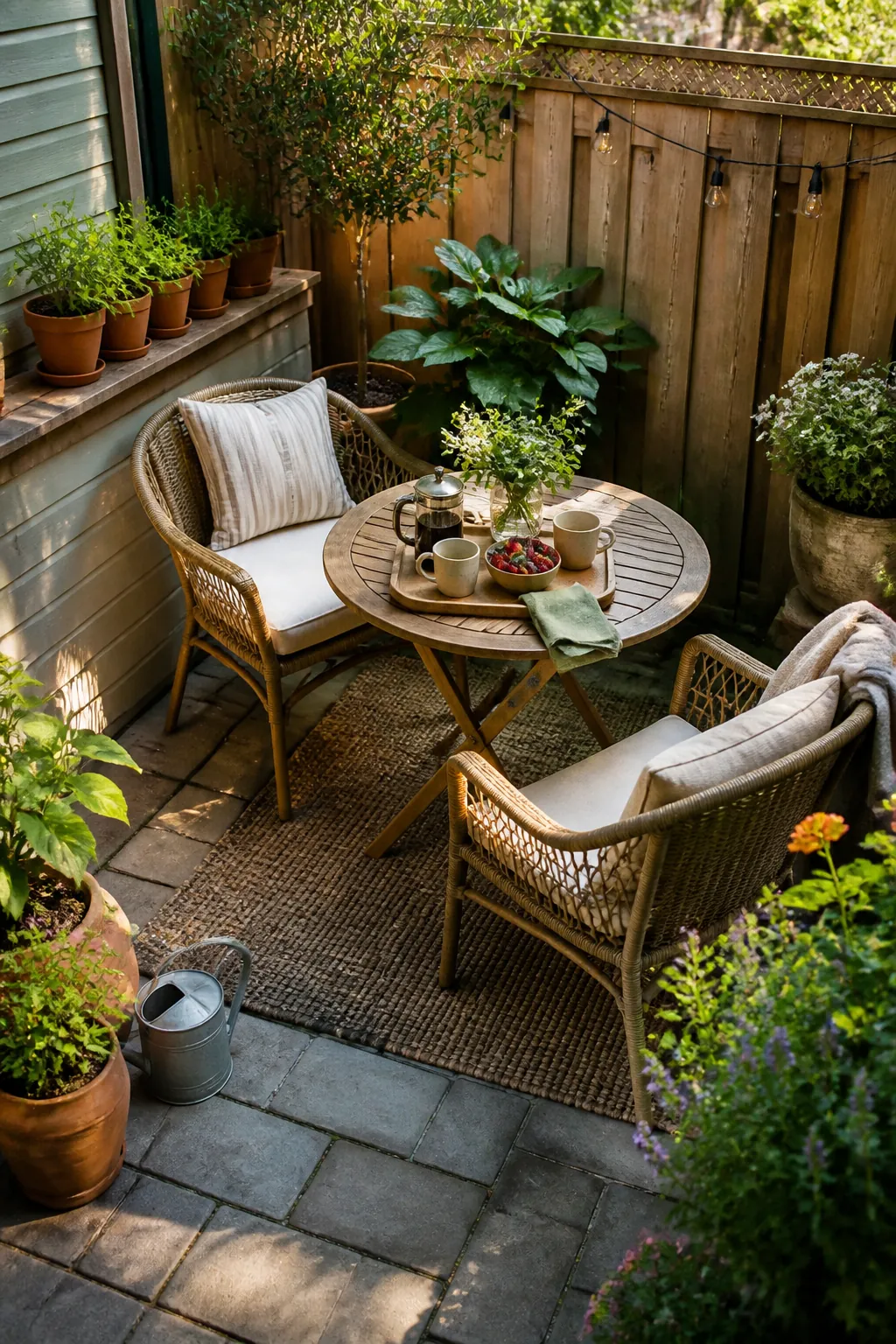
A round bistro table is the easiest win for two-person Outdoor Dining because it softens a hard corner and makes movement simple. It works especially well beside a fence, under a tree, or on a small paver pad where a rectangular table would create sharp traffic pinch points.
For four people, a slim rectangle or oval usually performs better than a wide square table. It gives serving dishes a place to land without forcing every chair far from the center. If one side backs against a fence or planting bed, pair the table with a bench there and use movable chairs on the open side.
The most reliable small Backyard Ideas are honest about chair clearance. Leave room for the chair to pull out, not just for the chair to exist. If you are choosing between a larger table and easier movement, choose movement every time. People forgive a smaller table faster than they forgive feeling boxed in.
- Two people: 24 to 30 inch round bistro table, two comfortable chairs, one narrow side surface.
- Four people: slim rectangular table, bench on the fixed side, chairs on the open side.
- Flexible weekends: folding or nesting pieces that can clear space when the corner becomes a lounge area.
Build a Back Wall With Plants, Privacy, and Storage
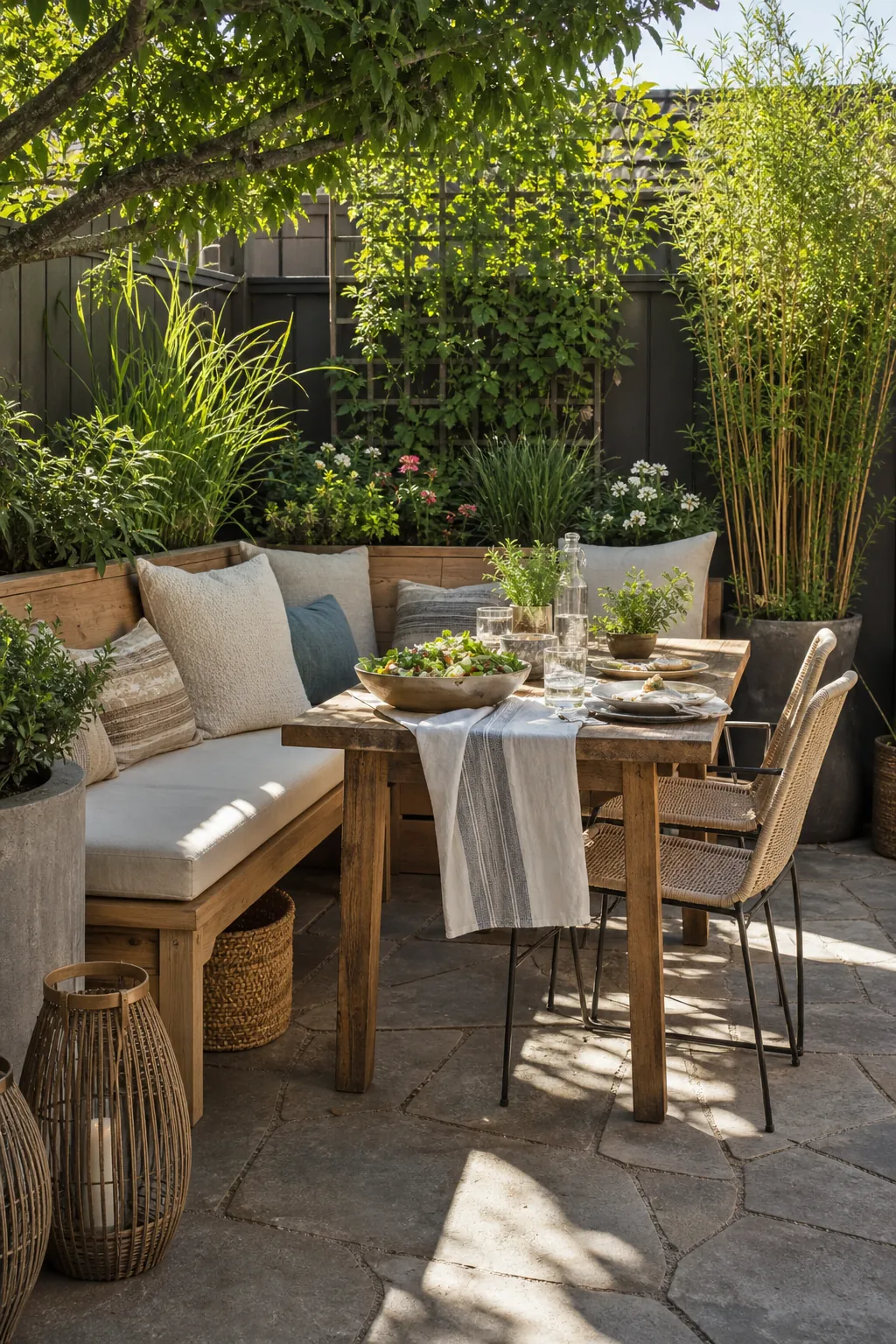
A dining corner needs some kind of back wall, even if it is only suggested. A fence, trellis, hedge, planter row, bamboo screen, or tall container grouping gives the space a reason to feel settled. Without that edge, the table can look stranded in the yard.
Use planting in layers. Put taller greenery or a screen at the back, medium pots at the sides, and herbs or low flowers near the table. This creates a Garden Seating nook without stealing the whole floor. Herbs are especially useful near Patio Dining because they add scent and texture while staying compact.
Storage matters more than most Patio Decor photos admit. A bench with a lift-up seat, a lidded deck box, or a slim serving cart keeps cushions, clips, citronella-free table covers, napkins, and lanterns close by. If every dinner requires a full setup ritual, the corner will become something you admire from inside the house.
The sweet spot is a corner that feels softened but not overgrown. Plants should frame the meal, not brush every shoulder. Keep prickly, shedding, or heavily scented plants away from chair backs and serving surfaces.
Solve Heat Before You Style the Table
Warm weather weekends expose the difference between pretty Outdoor Living and usable Outdoor Living. A dark table, full afternoon sun, and still air can turn a beautiful corner into a place people avoid until sunset. Shade is not a finishing touch. It is the comfort structure.
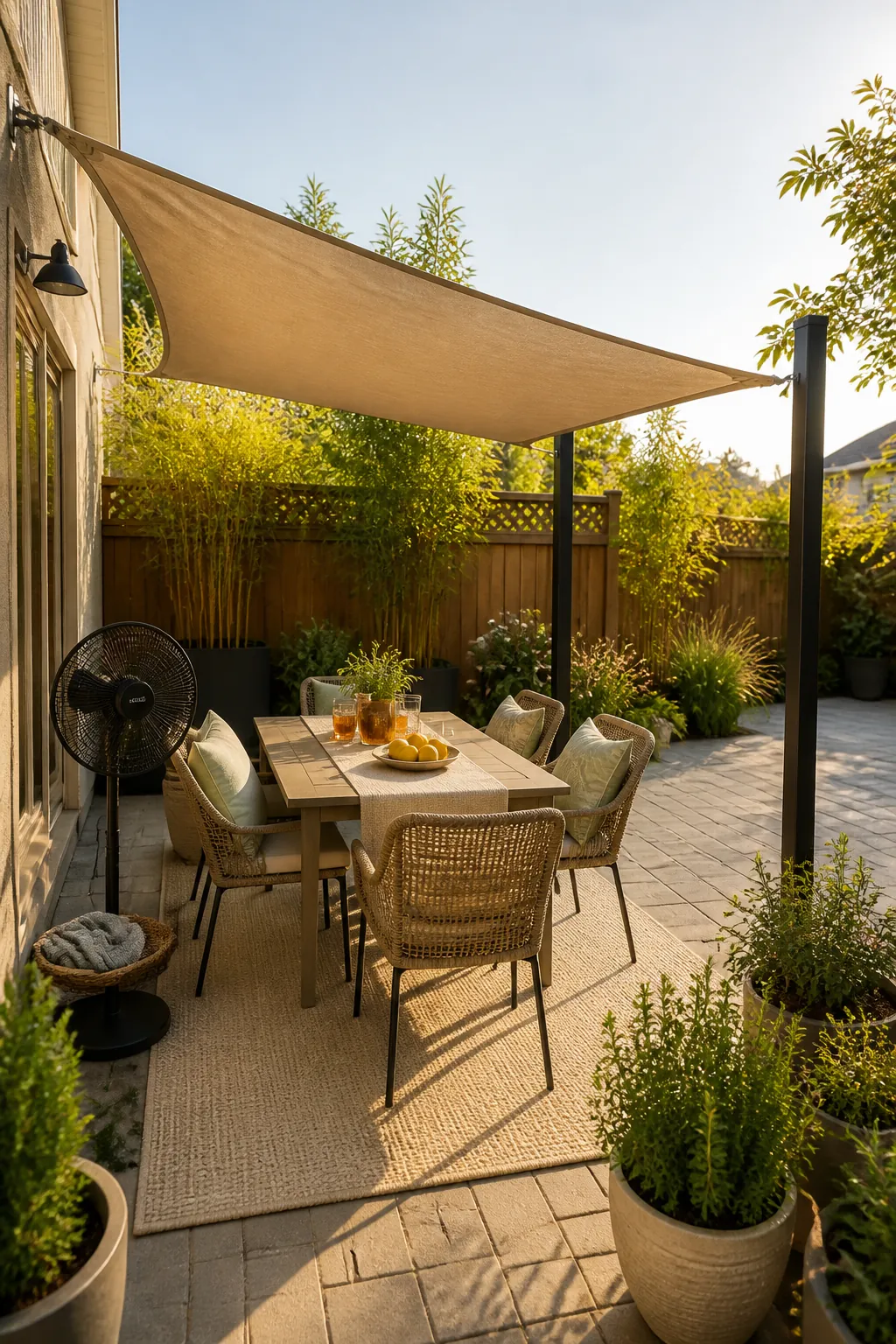
For a small dining corner, shade the people and the tabletop first. A rectangular shade sail, wall-mounted awning, half pergola, or offset umbrella can work better than a center-pole umbrella if your patio is narrow. The best shade plan covers the chairs when people are seated, not just the center of the table.
Airflow is the second half of the plan. Open-sided shade usually feels better than a heavy enclosed canopy in hot weather. Add a quiet outdoor-rated fan where it can move air across legs and under the table without blowing napkins everywhere. Light-colored rugs, breathable cushions, and nearby greenery also help reduce reflected heat.
If you are deciding where the patio dining zone should go, test the surface with your hand or bare foot in late afternoon. If the paving is uncomfortable after a few seconds, style will not fix it. Move the table, add shade, or use a lighter rug before investing in more decor.
Light the Meal, Not the Whole Yard
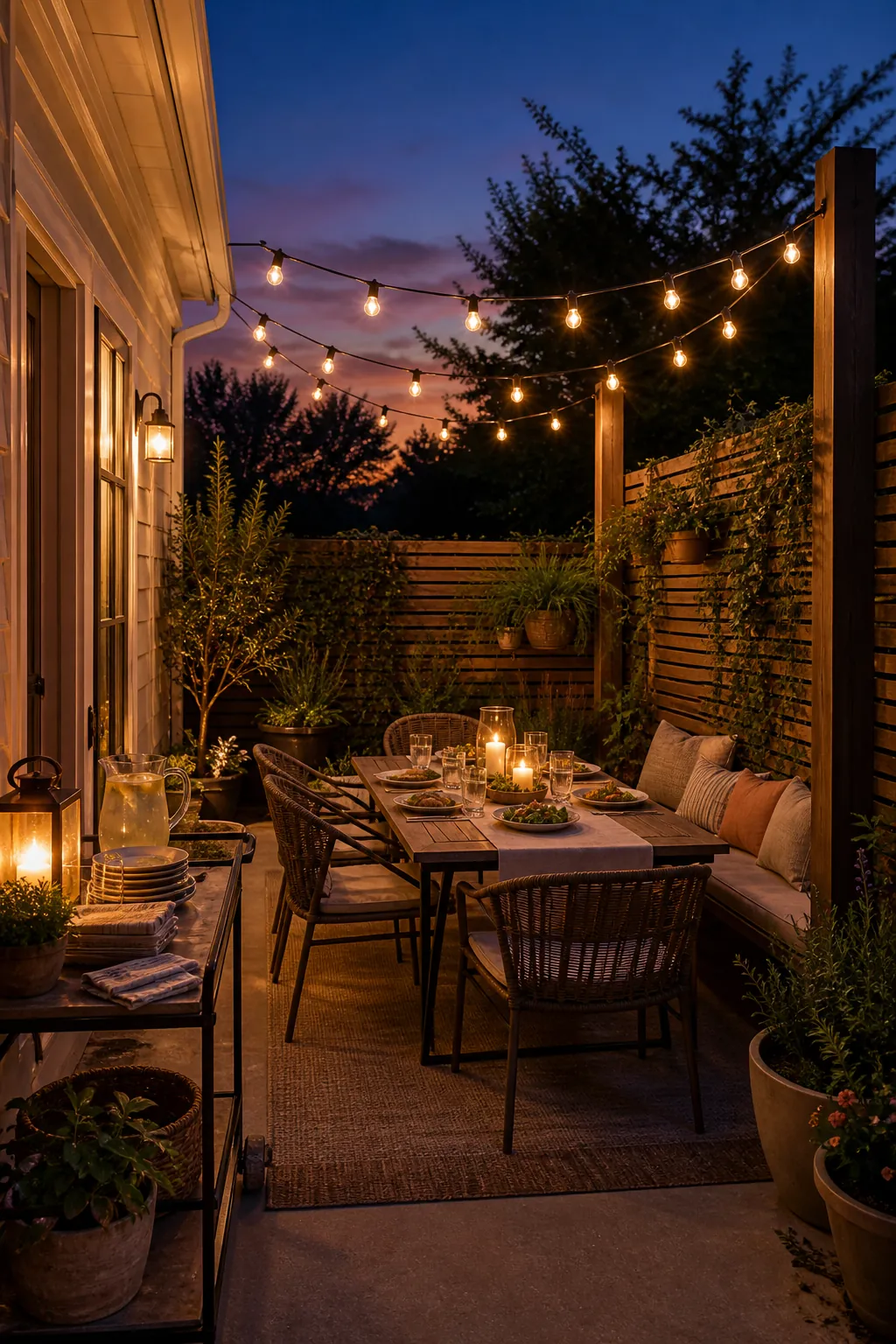
String lights are popular because they make a corner feel intentional, but the common mistake is using them only as atmosphere. For outdoor dinners, the table still needs enough light for serving, pouring, and cleanup. Think in layers rather than one dramatic strand across the entire yard.
Hang cafe lights high enough that they create a ceiling effect, then add lanterns, a small rechargeable table lamp, or low path lights near the walking route. If the lights need to span a long distance, use a guide wire or proper support posts so the electrical cord is not carrying the tension.
Good lighting also controls mood. Warm bulbs make food, plants, and wood tones look better than harsh cool-white light. Dimmers are useful because the corner needs a different brightness during dinner than it does during cleanup. The goal is a table people can see, with a yard that still feels calm.
Make Bugs and Cleanup Part of the Design
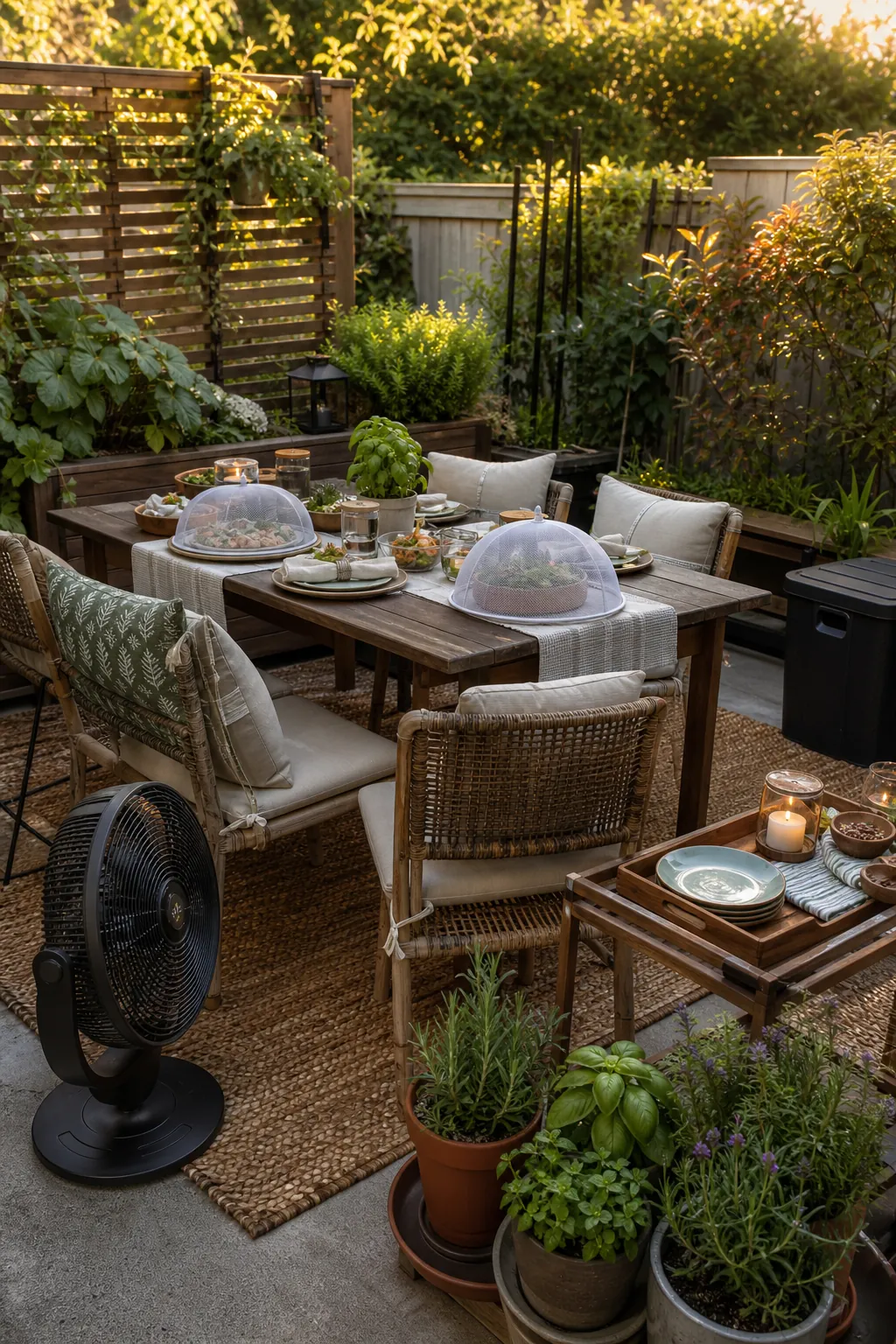
Many outdoor dining setups fail after the first warm night because bugs were treated like an afterthought. The most practical approach is not one magic candle. It is a layered routine: remove standing water, keep planter saucers dry, cover food until serving, move air around the seating zone, and make cleanup fast.
A fan can be one of the least glamorous and most useful pieces in a dining corner. Place it low enough to move air around legs and chair seats, then keep table decor low and weighted so the breeze does not create chaos. Mesh food covers, lidded drinkware, and a tray for clearing plates can look attractive when chosen in natural materials.
Do one quick mosquito check every week during warm months: empty or cover buckets, saucers, toys, birdbaths, and any container that can hold water. The best Garden Design for dining is not only pretty. It removes the small annoyances that send everyone back indoors.
Use Patio Decor That Can Survive a Real Weekend
The best Patio Decor for outdoor dining has weight, texture, and a job. A washable runner beats a delicate tablecloth on a breezy patio. A low herb centerpiece beats tall flowers that block conversation. Outdoor cushions with removable covers beat indoor pillows that have to be rescued from every forecast.
Choose a limited material palette so the corner feels calm: wood, bamboo, rattan, terracotta, stone, linen-look outdoor fabric, black metal, or warm brass can all work. Repeating two or three materials makes small spaces feel designed without requiring a matched furniture set.
Keep tabletop styling low and movable. A tray can hold condiments, candles, napkins, and a small vase, then lift away when the serving dishes arrive. This is where the corner starts to feel like a flexible outdoor room rather than a photo setup.
Three Weekend-Ready Outdoor Dining Corner Plans
If you want a simple starting point, choose the plan that matches the way you actually spend weekends. The most useful Backyard Ideas are specific enough to act on.
The Two-Person Breakfast Corner
Use a round bistro table, two cushioned chairs, a small outdoor rug, herbs on a ledge, and one lantern or rechargeable lamp. This setup is ideal for coffee, light lunches, and weeknight dinners when you do not want to set a full table.
The Family Patio Dining Corner
Use a slim rectangular table, bench seating along the fence, two or three movable chairs, a shade sail, and a serving cart near the door. This plan keeps traffic open and makes it easier to move food in and out without clearing the table every five minutes.
The Garden Dinner Nook
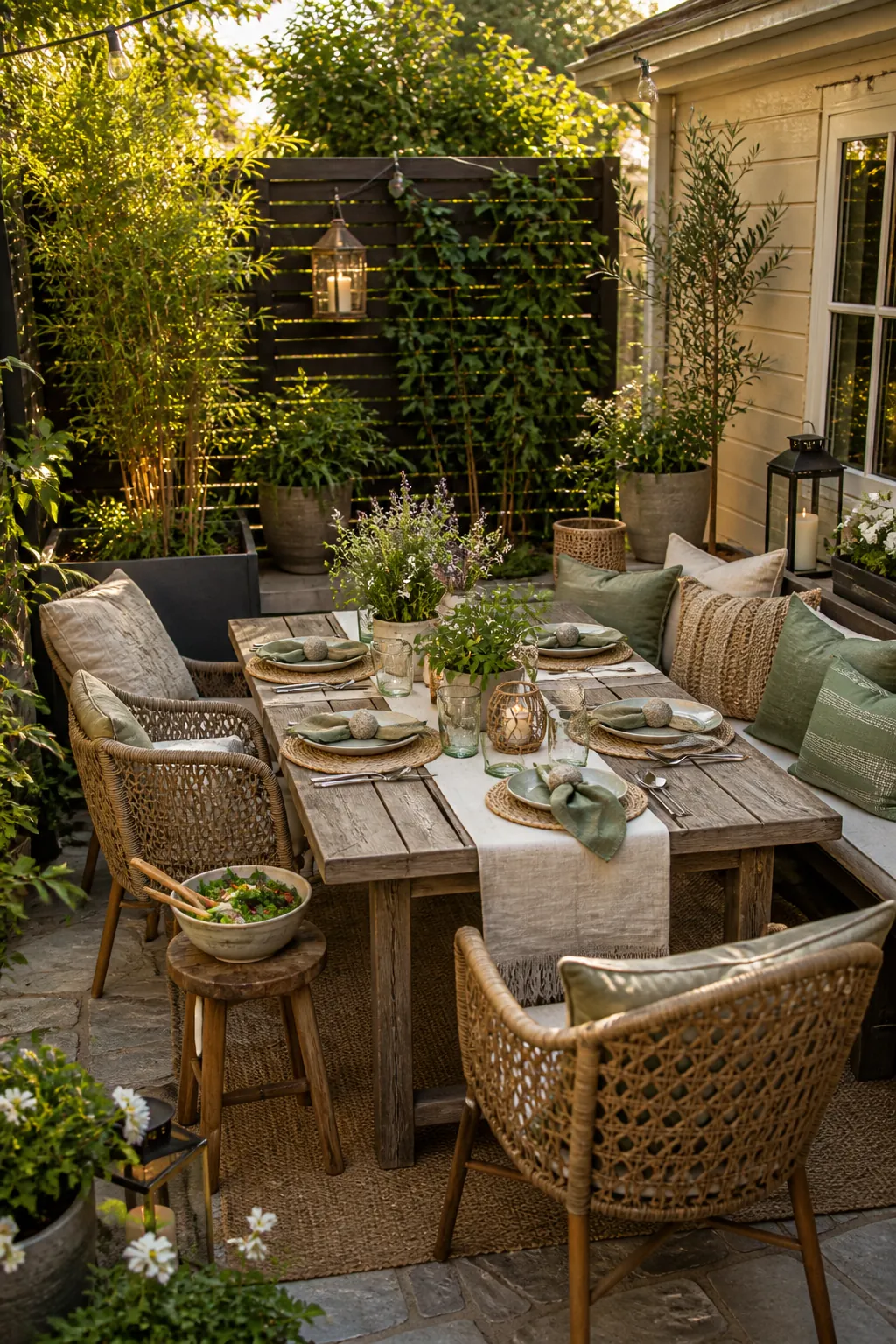
Use an L-shaped bench, layered planters, a trellis or bamboo screen, cafe lights, and a low table arrangement. This is the best fit when you want Garden Dining that feels tucked away, relaxed, and more intimate than the main patio.
The Final Corner Test
Before you commit, walk the setup like a guest. Pull out every chair. Carry a serving bowl from the kitchen. Sit in the hottest seat. Turn on the evening lights. Clear the table. Look for the small friction points, because those are what decide whether the corner gets used.
- Can every guest sit down without shifting furniture?
- Is the table shaded at the time you actually eat?
- Can you see dinner after sunset without harsh light?
- Are bugs, food covers, airflow, and standing water handled?
- Is cleanup easy enough that you will use the corner again next weekend?
When those answers are yes, the corner does not need to be large or expensive. It just needs to respect the way warm weekends really work: a little shade, comfortable seating, a table that fits, practical lighting, and enough natural texture to make the meal feel like it belongs outside.