
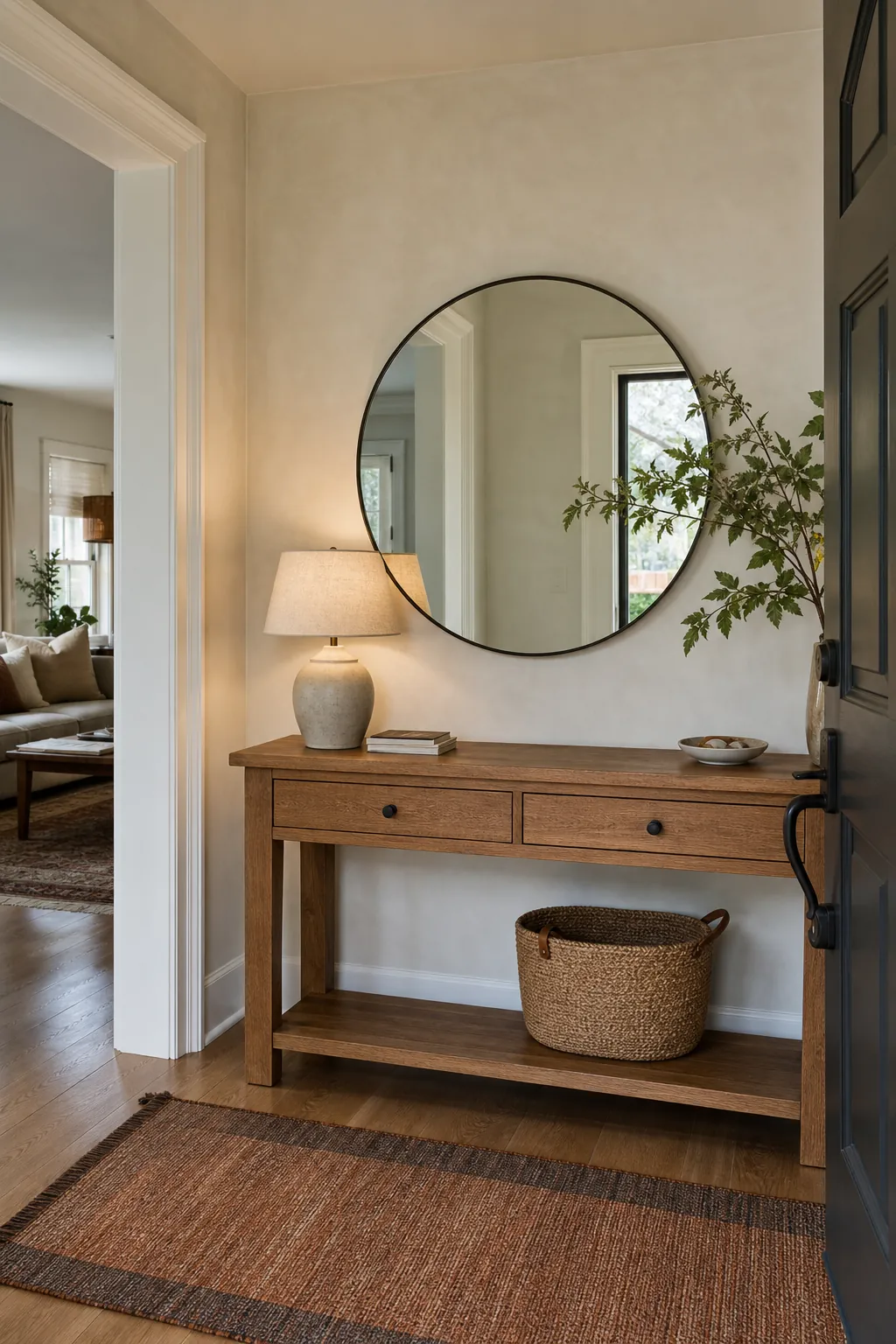
A round mirror can change the mood of an entryway before you add a single decorative object. Its curve interrupts the hard grid created by doors, trim, consoles, and floorboards, so the first view into the home feels calmer. But the shape alone is not a shortcut. Scale, reflection, light, and the landing zone beneath the mirror decide whether the arrangement feels welcoming or oddly unfinished.
The most useful round mirror entryway ideas begin with the way the space functions. You need somewhere to set keys, enough clearance to walk through, and a reflection that shows light or an attractive part of the home—not a coat pile or the front door hardware. Once those basics work, soft entryway decor becomes much easier.
Let the mirror soften a slim wood console
A rectangular entryway table naturally creates a strong horizontal line. A round mirror is the cleanest counterpoint because it adds movement without demanding another color or pattern. For an easy visual balance, choose a mirror whose diameter is roughly half to three-quarters of the console width. The range matters more than a rigid formula: a delicate frame can be slightly larger, while a thick or dark frame already carries more visual weight.
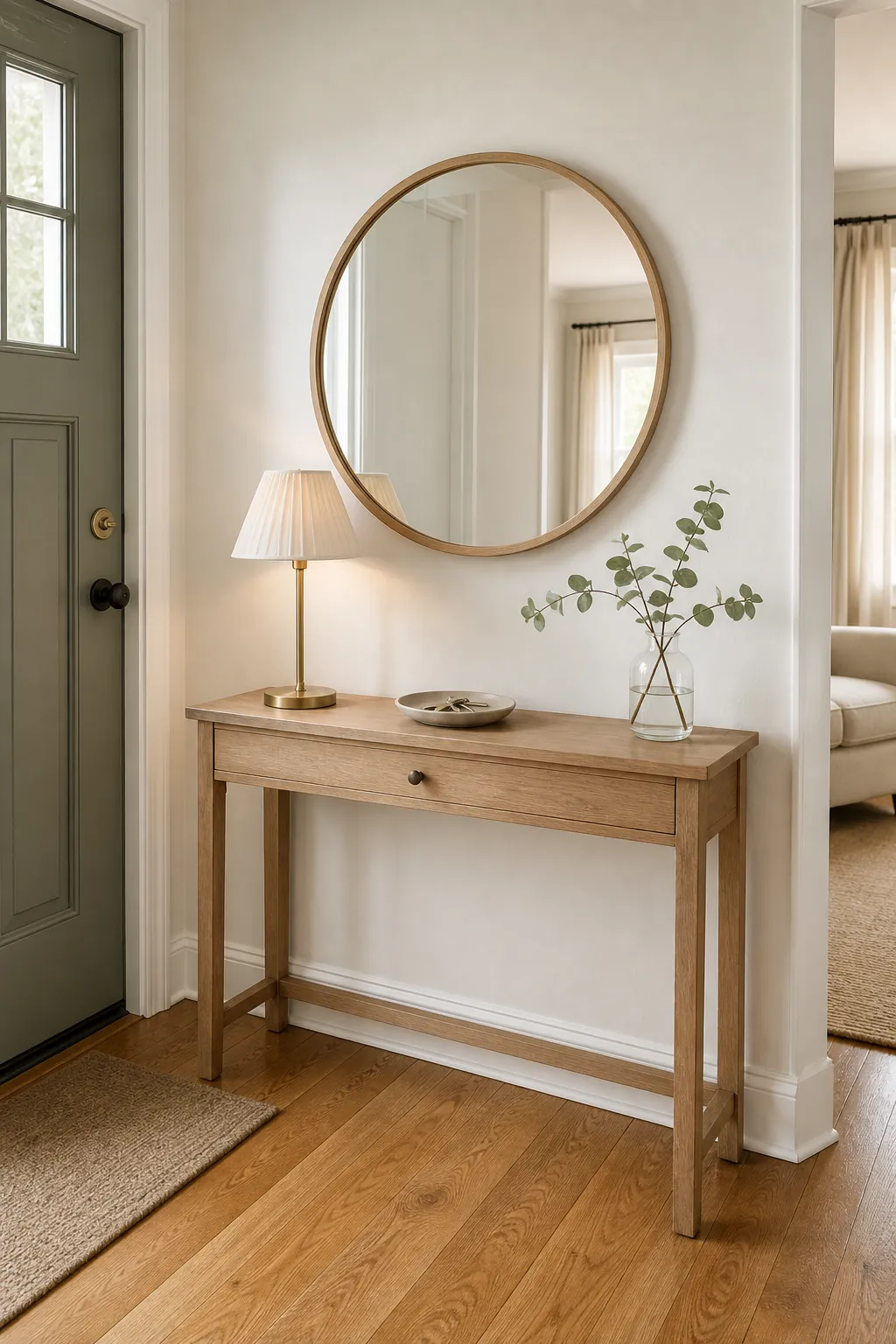
Before drilling, trace the mirror on kraft paper and tape the circle to the wall. Stand at the doorway, from the adjacent room, and at the console. This catches the common mistake of choosing a mirror that looks generous up close but disappears from the actual arrival view. Keep the tabletop editing disciplined: a tray for daily essentials, one lamp or vase, and a small open area are enough.
Hang it low enough to belong to the furniture
A wall mirror often looks as if it is floating because it was hung according to eye level alone. When it sits over furniture, the furniture and mirror should read as one composition. Start with a gap of about six to eight inches between the console top and the bottom of the frame, then adjust for tall objects and the height of the people using it. The relationship to the console is usually more important than centering the mirror on the entire wall.
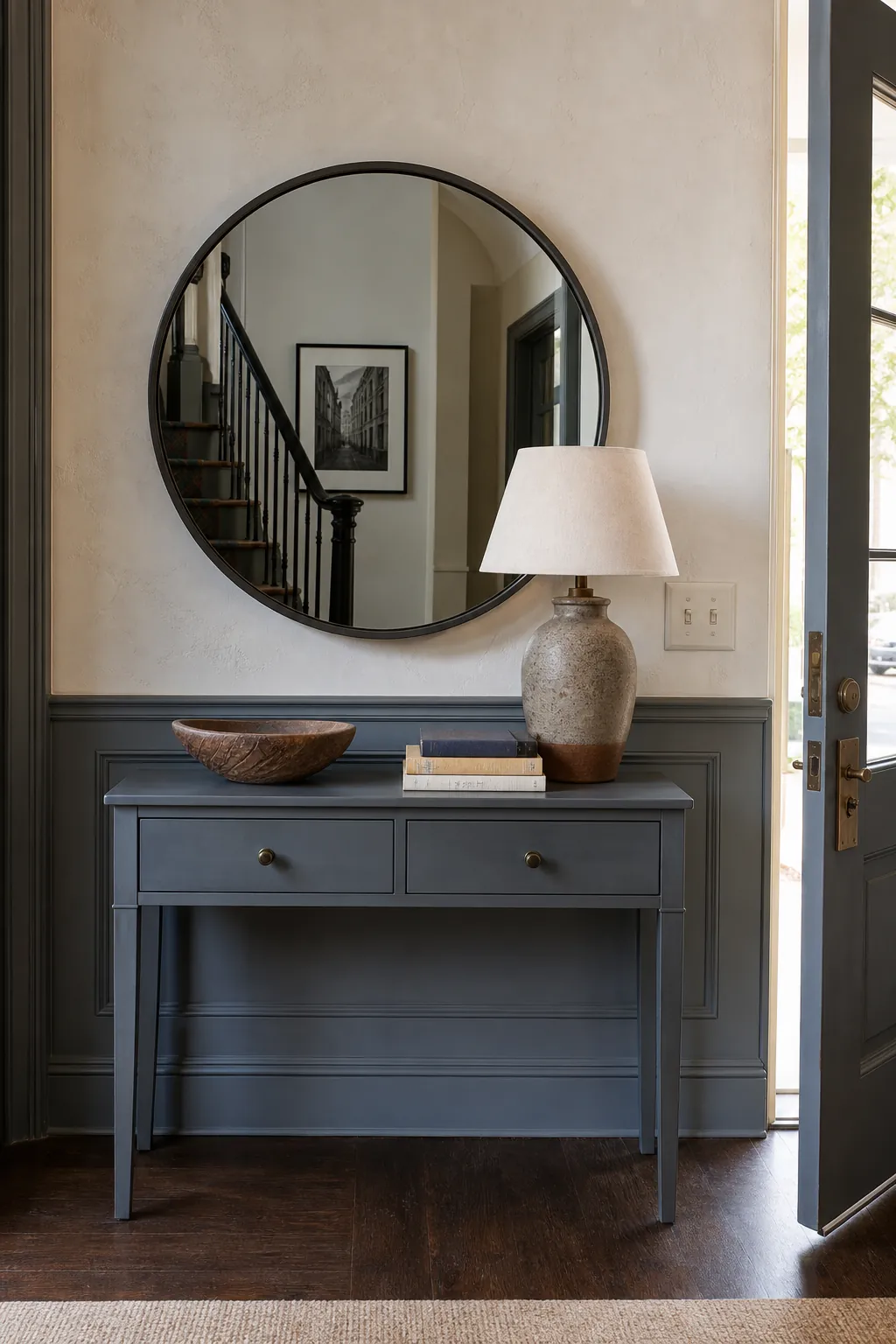
Check the reflection before fixing the bracket. A mirror that catches a window, a pendant, a leafy branch, or an orderly room beyond adds depth. One that doubles an open closet or a bright bare bulb adds visual noise. Moving the circle a few inches sideways can improve the reflected view without changing the furniture plan.
Use a pale frame to quiet a narrow foyer
In a tight hallway, a heavy black ring can feel like punctuation when the room needs breathing space. Try pale oak, whitewashed wood, aged silver, or a thin warm-metal rim. Keeping the frame close to the wall color reduces contrast and lets the reflected light do the work. This is especially effective when the entryway mirror is close to a door swing or squeezed between trim and a corner.
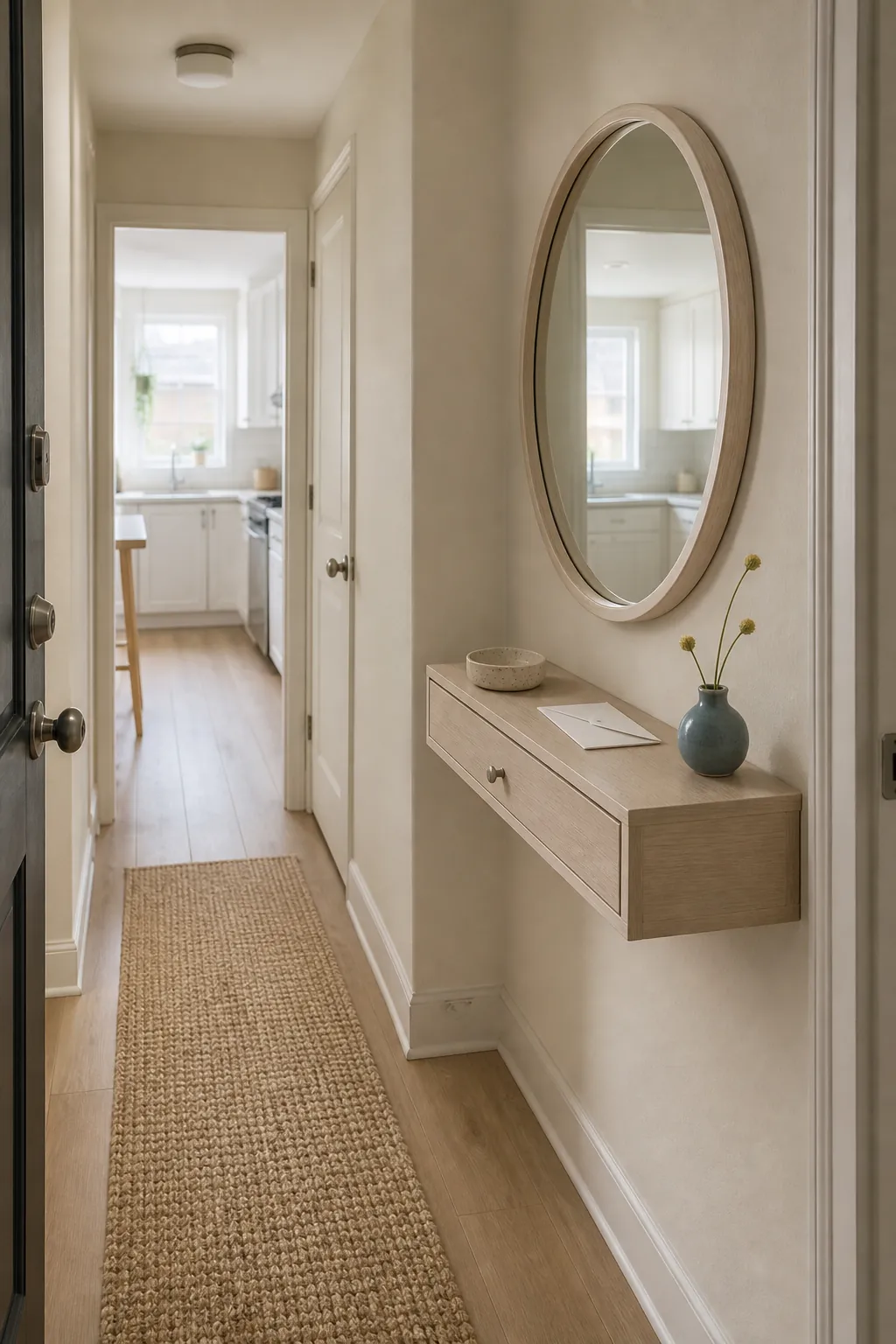
Depth is just as important as width. If a standard console pinches circulation, replace it with a shallow ledge or wall-mounted drawer. A small ceramic dish still gives keys a home, and a hook inside a nearby cabinet can keep bags out of the composition. Soft does not mean impractical; it means the practical items have defined places instead of spreading across the first surface.
Build warmth with texture instead of extra objects
Warm home decor often gets translated into more accessories, but texture is quieter and more convincing. Pair the smooth glass with visible wood grain, a linen shade, a hand-thrown bowl, a wool runner, or a woven basket. These surfaces absorb and scatter light differently, which gives a simple foyer decor scheme depth without making the console hard to use.
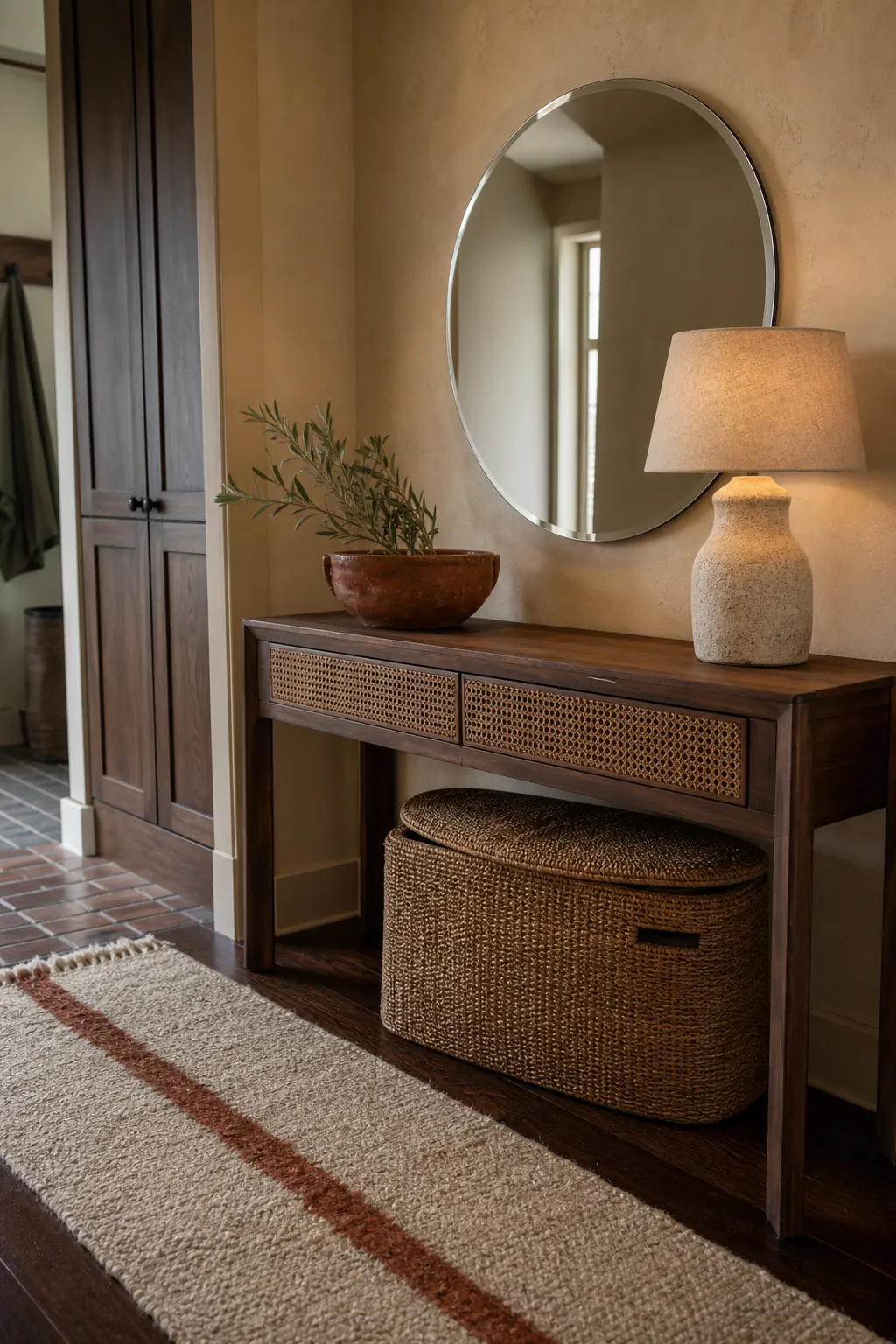
Choose two or three tactile materials and repeat them once. A cane-front drawer can relate to a basket; an oak frame can echo the console; a rust stripe in the runner can return in a small vase. Repetition creates calm more reliably than perfect matching. Leave some bare tabletop visible so the composition can cope with real mail and keys without instantly looking messy.
Light the face, not just the ceiling
A ceiling fixture may illuminate the floor while leaving the mirror dull and faces shadowed. Add a shaded table lamp, a compact rechargeable lamp, or a pair of low-glare sconces when wiring allows. Aim for warm, diffused light rather than an exposed bulb reflected directly in the glass. The goal is a useful last-look mirror and a gentle pool of light visible from the front door.
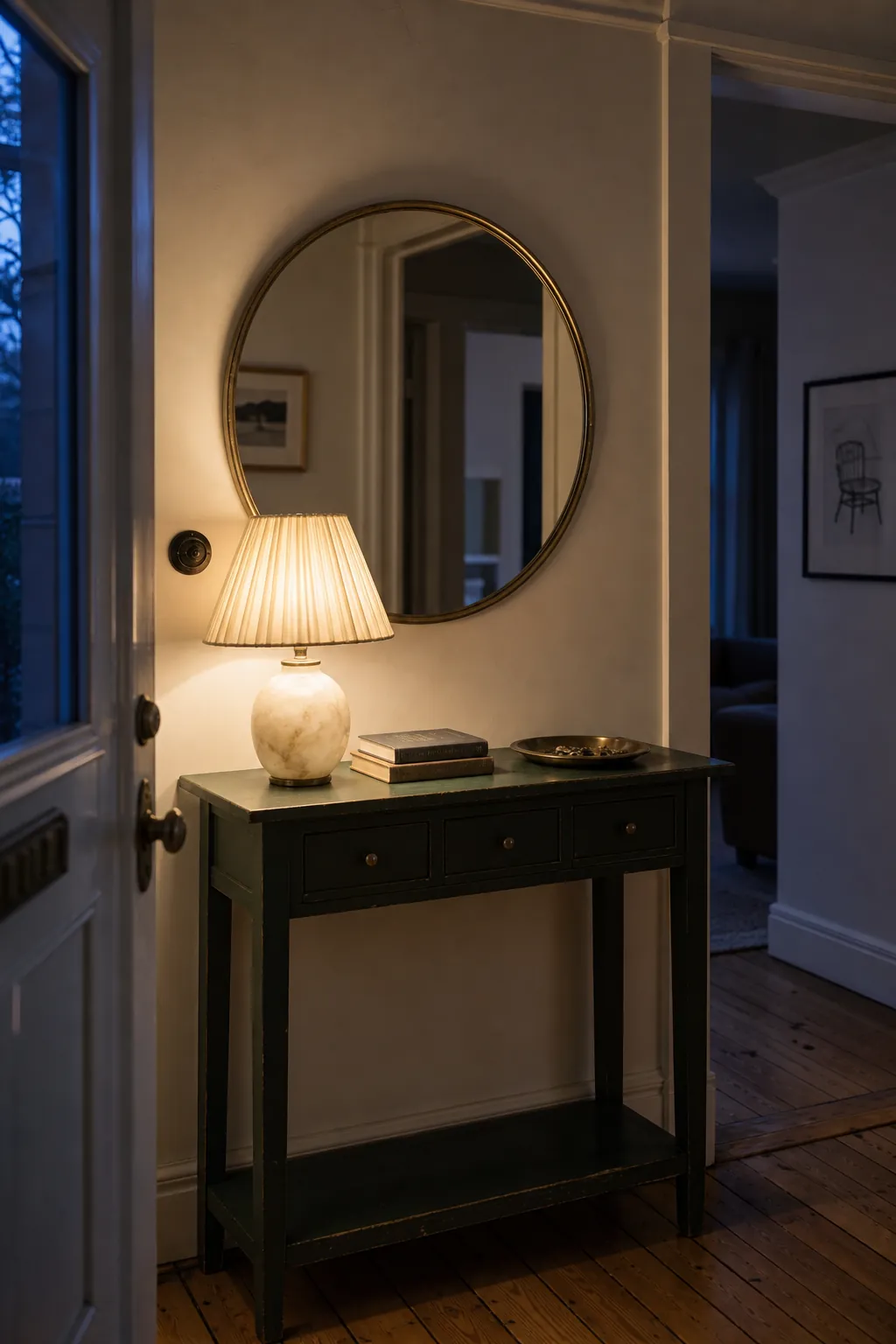
Place a single lamp off-center and balance it with something lower, such as a bowl or stacked books. Avoid creating two equal towers on either side unless the entry is genuinely formal and wide. Asymmetry keeps the circular mirror styling relaxed, while the mirror itself supplies the central anchor.
Give a no-console entryway a softer landing point
Not every entrance has room for a table. A round mirror can still establish a welcoming pause above a bench, a floating drawer, or a slim row of pegs. In a renter-friendly setup, lean a narrow bench below a securely mounted mirror and use a lidded basket for shoes. Keep coats to the side so the circle retains clear wall space around it.
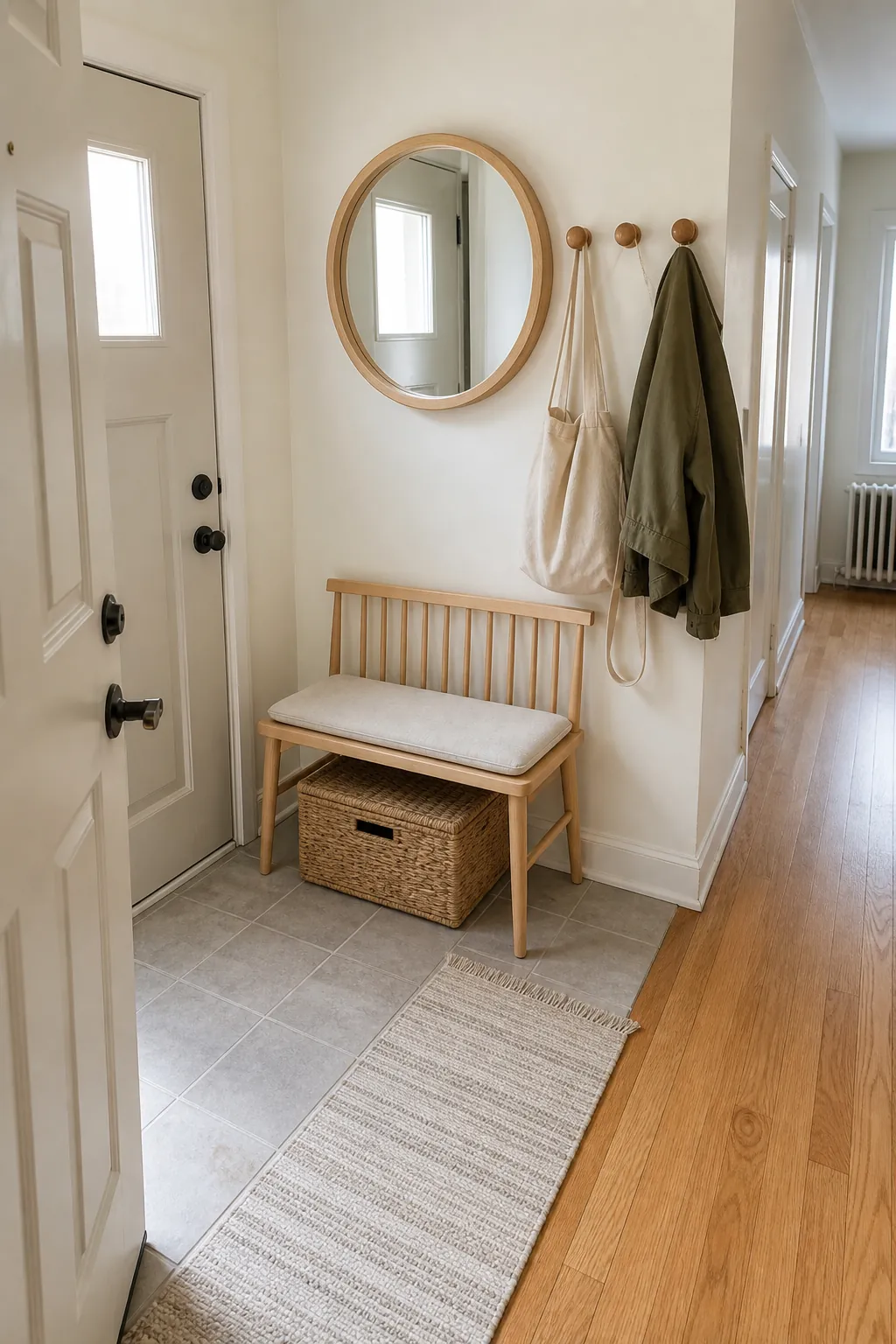
Measure the walking path with the bench in place and test the door at its full swing. Then look at the wall from the approach, not only straight on. A circle needs visible breathing room at its sides to feel intentional. The final test is simple: you should be able to enter, put something down, check your reflection, and move onward without rearranging the decor. That ease is what makes the first impression feel soft.