
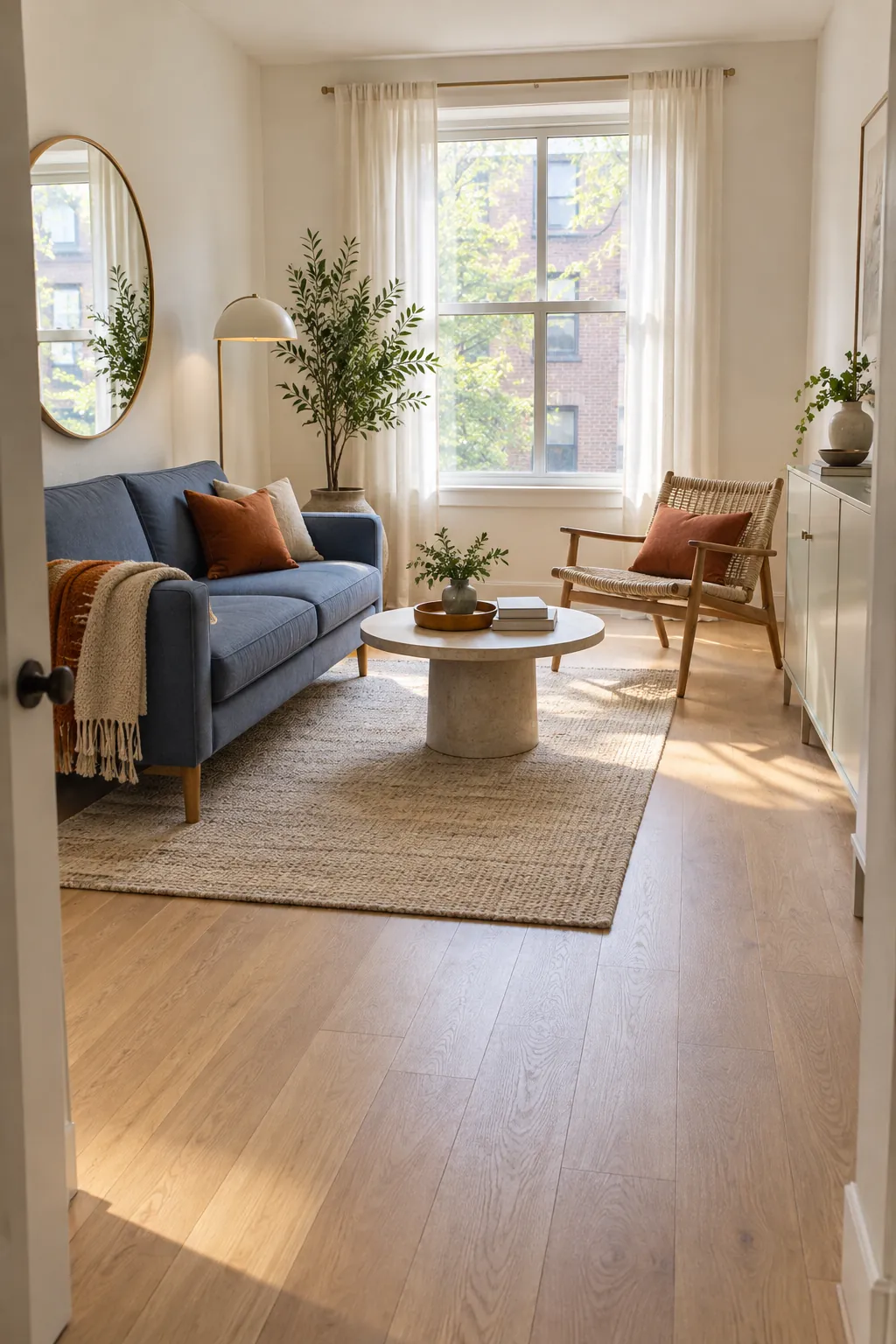
A small room rarely feels cramped because of its measurements alone. It feels cramped when your eye meets an obstacle at every turn, daylight stops at the window, and furniture hides most of the visible floor. The fastest improvement is to create a few long, calm sight lines before you buy anything new.
That means treating openness as a practical layout result, not a decorating style. You can keep color, comfort, books, and useful storage. The goal is to make the room easy to enter, easy to cross, and easy to understand at a glance.
Clear the path your eye follows first
Stand at the doorway and notice what interrupts your view of the far wall or window. A chair corner, laundry basket, deep side table, or pile beside the bed can make the room feel full before you step inside. Move those items out of the doorway view and protect a comfortable route to the main seat, bed, desk, or closet.
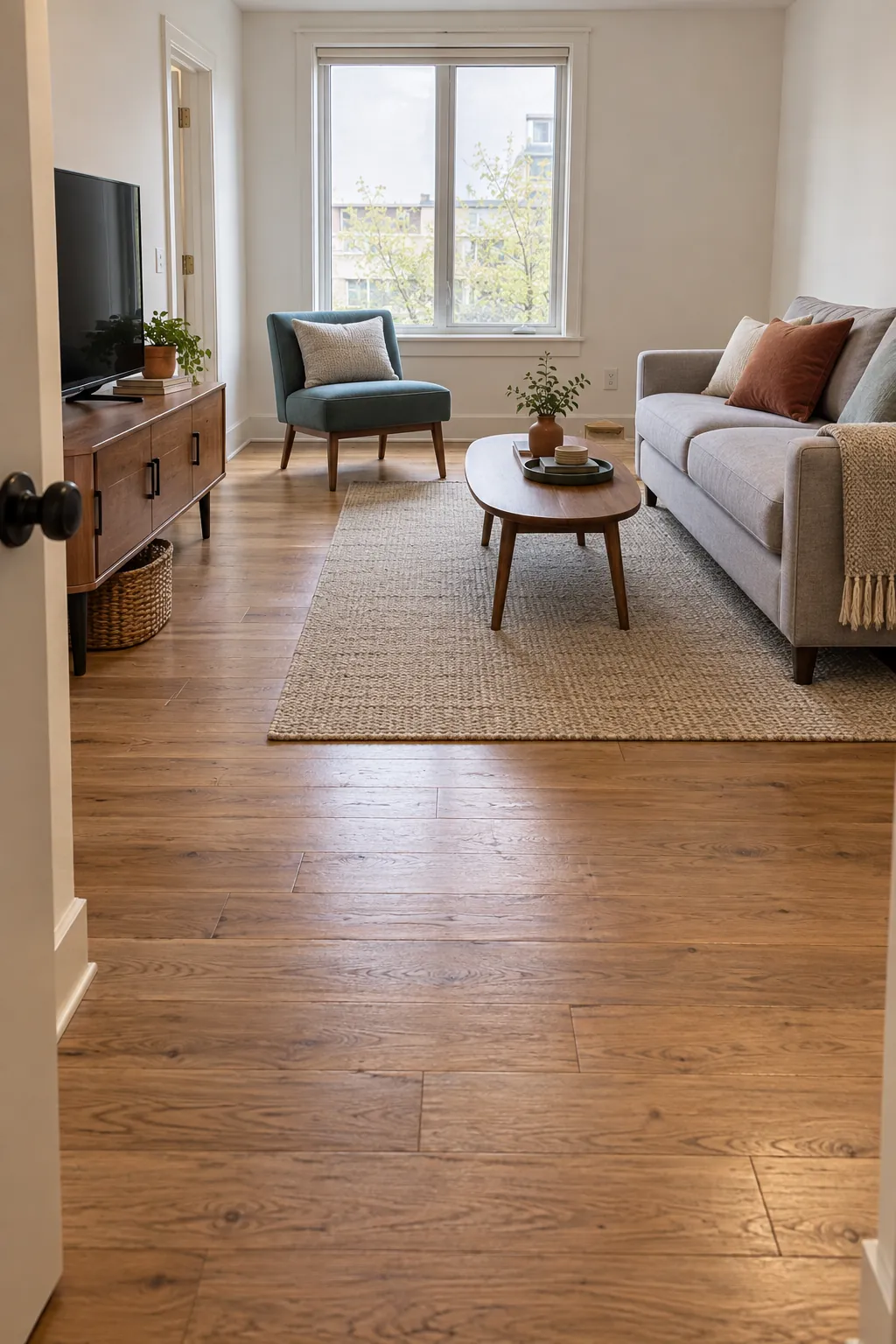
Visible floor is especially powerful in a tight space. Keep the center calm and collect necessary objects into one useful zone instead of distributing them around every wall. A tray for daily items, one basket for loose textiles, and a defined charging place usually create more relief than several small organizers.
Let the window light reach farther
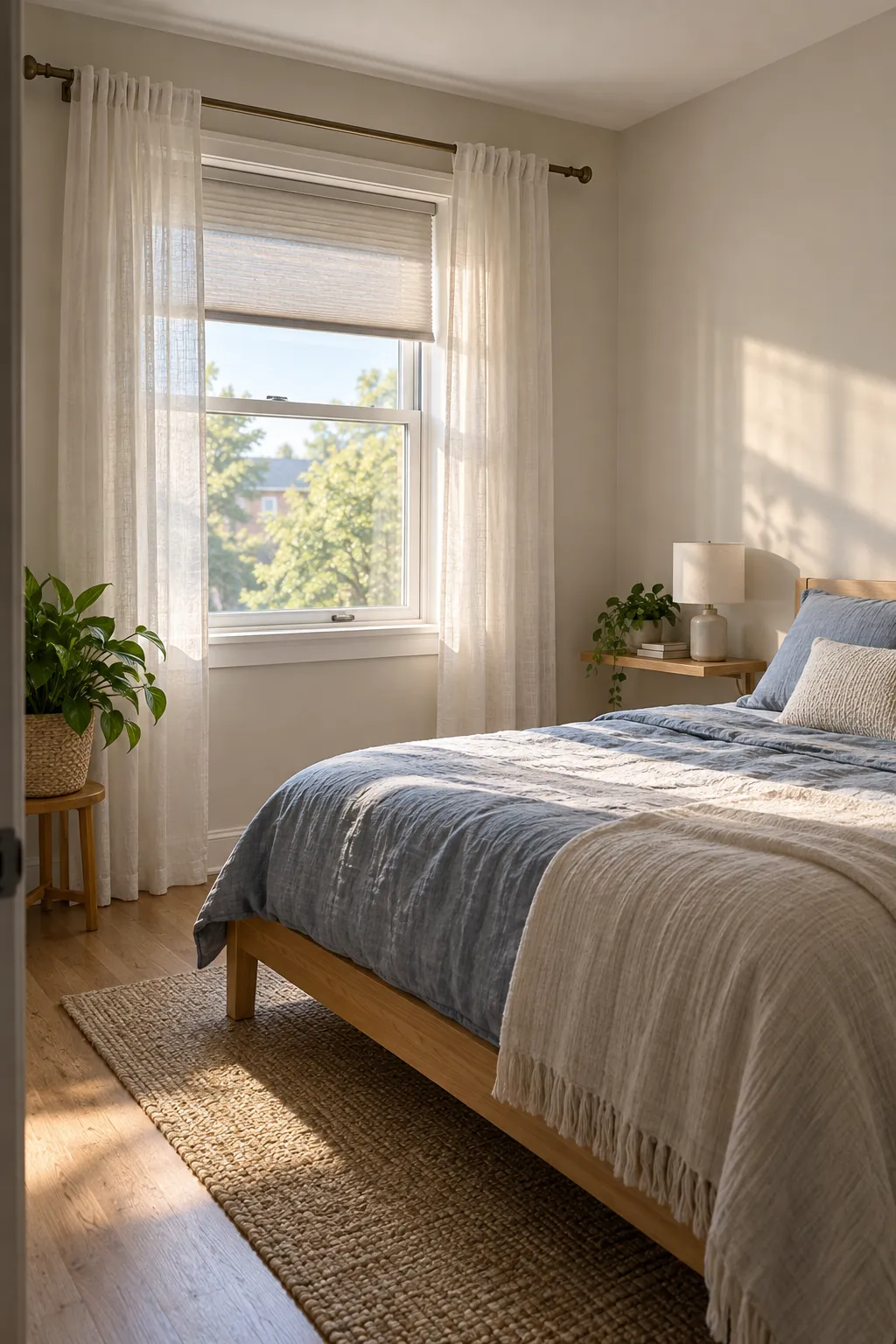
Daylight gives a room depth because it reveals the distance between surfaces. Heavy curtains that cover part of the glass reduce that effect even when they are open. Mount the curtain rod wide enough for the panels to rest beside the window, then use sheer curtains when privacy allows. Keep tall furniture away from the brightest part of the opening.
Clean glass and a pale window recess also matter. In the evening, replace one harsh ceiling light with several useful sources at different heights. A reading lamp, a shaded table lamp, and a modest ambient lamp reveal corners that otherwise disappear into one dark boundary.
Use color continuity instead of empty whiteness
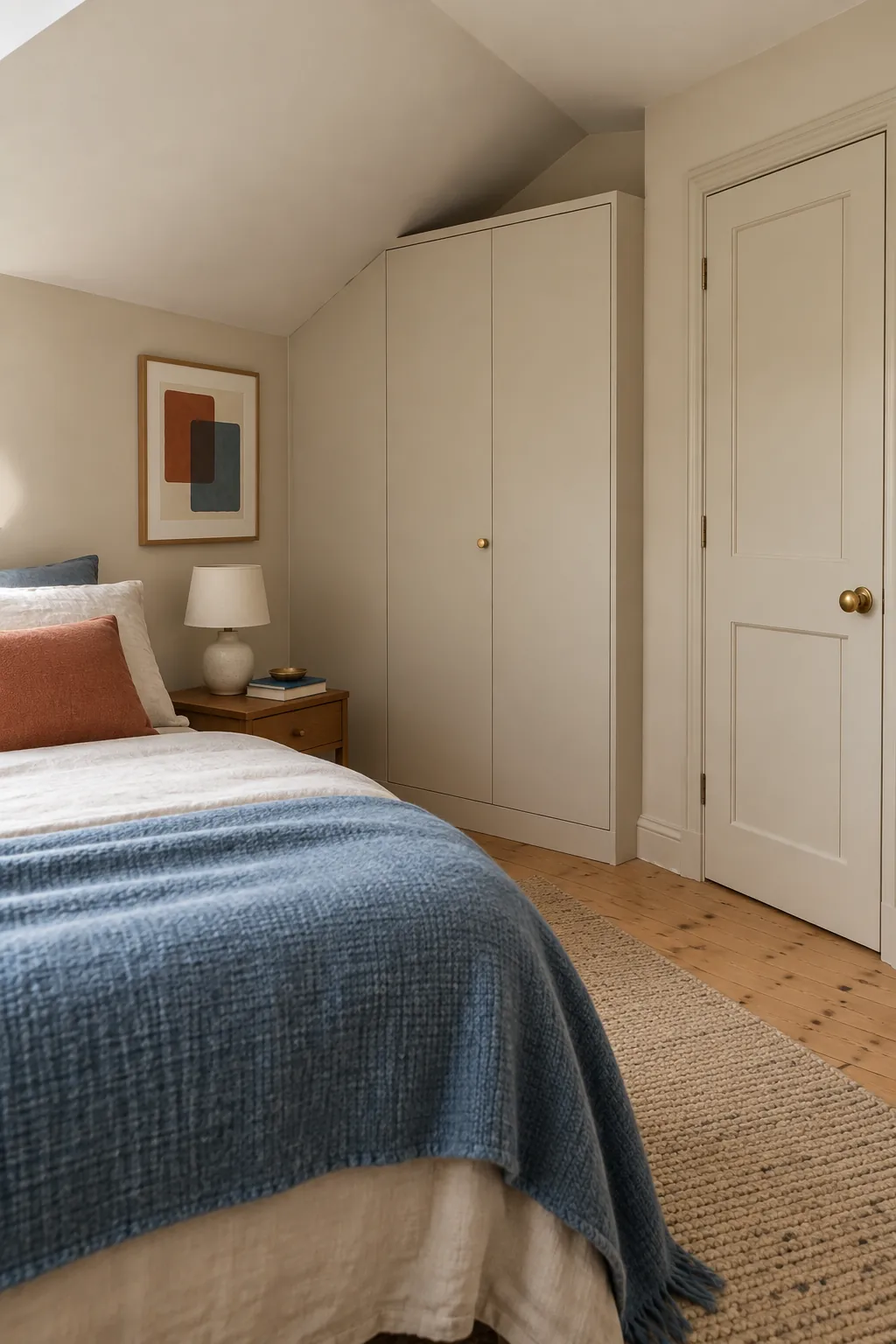
Light paint for small rooms works best when it reduces visual boundaries. A soft warm white, pale stone, or quiet blue can help the walls share light, but bright white is not a cure for poor layout. Strong contrast between walls, trim, doors, and storage makes every edge more obvious. A related color across those surfaces lets the eye travel without stopping.
You do not need a colorless room. Repeat one muted accent in a cushion, a book spine, and a small object, then leave breathing room around it. If you rent, coordinate removable textiles and existing finishes rather than repainting without permission. The result should feel connected, not bleached or unfinished.
Choose furniture that shows the room around it
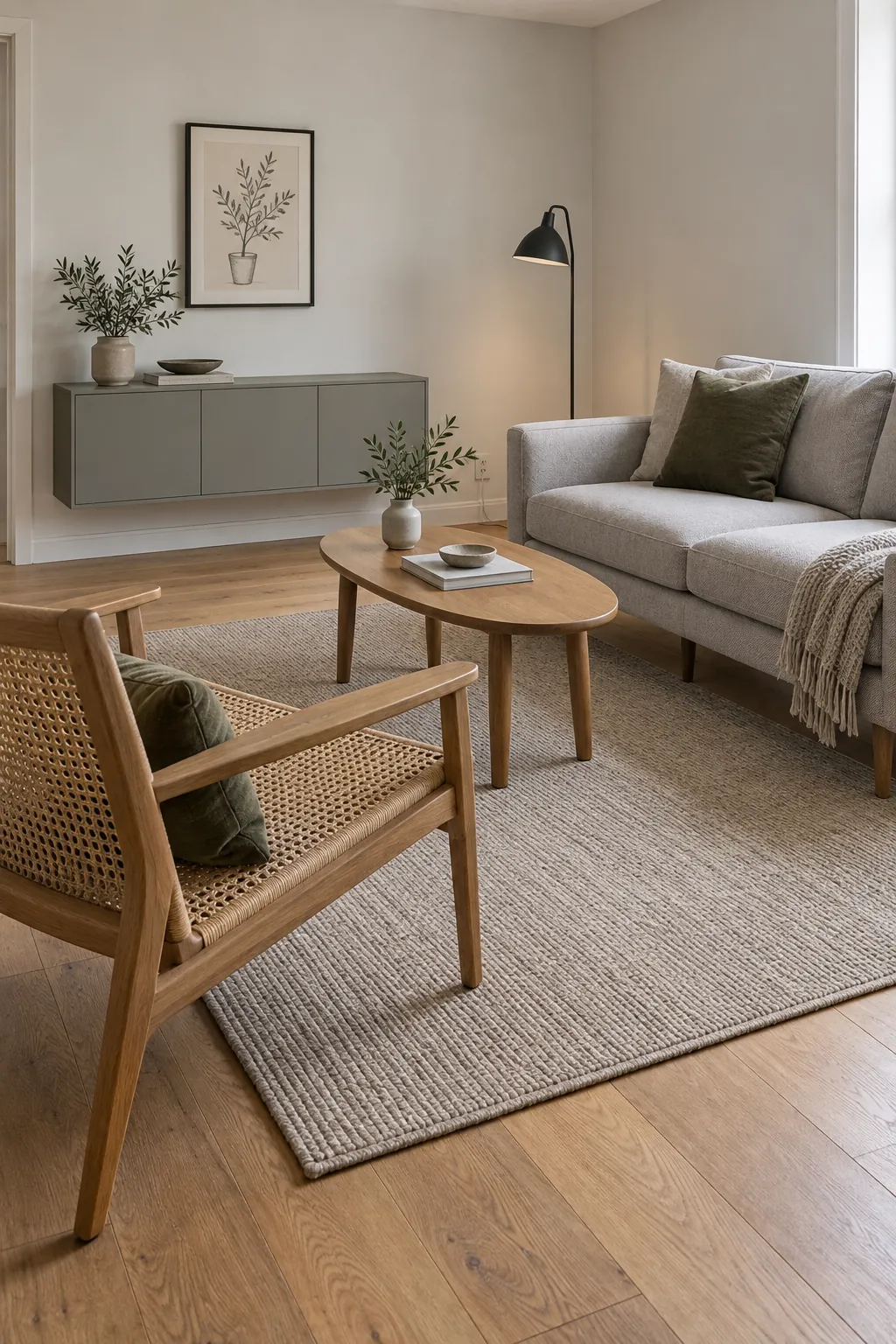
Low profile furniture can expose more wall, while open leg furniture lets the floor continue underneath. Both effects help, but scale and function come first. One correctly sized sofa is usually calmer than a tiny sofa surrounded by several compensating chairs and tables. Measure the useful floor area and the walking route before you replace anything.
Look for slender arms, visible legs, shallow storage, and pieces that solve two real needs. A storage bed can remove a freestanding chest. A small table that reaches the sofa can replace two decorative tables. Avoid buying miniature furniture only because the room is small; uncomfortable pieces create clutter when you add more items to make them usable.
Place one mirror where it reflects depth and light
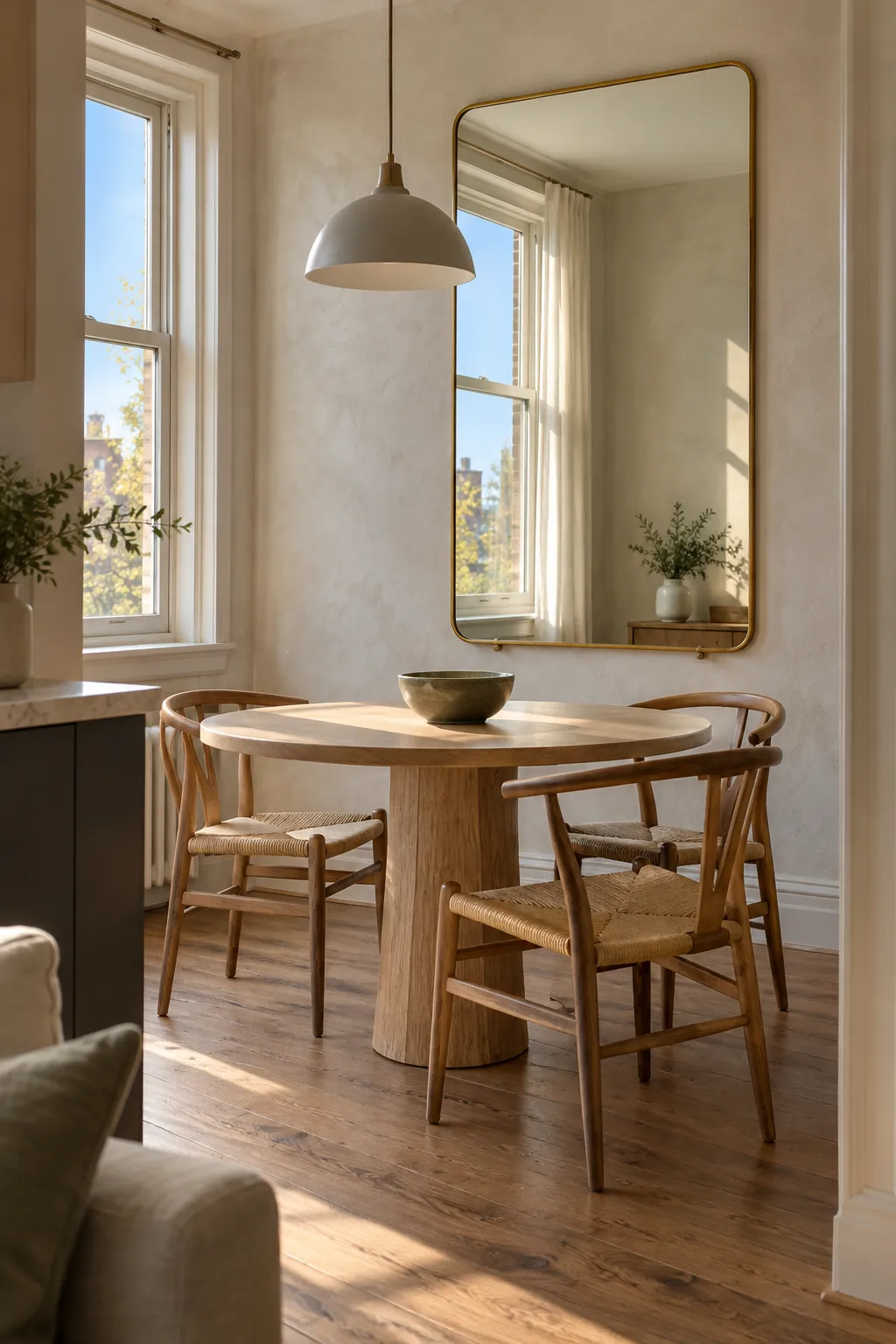
Large mirror placement matters more than the mirror itself. A mirror opposite or beside a window can return daylight and reveal another layer of the room. A mirror facing a crowded shelf simply doubles the visual noise. Check the reflection from the doorway and from your usual seat before you secure it.
Choose a simple frame and a size that relates to the furniture below it. Secure every large mirror according to its weight and the wall type. Renters should use a landlord approved method or a properly anchored floor mirror with an anti tip restraint. Safety must never depend on a casual lean.
Use height without crowding every wall
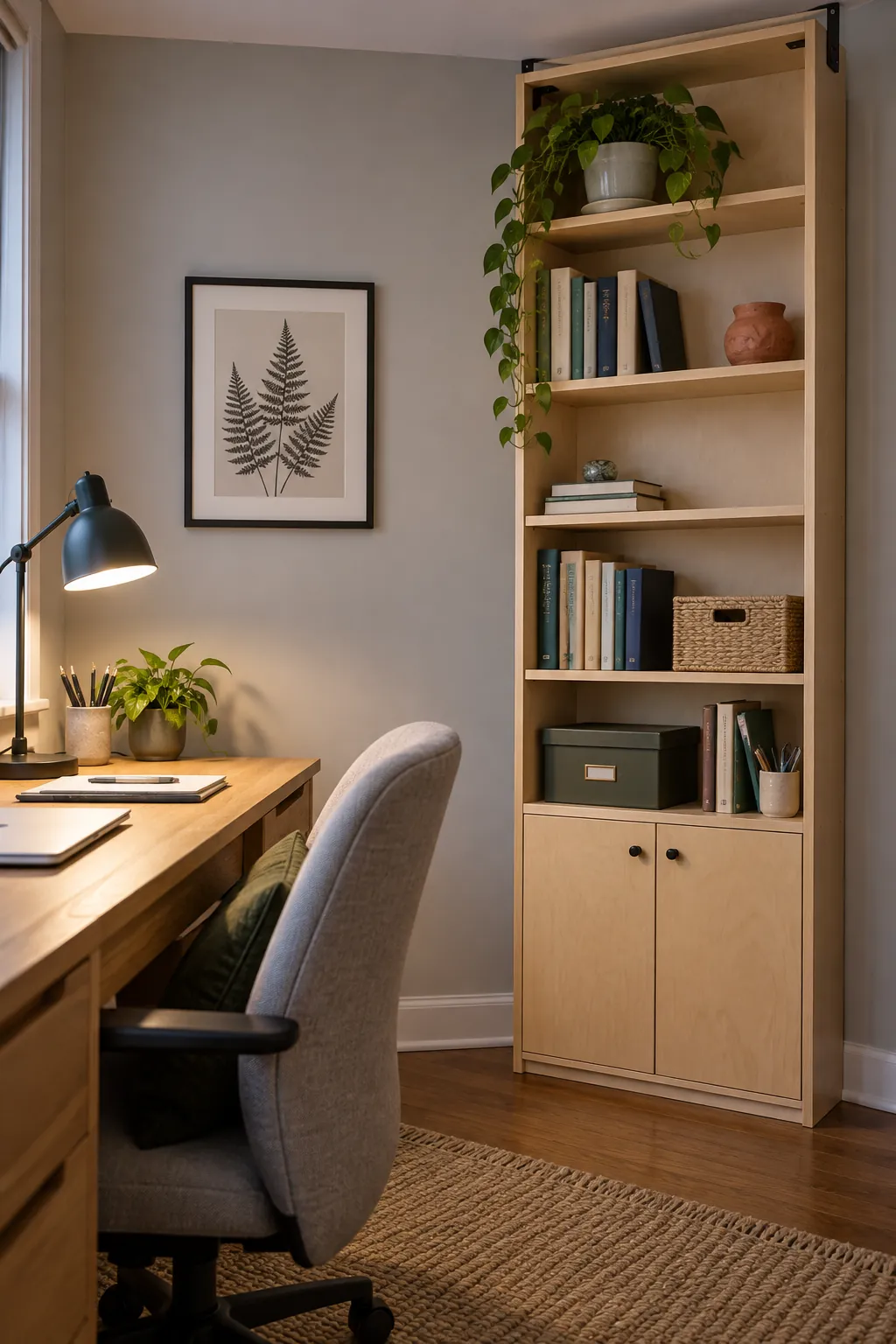
Vertical wall decor and tall storage can draw attention upward, but a room does not need something on every high surface. Choose one vertical zone for shelves, a slim bookcase, or a grouped display. Keep the remaining wall areas quiet so the eye can register both height and open space.
Put the heaviest items low, secure tall furniture, and reserve the easiest shelves for objects you use often. Closed storage is useful for visually busy supplies, while a few open shelves can hold books, a plant, and one personal object. Leave gaps between groups. Those gaps are part of the design, because they make each useful item legible and keep the room from becoming a storage wall.
The room should now feel easier to use, not merely easier to photograph. Walk through it at your busiest time of day, open every door and drawer, and sit in each main place. If the route stays clear and the corners remain useful, the extra sense of space will last after the first tidy morning.