

A tiny bathroom does not always need remodeling to work better. Most frustrating bathrooms have the same problems: too many items on the counter, no landing spot for towels, awkward wall space going unused, and lighting that makes everything feel tighter than it is.
The best small-space changes are specific, repeatable, and easy to maintain. Choose the storage move that fixes your daily bottleneck first, then make the surrounding decor quieter so the room feels cleaner and easier to use.
Clear The Counter Before Buying Anything
A no remodel bathroom refresh starts with subtraction. Keep only the daily items near the sink and move backups, duplicates, and occasional products into closed storage. More storage helps only after the counter has a smaller job.


Add Wall Mounted Storage Where The Floor Cannot Help
Wall mounted storage is the easiest upgrade when the bathroom layout is fixed. Use shelves, rails, hooks, or a medicine cabinet to lift items off the sink and floor without changing plumbing or tile.


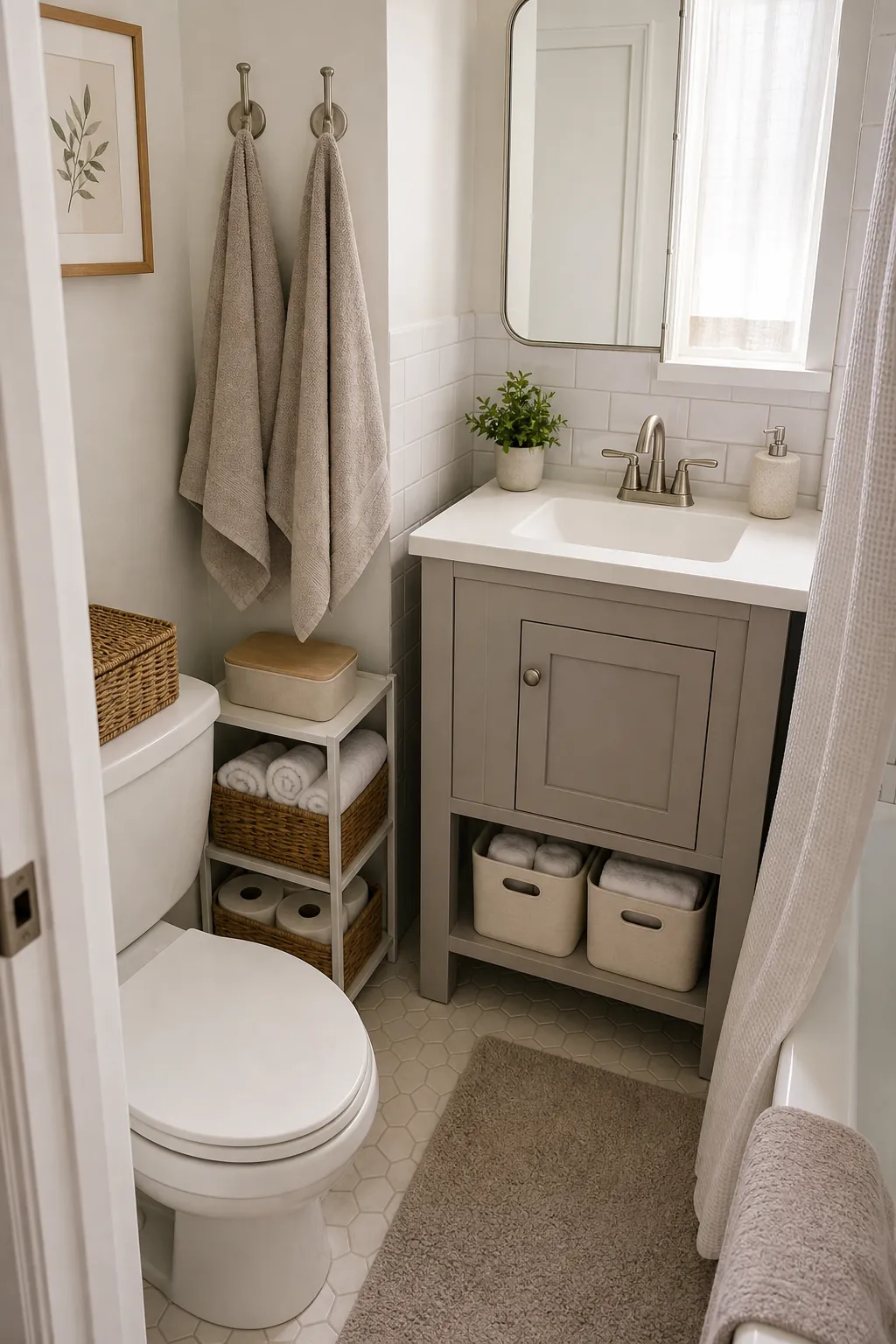
Make The Toilet Wall Work Harder
The wall above or beside the toilet is often the biggest unused area in a tiny bathroom. A shallow shelf, cabinet, or over-toilet unit can hold extra paper, towels, and baskets if it stays narrow enough.


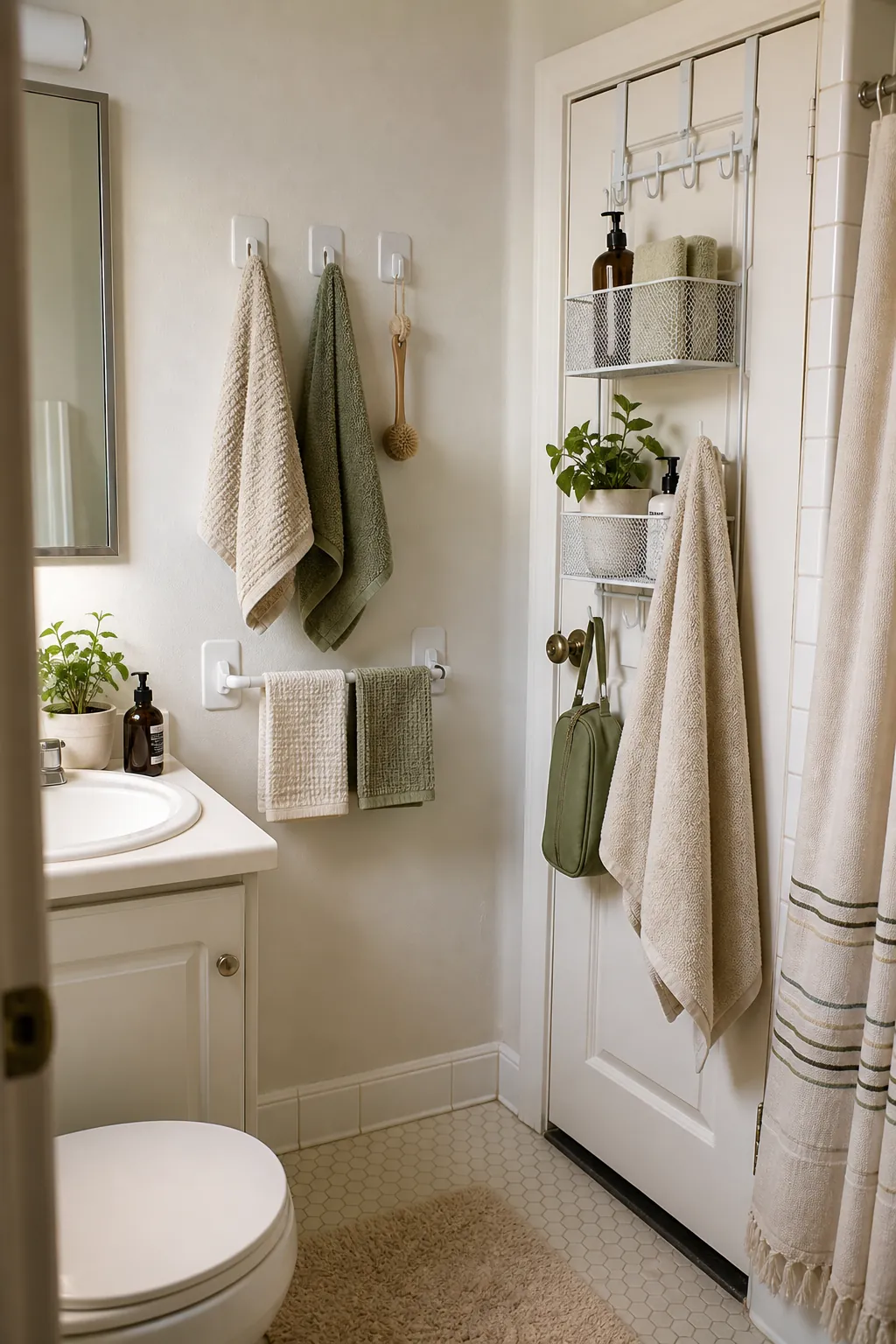
Use Renter Friendly Hooks And Rails
Renter bathroom ideas depend on removable hardware. Adhesive hooks, tension rods, over-door racks, and freestanding slim carts can add function without drilling into tile or changing the room permanently.

Improve The Mirror And Light Around The Sink
Better light can make a small bathroom feel cleaner even when nothing moves. A larger mirror, warm bright bulbs, or a simple sconce-style lamp can reduce shadows and make the sink zone feel more usable.


Create A Reset Routine That Keeps The Layout Working
A tiny bathroom design only works if it is easy to reset. Give each category a home, keep refills out of sight, and make the most visible surfaces quick to wipe down.
The Practical Finish
Before adding another product, reset the room and test the flow for one normal morning or one normal meal. If the surface stays clearer, the most-used items are easier to reach, and the room still feels open, the idea is working. Small rooms improve most when every inch has a purpose and every visible item earns its place.