
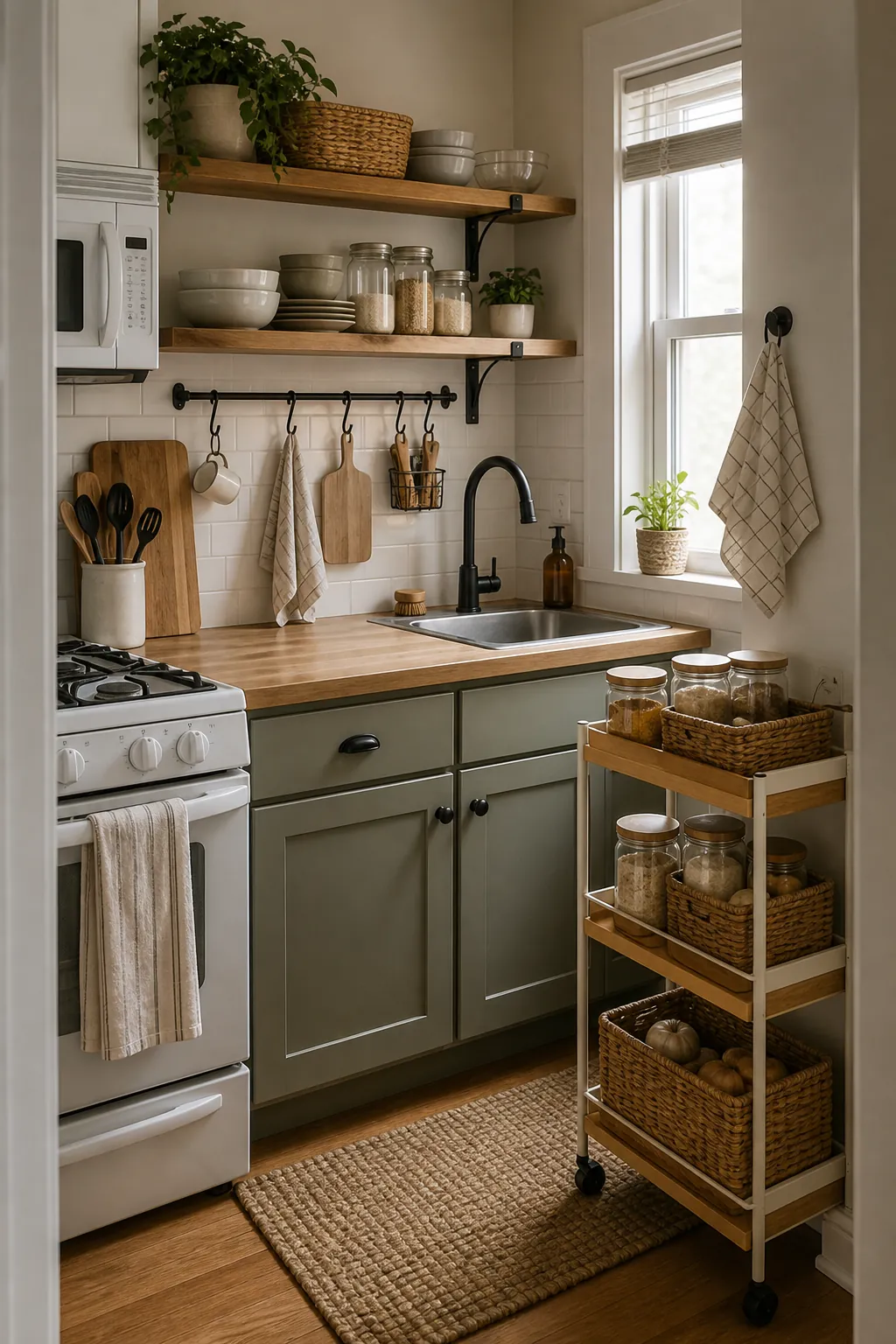
A small kitchen with limited cabinets forces every category to prove it belongs. The solution is not to buy random containers. It is to decide what gets cabinet space, what can move to open storage, and what should leave the kitchen completely.
The best small-space changes are specific, repeatable, and easy to maintain. Choose the storage move that fixes your daily bottleneck first, then make the surrounding decor quieter so the room feels cleaner and easier to use.
Start With Cabinet Priority, Not Containers
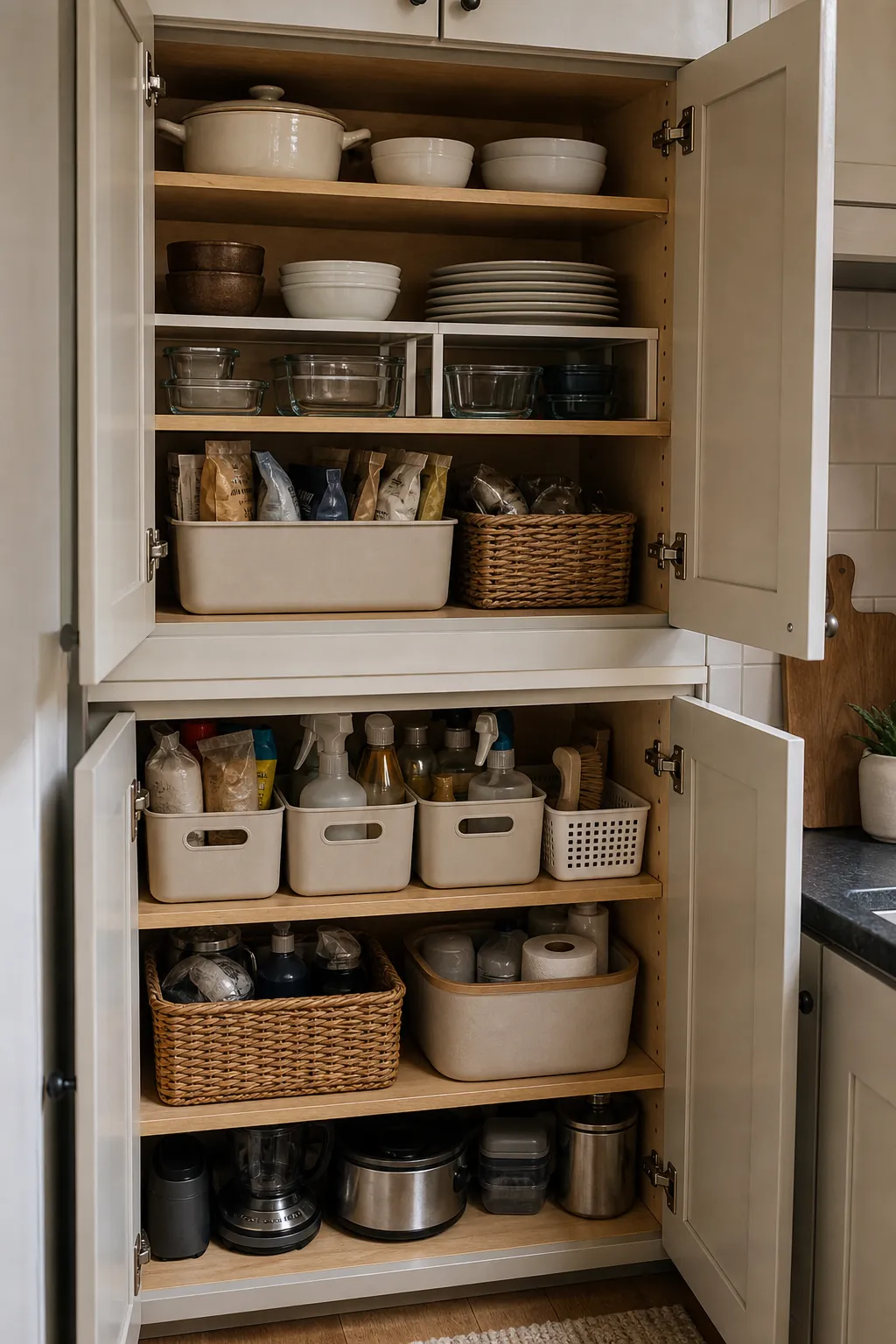
Give closed cabinets to items that look messy, stack poorly, or need protection from dust. Food bags, cleaning supplies, and mismatched plastic usually need doors more than pretty mugs do. Cabinet organization starts with choosing what deserves the cabinet.
Create A Pantry Alternative Outside The Cabinets
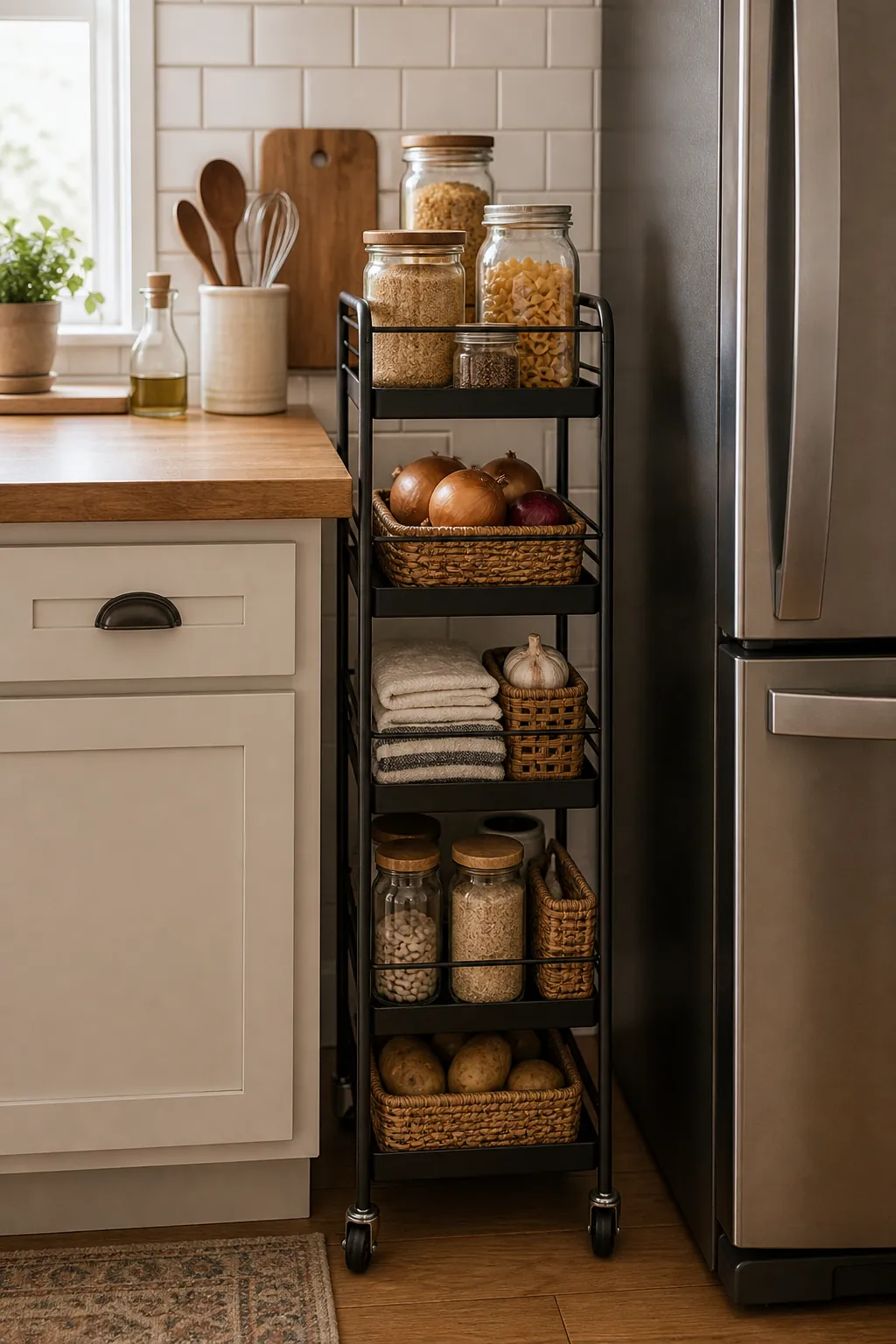
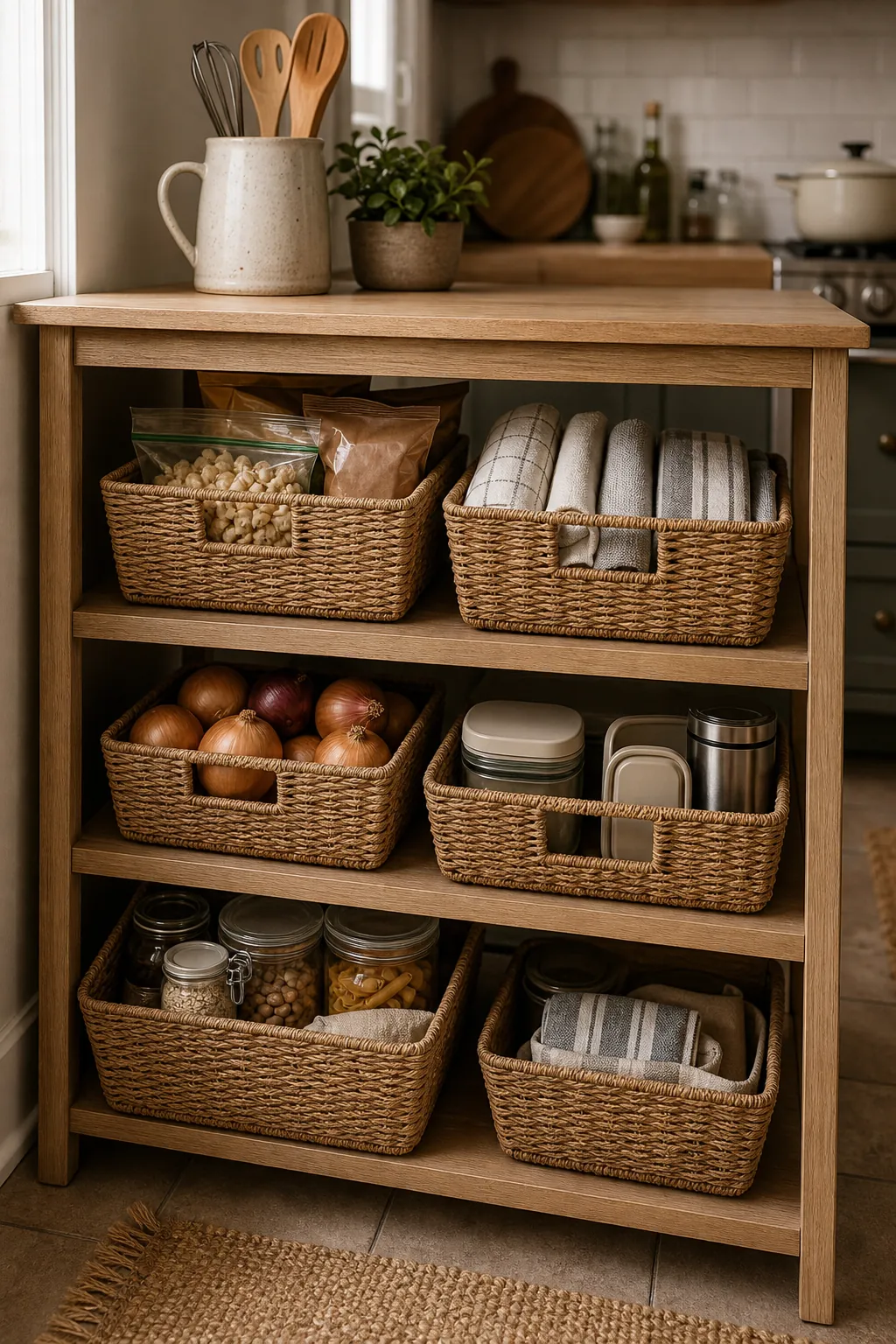
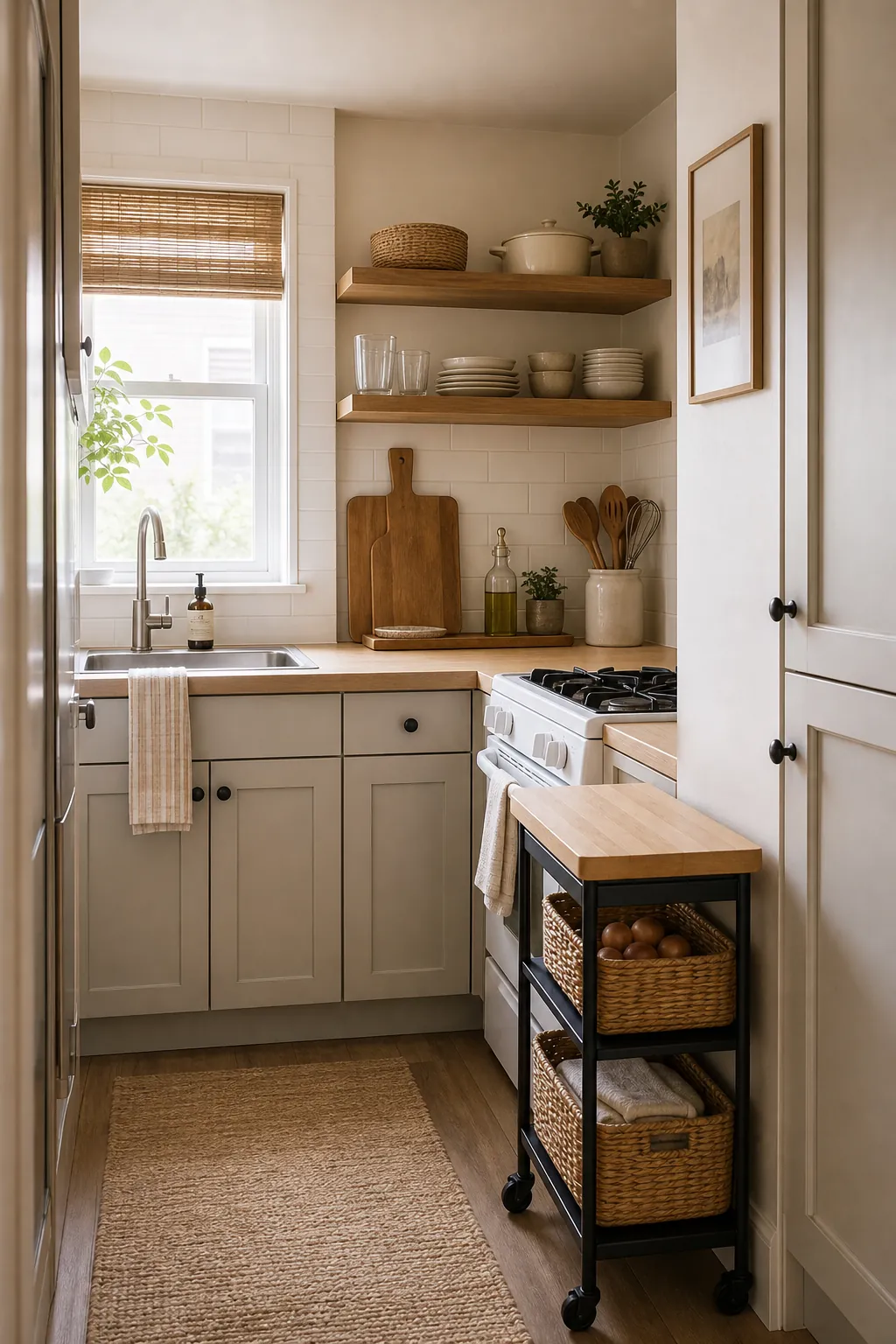
If there is no pantry, use a slim cart, freestanding shelf, wall rack, or lidded basket zone. Keep pantry alternatives narrow, labeled, and edited so they feel intentional instead of temporary clutter.
Use Wall Shelves For Good-Looking Daily Items
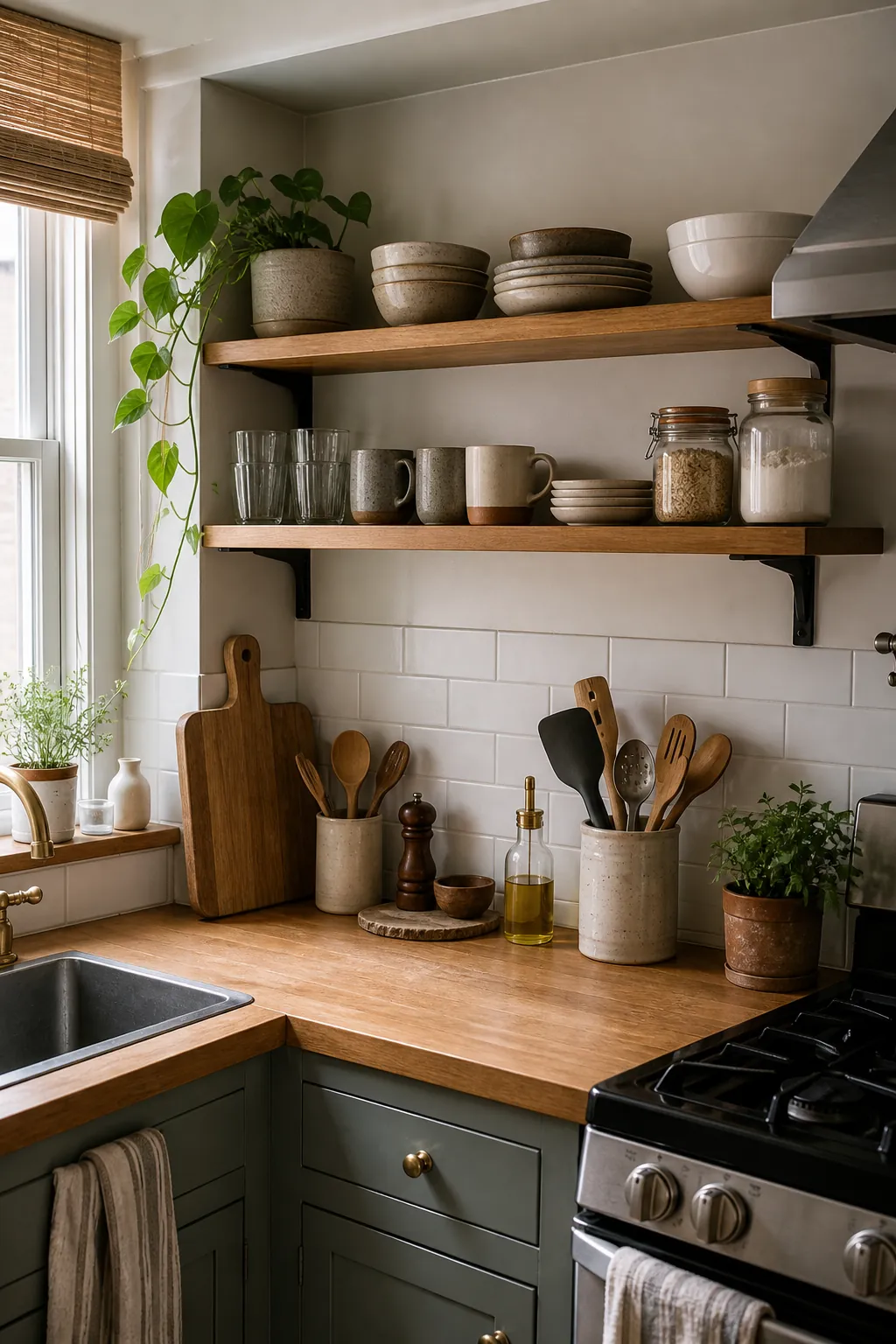
Wall shelves can hold plates, bowls, jars, mugs, or mixing bowls if the display stays practical. Use fewer items than the shelf can technically hold so the kitchen still feels calm.
Make Kitchen Baskets Work By Category
Baskets are useful when each one has a job: snacks, baking supplies, onions, dish towels, or lunch containers. Mixed baskets become a second junk drawer.
Use Cabinet Doors And Sides For Thin Storage
Cabinet doors, fridge sides, and end panels can hold thin items like wraps, measuring spoons, cutting boards, or spice racks. These areas help when the inside of every cabinet is already full.

Declutter The Items That Steal Cabinet Space
Limited cabinets make duplicates expensive. Extra mugs, unused pans, specialty gadgets, and expired pantry items quietly push daily tools into bad locations. Remove them before buying another shelf.
The Practical Finish
Before adding another product, reset the room and test the flow for one normal morning or one normal meal. If the surface stays clearer, the most-used items are easier to reach, and the room still feels open, the idea is working. Small rooms improve most when every inch has a purpose and every visible item earns its place.