
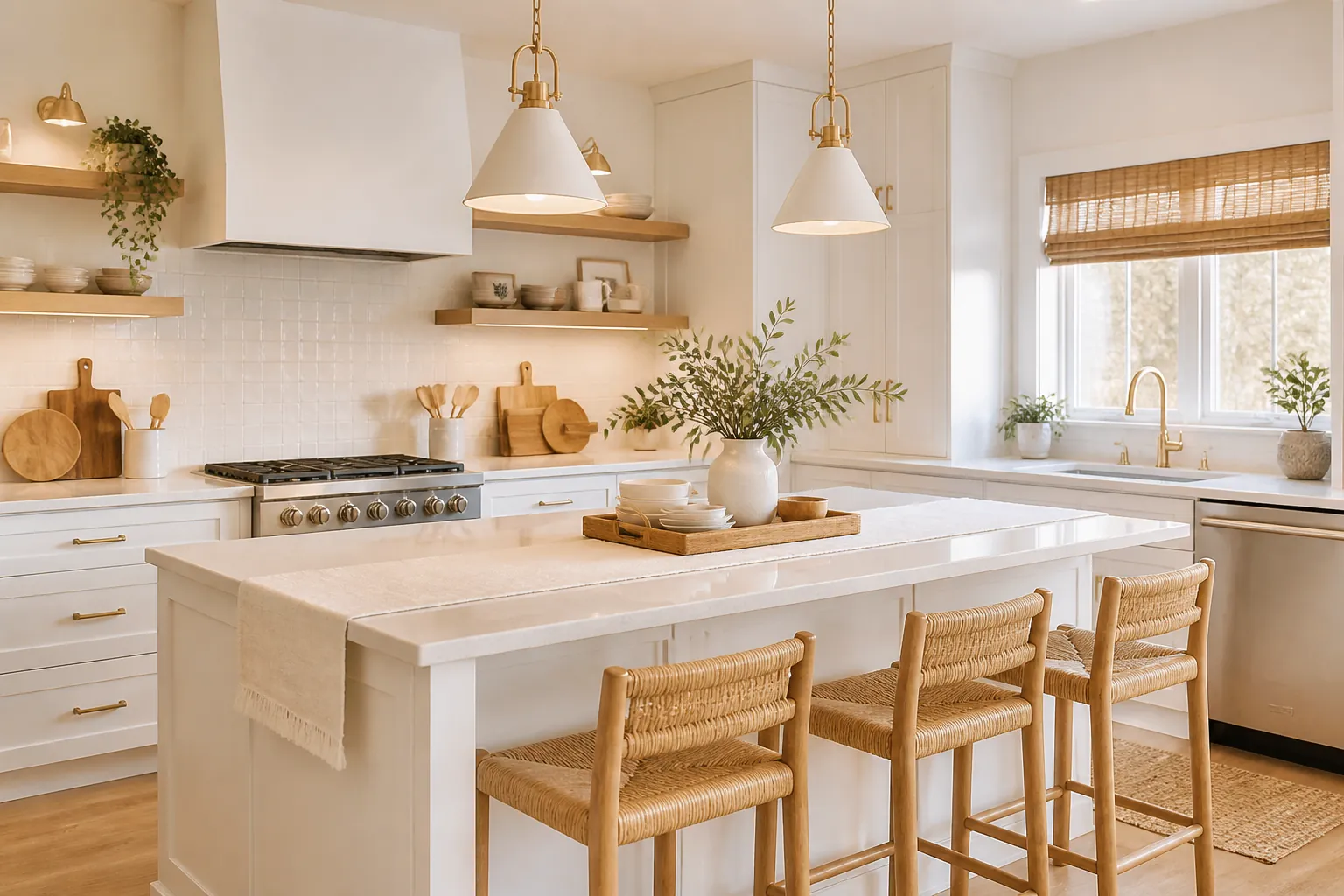
A white kitchen usually turns cold for one of three reasons: the light is too blue, every surface is too smooth, or the room has nothing natural for the eye to rest on. The fix is not to fight the white. It is to give the white better company.
The strongest White Kitchen Decor ideas do not bury the room under color. They add warmth in layers: warmer bulbs, wood accents, texture, soft textiles, plants, and a few grounded materials that make the cabinets feel intentional instead of sterile. That is how a Warm White Kitchen stays bright without feeling like a showroom.
Start With The Light Before You Buy More Decor
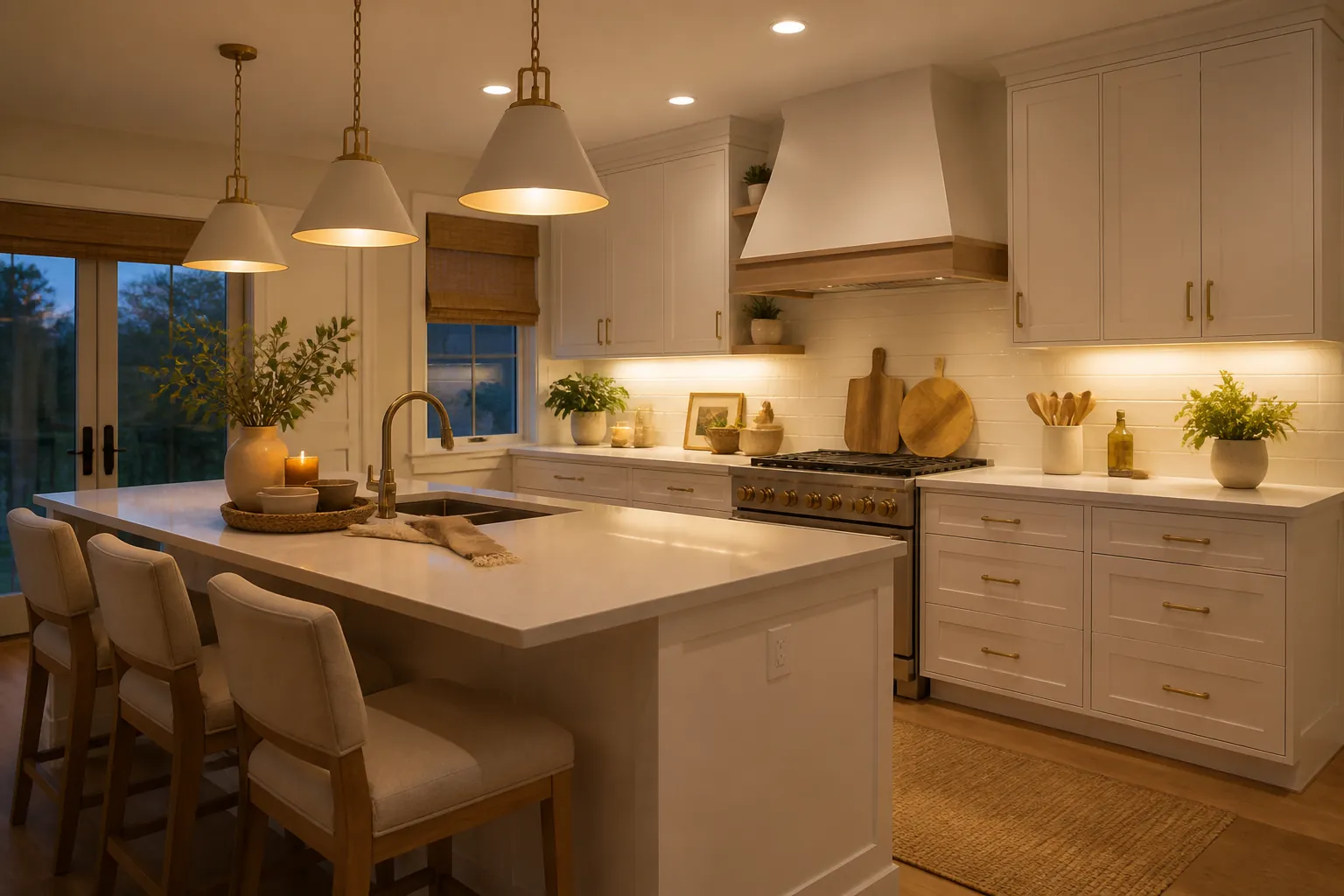
If the kitchen feels cold at night, check the bulbs first. A white room under cool, bright overhead light can make even beautiful cabinets feel harsh. The change that often makes the fastest difference is switching to warmer, dimmable lighting in the same color temperature across the room.
Aim for a soft warm white rather than a blue-white glare. Under-cabinet lights, a small counter lamp, or pendants over an island can create pools of warmth where the room actually gets used. Layered lighting makes white surfaces look softer because it creates shadow, depth, and glow. Without those layers, the whole kitchen reads flat.
Add Wood Where Hands And Eyes Naturally Pause
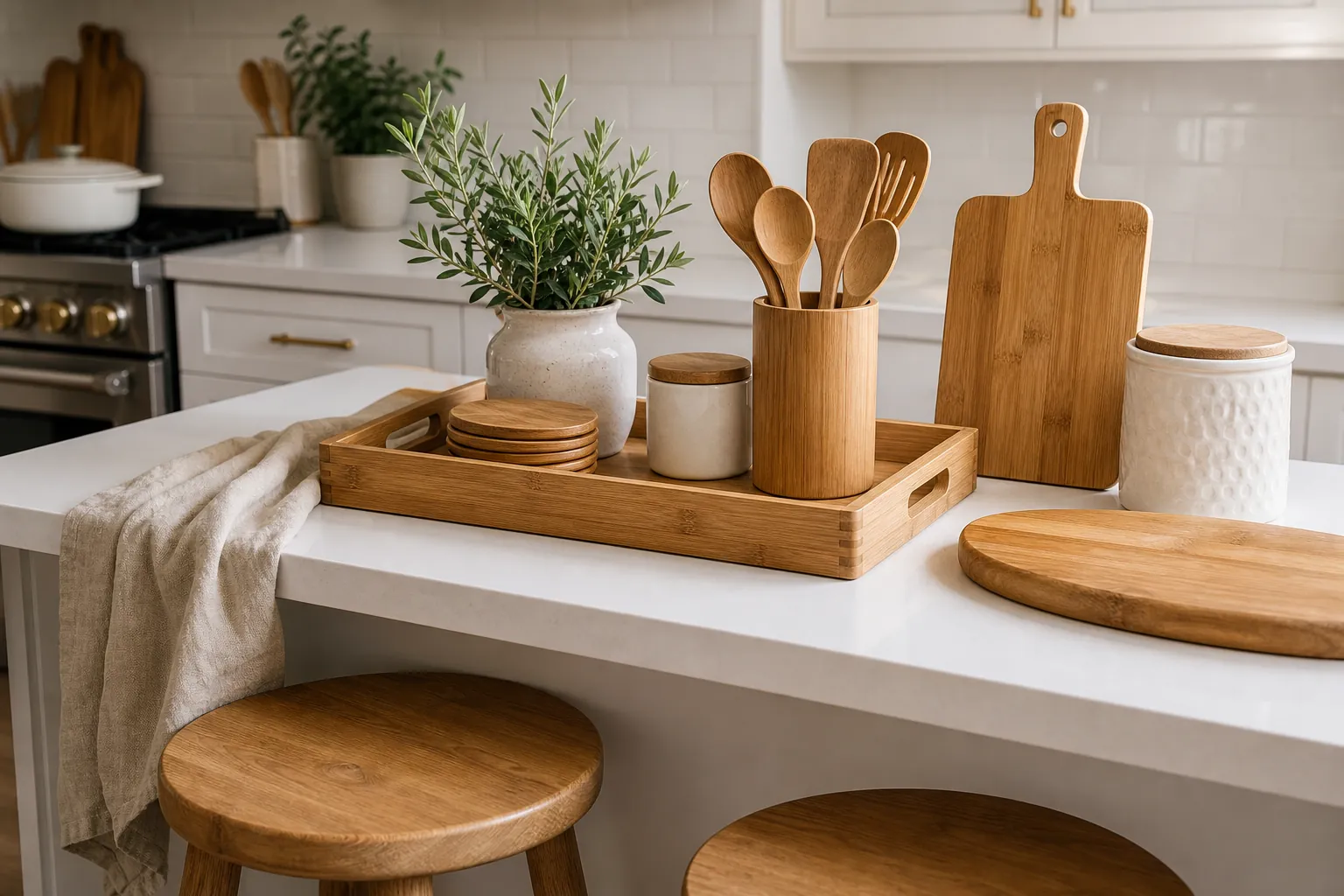
Wood works because it gives white something warm, matte, and imperfect to contrast against. You do not need to replace every cabinet door. Start where people already look and touch: the island, open shelves, cutting boards, stools, trays, utensil crocks, and the zone around the sink.
Light oak, walnut, bamboo, and aged wood all shift the mood, but the key is repetition. One cutting board can look random. A cutting board, wood stool legs, a bamboo shade, and a warm wood bowl start to look like a choice. Good wood accents make a white kitchen feel warmer without making it feel crowded.
Replace Flat White-On-White With Kitchen Texture
Cold kitchens often have plenty of nice materials, but they are all doing the same thing: glossy white, smooth stone, straight cabinet fronts, polished metal. The room needs texture more than it needs another accent color.
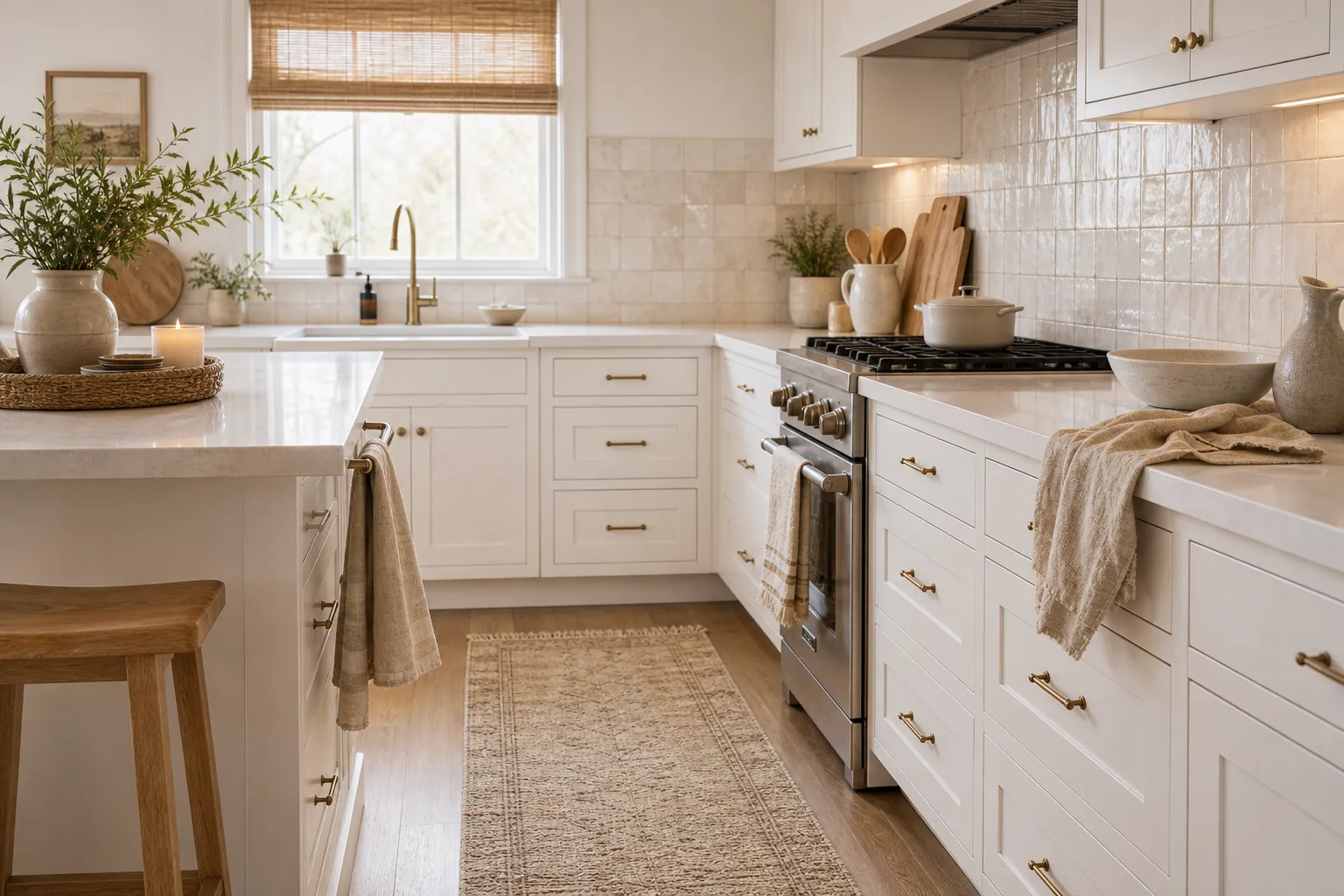
Look for surfaces that break the light gently. Handmade tile, zellige-style backsplash, honed stone, woven shades, linen cafe curtains, ribbed glass, cane seats, a wool runner, or a nubby dish towel can all change the feeling of the room. Kitchen texture is what keeps a white palette from feeling blank. It adds movement while the color scheme stays calm.
Use Warm Metals As Small Anchors
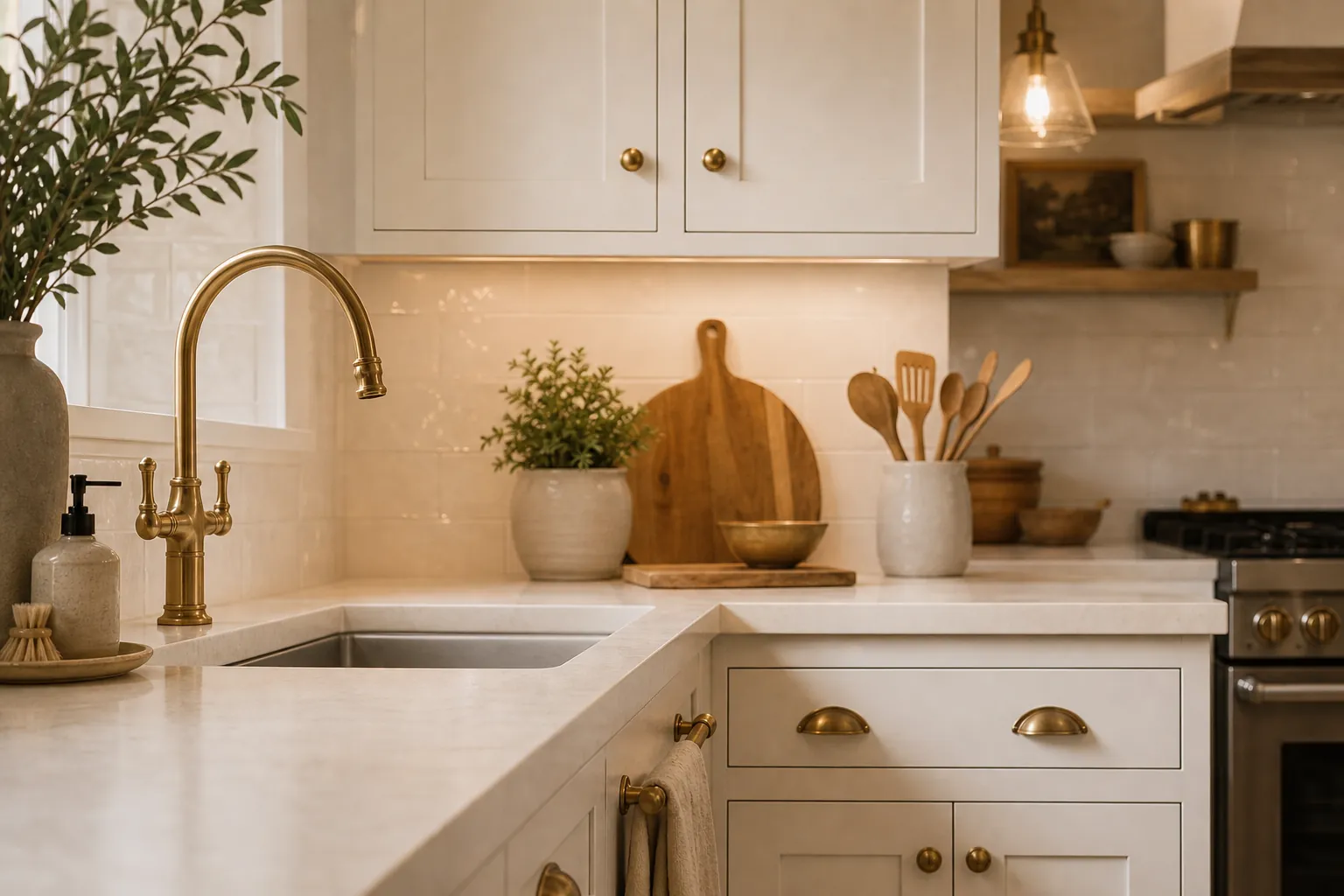
Hardware is not magic on its own, but it can help the whole room lean warmer. Brass, aged brass, bronze, copper, or even a warm brushed nickel can soften white cabinets more than icy chrome or very stark black hardware.
The trick is restraint. You do not need every finish in the kitchen to match perfectly. Let warm metal show up in a few deliberate places: cabinet pulls, a faucet, pendant details, a small rail, picture frames, or a lamp. Warm metals work best when they echo other warm materials, not when they are the only warm thing in the room.
Bring In Natural Color Without Losing The White Kitchen
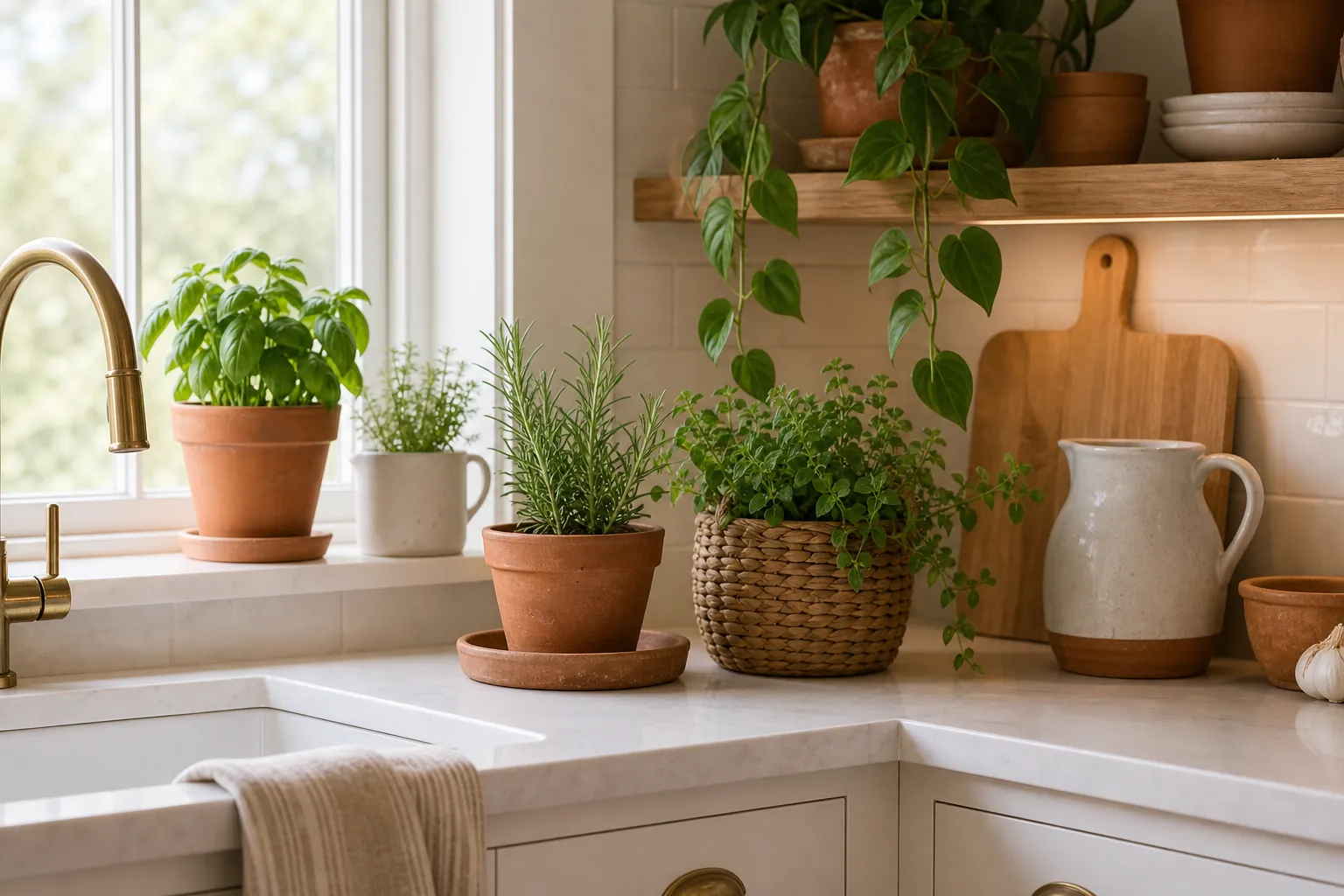
A Natural Kitchen does not have to be green from floor to ceiling. A little plant life, a bowl of lemons, terracotta pots, sage textiles, or muted art can make white feel lived-in. These accents are especially useful if you rent, are waiting on a bigger remodel, or simply want a warmer kitchen without repainting.
Keep the color earthy rather than sharp. Olive, clay, flax, cream, muted gold, and soft brown tend to work better than high-contrast brights. The goal is not to distract from the cabinets. The goal is to give them a softer context. When color looks like it came from food, plants, wood, or stone, it usually feels natural instead of busy.
Let The Dining Area Soften The Kitchen
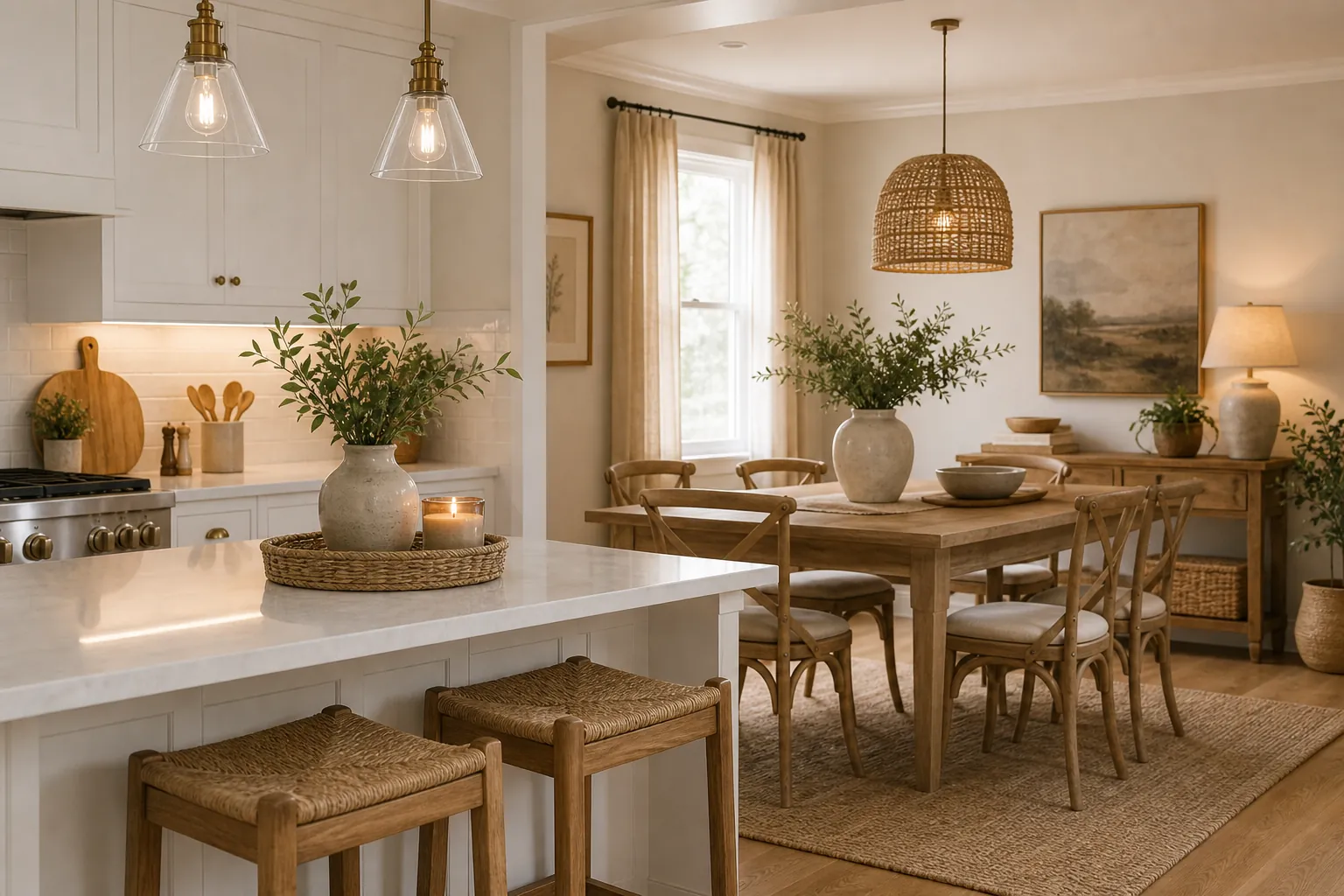
If the kitchen opens to a table, breakfast nook, or small dining corner, use that space to carry warmth across the room. This is where Dining Room Decor can do real work for the kitchen: woven chairs, a wood table, linen napkins, a pendant with a natural shade, or framed art can make the whole view feel more human.
Think about what you see from the kitchen sink or island. If that view is another wall of white, the room can feel unfinished. If the view includes wood, fabric, art, and a softer light source, the kitchen starts to feel connected to the rest of the home. A cozy kitchen often borrows warmth from the rooms around it.
A Better Order Of Operations
When a white kitchen feels cold, it is tempting to buy random accessories until the counters fill up. That usually creates clutter before it creates warmth. Work in this order instead:
- Fix the lighting first so the white stops reading blue or clinical.
- Add one repeated wood tone through stools, boards, shelves, bamboo shades, or bowls.
- Choose one texture upgrade such as a runner, woven shade, handmade tile, or linen curtain.
- Use warm metal as an accent instead of relying on hardware to solve the whole room.
- Style with natural color from plants, fruit, terracotta, art, or soft textiles.
The point is not to make the kitchen less white. The point is to make the white feel chosen. Once the light is warmer, the surfaces have texture, and the room has a few natural materials, a white kitchen can feel bright, calm, and genuinely welcoming.