
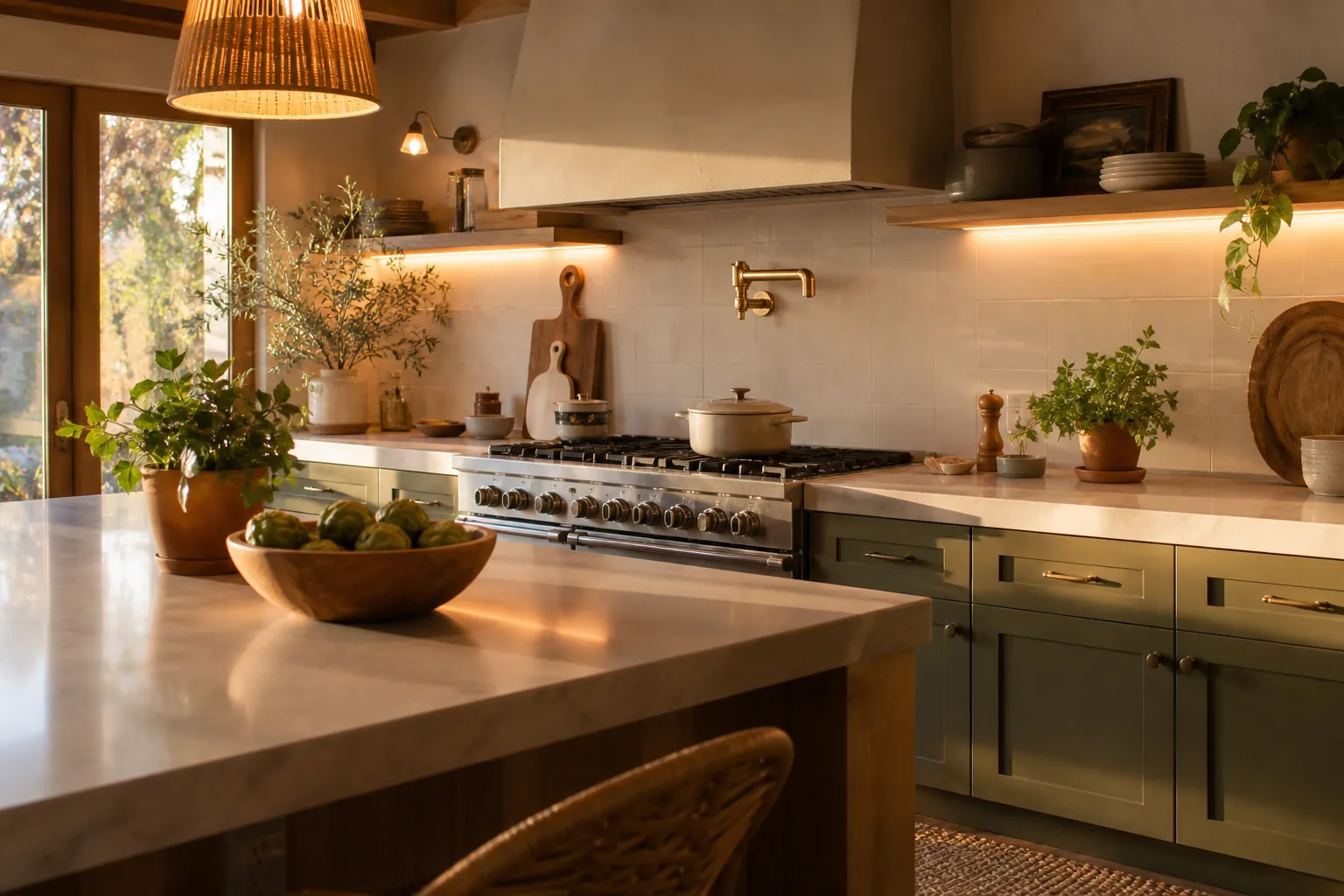
A warm kitchen is not just a kitchen with beige cabinets or a pile of decorative bowls. The rooms that feel genuinely cozy usually have a better mix: softer light, natural texture, useful wood accents, a few living details, and enough breathing room for cooking to still feel easy. The goal is to make the space feel cared for without turning every counter into a display shelf.
That matters because kitchens are full of hard surfaces. Stone, tile, metal, glass, and bright task lighting are practical, but they can make even a clean kitchen feel cold. The best warm kitchen ideas work by balancing those hard finishes with pieces that look touchable, age well, and support the way you cook every day.
Start with the light the kitchen uses after sunset
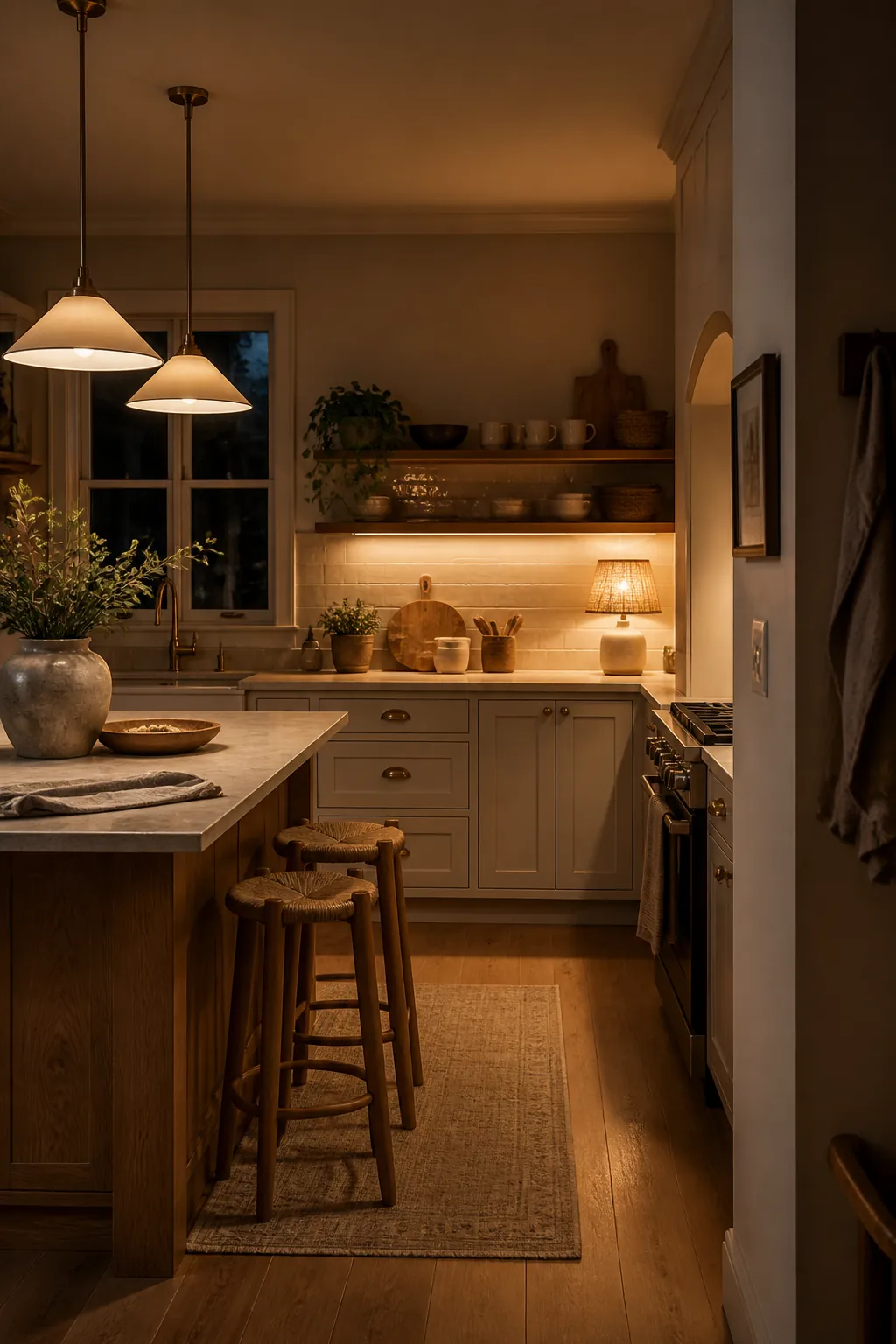
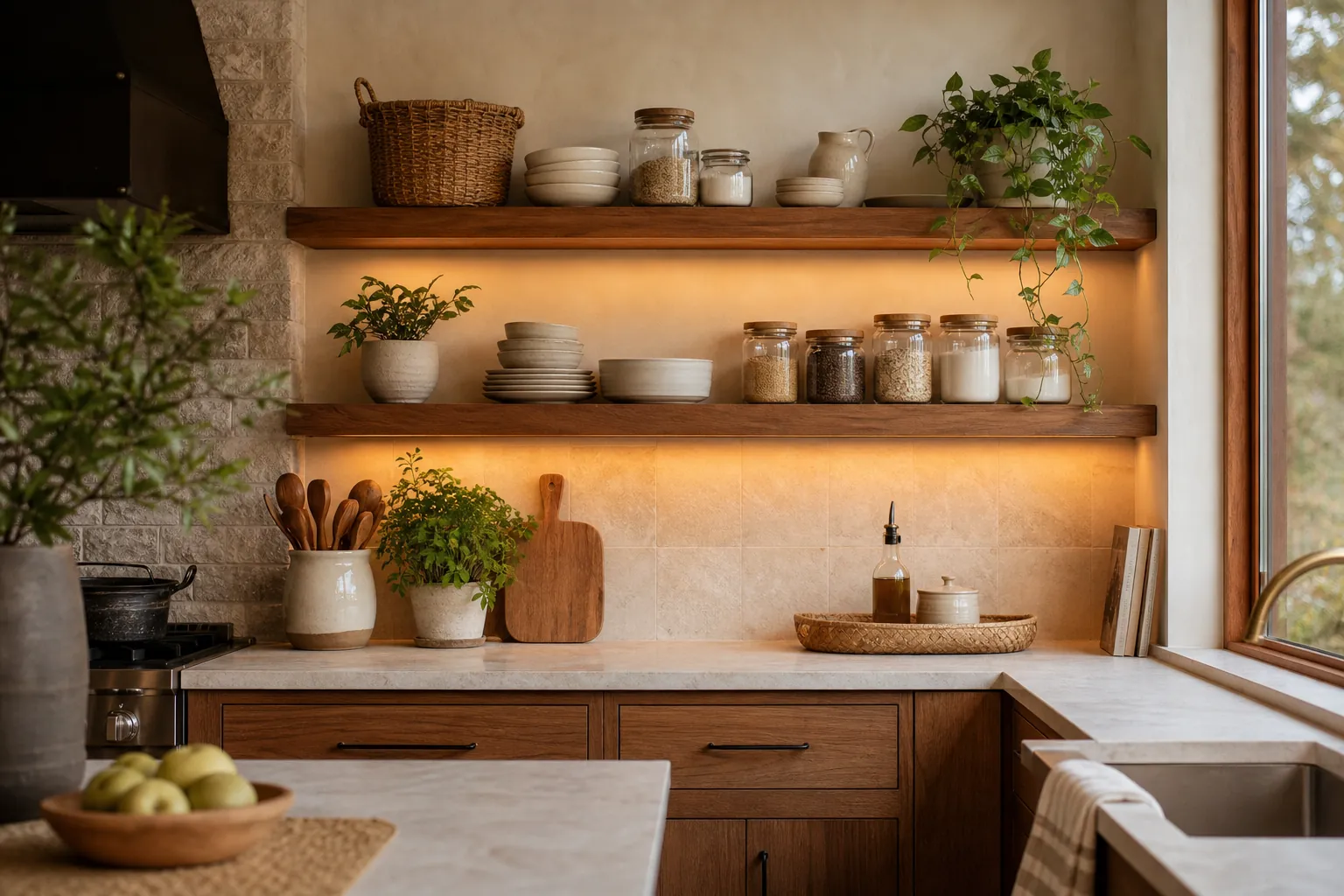
If a kitchen feels sterile at night, the first fix is usually lighting, not decor. Overhead lights are helpful for chopping and cleaning, but they flatten the room when they are the only source. Add a second layer: a warm pendant over the island, a shaded sconce near open shelving, a small lamp on a counter corner, or under-shelf lighting that washes the backsplash instead of glaring into the room.
Look for bulbs in a warm range and avoid mixing several color temperatures in the same sightline. One consistent warm glow makes wood, stone, bamboo, ceramics, and plants look more intentional. This is especially useful in white or gray kitchens, where cozy kitchen styling needs warmth from light before accessories can do much work.
Let wood show up where hands naturally land
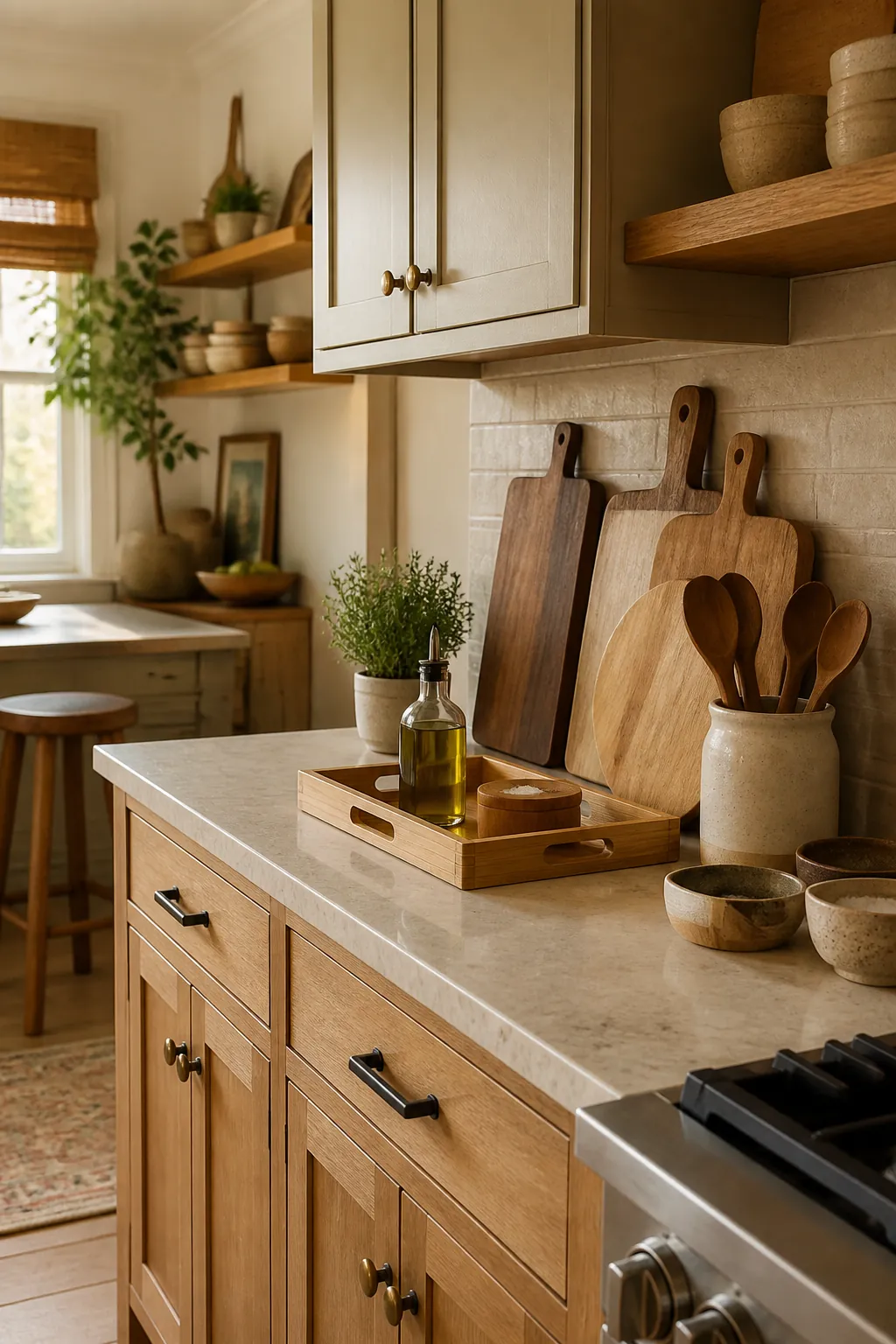
Wood accents feel most natural when they are tied to real kitchen habits. A maple cutting board beside the prep zone, a bamboo utensil crock near the stove, oak stools tucked under the counter, or a walnut rail with everyday tools can warm the room without looking staged. These pieces also soften the visual weight of appliances and cabinet fronts.
For a natural kitchen, do not make every wood tone match. A room often feels more collected when the tones are related but not identical: pale oak shelves, a slightly darker cutting board, a bamboo tray, and woven baskets can sit together comfortably. Repeat wood in at least three small places so it reads as a design choice, not a random accessory.
Use texture where kitchens usually feel hard
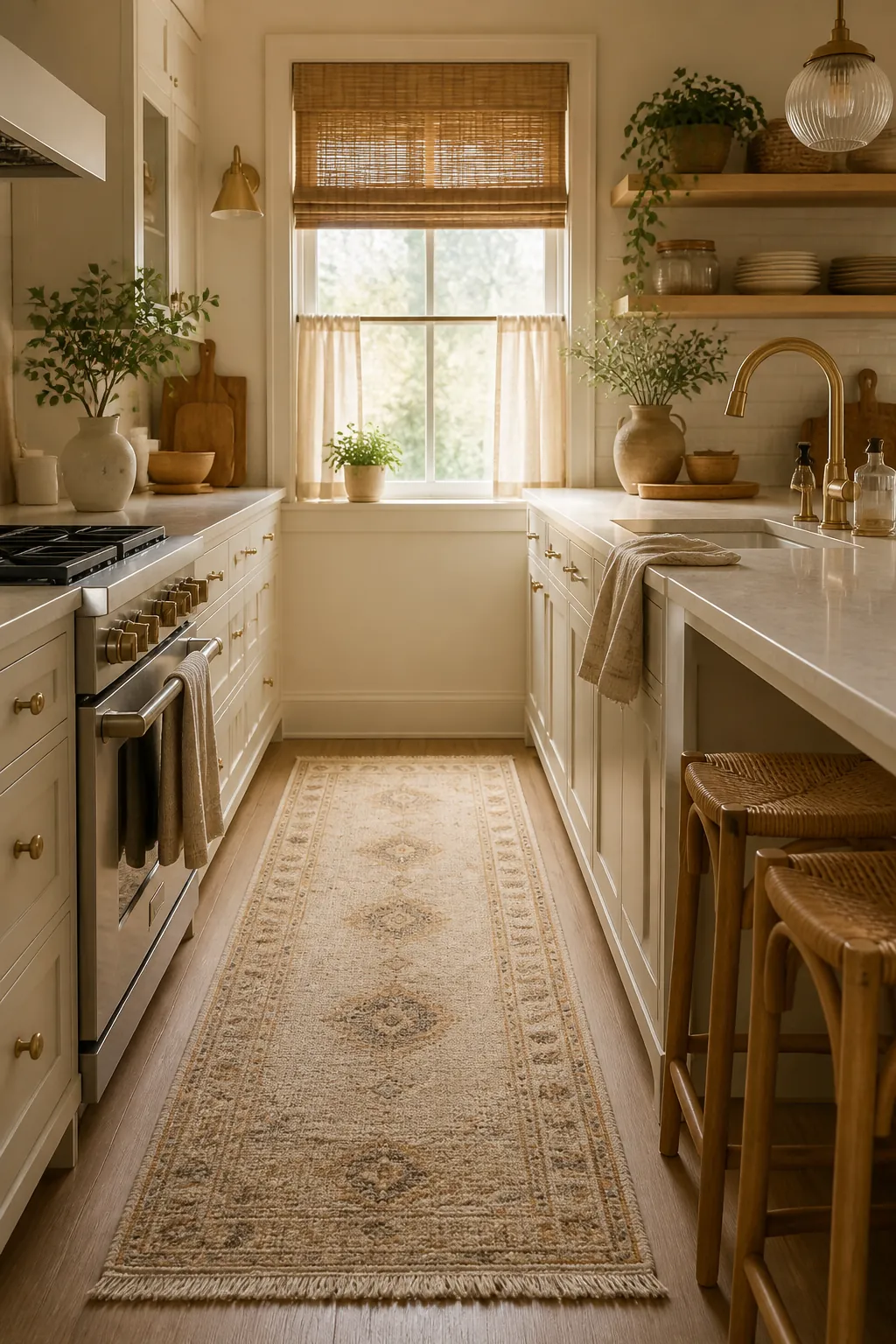
Textiles are often missing from kitchens because they have to deal with spills, heat, and daily mess. That does not mean the room has to feel bare. A washable runner, linen cafe curtains, cotton dish towels, a woven shade, or a cane-backed stool can add warmth without making the kitchen fussy.
The trick is to choose texture with a job. A runner should make the sink or prep area more comfortable. A curtain should soften a window. A woven basket should hold onions, napkins, or cleaning cloths. Cozy kitchen decor works best when it earns its place through use. That is what keeps boho kitchen details from feeling cluttered or purely decorative.
Turn open shelving into a lived-in story
Open shelving can make a warm kitchen feel personal, but it can also become visual noise quickly. Keep the shelf edit simple: stack the dishes you actually use, add one or two handmade ceramic pieces, lean a small cutting board, tuck in a cookbook, and leave some empty space. The shelf should look ready for breakfast, not like a store display.
Warm open shelving depends on rhythm. Mix vertical and horizontal shapes, rough and smooth textures, matte and glazed finishes. If everything is the same height or color, the shelf goes flat. If every item is special, the shelf feels busy. The coziest shelves combine ordinary daily pieces with a few natural materials that make the kitchen feel lived in.
Bring in plants and produce like color, not clutter
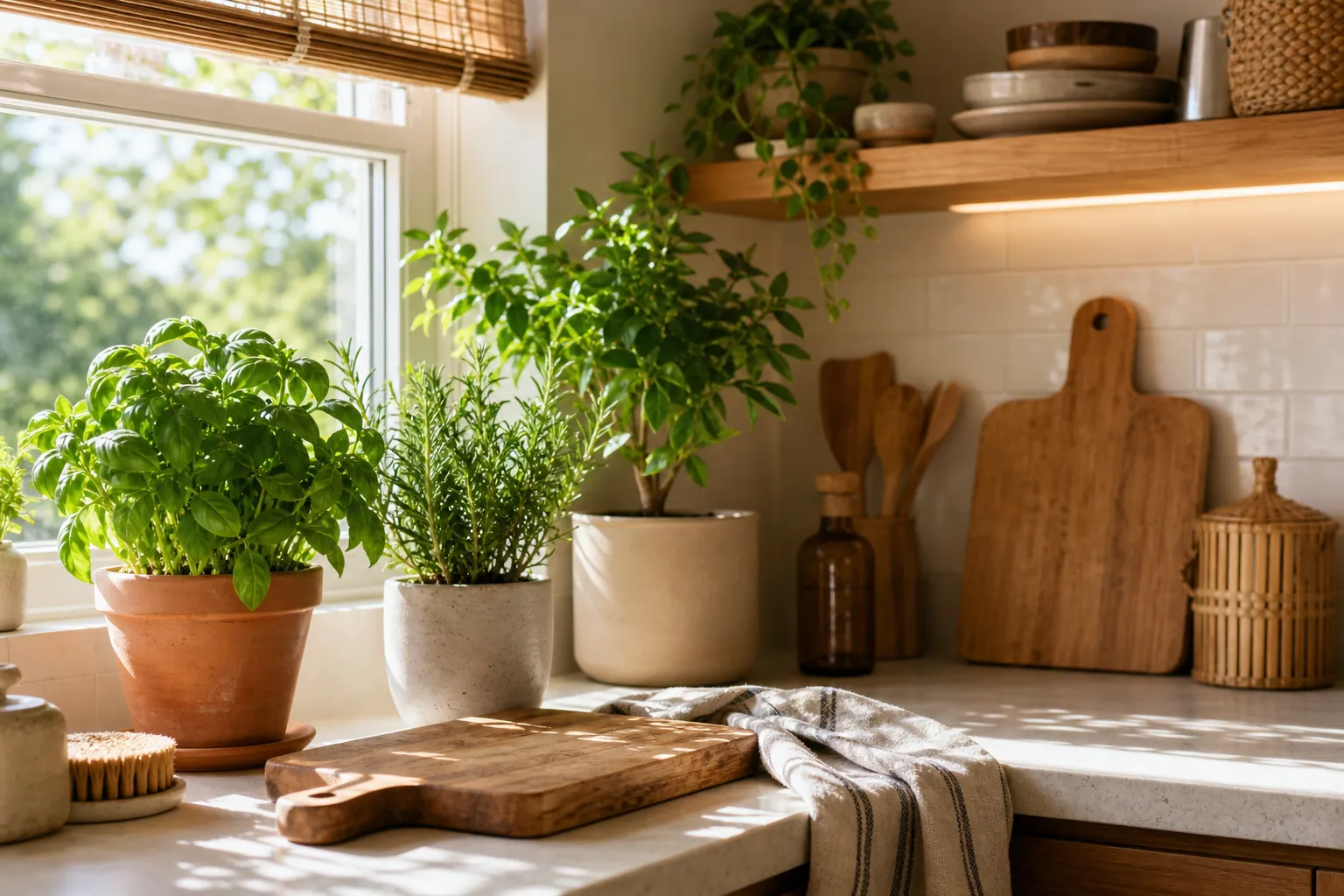
Kitchen plants are one of the easiest ways to make a cooking space feel alive, especially when the palette is neutral. Start with herbs near a bright window, a trailing plant on a high shelf, or a small olive or pothos in a corner that needs softness. If the room does not get enough light, use fruit, branches, or cut stems instead.
Greenery works because it breaks up straight cabinet lines and adds a color that rarely fights with wood, stone, or warm metal. Keep it practical by grouping plants where watering is easy and away from heavy grease zones. One healthy plant in the right place feels warmer than five struggling plants scattered around the room.
Connect the dining edge so cooking feels social
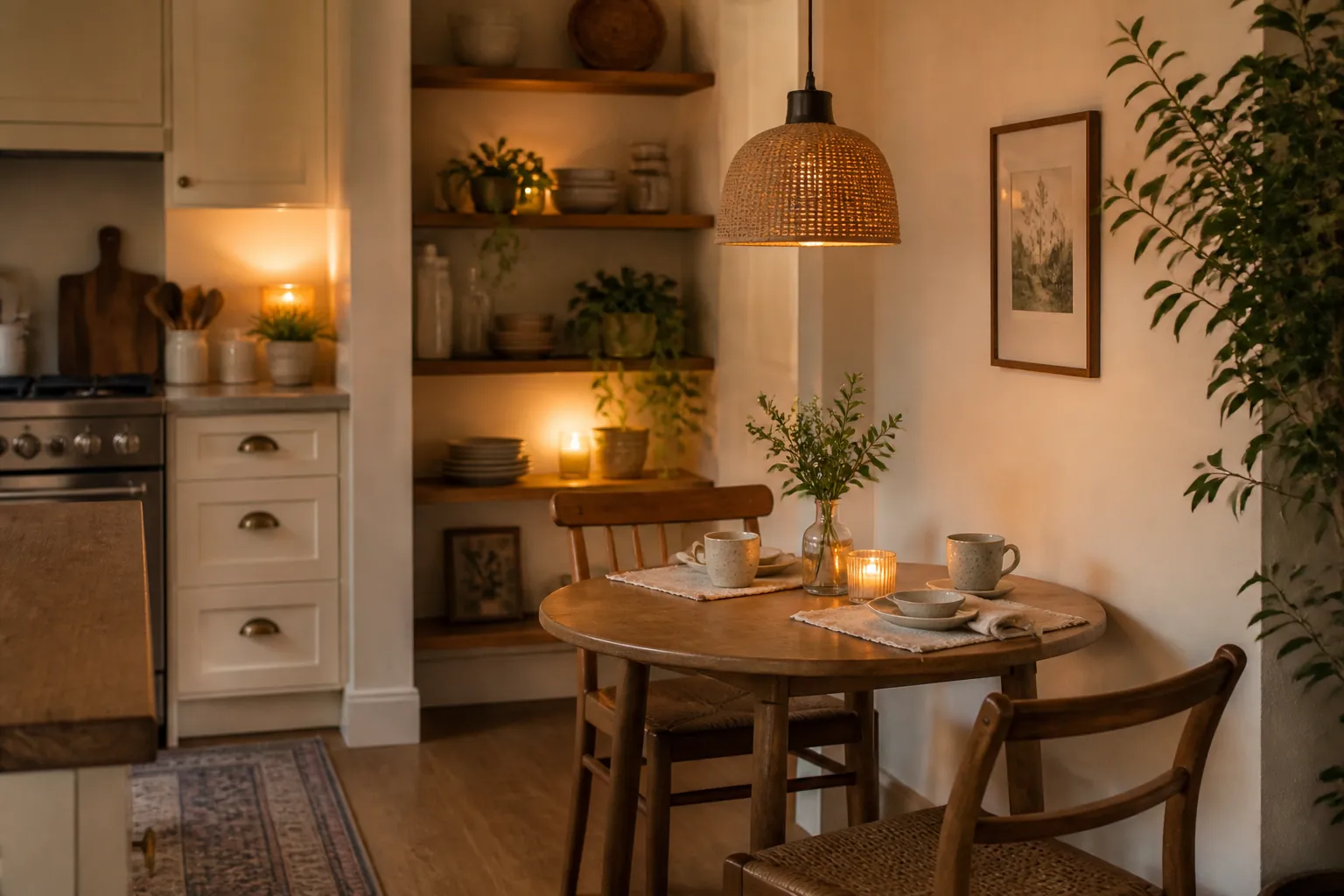
A cozy kitchen often borrows warmth from the dining room. Even a small eating edge can change the mood: a round cafe table near the window, a wood bench under a breakfast nook, a pair of woven counter stools, or a pendant that makes the island feel like a gathering spot. This is where kitchen decor and dining room decor should speak the same language.
Repeat one or two materials across both areas. If the kitchen uses bamboo accessories, bring a bamboo shade or tray to the dining side. If the dining chairs are wood, echo that tone with cutting boards or shelf brackets in the kitchen. Warmth feels stronger when the cooking and eating zones look connected instead of separate.
Edit one cold detail before buying more decor
When a kitchen still feels cold after adding warm pieces, look for the one detail that is overpowering the room. It might be blue-white bulbs, bare windows, a countertop crowded with small appliances, overly cool hardware, or shelves filled edge to edge. Removing or changing that one detail can make the whole room feel calmer.
The most reliable warm kitchen formula is simple: soft light, visible wood, useful texture, restrained open shelving, living color, and a dining connection. Start with the piece that affects how the room feels while you cook. Then let the rest of the kitchen styling build slowly around real use.