
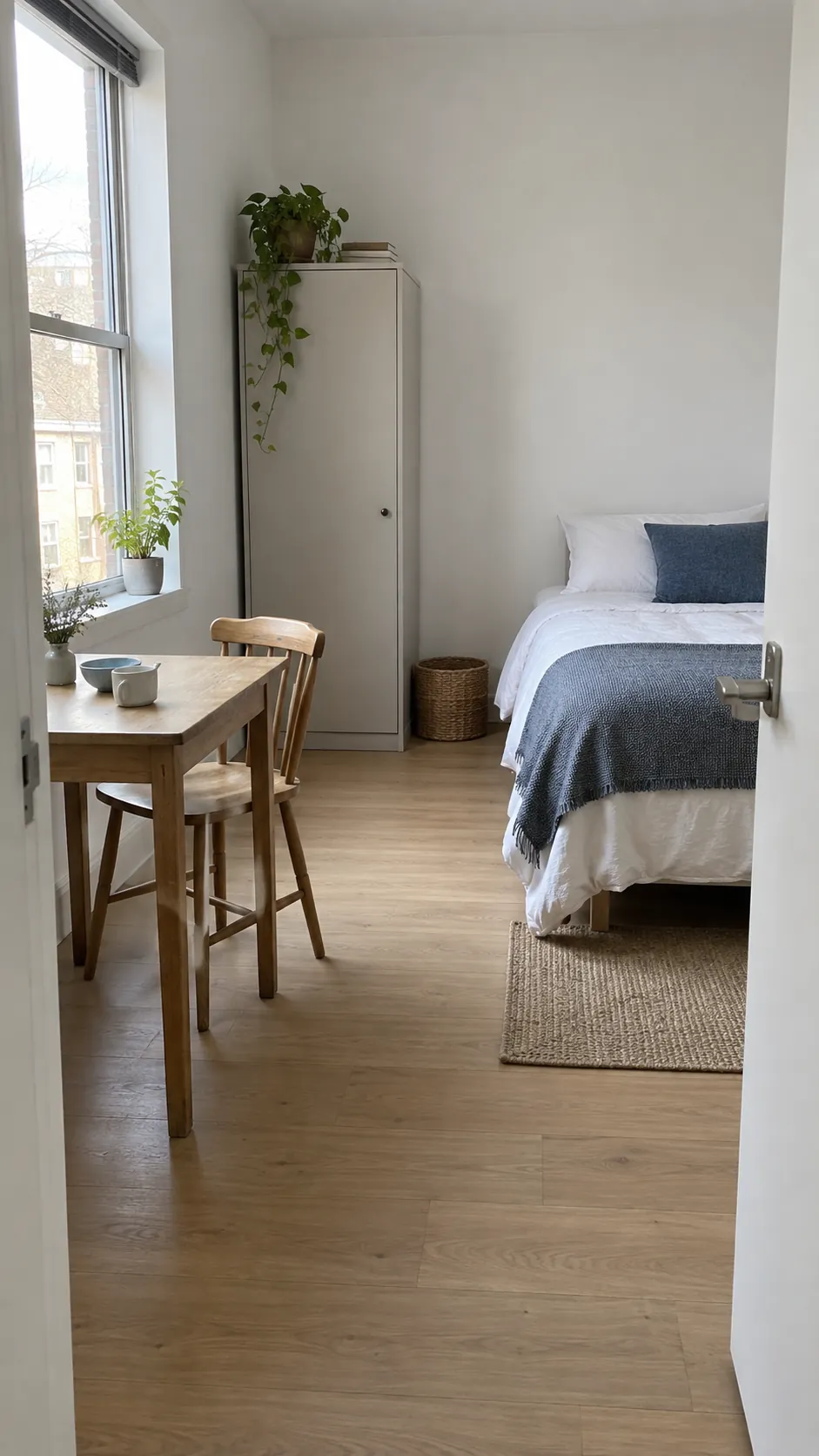
The fastest way to overspend in a small home is to buy furniture before deciding how the room needs to work. A cheap sofa, an extra shelf and a folding table can still add up to a crowded room with nowhere comfortable to sleep. Start with the daily essentials, check their footprints, and leave the rest of the budget unspent until a real need appears.
Measure the room before you spend
A bargain stops being a bargain when it blocks the closet. Measure each wall, window, doorway and fixed heater, then sketch the room with the dimensions written beside it. Include the delivery route through the building, because a sofa that fits the apartment may not fit the stairs.
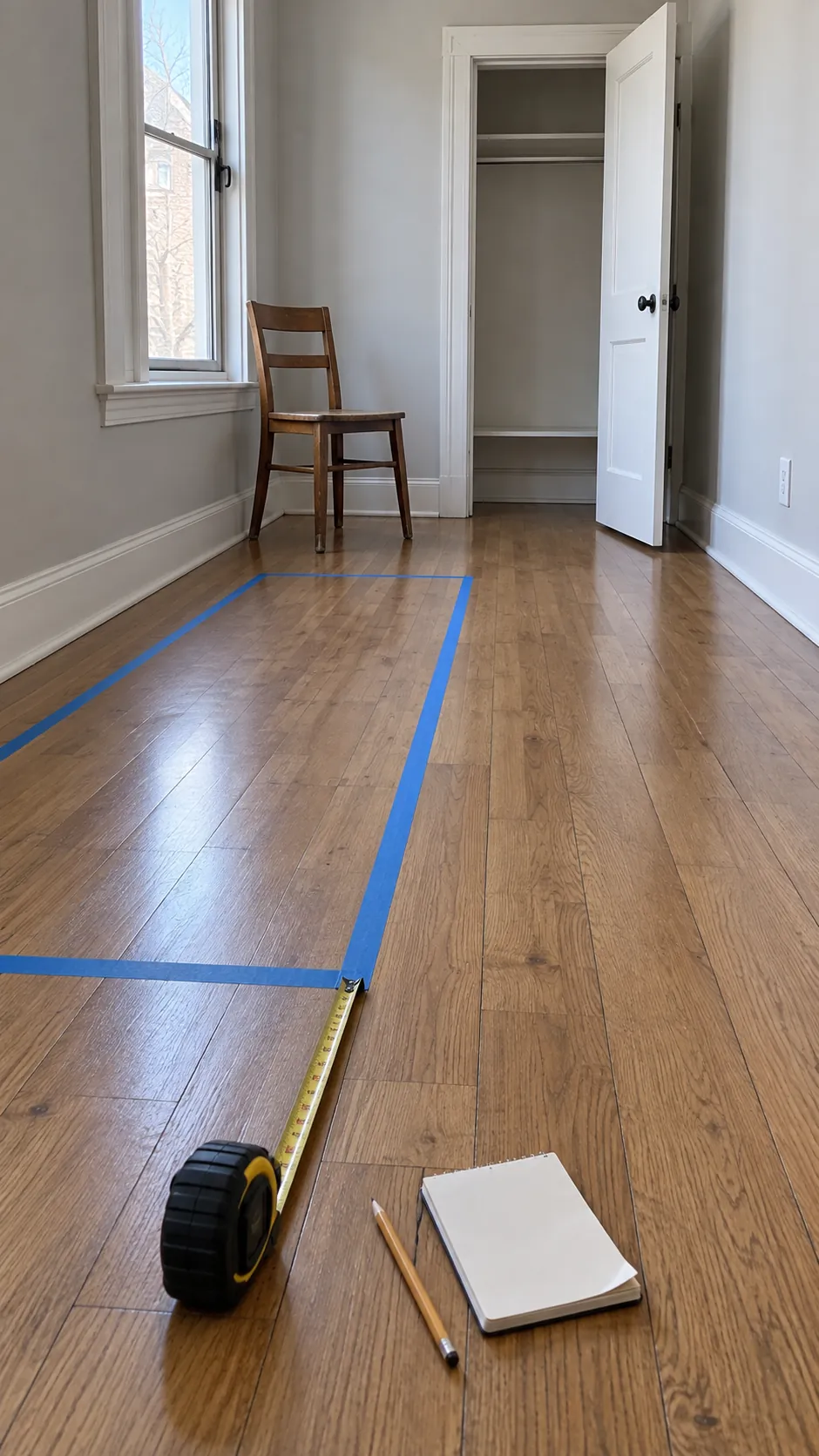
Mark the proposed furniture footprints with removable tape after testing it on your floor finish. Open cupboard doors, pull out a chair and walk from the entrance to the bed while those outlines are down. Leave the routes you actually use comfortably clear, and follow any building requirements for exits and heater clearances.
For folding furniture, record two measurements: its stored footprint and its working footprint. A compact dining set still needs room for your knees and the chair behind you. Check these dimensions before comparing finishes or sale prices.
Give every dollar a job
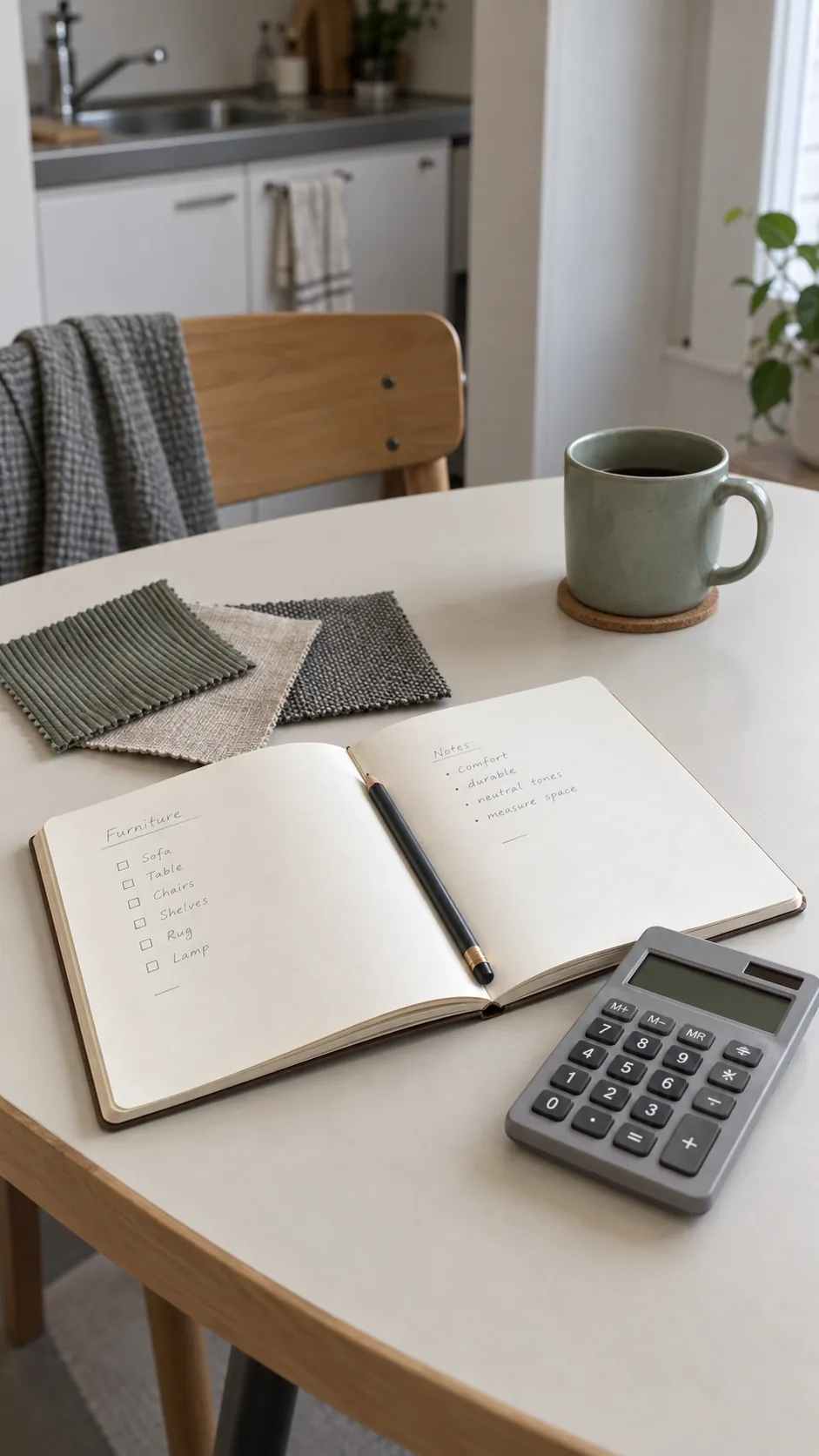
Set a furniture budget after rent, deposits, moving costs and essential household bills are covered. Reserve some of that furniture money for delivery, tax, assembly parts and unexpected fixes. Your spending limit should include the cost of getting an item usable inside the room, not just the price on its listing.
For illustration, a $1,000 furnishing allowance might assign $450 to a mattress and frame, $150 to a table and chair, $100 to storage, $80 to lighting and privacy, and $220 to delivery and contingency. Those are planning envelopes, not current store quotes. If your sleeping setup costs more, delay the sofa or decoration instead of pretending the total has not changed.
Choose your sleeping setup before your sofa
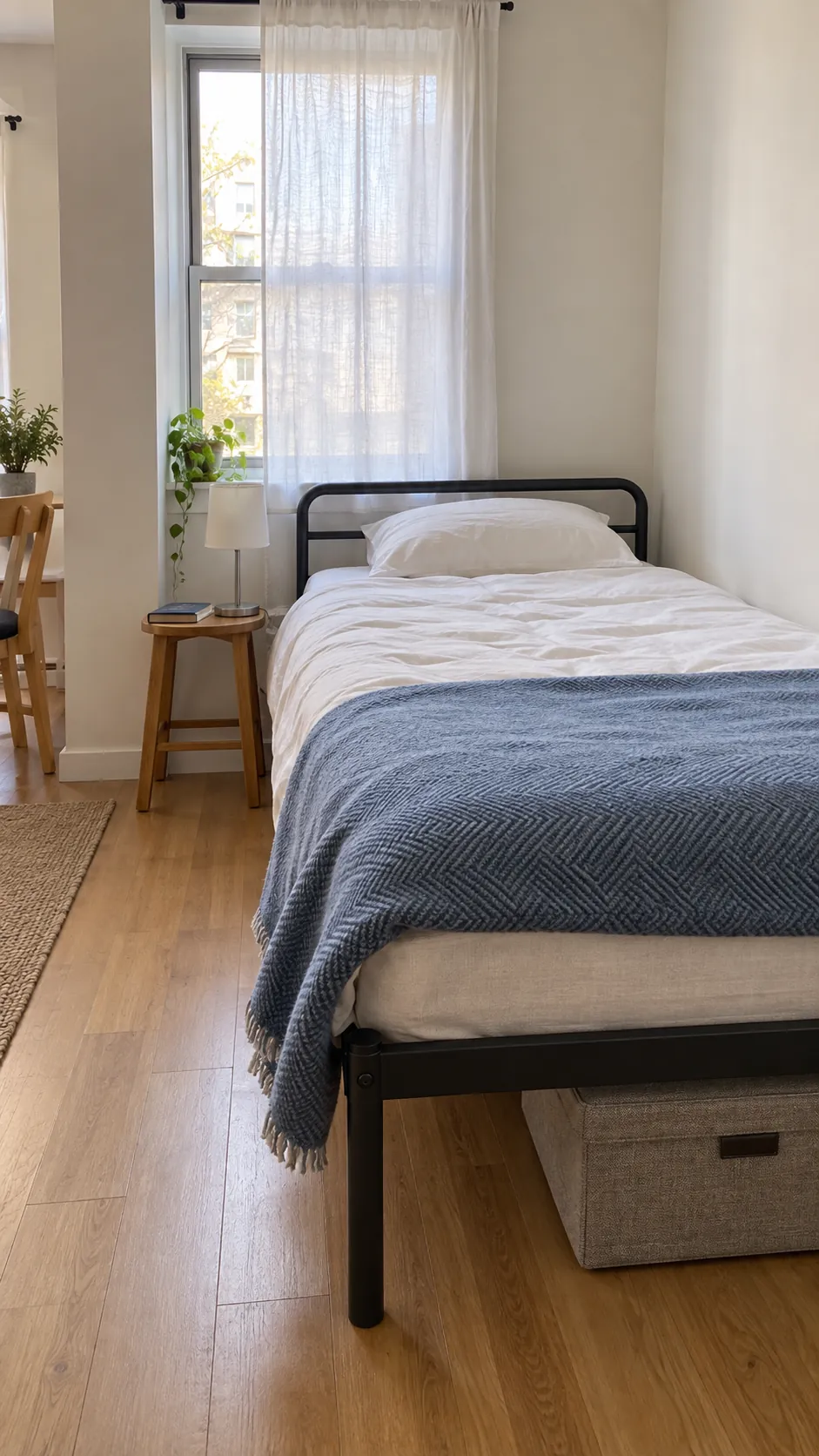
A studio does not automatically need a sofa bed. If a regular bed fits while preserving circulation, a simple frame with usable storage underneath can avoid a daily conversion chore. A daybed can provide a sleeping surface and somewhere to lounge, although deep seats often need firm back cushions to feel comfortable.
Choose a sofa bed for a studio only after checking its open dimensions, mattress support and conversion mechanism. Try the actual model in person when possible, and read the return terms before buying it. Decide where pillows and bedding will go during the day; a disappearing bed is less helpful when its bedding occupies the only chair.
Buy for the person who sleeps there every night before making room for occasional guests. A smaller sitting area may be a better compromise than an uncomfortable primary bed. Keep the sleep purchase early in the plan so later bargains have to fit around it.
Buy secondhand where you can inspect the value
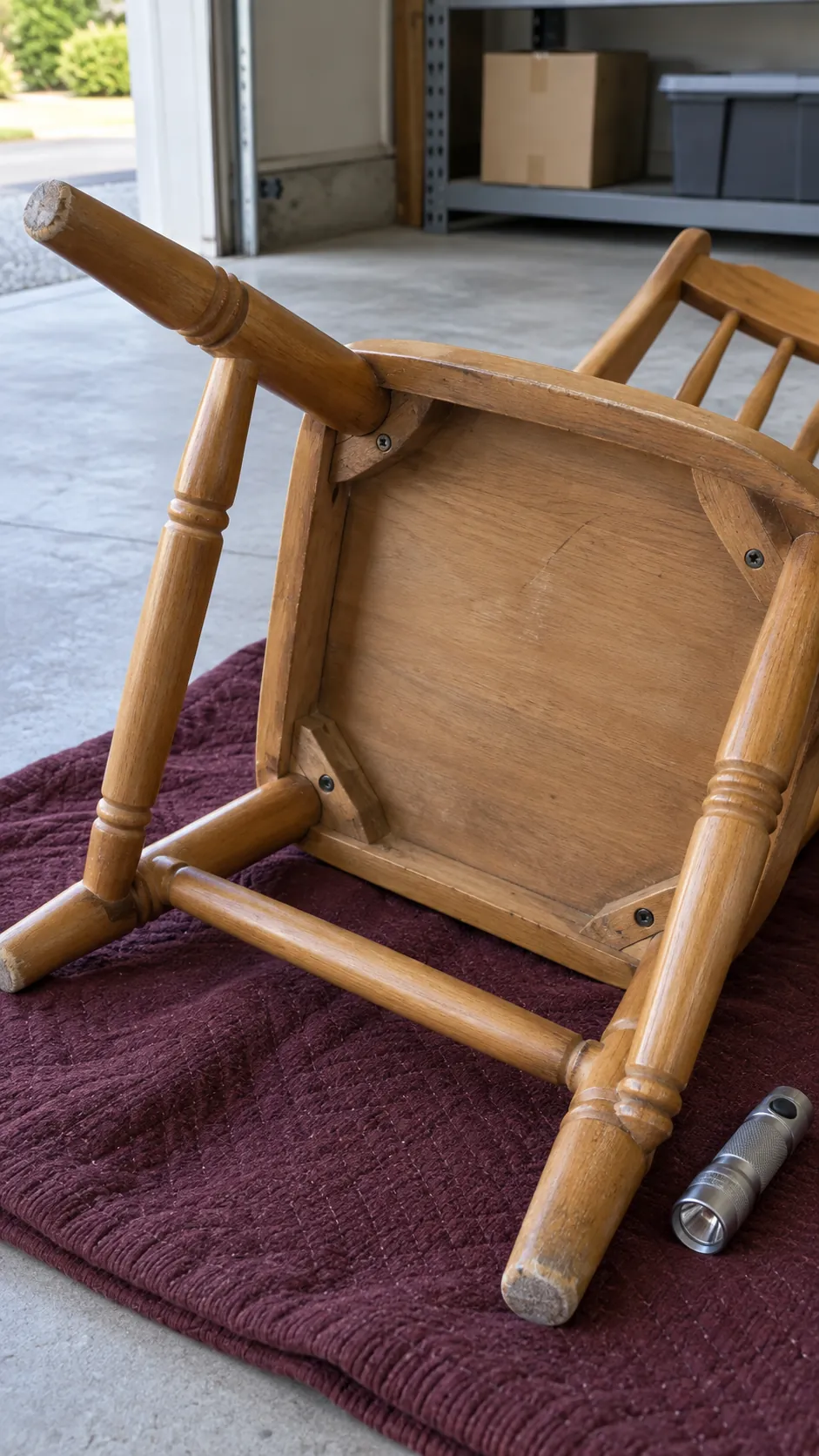
Hard surfaced tables, chairs and small cabinets are sensible places to look for thrifted apartment decor and furniture. Check joints, legs, drawer runners and the underside before paying, then ask about damage and repairs. Open every door and drawer, look for moisture swelling, and reject a wobbly piece unless you understand the repair.
Used upholstery and mattresses need more caution because pests, odors and internal damage can be difficult to detect. Inspection cannot guarantee an item is pest free. If you cannot establish its condition, put the money toward a simpler new option instead.
Compare the collection cost with the delivered price of an alternative. A free dresser can become expensive when it needs a van, two helpers and replacement hardware. Ask for measurements and confirm the pickup arrangements before committing.
Make one table serve your real routine
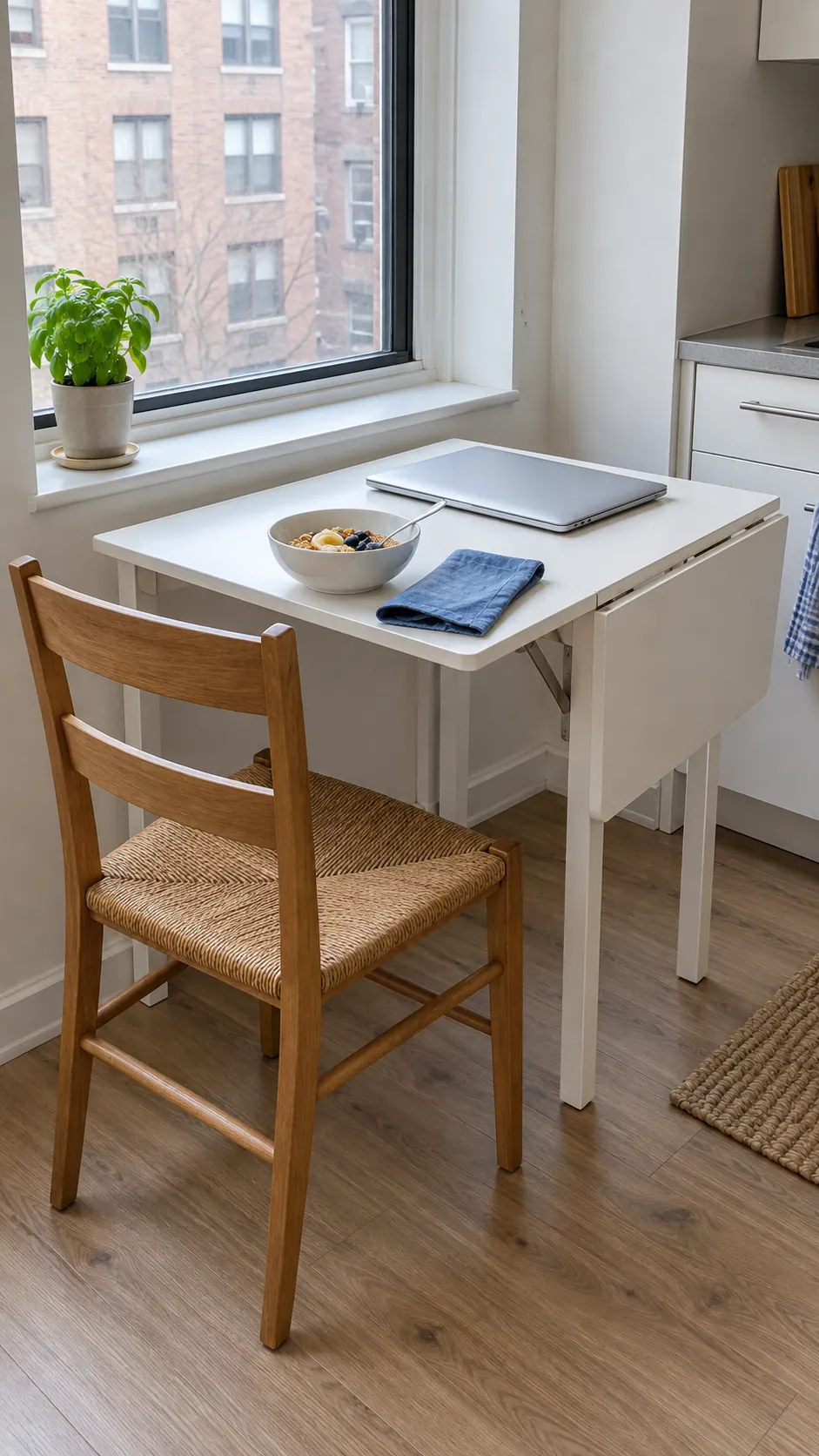
A table that handles breakfast and laptop work can be more useful than a separate desk and dining set squeezed into the same corner. Test its height with the chair you intend to use, and check that your legs clear the apron underneath. If you work at home for long stretches, seating comfort deserves more of the budget than decorative extras.
Drop leaf tables and nesting stools are useful only when you will actually fold or stow them. Picture the room at the busiest point of the day, with dinner out and the laptop needing somewhere to go. Choose affordable space saving furniture with a clear second job, not an elaborate mechanism that solves a problem you do not have.
Store belongings before buying more storage
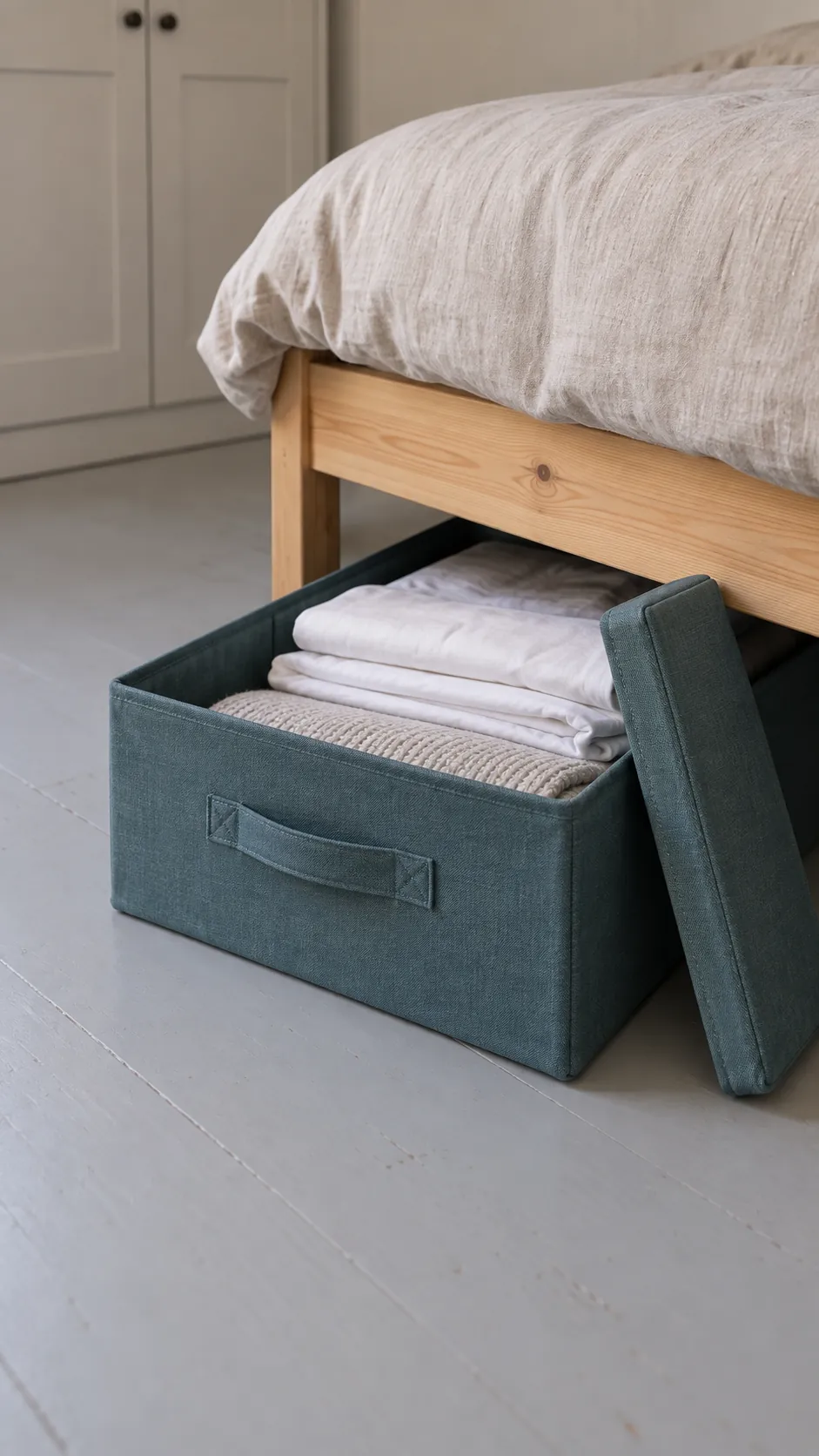
Sort what you already own into clothing, cooking supplies, work materials and occasional use items. Measure the largest objects before buying bins, because matching boxes are wasted money when the things inside do not fit. Start with existing closets and the space under the bed before adding another cabinet.
Use studio storage furniture close to the activity it supports. A shallow basket near the entrance can hold a bag, while a closed box beneath the bed can hold spare linens. Avoid turning the daily route into a corridor of storage units.
Renter friendly shelves still need a safe installation method. Get permission where required, use hardware appropriate to the wall and load, and follow the manufacturer’s anchoring instructions for furniture. Adhesive fixtures are not a substitute for required anti tip anchoring; choose another storage arrangement if safe installation is unavailable.
Make the room feel finished with a few deliberate choices
Repeat one wood tone or one accent color so secondhand pieces have something in common. A washable cover, a useful lamp and curtains that provide the privacy you need can make a bigger difference than several small ornaments. Keep heat sources and ventilation clear when placing fabrics.
You do not need to fill every wall or cover every stretch of floor. Let the useful pieces settle first, then choose decoration for the gaps that still bother you. This is how a budget studio apartment can feel personal without a second shopping list of things to dust.
Shop in rounds instead of furnishing everything at once
Your first small apartment shopping list can be short: a reliable sleeping setup, a seat and surface for meals, essential light, and enough storage to put daily belongings away. Add privacy coverings when the room needs them. Put decorative furniture, extra seating and a television stand into a later round unless they solve an immediate problem.
Live with the initial arrangement long enough to notice what you move each morning and what blocks you each evening. Record the problem before searching for a product, then set a maximum size and total delivered price for the solution. The best next purchase is the one that removes a repeated inconvenience, even if that means keeping an empty corner for now.