
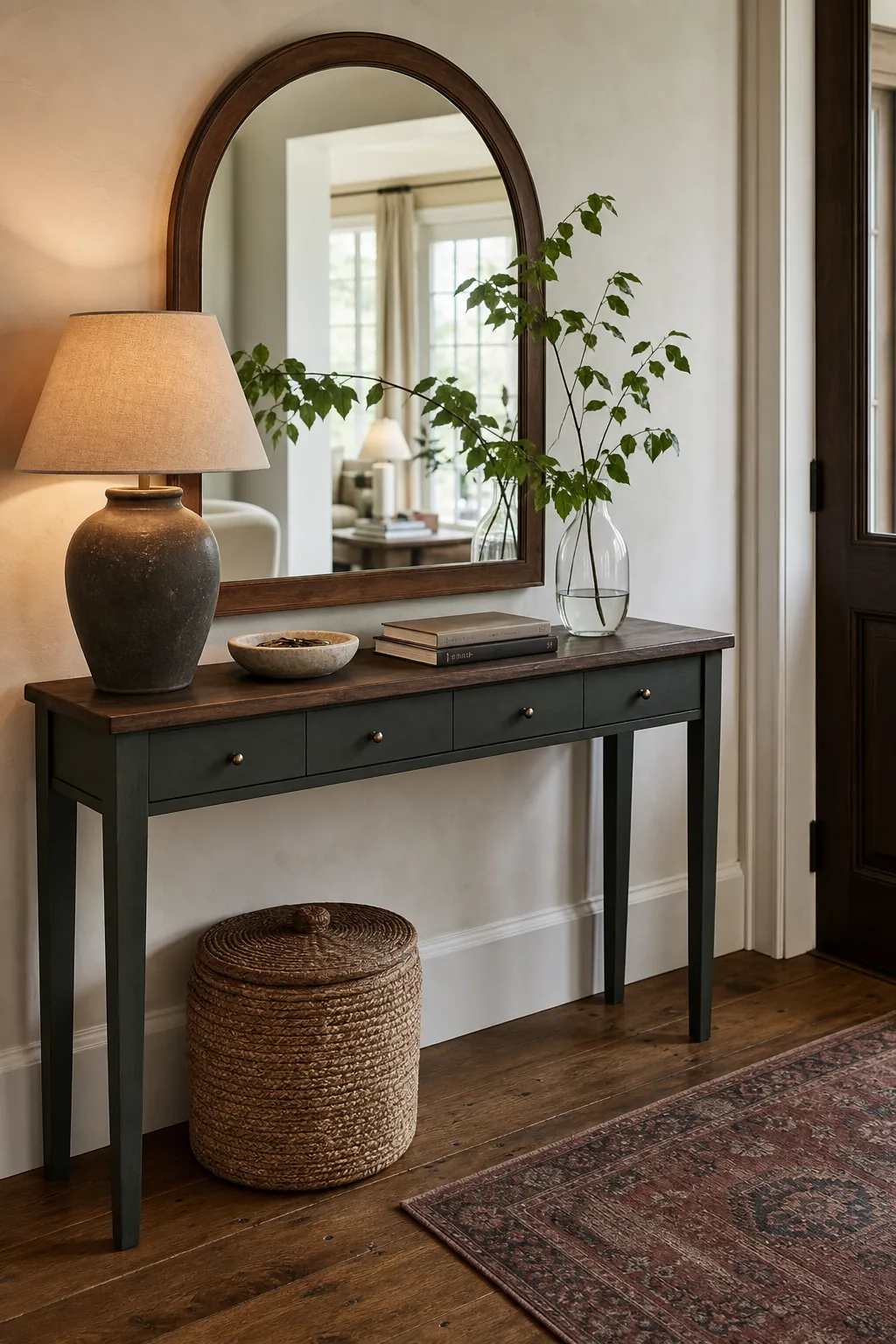
An entryway table can hold a beautiful mirror and still look strangely unfinished. Usually, the problem is not a missing accessory. It is a missing relationship: the mirror floats above the furniture, the objects have no height rhythm, or the arrangement leaves no clue about how the surface is used. A finished entryway reads as one connected composition before you notice any individual piece.
Connect the Mirror to the Table
Start with the outside dimensions of the mirror, not the glass alone. It should be substantial enough to belong with the table while leaving a visible wall margin. A round mirror softens a boxy console; an arched mirror adds height to a low table; a horizontal rectangle can steady a long sideboard.
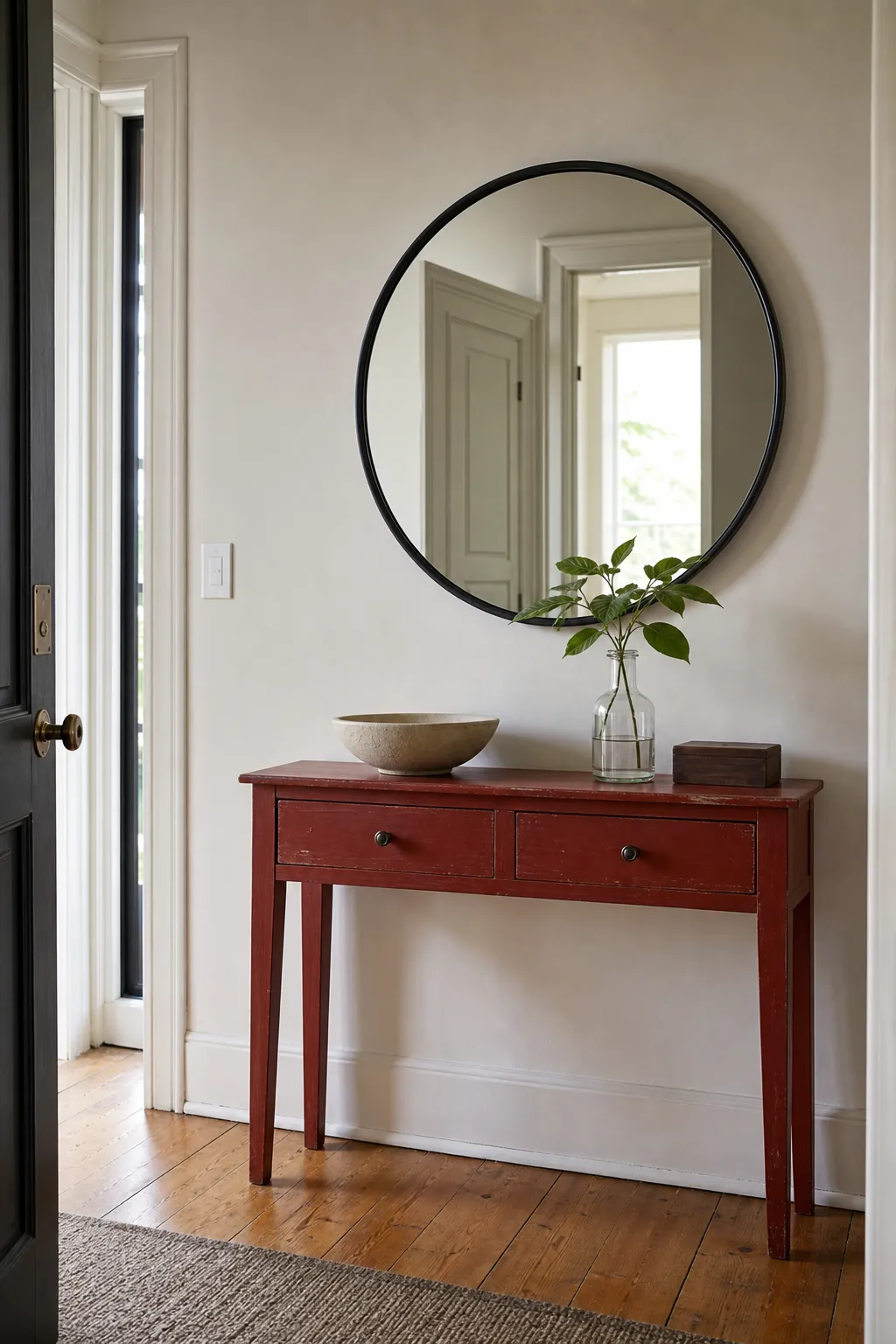
Use painter’s tape to test the outline, then view it from the front door and the adjoining room. The table and mirror do not need identical widths, but neither should overpower the other. If the frame looks like a small dot over a broad cabinet, accessories will not repair the scale problem.
Close the Empty Gap
A large strip of bare wall between the table and mirror makes them feel unrelated. Lower the mirror until the gap reads as breathing room rather than a separate zone. Keep it high enough for real users and clear of the tallest object you plan to place below. Test the reflection before drilling; useful height matters more than a formula.
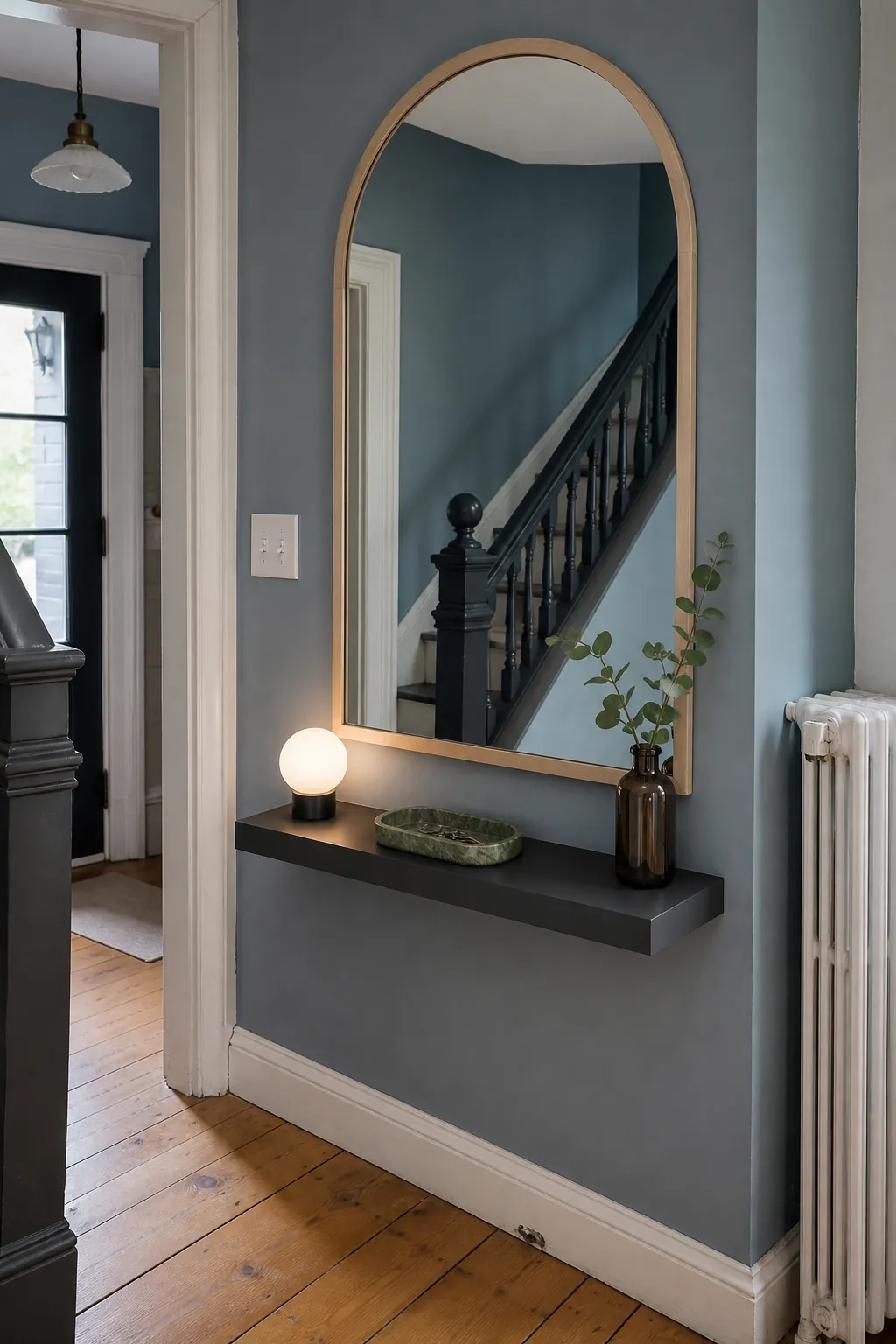
If a switch, molding, or outlet prevents perfect centering, work with the architecture. Shift the table and mirror as a pair, or use an intentionally asymmetrical arrangement. A deliberate offset looks finished; two almost-centered pieces look accidental.
Build a Clear Height Triangle
Place one tall object at an end, one medium element closer to the center, and one low object within easy reach. A lamp, vase, or branch can supply height; a small stack of books can lift a medium piece; a tray or bowl creates the low point. The eye should travel across the table instead of hitting a row of objects at one level.
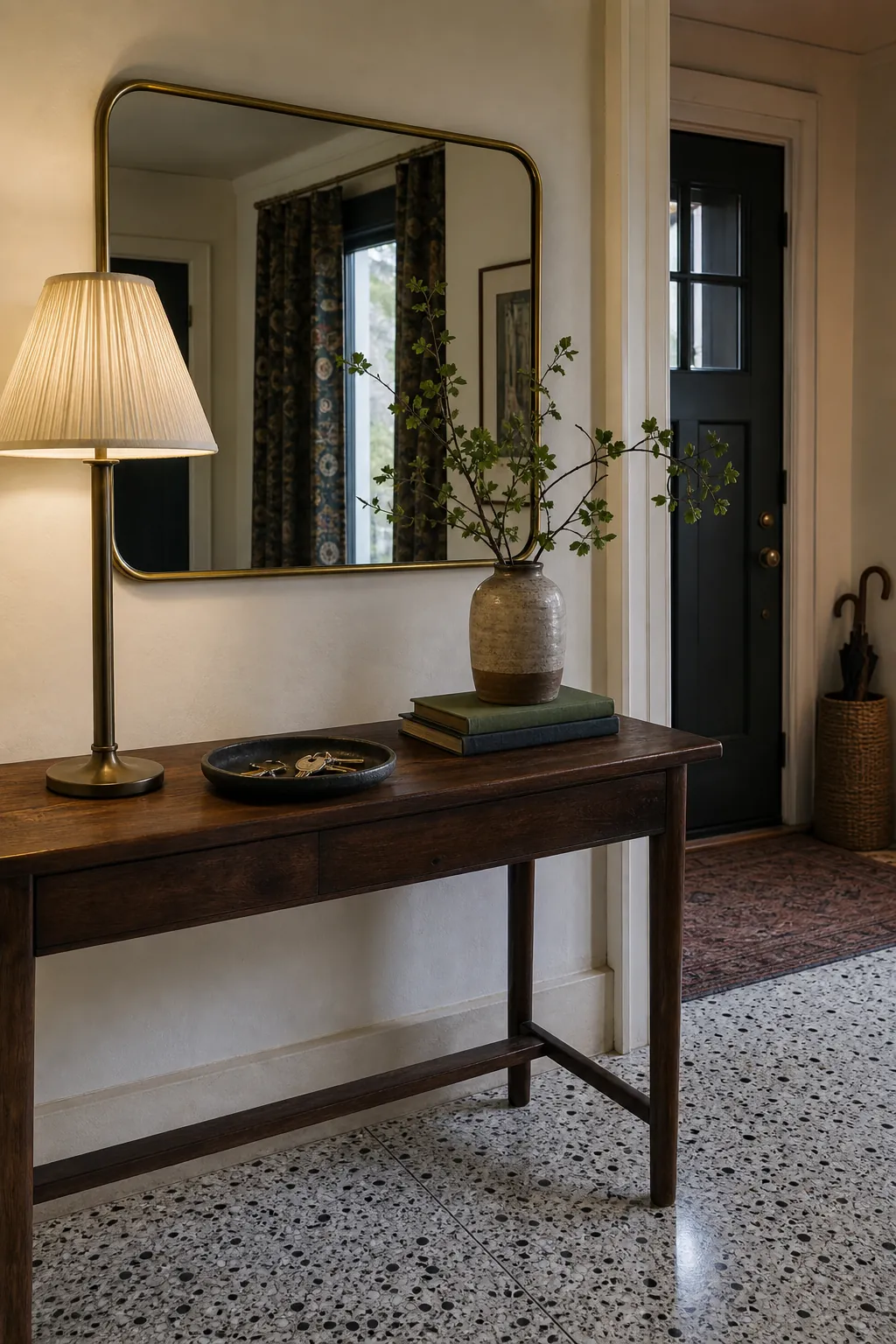
Keep the tallest item from cutting across the center of the mirror. It can overlap the outer edge visually, which helps connect wall and table, but the glass should remain useful. Leave one third of the surface relatively open so the entry still functions.
Add One Personal, Useful Layer
The fastest way to make a console look staged is to fill it with objects that have no role in your home. Use a favorite bowl for keys, a small box for dog bags, a photograph in a frame you already own, or two books you actually browse. One personal layer gives the arrangement specificity without turning it into clutter.
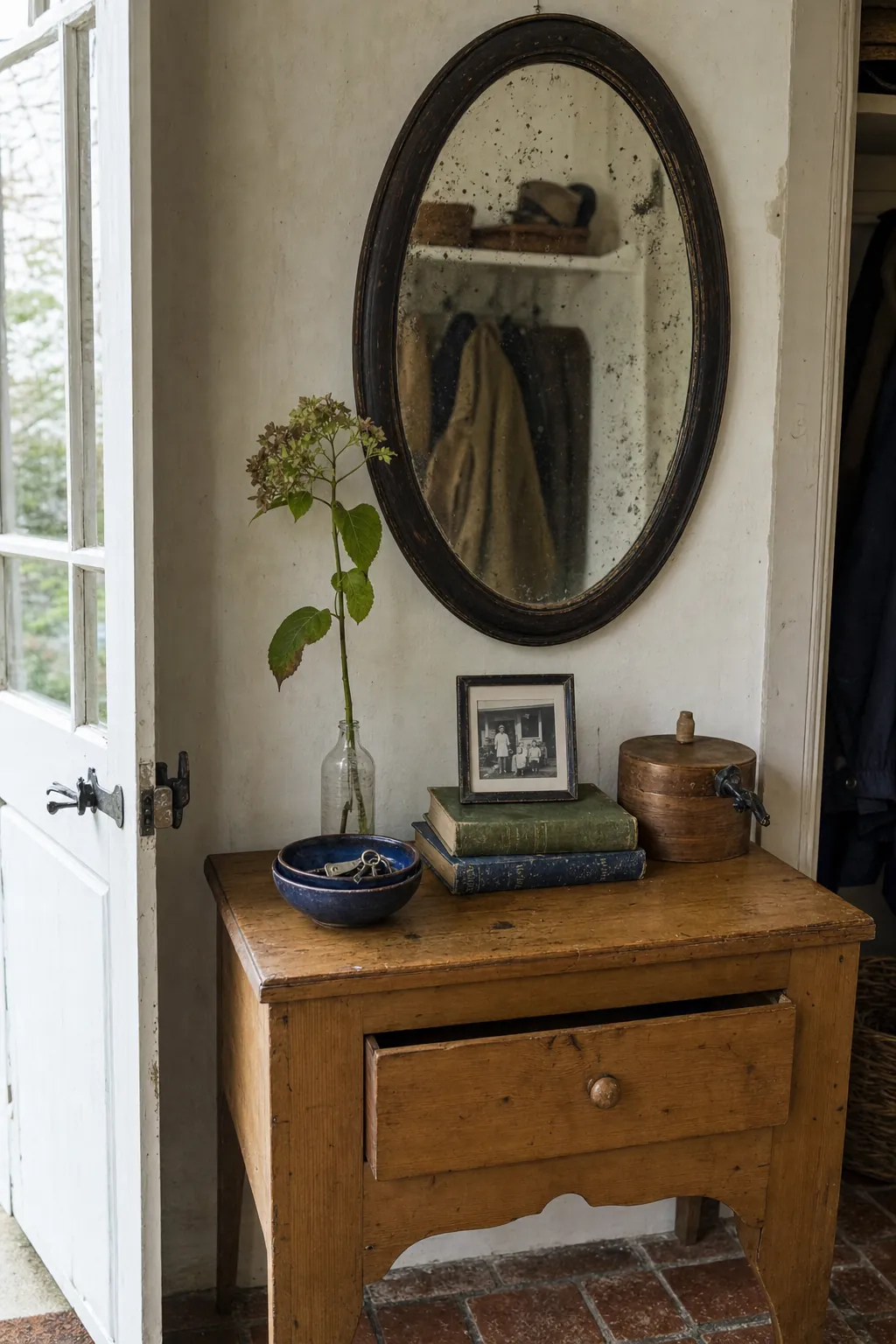
Contain the smallest daily objects in one tray. Mail should have a separate destination, especially if it grows faster than you sort it. The goal is not to hide all evidence of life; it is to make the evidence look cared for.
Repeat One Finish or Color
A mirror and table do not need to match, but they need a bridge. Repeat the frame’s dark metal in a lamp base, echo warm wood in a tray, or pull one muted color from the runner into a ceramic vessel. One or two repetitions are enough to make separate purchases feel intentional.
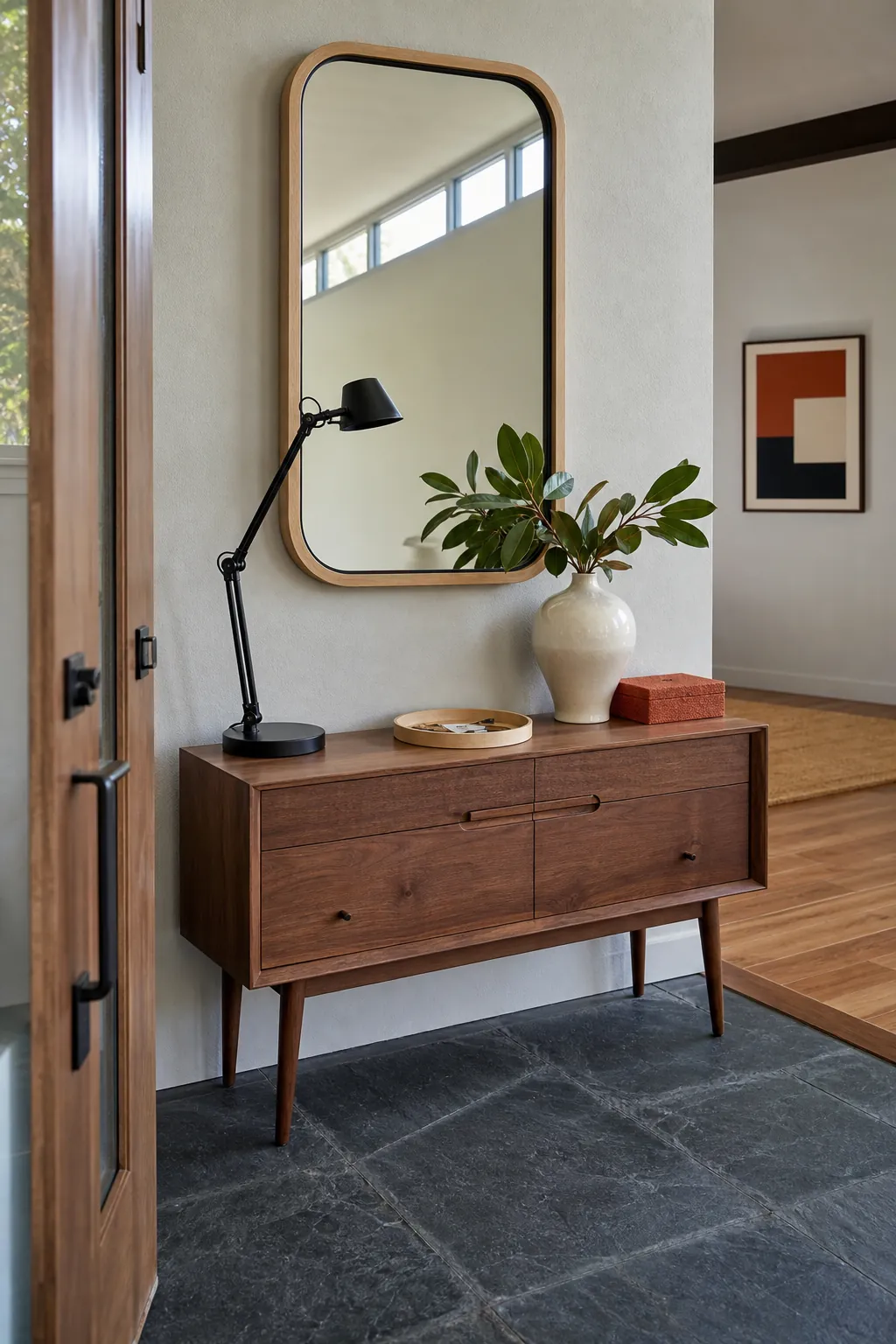
Contrast is equally important. If everything is pale wood and woven fiber, add a cool stone bowl or black metal accent. If the table and mirror are dark, use linen, light ceramic, or clear glass to keep the arrangement from feeling heavy.
Stop Before the Surface Is Full
Take a photograph from the doorway. The flatter view makes crowded areas, awkward gaps, and competing shapes easier to see. Remove the weakest object, straighten the practical zone, and check what the mirror reflects. Often, subtraction is the finishing touch the table was missing.
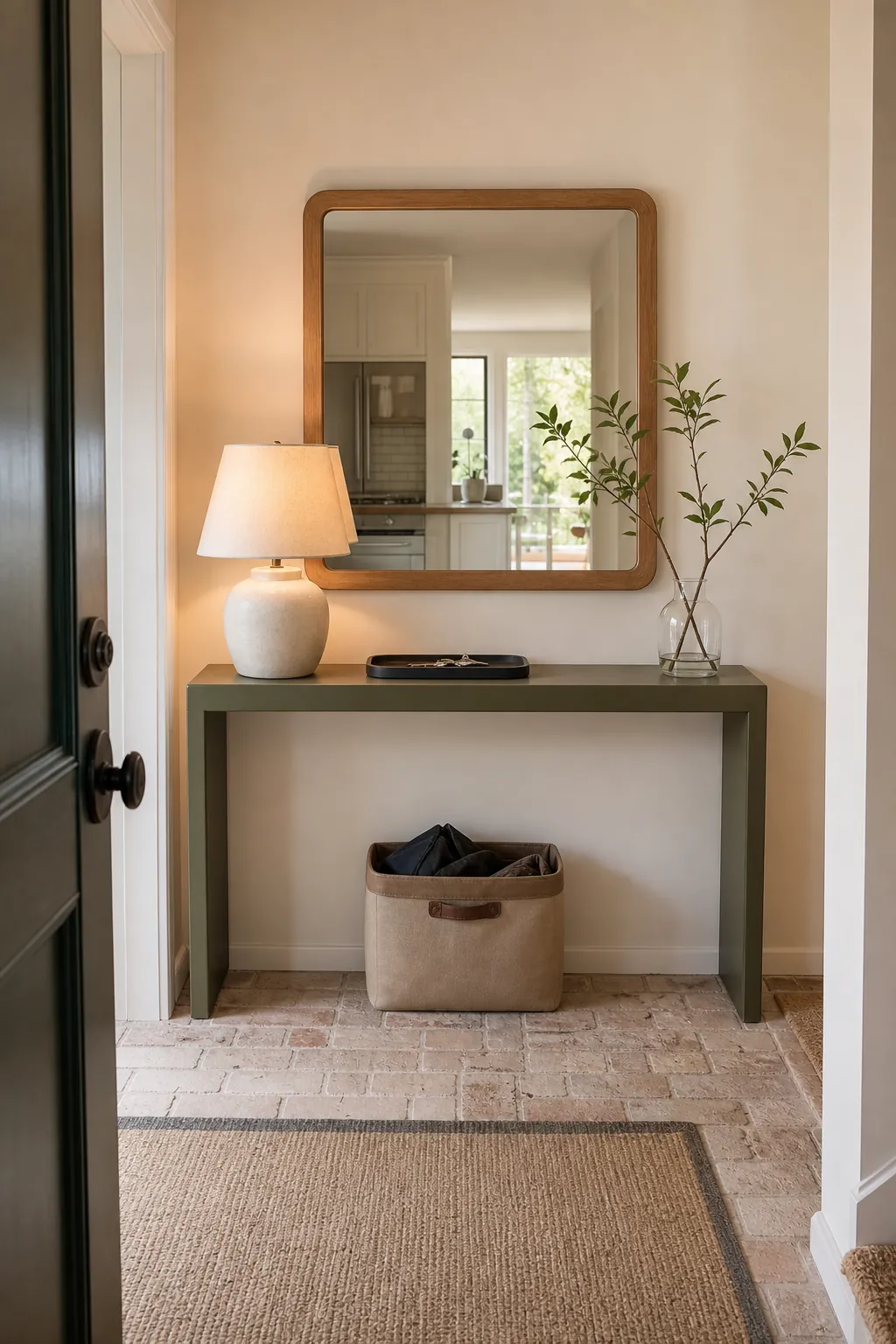
Walk through the entry with a bag in one hand and keys in the other. If you can set something down, use the mirror, reach the tray, and continue without moving decor, the composition is complete. A finished entryway does not merely look balanced. It makes arriving home feel easier.