You cannot create more square footage without construction, but you can recover space that is blocked, duplicated, or difficult to use. The fastest gains usually come from removing low value items, protecting the main path, and replacing several weak storage pieces with one better solution.
Begin with the activity the room must support. A bedroom needs a clear route to the bed and clothing storage. A small living room needs comfortable seating and access through the room. Measure those requirements before adding any new organizer.
Declutter the Small Room in Manageable Sections
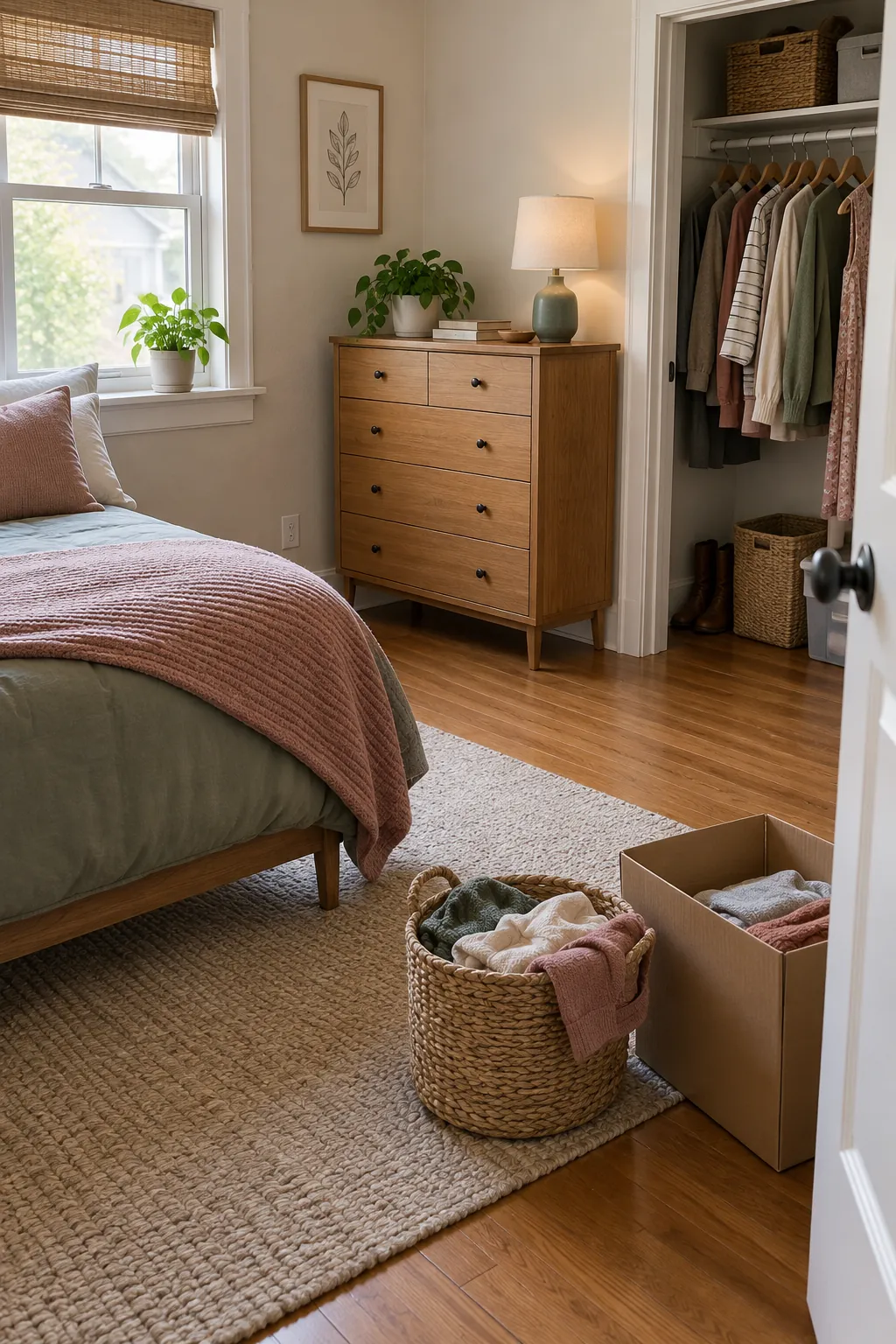
Do not empty the entire room if the resulting pile will stop progress. Work on one drawer, surface, shelf, or floor section at a time. Decide whether each item is used in this room, belongs elsewhere, should be donated, or must be discarded responsibly.
Finish each section before opening another. This approach reflects a common concern in organization discussions: a large sorting project becomes exhausting when daily life interrupts it. Once you know what remains, you can choose storage based on real volume instead of organizing items you no longer need.
Correct the Small Room Furniture Layout
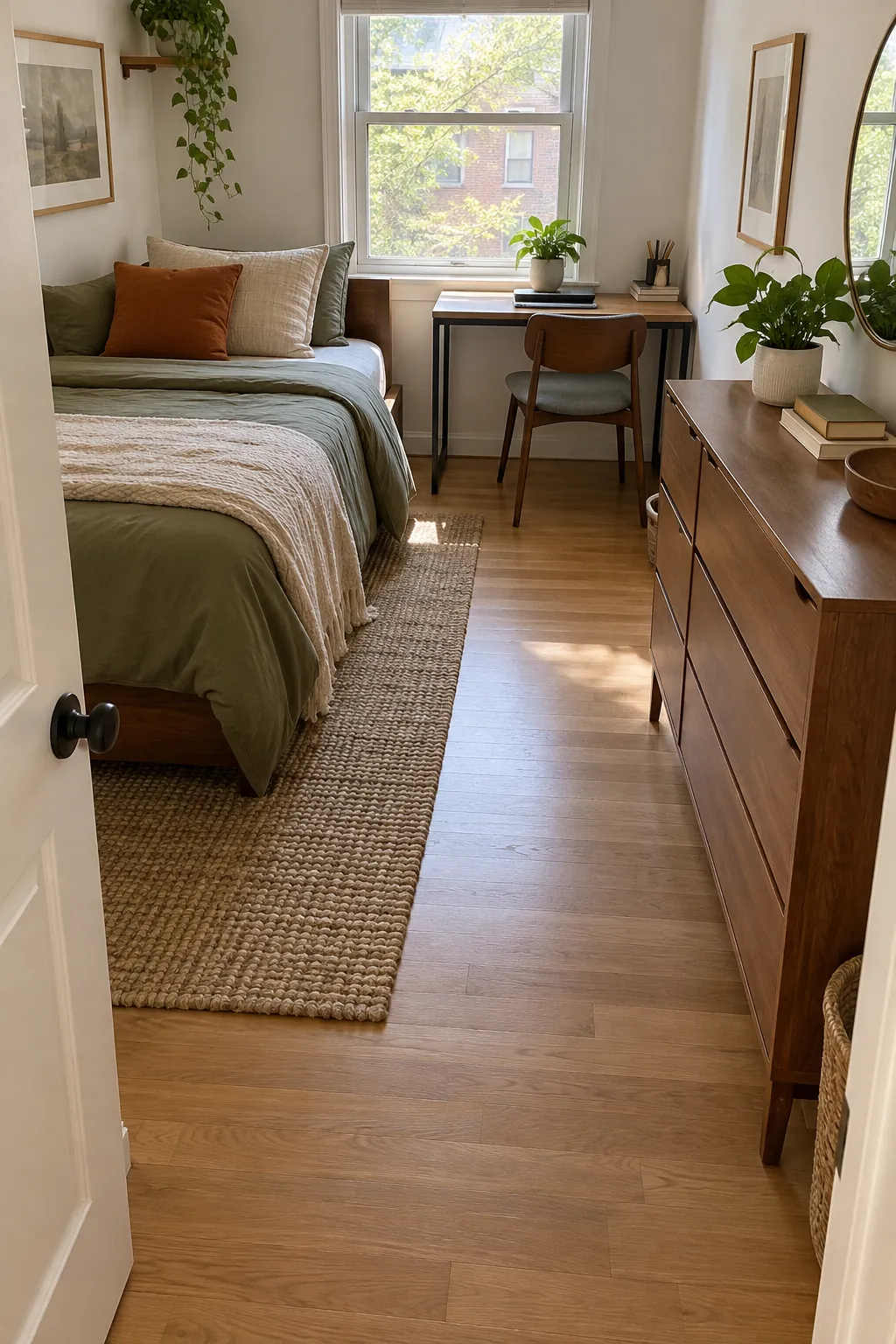
A small room furniture layout should protect the most frequent route first. Move the largest piece into its most practical position, then add only the furniture that supports daily tasks. Tape proposed footprints on the floor before lifting or buying anything.
Avoid narrow leftover gaps that collect clutter but cannot support a real use. Align furniture edges where possible and keep doors, drawers, and wardrobes able to open fully. Visible floor under raised legs can make the layout easier to read, but correct clearance matters more than appearance.
Use Vertical Storage Solutions
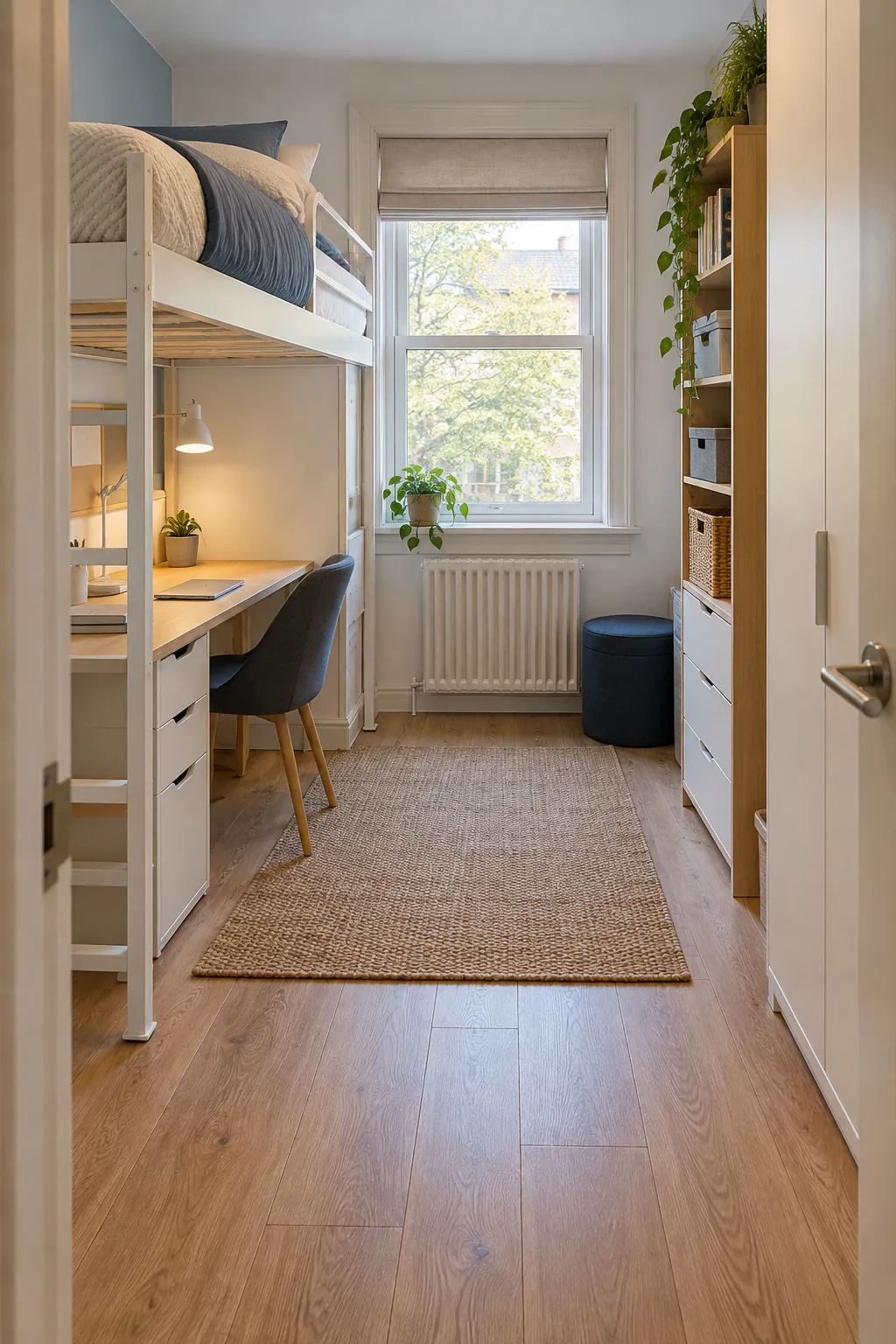
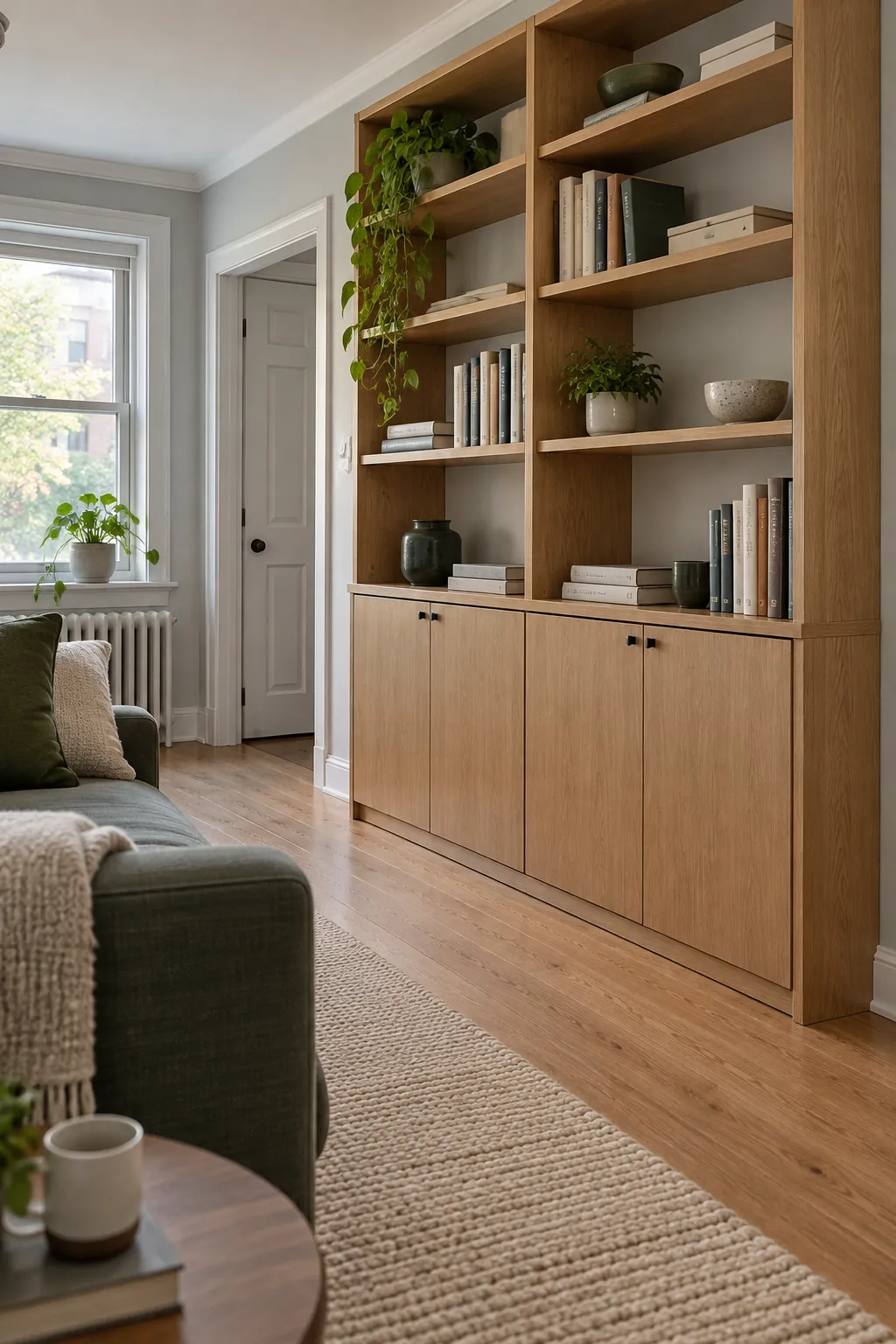
Vertical storage solutions move appropriate items off the floor and use wall height. Place frequently used objects between waist and eye level, less frequent items higher, and heavy objects low. A tall narrow bookcase can outperform several short units when it is stable and fits the wall.
Leave some open wall and shelf space so the room does not feel packed from floor to ceiling. Anchor tall furniture correctly and respect the load limit of every shelf. In a rental, choose approved freestanding pieces or discuss fixing methods with the property owner.
Choose Multifunctional Furniture With One Strong Purpose
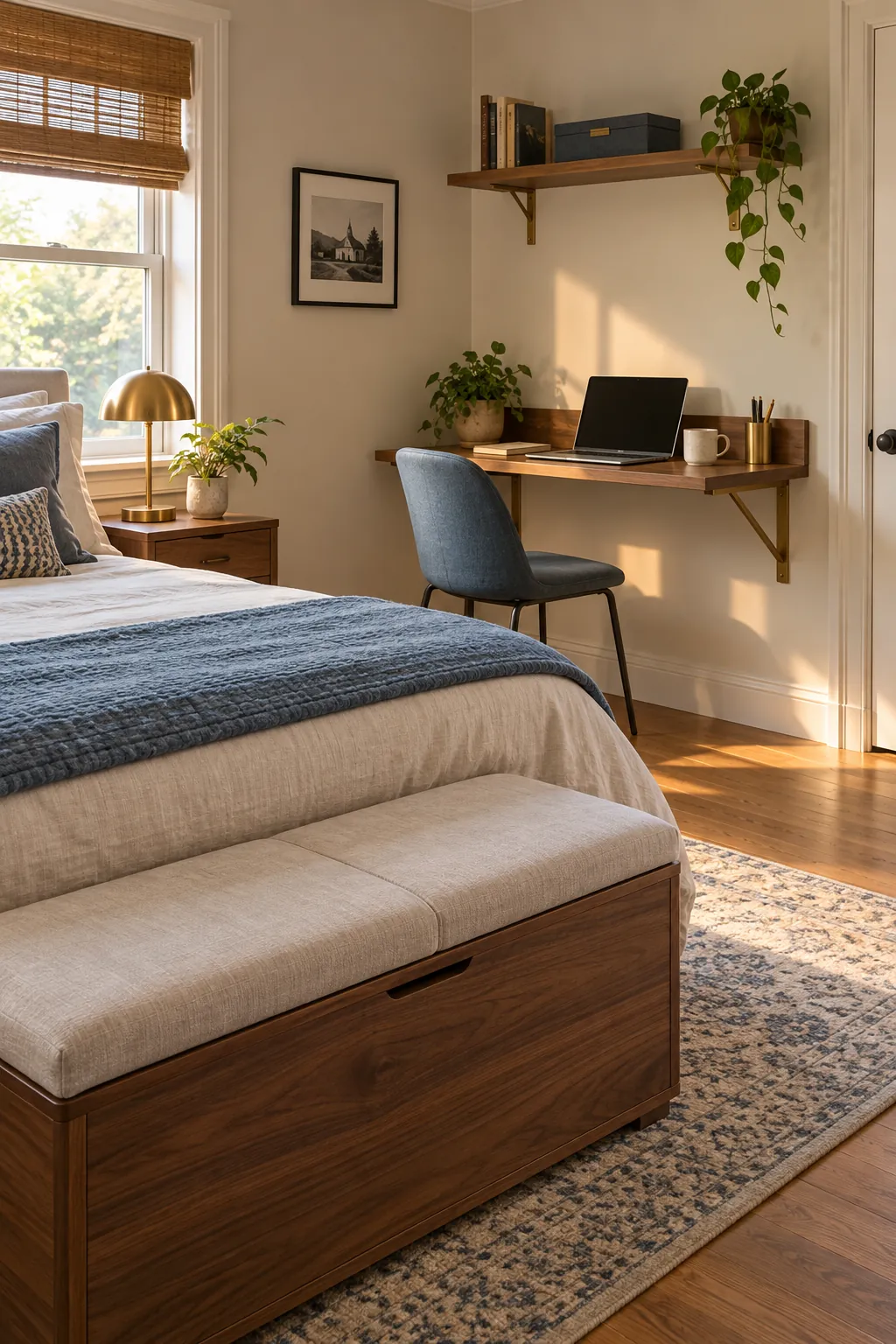
Multifunctional furniture saves space only when both functions are easy to use. A storage ottoman can provide a seat and hold blankets, while a drop leaf table can support work and fold after use. A complicated transforming piece that is rarely converted becomes ordinary bulky furniture.
Test opening clearance, weight, comfort, and storage access. Prefer one excellent primary function plus one simple secondary function. Avoid buying a small piece merely because it contains storage if its shape blocks movement or fails the daily task.
Add Wall Mounted Storage Where It Supports a Task
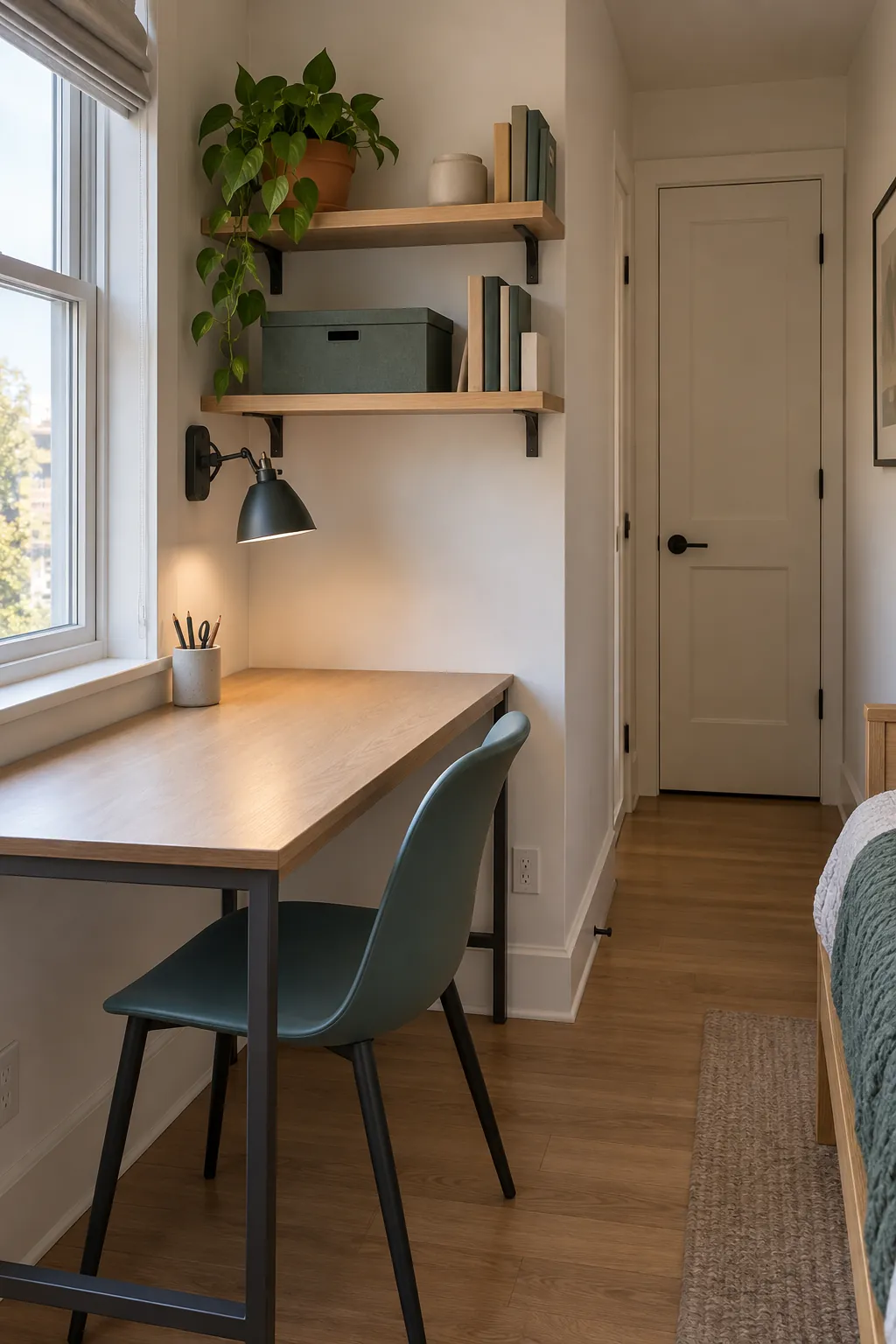
Wall mounted storage can clear a desk, bedside area, or entry floor. Use a shallow shelf, rail, cabinet, or lamp only where it serves an activity below. Keep projections out of narrow walking routes and mount every piece for the wall type and expected load.
Do not cover every free wall. One focused storage zone looks calmer and is easier to maintain than scattered shelves. Hide visually noisy small items in a closed container, and leave enough empty surface to put down the object currently in use.
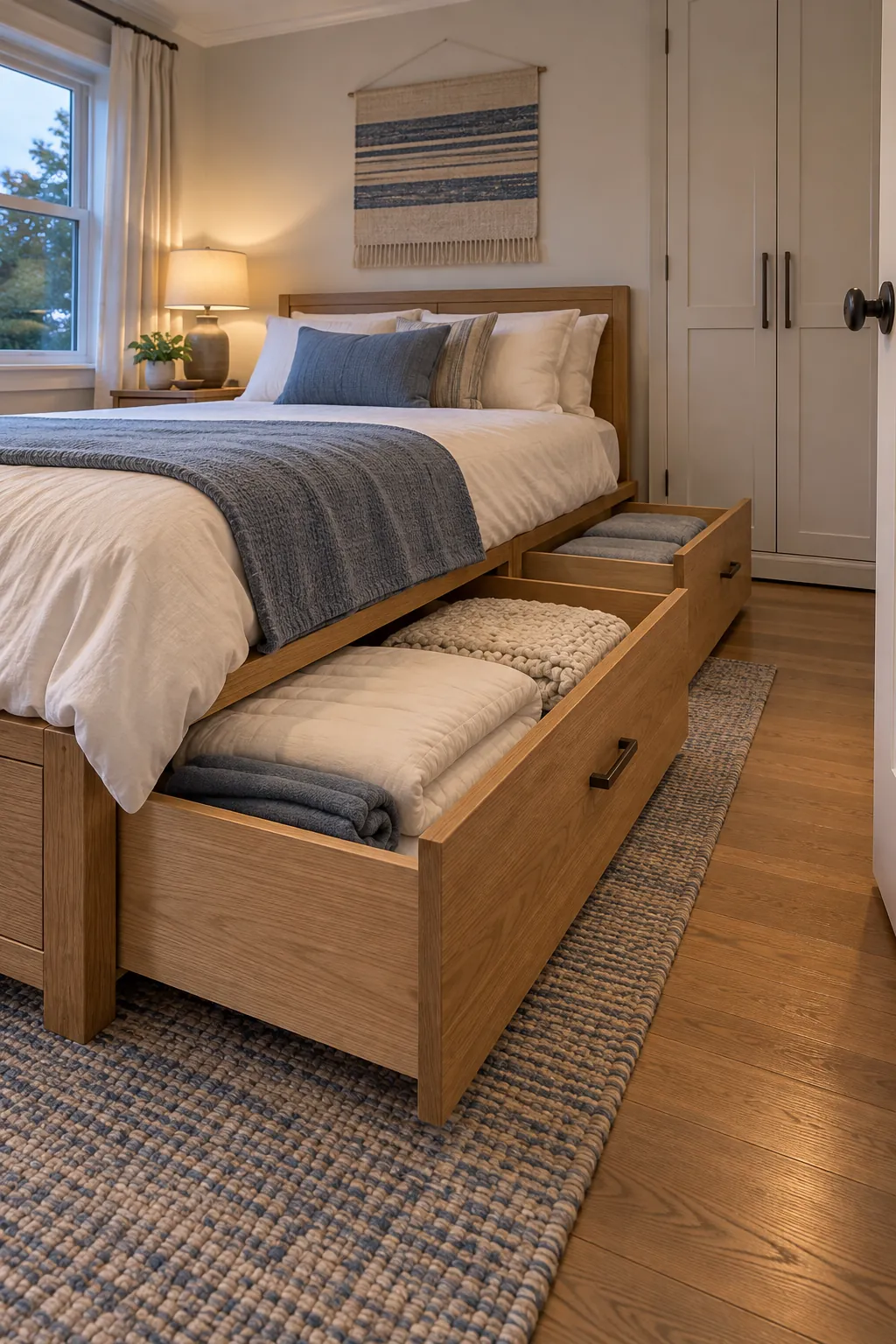
Organize Under Bed Storage for Real Access
Under bed storage is useful for seasonal clothing, spare bedding, or items needed only occasionally. Measure the clear height and the space required to pull a container out. Use containers that protect contents from dust and can be handled without moving another piece of furniture.
Keep a simple inventory and avoid filling the area with forgotten objects. If the bed has drawers, confirm they can open fully beside walls and other furniture. The recovered open floor should remain open, since filling every new gap will quickly recreate the original problem.