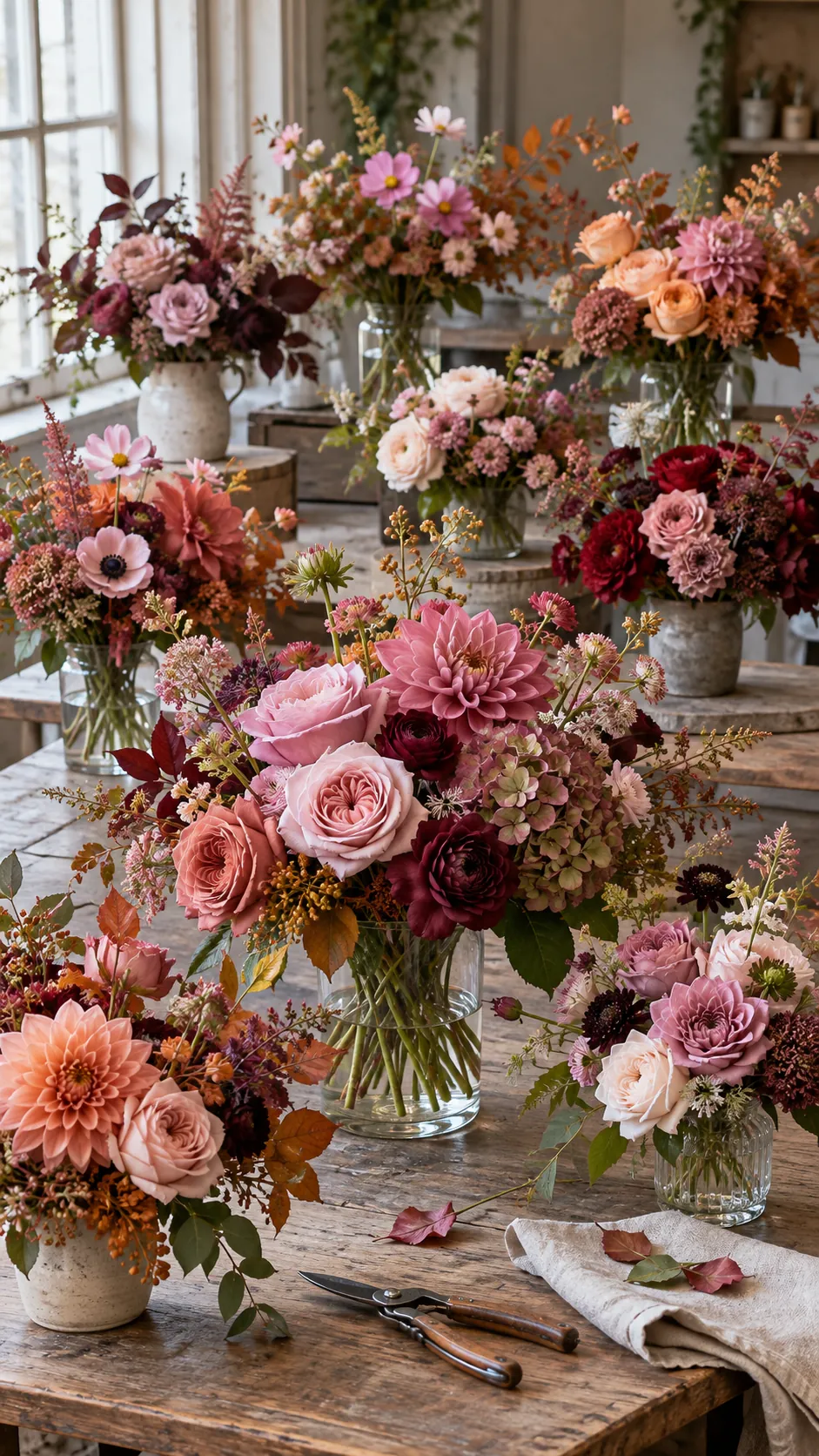
Pink flowers do not have to look like spring once the palette gains depth, texture, and a grounded accent. The most convincing combinations pair a clear pink family with one autumn tone and one quieter botanical bridge. That approach also solves a common color problem: the bouquet can feel seasonal without becoming a predictable mass of orange and red.
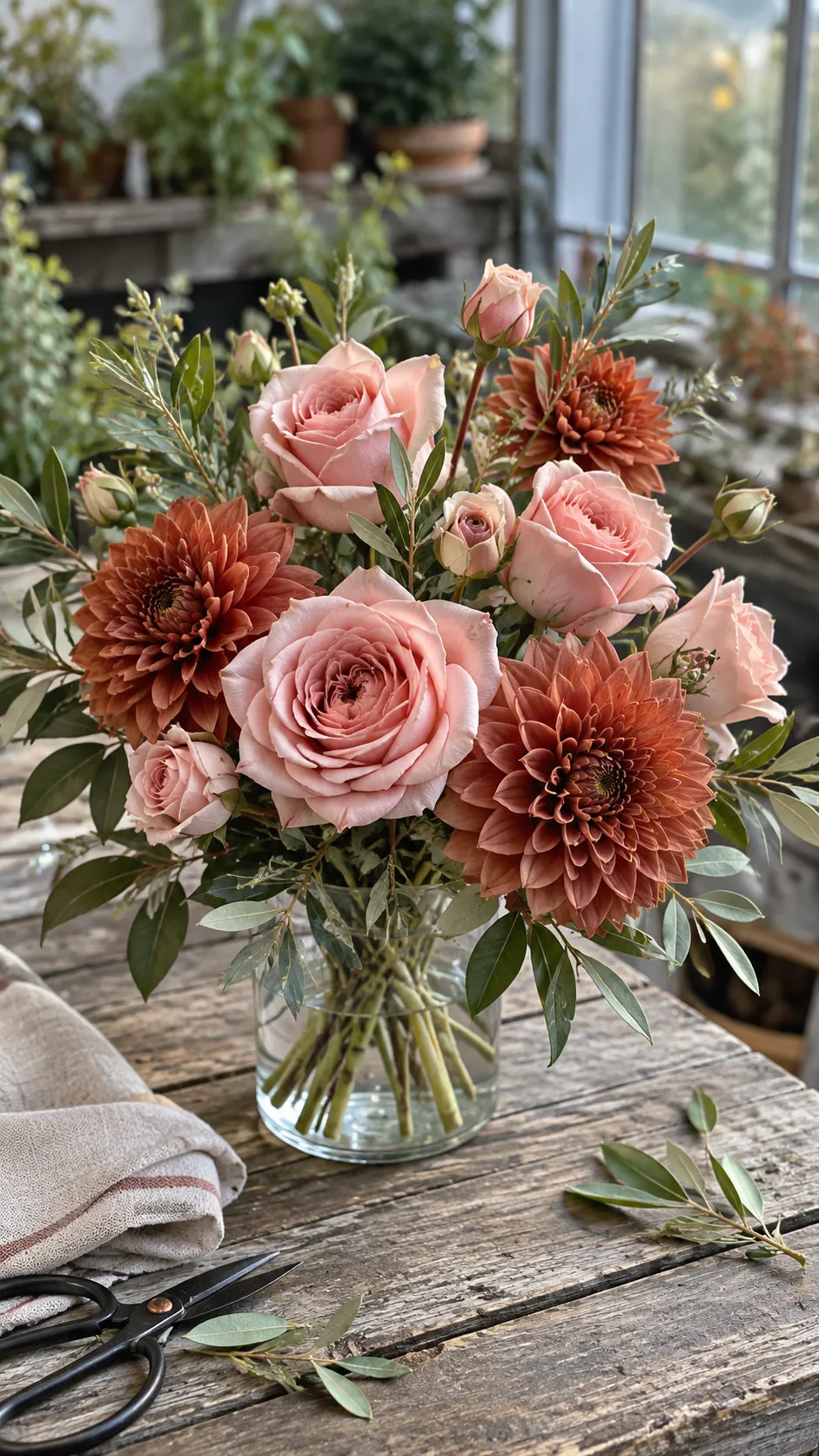
Blush Roses With Rust Dahlias
Rust adds autumn weight without making soft pink feel sugary. Use blush roses as the light base and place rust dahlias in three uneven focal points. Olive foliage cools the transition and keeps the palette suitable for an early fall table or ceremony.
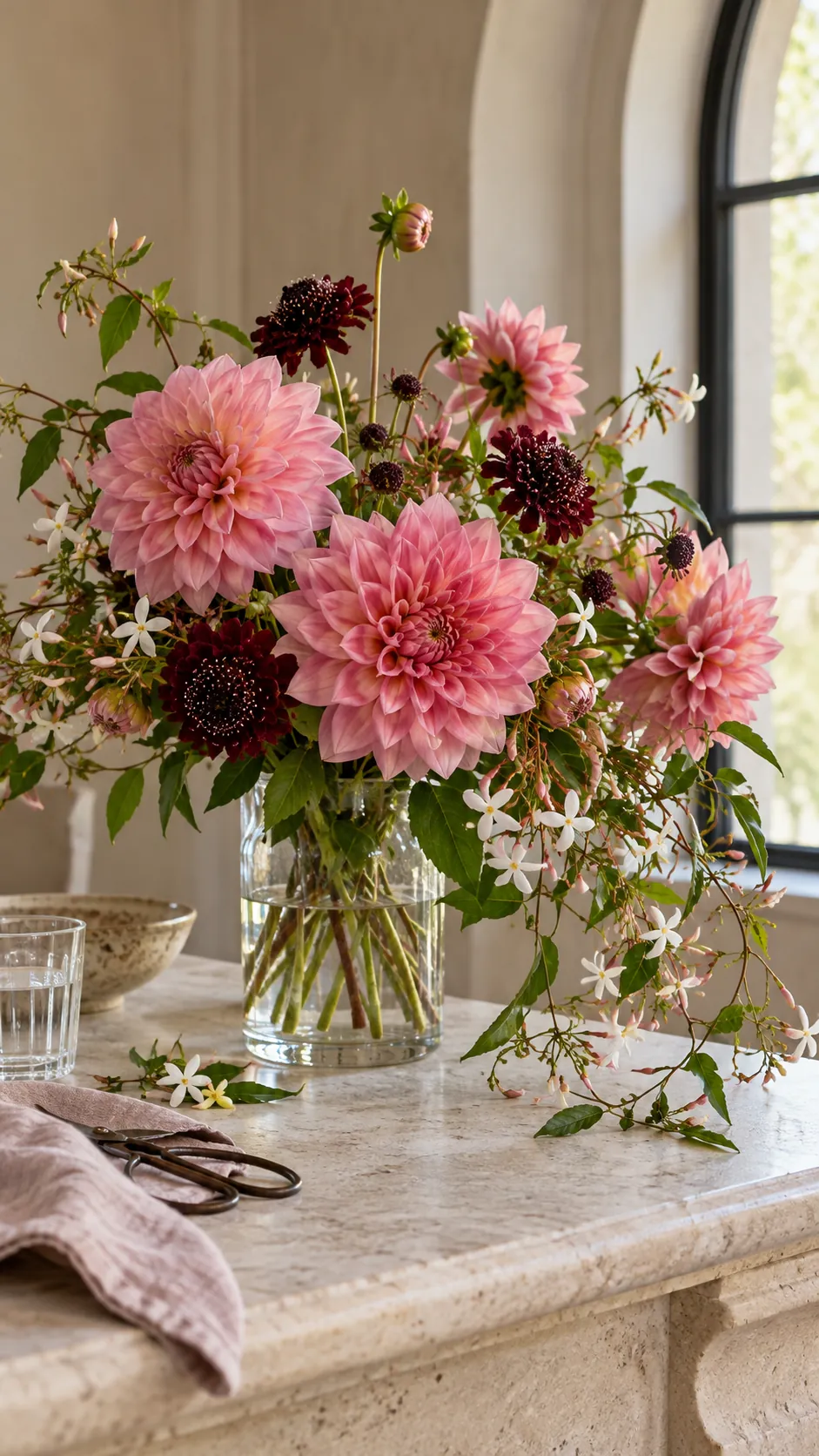
Pink Dahlias With Burgundy Scabiosa
Burgundy scabiosa gives pink dahlias a darker edge while preserving their romantic character. Let the small pin cushion forms float above the larger dahlia faces for clear texture contrast. Trailing jasmine creates movement and prevents the deep color from collecting in one heavy patch.
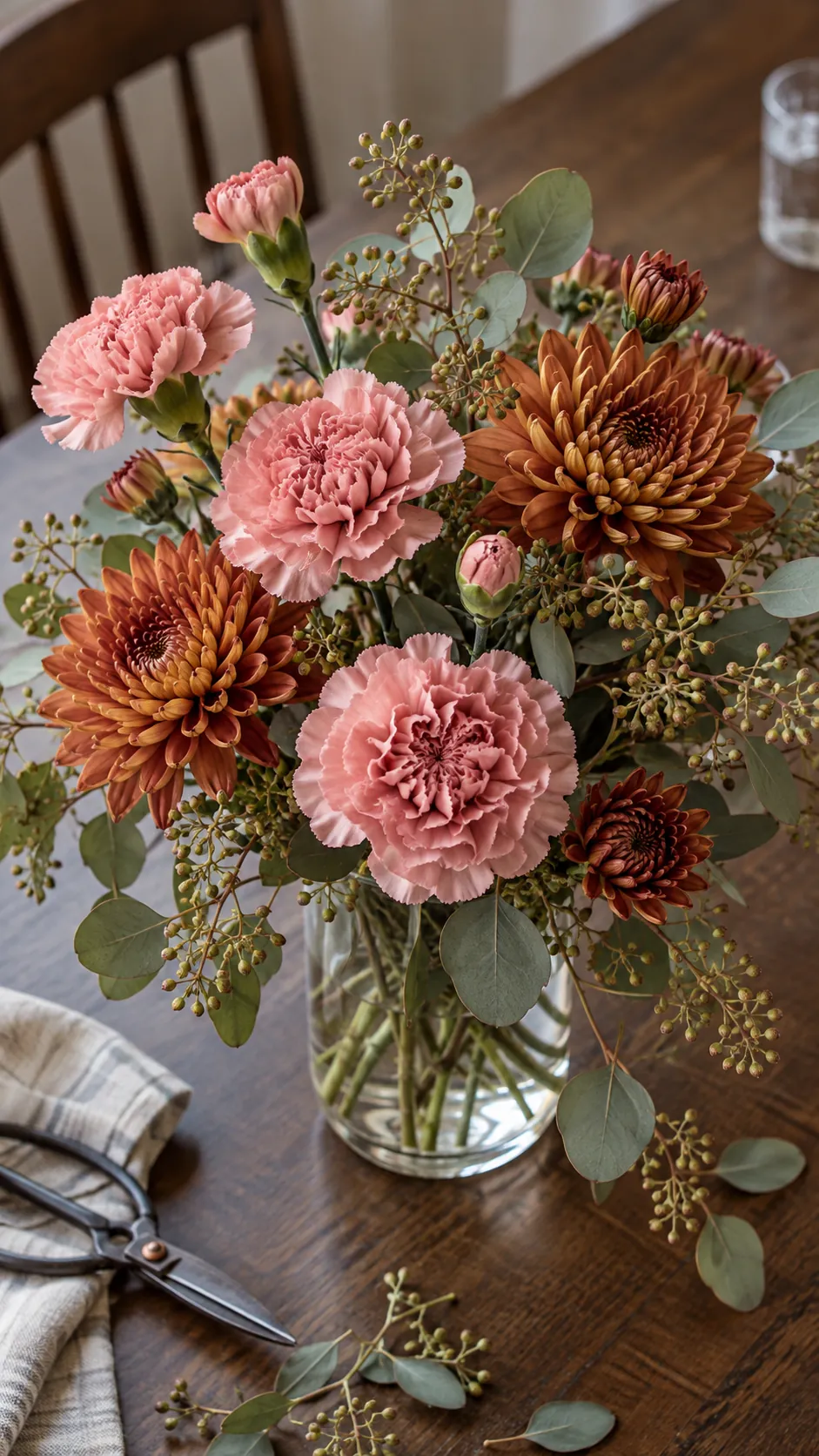
Dusty Rose Carnations With Copper Mums
Dusty rose and copper share a muted quality that feels naturally seasonal. Cluster a few carnations loosely, then thread smaller copper mums between them instead of building solid color blocks. Seeded eucalyptus adds cool gray green notes that keep the combination balanced.
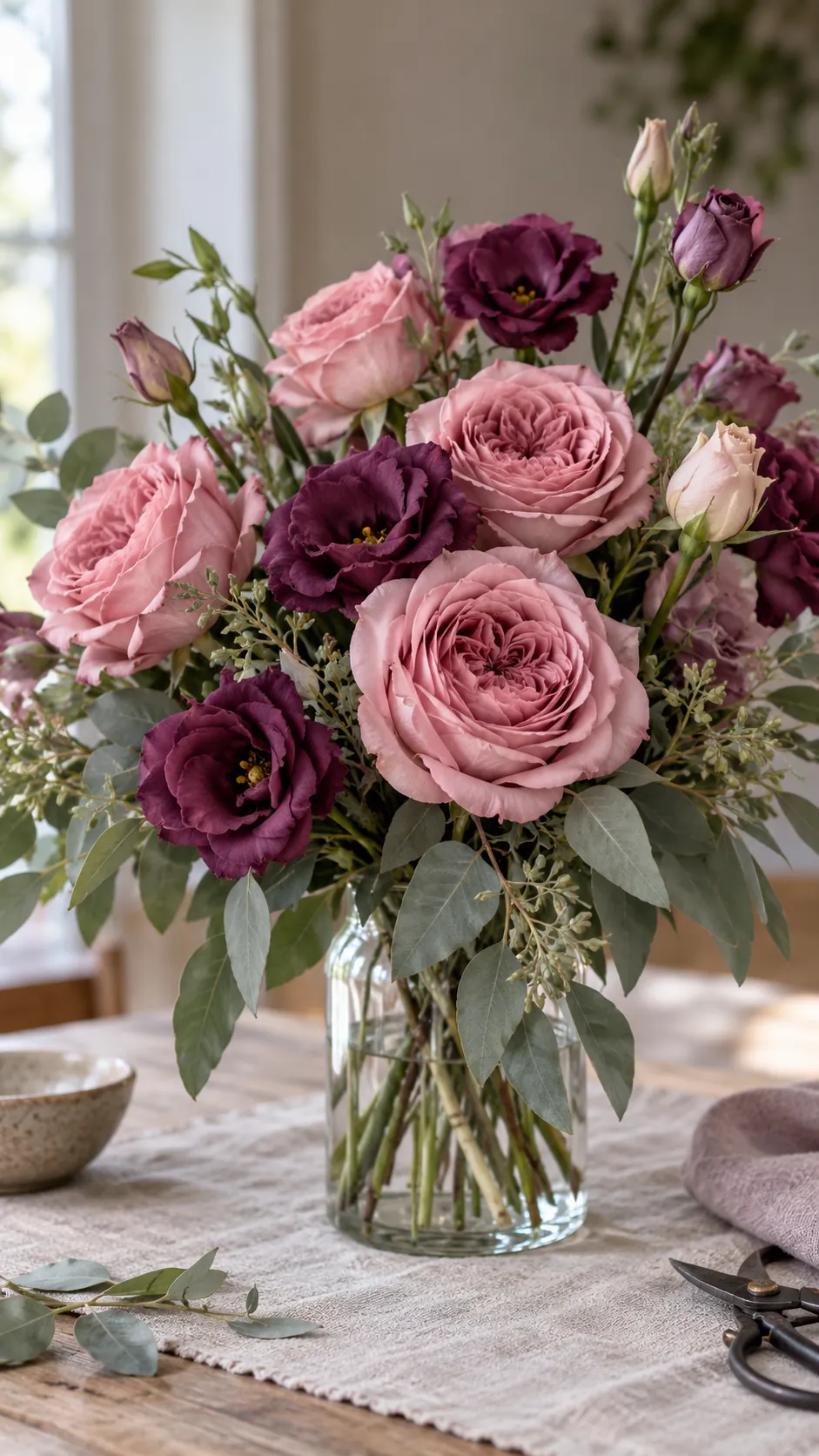
Mauve Roses With Plum Lisianthus
Mauve roses become richer when plum lisianthus repeats their cool undertone. Mix open roses with lisianthus buds so the bouquet has both broad and narrow shapes. Soft sage foliage gives the dark petals breathing room and suits a refined late fall palette.
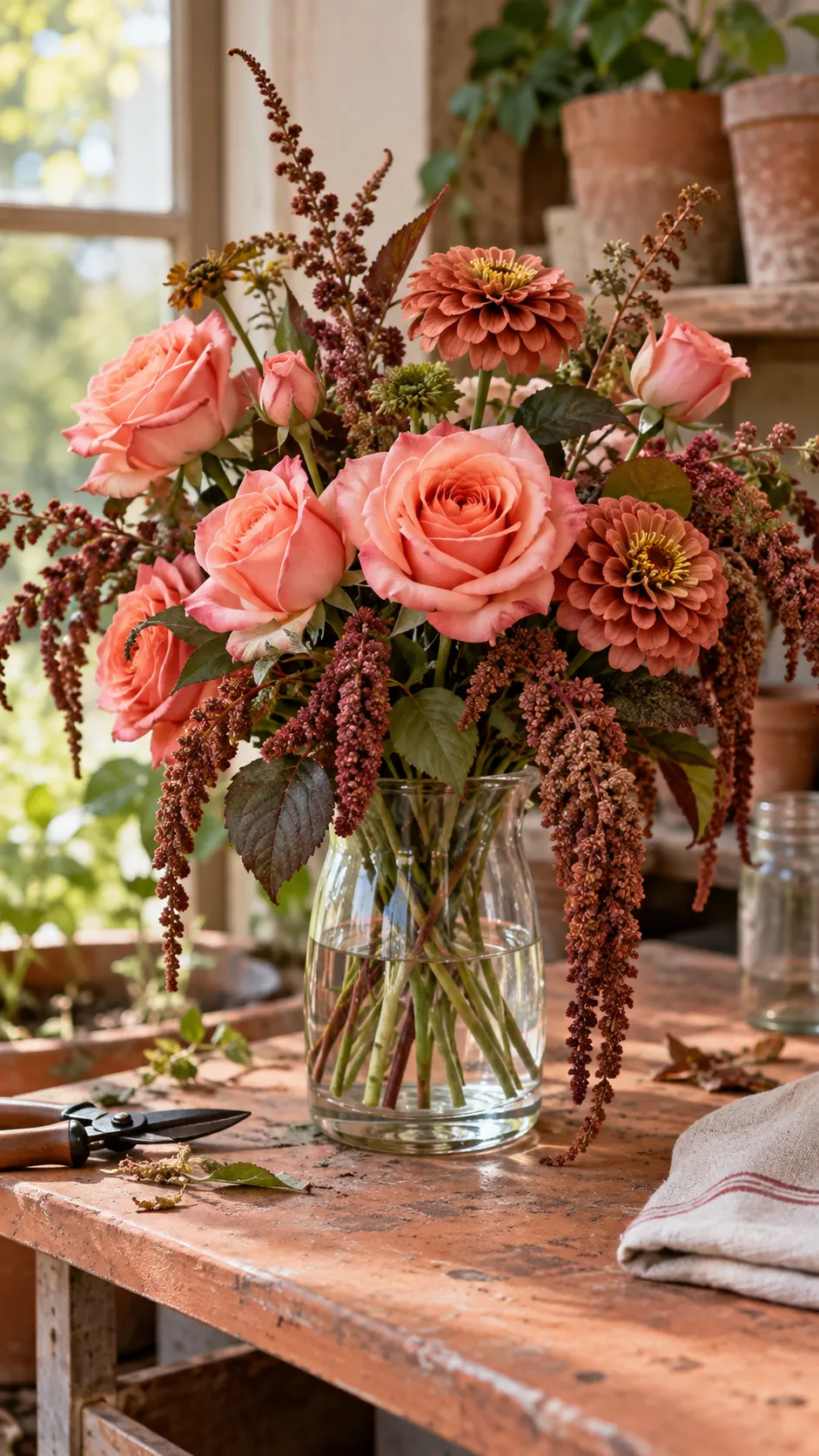
Coral Roses With Terracotta Zinnias
Coral roses bridge pink and orange, which makes terracotta feel deliberate rather than abrupt. Keep the zinnias slightly lower so their firm shape supports the softer rose petals. A restrained fall of bronze amaranthus introduces movement without turning the bouquet into a cascade.
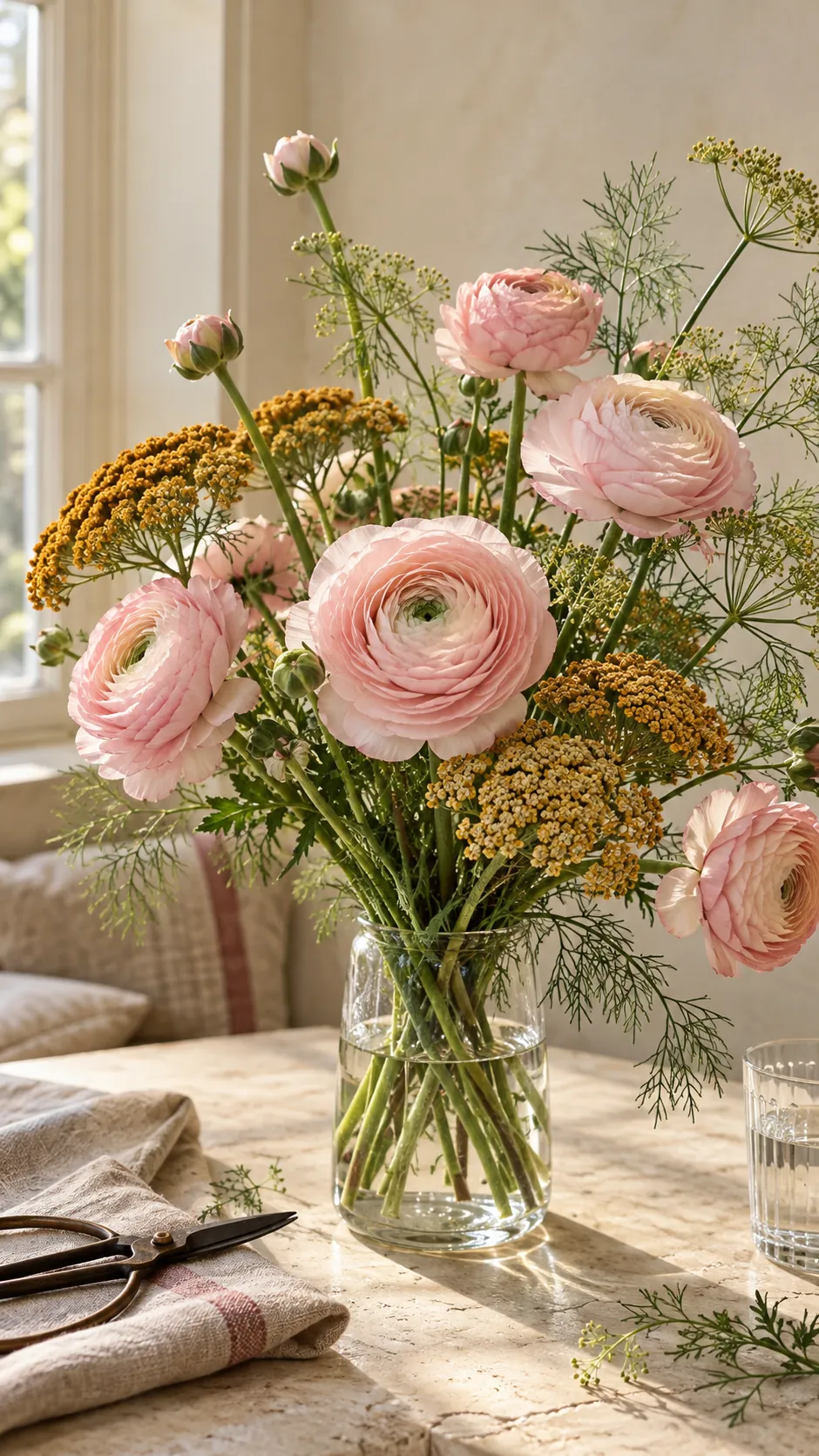
Pale Pink Ranunculus With Golden Yarrow
Golden yarrow warms pale pink ranunculus while its tiny flowers add a dry meadow character. Space the yarrow in small clouds instead of one dense cap. Airy fennel foliage continues the fine texture and makes this combination feel light enough for early autumn.
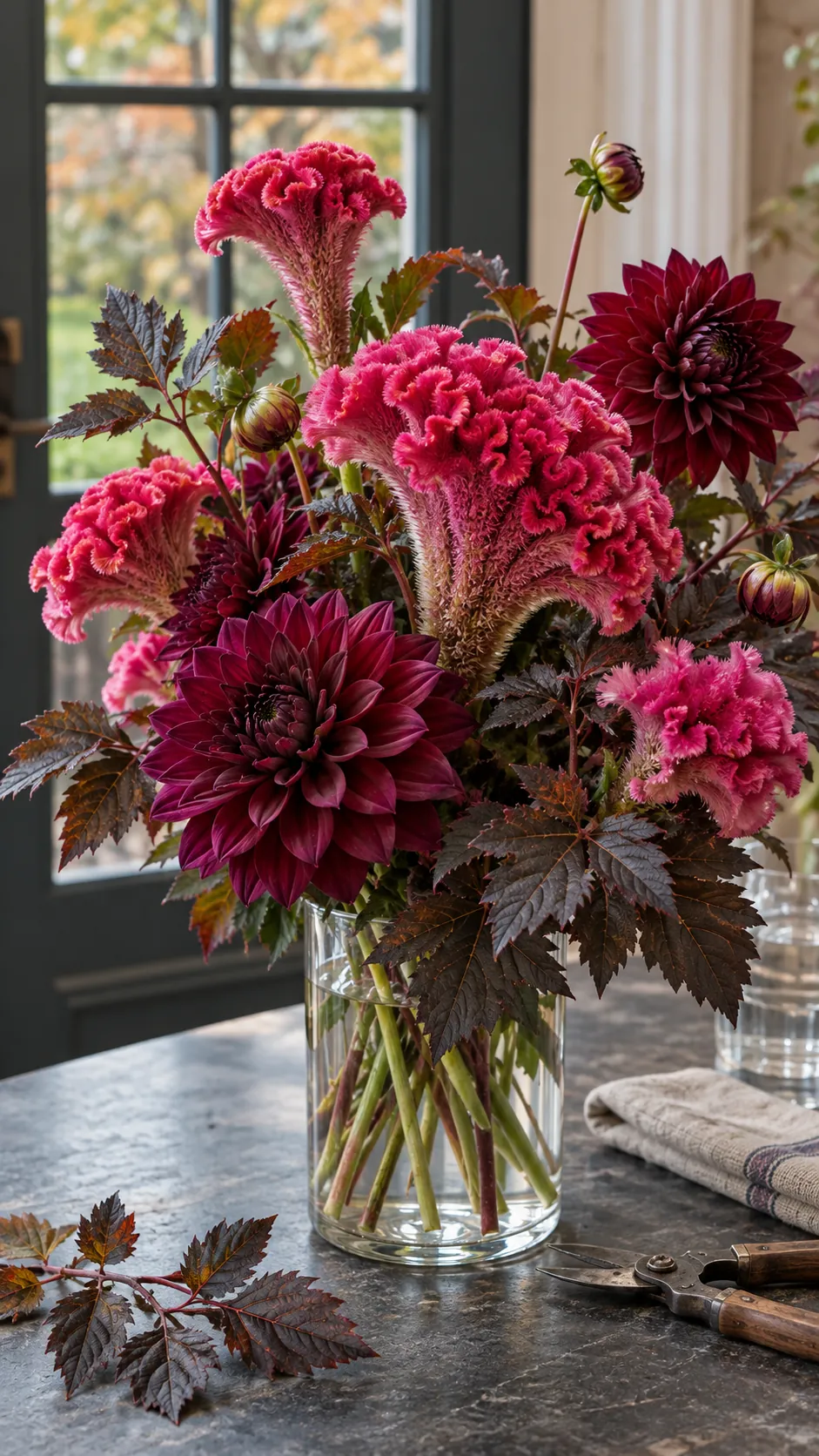
Hot Pink Celosia With Wine Dahlias
Hot pink can work in fall when a deep wine tone absorbs some of its brightness. Use celosia as an irregular accent and let wine dahlias carry most of the visual weight. Dark ninebark leaves create a natural outline and make the saturated pink look intentional.
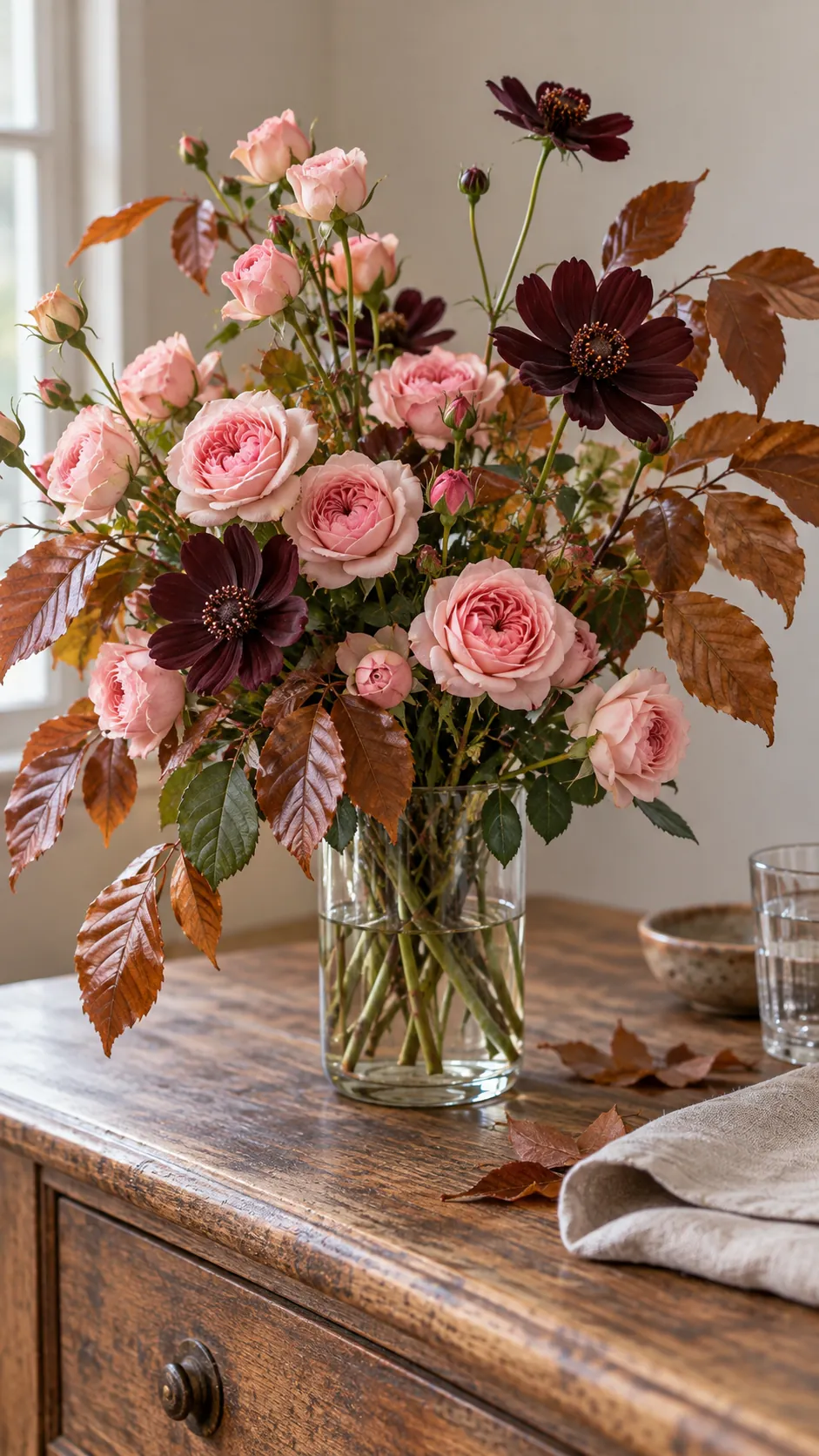
Shell Pink Roses With Chocolate Cosmos
Chocolate cosmos adds a near brown note that immediately grounds shell pink roses. Keep the small dark flowers slightly above the rose clusters so they remain visible. Copper beech leaves echo the warm centers and give the bouquet a gathered woodland finish.
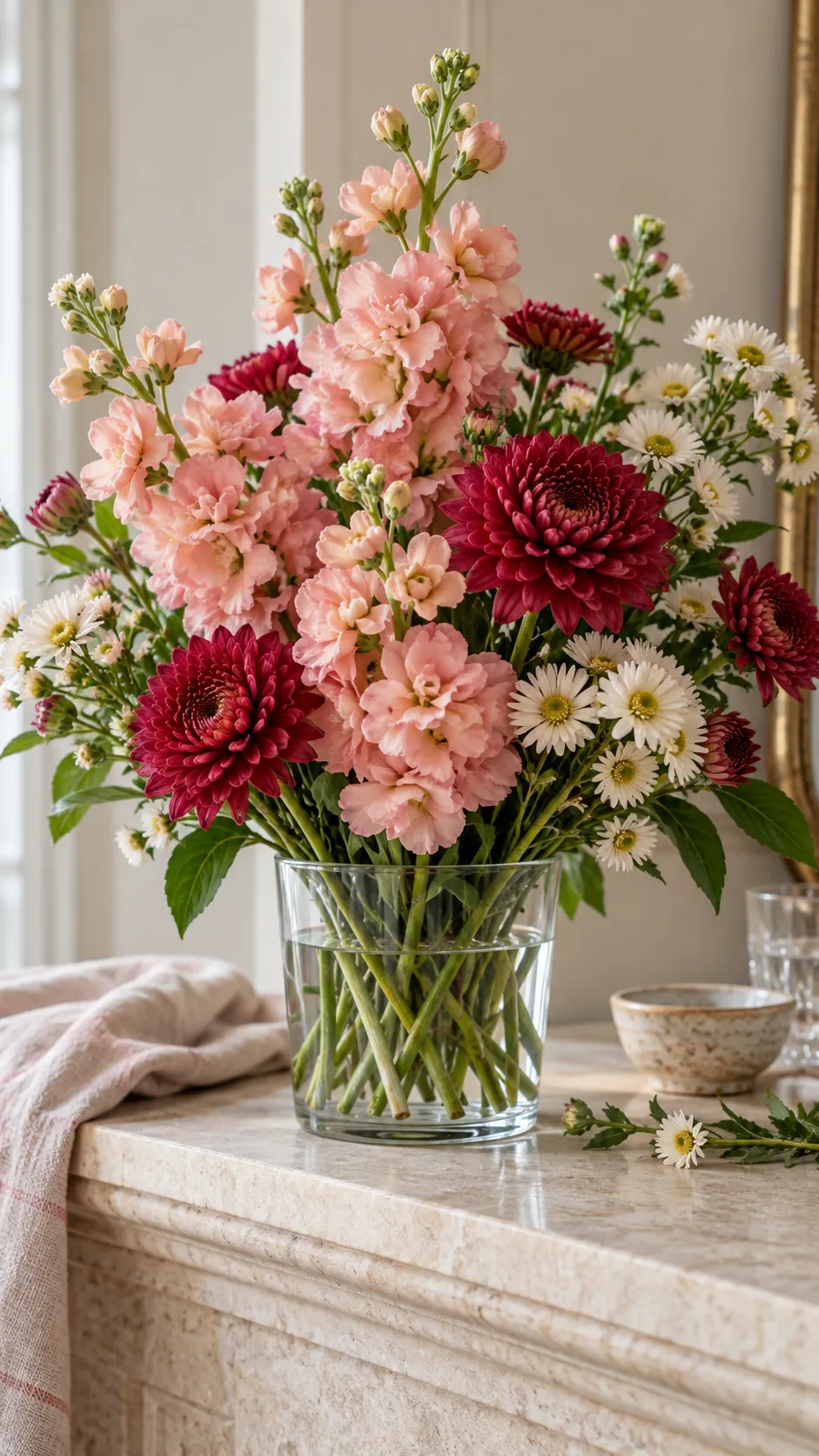
Peach Pink Stock With Cranberry Mums
Peach pink stock brings height and fragrance while cranberry mums establish a clear fall anchor. Arrange the stock in uneven vertical lines rather than a stiff ring around the center. Cream asters soften the transition and keep both colors easy to distinguish.
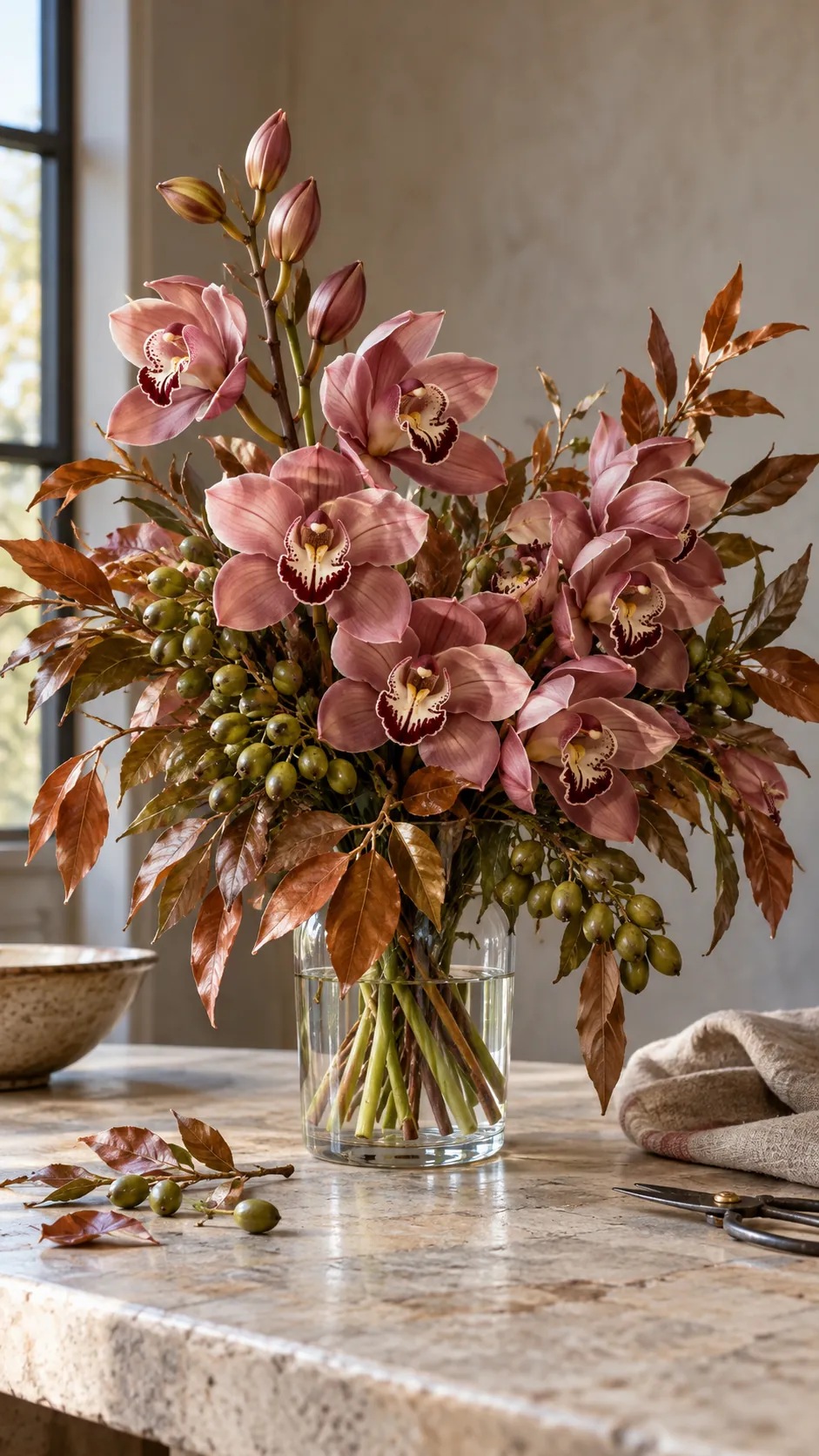
Rose Pink Orchids With Bronze Foliage
Rose pink orchids feel seasonal when their glossy petals meet matte bronze foliage. Use only a few orchid stems and give every bloom a clear view. Olive berries add a small rounded detail that connects the formal flowers to a natural autumn palette.
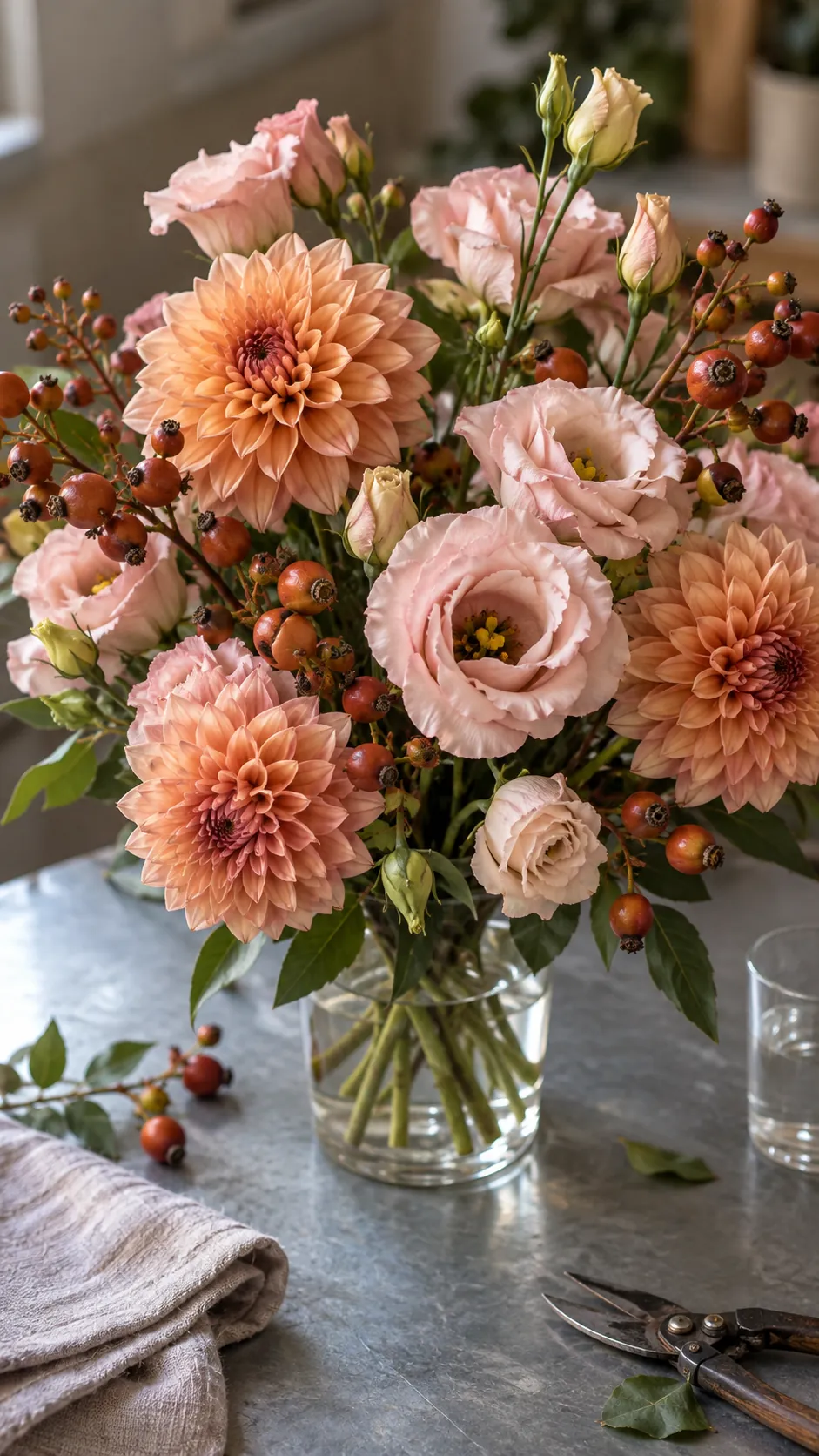
Blush Lisianthus With Apricot Dahlias
Blush lisianthus and apricot dahlias create a gentle sunset transition without relying on bright orange. Keep lisianthus buds near the outline and place the dahlias deeper in the center. Rust colored rose hips add crisp points of contrast and signal the change of season.
Dusty Pink Roses With Burgundy Amaranthus
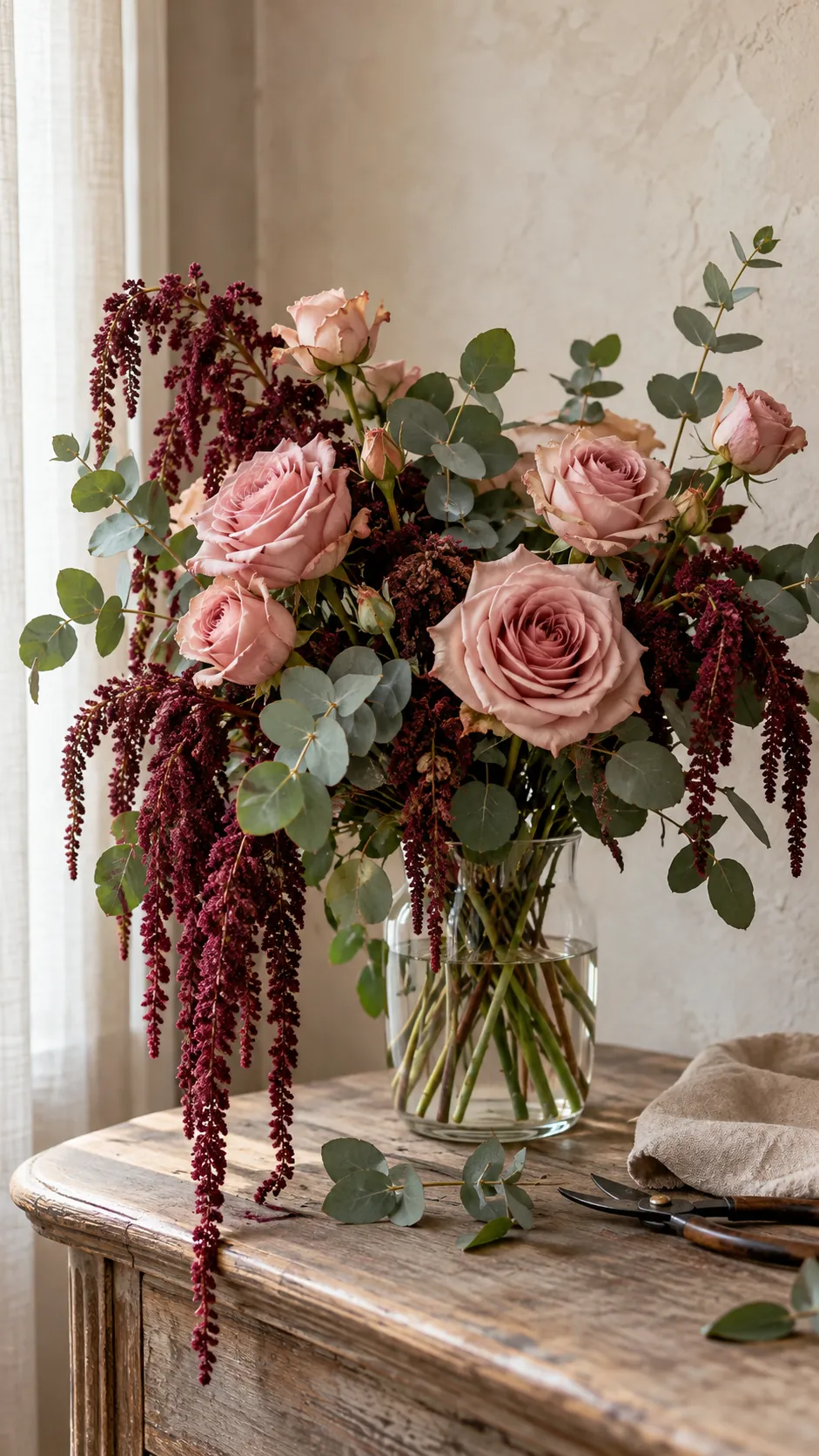
Dusty pink roses remain the focal flowers while burgundy amaranthus gives the final combination dramatic movement. Use one restrained amaranthus trail and repeat burgundy with a few small accents near the center. Muted eucalyptus keeps the shape open, so the dark element looks elegant rather than heavy.