

An empty wall behind a sofa rarely feels empty because it lacks stuff. It feels empty because the sofa, wall, coffee table, pillows, plants, and lighting are not working as one visual group yet. That is the difference between a room that looks unfinished and a room that looks intentionally calm.
The quickest fix is not to buy more small decor. The better fix is to create one clear anchor, then let the rest of the living room decor support it. Your wall behind sofa should feel connected to the seating area below it, not like a separate blank rectangle you are trying to hide.
Start by deciding how much wall actually needs to be filled
Before choosing art, shelves, mirrors, or a gallery wall, stand across the room and look at the whole sofa zone. The common mistake is treating the entire wall as the problem. In most living rooms, only the area directly above the sofa needs a strong visual relationship with the furniture.
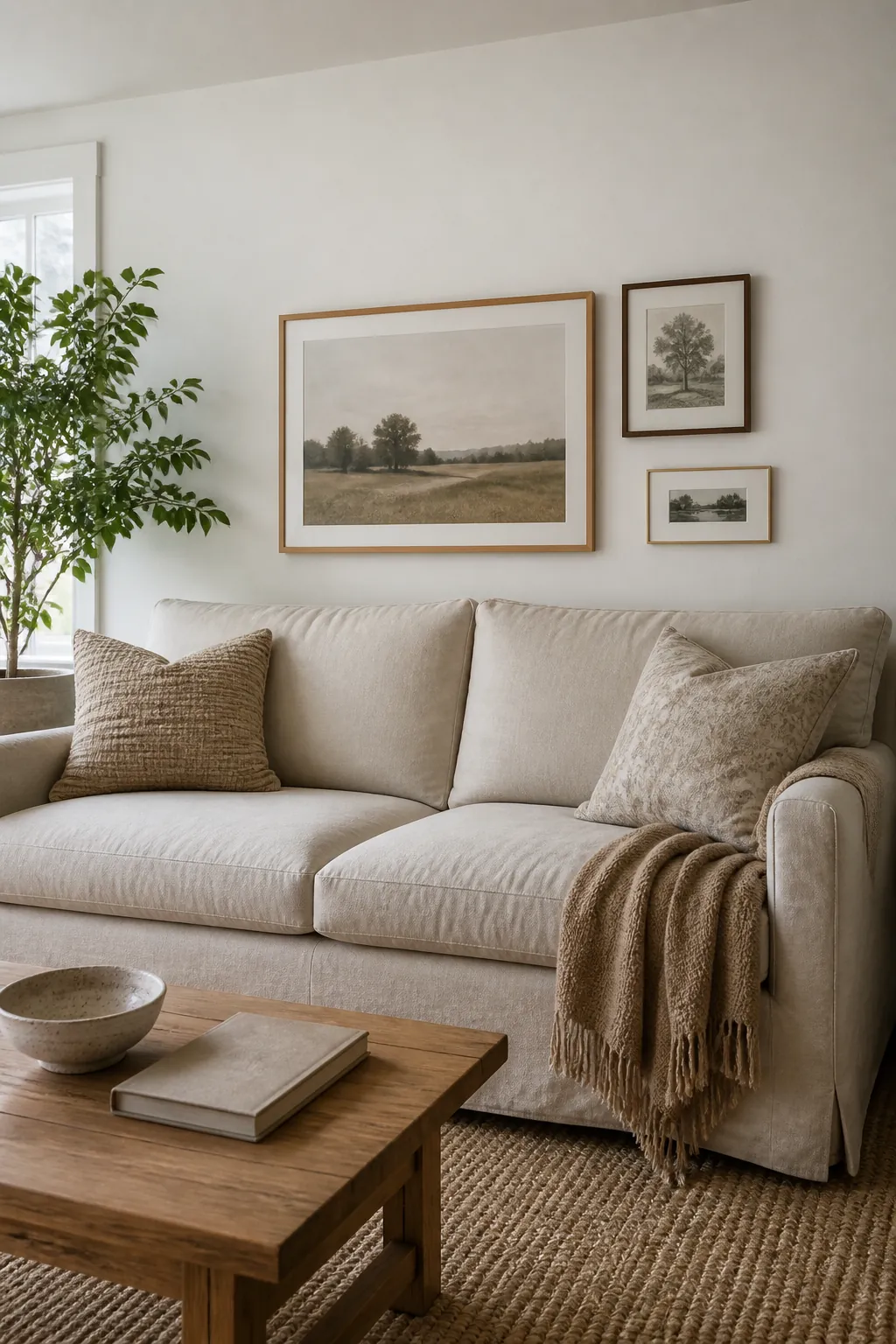
For a clean starting point, imagine a rectangle that begins a few inches above the sofa back and spans roughly two thirds to three quarters of the sofa width. That rectangle is your anchor zone. If the decor inside that zone has enough scale, the wall will stop feeling abandoned even if the outer edges stay quiet.
This is why one large piece of art often looks calmer than seven tiny frames scattered too far apart. It is also why shelves can feel heavy when the couch is tight against the wall. The goal is not maximum coverage. The goal is enough visual weight in the right place.
Choose one main anchor before you add accessories
If your living room wall decor feels random, it is usually because every piece is trying to be important. Pick one main anchor first. That can be a large framed print, a pair of vertical artworks, a low row of three prints, an oversized mirror, or a woven wall piece. Everything else should support that choice.
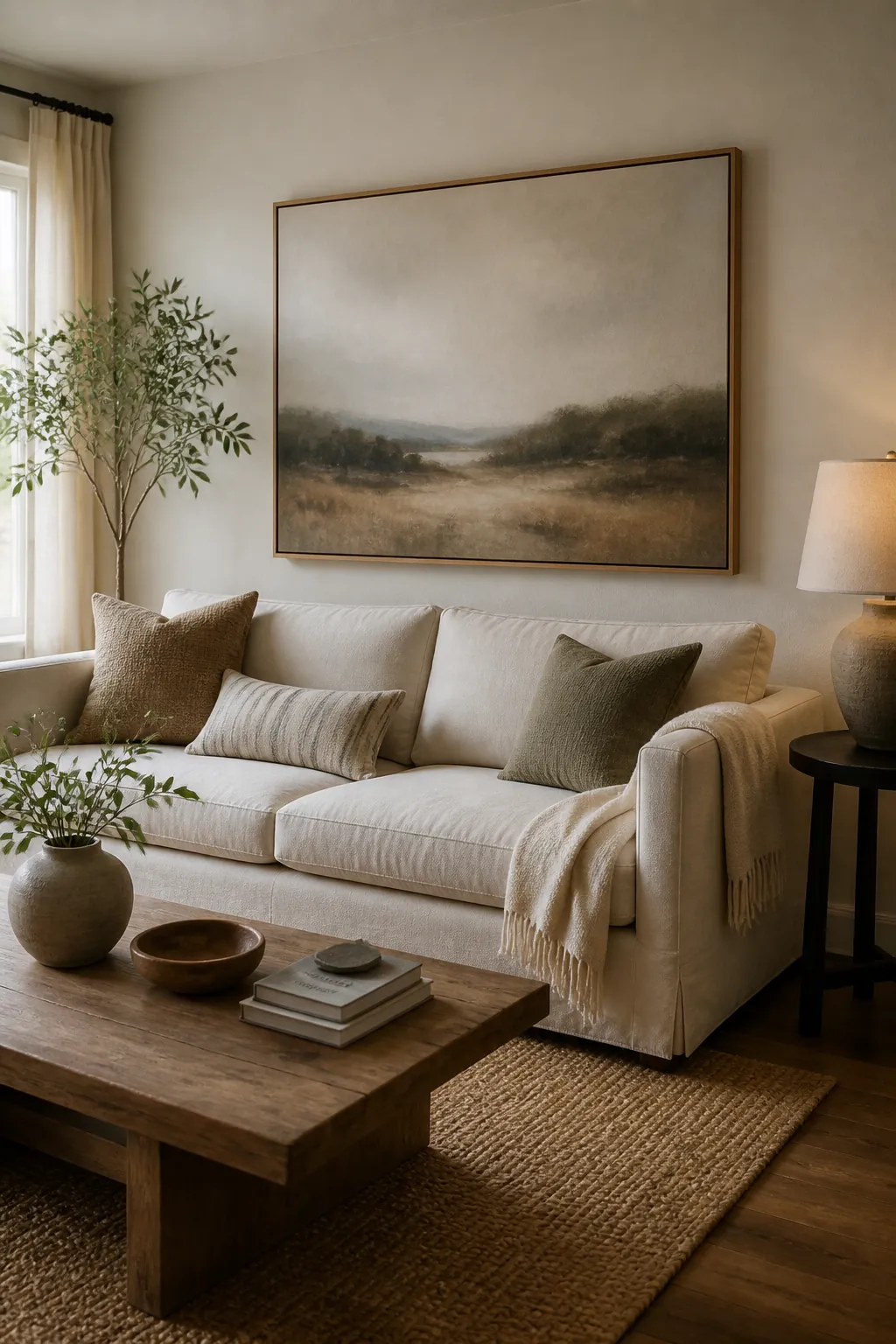
For a small or narrow room, a mirror can be useful because it reflects light and makes the sofa wall feel less flat. For a cozy living room with warm textures, woven art, framed botanicals, or wood-toned frames can soften the wall without adding visual noise. For a modern neutral decor scheme, one oversized abstract or landscape piece usually feels more expensive than a busy mix of small items.
Hang the anchor low enough that it belongs to the sofa. If it floats too high, your eye reads it as two separate things: sofa below, art above, and an awkward gap between them. When the bottom of the art sits close to the sofa back, the whole zone feels designed.
Use a gallery wall only when the pieces share a clear rule
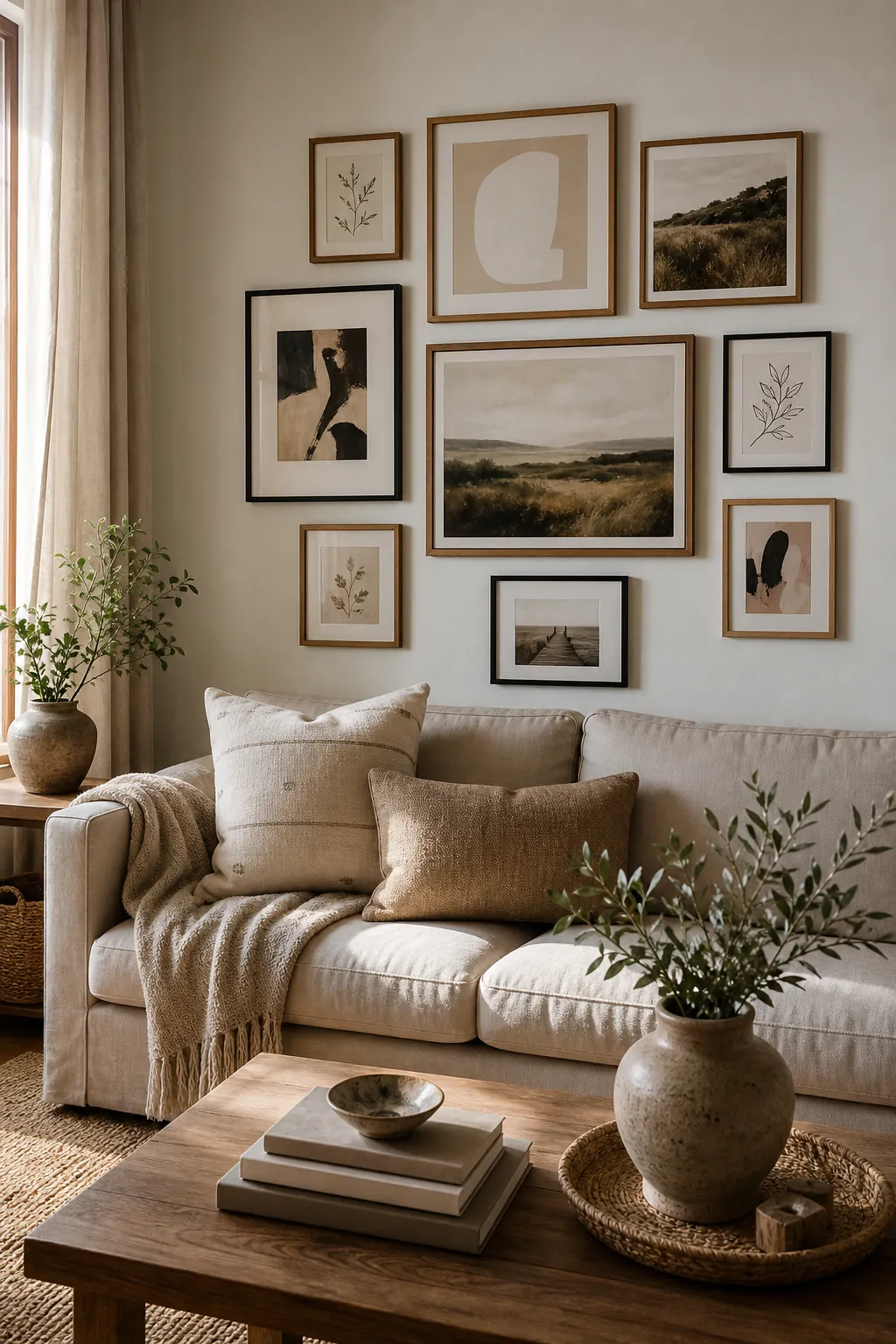
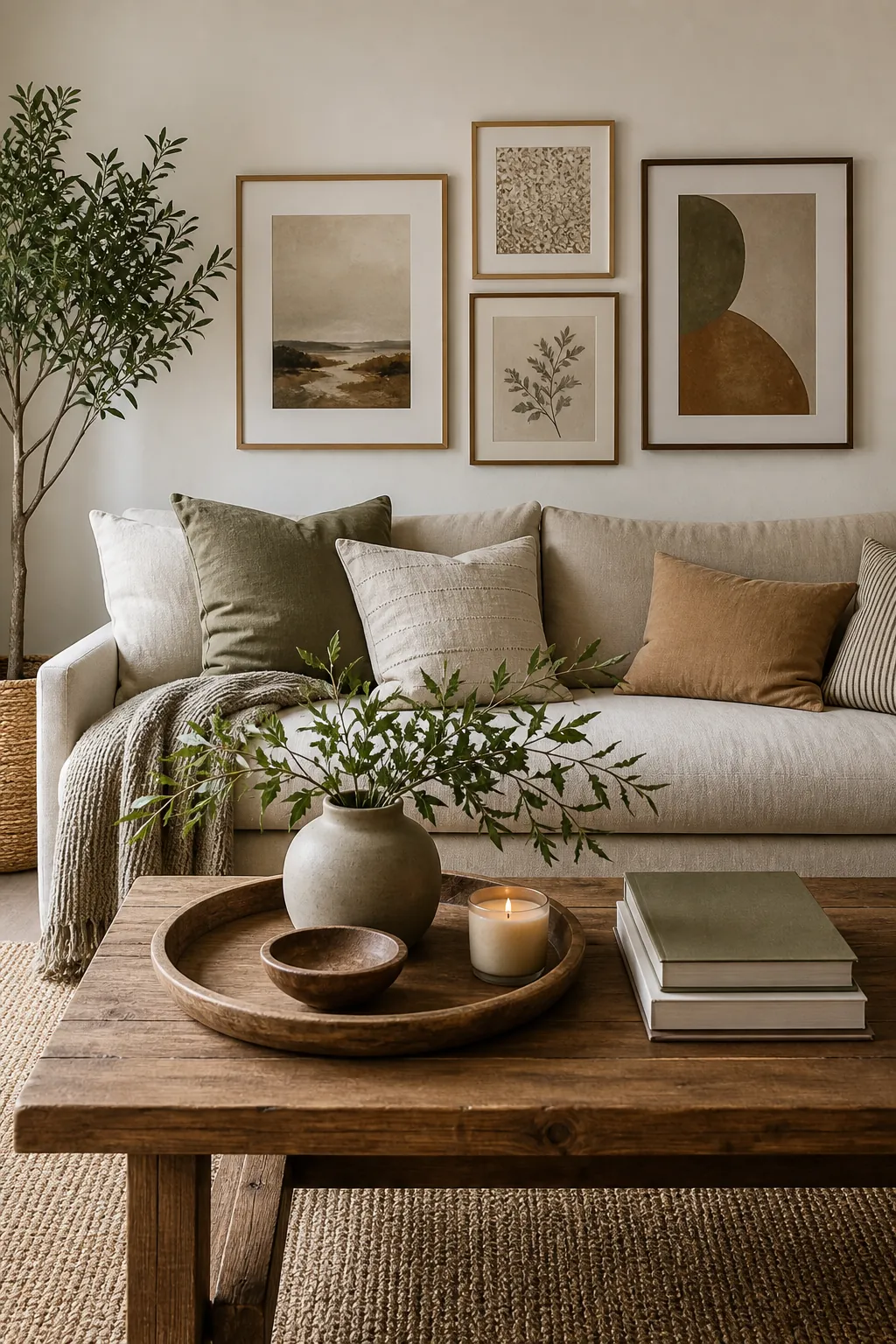
A gallery wall is a strong answer for a wall behind sofa, but it needs discipline. Without a rule, it can make the room feel busier instead of fuller. The rule can be color, frame finish, subject, spacing, or shape. You do not need all of them. You need enough consistency that the eye can understand the grouping quickly.
For a calm home styling look, mix two or three frame sizes but keep the frames in one finish, such as black, oak, brass, or white. For a collected look, combine family photos, simple line art, small landscapes, and vintage prints, but repeat one color through several pieces. For a natural home feel, add one woven tray or shallow basket among the frames so the wall has texture, not just paper and glass.
Lay the arrangement on the floor first. Keep the outside shape compact enough to relate to the sofa. Leave more breathing room at the edges than you think you need. A gallery wall should read as one generous composition, not a set of lonely objects trying to fill a blank wall.
Add depth with texture instead of adding more small things
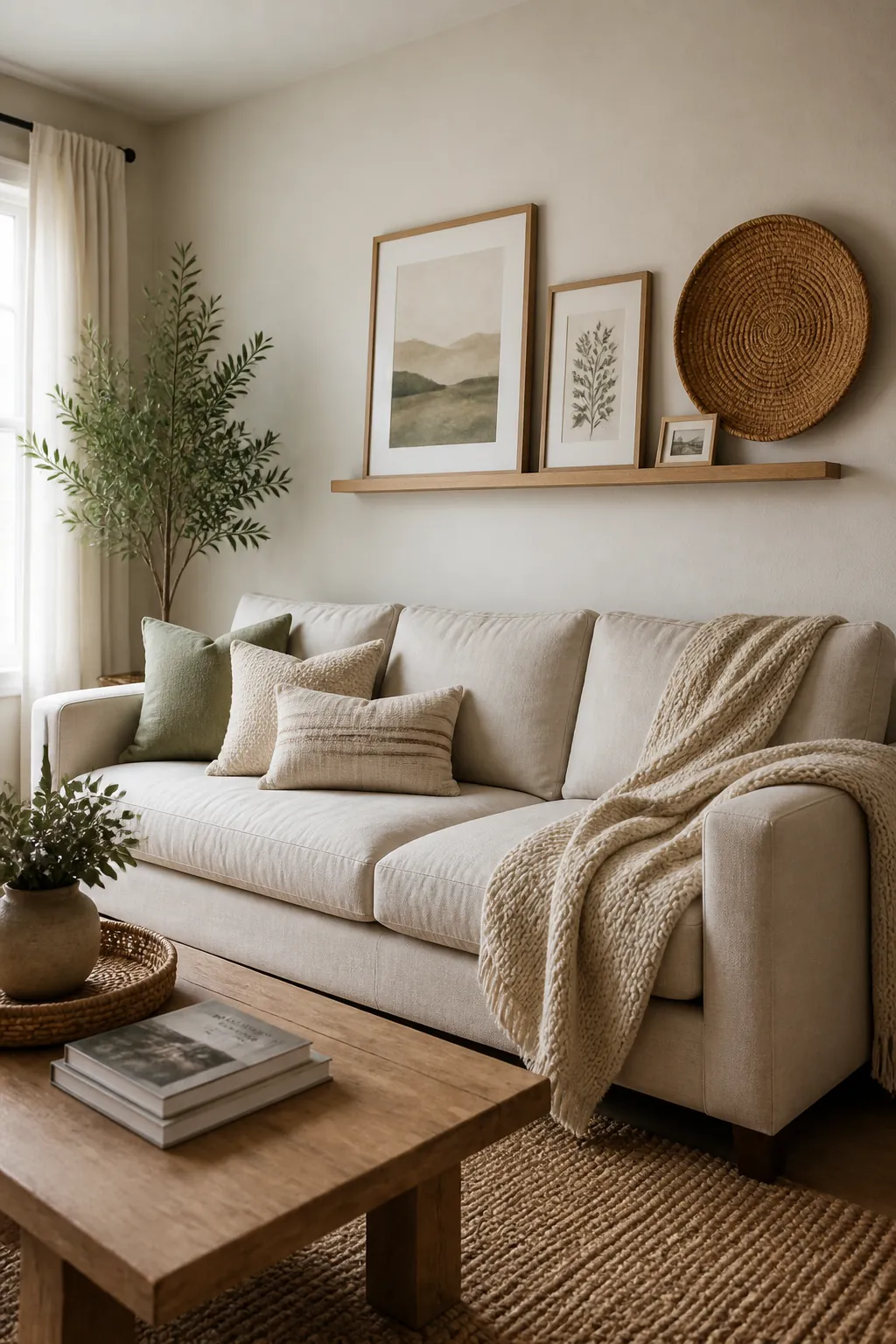
When a sofa wall feels flat, texture often works better than clutter. A wall can be visually full even when it has only a few elements, as long as those elements create depth. Think woven baskets, linen mats inside frames, a slim picture ledge, a bamboo or wood frame, soft ceramic lamps, or a plant that overlaps the edge of the wall decor.
This is especially helpful in neutral decor. Beige, white, gray, and warm wood can look beautiful, but they need contrast in texture to avoid becoming bland. A matte frame beside a woven shade, a leafy plant beside a smooth coffee table, or a ribbed vase below simple art can make the entire sofa styling feel layered.
If the sofa is pushed against the wall, be careful with deep shelves directly over seated heads. A slim picture rail can work, but bulky shelving may feel visually heavy and physically uncomfortable. If you have space to pull the sofa forward, a narrow console behind it can hold a lamp, books, and plant decor while keeping the wall itself simpler.
Let plants and lighting soften the hard edges
A blank wall can look harsh because everything in the sofa zone is horizontal: sofa seat, sofa back, coffee table, rug, and sometimes a long media console across the room. Plants and lighting break that stiffness. They add height, shadow, and a softer outline.
Try a tall plant on one side of the sofa, especially if the art is centered and the room still feels too bare. A floor lamp can do the same job while making the room warmer at night. If you already have art in the anchor zone, one lamp or plant at the edge is usually enough. If you add a pair of sconces, keep the rest of the wall simpler so the lighting does not compete with the art.
Plant decor is most effective when it overlaps the sofa zone instead of sitting far away in a corner. The leaves should visually bridge the gap between furniture and wall. That overlap is what makes the living room feel layered rather than lined up against the wall.
Style the sofa and coffee table so the wall does not work alone
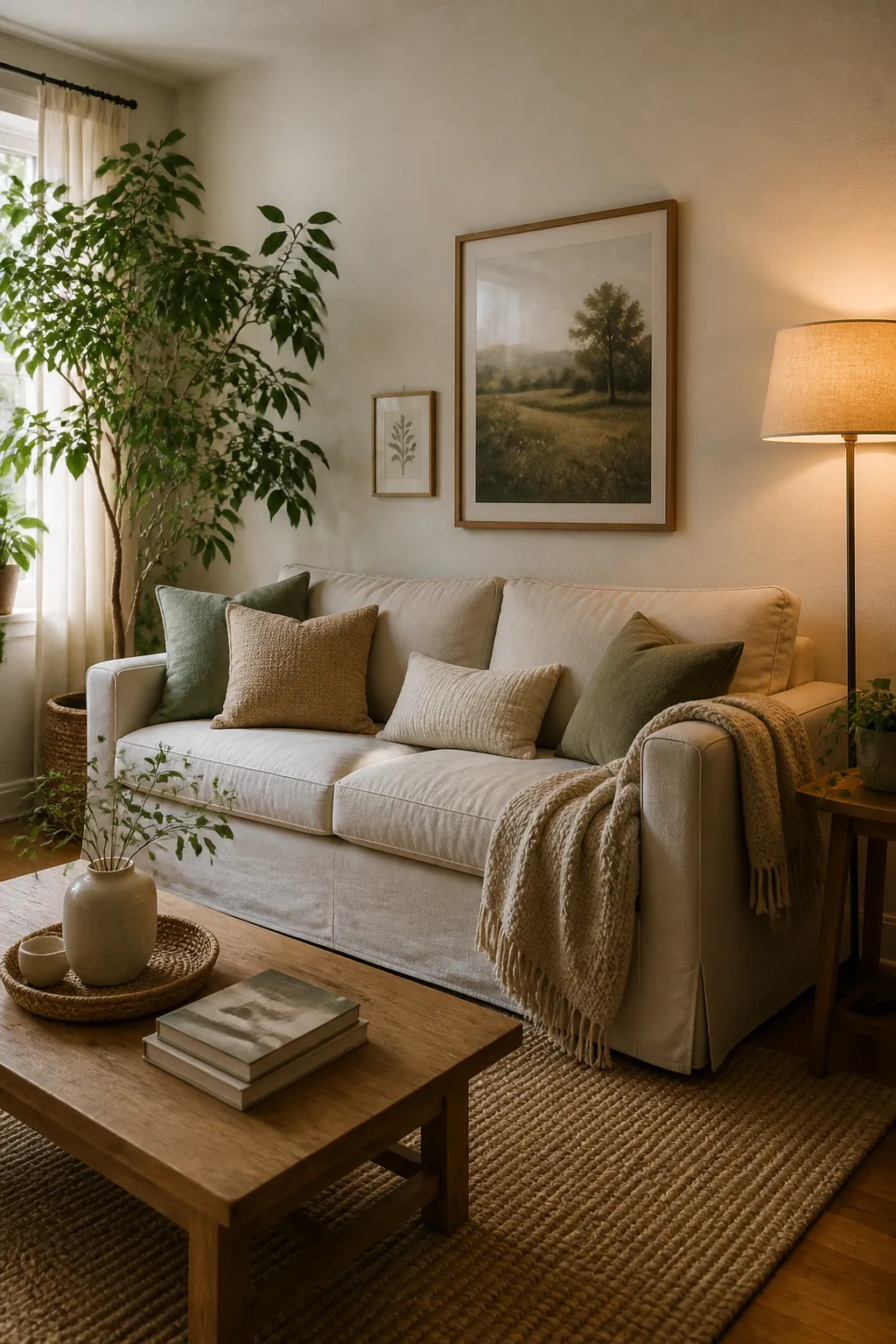
The wall behind the sofa will never feel right if the furniture below it looks disconnected. Pillows, throws, coffee table decor, and the rug all help the wall decor feel intentional. Pull one or two colors from the art into the pillows. Repeat the frame tone in a tray, vase, or table lamp. Let a plant on the coffee table echo the taller plant beside the sofa.
This does not mean matching everything. A room looks more natural when the repetition is subtle. For example, if your gallery wall includes black frames, use a small black bowl or candle holder on the coffee table. If your art has soft green, add one muted green pillow or a plant with a similar tone. If your wall decor uses warm wood, bring in a wood tray or a stack of books with tan covers.
The best living room decor feels like a conversation between objects. The wall answers the sofa. The sofa answers the coffee table. The plants and lighting make the edges feel alive. Once those relationships are in place, the empty wall stops demanding attention.
Simple formulas that work in real rooms
If you are stuck, choose one of these formulas instead of starting from endless decor options.
- Calm and minimal: one oversized framed print, two pillows that repeat the art color, one sculptural vase on the coffee table.
- Cozy and natural: three wood-framed prints, one woven basket or tray on the wall, a tall plant beside the sofa, warm lamp light.
- Collected and personal: a compact gallery wall with family photos, one landscape, one small textile piece, and consistent frame spacing.
- Renter friendly: leaning art on a picture ledge, removable hooks, a floor lamp, and coffee table decor that carries the same colors.
- Small living room: one mirror or one large light-toned artwork, no bulky shelf, one plant at the side, low contrast pillows.
Do one formula well before adding more. If the wall still feels empty, increase the scale of the main anchor before adding extra pieces. If it feels busy, remove the smallest items first. The room usually improves faster when you edit than when you keep filling.
The wall should feel finished, not full
A beautiful sofa wall leaves some empty space. That empty space gives the art, plants, and furniture room to breathe. What matters is that the blank parts feel intentional because the main anchor has enough scale, the textures add depth, and the styling below connects back to the wall.
When you are deciding what to change, ask one practical question: does this make the sofa area feel more connected? If yes, keep it. If it only fills space, skip it. The wall behind your sofa does not need more decor. It needs a clearer relationship with the room.