
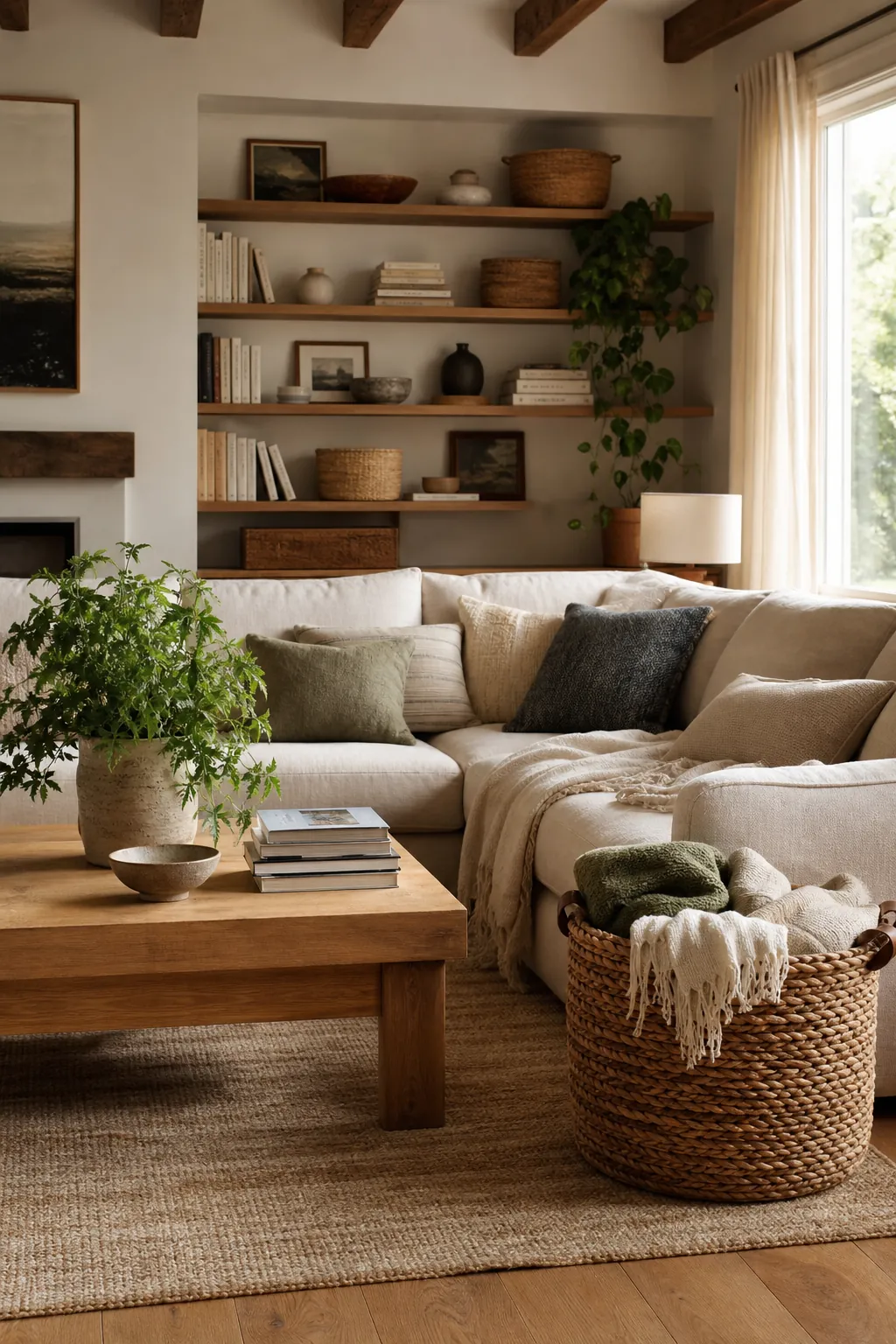
A living room rarely feels unfinished because it is missing more decor. It usually feels unfinished because the decor has not been given a job. Baskets, books, and plants work so well together because each one solves a different problem: baskets hide the everyday mess, books add structure and personality, and plants soften the hard lines that make a room feel flat.
The trick is to stop sprinkling them around the room as filler. Use them as a small styling system instead. A woven basket can anchor an empty corner, a stack of books can give a coffee table height, and living room plants can pull greenery through shelves, side tables, and the sofa area without making the space look crowded.
Start With One Basket That Actually Solves a Problem
The fastest way to make basket decor look intentional is to connect it to a real function. Put a tall woven basket beside the sofa for throws, a lidded basket under a console for remotes and chargers, or a shallow basket tray on an ottoman for coasters and a small plant. When the basket has a purpose, it reads as design instead of storage you forgot to hide.
Scale matters more than quantity. One oversized basket with visible texture looks calmer than three tiny baskets scattered around the room. If your living room decor already has warm wood, jute, cane, or bamboo, choose a basket in a related tone so it feels connected to the rest of the space. If the room is mostly gray, white, or black, use the basket to bring in a warmer natural note.

Use Books as Architecture, Not Just Decoration
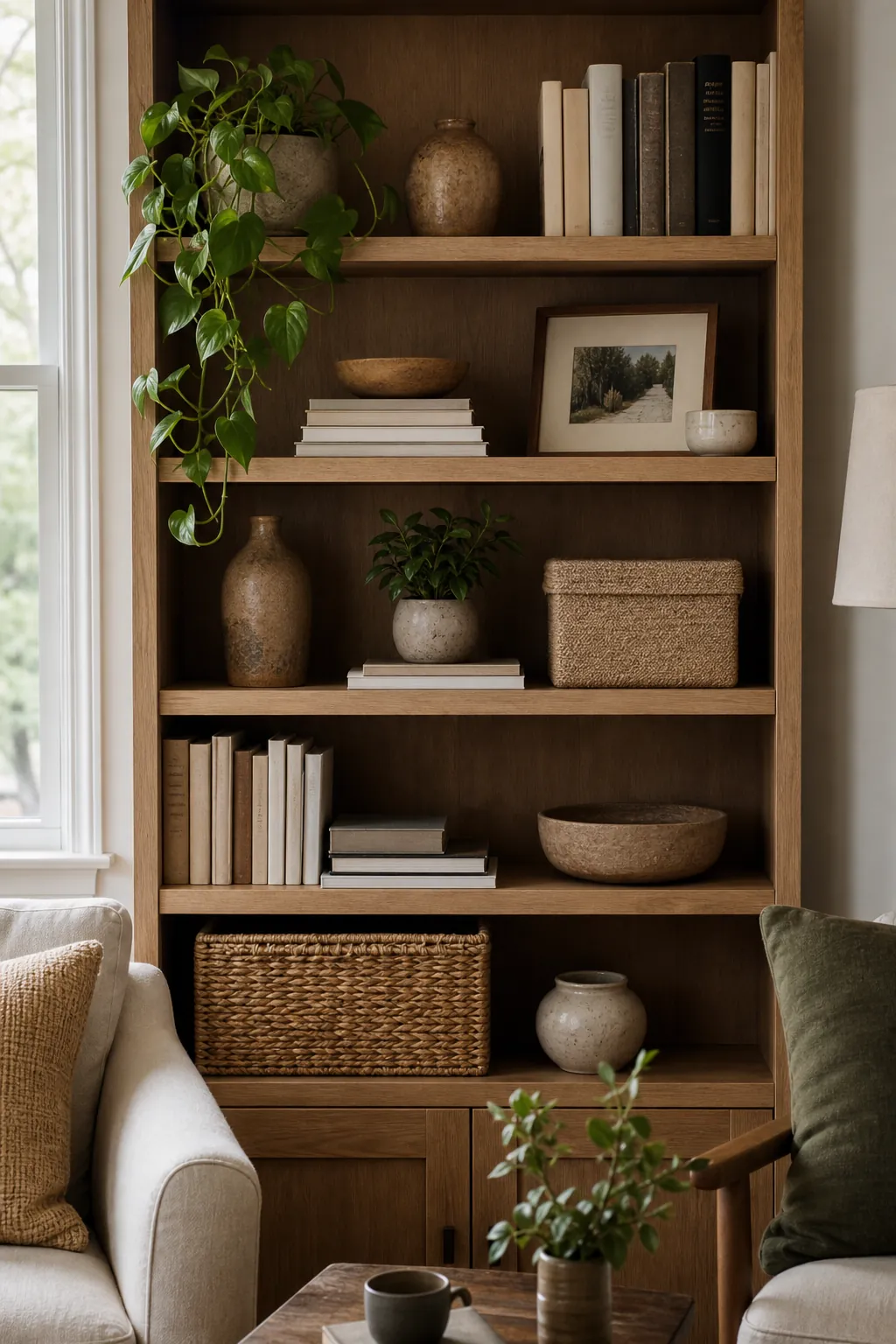
Books decor works best when books create shape. Stand a few vertically to give a shelf weight, stack two or three horizontally to lift a bowl or small planter, then leave breathing room around the stack. This is why a shelf full of personal books often looks better than a shelf packed with random matching objects. Books give the eye a structure to follow.
If your shelves feel messy, start by grouping books by general color temperature rather than exact rainbow order. Warm neutrals, soft greens, creams, charcoal, and terracotta can sit near baskets and plant pots without fighting them. For shelf styling, repeat the same rhythm across the room: books on one shelf, a plant or vase nearby, and one basket or box lower down to hide less attractive essentials.
Make the Coffee Table Useful Before You Make It Pretty
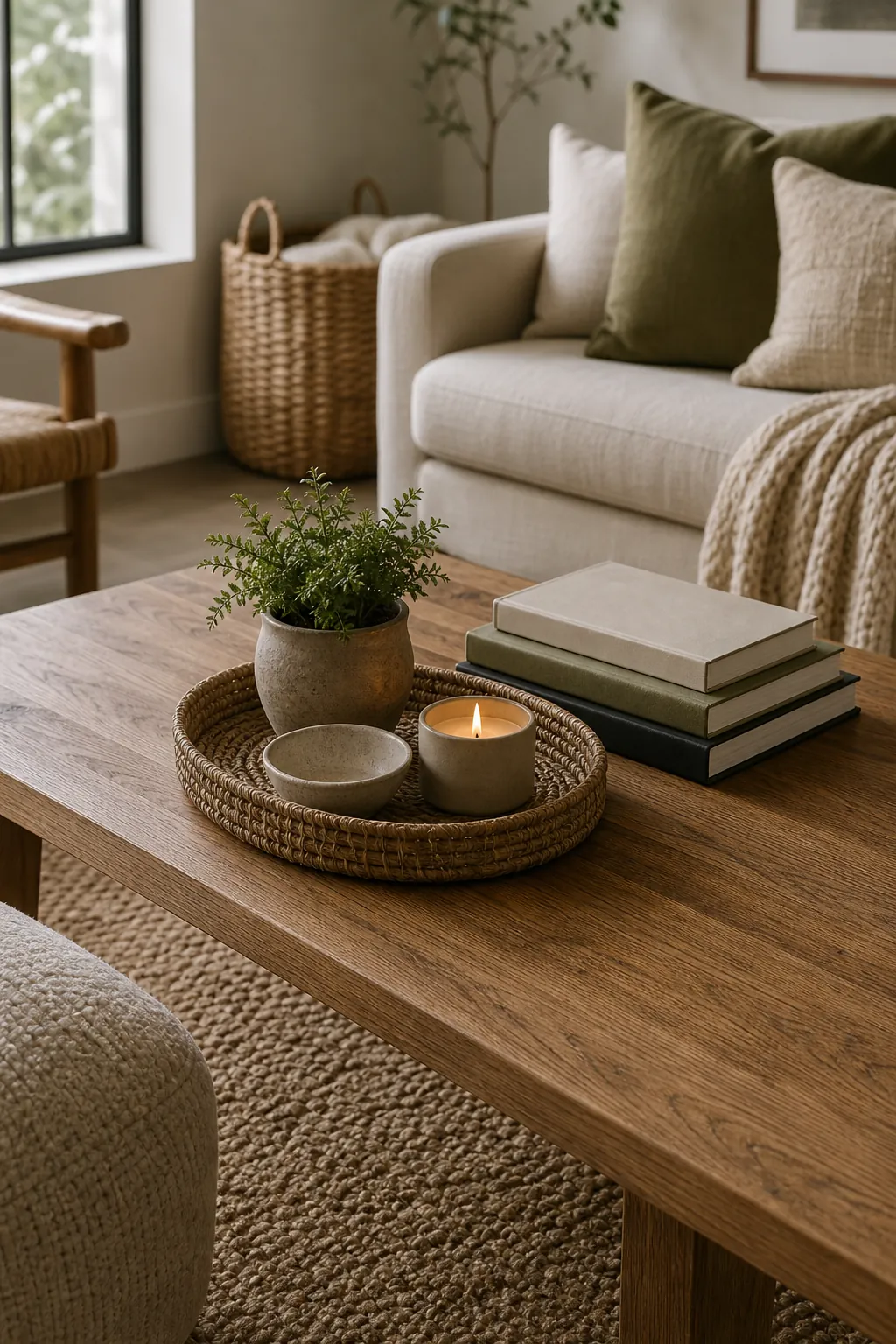
Coffee table decor is where many rooms start to look staged. A table should still have space for a mug, remote, snack plate, or book you are actually reading. Build one compact zone instead of covering the entire surface: a tray, one stack of books, one low bowl, and one piece of greenery is usually enough.
For a rectangular table, break up all the straight lines with a round bowl or a trailing plant. For a round table, use a stack of square books to give it direction. The best coffee table styling has contrast: low and tall, soft and structured, practical and personal. If you have kids or pets, use a heavier bowl, a washable tray, and a sturdy plant pot instead of fragile pieces.
Let Plants Fix the Flat Spots
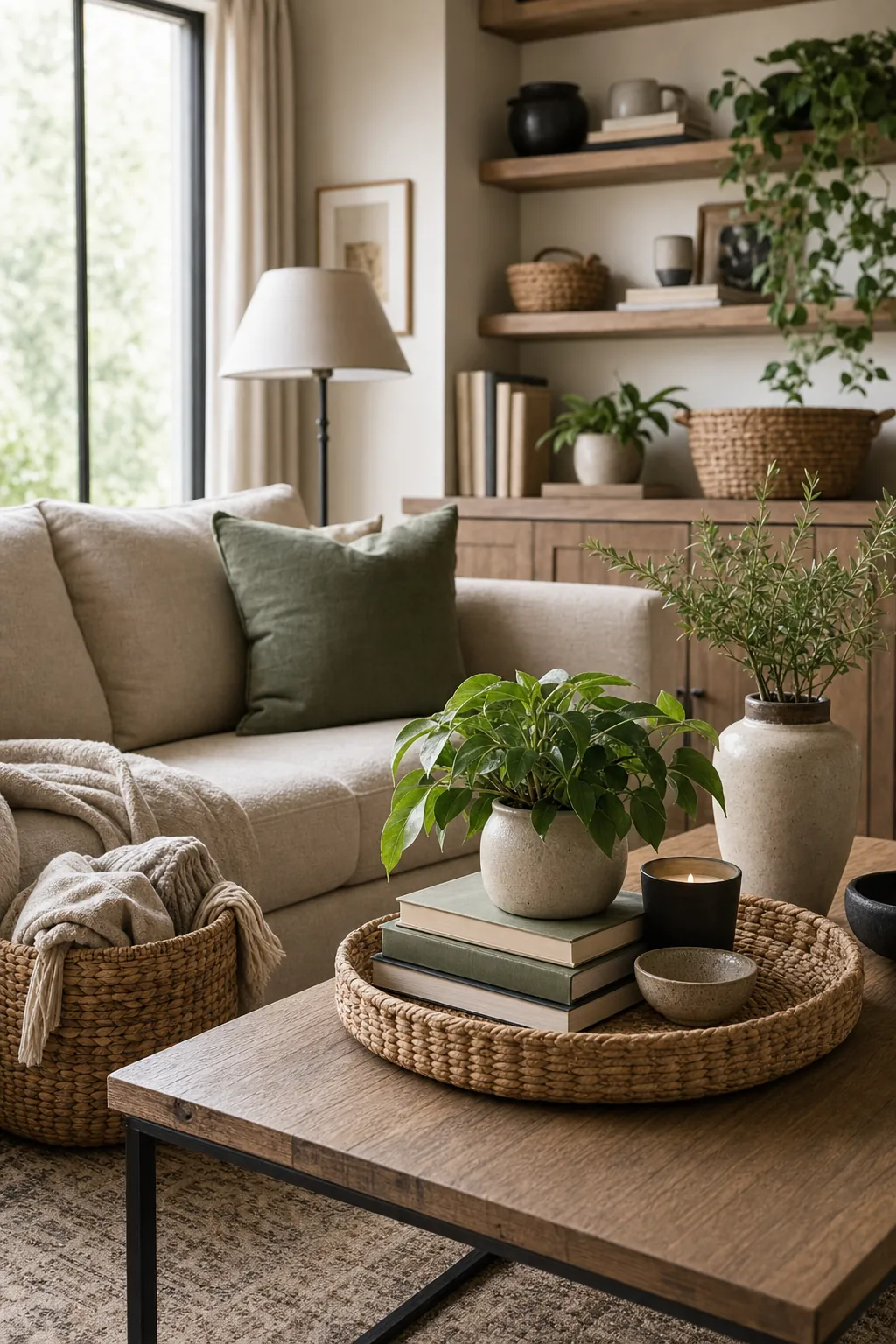
Plant decor is not only about adding color. Greenery changes the shape of a room. A tall plant can soften an empty corner, a trailing plant can loosen up stiff shelves, and a small plant on a book stack can make a coffee table feel lived in. If the room feels too square, too gray, or too newly bought, plants are often the quickest fix.
Choose plant placement by shape. Put tall, upright plants near low furniture. Use trailing plants on high shelves where the leaves can drop into the composition. Keep small tabletop plants near books or baskets so they do not look stranded. Even faux greenery can work when the scale, pot, and placement feel believable.

Repeat Materials So the Room Feels Connected
A basket beside the sofa, books on the coffee table, and a plant on the shelf can still look random if nothing repeats. Pick two or three quiet connections and carry them around the room. For example, repeat a woven texture in a basket, tray, and lampshade. Repeat green through a plant, pillow, and book spine. Repeat black through a picture frame, side table, and planter.
This is the difference between home styling and buying more stuff. You are not trying to match everything. You are trying to make the room feel like the pieces know each other. Baskets bring texture, books bring color blocks, and plants bring movement. When each shows up more than once, the room feels layered instead of decorated in isolated spots.
Edit Out Anything That Looks Like Filler
The most common mistake with baskets, books, and plants is using them to avoid making a decision. A room can have all three and still feel cluttered if every shelf is filled, every table has a cluster, and every basket is the same size. Leave some open space so the useful pieces can breathe.
Before you buy anything new, walk the room and ask three questions. Does this object help the room function? Does it add a texture, color, height, or shape that is missing? Does it say something about the people who live here? If the answer is no, the room will usually look better with less.
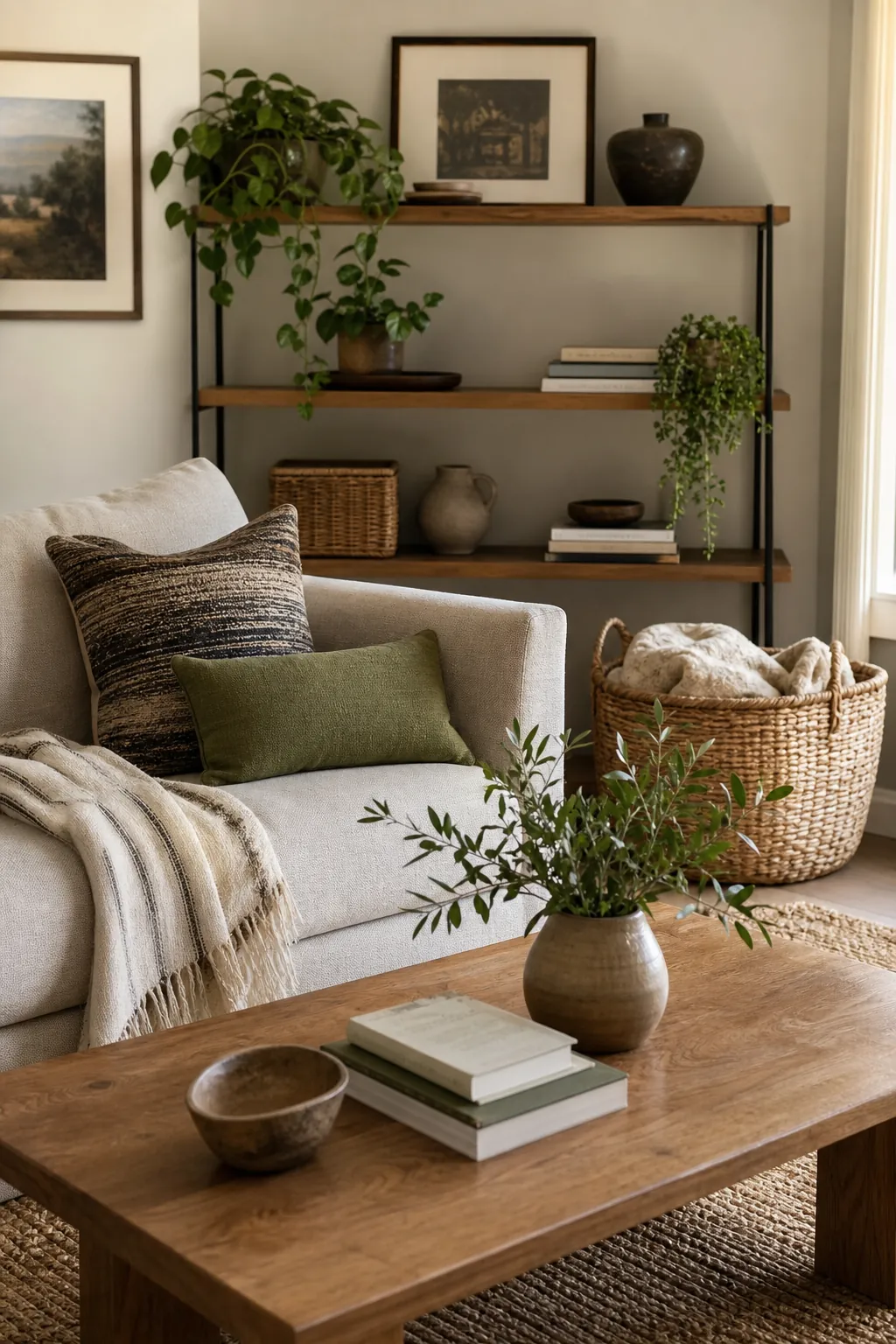
A Simple Basket, Book, and Plant Formula
If you want a quick starting point, use this formula in one zone at a time: one woven piece, one stack of books, one plant, one personal object, and one empty patch of space. Try it on a shelf, coffee table, console, or the side table next to your sofa. Then repeat a smaller version somewhere else in the room.
- For a coffee table: tray, two books, small plant, bowl, and open surface.
- For a shelf: vertical books, basket or box, trailing plant, framed photo, and negative space.
- For sofa styling: basket of throws, side table books, floor plant, textured pillow, and one repeated accent color.
The room does not need to look perfect in one afternoon. It should look collected, useful, and warm. When baskets hide what you need, books show what you love, and plants bring the room to life, the whole living room starts to feel designed without losing its realness.