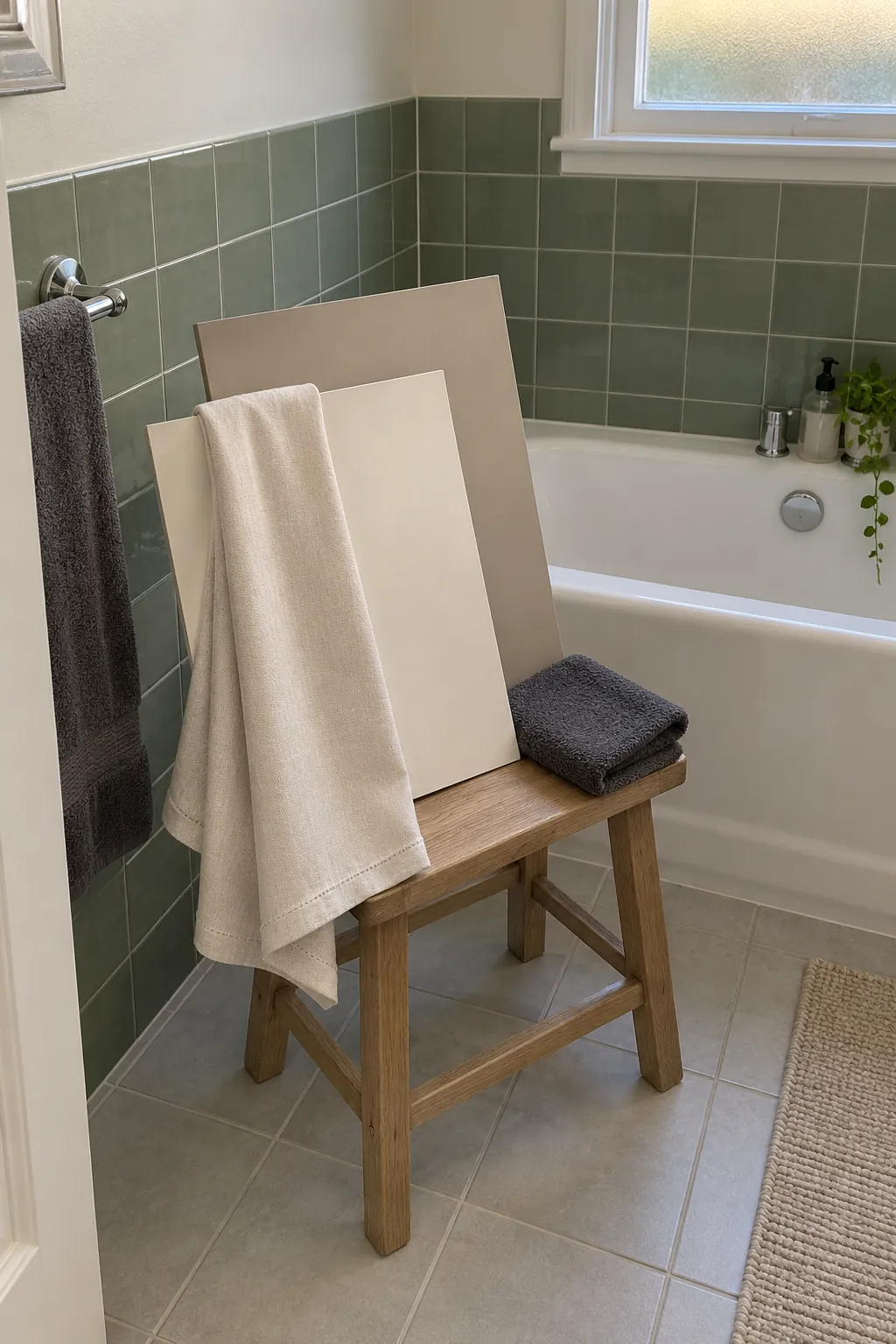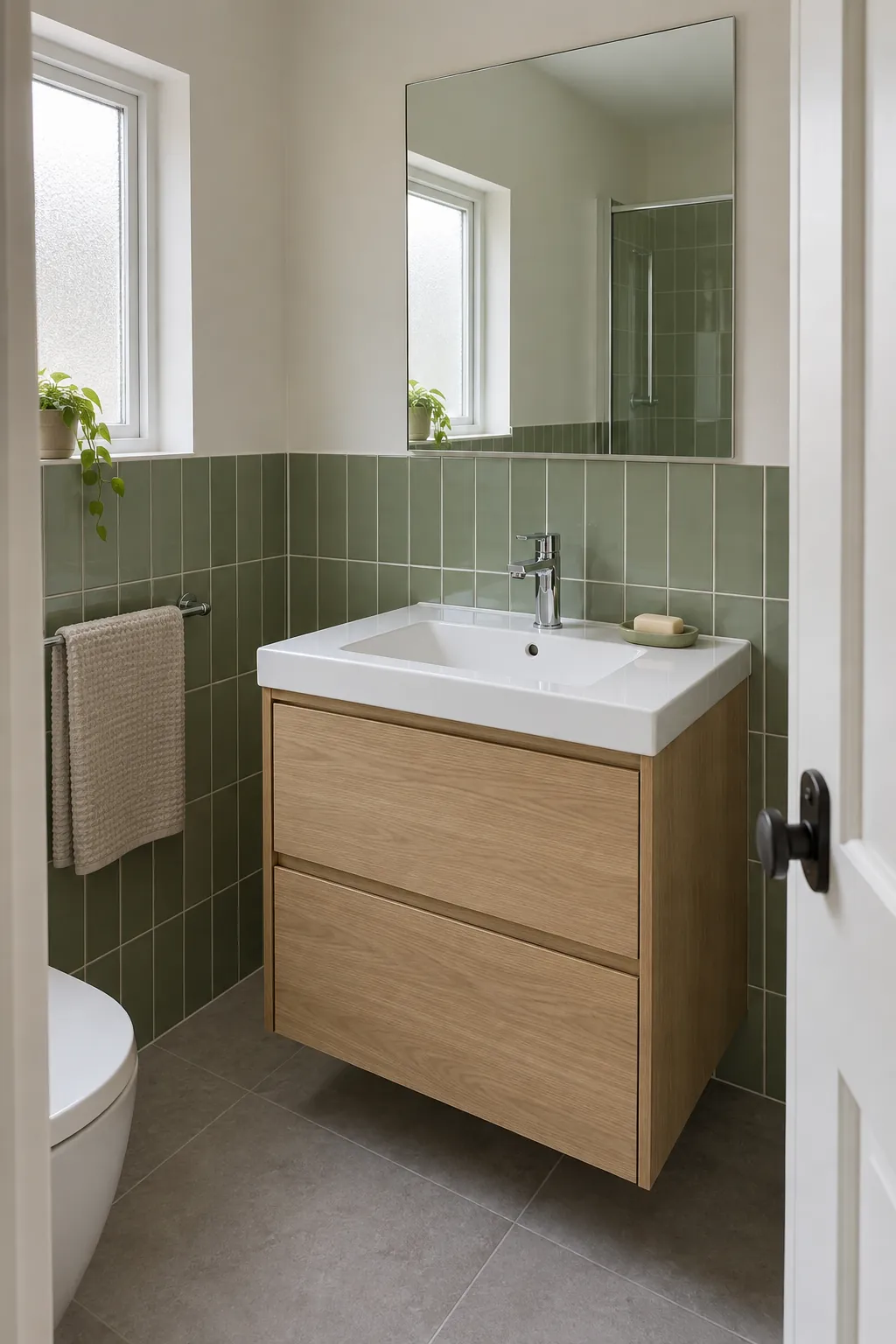
Replacing tile is a much bigger decision than changing paint or towels. If the existing green is staying, use it as the starting point and check the surrounding fixed finishes before choosing a new wall color. A palette can look convincing on a screen yet feel wrong beside the real grout and tub.
Let the tile and fixtures set the starting palette
Soft white, cream, warm beige, muted pink, wood tones, charcoal, and related greens can work with green tiles. The right combination depends on whether the tile leans blue, yellow, or gray and on the color of the fixtures beside it. Treat these as sample directions, not promises that a named color will suit every bathroom.
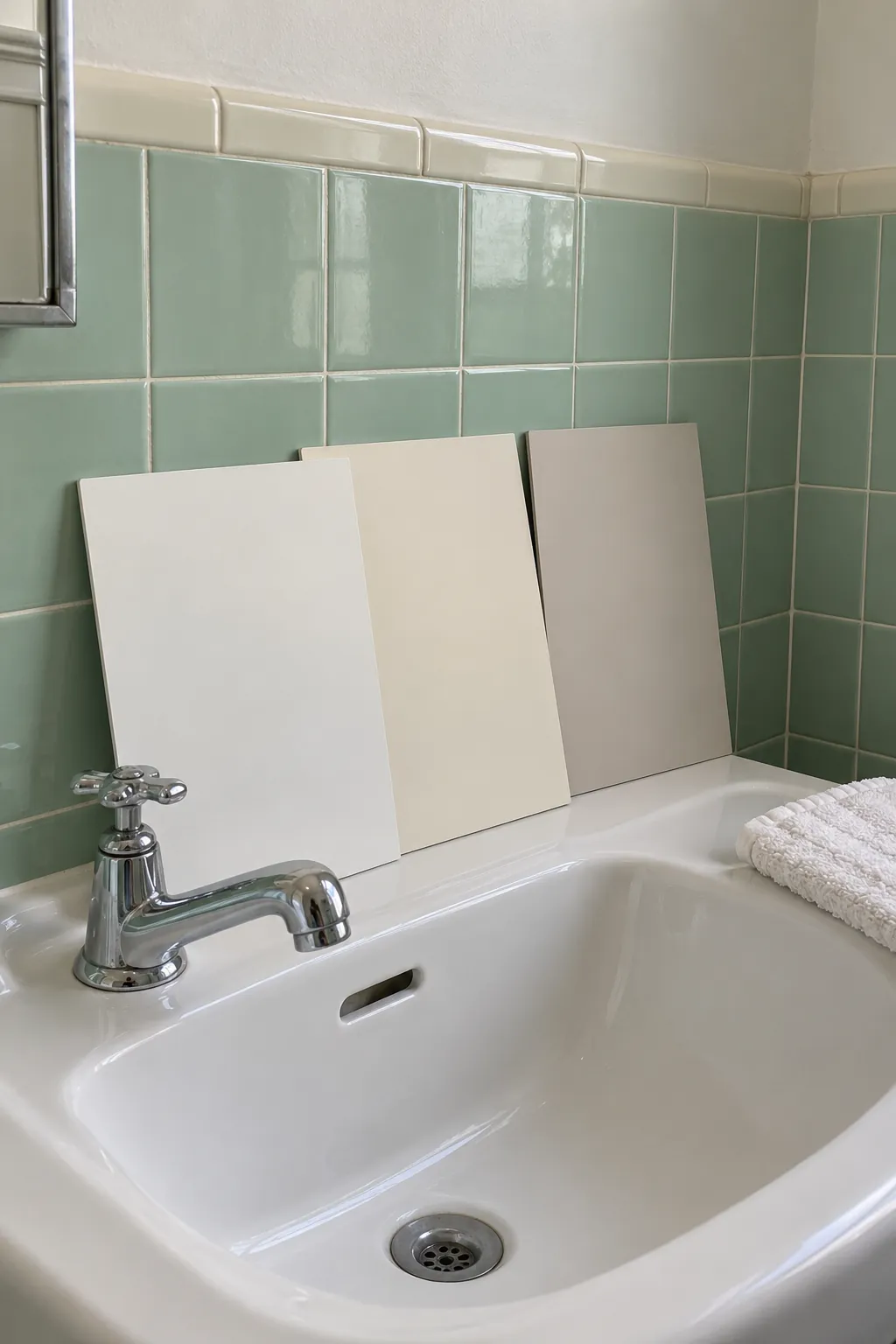
Look at the tile beside plain white paper to make its undertone easier to see. Cool mint and teal often pair cleanly with white or soft gray, while olive and warmer sage often sit comfortably beside cream or oatmeal. Include the grout, countertop, and floor in that comparison, because one mismatched pale surface can be more noticeable than the green itself.
Use soft white to leave the tile in charge
A green and white bathroom gives strong tile a simple background and keeps the main color easy to read. Choose the white beside the basin and bathtub first, especially if those fixtures are not the same shade. A softer white can bridge slightly different pale finishes without adding a conspicuous new color.
If the tile is glossy, a quieter painted surface above it creates useful texture contrast. Follow the paint manufacturer’s guidance for bathrooms and the actual moisture exposure rather than choosing finish only for appearance. White towels and a plain curtain can complete this approach when you want the original tile to remain the focal point.
Bring in warm neutrals and natural wood
Cream, oatmeal, and a restrained taupe can soften olive or warm sage tile. Avoid assuming that all beige paints are neutral: some show pink, yellow, or green undertones more clearly beside the tile. Compare a few large samples before covering the whole wall.
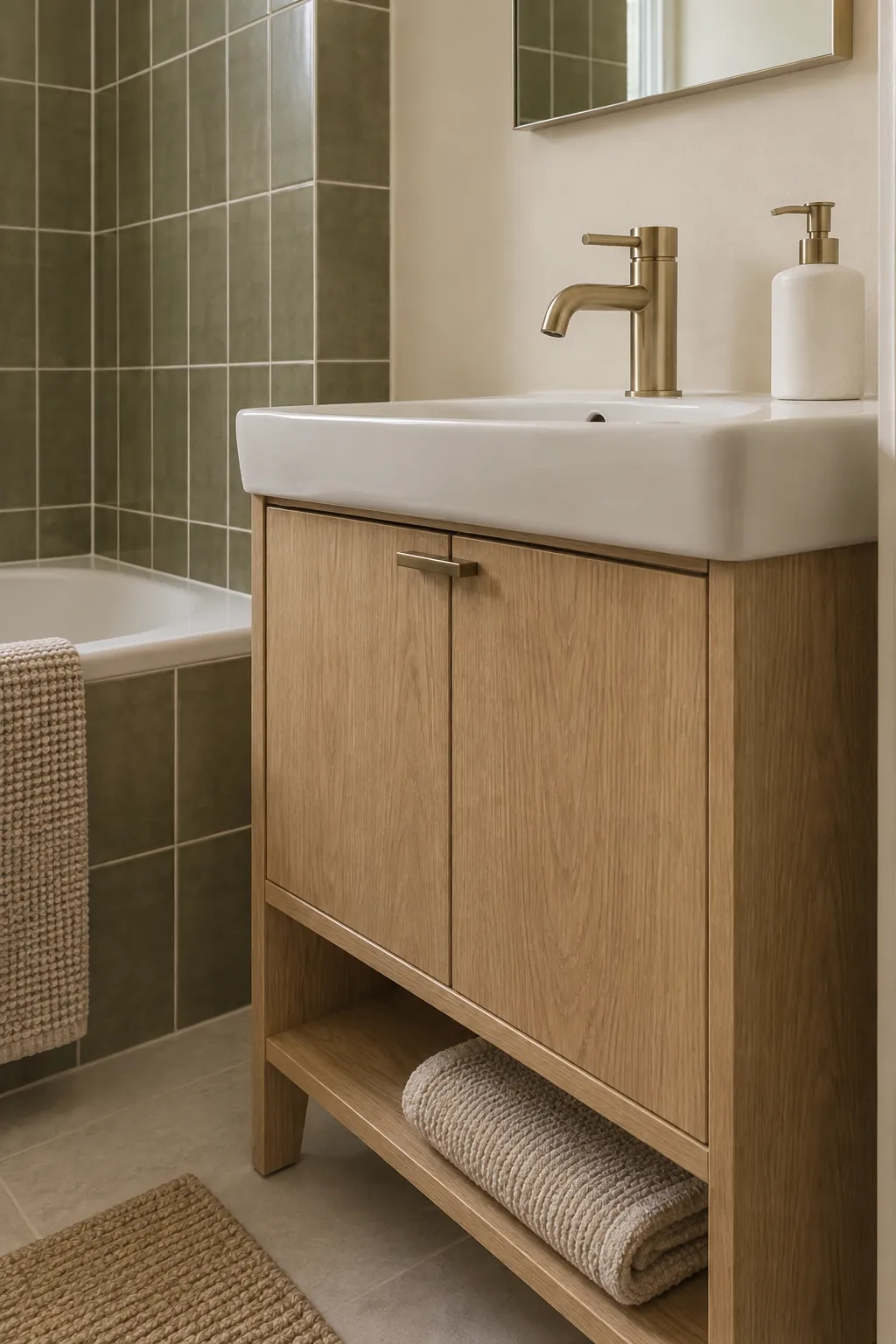
Green tile and a wood vanity can feel connected when the wood tone agrees with the other warm finishes. Pale oak usually gives a lighter effect than dark walnut, while orange leaning wood deserves a careful sample check with cool mint tile. If you are keeping a vanity, work with its actual finish rather than choosing paint from an unrelated inspiration photo.
Add blush or clay in a controlled area
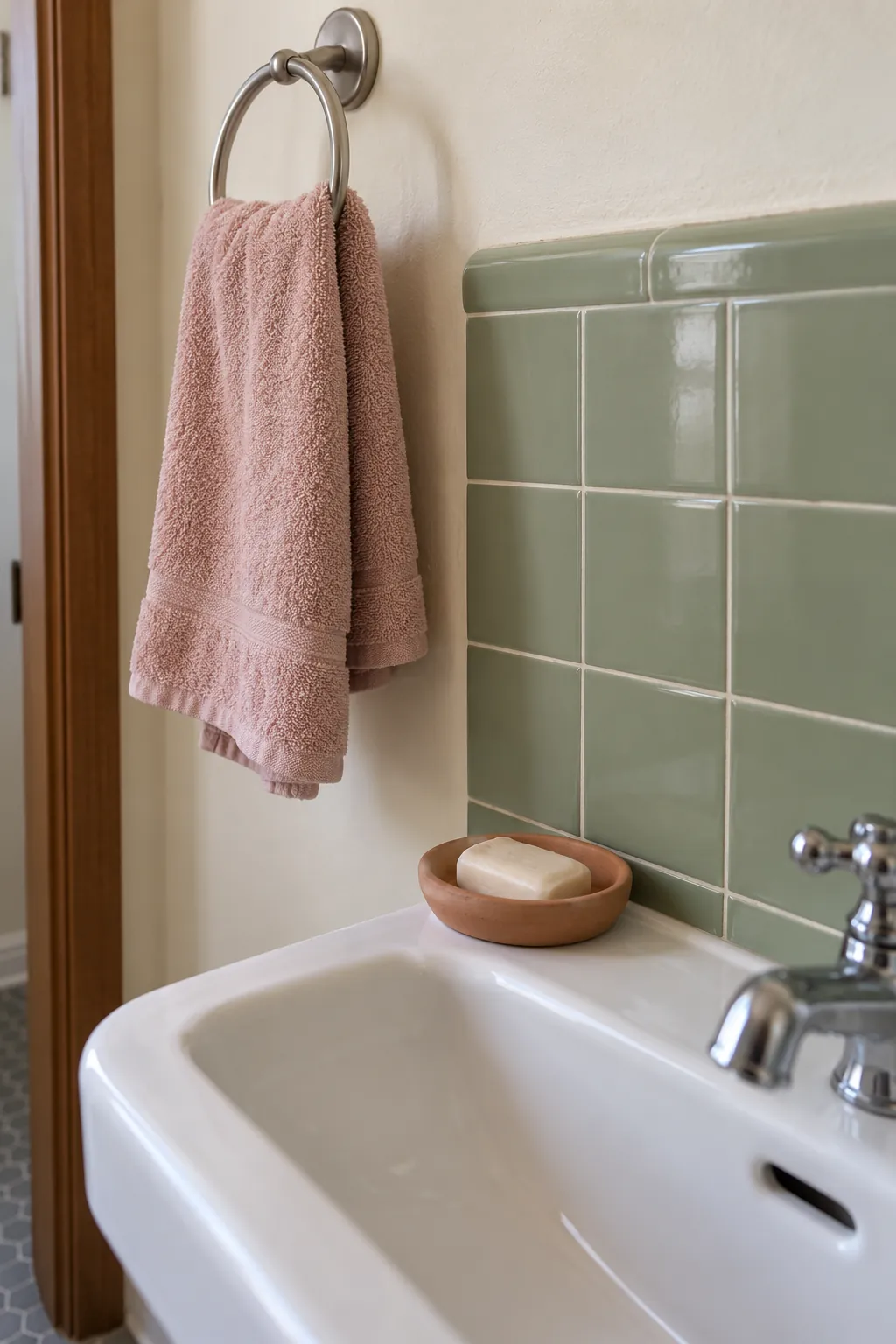
Muted blush gives cool green a gentle warm contrast and can suit vintage green bathroom decor. Keep it subdued if the existing floor or fixtures already contain pink. A towel or small accessory is an easier test than a whole painted wall.
Clay and terracotta accents are another direction for earthy sage and olive palettes. Their strength varies widely, so begin with a ceramic soap dish or one textile rather than several orange surfaces. Leave the remaining large areas quiet so the green and the accent have a clear relationship.
Use charcoal or a second green with a clear purpose
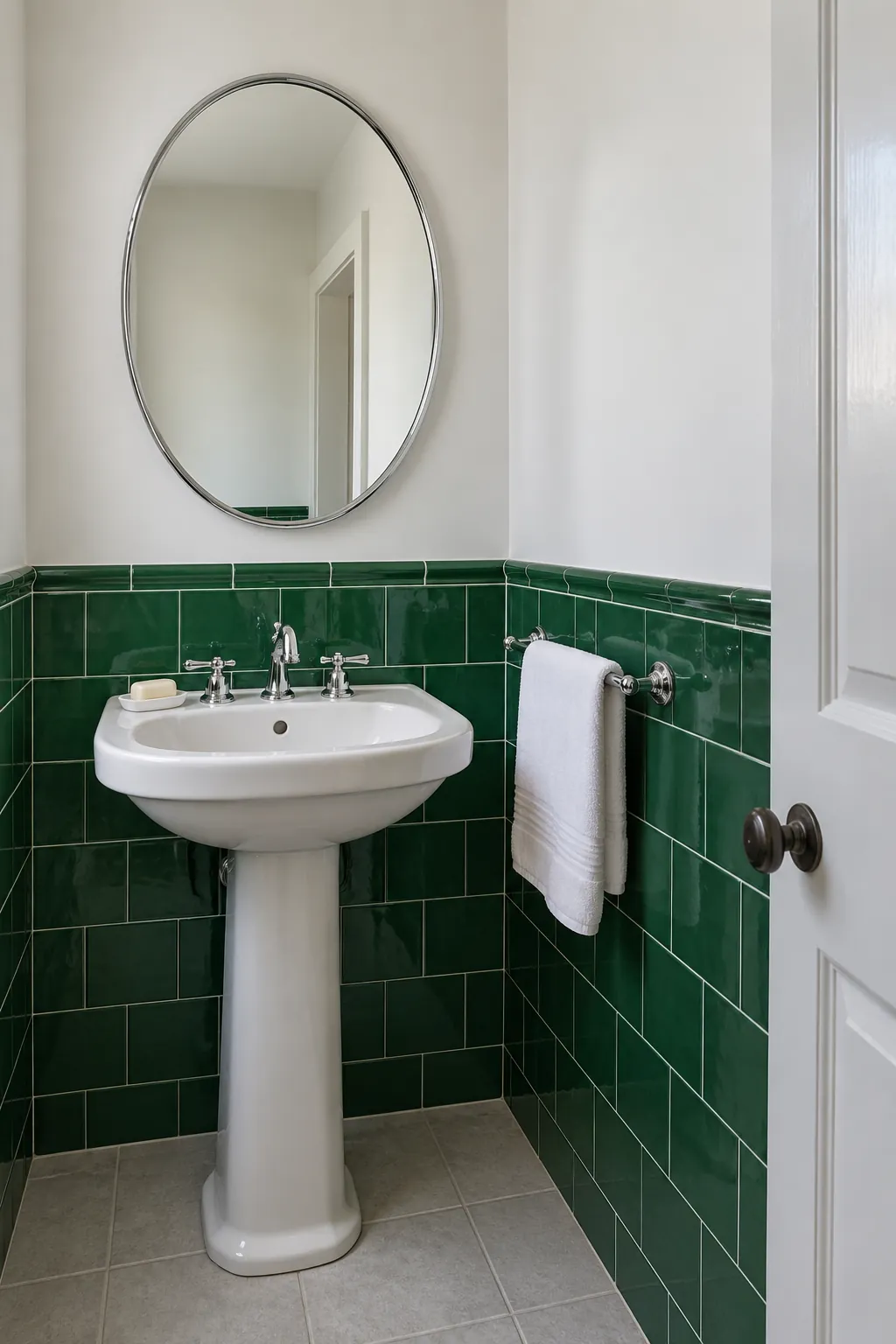
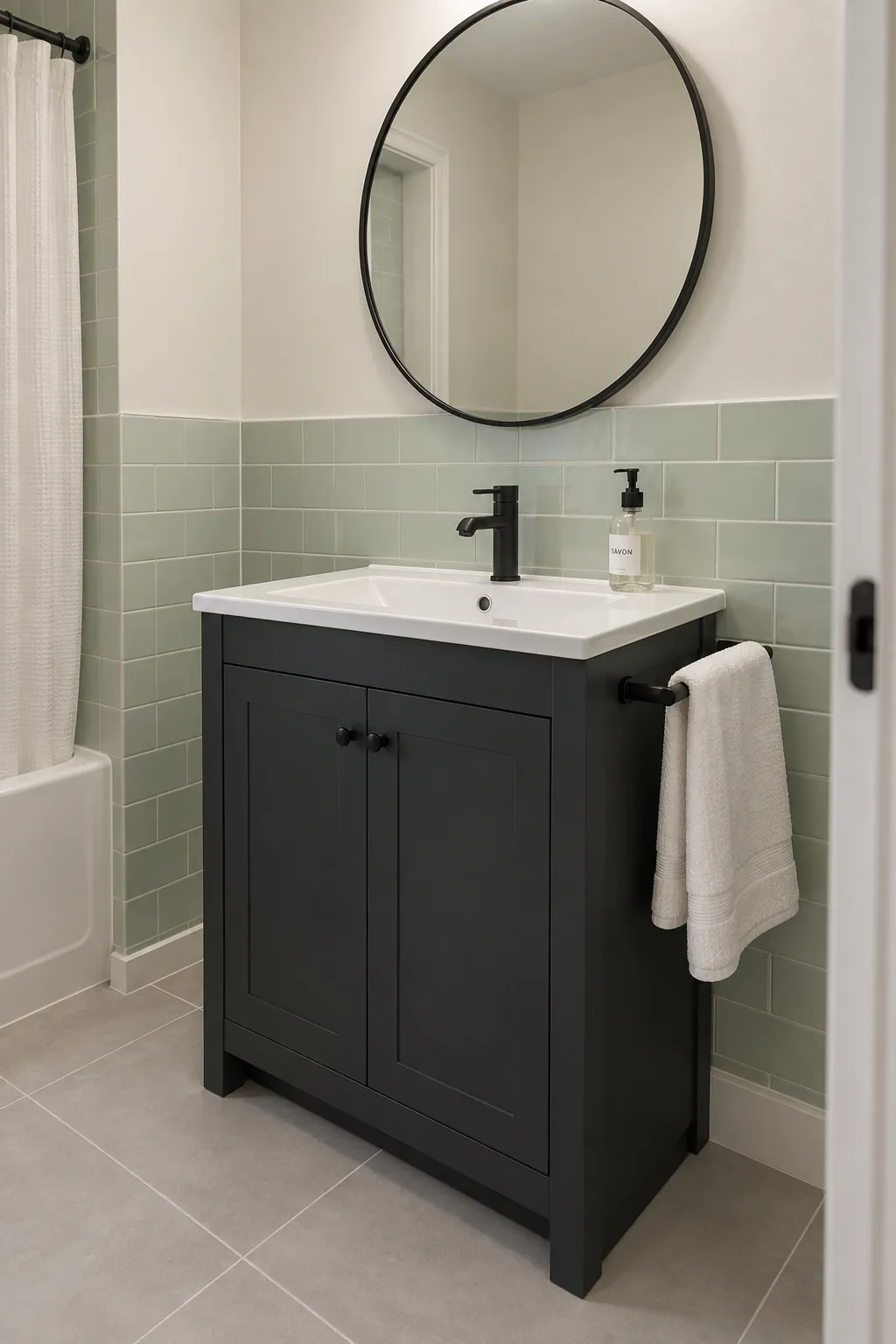
Charcoal hardware or a dark vanity can outline pale green tiles without adding another saturated hue. A large dark wall has a different effect from a small handle, so assess how much dark color the room can comfortably carry. In a bathroom with limited daylight, keep a generous light surface if you want the room to feel less visually dense.
A second green works best when it looks intentionally related or deliberately different in depth. Matching paint to glazed tile is difficult because the surfaces reflect light differently. For sage green bathroom ideas, compare a lighter muted wall green with the existing tile, and reject a near match that looks wrong under evening light.
Test the whole combination before buying the finish
Paint sample boards rather than judging tiny chips alone, and hold them beside the tile on more than one wall. Check daylight, mirror lighting, and the room’s evening light, letting each sample dry as directed. Your screen is useful for finding directions, but it cannot confirm how a paint color will behave next to the real tile.
Bring the curtain and towel fabric into the same test, especially when choosing shower curtains for green tile. Keep the fixed finishes, main wall color, and one accent visible together, then remove any color that has no clear role. The strongest green tile color palette is the one that still agrees with your floor and fixtures when the bathroom lights are on.