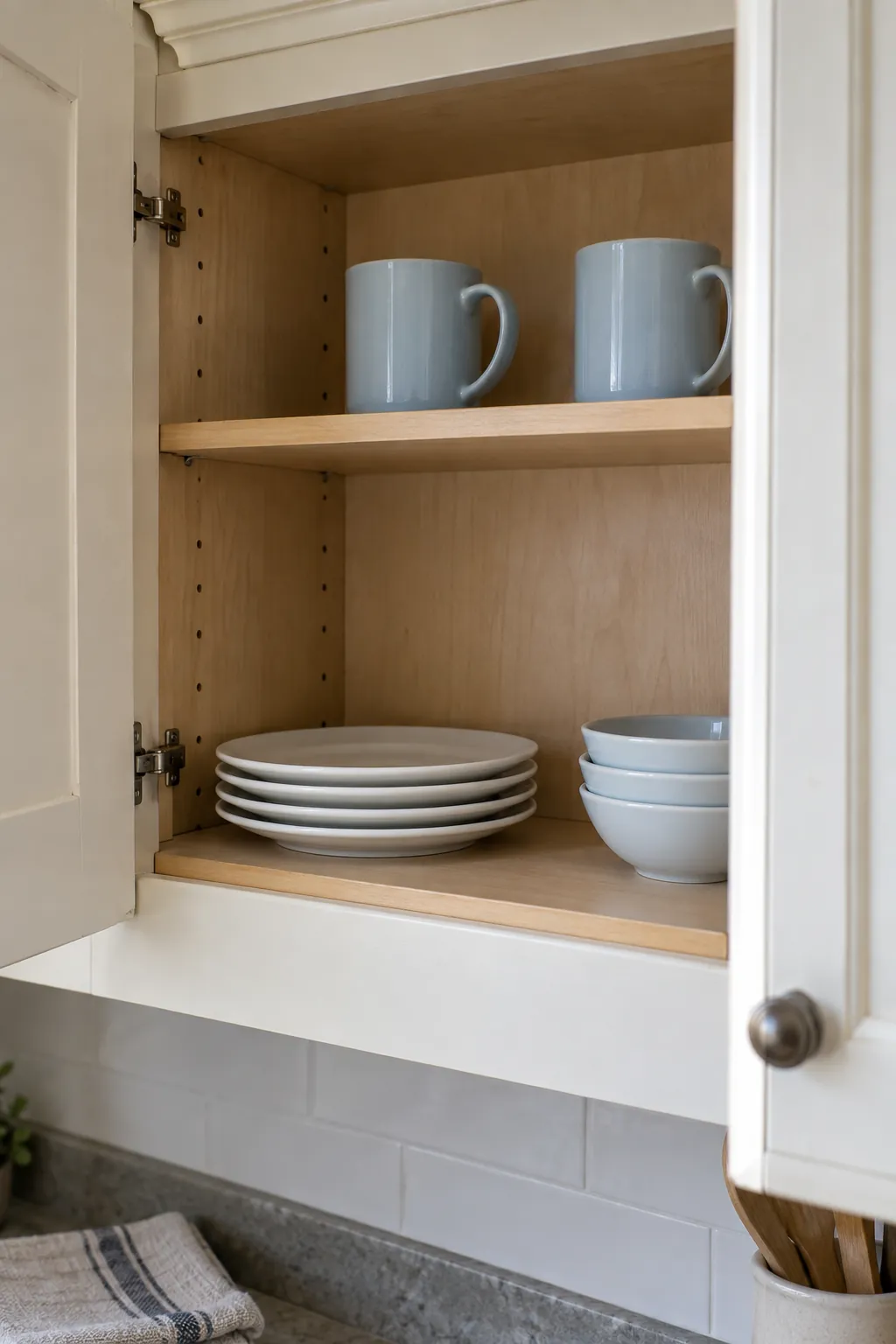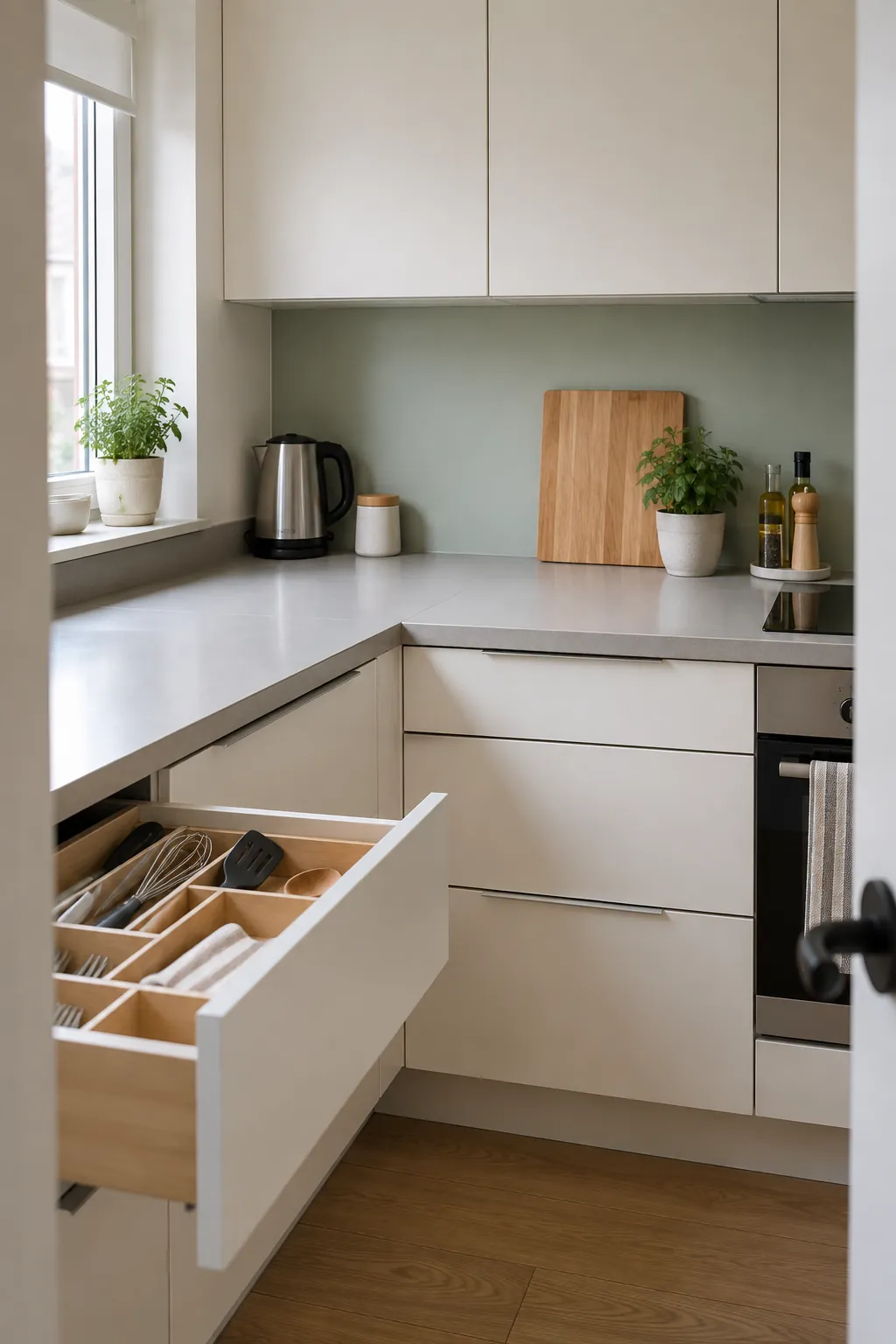
A clear counter loses its appeal if making breakfast means unpacking a cupboard. The useful goal is a kitchen that asks less of you: fewer duplicate tools, easy access to everyday ingredients and enough open space to work. You can keep the equipment that makes cooking enjoyable.
Keep the tools your real meals require
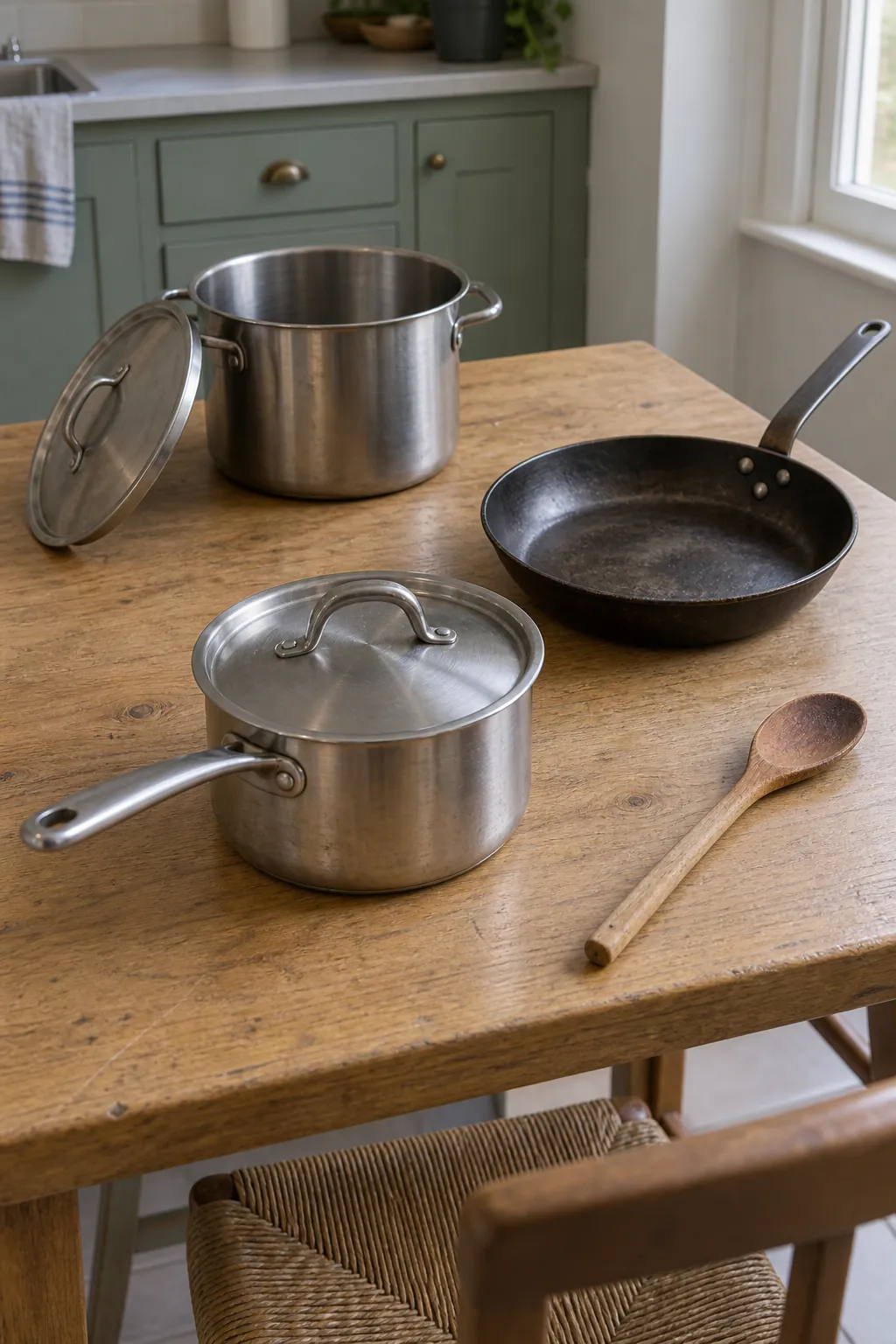
A kitchen can look spare and still make dinner unnecessarily difficult. Begin with the meals you cook in a normal week, including breakfast and packed lunches. Set out the equipment those meals require, then look for duplicates that do the same job. Your essential cookware list should come from those meals rather than somebody else’s ideal number of possessions.
A saucepan, frying pan and larger pot may cover a great deal of everyday cooking, but a regular baker may also need cake tins and mixing bowls. Keep a specialty tool when it earns its space through actual use. Put uncertain items in a temporary review box outside the working cupboards, with a date to revisit them, instead of making rushed disposal decisions.
Agree on shared equipment before removing anything used by another person. One household member’s spare mug or rice cooker may be central to another person’s routine. Minimalist kitchen organization works better when everyone can still make the food they rely on.
Protect a clear preparation surface
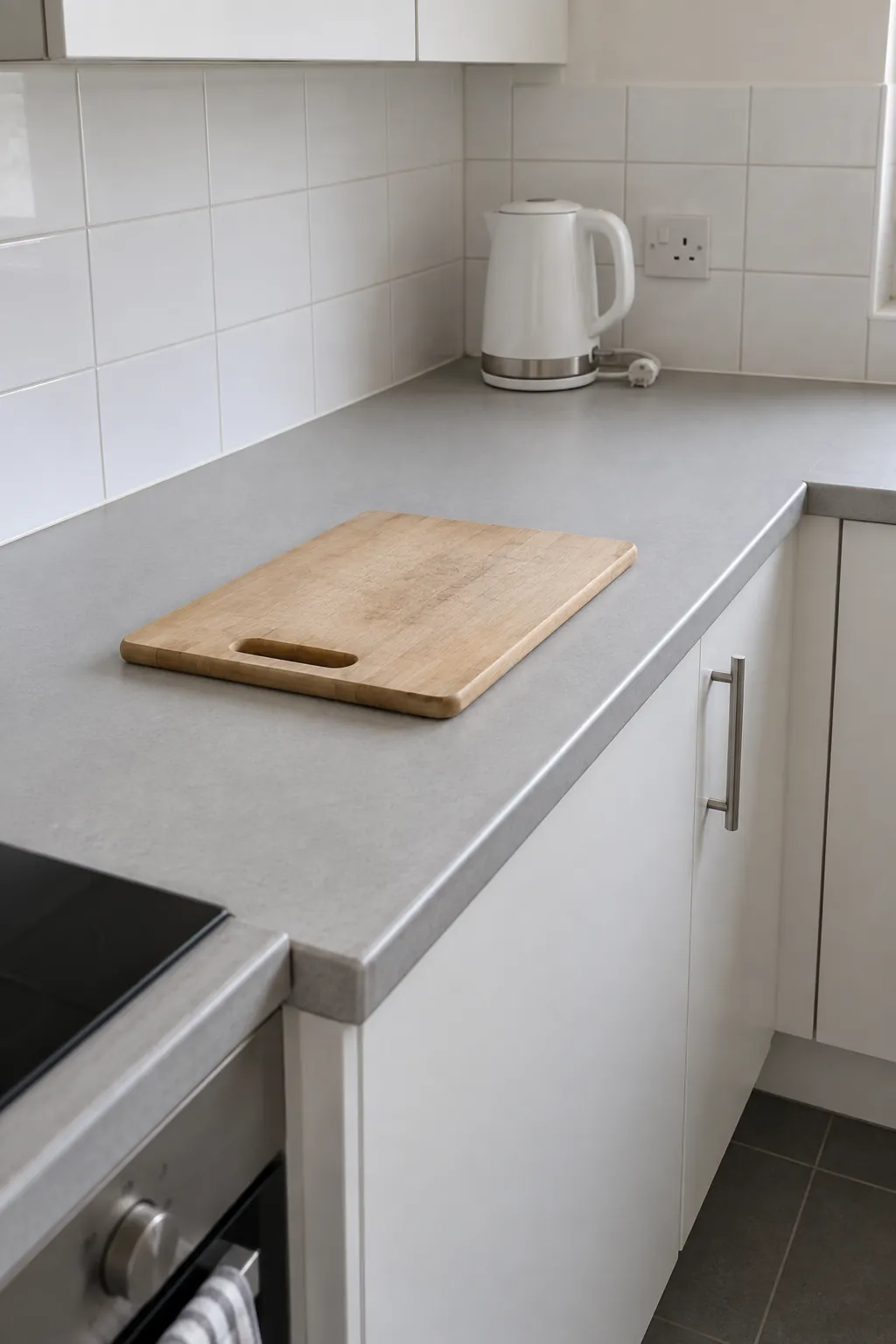
Choose the stretch of counter where you chop, mix or assemble meals and give it priority. Move mail, bags and unrelated household items to a different landing place. Then decide which appliances truly need to stay within immediate reach. A daily kettle may deserve a permanent spot even when a rarely used blender does not.
Clear kitchen counters need useful storage behind them. If putting the blender away means lifting out three pots first, it will soon return to the worktop. Give the appliances you keep an accessible home, and do not mistake hiding a pile inside a cupboard for solving it. Leave enough free surface to set down groceries before opening their storage spaces.
Store everyday items where the action happens
Place plates and cutlery near the area where you serve food or unload the dishwasher. Keep preparation tools beside the chopping surface and cookware near the cooking zone, while respecting appliance clearances. This shortens the repeated journeys that make a kitchen feel awkward even when it contains very little.
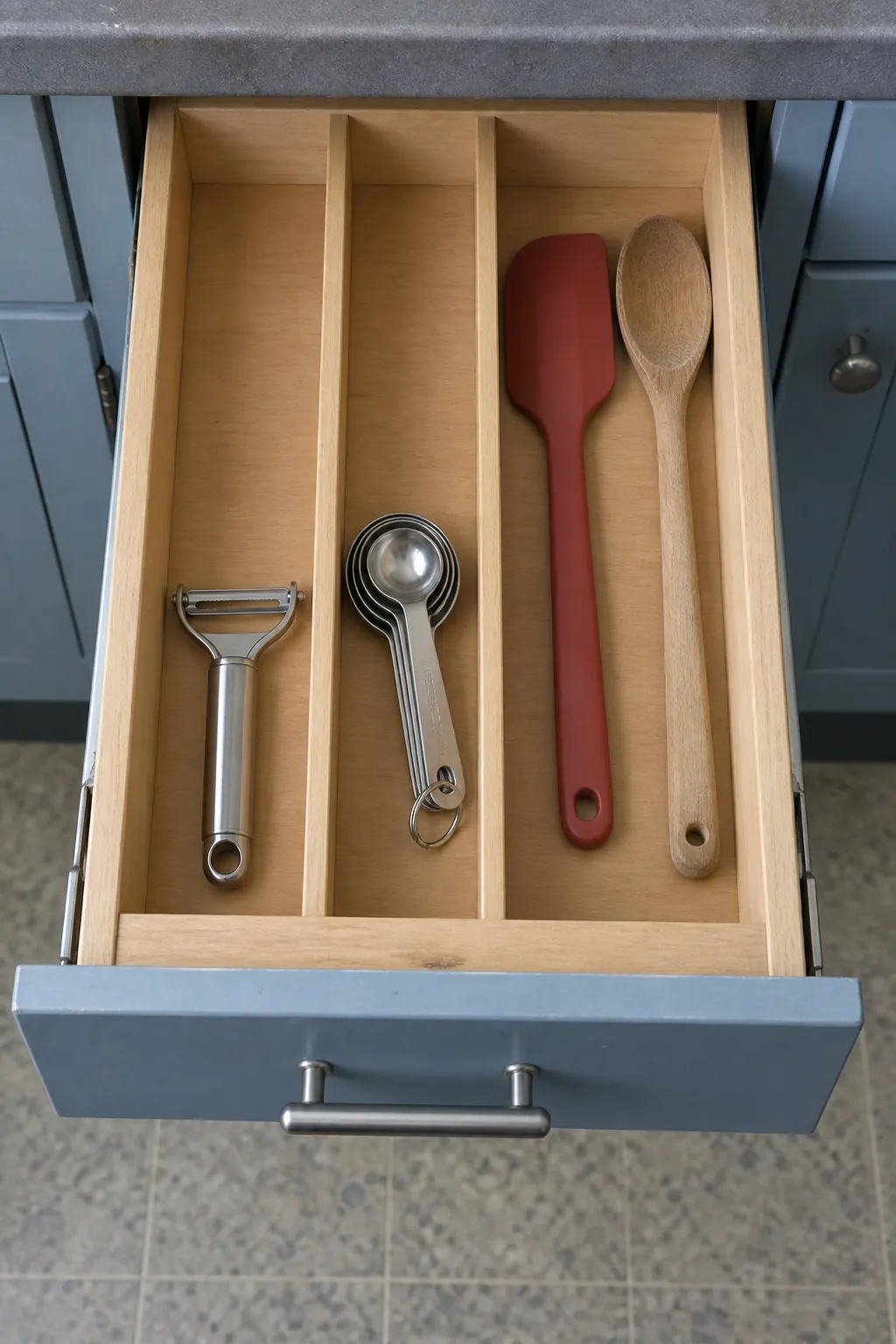
Within a drawer, arrange the tools you reach for most at the front. A simple divider can stop a peeler or measuring spoon set disappearing underneath larger utensils. Avoid filling every compartment just because an organizer provides it.
Minimal kitchen shelving is most useful for items that are regularly used and easy to clean. Keep heavy dishes within comfortable lifting height and observe shelf load limits. If open shelves collect grease or dust in your room, closed storage can support the same simple routine with less upkeep.
Make pantry contents easy to see and use
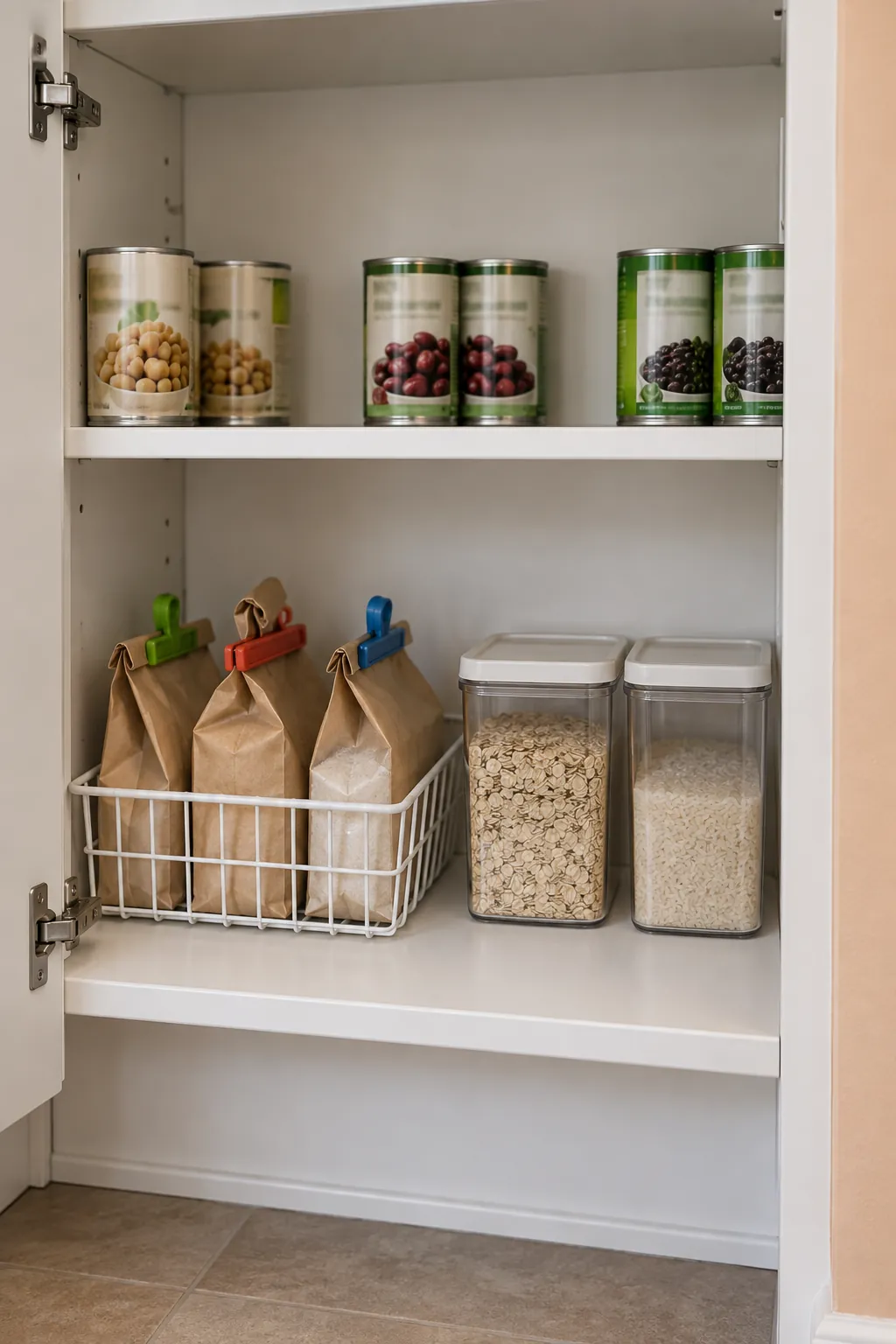
Start simple pantry storage by grouping foods according to how you cook: breakfast supplies, baking ingredients, grains or quick meal components. Bring older usable stock forward and check what you already own before shopping. Leave original labels visible when they contain cooking directions, allergy information or storage instructions you need.
Neutral kitchen containers are optional. Transfer food only when the container solves a real problem, such as a bag that will not close or a shelf that needs a stackable shape. Use food safe containers appropriate for the ingredient, and retain the identity, date and other necessary package information. Do not pour fresh stock onto old residue without cleaning and thoroughly drying the container.
Keep an allowance for opened packets and ordinary packaging rather than designing a pantry that works only on restocking day. One small basket can hold those packets without making the entire shelf dependent on matching jars. Choose visibility and access over a perfectly uniform photograph.
Hide appliances without making them hard to use
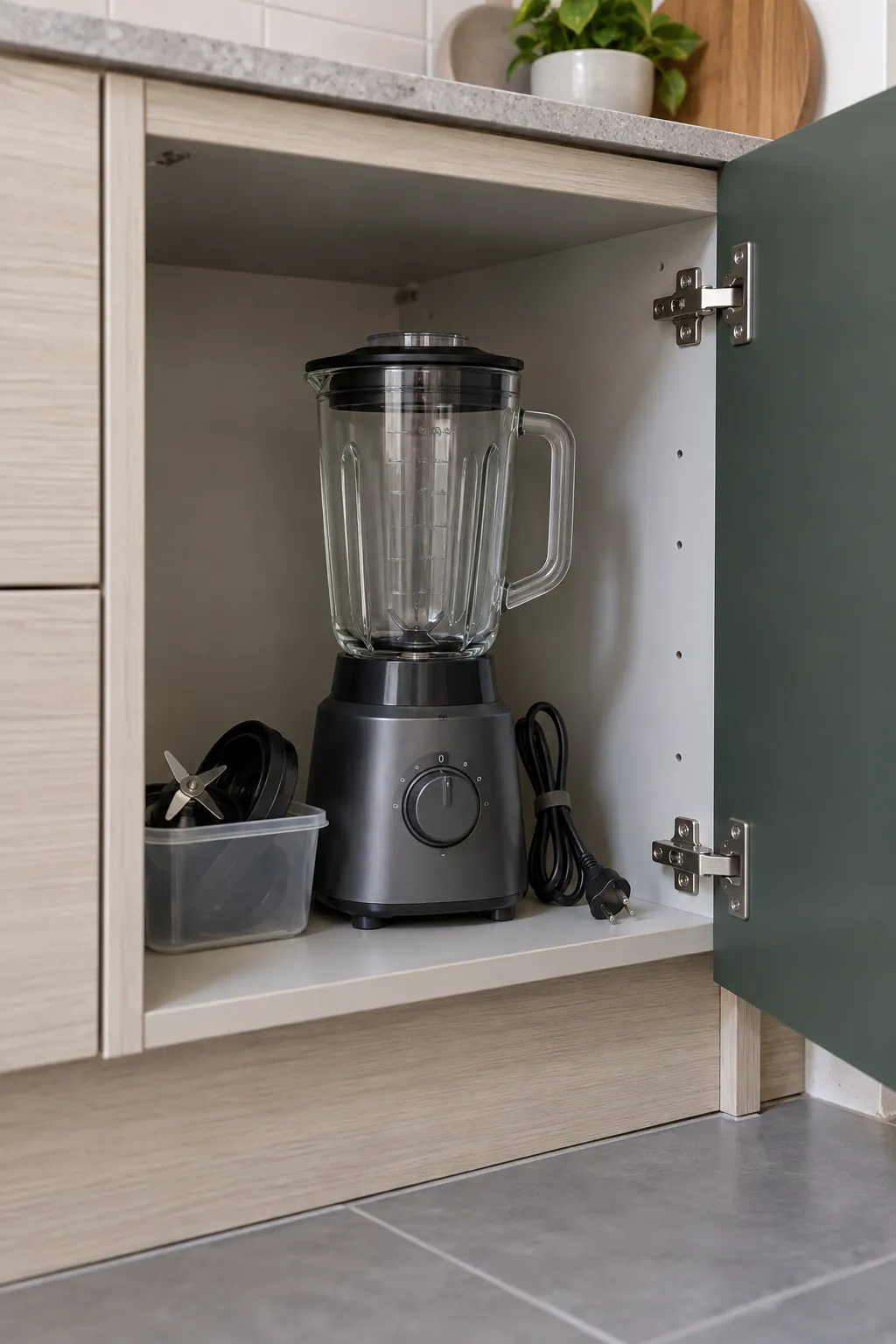
Hidden appliance storage is storage for an appliance that is switched off, unplugged where appropriate, clean and cool. Follow its instructions for use and required ventilation. A cupboard is not automatically a safe place to operate a toaster, kettle or other appliance that produces heat or steam.
Put heavier equipment at a height where you can lift it comfortably without reaching overhead. Check that the shelf can take the weight and that the door opening is wide enough for handles. Store the matching lid or attachments nearby so using the appliance does not begin with a search.
If a machine is used several times each day, leaving it out may be the more workable choice. Give it a defined area and protect the preparation surface beside it. A kitchen does not become less organized because a useful object remains visible.
Keep enough room to put things back
Leave space around stacks and containers so they can be returned without careful rearranging. Cupboards that require a particular balancing act tend to become cluttered again after one busy evening. Remove a redundant item or move occasional equipment out of the main working zone when daily items stop fitting easily.
After a week of ordinary cooking, notice what stays on the counter. It may lack a convenient home, be needed more often than expected or belong elsewhere in the house. Fix that specific friction before buying another organizer. The arrangement has succeeded when you can start dinner without first reorganizing the kitchen.