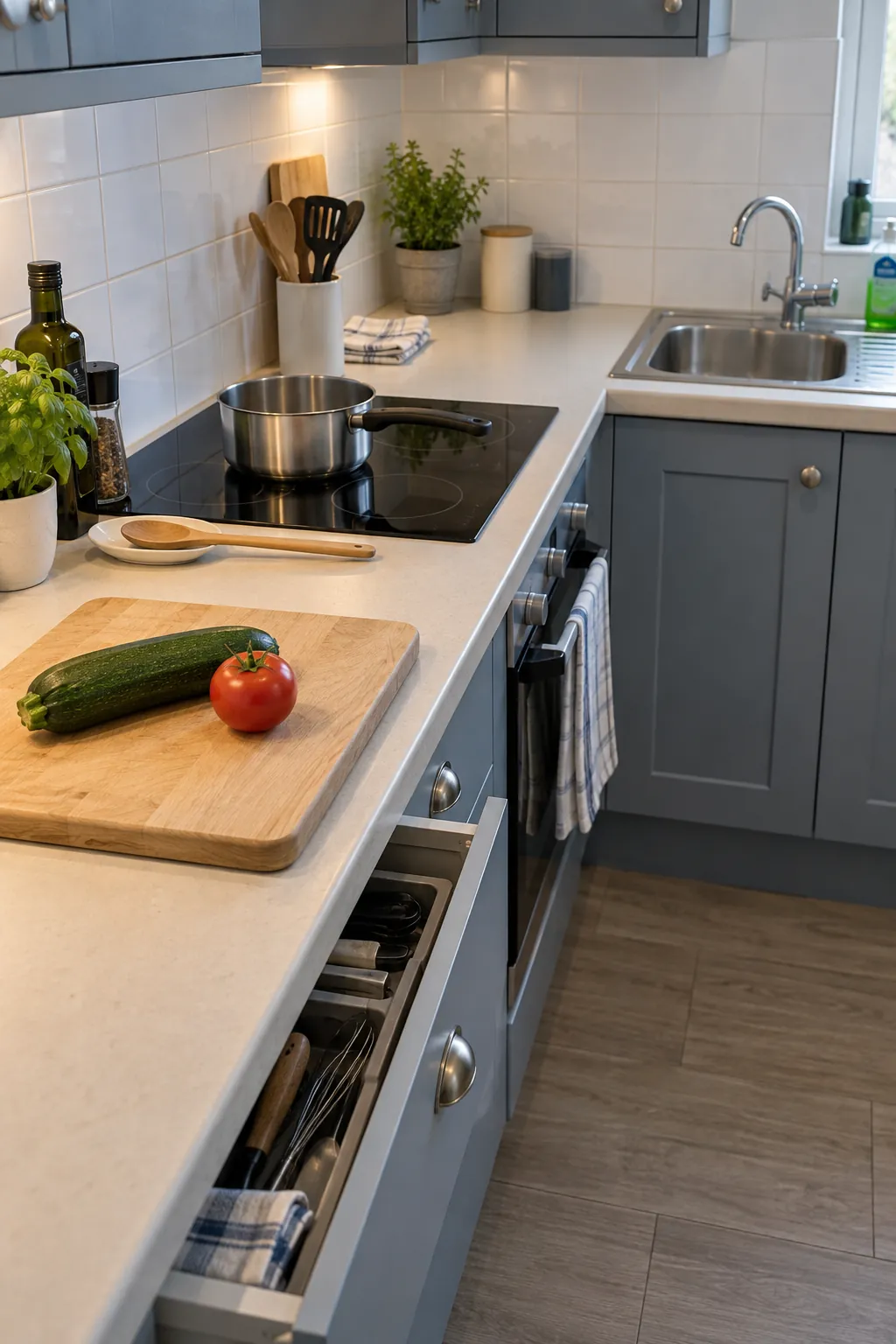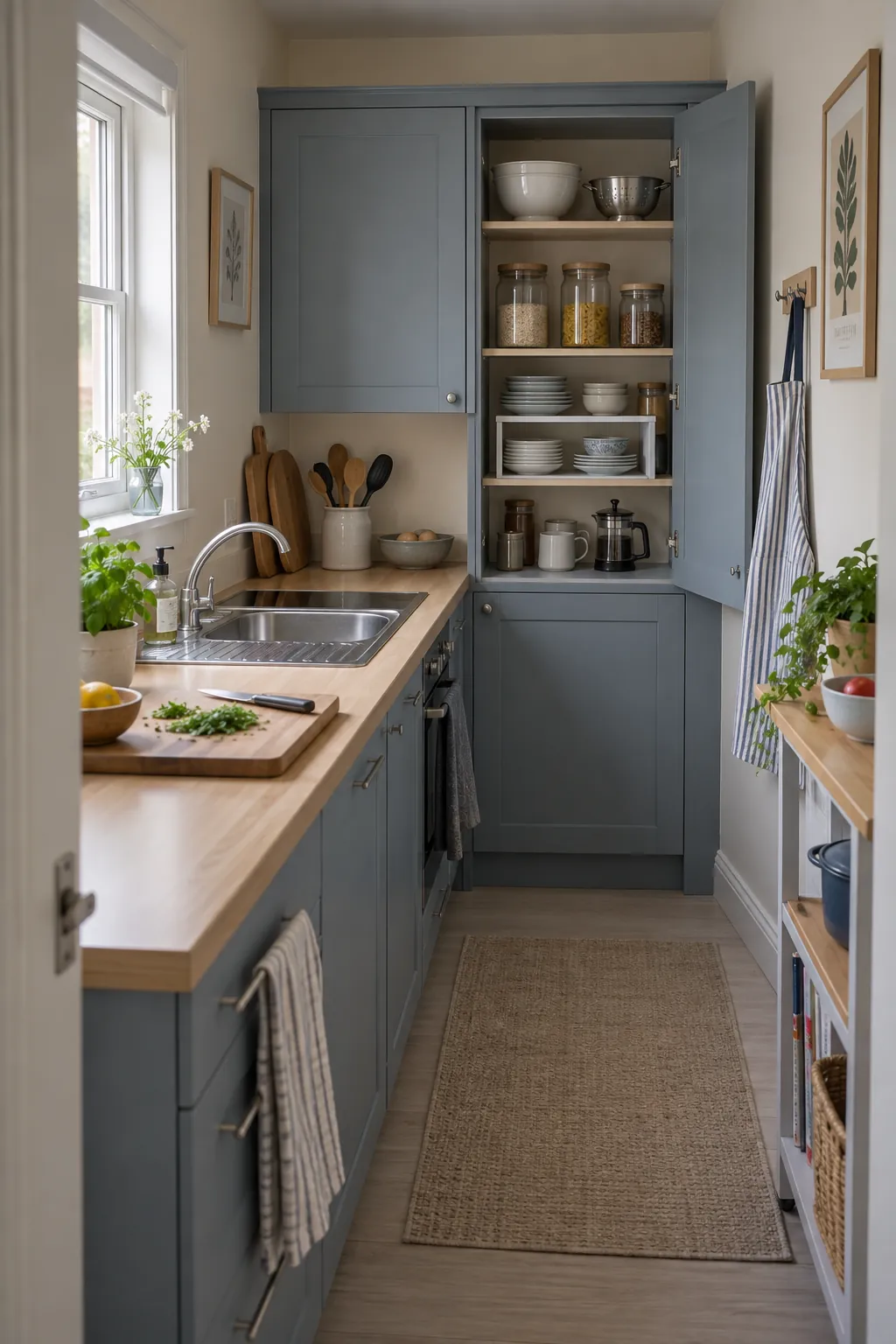
When the chopping board has nowhere to land, another basket can make the room feel even tighter. The first job is to recover a place to work, then make the storage you already have easier to reach. Leave the walking space and appliance doors room to function as you do it.
Find the bottleneck before adding storage
Empty one working area at a time and identify what prevents you from cooking comfortably. It might be a counter covered by appliances, a deep cupboard with inaccessible pots or a narrow aisle that cannot take a trolley. Tiny kitchen organization starts with that specific constraint. A new organizer helps only if it addresses the part of the room that is actually slowing you down.
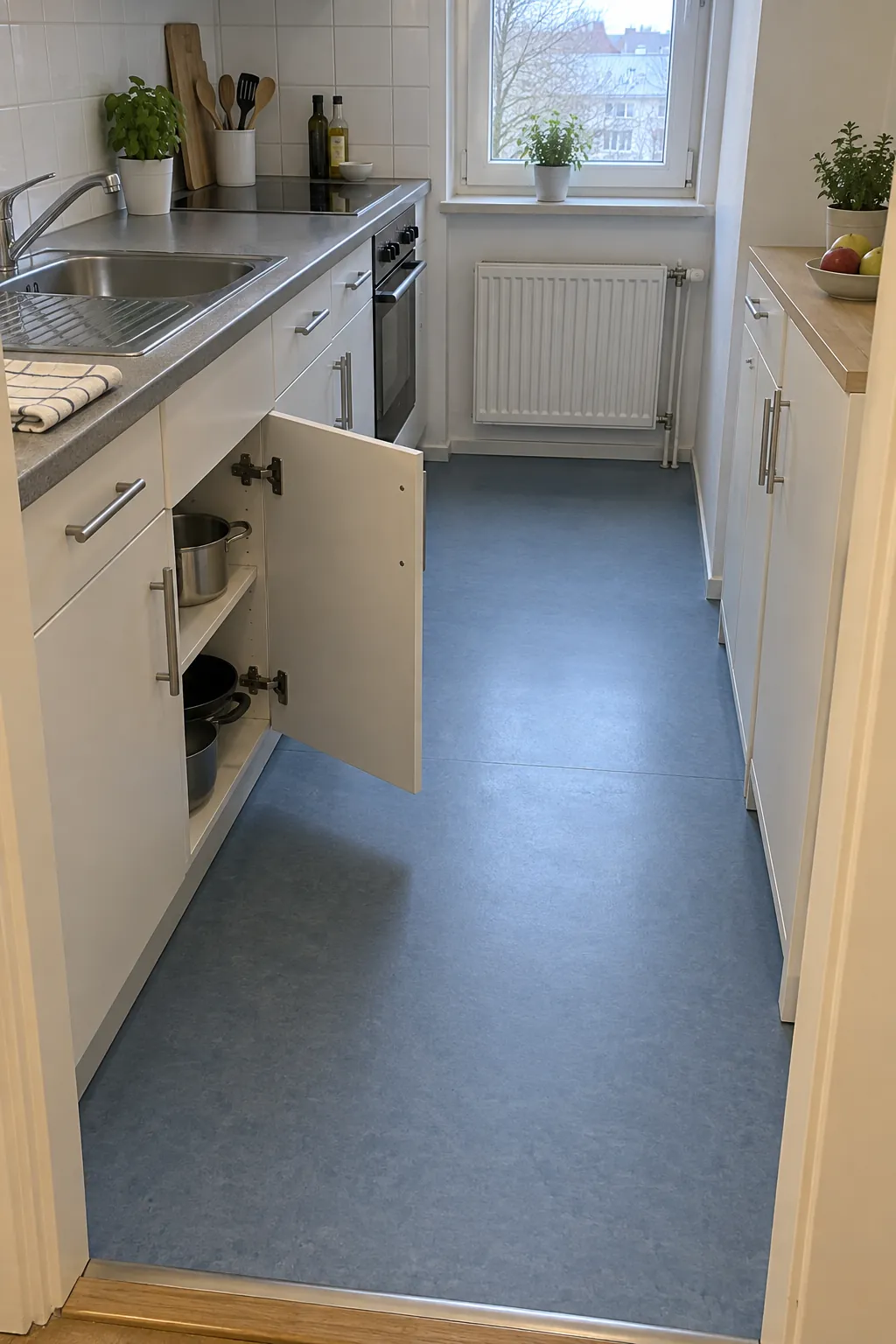
Measure shelf interiors, door openings and drawer clearance before shopping. Hinges and pipes reduce usable space, so the cabinet’s outside dimensions are not enough. Open the oven, dishwasher and cupboard doors to check their swing. A storage cart that fits when every door is closed can still make the room harder to use.
Make one preparation spot dependable
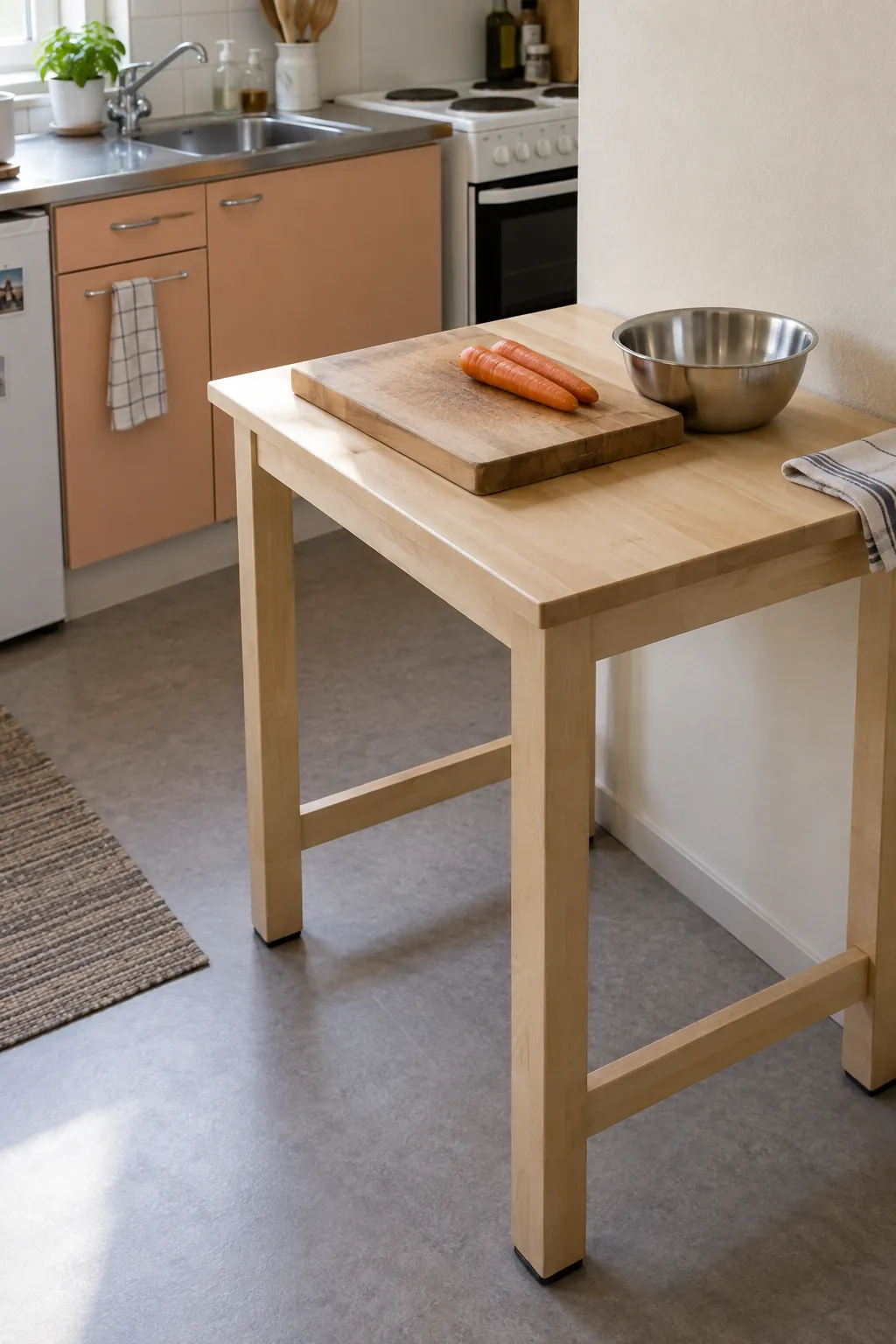
Keep your most usable piece of counter available for a cutting board and a bowl. Move occasional appliances to accessible storage and remove objects that belong in another room. If the sink and hob leave almost no fixed preparation area, a stable table nearby can help, provided it leaves a comfortable passage and suits the task.
Counter space solutions should not depend on balancing a board across unstable surfaces. A purpose made sink board must fit securely and be used according to its instructions; it also temporarily reduces access to the sink. Never treat a hob as ordinary storage or place a makeshift cover over a cooking surface. Choose the solution that still lets you wash, cook and move safely.
An over sink shelf can hold a small amount of suitable equipment when its feet fit securely and its load stays within the stated limit. Measure faucet height and window movement as well as width. Avoid crowding the sink with layers that make rinsing a pot difficult.
Use cabinet height without building unstable stacks
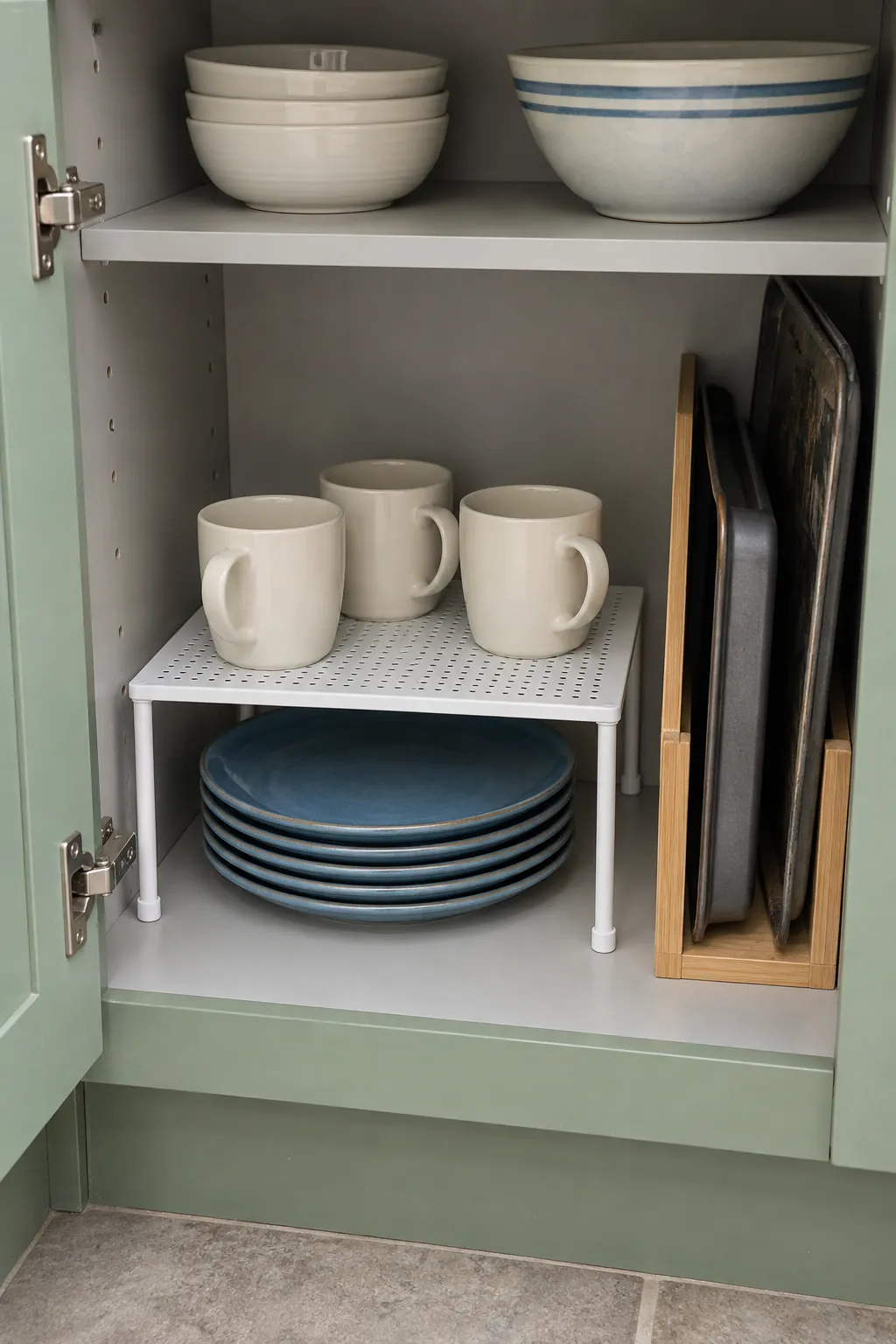
Tall gaps between fixed shelves often waste more room than the cabinet’s footprint suggests. A sturdy removable shelf riser can separate mugs from plates, while an adjustable shelf can bring two smaller groups within reach. Check the load rating and leave enough clearance to lift dishes out without scraping the shelf above.
For pans and baking sheets, upright dividers can reduce the need to dismantle a heavy pile. Keep the heaviest cookware low, with handles contained inside the cabinet. Small kitchen cabinet ideas work best when an item can be retrieved independently. Moving three pans to reach the fourth saves little practical effort even if the cupboard looks full and tidy.
Choose vertical storage that fits the surface
A short wall rail can hold a few frequently used utensils when properly installed on a suitable surface. Place it away from hot zones and where hanging items will not brush against food preparation. In a rental, check permission before drilling and use hardware appropriate to the wall and expected weight.
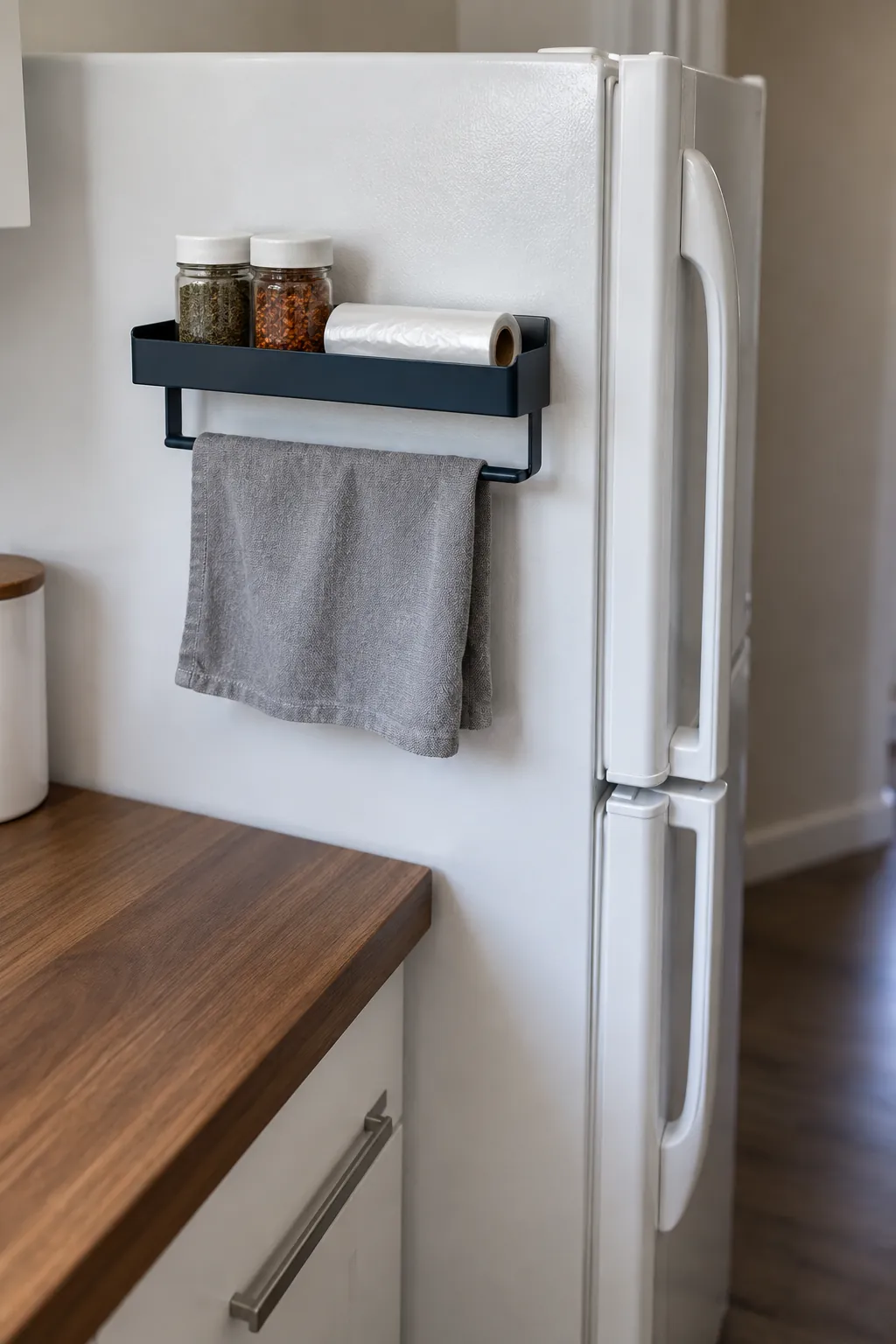
Magnetic kitchen storage can be useful on a compatible steel refrigerator side, but not every finish accepts magnets. Check compatibility, surface care and the accessory’s load limit before loading it. Start with light items and keep the door swing, ventilation openings and walking path clear. Avoid storing sharp knives where children can reach them or where passing people might knock them loose.
Adhesive hooks have surface, curing time and weight requirements too. They are not a universal substitute for mounted shelving. When the wall or appliance surface is unsuitable, a divider inside an existing cupboard may offer a more reliable gain.
Create a pantry within the space you have
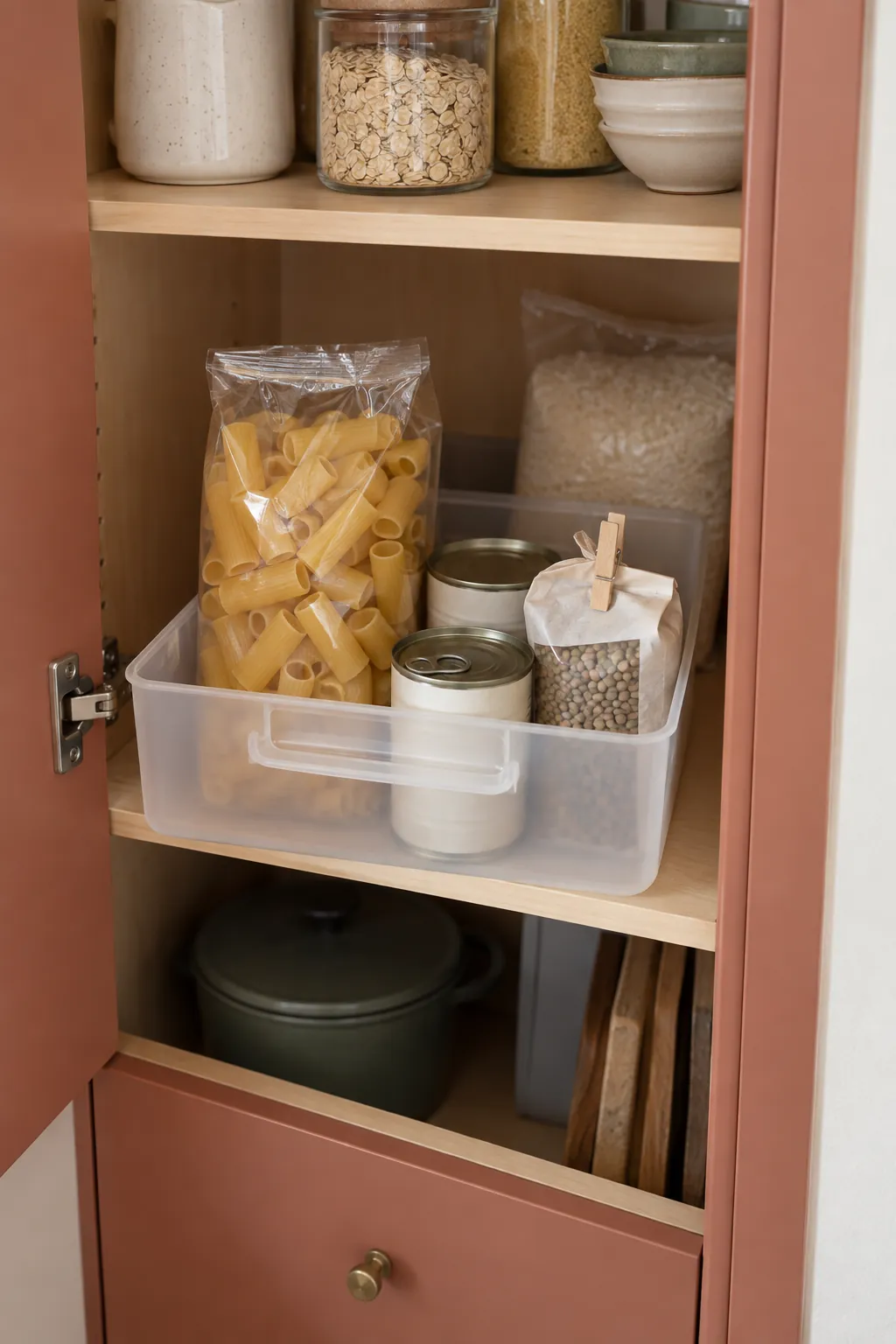
You do not need a separate pantry cupboard to group dry food sensibly. Dedicate one accessible shelf or a pair of shallow bins to ingredients, keeping them away from heat, moisture and cleaning products. Put tall packets at the back only if you can still see and reach them. A bin that slides out can make a deep shelf easier to use.
Narrow pantry ideas should account for the products you regularly buy. Measure the tallest bottle and the width of an ordinary cereal packet before choosing containers or baskets. Decanting every item can create leftover bags that need a second storage area. Retain useful original package information and buy containers only where they solve an actual problem.
If the kitchen has no suitable cupboard, a stable closed cabinet in an adjacent dining area can hold dry goods or occasional serving pieces. Keep the most frequently used ingredients close to preparation space so you are not walking between rooms for every step of a recipe.
Test the arrangement with an ordinary dinner
Cook a familiar meal before making the system permanent. Notice whether a door blocks your body, a utensil catches on another item or a pan is awkward to lift. Those small observations tell you more than whether every shelf looks coordinated. Adjust one problem at a time and test again.
Finish by returning equipment to its assigned place and checking that the preparation spot is available for tomorrow. If something repeatedly stays out, improve its storage position or reconsider whether it belongs in the kitchen. The most useful kitchen organization hacks are the ones you can keep using when dinner is late and nobody feels like tidying.