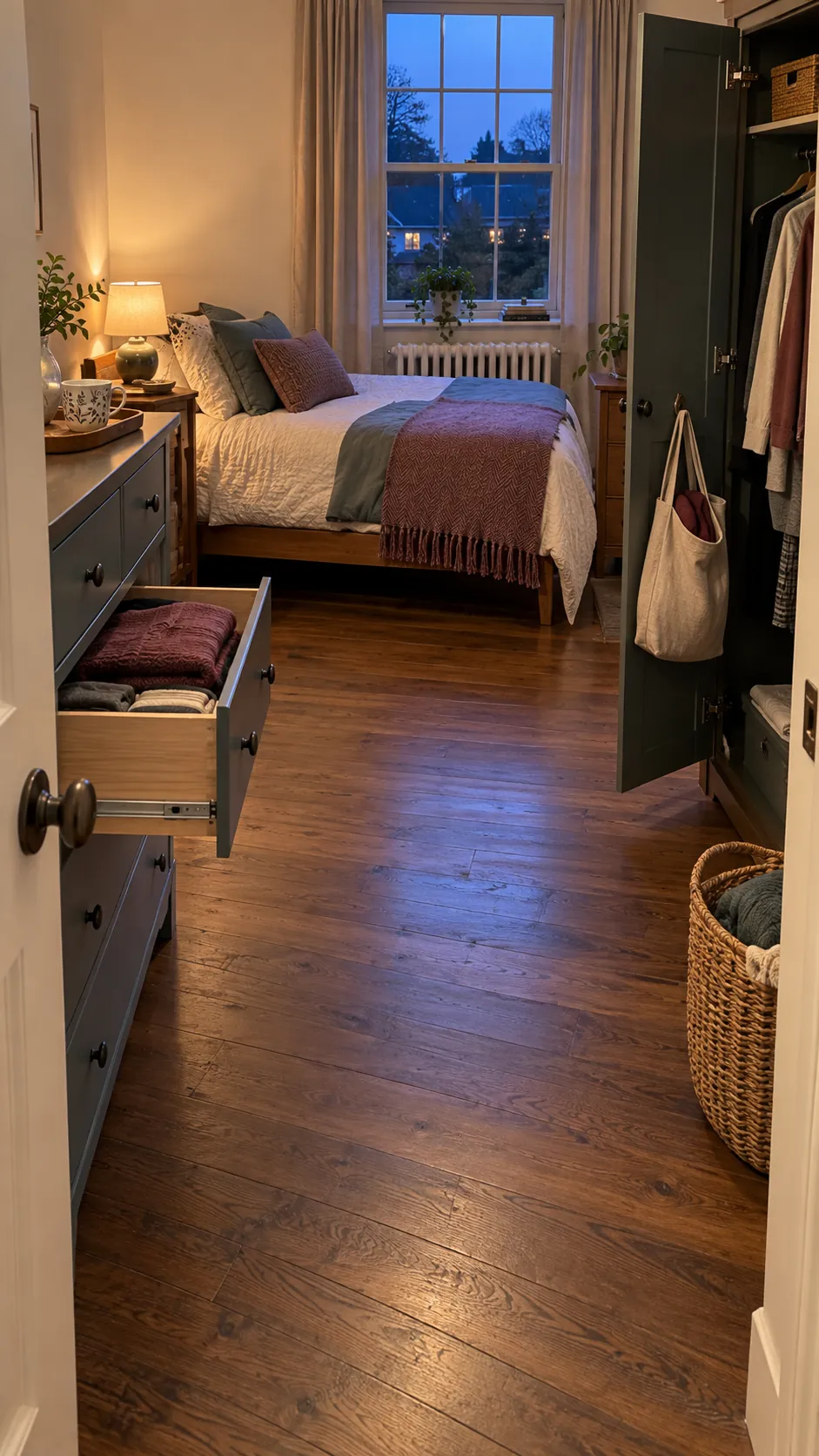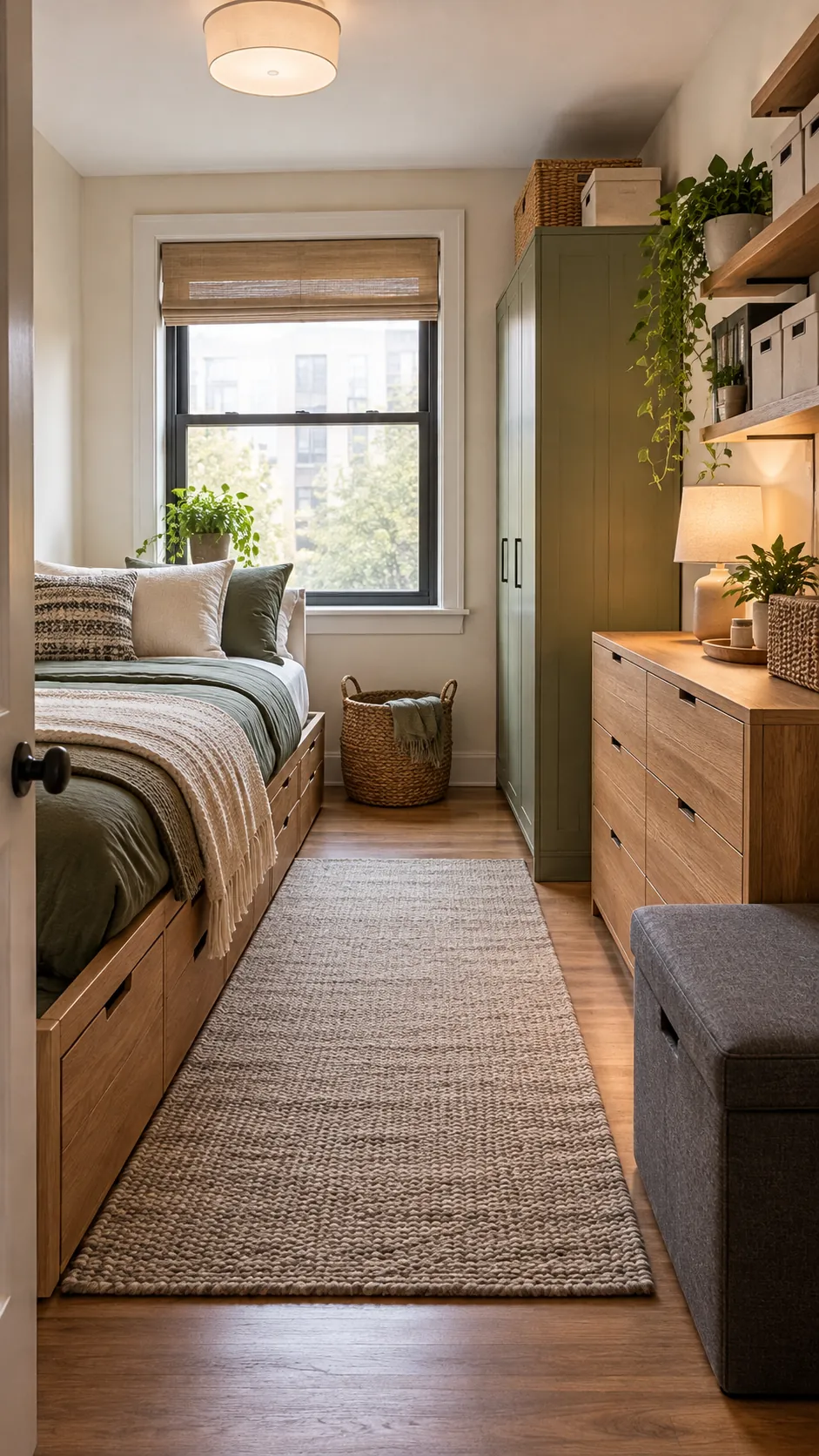
A crowded room can make every ordinary task feel harder. You cannot put away laundry because the bed is covered, and you cannot sort the bed because there is nowhere to stand. The answer is not another random set of bins. You need to reduce the volume, protect clear movement space, and give every remaining item a home that matches how often you use it.
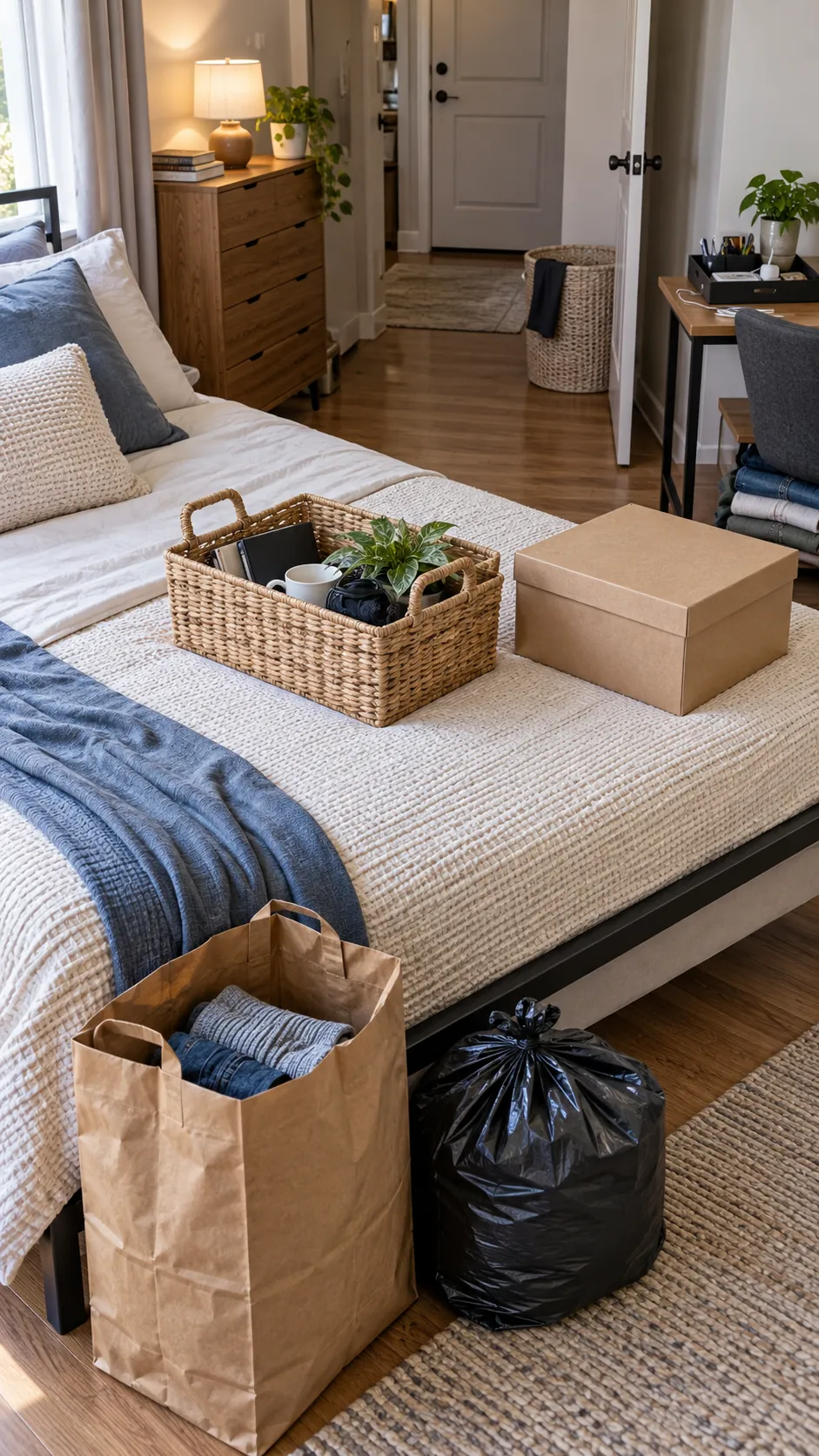
This method works even when you cannot empty the whole room at once. Start with a bag for rubbish, a box for donations, a basket for items that belong elsewhere, and one temporary box for undecided items.
Clear One Useful Landing Zone
Choose one surface that will help you finish the rest of the work. A section of the bed, a desk, or a clear patch beside the door can become your sorting zone. Remove only what is on that surface, then put rubbish, donations, and items for other rooms into their assigned containers. Do not spread the contents across the floor because that removes your walking space and creates a larger problem.
Keep the first session small enough to finish. Fifteen focused minutes are more useful than pulling apart the whole room and stopping halfway. When the landing zone is clear, wipe it down and protect it from new piles. You now have a stable place to fold, compare, measure, and make decisions.
Reduce Volume Before Buying Storage
Storage cannot solve a volume problem. If drawers will not close and every shelf is packed to the edge, decide what deserves room before you shop. Work with one category at a time, such as shirts, books, cables, or art supplies. Keep the best version of duplicate items, remove broken pieces, and release anything that no longer supports your current life.
If you fear regretting a decision, use a dated trial box. Seal uncertain items in one container and store it out of the daily path. If you do not need an item during the trial period, you have useful evidence that it can leave. Give the box a firm review date so it does not become permanent hidden clutter.
Match Storage Access to Use Frequency
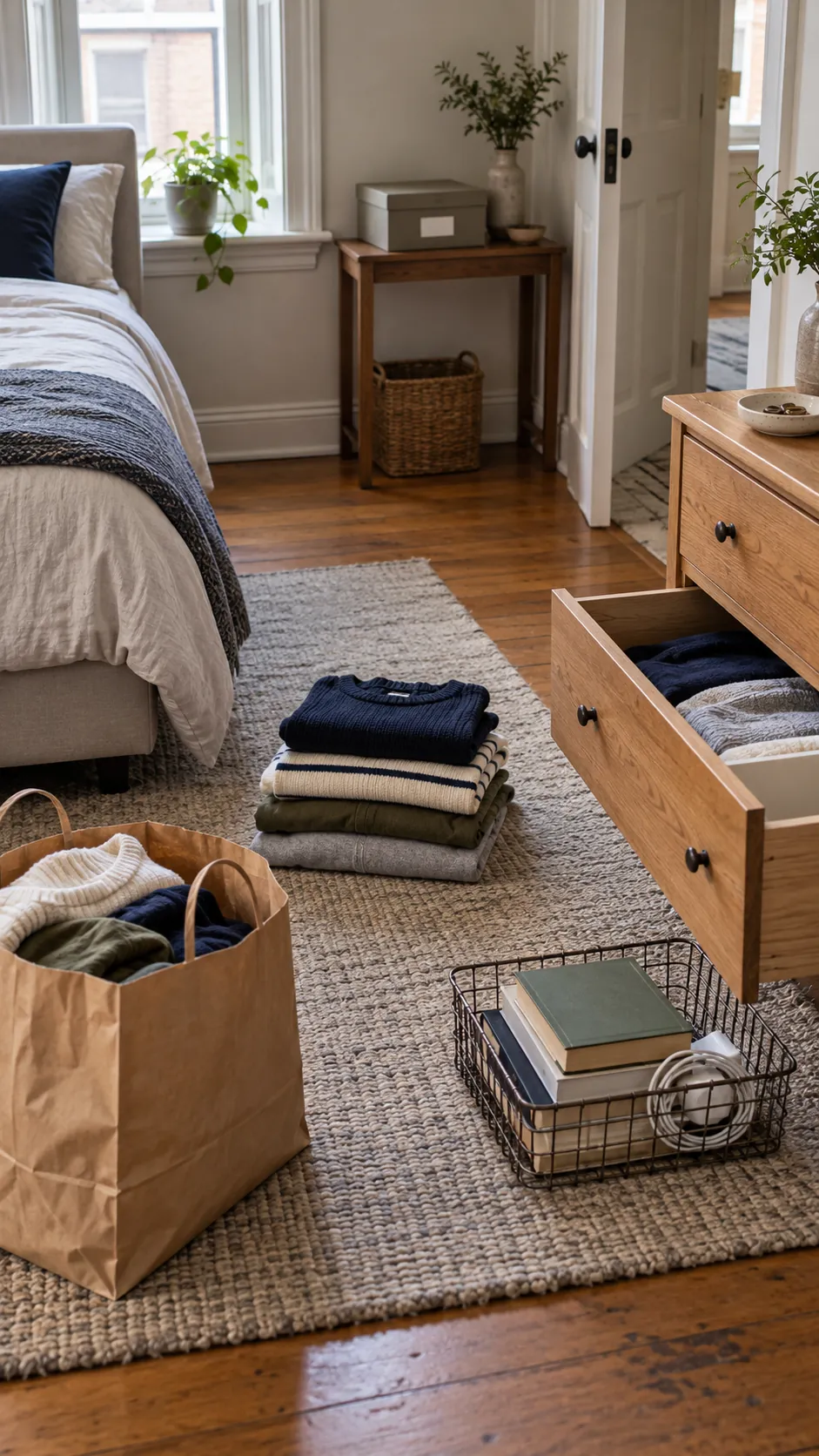
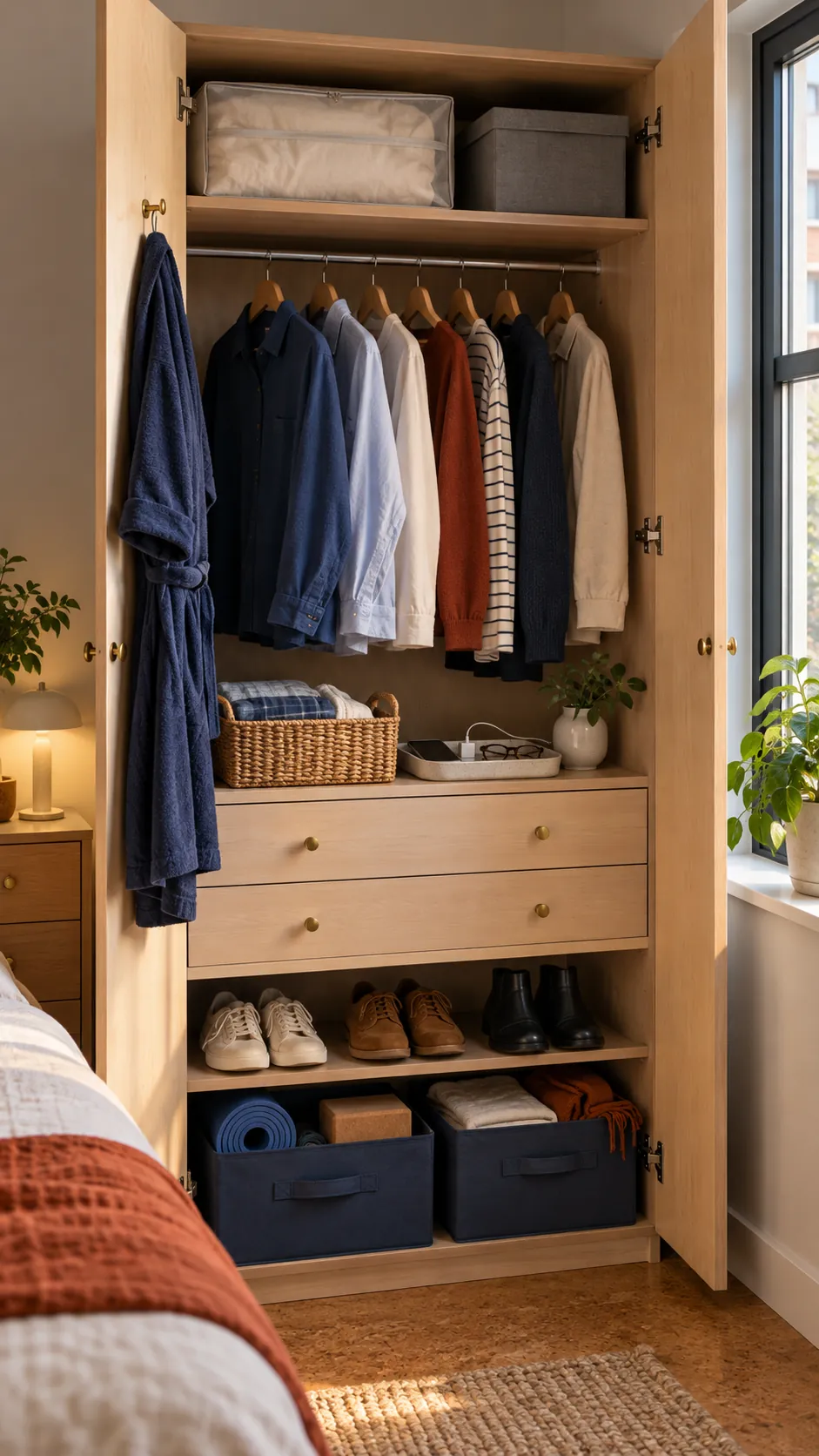
Daily items need the easiest homes. Place sleepwear, work clothes, medication, chargers, and current projects between knee and shoulder height whenever possible. Weekly items can sit higher or lower. Seasonal items can use the least convenient spaces because you handle them only a few times each year.
This access rule prevents the common cycle of removing five containers to reach one useful object. Use open baskets for things you grab often and closed, labeled bins for categories that create visual noise. Leave a little empty space in every container. A storage system fails when returning one item requires careful packing.
Use Walls Without Crowding the Room
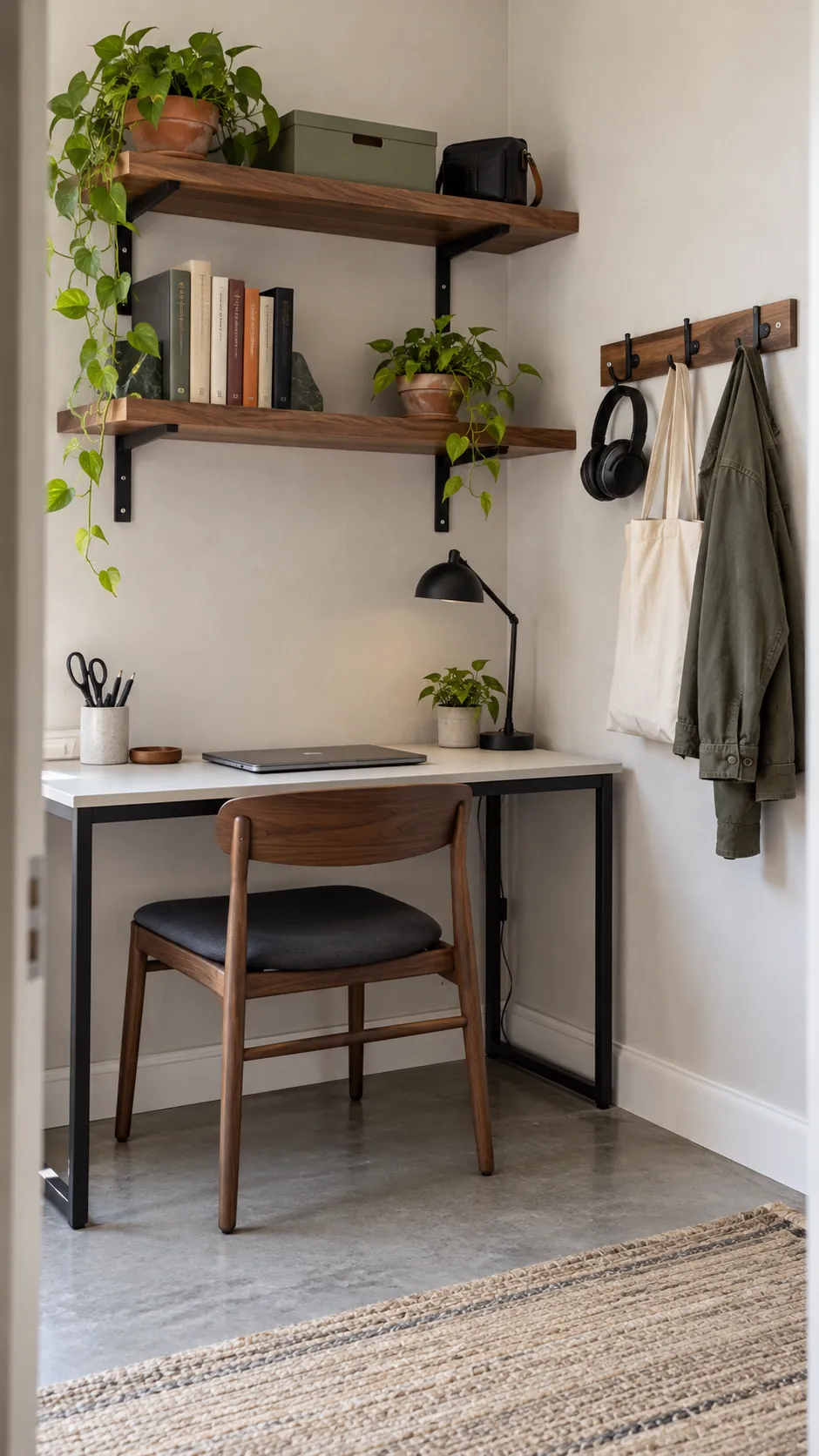
Vertical storage solutions work best when they hold narrow, lightweight categories and keep the floor visible. Add wall mounted shelves above a desk, dresser, or door where furniture already occupies the floor below. Use hooks for bags, headphones, robes, and tomorrow’s outfit. Keep heavy objects on lower shelves and fasten every unit with hardware suited to the wall and the expected load.
Renters can use removable hooks only within their tested weight limits. A slim ladder shelf or tension system can add height without permanent holes, but it still needs a stable base. Stop adding storage before the wall looks packed. A few coordinated containers and visible gaps make the room calmer than many small organizers.
Claim Under Bed and Hidden Storage
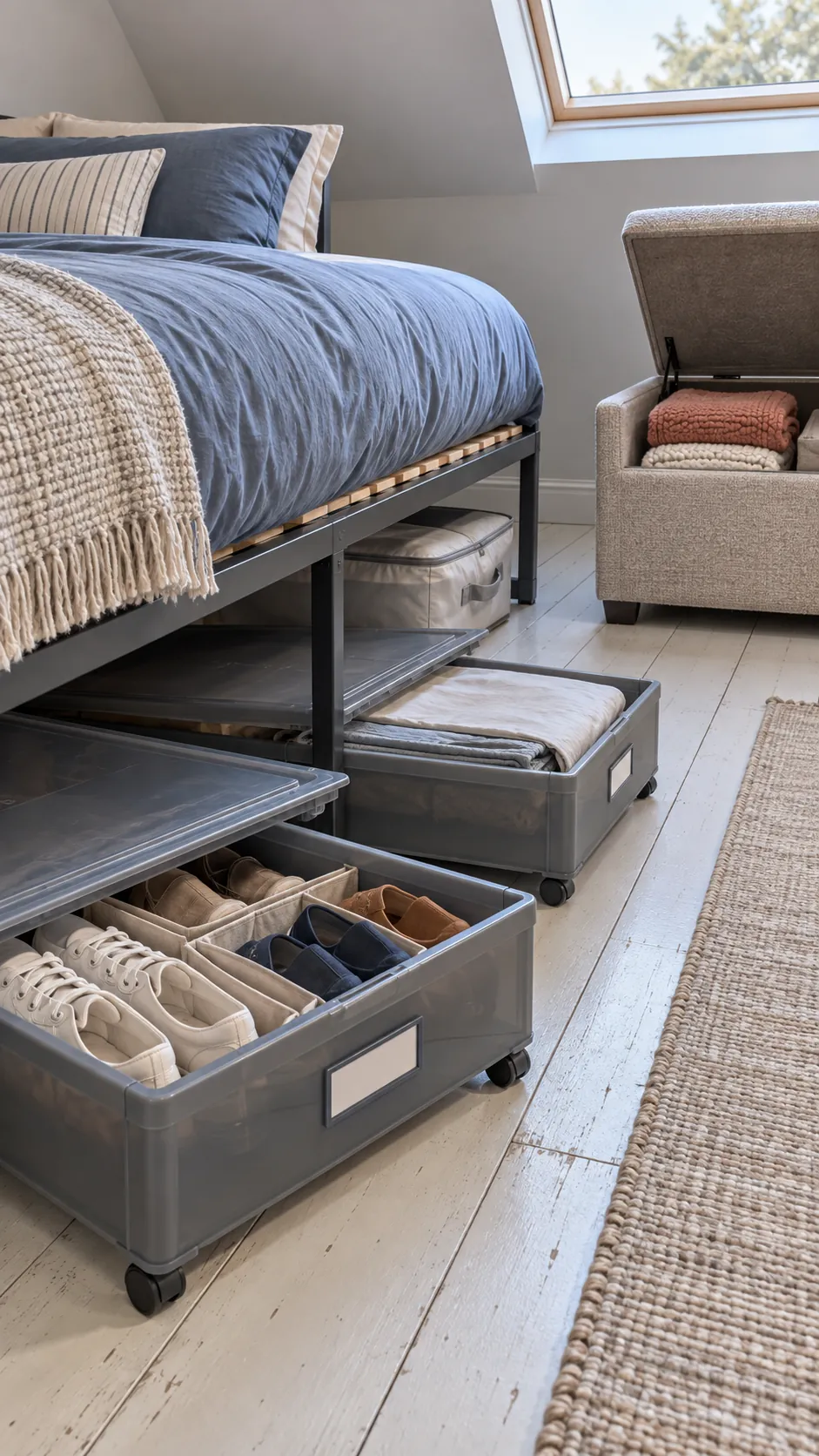
Under bed storage is valuable because it uses a large area without changing the room layout. Measure the clear height before buying containers, including any center supports under the frame. Choose shallow boxes that pull out fully, and group contents by category. Fabric bags suit soft bedding, while rigid lidded boxes protect papers, shoes, and less frequently used supplies.
Hidden storage furniture can do two jobs in the footprint of one. An ottoman can hold spare linens, a bench can contain bags, and a bedside cabinet can replace an open table. These pieces help only when their contents have clear limits. Do not treat every hollow space as permission to keep more than the room can support.
Build a Clutter Free Room Layout
Protect one clear path from the door to the bed and to any window or wardrobe you use. Place deep furniture against the least useful wall and keep narrow pieces near circulation areas. Open every drawer and door before deciding that the layout works. Furniture that blocks access will create new piles because putting things away feels inconvenient.
Finish with a short evening reset. Return daily items, clear the landing zone, and move the relocate basket out of the room. Keep a donation bag in an accessible spot and remove it when full. Review one storage category each month. A small room stays organized when the system makes the next correct action simple.