
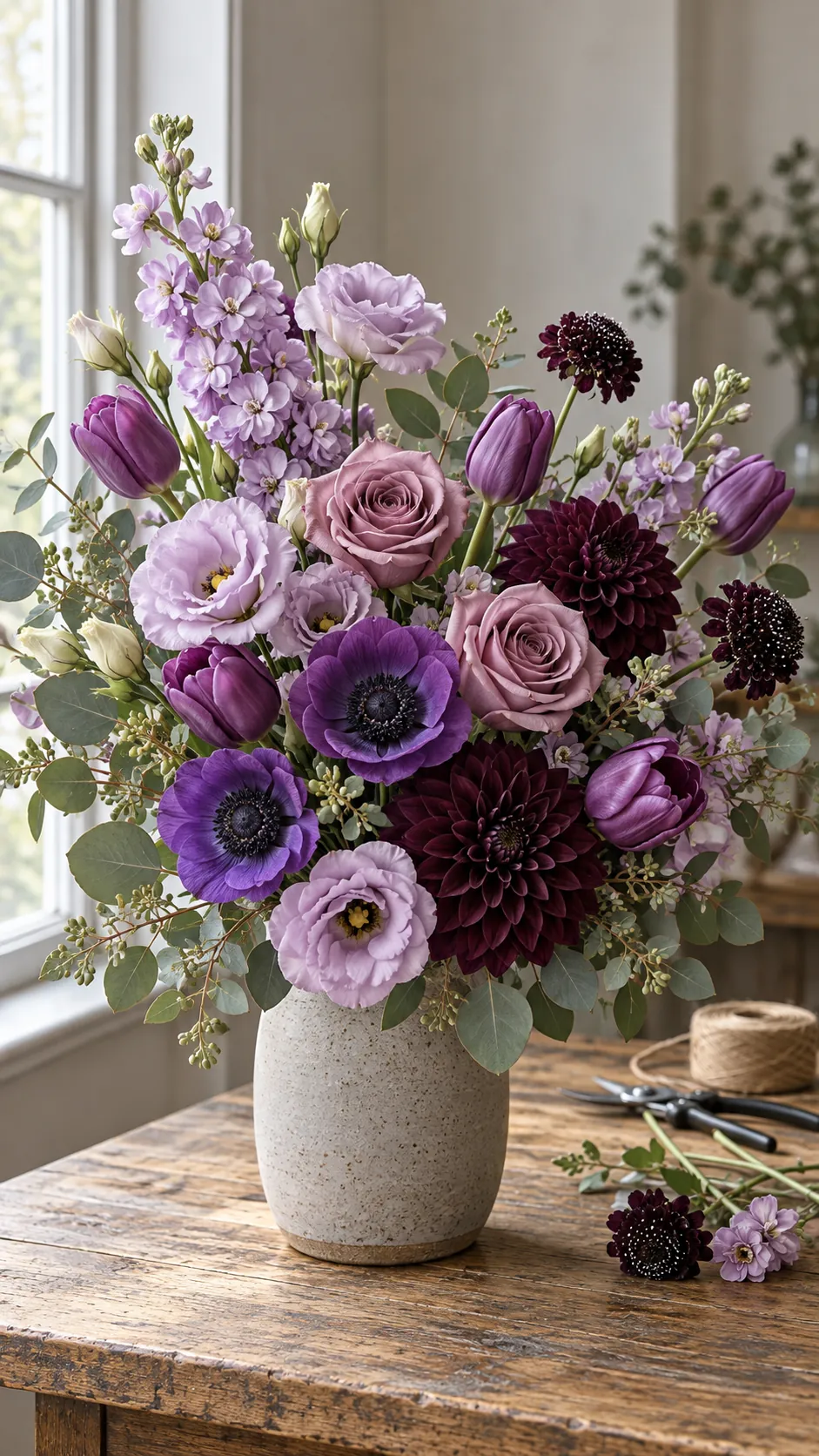
A purple bouquet can turn muddy when every bloom sits at the same value, even when each flower looks lovely on its own. The useful decision is not simply which purple to buy, but where to place light, middle, and deep tones so the eye can read the shape. These combinations show how to build that contrast with flowers that are easy to identify and substitute.
Lilac Lisianthus With Ivory Roses
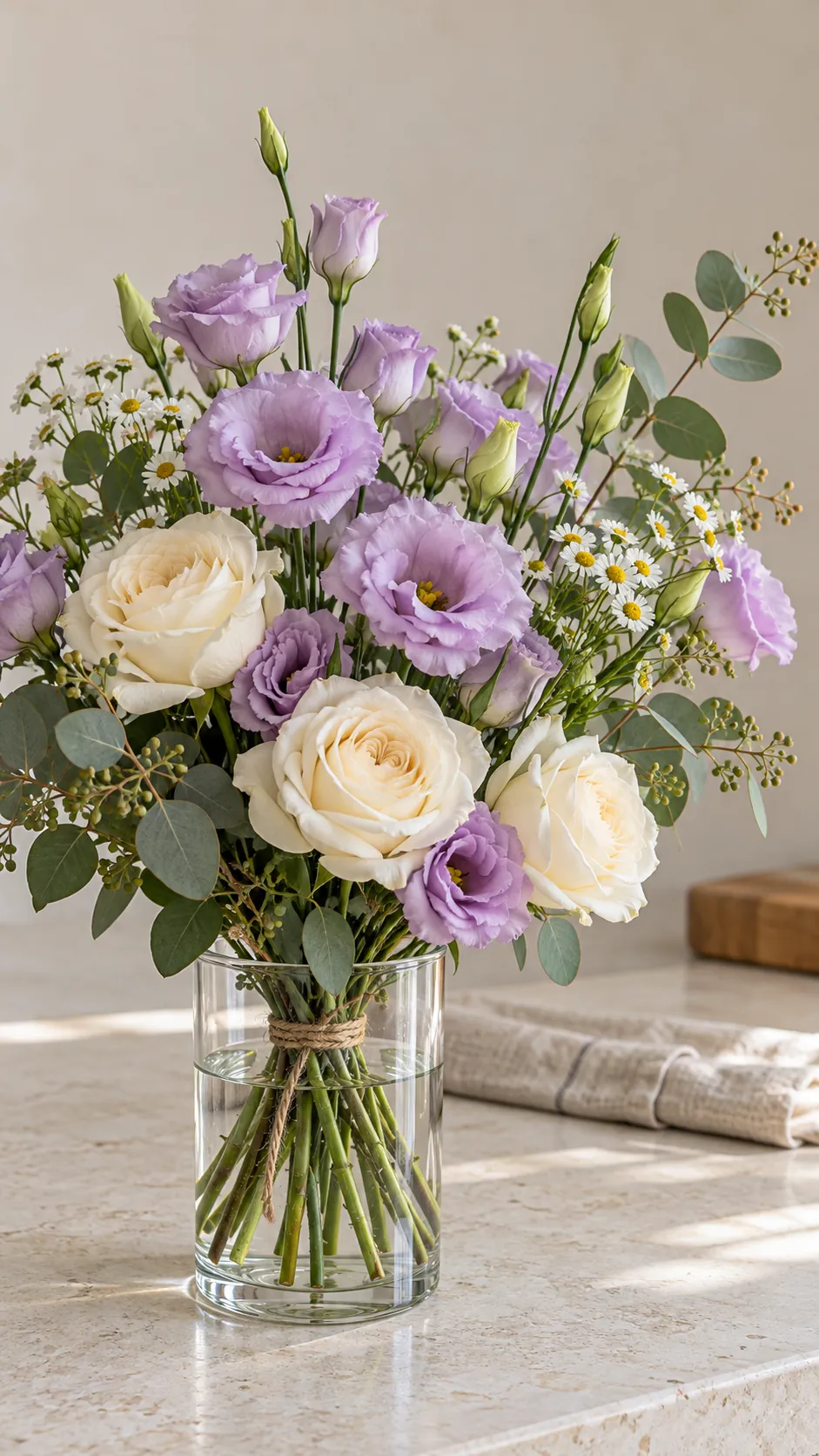
Lilac lisianthus gives a purple flower bouquet soft color without making it look sugary. Ivory roses provide calm spaces between the ruffled blooms, while a few eucalyptus stems extend the outline. Keep the palest flowers near the upper edge so the arrangement feels open rather than heavy.
Lavender Stock With Plum Scabiosa
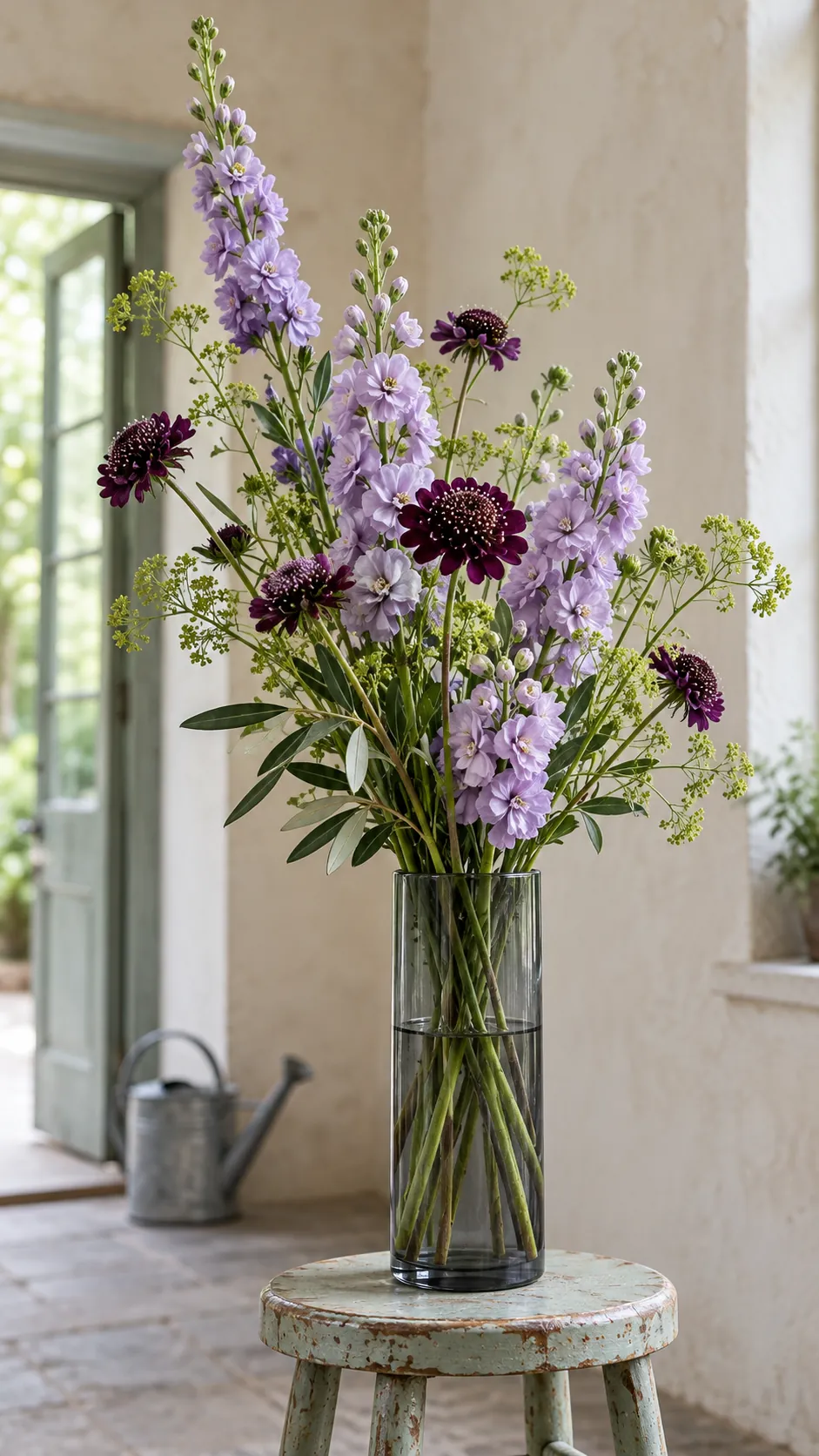
Tall lavender stock creates a clear vertical line, while plum scabiosa adds small dark focal points. This pairing works when you want fragrance and movement without a wide, formal silhouette. Turn the bouquet as you add stems so the deep flowers appear on several sides instead of forming one dark patch.
Mauve Roses With Burgundy Dahlias
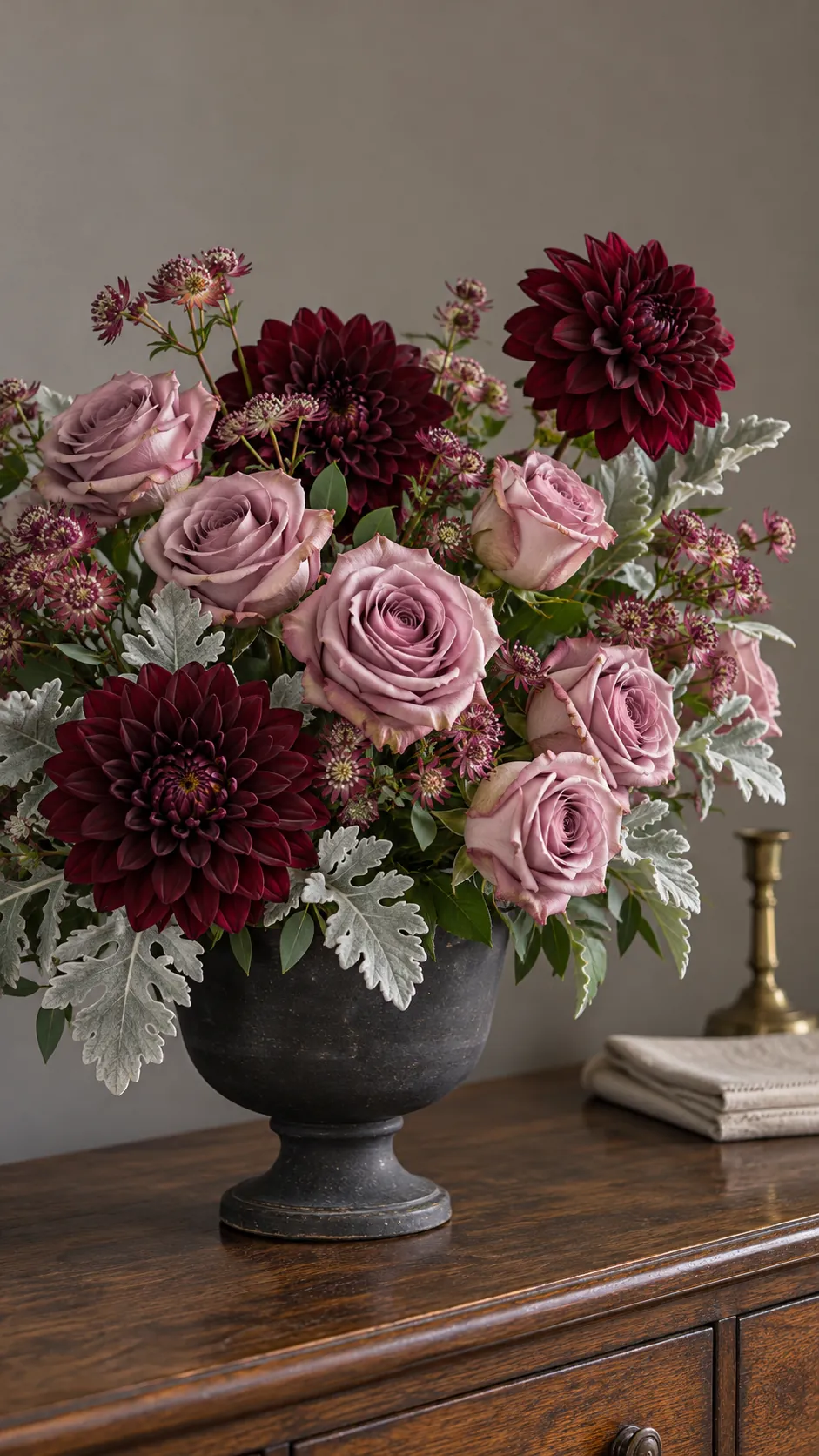
Mauve roses bridge the gap between true purple and the wine color of burgundy dahlias. The dahlias have strong visual weight, so use fewer of them and let the roses form the supporting mass. Dusty miller can cool the palette if the red undertone becomes too dominant.
Violet Tulips With White Ranunculus
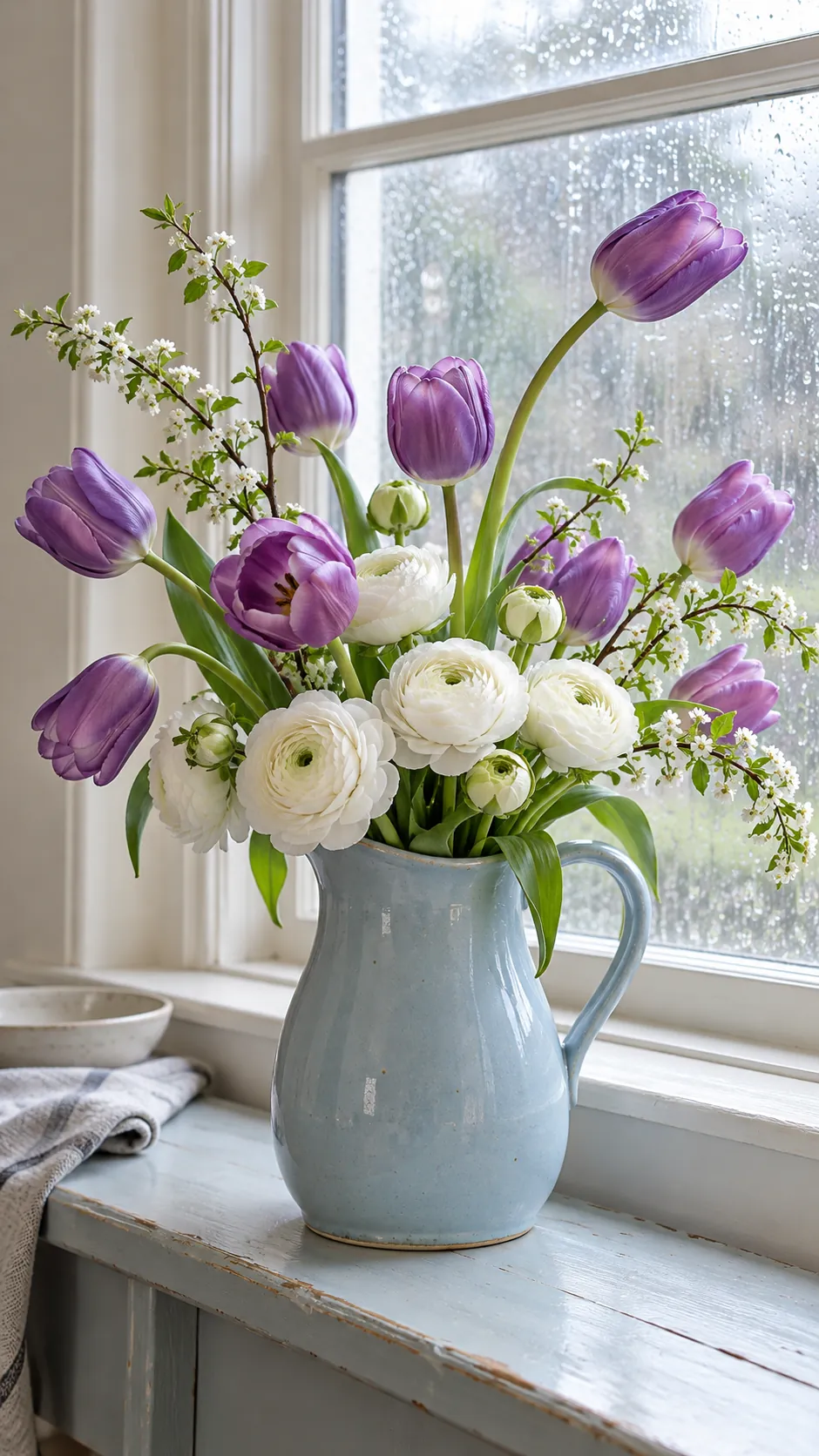
Violet tulips bring smooth curved petals to a mix that might otherwise feel overly frilled. White ranunculus brightens the center and repeats the tulips’ rounded form at a smaller scale. Give the tulips room to bend naturally because they continue to grow and shift after arranging.
Purple Hydrangea With Green Viburnum
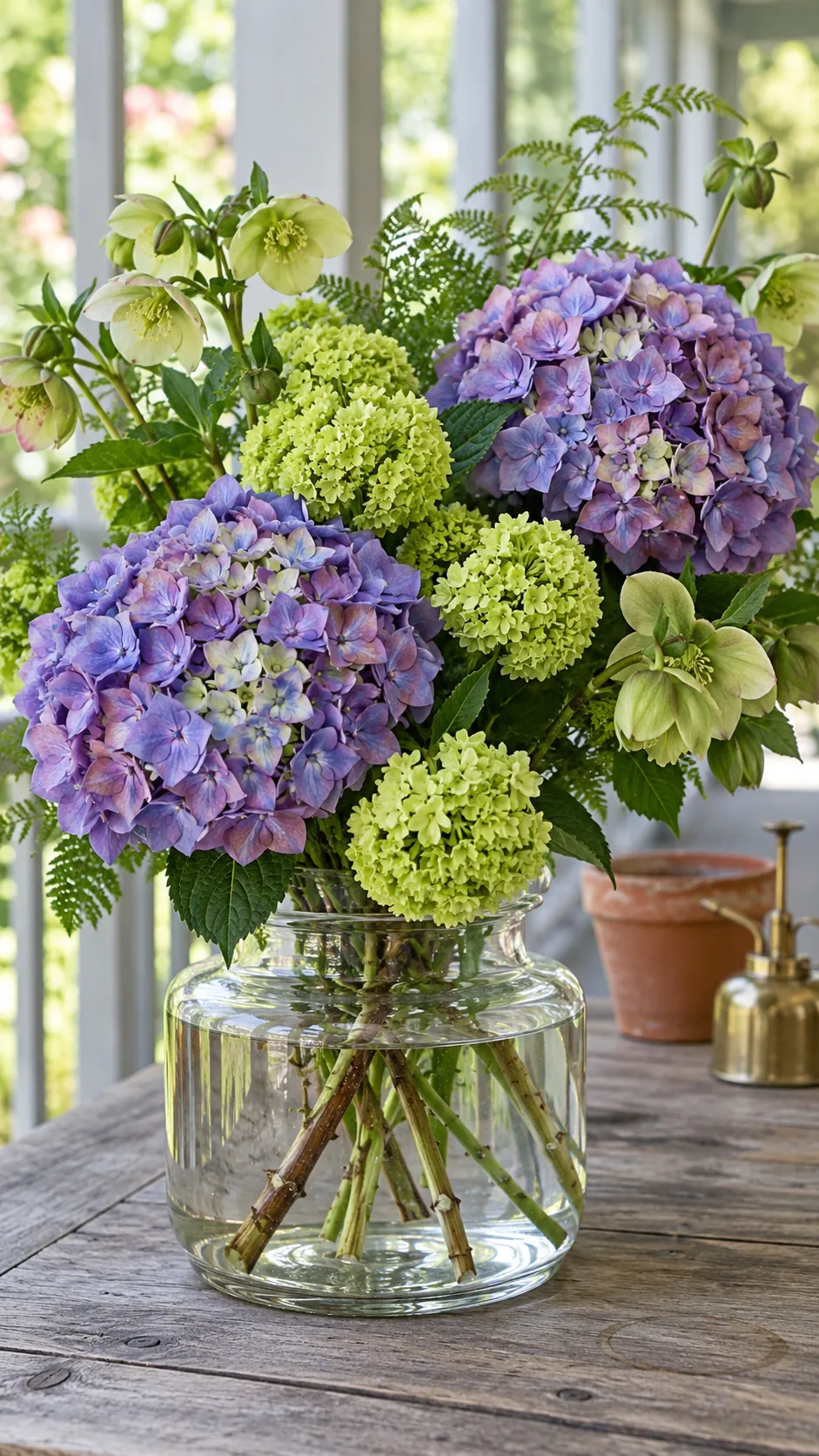
Purple hydrangea supplies instant volume, and green viburnum keeps that volume from becoming a solid purple ball. Place the two flower heads at different heights to reveal their separate textures. Hydrangea drinks heavily, so recut the woody stem and keep the vase generously filled.
Orchid Sprays With Deep Plum Calla Lilies
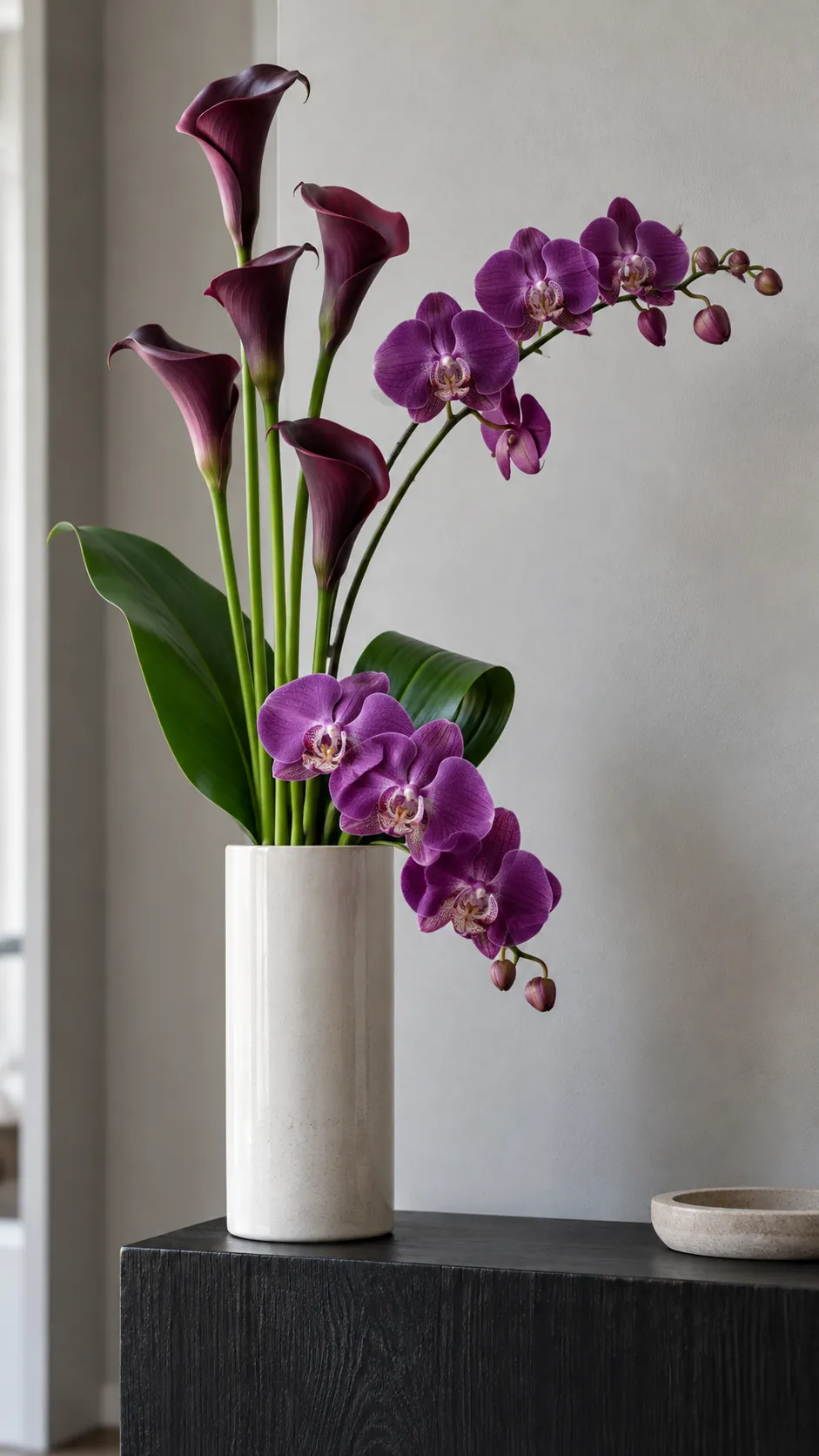
Arching orchid sprays and slim plum calla lilies make a compact bouquet feel sculptural. Let the orchids travel outward while the callas stay closer to the center, which creates tension without clutter. One or two glossy leaves are enough because extra foliage can hide the elegant stem lines.
Lavender Sweet Peas With Blush Peonies
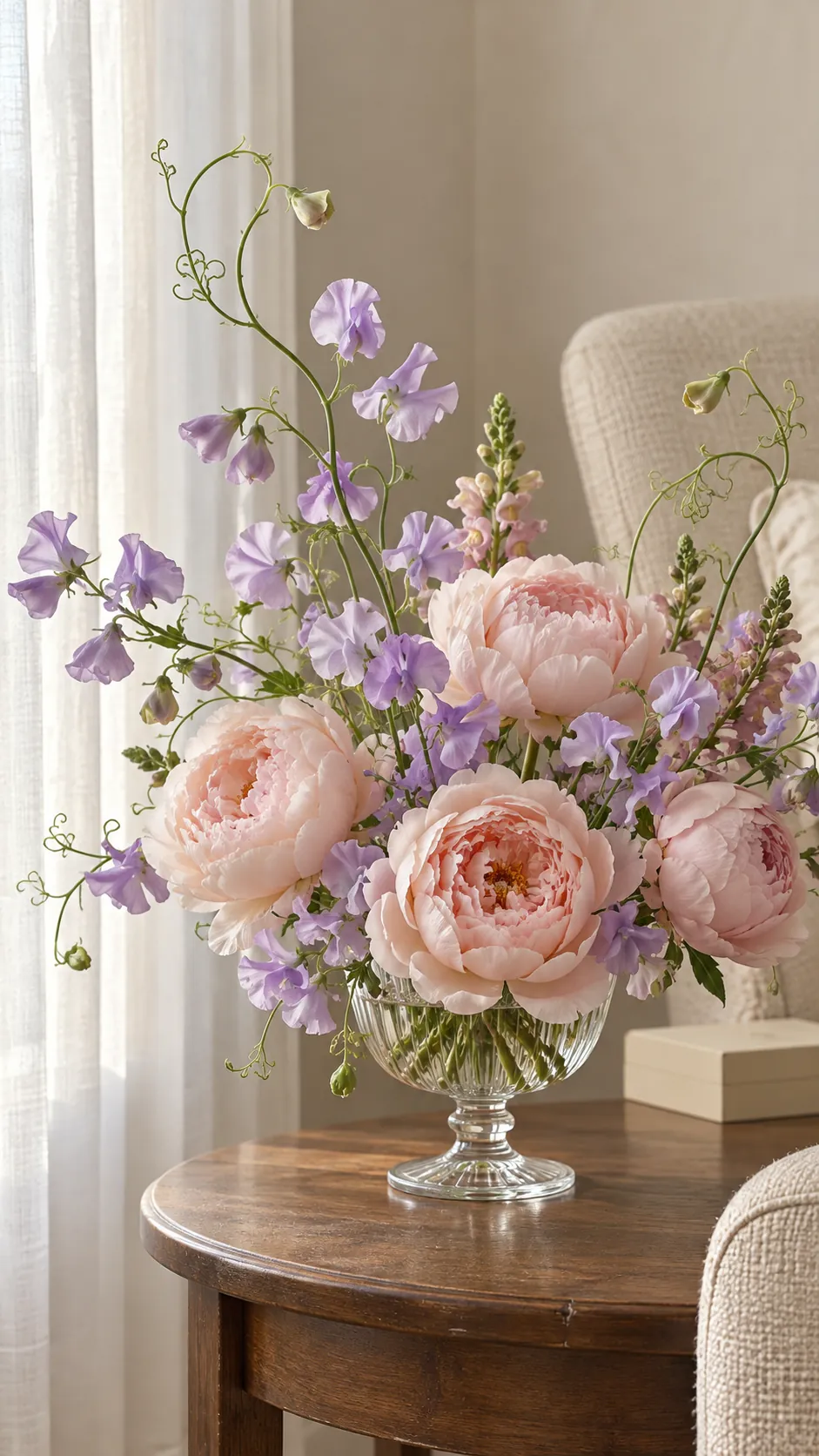
Lavender sweet peas add fluttering edges around broad blush peonies. The pink undertone warms a lavender floral palette while still allowing purple to lead. Cluster the peonies low and thread the sweet peas through the gaps so their delicate stems remain visible.
Purple Anemones With Silver Foliage
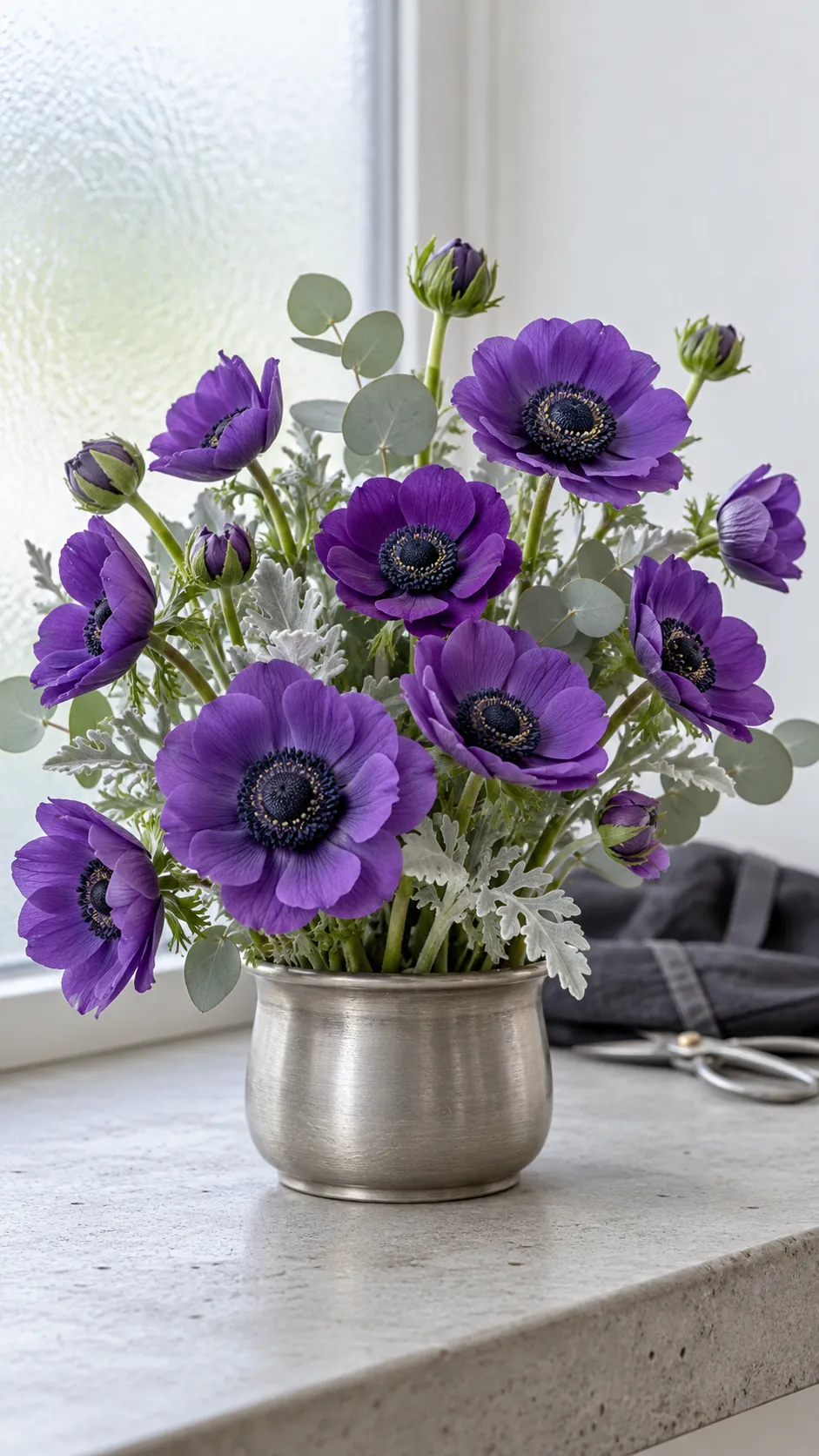
Purple anemones offer dark centers that make a tonal arrangement look crisp from across a room. Silver foliage separates the blooms and repeats their cool undertone without competing for attention. Face several anemones forward, then angle the rest sideways to avoid a flat display.
Indigo Delphinium With Lavender Roses
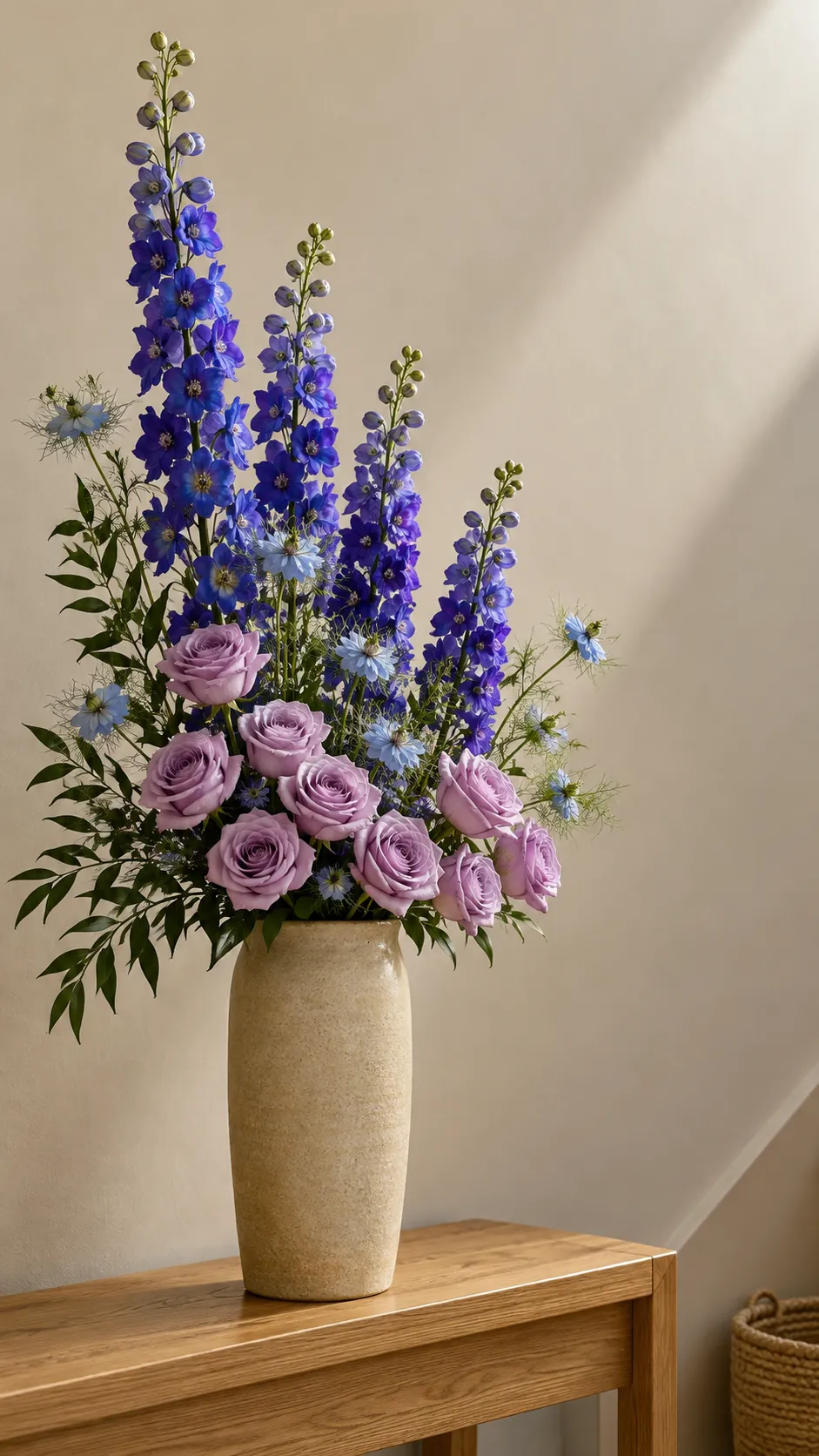
Indigo delphinium supplies height and a blue leaning purple that feels especially clear beside lavender roses. Build a low rose base first, then insert the delphinium at unequal heights. The finished outline should rise gently on one side rather than forming two matching towers.
Plum Chrysanthemums With Copper Amaranth
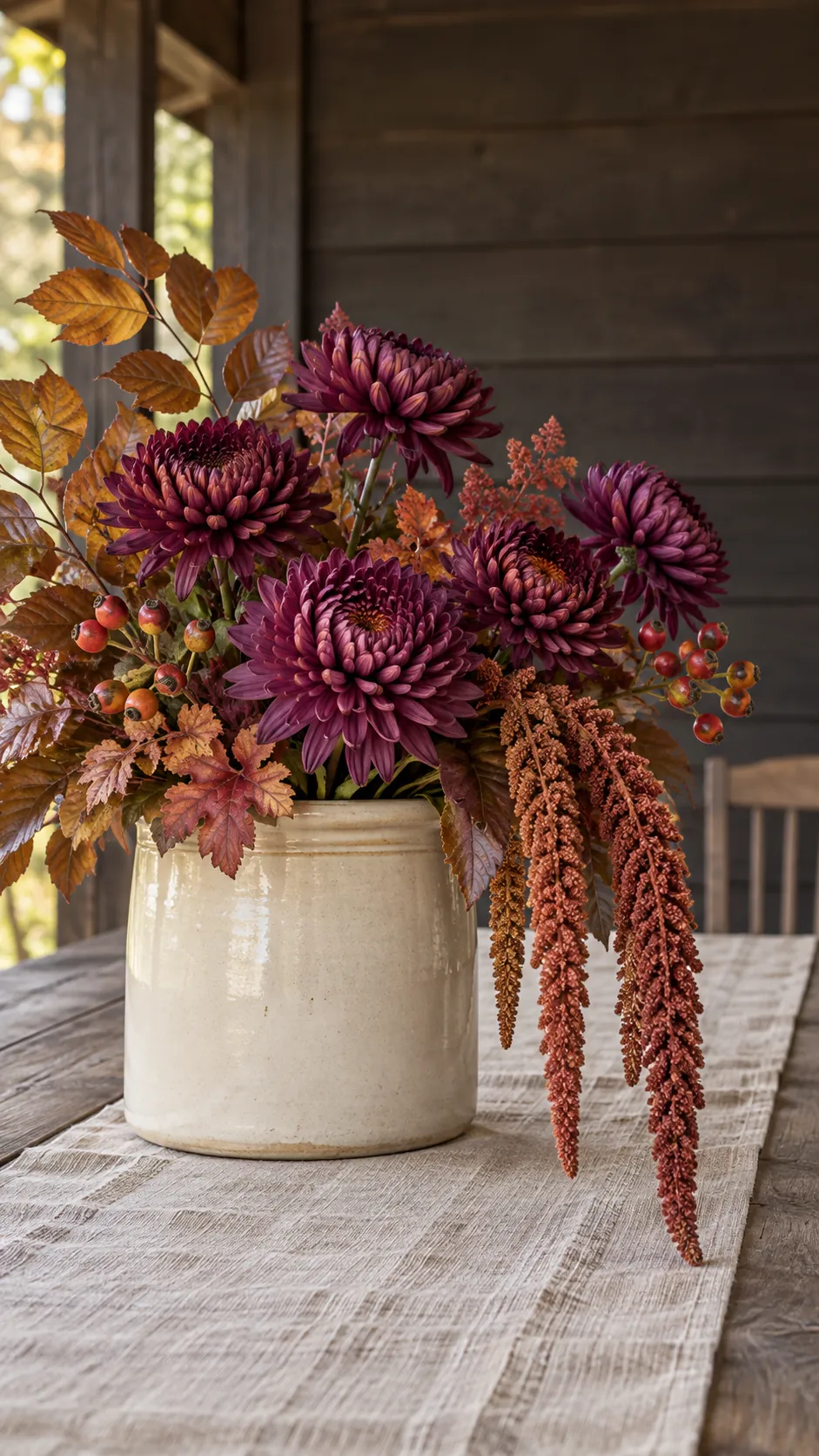
Plum chrysanthemums gain warmth from copper amaranth, making this mix suited to violet autumn flowers. Let the amaranth trail below the round flower heads so its movement has a clear purpose. Bronze leaves or beech foliage can connect both colors without introducing another bloom shape.
Lilac With Dark Purple Clematis
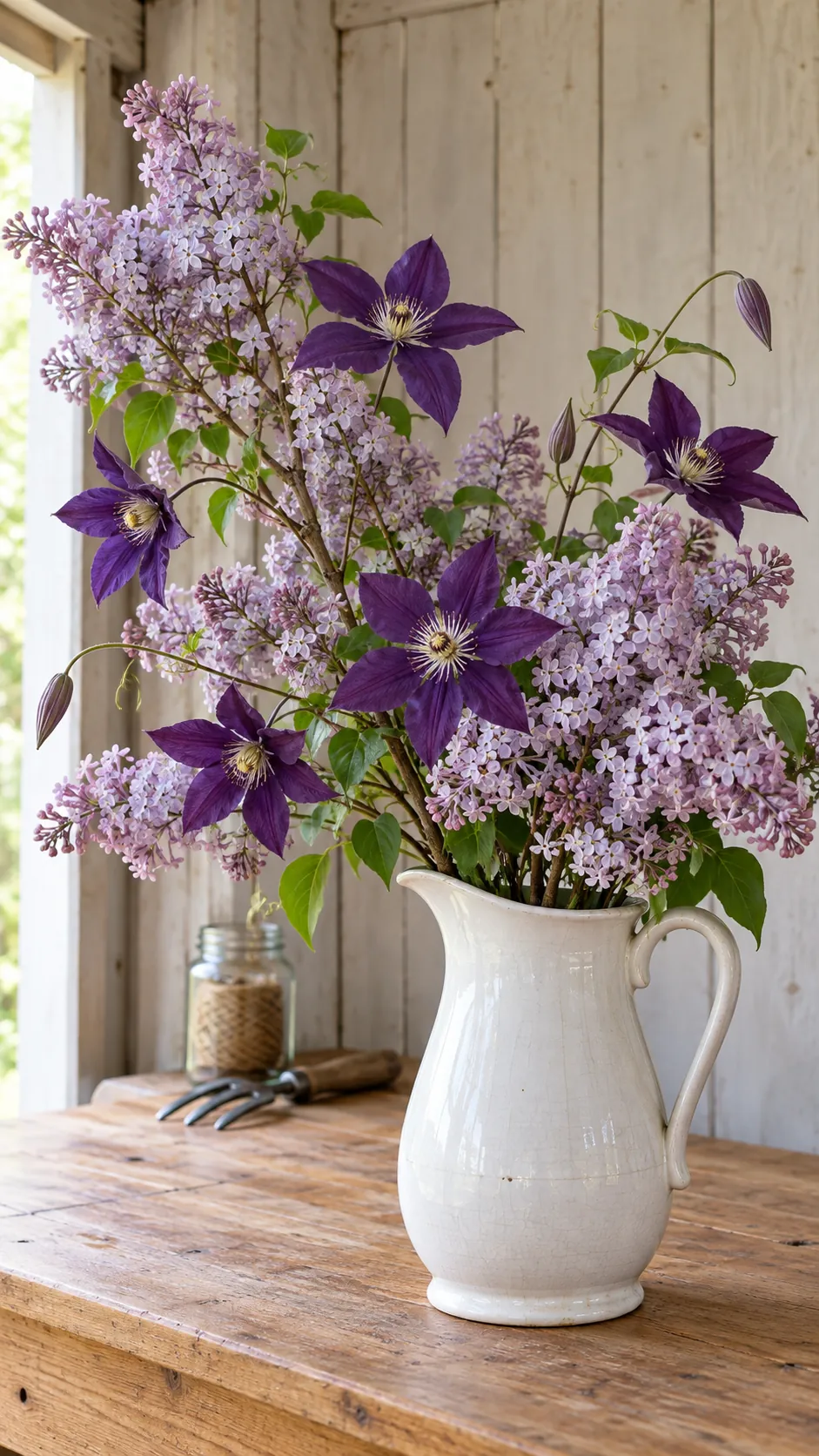
Fragrant lilac branches create a cloudlike base, while dark purple clematis adds distinct star shaped faces. Their woody and vining habits naturally produce an informal outline. Remove leaves below the binding point and support the softer clematis stems between sturdier lilac branches.
Purple Dahlias With Chocolate Cosmos
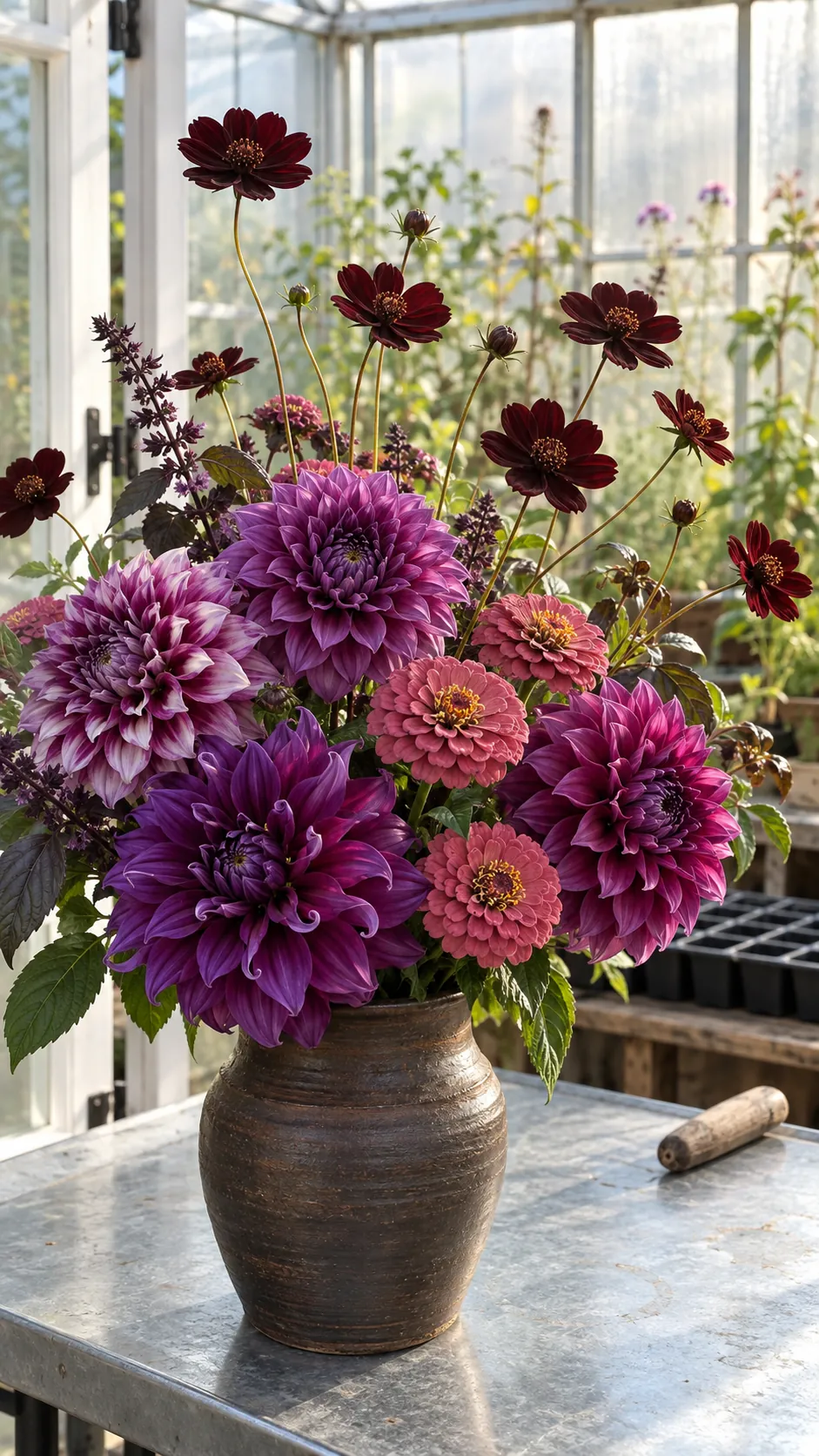
A purple dahlia bouquet becomes richer when chocolate cosmos adds small velvetlike accents. The cosmos should float above and around the larger blooms instead of disappearing beneath them. Include muted raspberry zinnias if you need a middle tone between bright purple and near brown.
Wisteria Tones With Cream Garden Roses
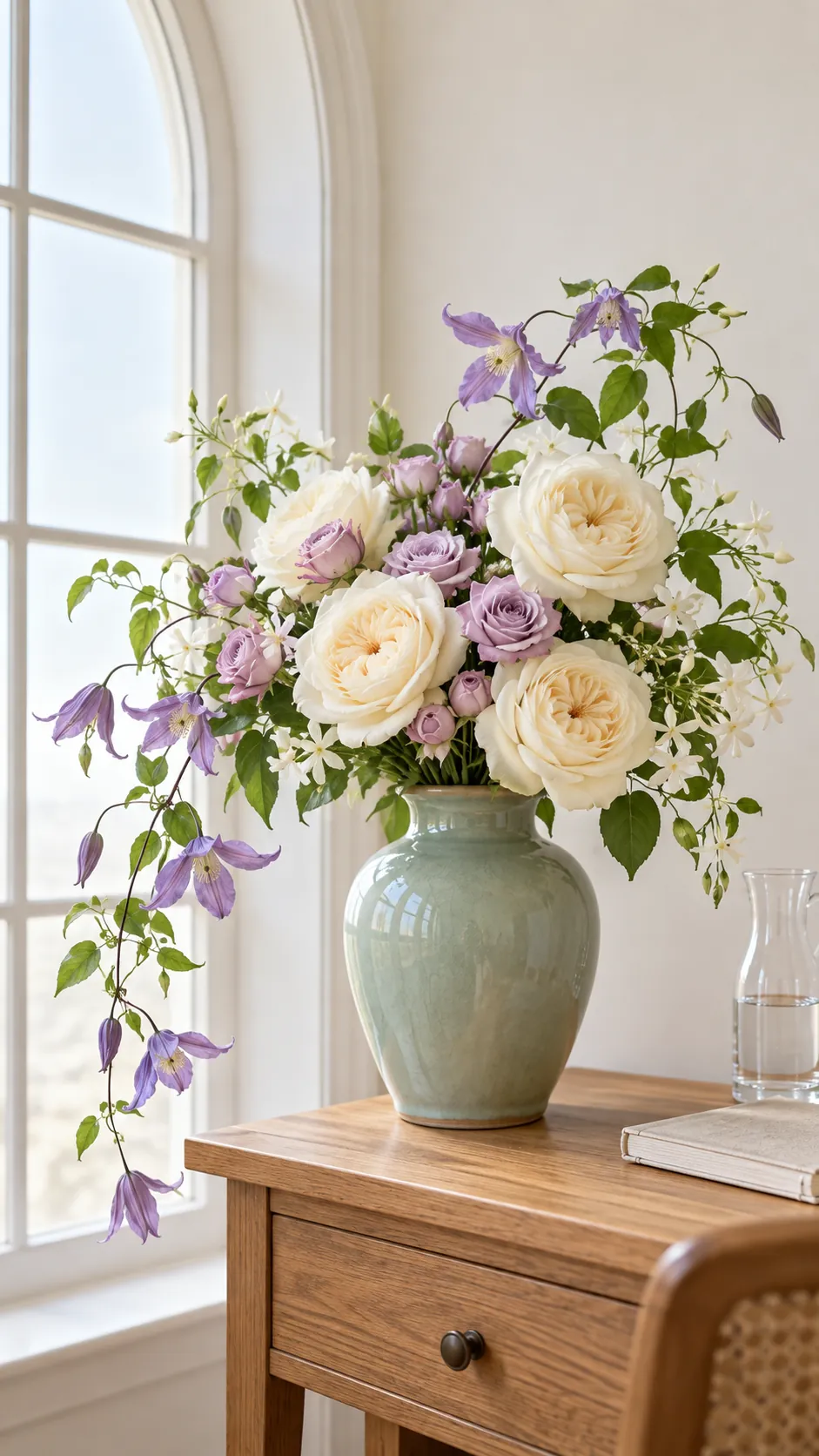
Wisteria toned flowers look graceful beside cream garden roses because the neutral blooms protect their delicate color. Use trailing clematis or actual wisteria only when it is safely available and properly conditioned. A loose downward line gives the arrangement romance without requiring an oversized cascade.
Tonal Purple Carnations With Lisianthus
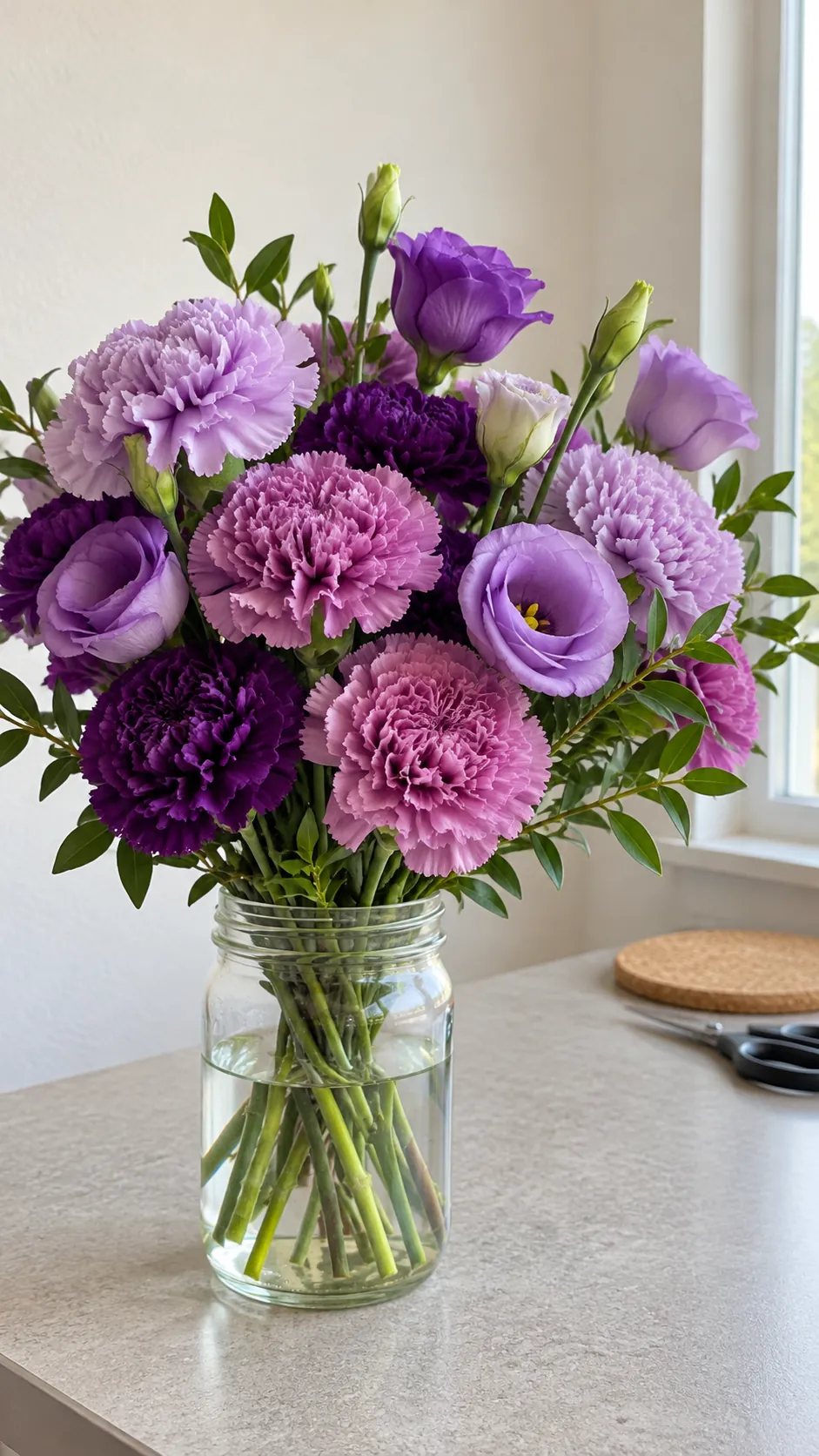
Purple carnations are useful when you need reliable volume and a controlled budget. Mix lavender, mauve, and deep violet varieties, then interrupt their dense texture with the open cups of purple lisianthus. Vary the stem heights by a few centimeters so the tonal purple flowers keep visible depth.
Deep Plum Callas With Blackberries
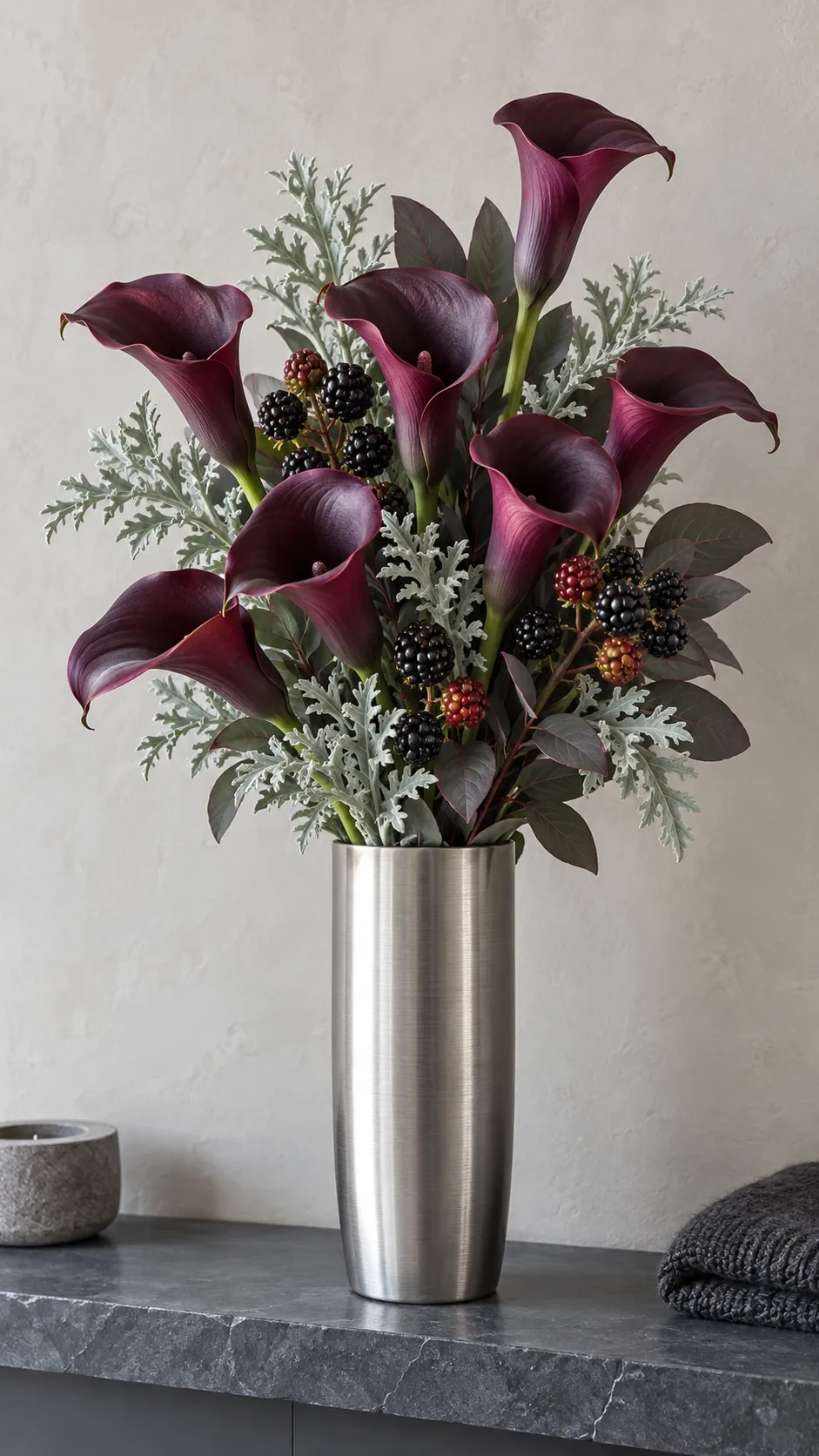
Deep plum calla lilies and blackberry stems create drama through shape as much as color. Keep the berries slightly inside the flower line so they read as texture instead of loose fruit. Pale gray foliage near the outer edge gives the darkest petals enough contrast to remain visible.