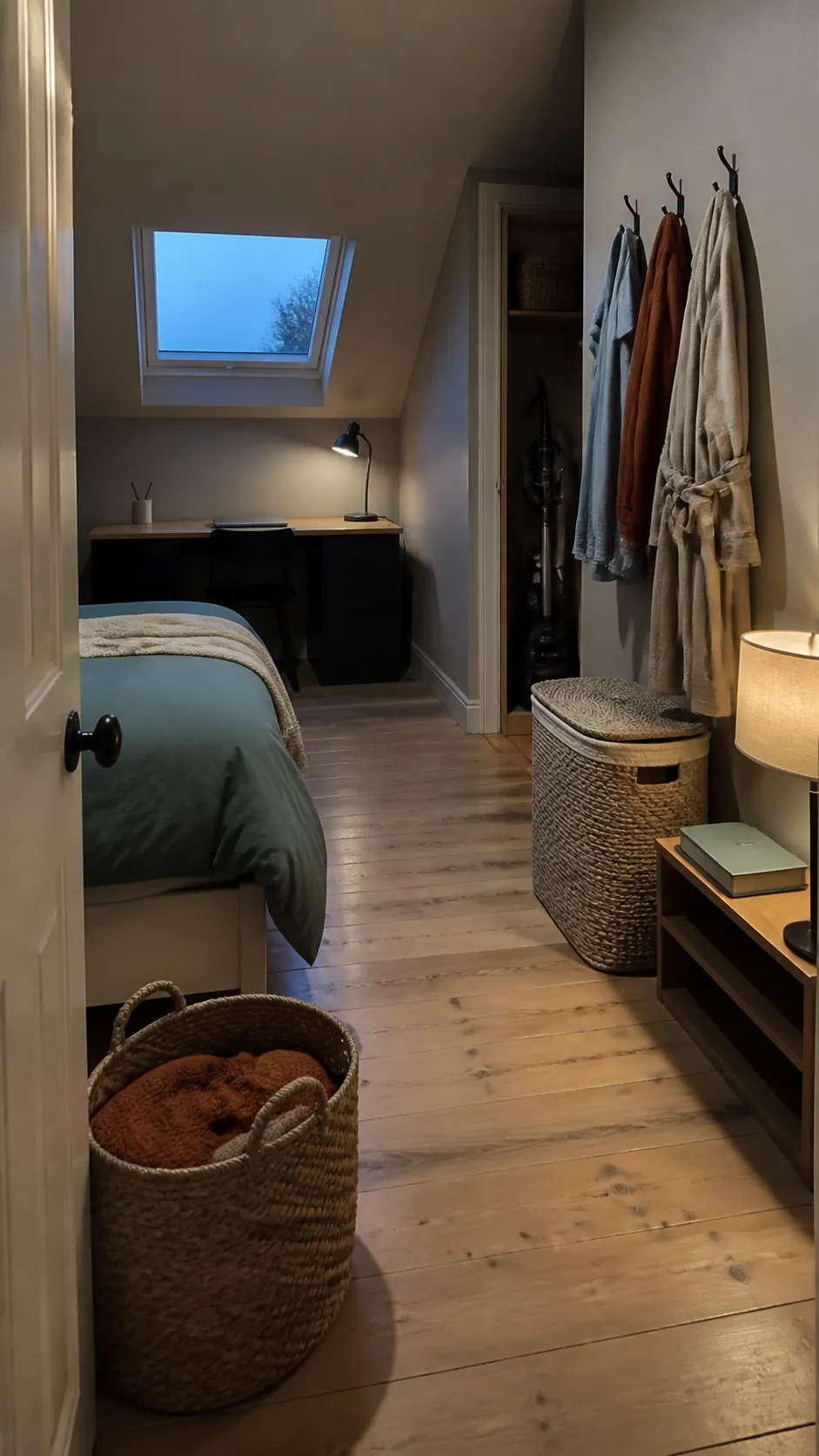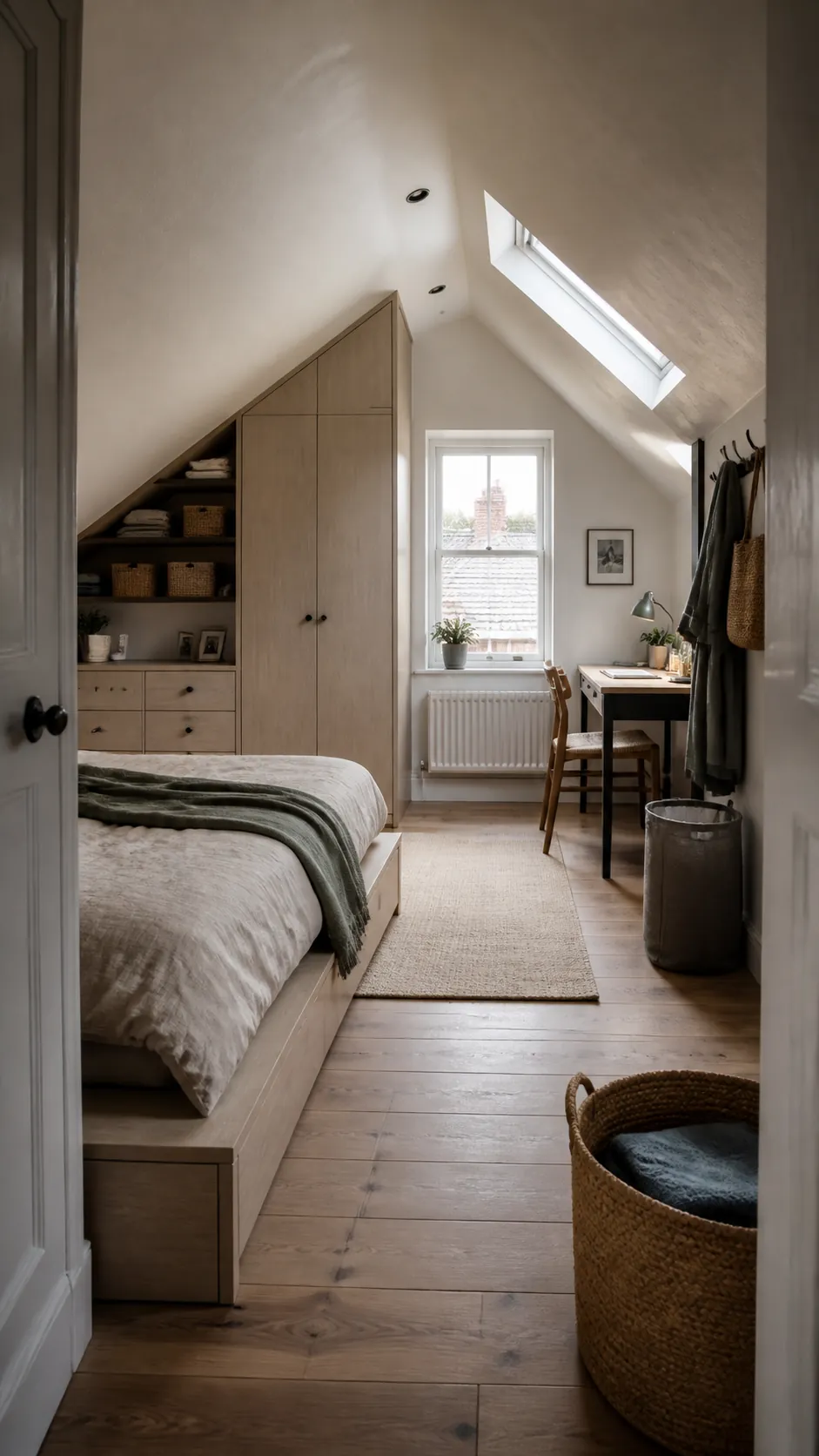
An attic bedroom stays organized when storage follows the room’s headroom and your actual habits. Instead of buying containers first, notice where clothes, work items, and laundry already collect, then give each pile a nearby home that is easier to use than the floor.
Start with the clutter map
For three ordinary days, note where objects land: clothes beside the bed, paperwork near the desk, shoes at the stair, or toiletries by a mirror. Those locations reveal missing systems more accurately than a generic attic closet plan. Remove rubbish and donations first so you are not designing storage for things you no longer want.
Group what remains by action rather than by vague category. Tomorrow’s clothes need a hook or valet, dirty clothes need a hamper, and items waiting to leave the room need one exit basket. Put the solution at the point of friction, even if it is not perfectly symmetrical.
Match storage to the available headroom
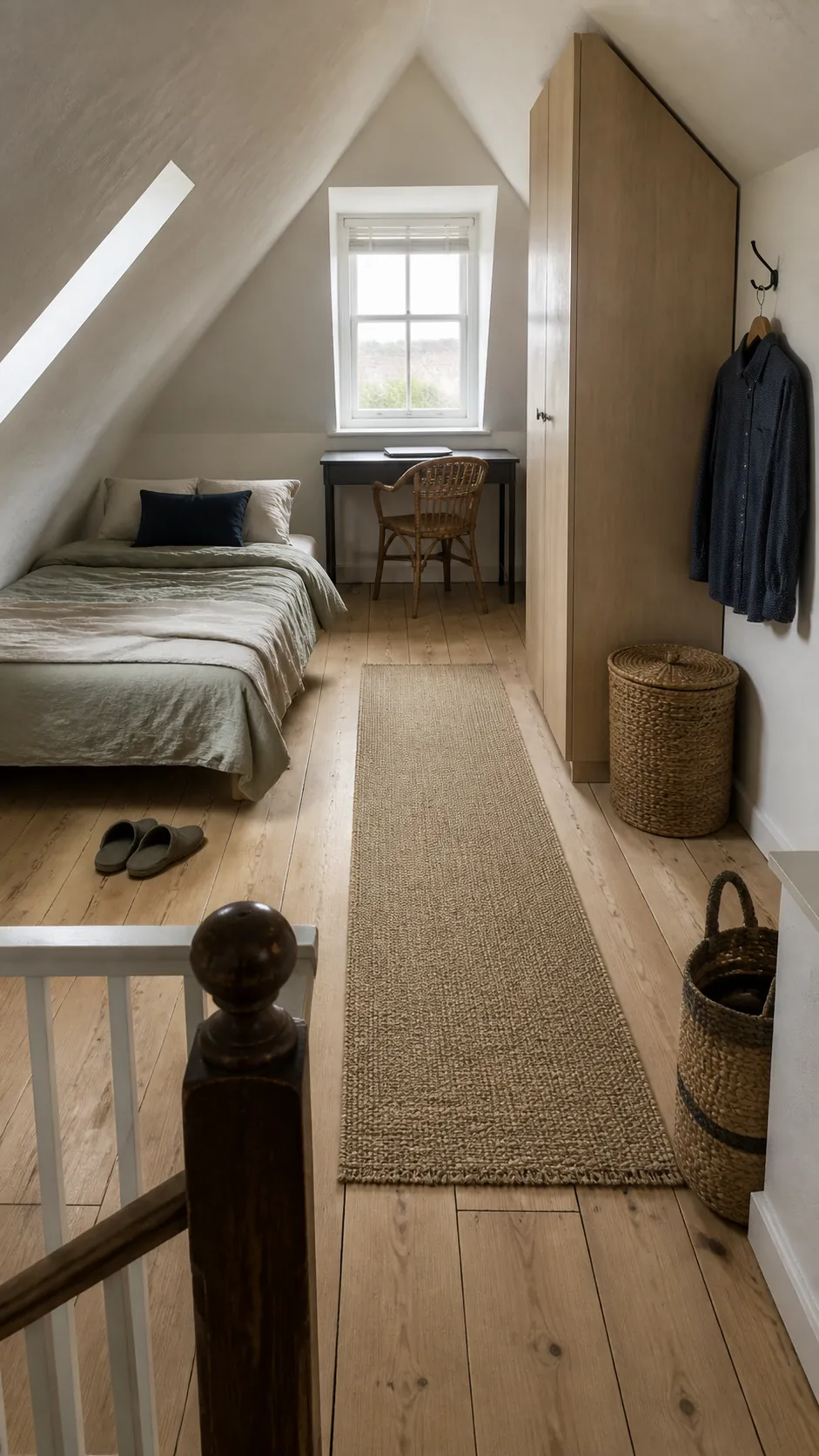
Reserve full-height walls for wardrobes, garment rails, and shelves you access while standing. Use the middle-height areas for a desk, dresser, or open cubbies, and give the lowest eaves to closed drawers, seasonal bedding, shoes, and luggage. This hierarchy prevents tall furniture from colliding with the roof while turning awkward edges into capacity.
Measure width, depth, and height at several points because old slopes are rarely perfectly straight. Include the space needed to open a door or drawer and the reach required to retrieve items at the back. Sloped ceiling storage only helps when it is comfortable enough to use every day.
Build closed storage into the eaves
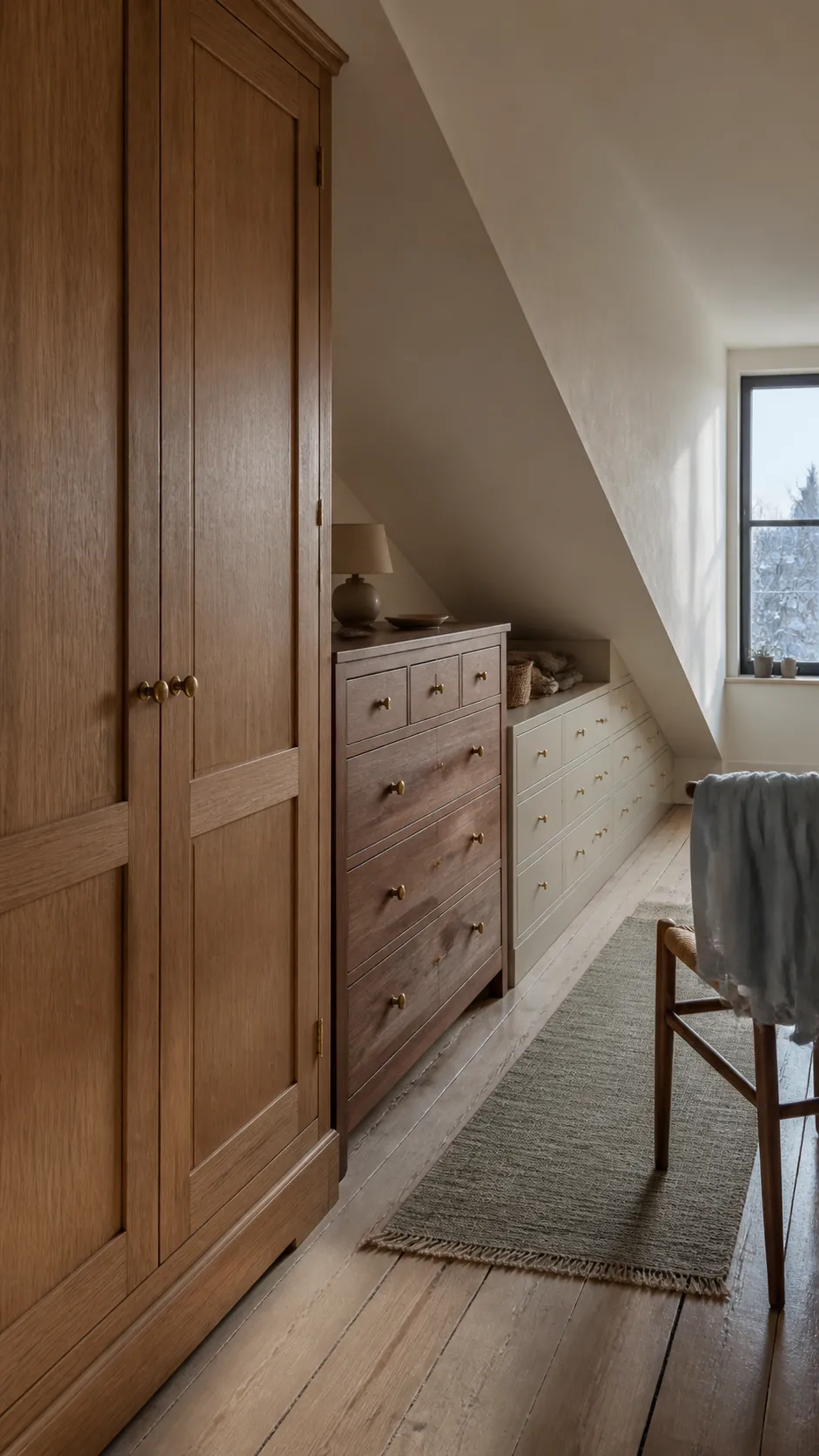
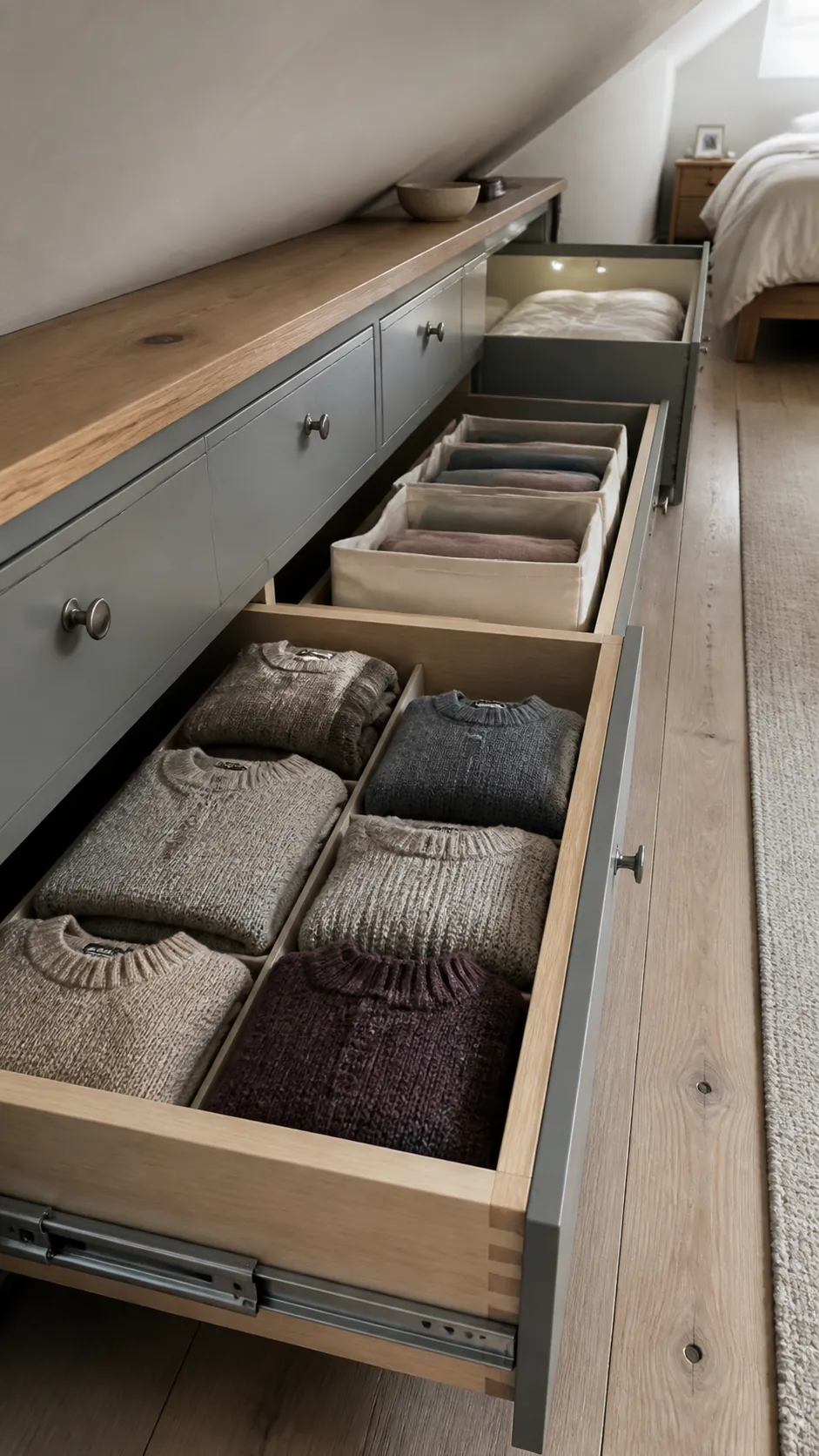
Under-eaves drawers and cupboards hide visual noise, protect textiles from dust, and use floor depth that a freestanding wardrobe cannot reach. Divide the run by frequency: daily folded clothes near the open aisle, spare bedding farther in, and luggage in the deepest compartment. Labels belong inside doors if you prefer a calm exterior.
Custom built-in attic cabinets are the neatest option, but a continuous top over matching low modular units can create a similar visual line. Avoid tiny doors that require crawling into a dark void. Wide drawers, pull-out trays, and interior lighting make the deepest volume genuinely accessible.
Make the tall wardrobe earn its footprint
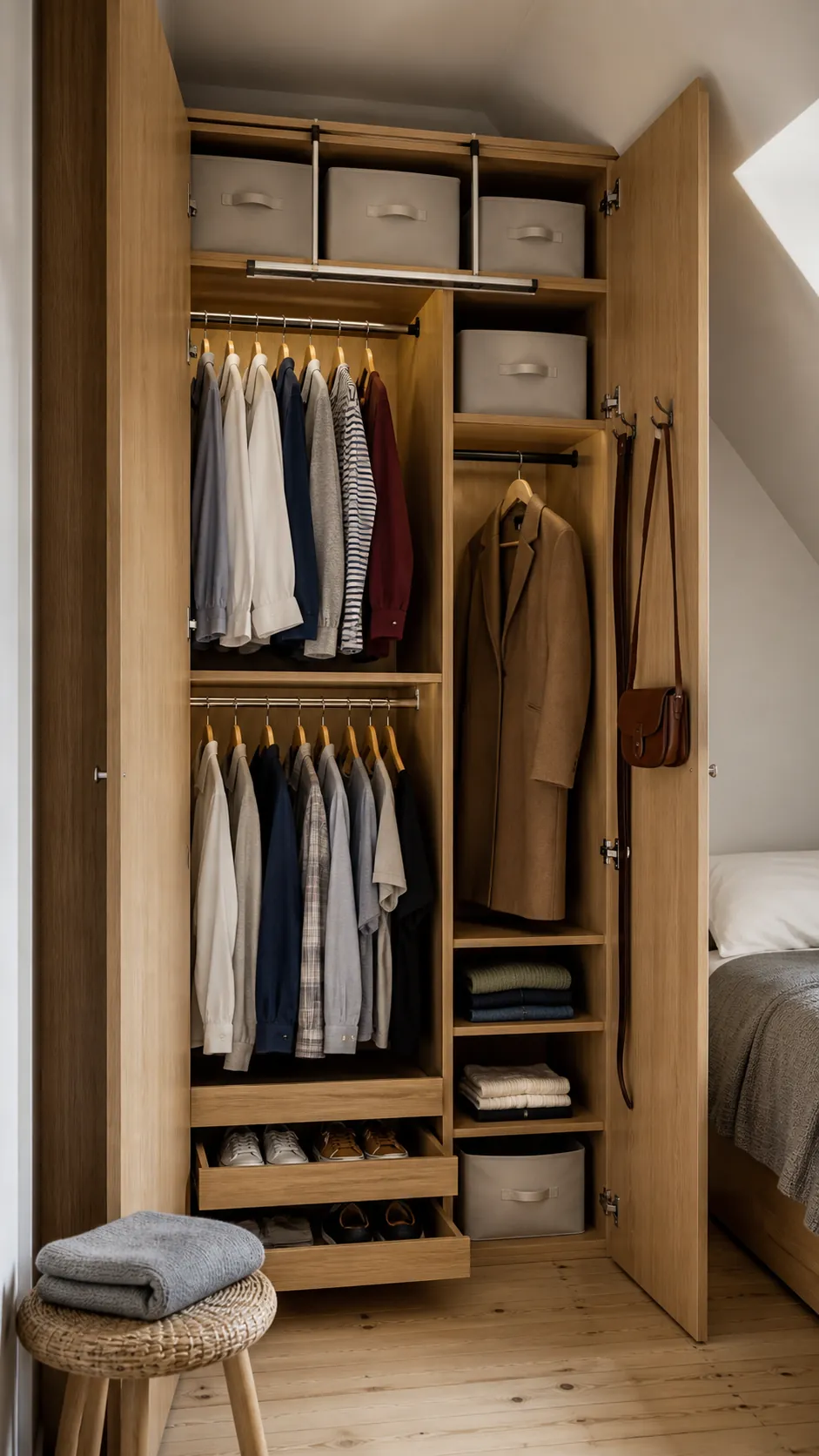
One wardrobe on a full-height gable can store more efficiently than several narrow pieces around the room. Fit a double hanging rail for short garments, a single tall section for dresses or coats, and shelves sized to the actual bins you own. Door-mounted hooks can hold belts, bags, or tomorrow’s outfit.
Keep the most-used items between shoulder and knee height. Archive sentimental clothing and off-season pieces on the top shelf, but use light containers that can be lifted safely. If open rails tempt you to overfill them, doors or a curtain will reduce visual clutter in a small loft storage scheme.
Use the bed for high-capacity hidden storage
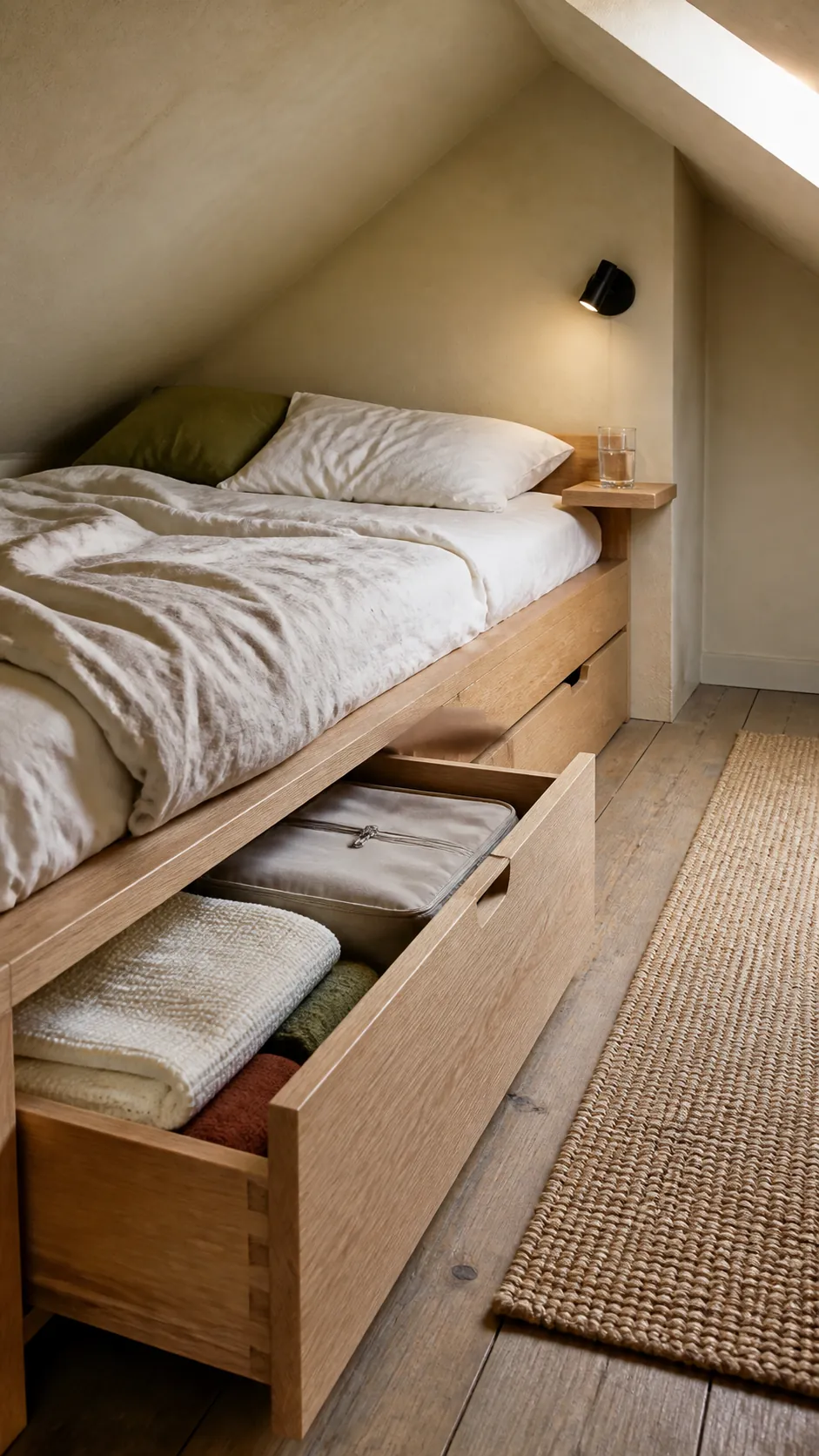
Under-bed drawers are ideal for spare linens, off-season clothes, and bulky soft items, especially when the bed already occupies a low-ceiling zone. Choose drawers on proper runners if the rug or uneven floor makes rolling boxes frustrating. Vacuum bags save volume but should not become a reason to keep damaged or unwanted textiles.
Leave the side facing the tallest aisle accessible and avoid storing essentials against an unreachable wall. A lift-up ottoman bed can provide more capacity, but verify that the platform opens without striking the slope. The best low ceiling furniture works with the roof in both its closed and open positions.
Create a reset that takes ten minutes
Keep one empty basket for objects that belong elsewhere, return surfaces to their intended use, and close every drawer before bed. Once a week, empty the exit basket, wash the laundry, clear the desk, and vacuum the difficult eaves edge with a crevice tool. A short repeatable reset beats an occasional exhausting overhaul.
When the same pile returns, do not blame yourself; adjust the system. Move the hamper, add a hook, reduce a category, or swap a lid for an open bin if the extra step stops you using it. An organized attic room is not one that never gets messy, but one whose storage makes recovery quick and obvious.