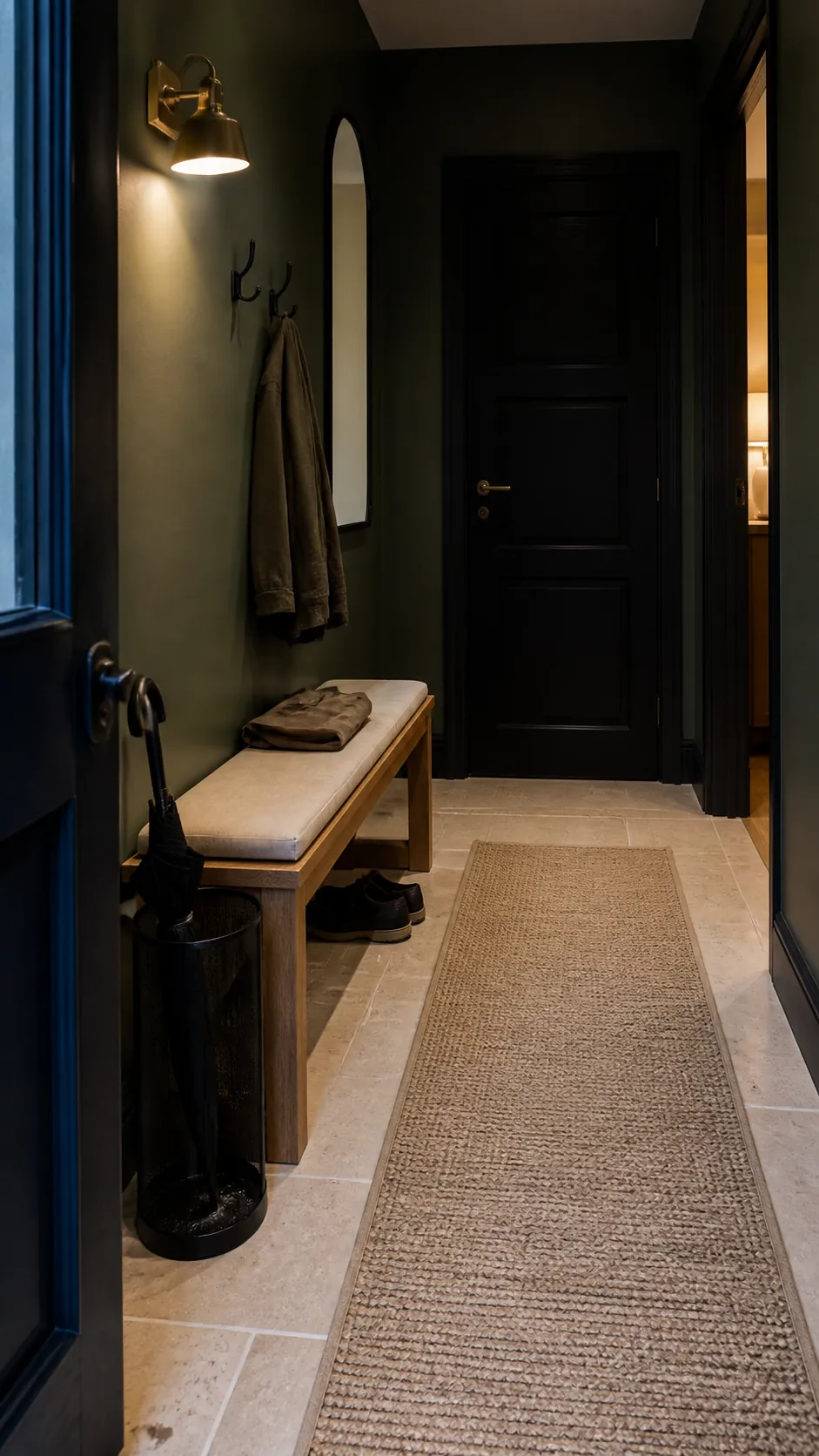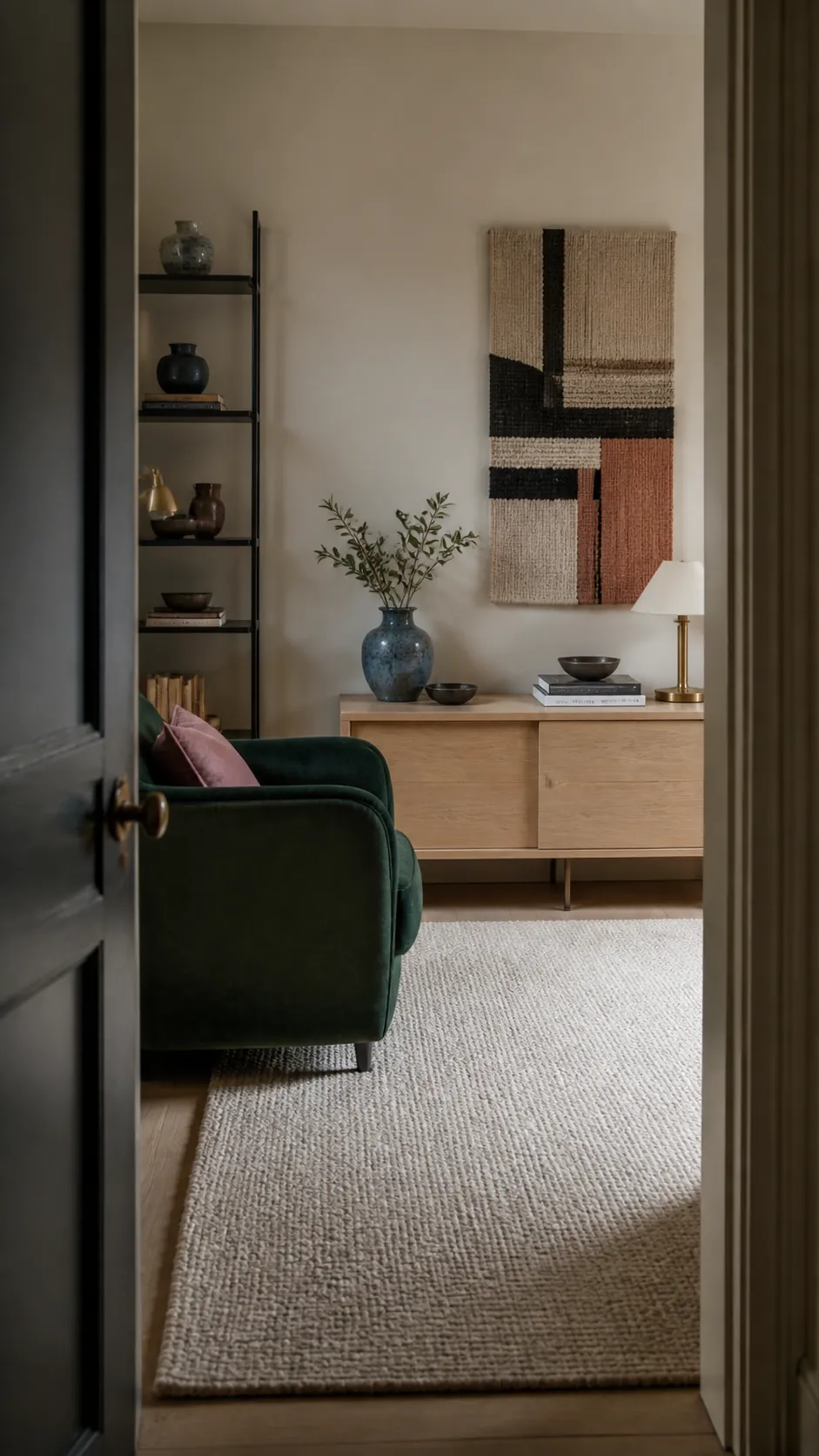
Dark green and black already create a strong, low-value foundation, so the next color should do a specific job. It can add light, warmth, softness, or a brighter point of focus. The most reliable additions are cream, natural oak or tan, aged brass, clay pink, muted blue, and pale stone. The pairing usually fails from too much visual weight, not because green and black clash.
Cream Creates the Necessary Light Plane
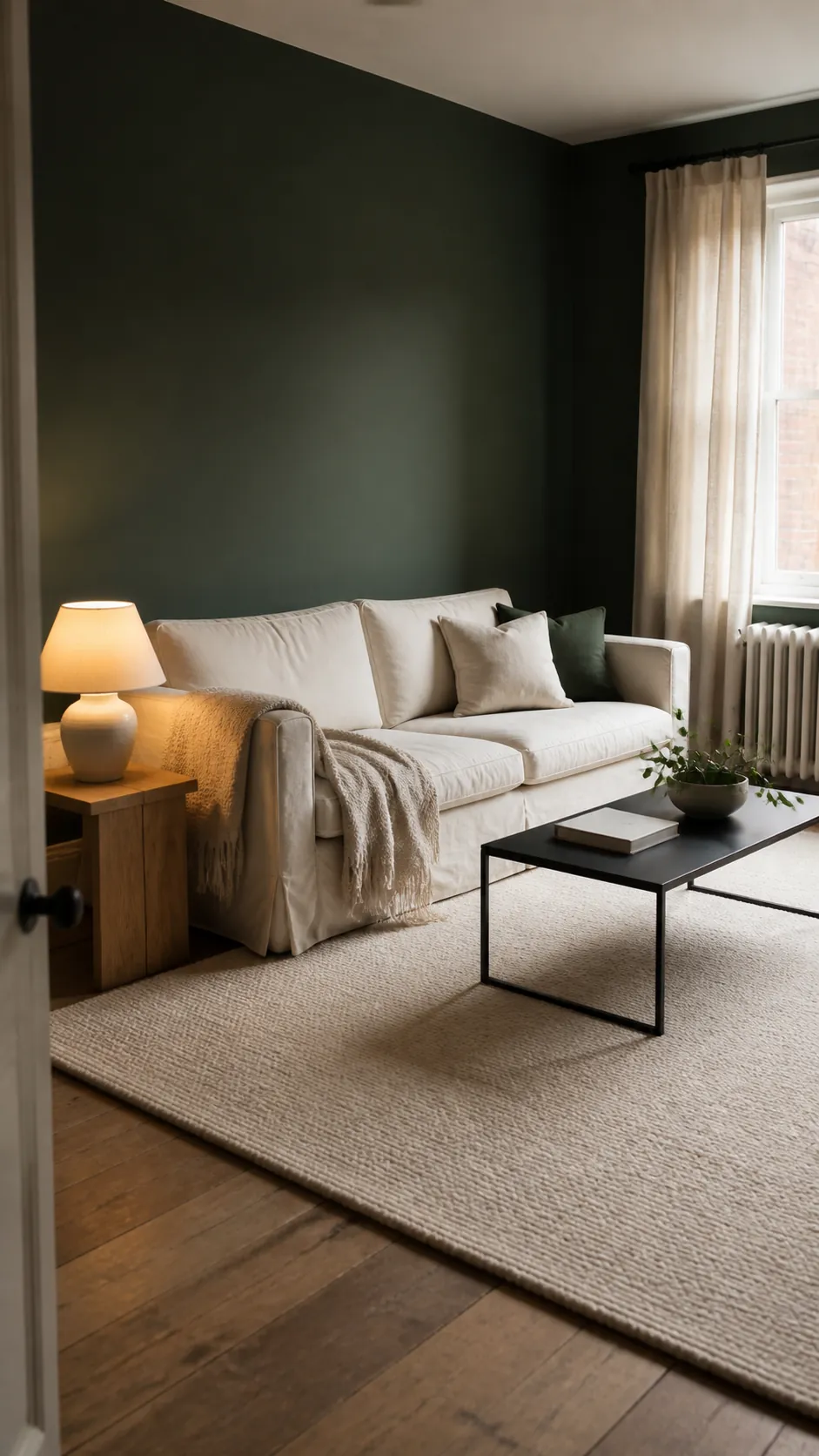
In a dark green and black living room, cream should usually cover at least one substantial surface. A pale sofa, broad rug, curtains, or ceiling gives the eye a clear resting place and keeps black furniture distinct from green walls. Stark white can feel graphic; cream produces softer contrast.
Repeat black through narrow lines rather than another large block: a curtain rod, table legs, or thin frame. This lets the green remain visibly green after sunset. If every major surface is dark, even expensive materials can collapse into one indistinct mass.
Oak and Tan Keep the Palette From Feeling Severe
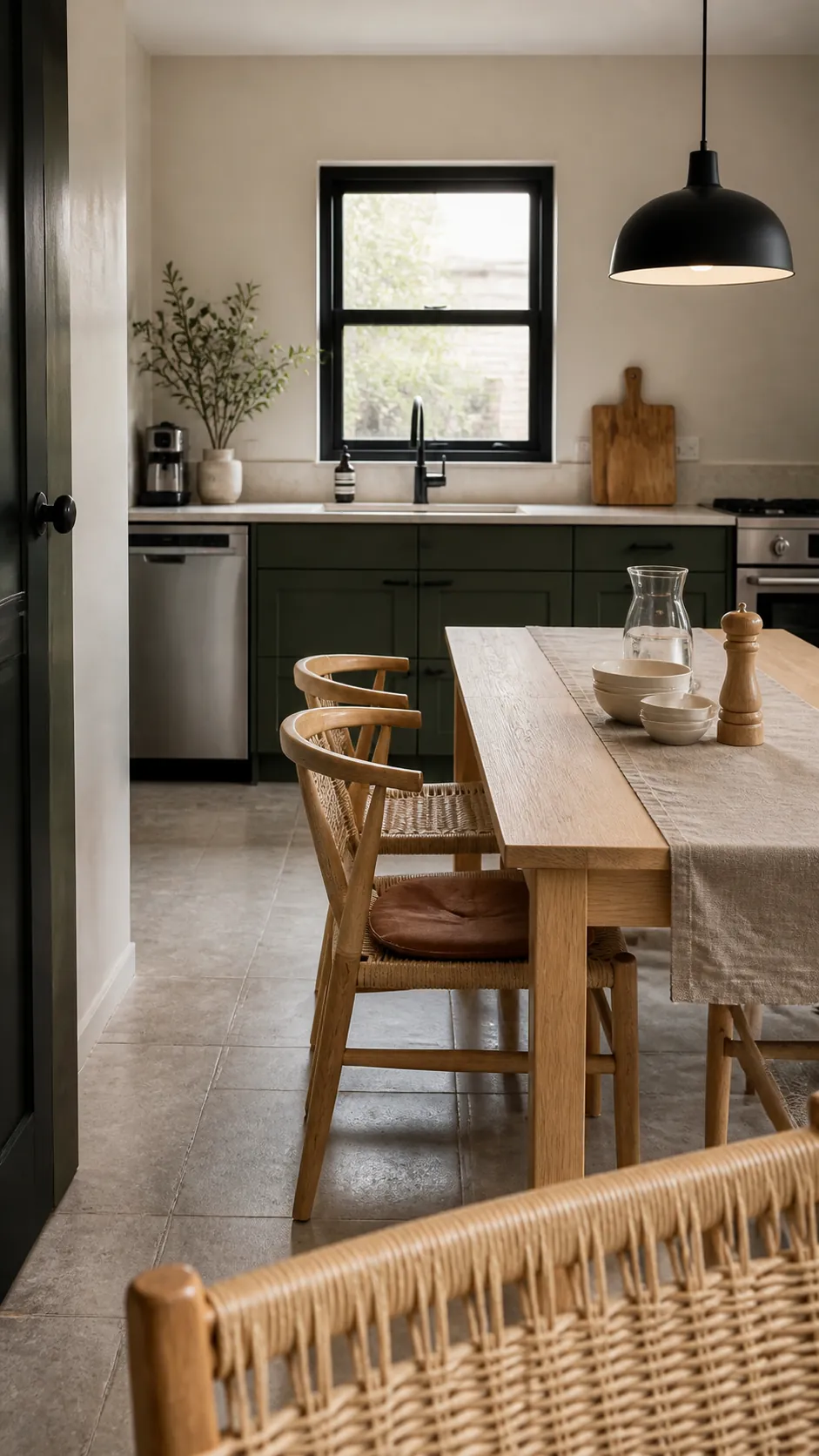
Natural oak, woven fiber, and tan leather interrupt the hard contrast of black trim with green walls. Grain and variation matter as much as hue: they introduce middle values between cream and black. Pale or medium oak is easier than espresso wood when the room has limited daylight.
Use the warm material where hands and light meet it—a table, chair arm, shelf, or cabinet front. Black can remain on legs, hardware, and window frames. The result feels modern without asking every object to be sleek, flat, and dark.
Aged Brass Adds Light Without Another Large Color
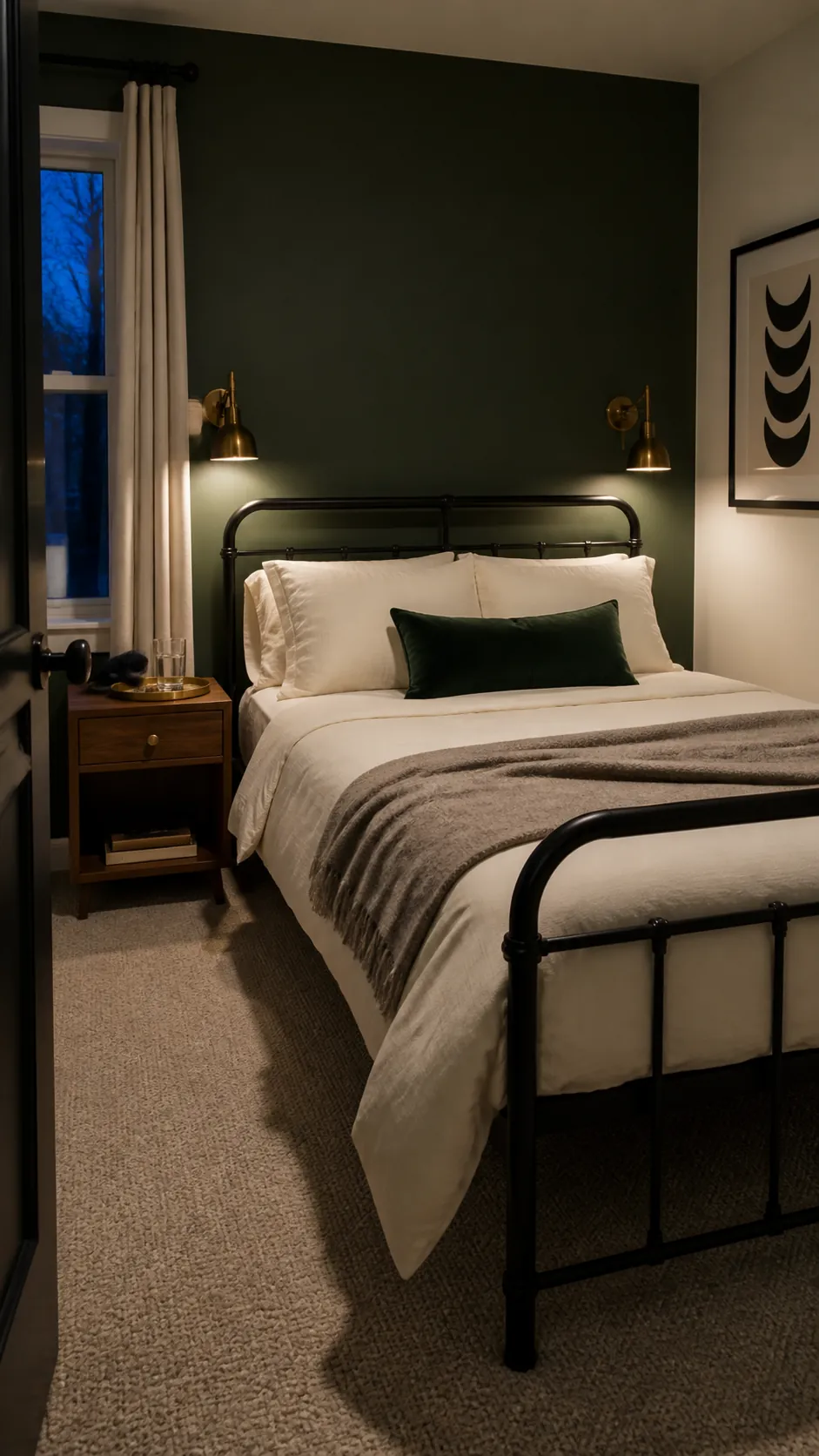
Dark green with brass accents is effective because metal reflects existing light in small flashes. Aged or brushed brass is quieter than polished yellow gold and sits comfortably beside matte black. Use it on functional details such as lamps, pulls, and a single tray.
Two or three separated touches look intentional; a room full of gold-tone objects looks themed. Keep black and brass finishes consistent within the same sight line. In a dark green black bedroom, for example, black bed rails and brass reading lights need no extra metallic furniture.
Clay Pink or Coral Softens the Mood
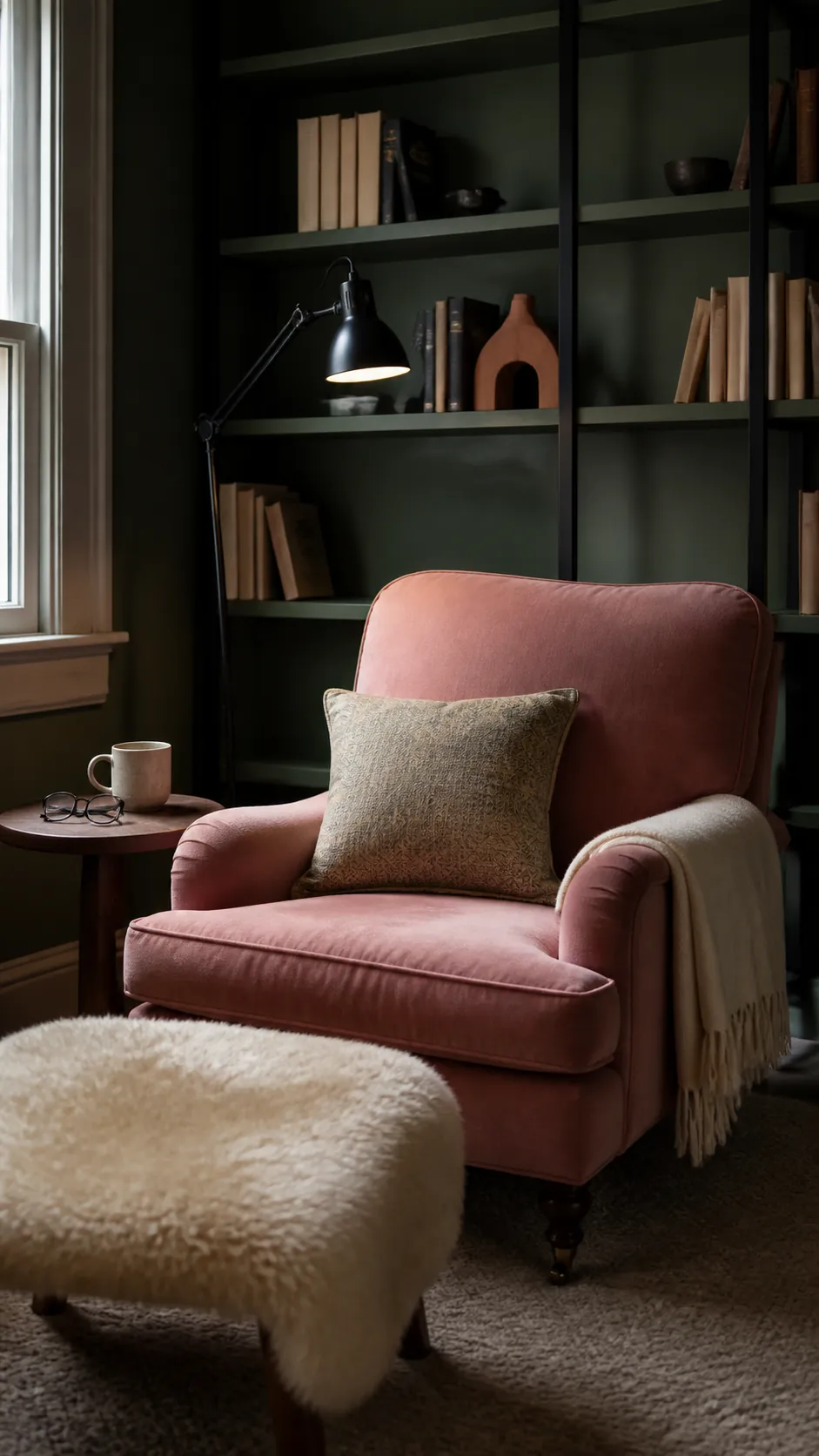
A warm pink introduces the softness that modern black and green decor can lack. Dusty coral, clay pink, and muted salmon offer more depth than pastel blush and less visual heat than true red. They work best in tactile fabric rather than glossy painted accessories.
Choose one medium-size moment, such as a chair or quilt, then connect it to the room with a tiny repeat in a pattern. Cream and walnut prevent the accent from reading as a third unrelated statement. Avoid bright red unless you deliberately want holiday-level contrast.
Muted Blue Adds Depth Without More Warmth
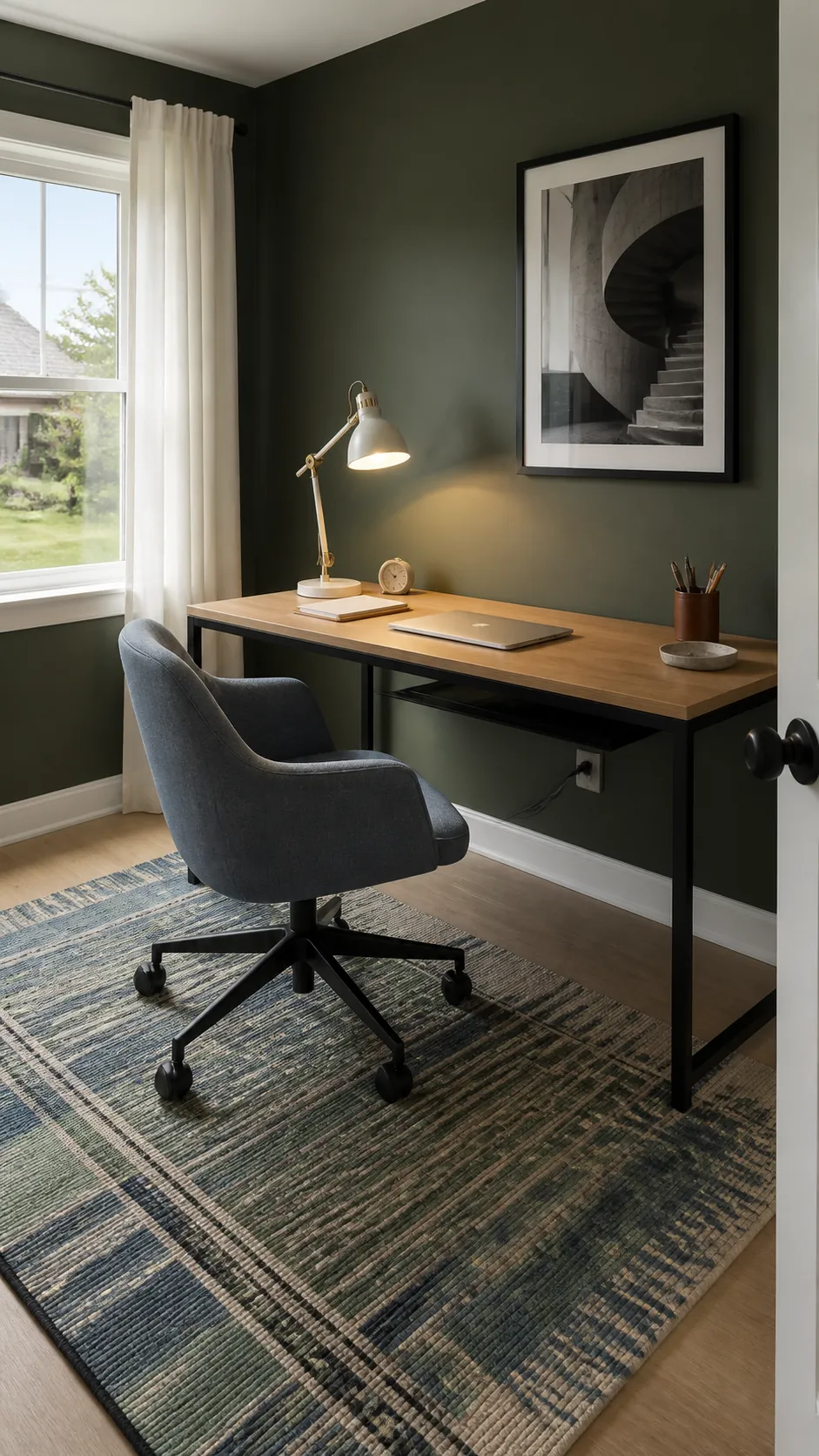
Slate blue, faded denim, or smoky teal can extend the cool side of a dark green and black palette. This works well in a bright office or bathroom where cream already provides light. Vary the values so blue does not become another near-black surface.
A rug containing green, blue, cream, and a fine black line is an easy bridge. Natural wood or cognac leather should appear somewhere nearby to keep the result from becoming cold. The blue can be quieter than the green and still make the room feel more layered.
Pale Stone and Layered Light Make the Scheme Livable
Pale limestone, putty, or mushroom adds a quiet middle ground where cream feels too bright. These colors are especially useful on floors, counters, and large rugs because they reflect light without turning the palette high contrast. Their slight warmth also separates matte black from deep green.
Finish by testing the room at its darkest hour. Add wall, table, or task lighting until the green retains color and the black keeps visible edges. If the two still merge, replace one broad dark surface with pale stone or cream. A moody room should feel intentional, not simply underlit.