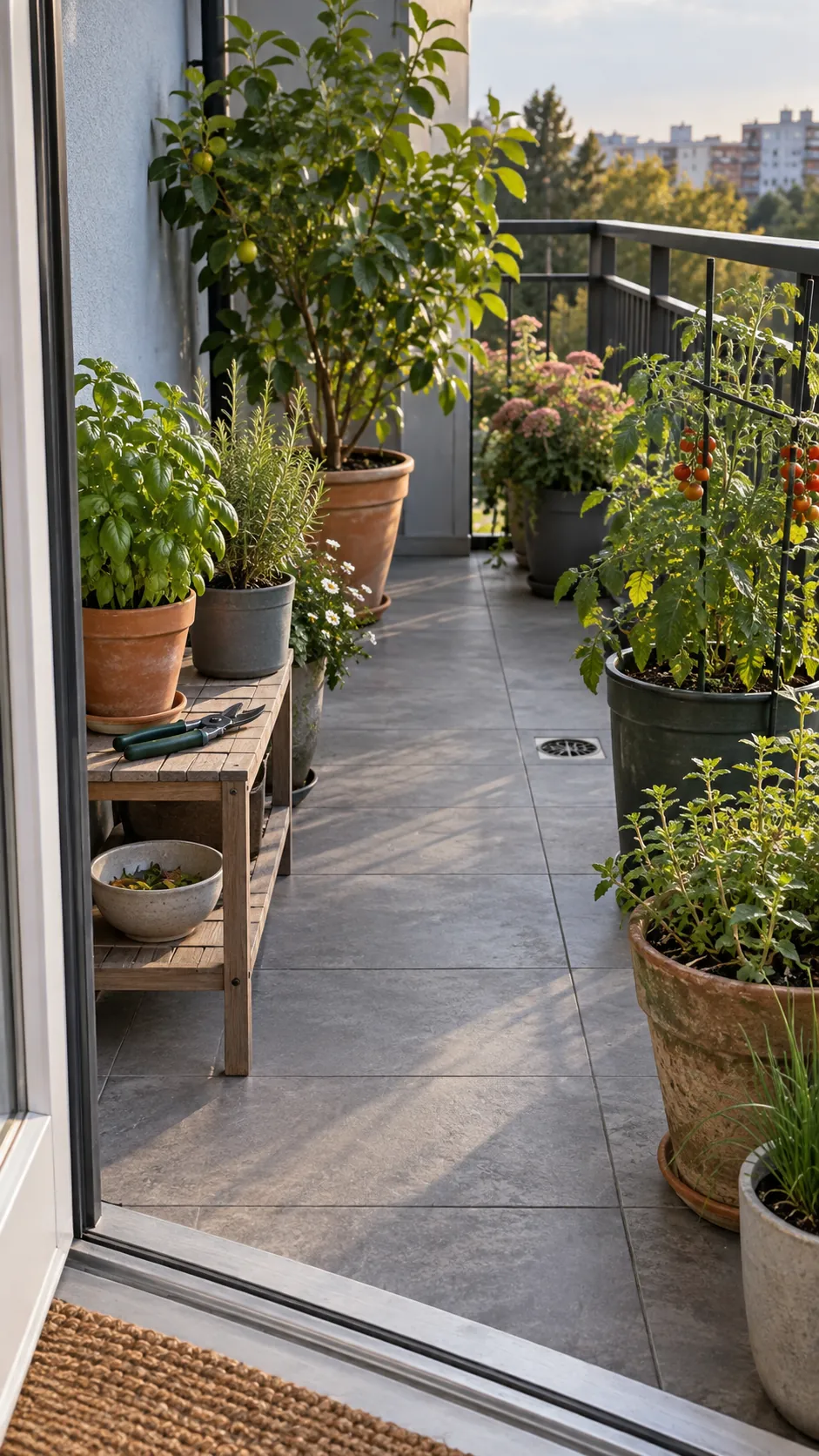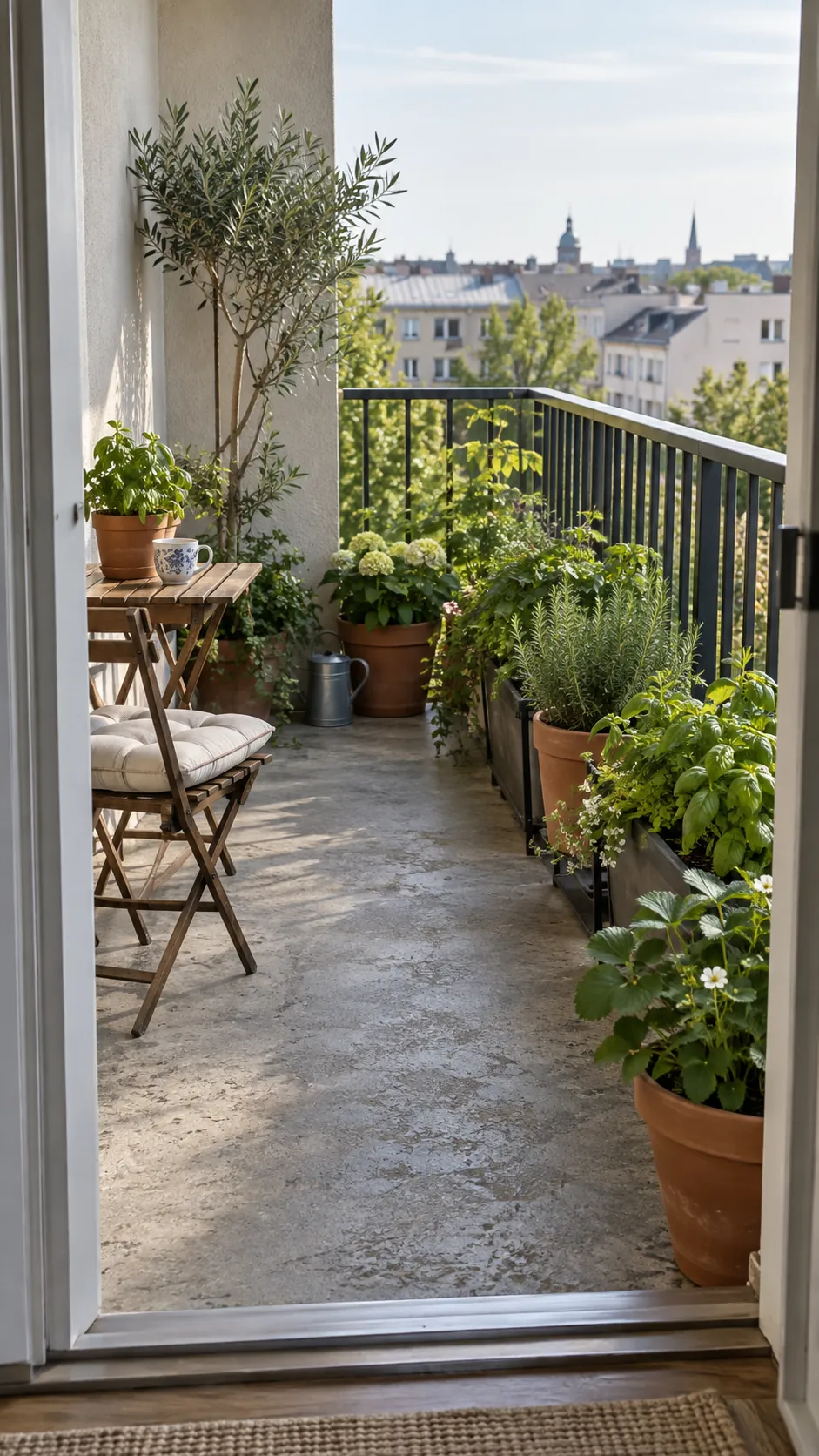
Balcony plants often look tidy on the day they are arranged, then become difficult to water, reach, or move. The useful test is whether you can care for every pot without leaning over a railing or carrying runoff through the apartment. Start with the light and the walking route, then choose a few positions that make daily care easy.
Before adding large containers or shelves, check your building rules and the balcony’s permitted loads. Wet potting mix and mature plants weigh more than empty pots. Leave the door, drain, and any safety feature accessible, and keep every container securely inside the balcony boundary.
Map direct sun before grouping plants
Watch the balcony through a normal day and note which spots receive direct sunlight, which stay bright but shaded, and which are sheltered by the wall. Light can change with the season and with neighboring buildings. Match each plant to the exposure recommended for that plant, rather than assuming the whole balcony has the same conditions.
Put plants with similar light needs together so one watering and care routine serves a zone. Keep a lower plant in front of a taller one only when it will still receive the light it needs. If an herb struggles in deep shade, moving it to a brighter spot is more useful than adding more pots around it.
Keep a reachable path through the pots
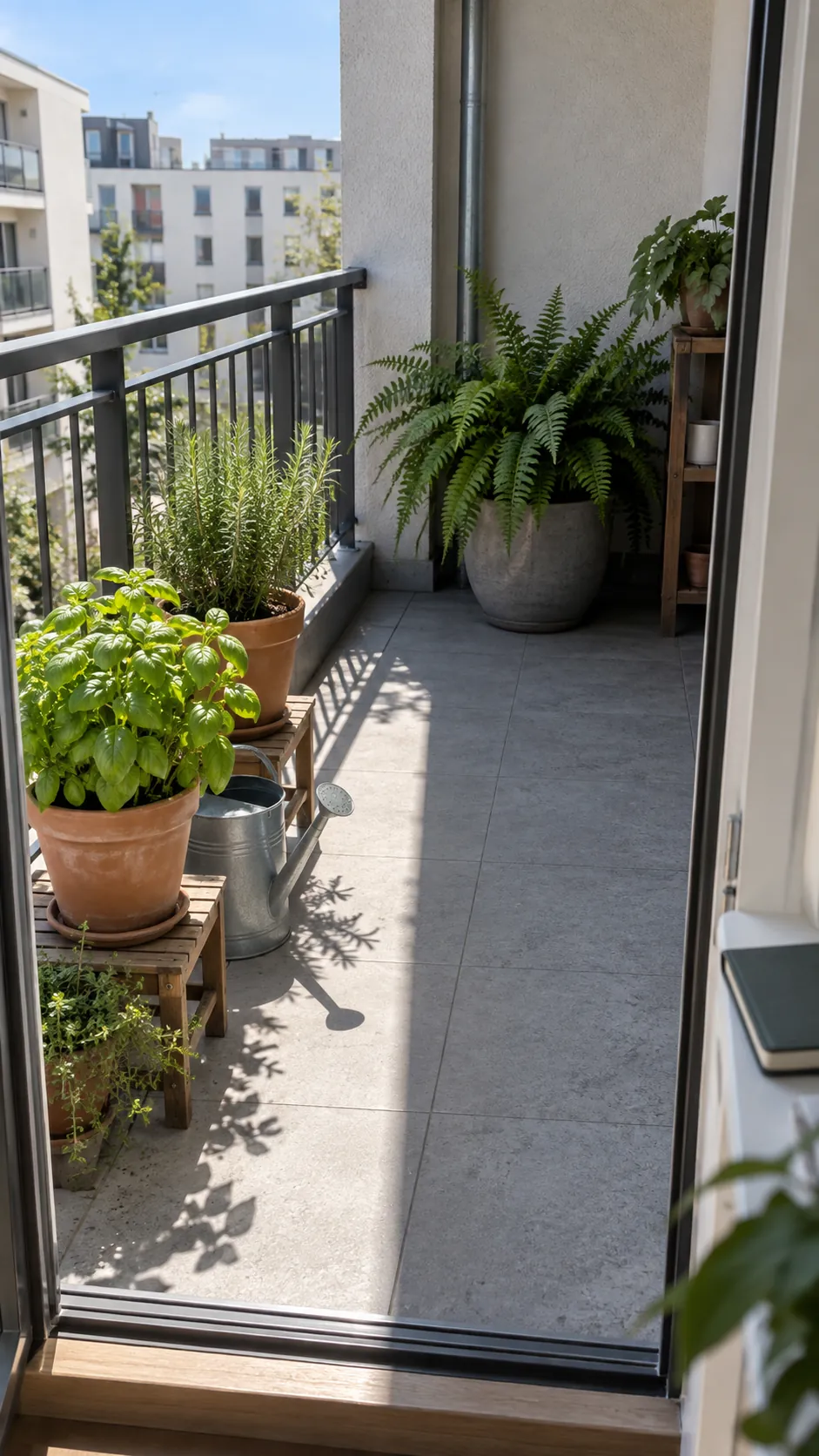
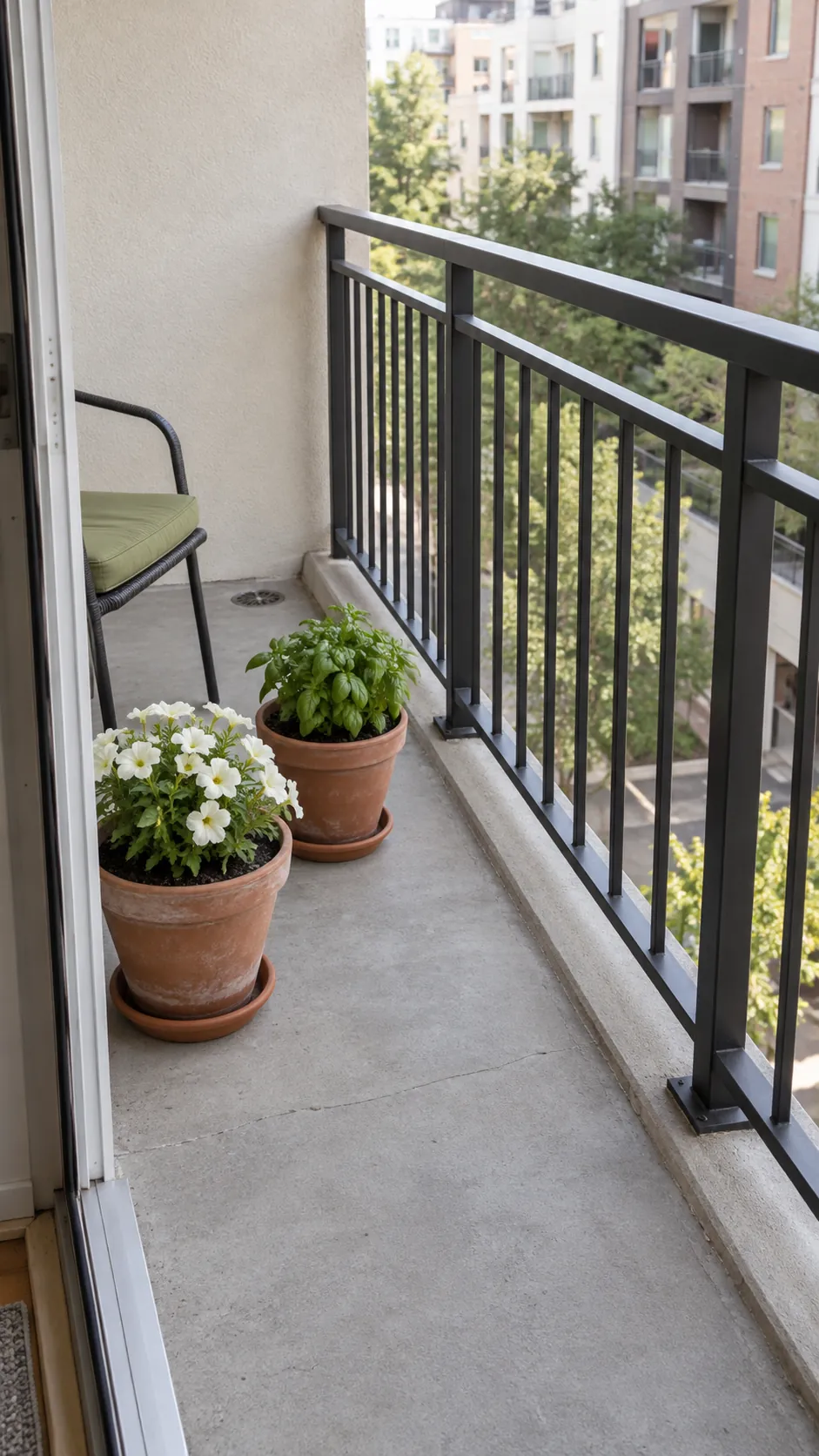
Draw a simple balcony plant arrangement around the route from the door to the farthest plant. Imagine holding a watering can and needing to inspect a leaf at the back. If you must step around a pot or lean across a chair, reduce the number of containers or shift them along the edges.
Place frequently harvested herbs near the door and larger plants farther along a solid wall if the light suits them. Leave room to lift a saucer, sweep fallen leaves, and clear the drain. Open floor space is part of the garden because it allows the plants you keep to receive actual care.
Use vertical space with stable supports
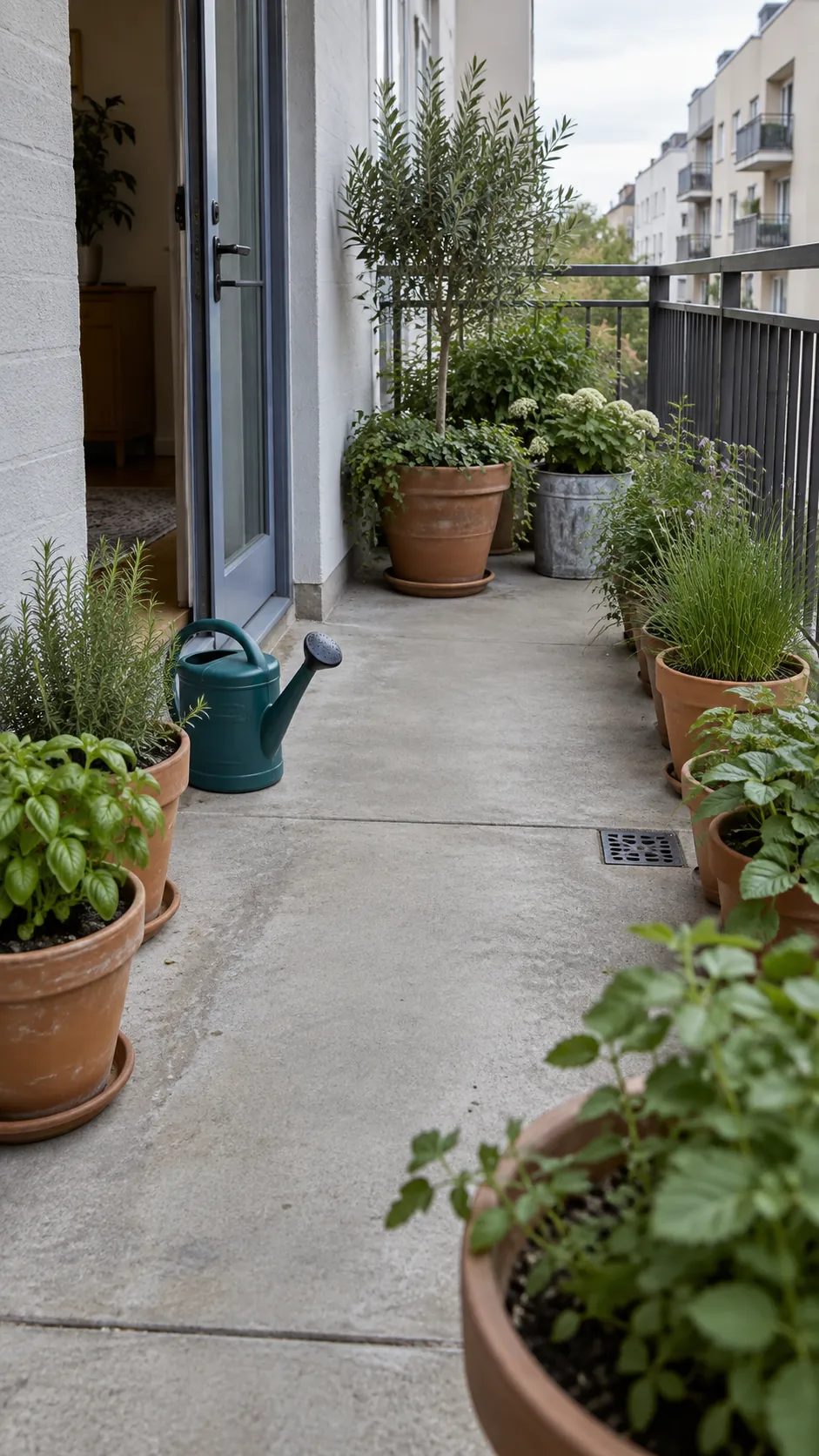
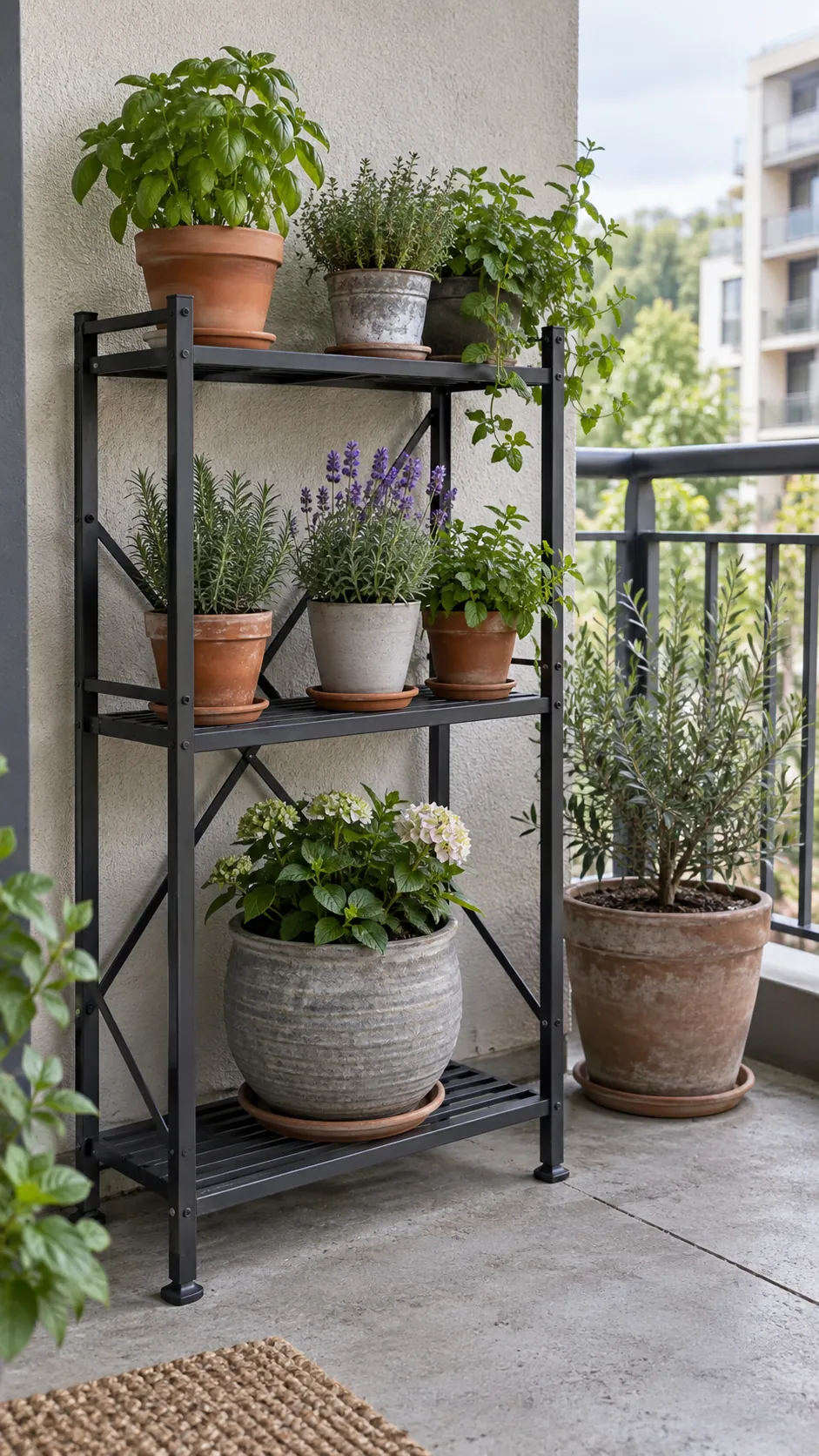
A tiered plant stand or apartment garden shelves can separate small pots by height without covering the whole floor. Put heavier pots on the lowest level and keep the stand on a level surface. Check the product’s load rating with wet soil in mind and secure it as required for wind exposure.
Wall planters can be useful where fixing is permitted, but they are not automatically safer than a floor stand. Confirm the wall, hardware, and lease conditions before installation. Leave enough space between shelves for foliage to grow and for your hand to reach the soil, or the vertical garden will become difficult to maintain.
Treat railing planters as a special case
Railing planter boxes can free floor area, but only use them when the building allows them and the railing and fixing system are suited to the load. A full, wet planter needs a secure attachment that cannot tip or fall outside. Never balance an ordinary pot on a rail or rely on a loose hook.
Keep foliage inside the boundary and consider where excess water will go. Plants should not drip onto a neighbor, obscure the view needed for safety, or make the rail hard to inspect. When rules or load details are unclear, a low floor pot set back from the edge is the simpler choice.
Set up a small watering and potting station
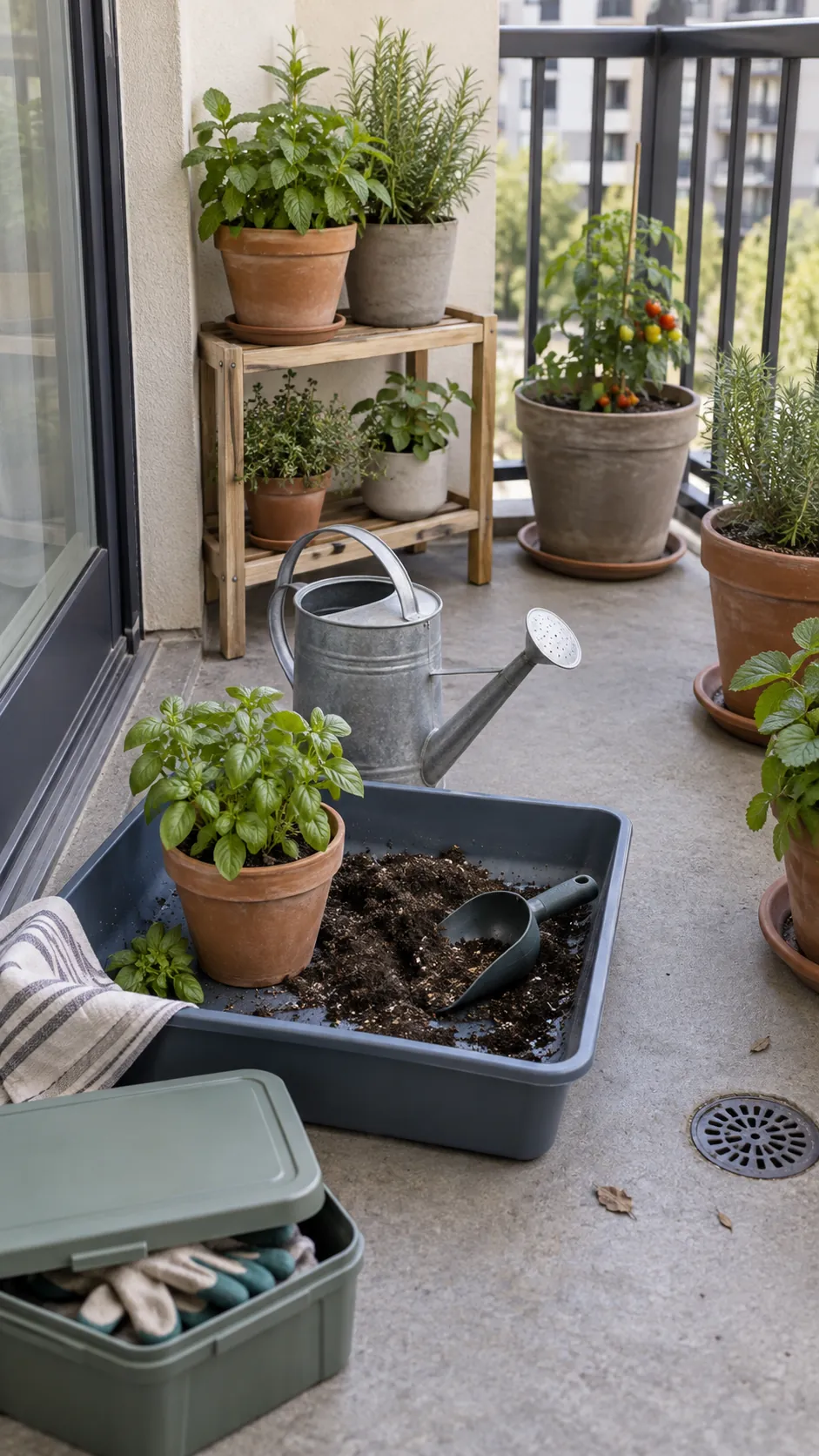
Keep a modest watering can near the door and group plants that need similar checks. Use saucers where appropriate, empty them when needed, and avoid sending water through balcony slats or onto another home. Make sure the floor drain stays clear, especially after repotting or a windy day.
For messy potting work, use a washable tray on a stable surface and bring loose soil back inside when finished. Store tools in a small covered container rather than leaving them across the floor. A consistent place for water and supplies makes a small balcony herb garden easier to care for without creating a mess below.
Edit the arrangement as plants grow
New plants may fit neatly in spring but crowd the route by midsummer. Inspect the layout regularly and trim or move a pot when leaves shade a neighbor or hide the drain. Rotate only plants that tolerate a change of exposure; keep light needs ahead of symmetry.
Start with a small collection that you can water and inspect easily, then add another plant only when a real position is available. A balcony pot organization system succeeds when each container has enough light, stable support, drainage, and a reachable place. The space between pots is what lets the garden stay healthy and usable.