
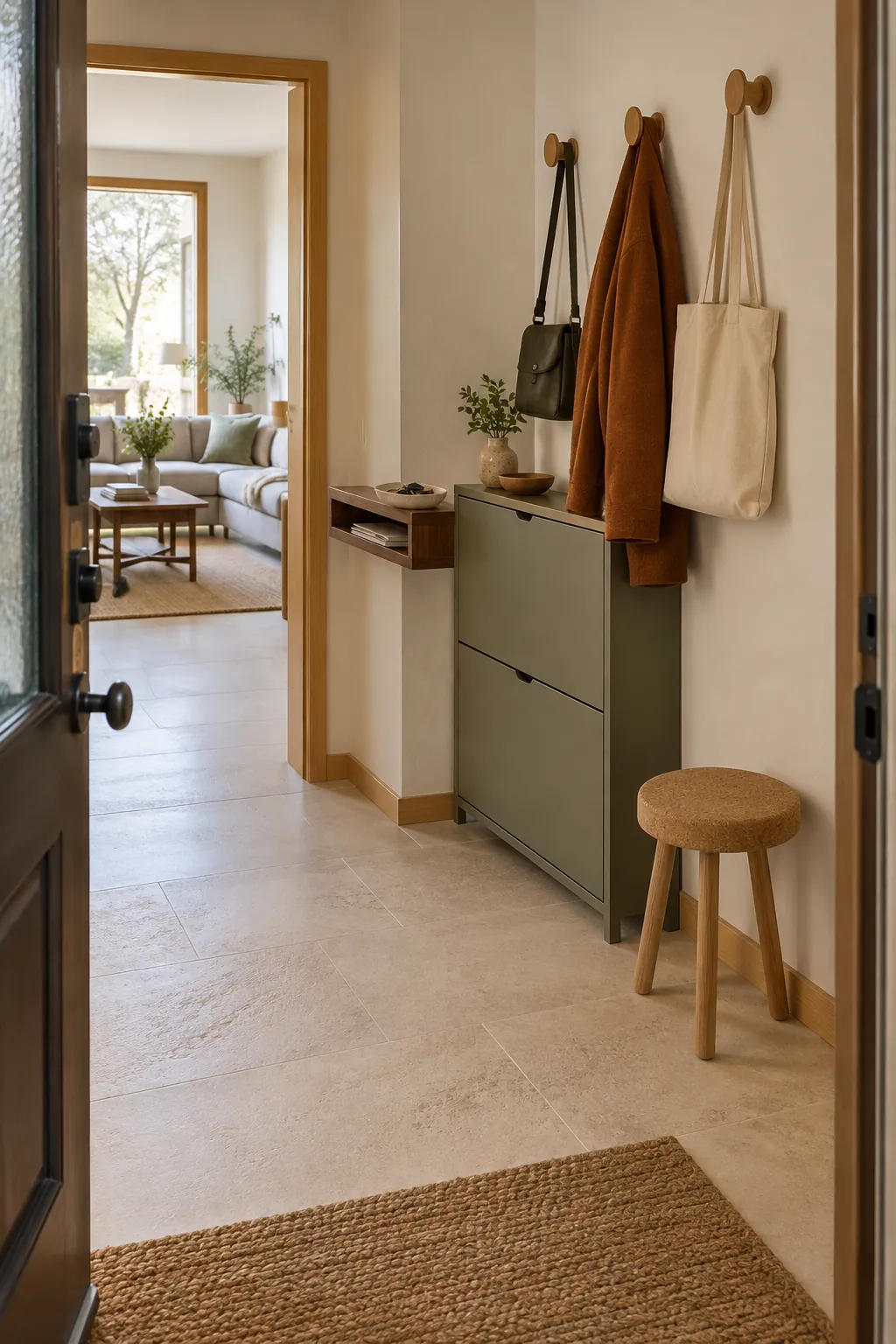
An entrance becomes disorganized when it asks one surface to handle every arrival. Keys, mail, shoes, bags, coats, and packages need different actions, yet they often land in the same pile. The most effective entryway starts with the sequence people follow when they come home.
Watch where each item naturally lands before buying storage. Then place the smallest useful container or fixture at that decision point. This approach creates a working drop zone while preserving enough open space for the door and daily movement.
Map the arrival sequence
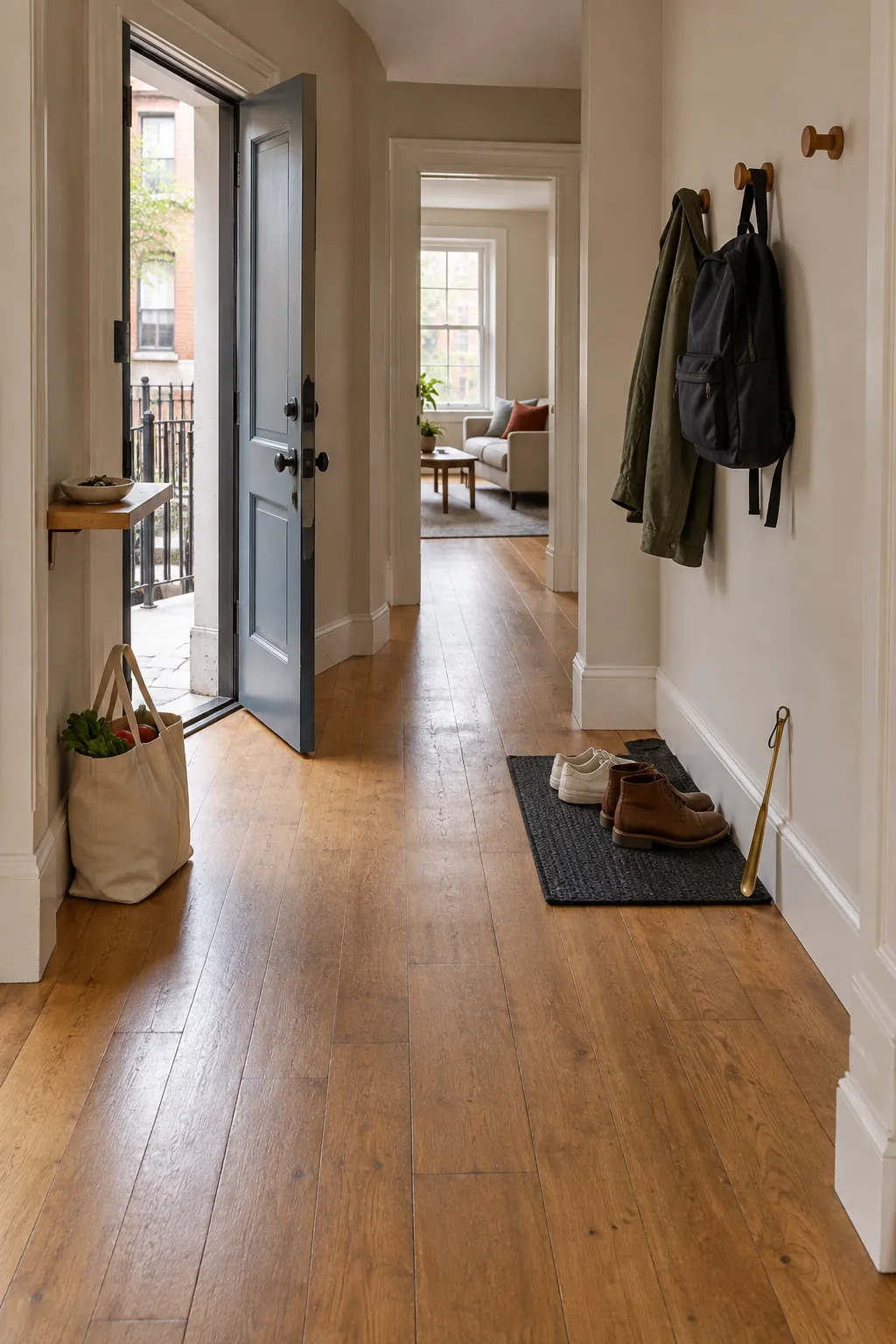
Stand outside the closed door with the things you normally carry. Walk in, open the door fully, and notice where you need to set something down, remove shoes, or hang a coat. Mark those actions in order and keep the route between them clear.
Build one compact drop zone
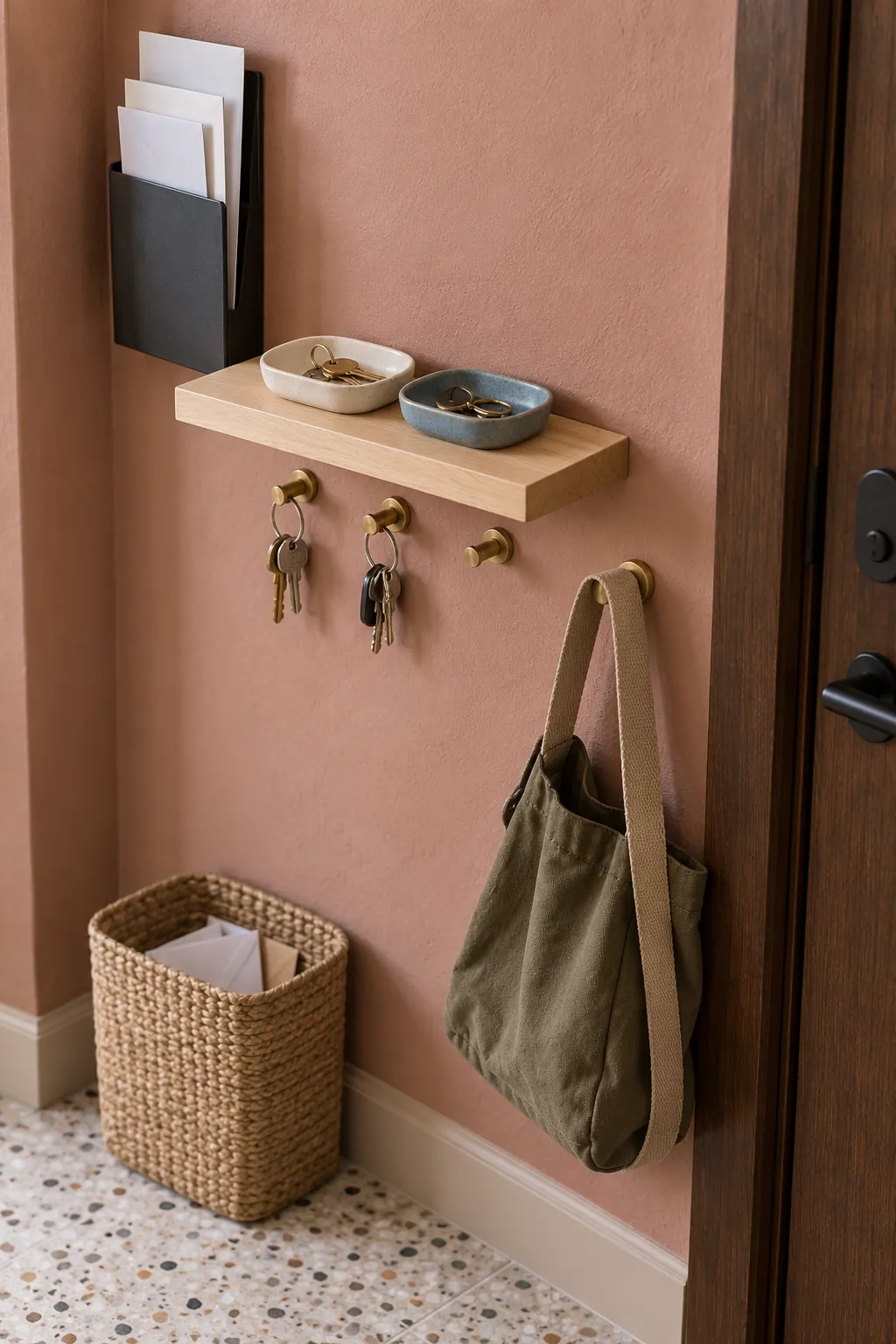
An entryway drop zone should accept the essentials with one easy motion. A shallow ledge can hold a tray for keys, a hook can take a daily bag, and one vertical slot can hold incoming mail. Keep the surface small enough that it cannot become a second storage room.
Place the zone near the latch side of the door if that position does not block the swing. Shared keys need a fixed hook, while personal items can use separate small trays or pegs. Empty the paper slot on a regular day instead of waiting for it to overflow.
Use a narrow console with strict limits
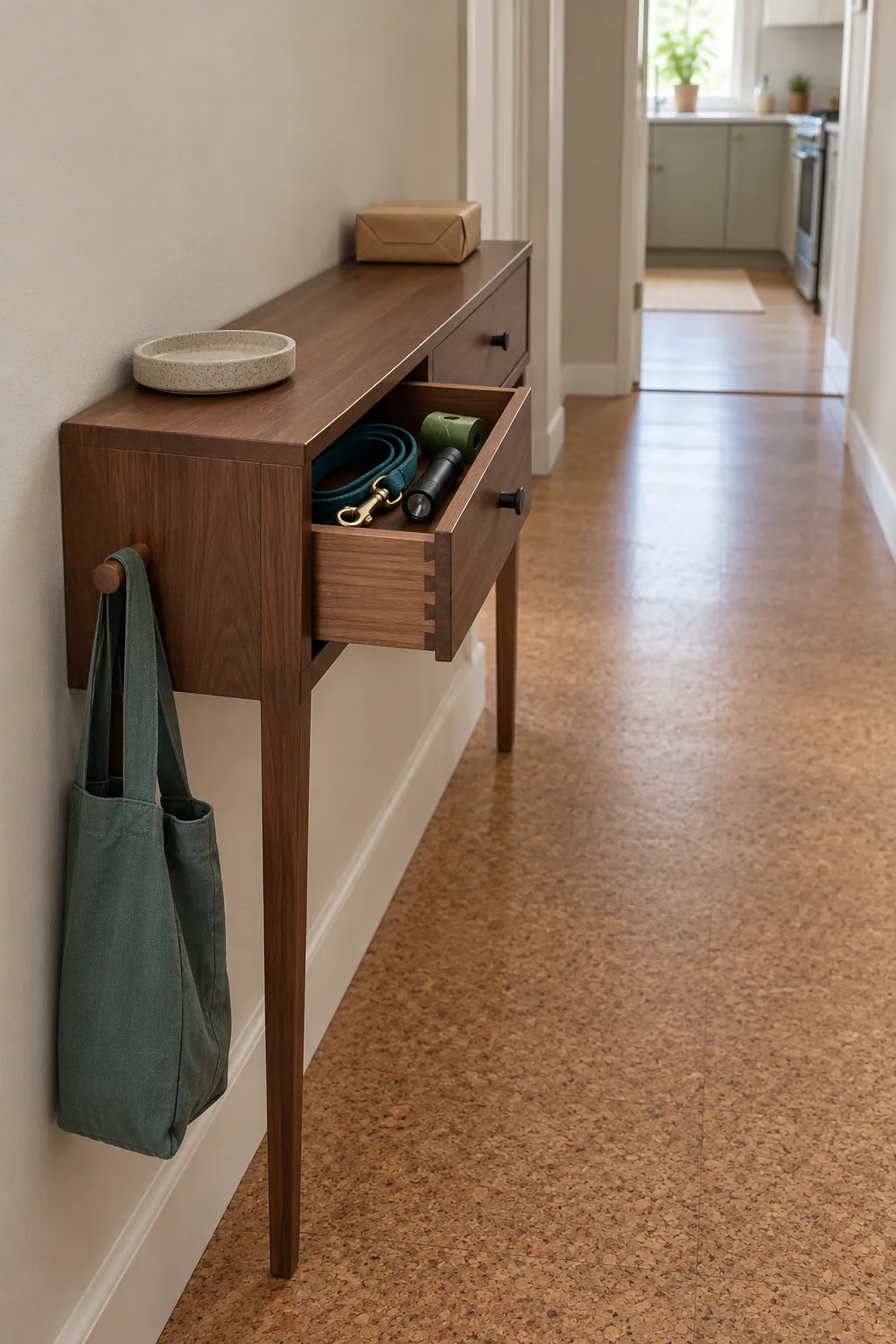
Narrow console storage can be useful when the wall is long but the passage is tight. Choose shallow drawers for small essentials and leave the top mostly open for a package or grocery bag that needs a temporary landing place. Measure the remaining walkway before bringing the piece home.
Assign each drawer a single category, such as pet supplies or spare keys. Avoid mixing long term household storage with daily departure items. When a drawer becomes hard to close, reduce its contents rather than adding another organizer on top.
Contain the active shoe collection
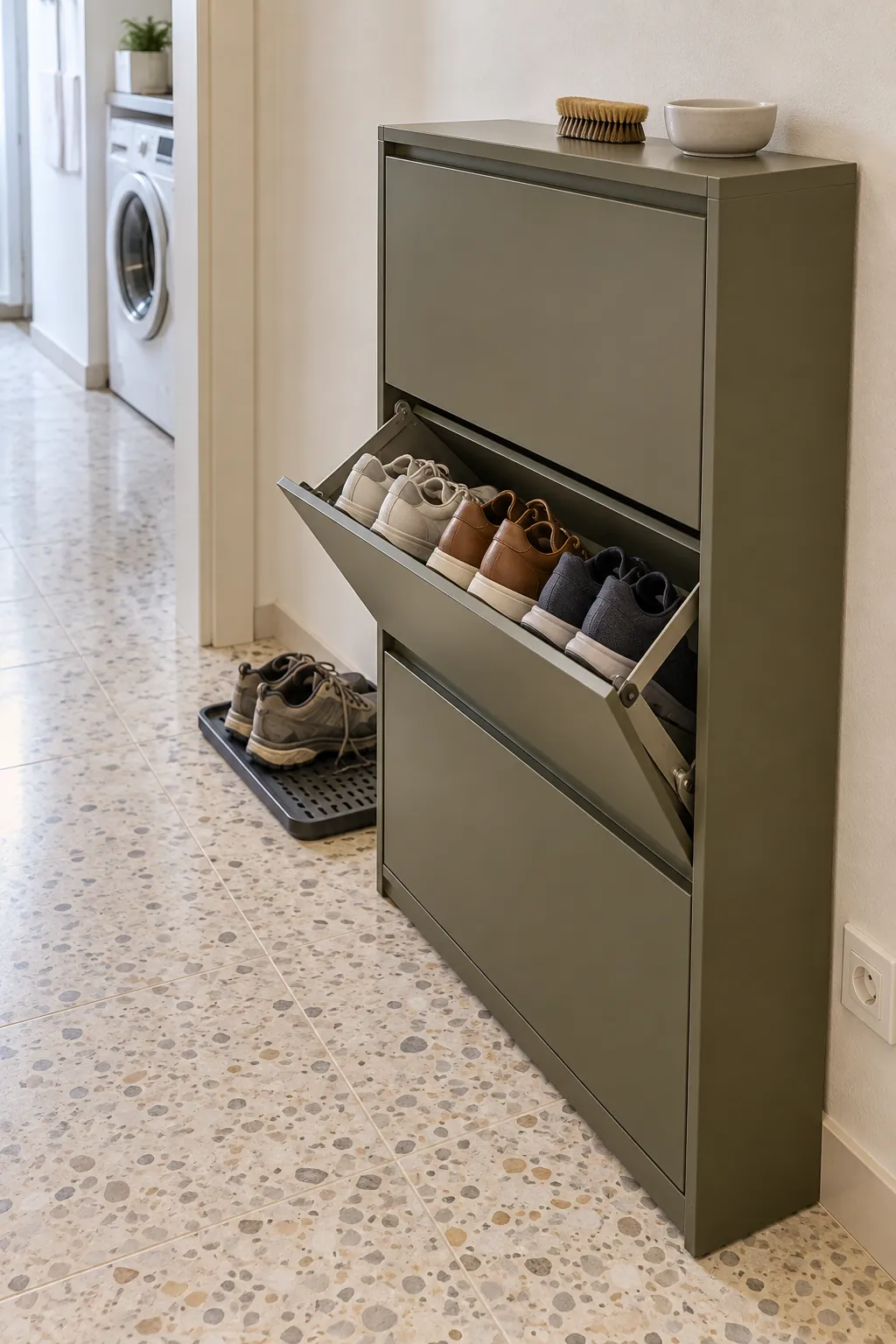
A shoe storage cabinet works best when it holds only the pairs used now. Place damp or muddy footwear on a ventilated tray until it dries, then return it to the cabinet. Store formal and off season pairs in a bedroom closet so the entrance stays within its capacity.
Give each person a reachable place
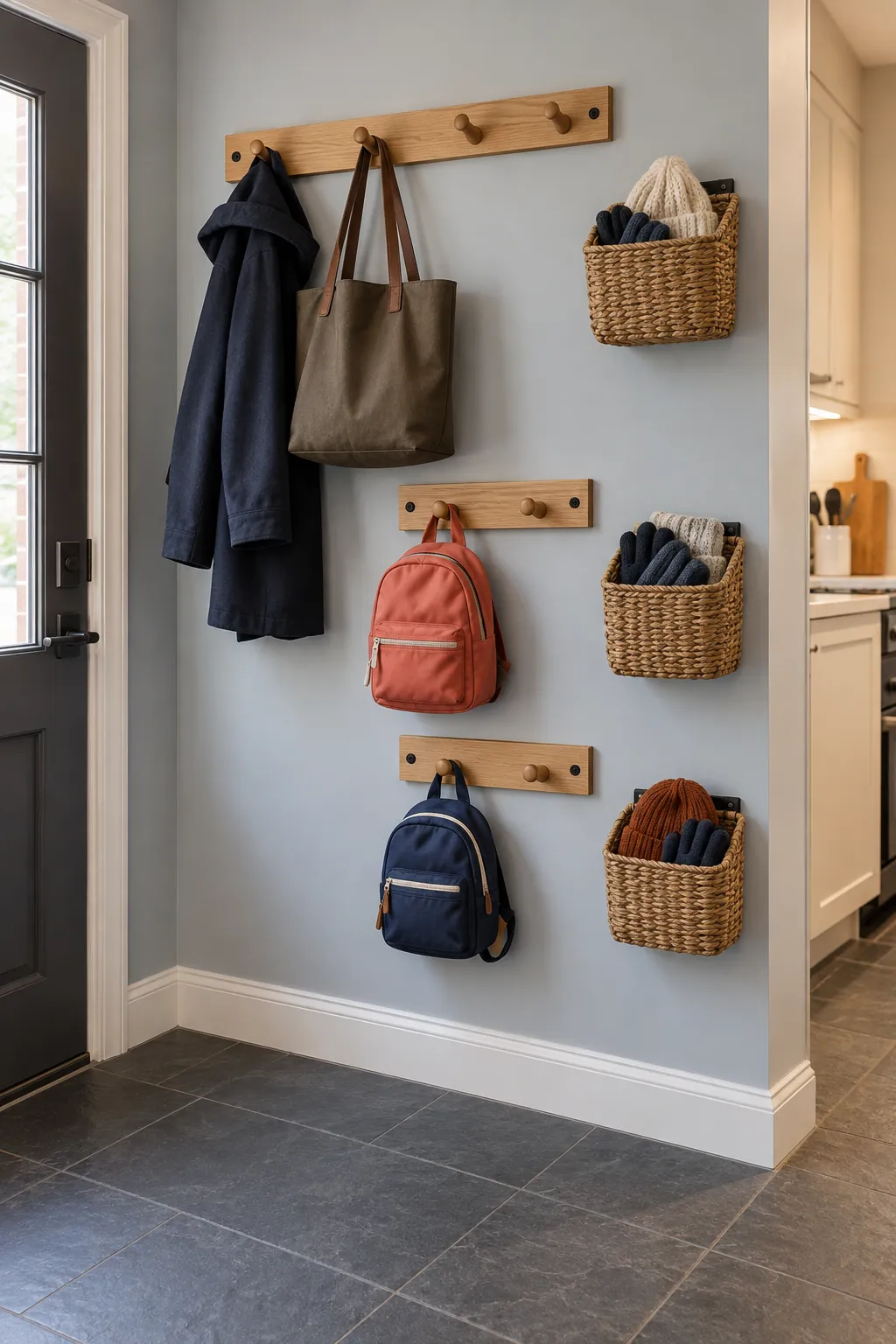
Wall hooks and baskets are easier to maintain when their heights match the users. Put children’s hooks where they can return a backpack without help, and keep adult coats above their shoulder line. Use one small basket per person for gloves or other loose items, with enough empty space to see when a basket is full.
Do not fill every wall with storage. Leave gaps between coats for drying and choose one place for guest items. A clear floor below makes cleaning easier and shows immediately when something has not been returned.
Protect space for sitting and turning
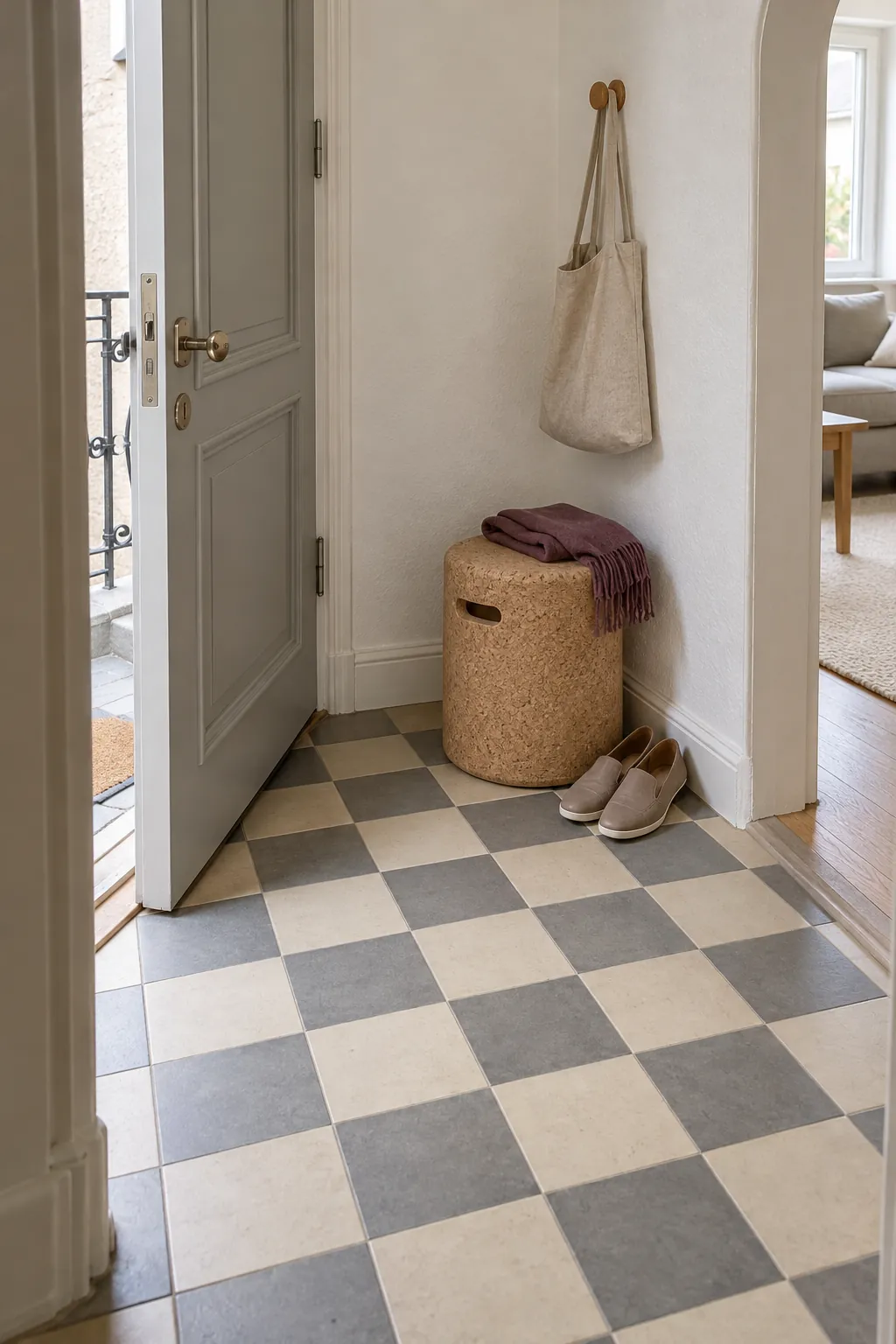
Entryway bench ideas are useful only when the seat supports a real task and leaves enough room to turn. A small stool may work better than a full bench in a tight foyer. Test the space with the door open and a bag in hand before choosing a piece.
Close the loop every evening
Return keys and bags, pair the shoes, recycle unwanted paper, and move packages to the room where they belong. This reset should take only a few minutes because every object already has a destination. If one category repeatedly remains out, adjust its storage location before increasing its capacity.
Small foyer storage works when it shortens decisions rather than hiding more belongings. Keep the arrival sequence visible, give each item one home, and preserve the floor area needed for movement. The entrance will stay organized because the system follows the way the household actually uses it.