A small living room can feel crowded even when it contains only a sofa, a chair, and a table. The problem is often not the amount of furniture. It is the way each piece competes with doorways, windows, walking routes, and the main activity in the room. A useful arrangement starts with movement, then supports conversation, viewing, storage, and comfort in that order.
Measure the room and every fixed obstacle
Draw a simple floor plan before moving anything. Record the wall lengths, door swings, window widths, radiator locations, outlets, and the depth of any fireplace. Measure the furniture too, including the full depth of a reclining seat and the space needed to open a cabinet door.
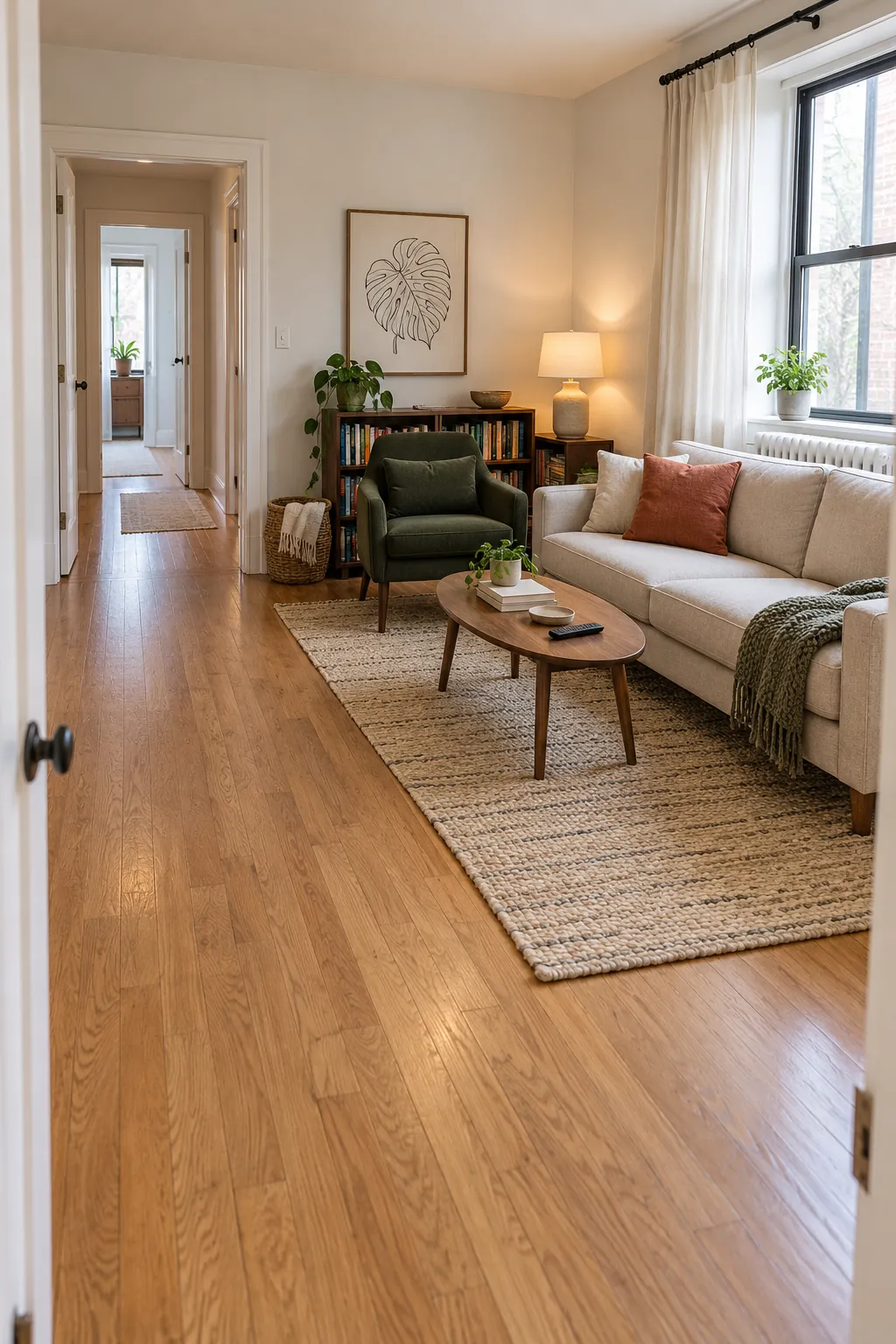
Mark the route from each entrance to the next destination. A main passage should feel direct and should not cut through the middle of a conversation area. If people must turn sideways around a table or step over the edge of a rug, the arrangement needs more open floor space.
Choose one anchor and place it first
The sofa is usually the anchor because it uses the most floor area. Place it where it supports the main purpose of the room without blocking the longest clear route. It may sit against a wall, face a media console, or float a short distance into the room when its back can define another zone.
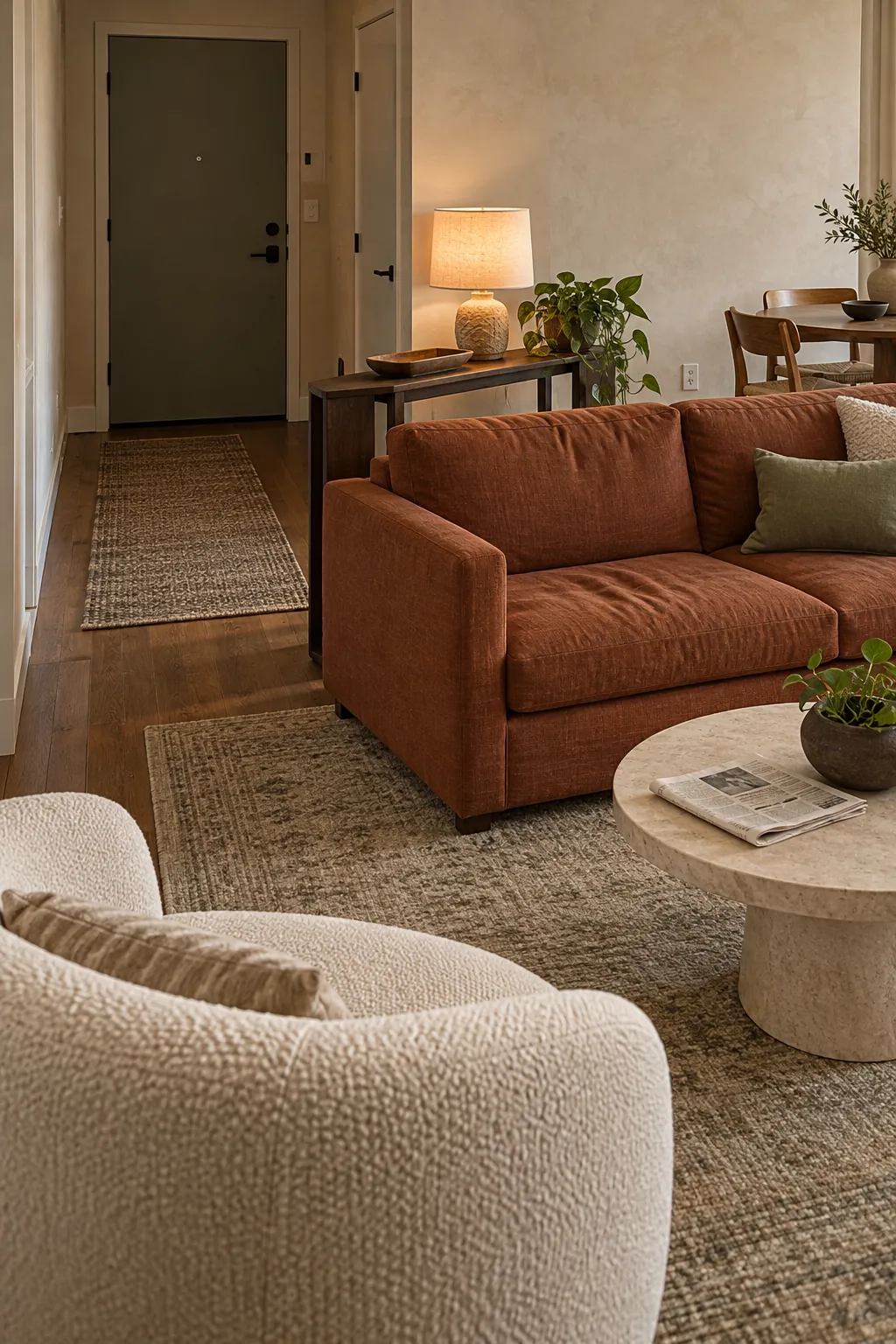
Do not assume every piece must touch a wall. A slightly floated sofa can create a cleaner entry path and a more intimate conversation area. Test the position with painter tape on the floor before lifting heavy furniture, then check the view from every doorway.
Match furniture scale to usable floor area
A long sofa is not always the main problem. Deep arms, a tall back, and a bulky base can make it consume more visual and physical space than its seat count justifies. A compact sofa with narrow arms, visible legs, and a standard seat depth often leaves room for one useful chair instead of forcing several undersized pieces into the plan.
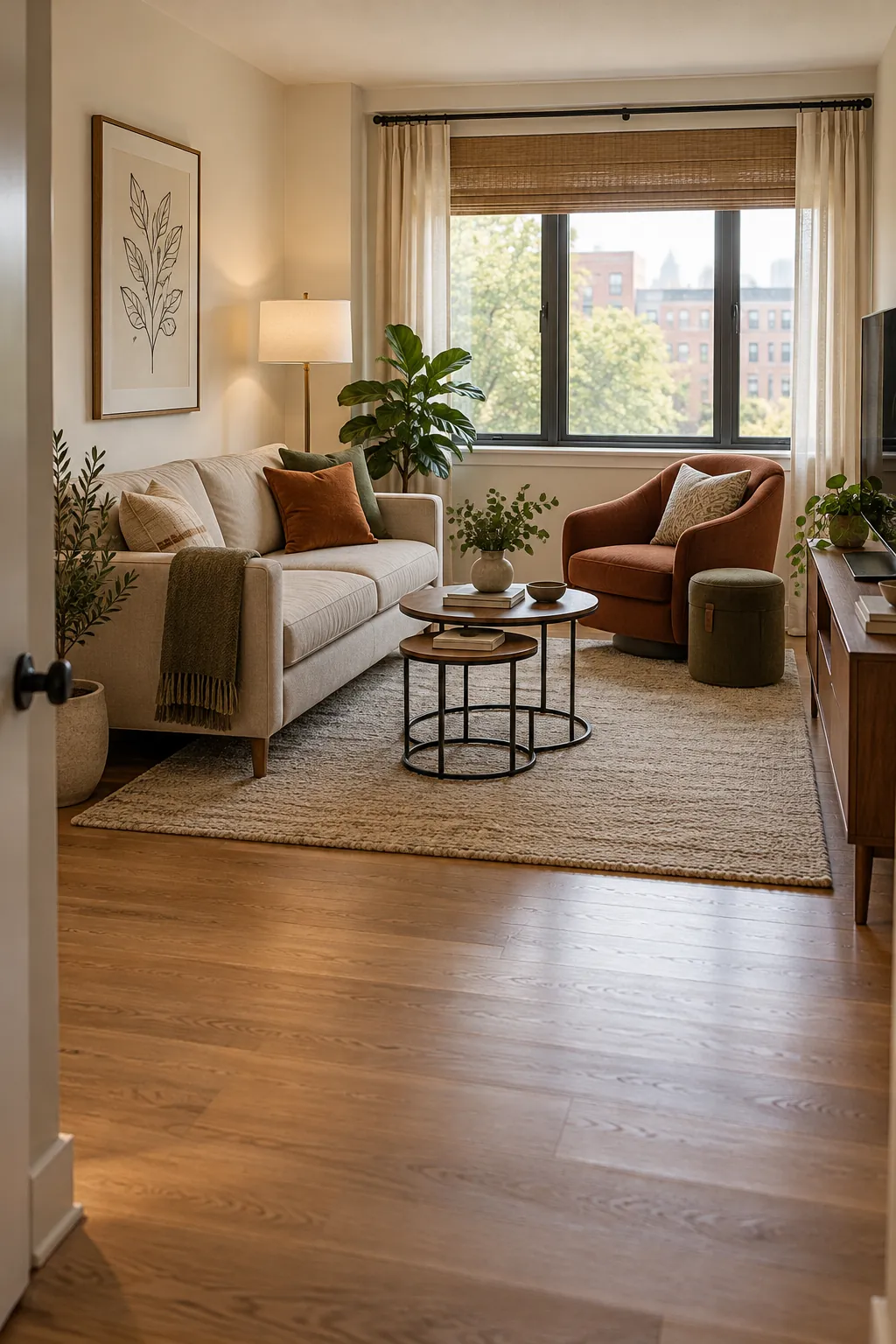
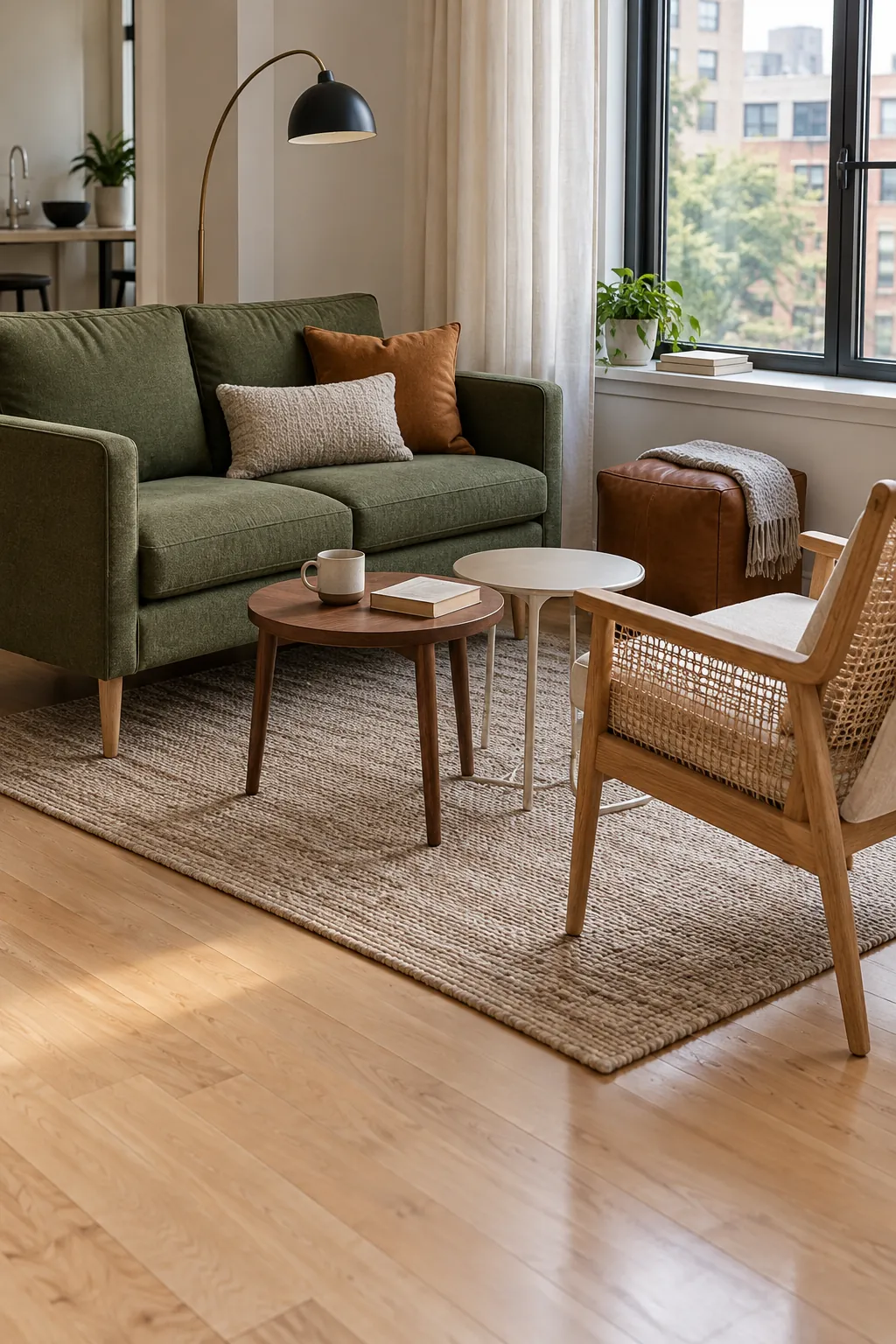
Use the fewest pieces that meet daily needs. One comfortable chair that turns toward guests can work better than two rigid accent chairs. A nesting table layout gives each person a surface when needed, then returns floor space after the visit.
Build a comfortable conversation area
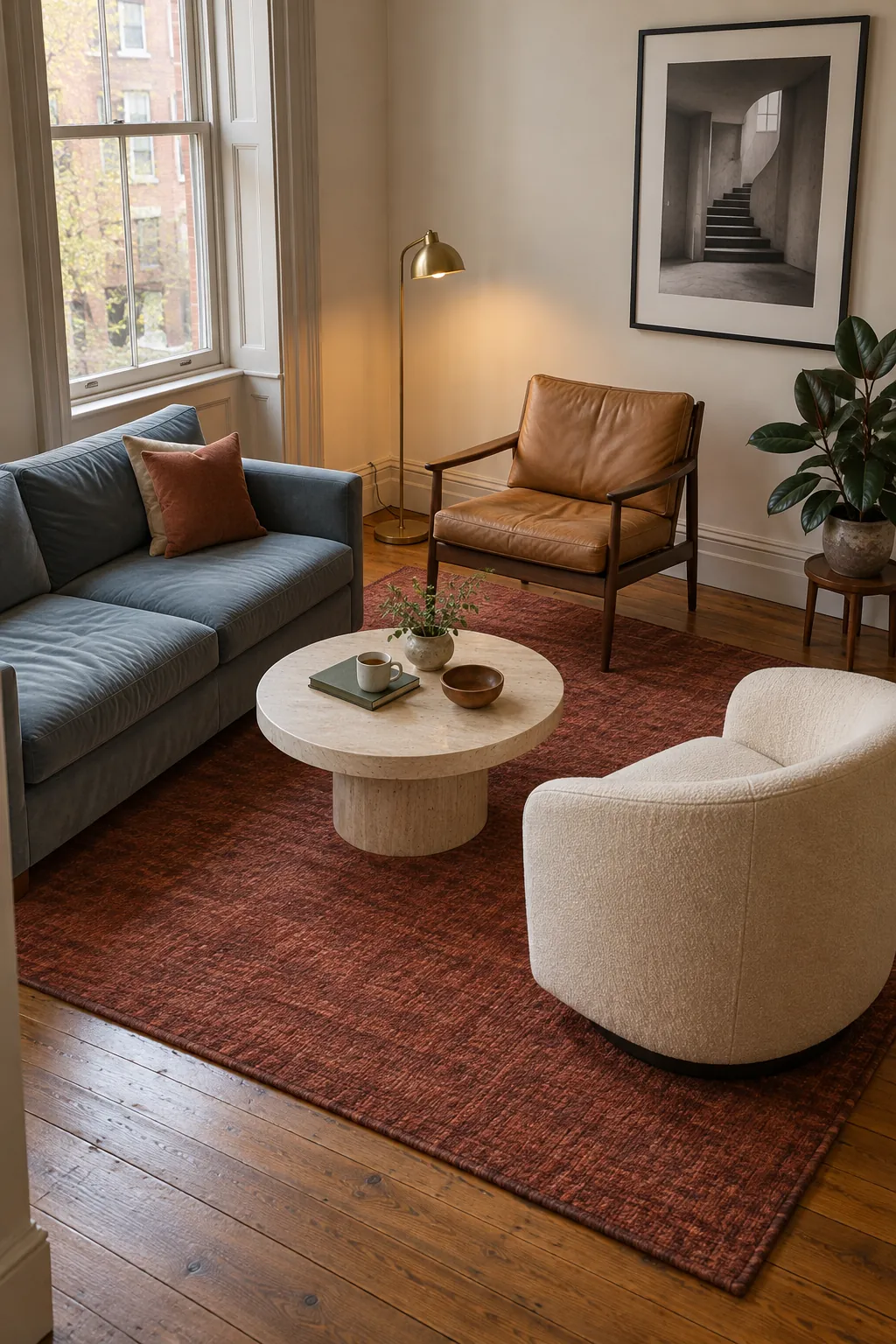
Turn seats toward one another enough that guests can talk without twisting. A chair placed at a right angle to the sofa usually needs less space than one placed directly opposite it. Keep a reachable surface near each seat, but avoid filling every gap with a table.
The rug should connect the seating rather than float alone in the center. At minimum, the front feet of the sofa and main chair should rest on it. This visual connection makes the group read as one zone and prevents the room from looking like unrelated furniture lined around the walls.
Keep the media wall shallow and calm
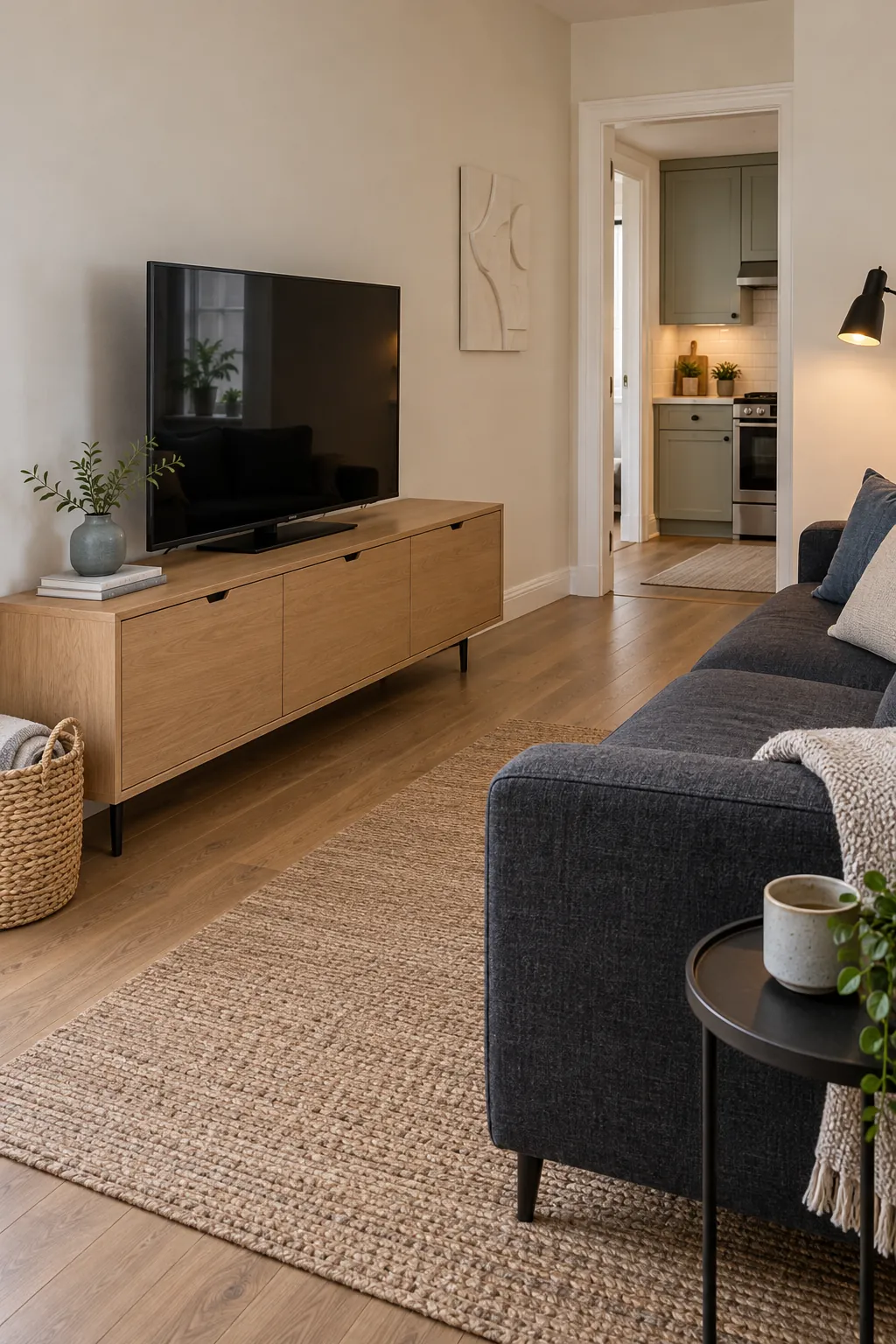
A television can control the whole layout if the media furniture is too deep or too wide. Choose a compact media console that fits the screen and stores only the equipment used in the room. Closed storage reduces visual noise, while a little open space around the screen prevents the wall from feeling packed.
Check viewing comfort from the main seat before final placement. Avoid mounting the screen so high that viewers must lift their chins. If a fireplace, window, or door makes a direct view impossible, a flexible chair and an adjustable screen mount can solve more than forcing the sofa into a poor traffic path.
Create flexible zones without adding clutter
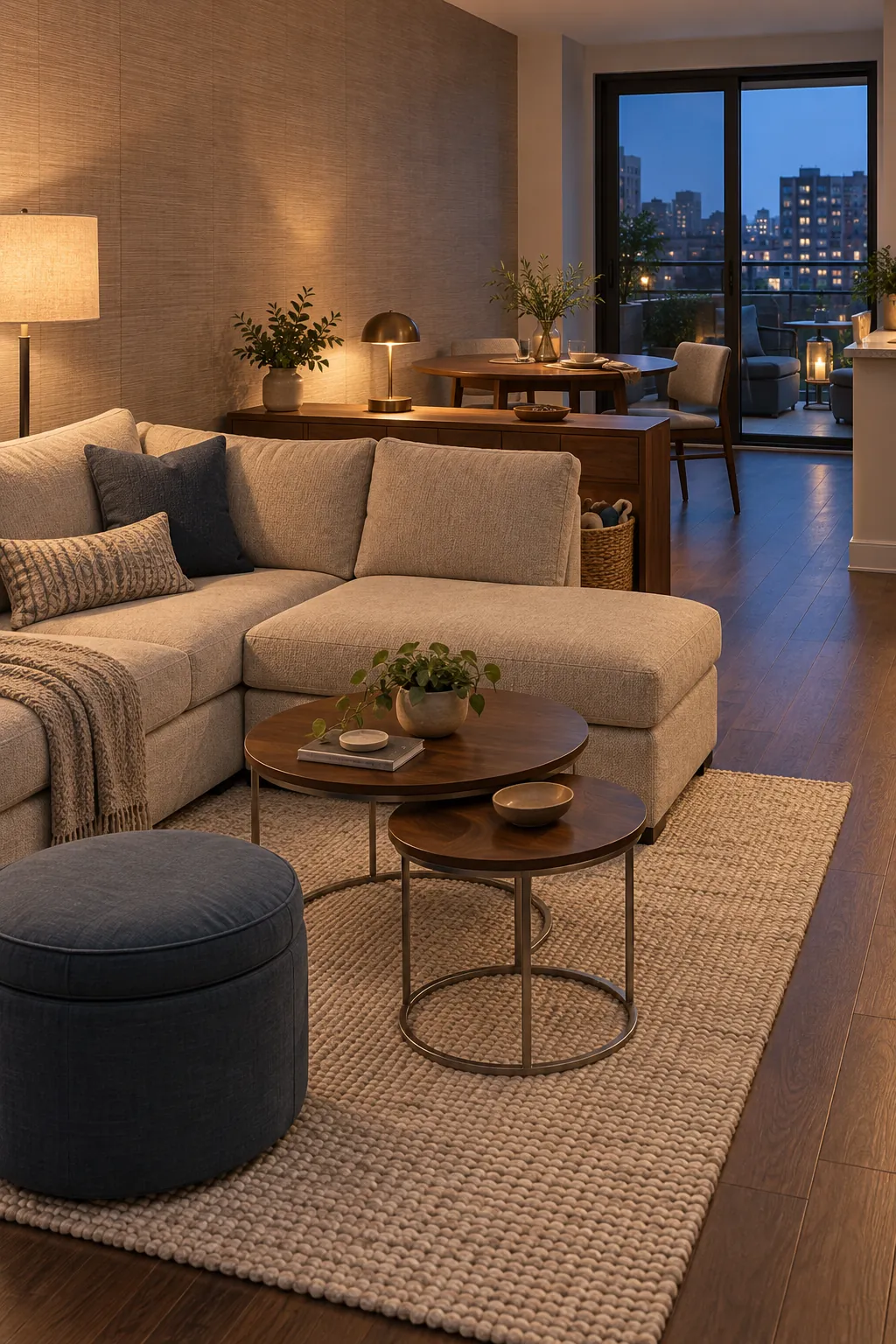
Living room zoning is useful when the space must also support dining, work, play, or pet care. Use the back of the sofa, one rug, or a narrow console to signal a boundary. Keep the boundary low enough that light and sight lines still pass through the room.
Give occasional activities furniture that can move or disappear. A storage ottoman can hold blankets and become an extra seat. Nesting tables can separate for guests, while a small stool can serve as a plant stand until someone needs it. Keep the final walking route open, sit in every seat, and remove any piece that solves no regular need.