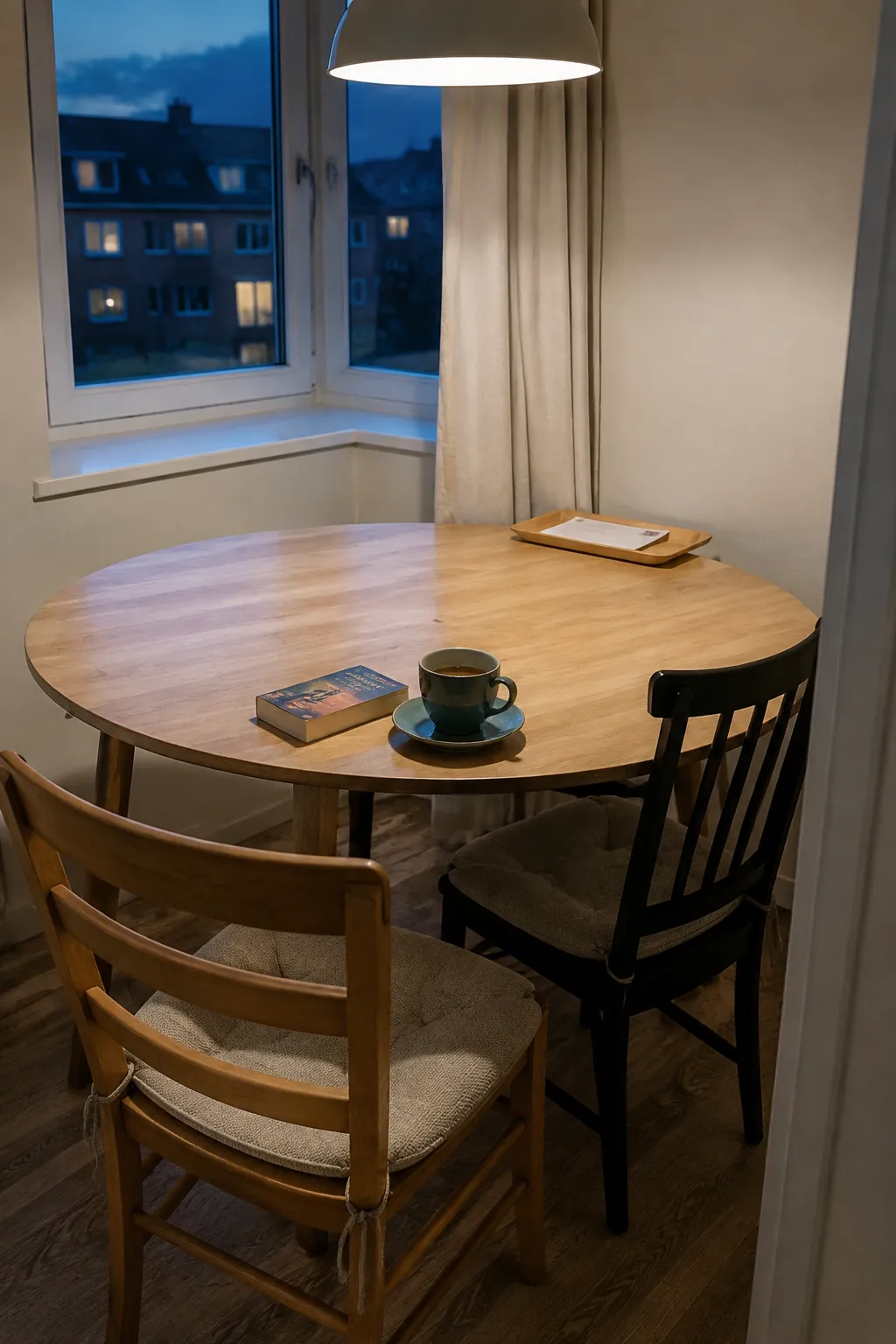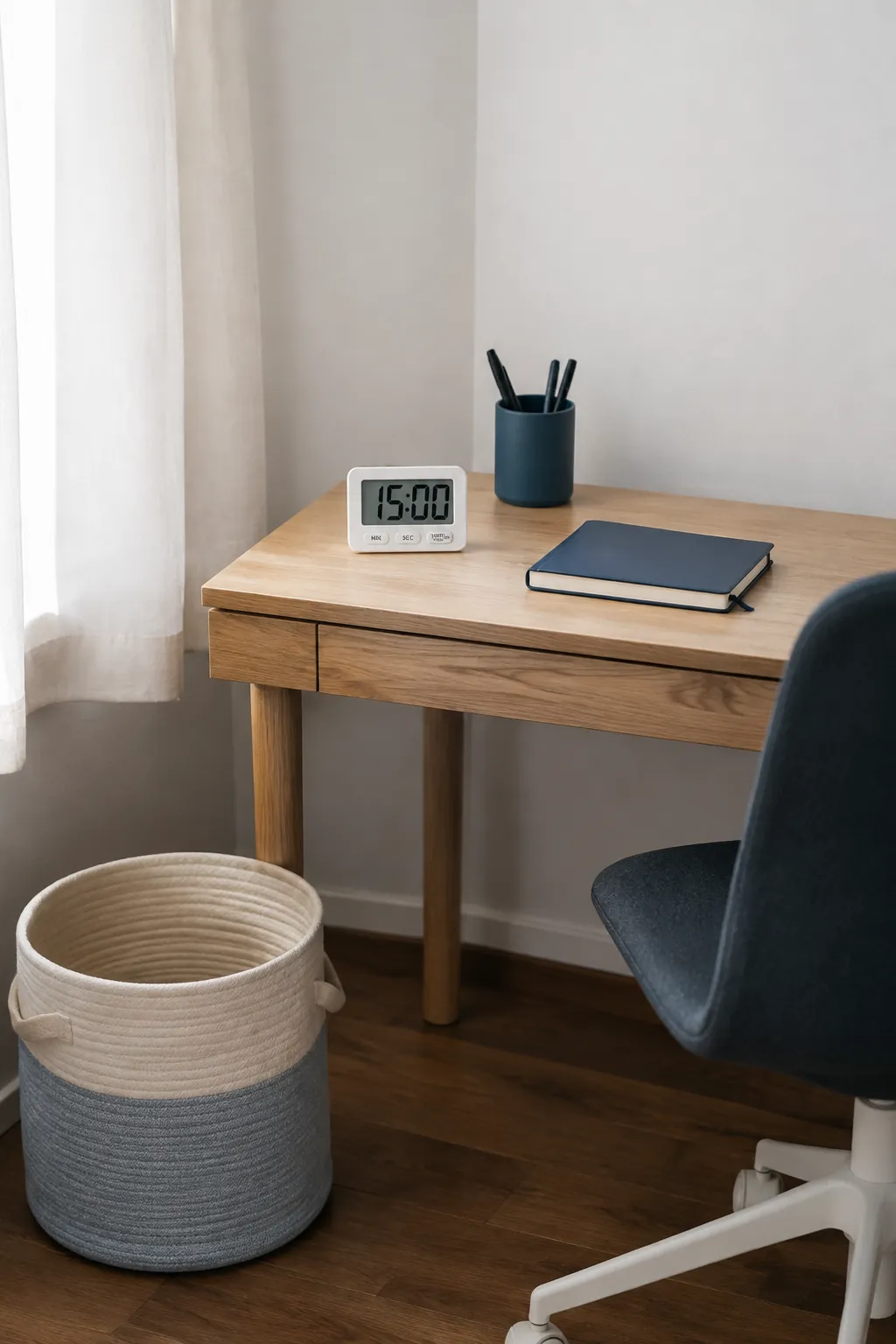
A short break disappears quickly when you spend most of it deciding where to begin. Then the timer rings with a drawer emptied across the table. The useful change is to shrink the job before you start and include putting everything back in the time you have.
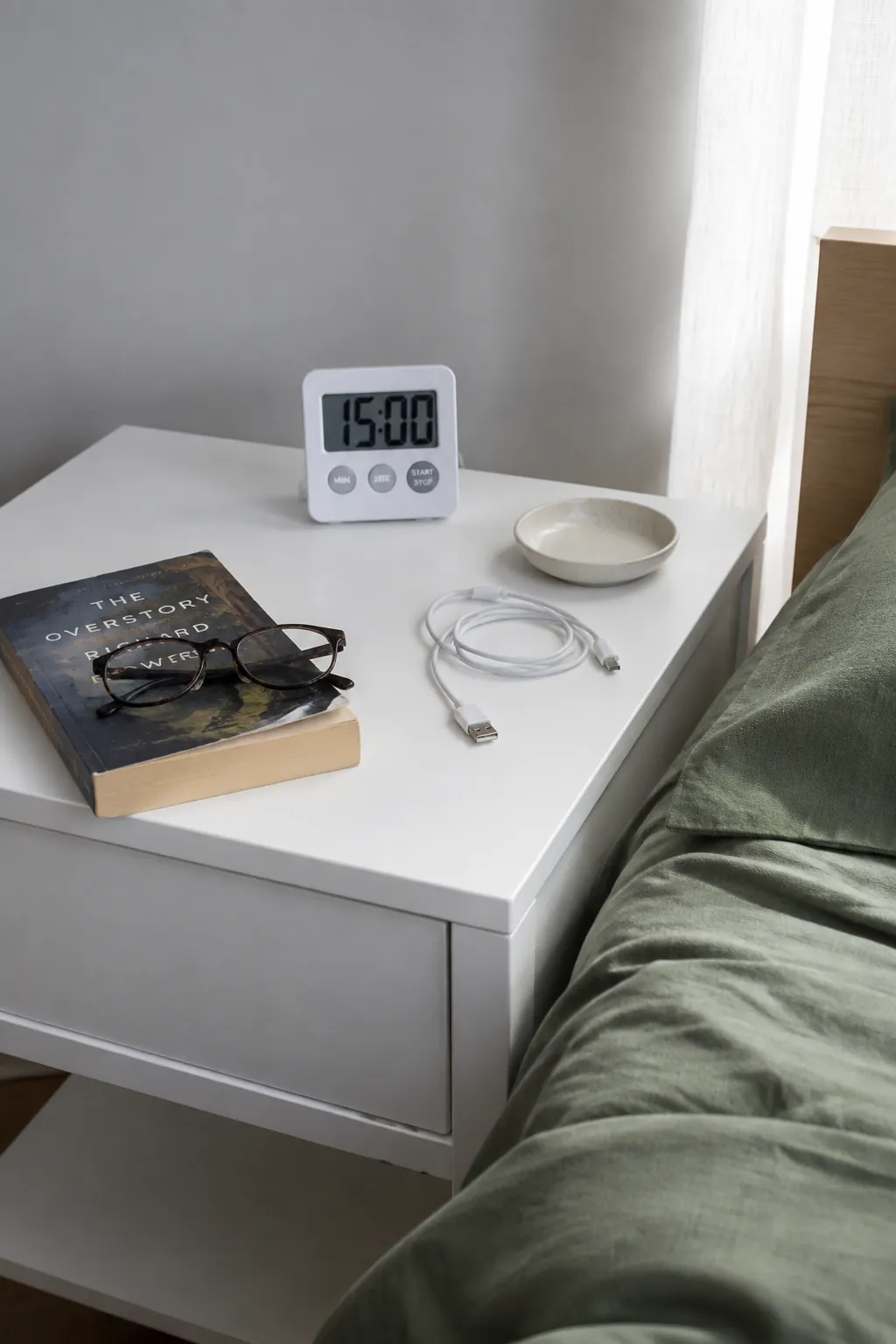
Choose one small area you use often, such as a bedside surface, a cutlery compartment, or the place where keys land. The goal is a finished improvement you can use immediately. A whole room may need several sessions, and that does not make this one unsuccessful.
Minutes zero to two: name one task you can close
Replace “sort the bedroom” with “clear the bedside table” or “match the socks in this compartment.” Pick a task with an obvious boundary and mostly familiar decisions. Photos, old correspondence, and a box of unknown cables are poor starting points when you have a firm deadline.
Set a 15 minute timer and a second reminder at minute 12, or keep a clock visible so you know when to stop sorting. Bring a small rubbish bag and one container for objects that belong elsewhere. If searching for supplies would eat into the session, use a spare bag and the storage you already have.
Minutes two to five: remove the obvious intruders
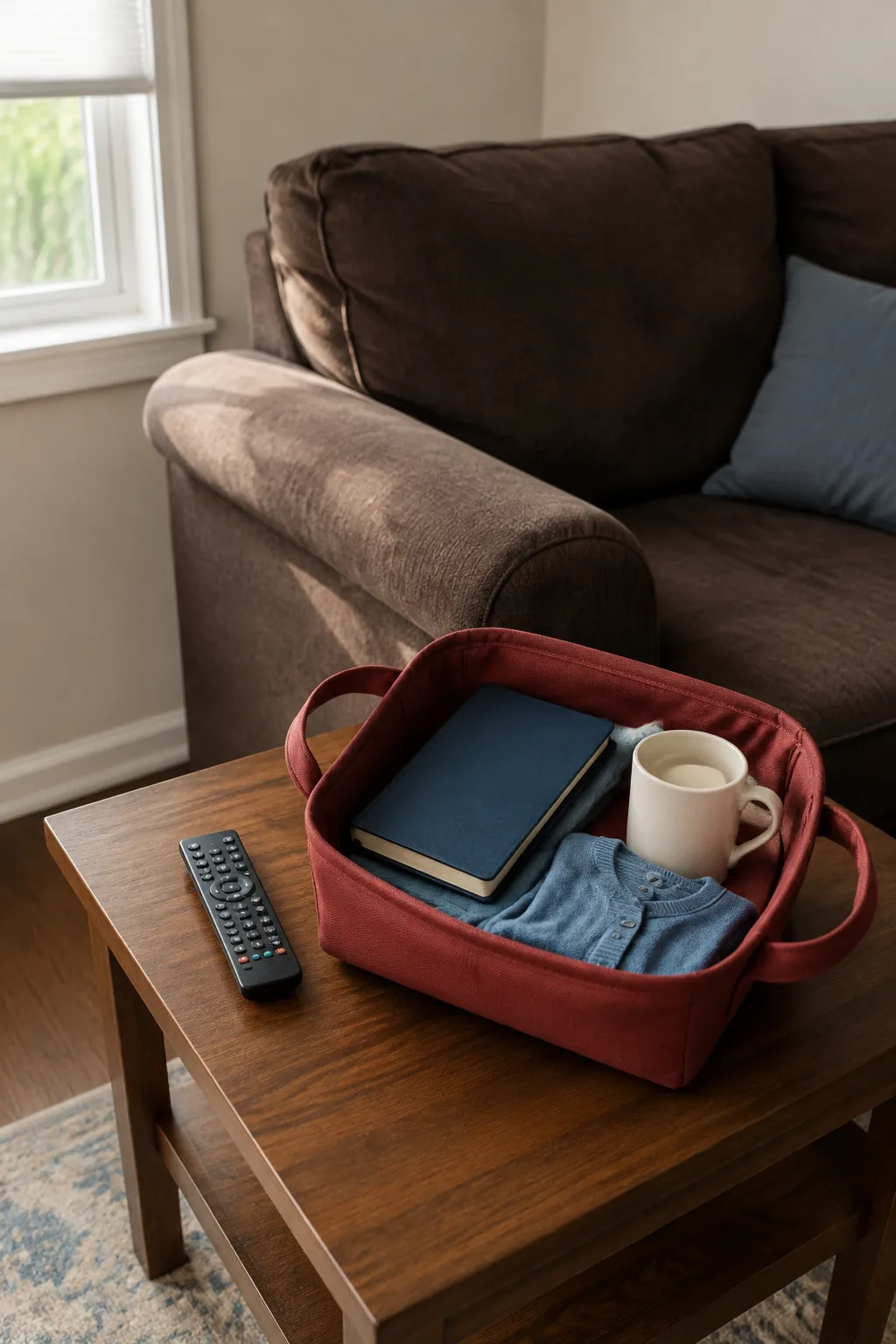
Lift out rubbish, empty packaging, and belongings that clearly belong in another place. Put return items in your container without leaving the area after each discovery. This prevents a single mug from leading you into a kitchen cleanup.
Keep other people’s possessions for them to decide about, and avoid opening papers that need a separate response. If you encounter something uncertain, set it aside within one small review space rather than making the entire session depend on that decision. Stop removing items when the chosen surface or compartment is manageable, even if nearby clutter remains.
Minutes five to nine: group what belongs together
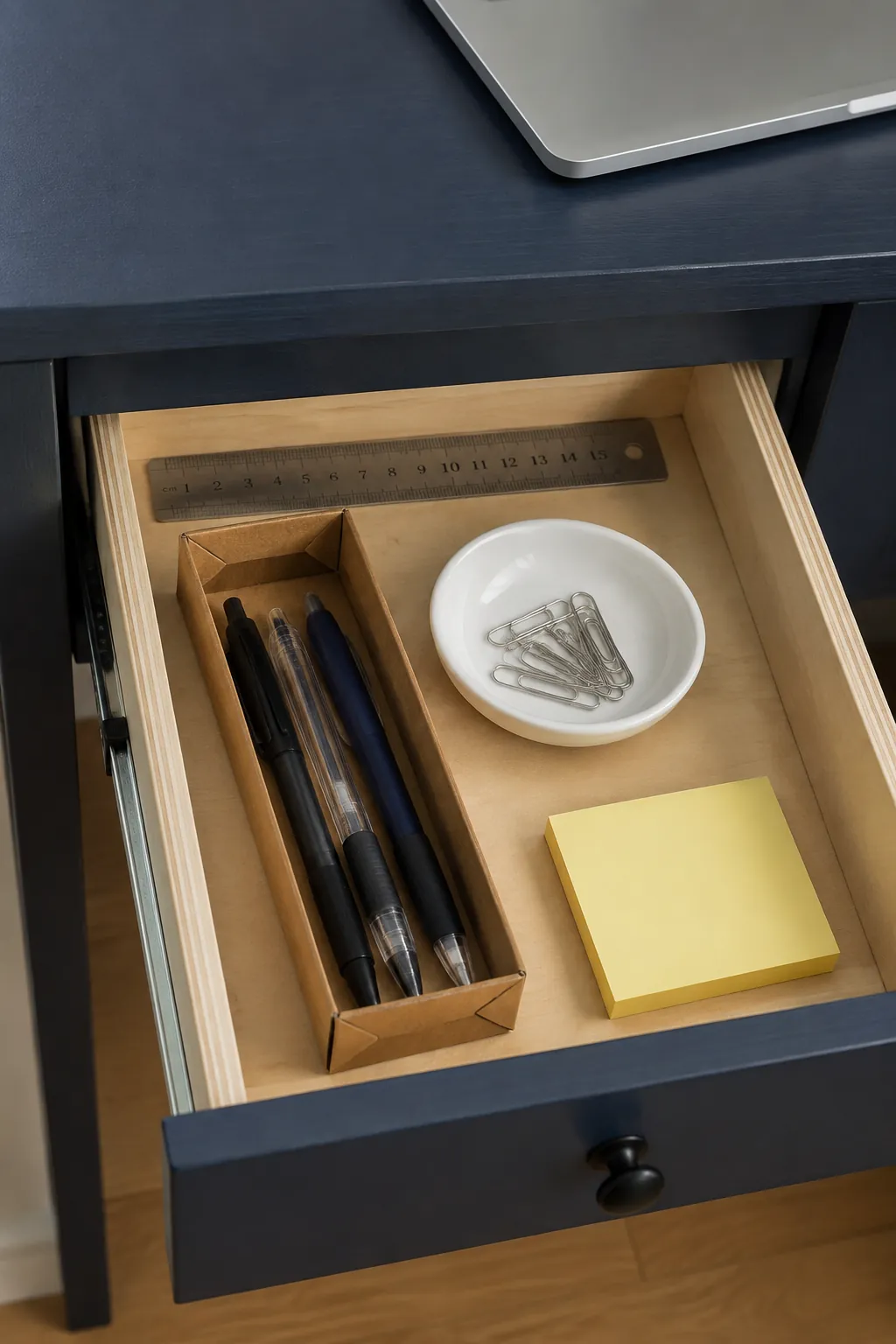
Arrange the remaining items by the way you use them. In a desk drawer, put working pens together, clips in a small existing dish, and sticky notes where you can see them. Test a pen if necessary, but do not turn a small organizing project into an inventory of every stationery supply in the house.
One drawer at a time means keeping the contents contained, not tipping several drawers onto the floor. If the drawer is densely packed, choose only its front compartment for today. Use an empty small box as a temporary divider when it fits safely and lets the drawer close.
Minutes nine to twelve: make the useful things easy to reach
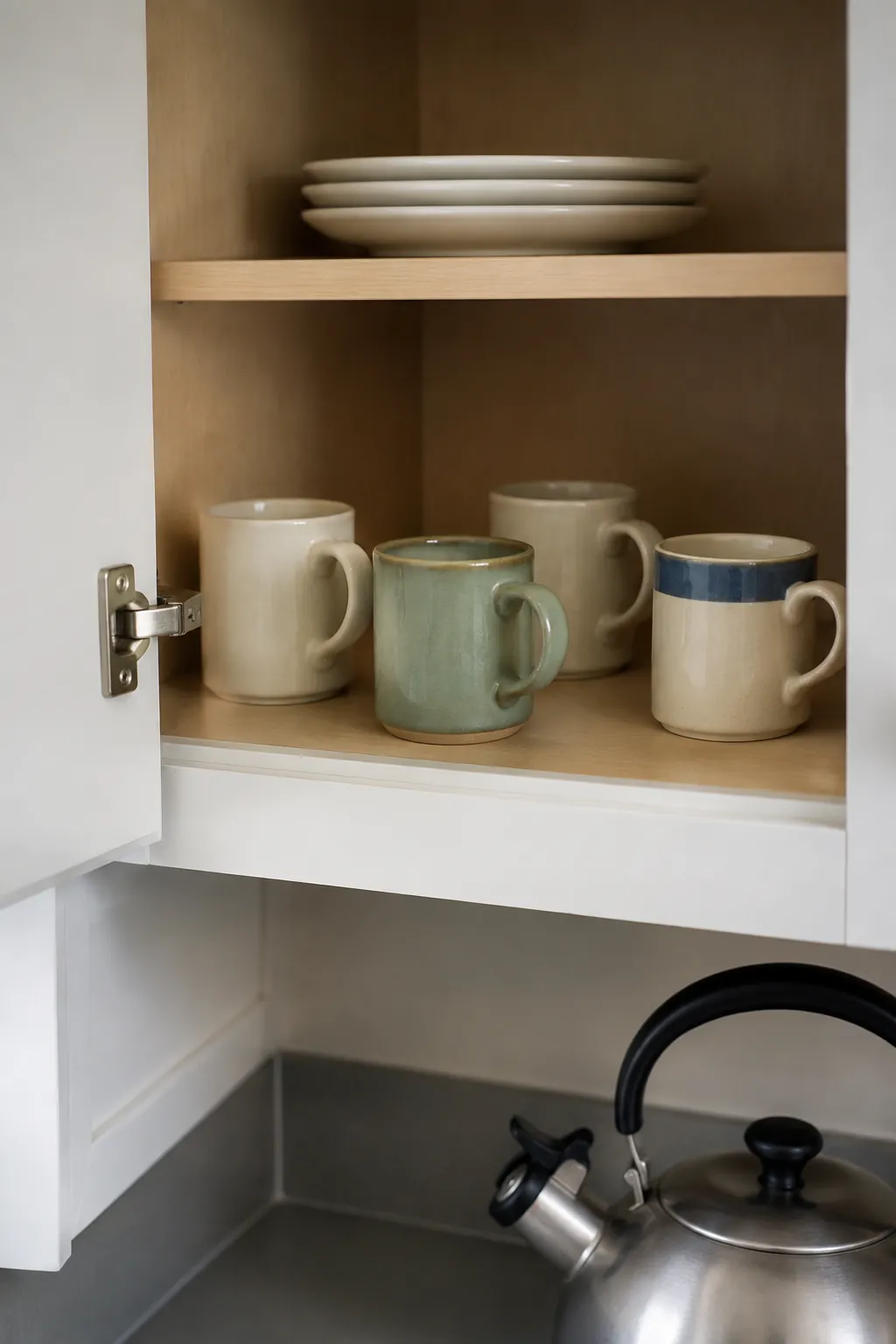
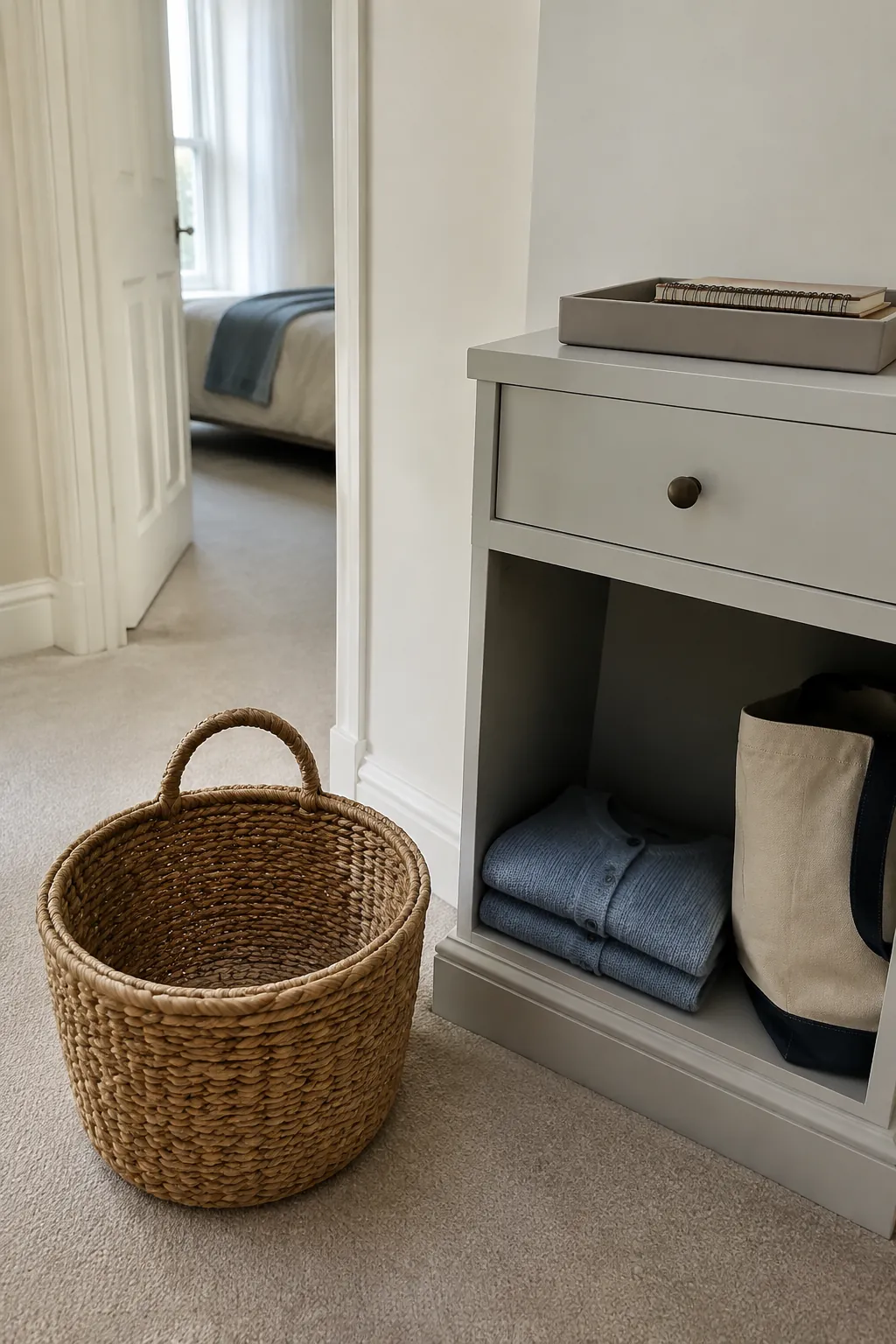
Place frequent items nearest the point of use, with occasional supplies behind or below them. A shelf of daily mugs needs room to lift one out without moving three others. A bedside table needs room for the objects you actually reach for at night, not a display that hides them.
Use the container or shelf as a capacity limit. If everything will not fit comfortably, remove an obvious duplicate or give a less frequent item a suitable home elsewhere. Avoid buying a new organizer during this 15 minute declutter; make a note to measure the space later if an actual storage problem remains.
Minutes twelve to fifteen: finish the return trip
When the closure reminder arrives, stop discovering new tasks. Carry the return items to their homes, put rubbish in the appropriate bin, and remove your temporary sorting supplies. Close the drawer or check that the cleared surface is usable before the timer ends.
If a decision remains unresolved, contain that item safely and write a specific next step, such as asking its owner tonight. Do not leave a bag of miscellaneous objects in the doorway and call the job finished. If you consistently run out of closure time, choose a smaller area next session or reserve five minutes for returning items.
Repeat the useful reset without making it a marathon
Attach a daily tidy routine to something that already happens, such as finishing dinner or shutting down your work computer. Choose the next small target in advance so the following session starts with action. Rotate through quick room reset tasks according to what is bothering you, rather than treating every shelf as equally urgent.
The timer cleaning method is a boundary, not a requirement to race or ignore your energy. Use a gentler pace, a seated task, or a shorter session when that suits you, and stop when you planned to stop. Consistency is easier when a brief evening reset does not secretly become an hour of chores.
Notice whether the change makes tomorrow easier: a charger you can find, a drawer that closes, a table ready for a cup of tea. If the same pile returns, adjust where those items live before adding more sorting time. The best result of today’s session is a small job you no longer have to redo tomorrow.