
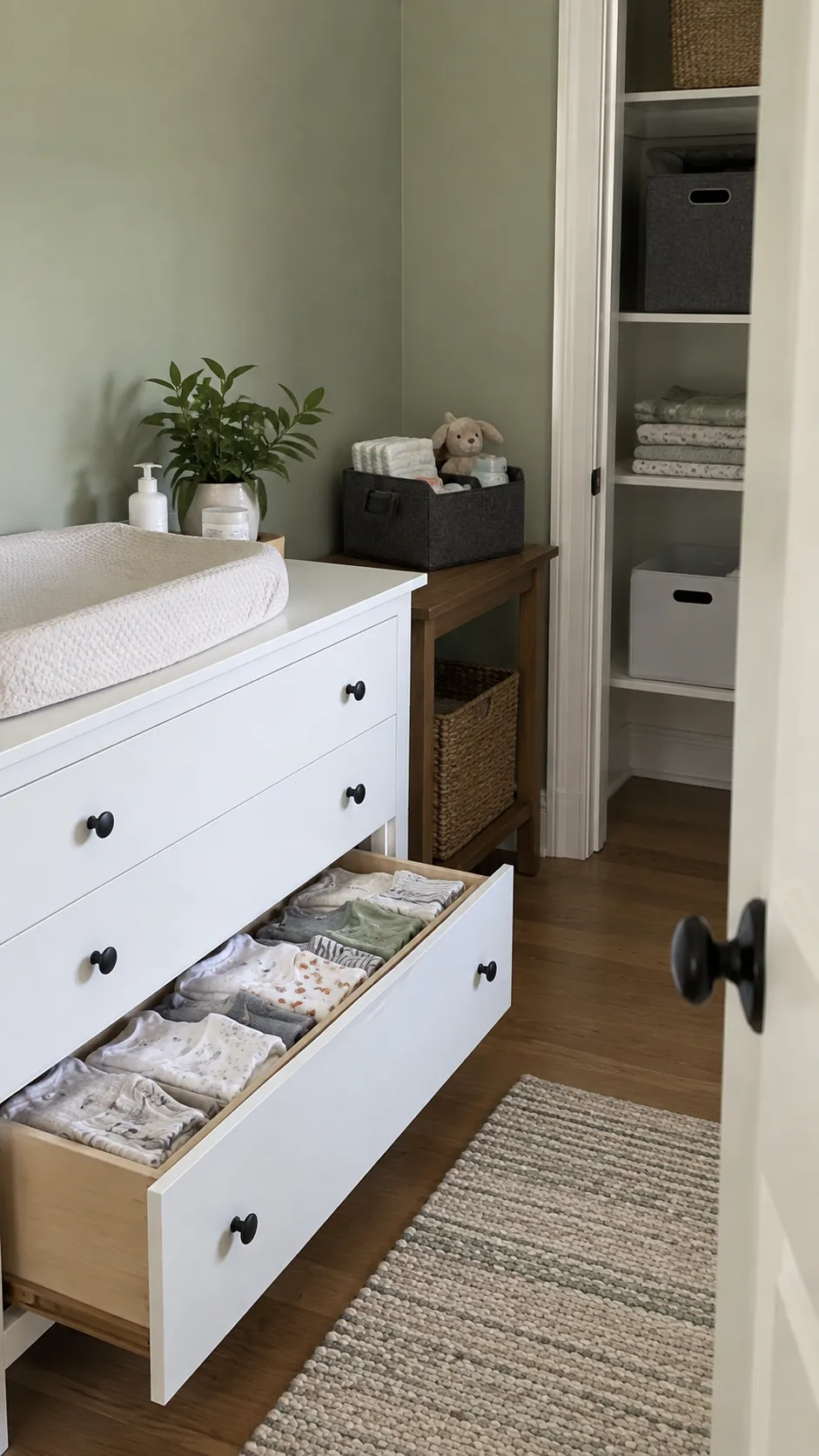
A full drawer can still leave you searching for the one clean sleeper you need. The problem is often that current supplies, backups, and things your baby has outgrown share the same space. Separate those jobs first, then choose containers that fit what remains.
Sort by the next task, not by the prettiest basket
Before buying containers, gather the supplies you already have and separate them by use: changing, dressing, feeding support, bathing, and health care. Put duplicates and larger clothing sizes in a separate reserve group. This first pass reveals whether you need another basket or simply fewer things in the daily area.
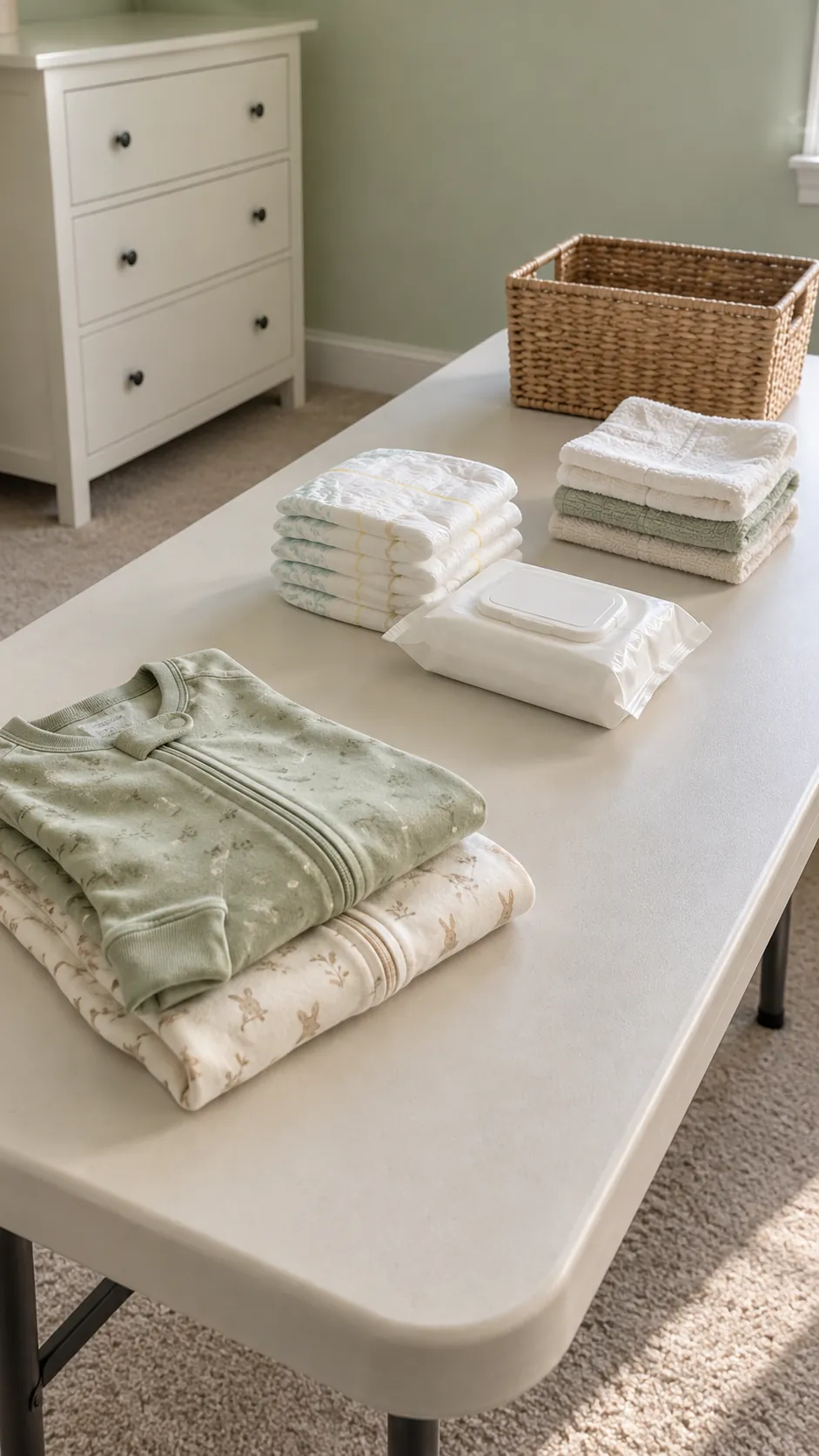
Give every item one primary home. A burp cloth can travel with you, but its clean replacements should return to a predictable place. If several caregivers use the room, agree on the categories together. A system only one person understands will quickly become a collection of miscellaneous piles.
Keep packaging or instructions when they explain safe use, cleaning, expiry, or storage conditions. Do not transfer medicines into attractive unmarked jars. Organizing should make the important information easier to find, not remove it.
Keep the diaper caddy small enough to carry
Diaper caddy organization works best with a limited working supply. Start with diapers, a closed wipes pack, a spare outfit, and a washable changing mat if your routine needs one. Add only the items you repeatedly reach for, then check whether the handle still feels comfortable when the caddy is full.
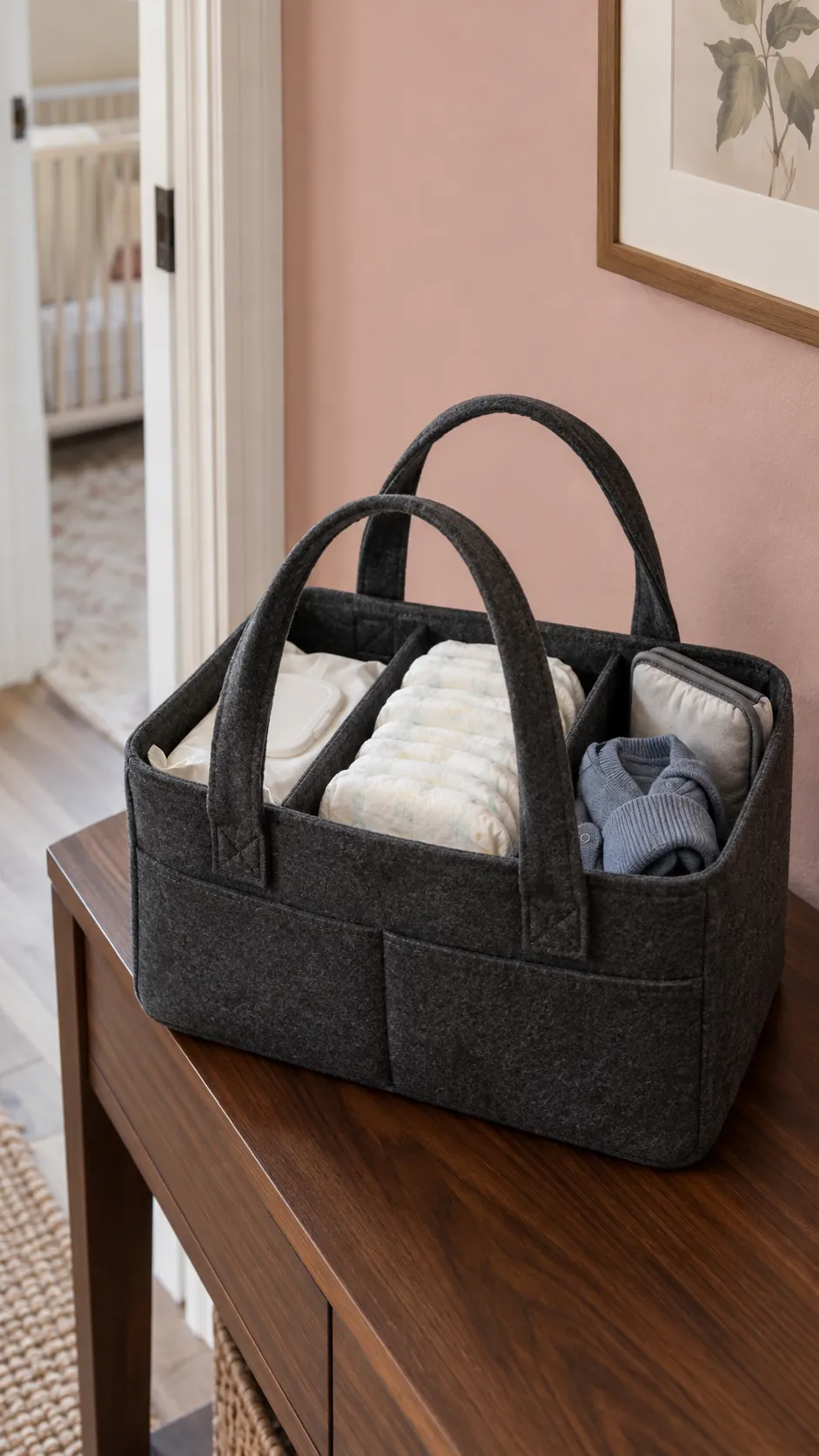
A portable caddy belongs near the adult during a change and out of the child’s reach afterward. Never hang it from crib rails or leave plastic packaging in the sleep space. If you change your baby on an elevated surface, keep a hand on them and follow the product’s instructions. Gather everything before starting; carrying a caddy does not make it safe to step away.
Keep bulk refills in a separate cupboard. When the caddy feels heavy or you must lift several objects to reach the wipes, remove something. The best arrangement leaves room to see what is running low.
Make current clothing the easiest category to find
Separate clothing that fits now from the next size before arranging the drawer. Brand sizes vary, so use your baby’s actual fit as well as the label. Keep sleepers, bodysuits, and socks in distinct spaces, with the pieces used most often closest to the front.
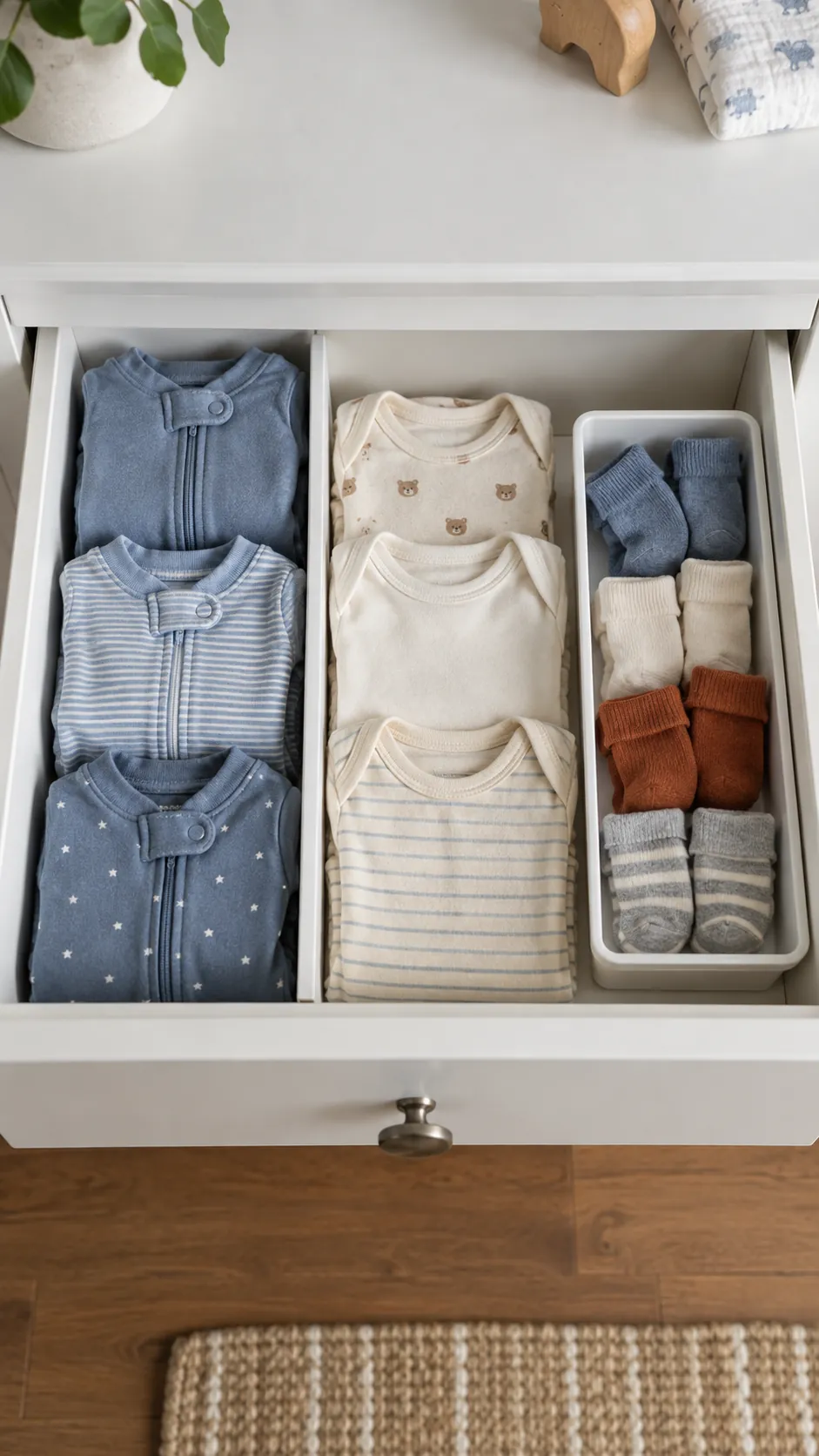
Baby clothes dividers can be simple removable drawer partitions. Fold enough to see each category, without making every small garment stand perfectly upright. Nursery drawer labels help other caregivers return clean laundry to the same place; use plain words such as Sleepers or Socks rather than a complicated code. Avoid small detachable label pieces within a child’s reach.
Separate clean feeding supplies from used items
Feeding station essentials depend on how you feed your baby. Near an adult chair, you might keep clean burp cloths, a water bottle for yourself, and the items you actually use during an awake feed. Leave room to set something down instead of filling the entire surface with storage.
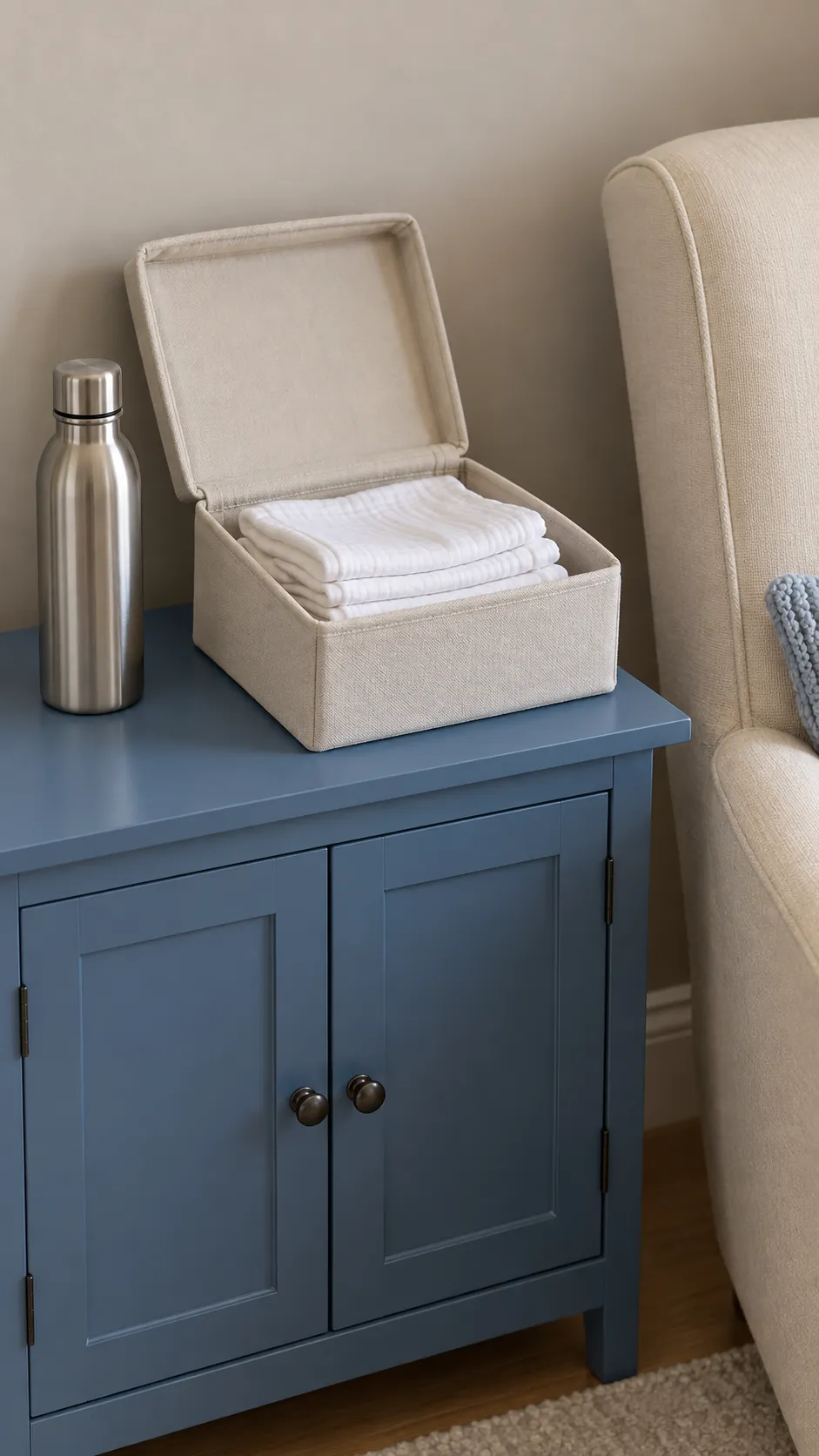
Keep cleaned feeding equipment in a clean, protected place according to its care instructions. Used bottles and pump parts need a separate route back to the cleaning area, rather than being tucked among clean supplies. Follow the manufacturer’s cleaning guidance and current feeding safety advice for your equipment and situation.
The nursery is not automatically the best place to prepare or store milk. Use the appropriate kitchen or refrigeration setup and follow safe preparation, storage, and discard guidance. Do not leave prepared feeds sitting in an organizer as if they were ordinary room supplies.
Give toiletries and health supplies a secure home
Baby toiletries storage needs a different standard from clothing storage. Keep products in their original containers, close them after use, and follow the storage directions on their labels. A tray can contain minor drips, but it does not make the contents safe for a child to access.
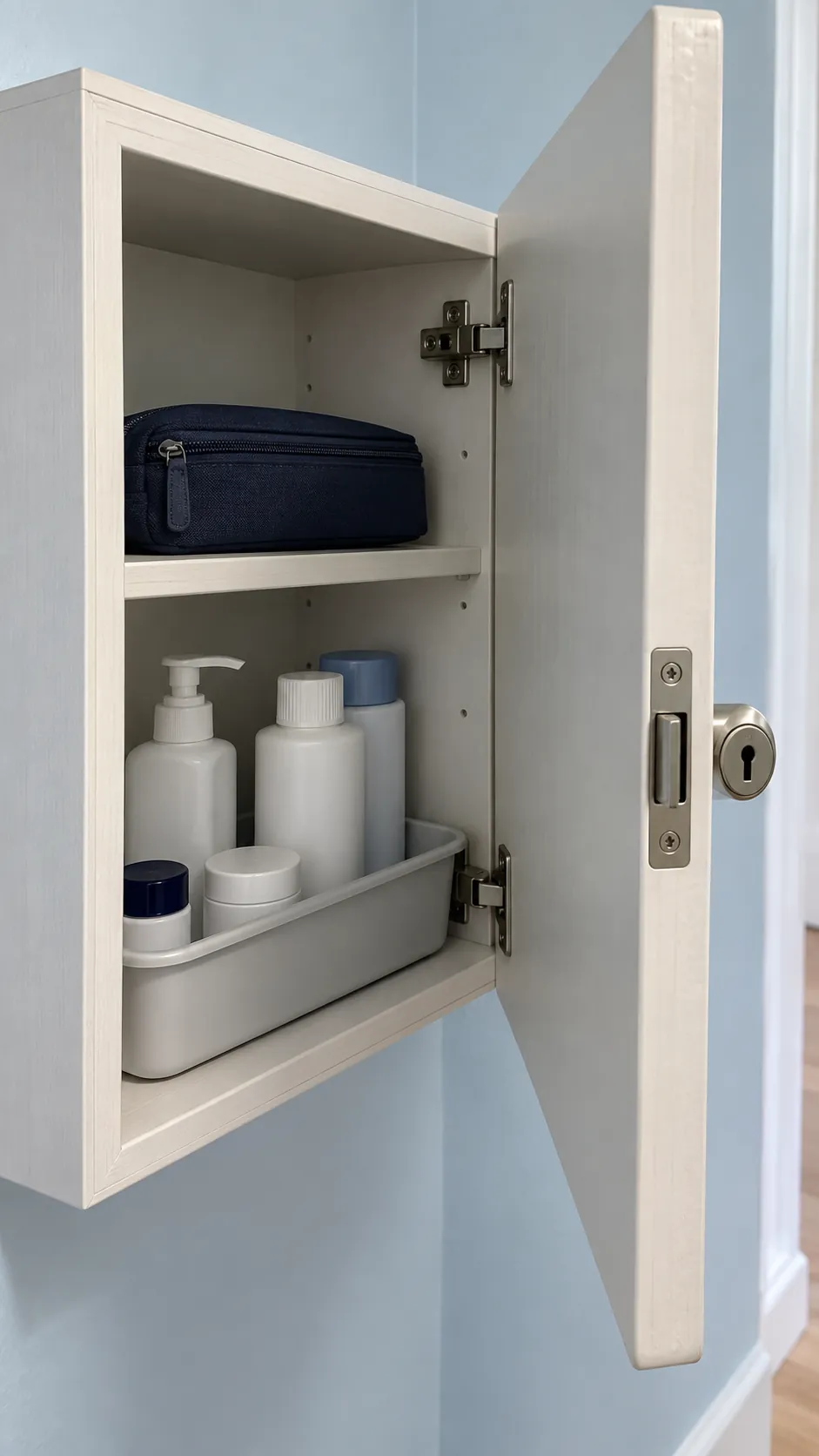
Store medicines and potentially harmful products in a secure location out of sight and reach, using appropriate locks rather than relying on shelf height alone. Keep a thermometer and its instructions together so an adult can find them. Check expiry dates periodically and ask a pharmacist about disposal when needed. Bathroom humidity may make some products unsuitable for that room, so follow each label.
For bathing, collect a clean towel, washcloth, and the products you intend to use before bringing your baby to the bath. Put everything away after the task. Storage convenience never replaces constant, close supervision around water.
Build one simple refill and outgrown routine
Choose a regular moment, such as putting away laundry, to check diapers, wipes, and clean cloths. Move a small amount from reserve storage into each working station. Keep the remaining reserve together so an almost empty caddy does not trigger an unnecessary purchase.
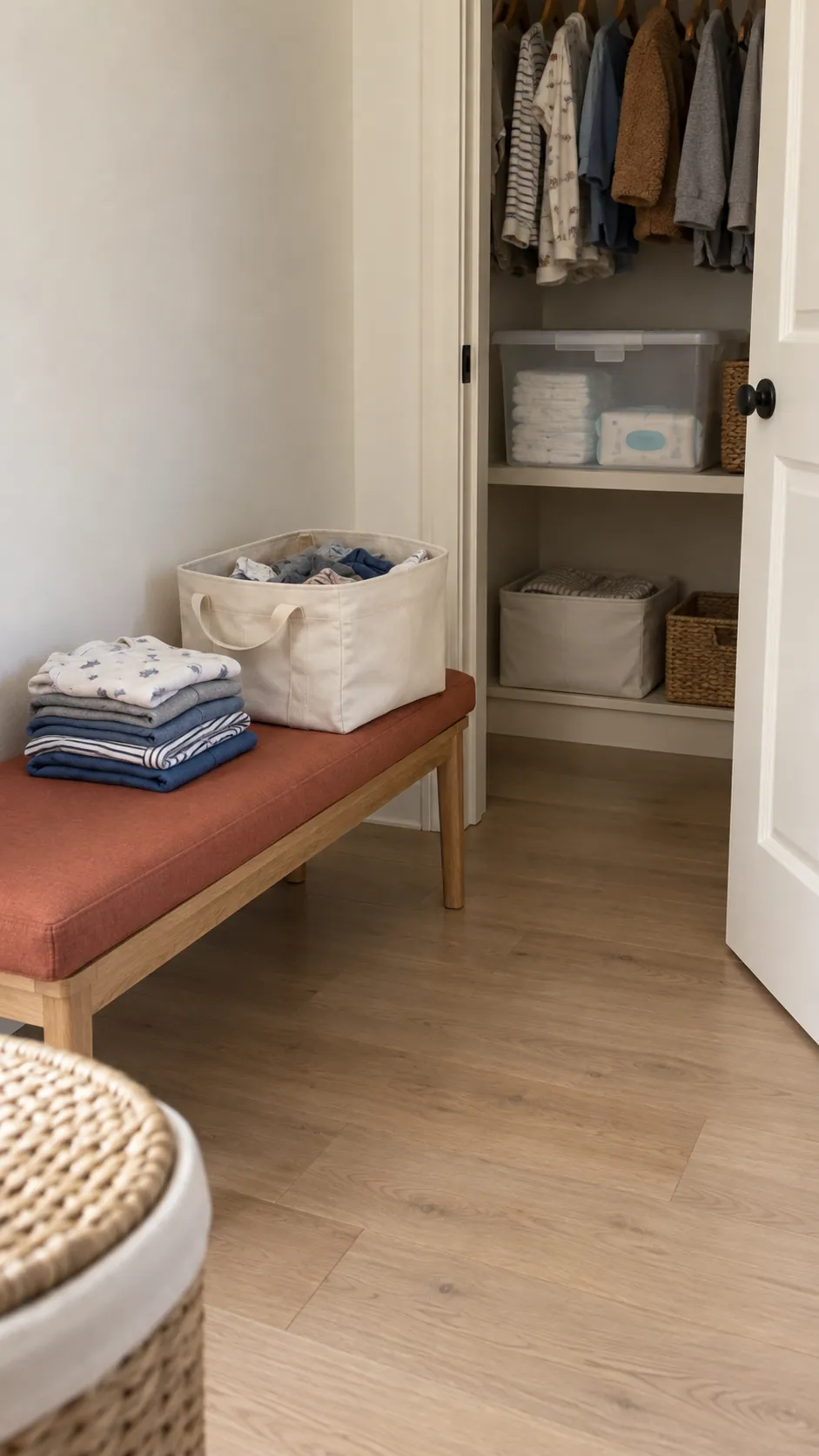
Place an adult accessible container for outgrown clothing near the laundry routine. Move pieces there as soon as their fit becomes unsuitable, then sort them later for storage, donation, or reuse. This prevents the same too small sleeper from returning to the active drawer after every wash.
After a few days, notice what keeps landing outside its assigned home. A container may be too deep, a category may be unclear, or the supplies may belong closer to their task. Adjust that specific problem before adding more storage. The test is whether another caregiver can find a clean outfit and put the spare back without asking.