Buying a mushroom lamp will not fix a room whose colors fight each other or whose dresser blocks the walkway. Start with the furniture you need, choose a few period cues you love, and give them enough space to be noticed. You can build a nostalgic room gradually while keeping it comfortable for ordinary mornings and nights.
Choose an era through shapes, not souvenirs
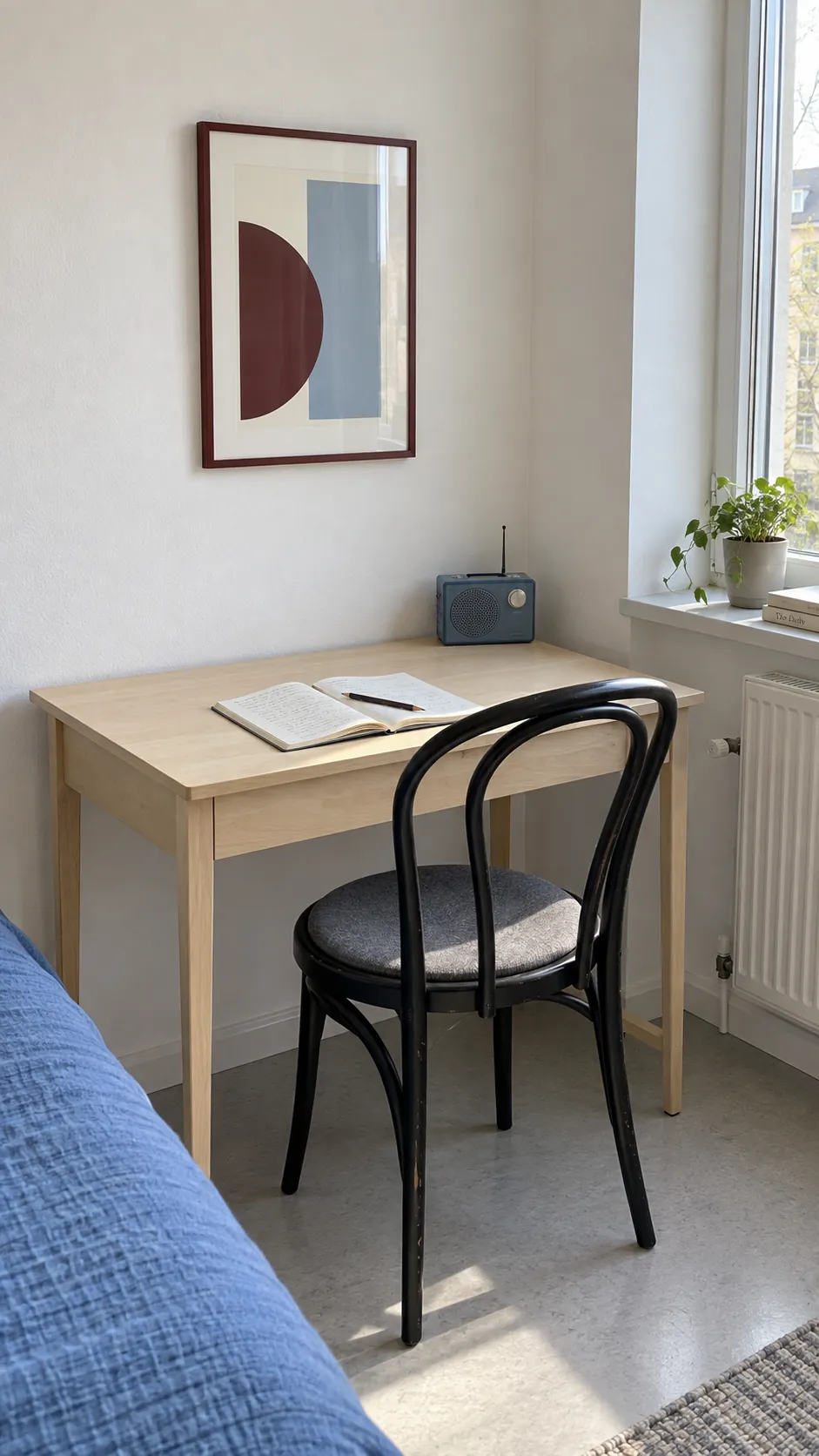
A room becomes convincing when its furniture, colors, and lighting share a few visual cues. For a 70s bedroom aesthetic, start with earthy color, rounded lamps, and tactile fabric; for an 80s bedroom aesthetic, try lacquered surfaces, graphic shapes, or a restrained pastel combination. A 90s bedroom aesthetic can draw on pale timber, checks, and a practical desk corner without turning every surface into a nostalgia display.
These are starting points rather than strict historical rules, because real homes have always mixed old and new pieces. Pick the decade you enjoy most, then write down three qualities you actually want to live with, such as curved forms, walnut, and green. Use those qualities to judge purchases instead of buying an object simply because it looks old.
Let one existing color guide the palette
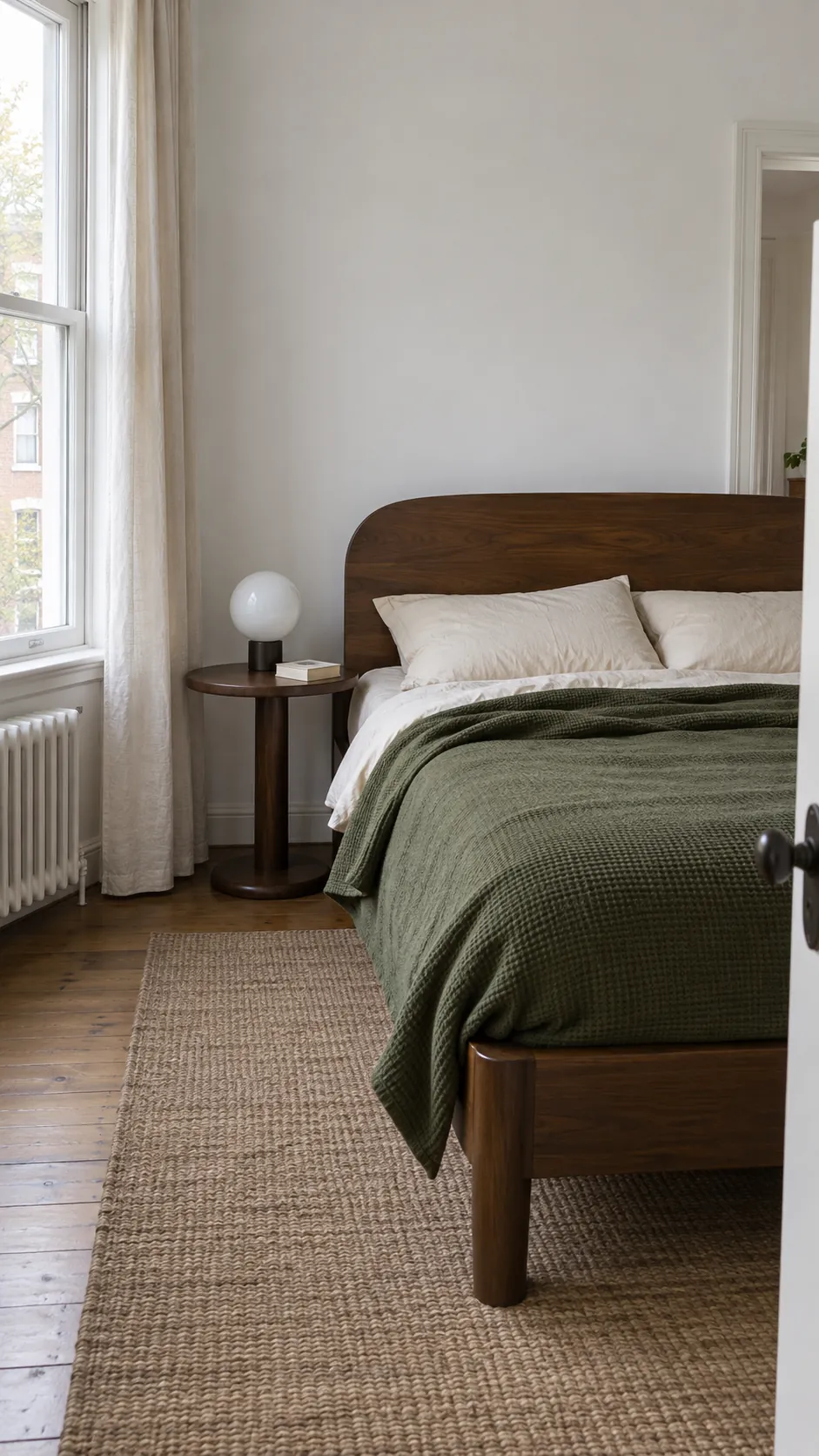
Before choosing paint, look at what will stay: flooring, curtains, a wooden bed, or a large wardrobe. A reddish wood finish needs a different partner from a pale oak floor, so bring fabric samples into the room and compare them beside the furniture. View them in daylight and with your evening lamps switched on.
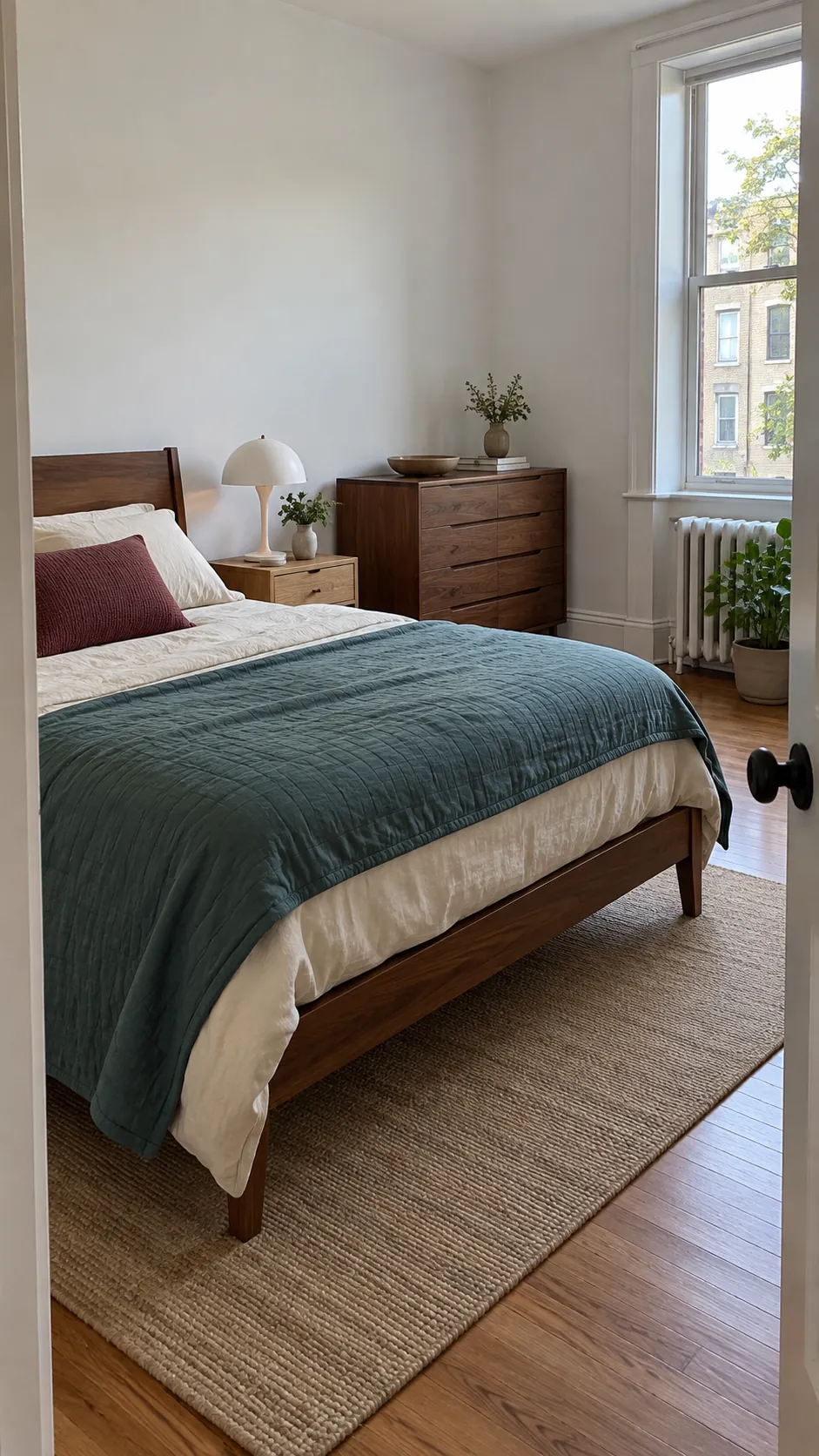
For an earthy retro style bedroom, use off white as the background, olive for the main textile, and a smaller rust accent. If you prefer a cooler room, dusty blue, cream, and a little burgundy can feel nostalgic without an orange cast. Repeat an accent on two separated objects, then leave enough plain fabric between them for the eye to rest.
Paint is optional. In a rental, bedding and curtains can carry most of the color, provided the curtain fitting and any wall attachments meet your lease requirements. Test removable products on an inconspicuous area and follow the manufacturer instructions; removable does not guarantee damage free.
Buy the furniture that solves a daily problem
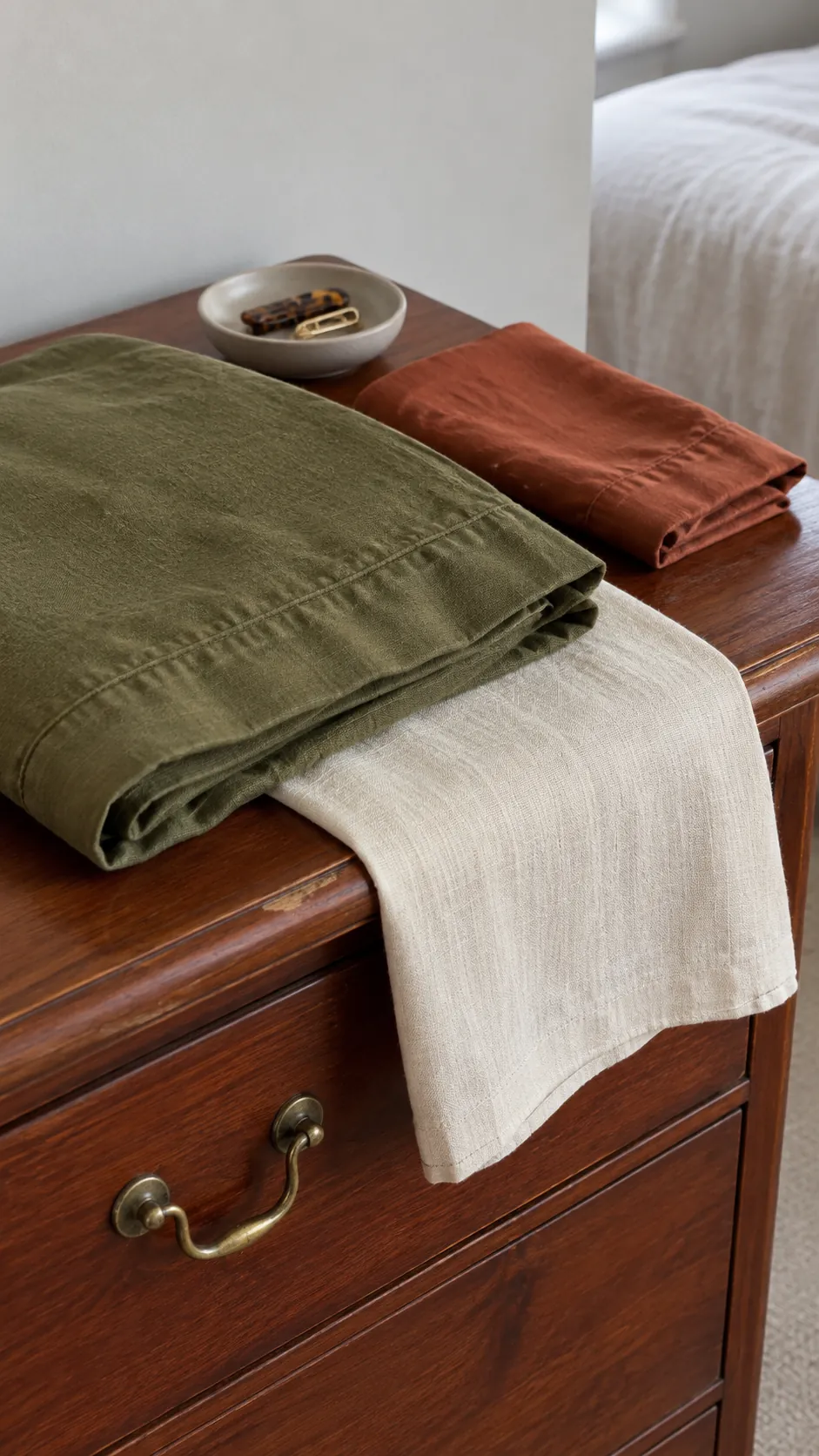
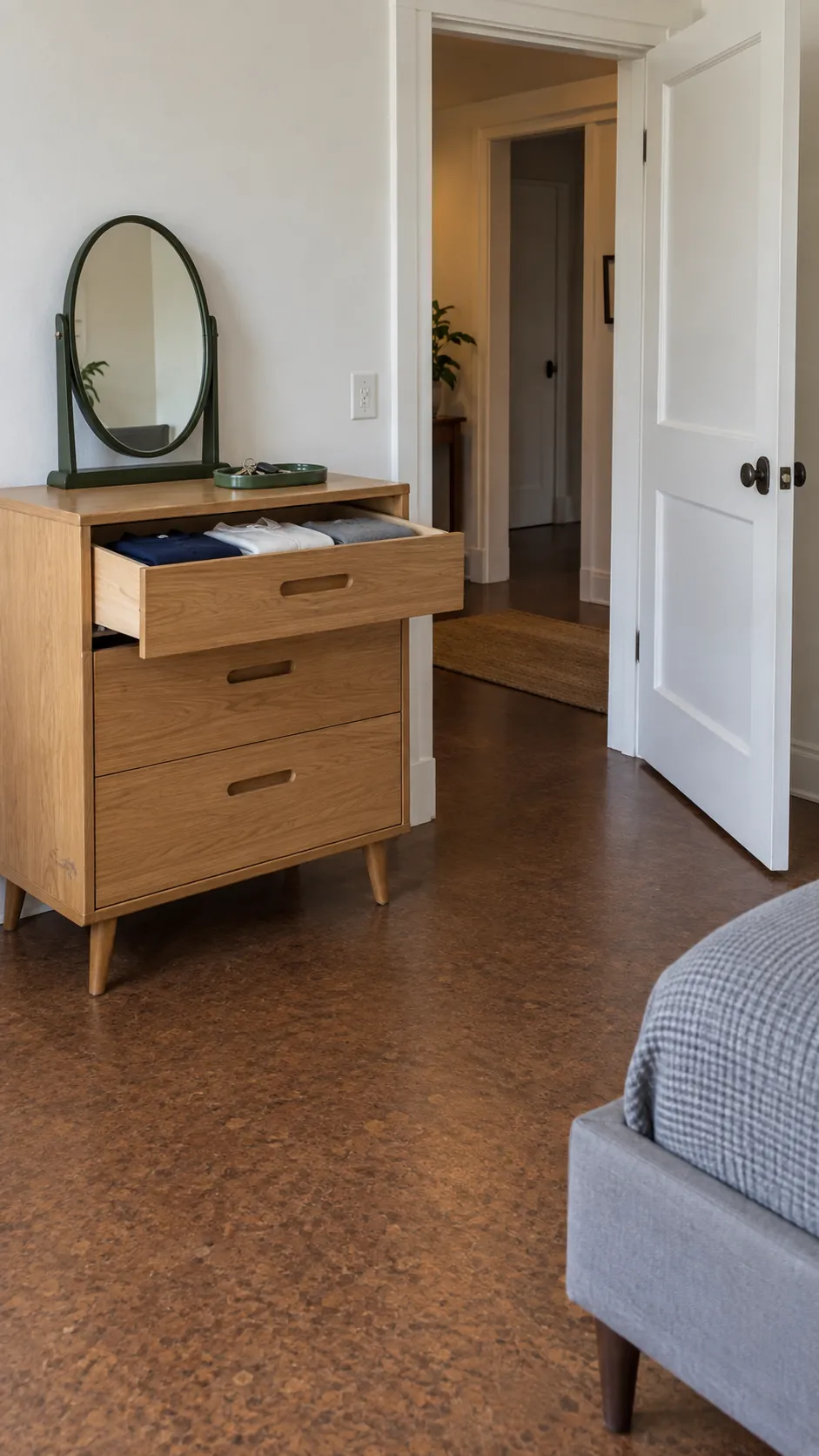
A vintage bedroom aesthetic does not require a matching suite. A useful secondhand dresser can supply more character than several decorative trinkets while giving clothes somewhere to go. Measure its width, depth, and height, then check the route through doors and stairs before arranging collection.
Open each drawer, check the joints, and inspect the back and underside for damage, odors, and signs of pests. A veneer surface is not automatically poor quality, but missing veneer and swollen panels can make a cheap purchase expensive to repair. Anchor storage furniture as directed for the piece and wall type, especially where children may climb.
Keep the mattress and other comfort decisions separate from the vintage hunt. You can place a current bed beside an older chest if the proportions and finishes work together. For a small room, choose fewer pieces with useful storage rather than squeezing in an additional chair just to complete the look.
Give the bed one strong pattern
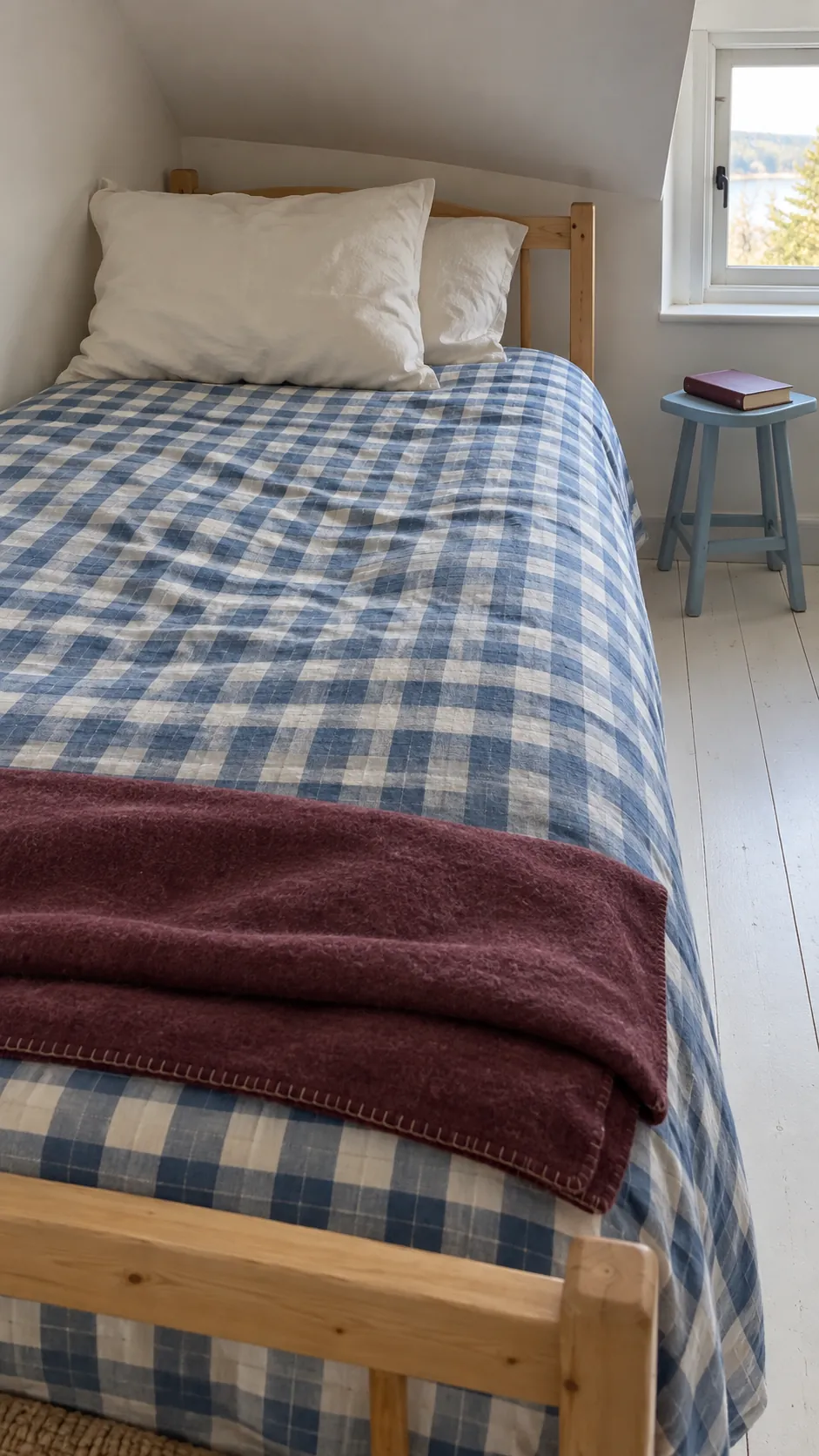
The bed is often the largest visible surface, so its fabric sets the volume of the room. Choose a checked coverlet, a curved geometric print, or a small floral, then keep most surrounding textiles quieter. Mixing prints works best when their scale differs and at least one color connects them.
For teen room ideas, a reversible duvet offers room to change direction without replacing furniture. Fold a patterned blanket across the foot if a fully printed bed feels busy. Keep the layers you actually use at night, and choose washable fabrics that suit your laundry routine.
Make evening light soft enough to live with
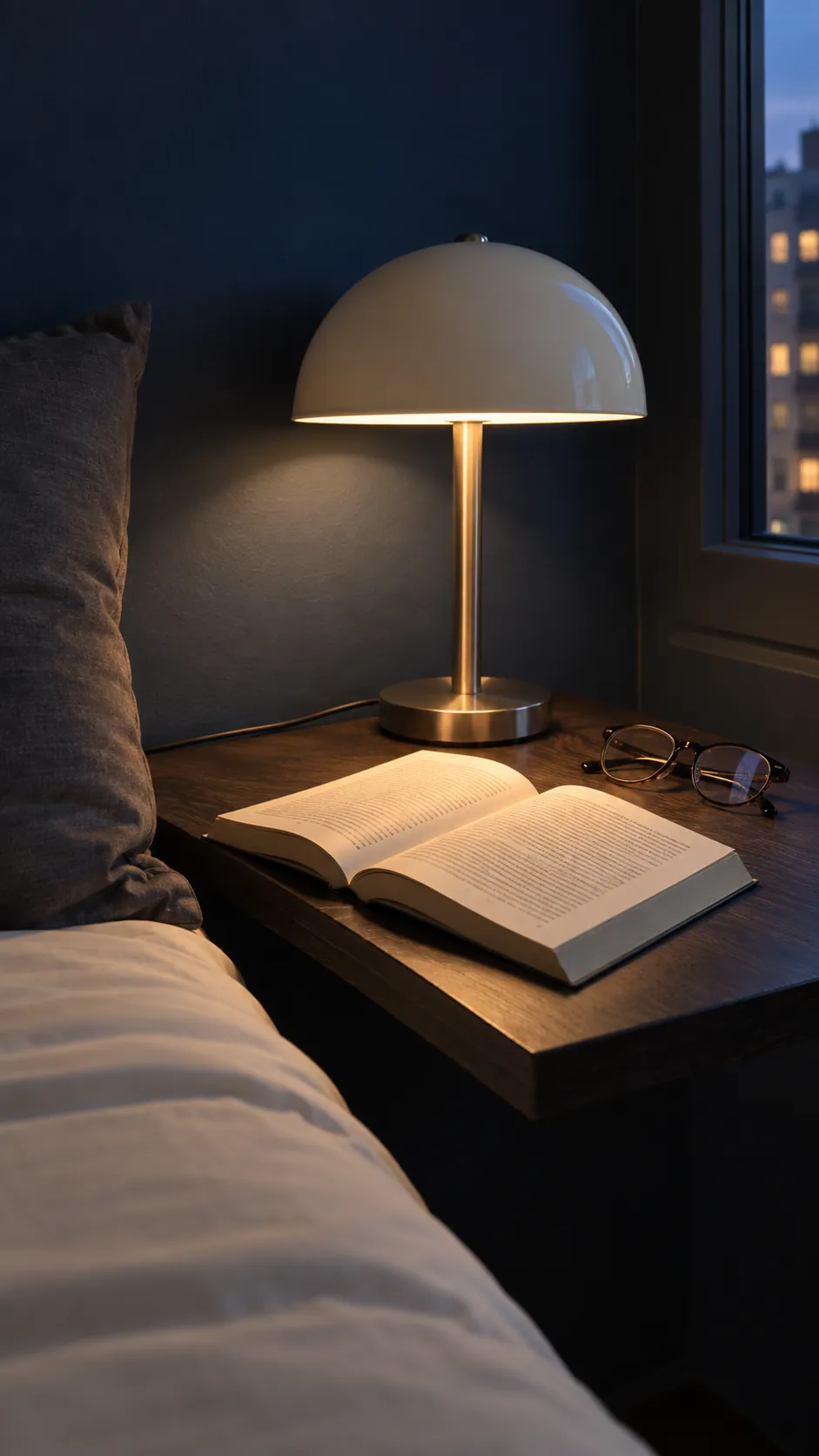
A sculptural lamp can establish a retro modern bedroom more effectively than a ceiling full of decorative bulbs. Look for a shade that conceals the brightest part of the bulb from your usual seated position. Place reading light where it reaches the page without shining straight into your eyes or a partner’s face.
Try warm white light around 2700 K for a relaxed evening, while checking that the room colors still look natural to you. Choose a bulb within the fixture rating and follow its clearance instructions. If a vintage lamp has damaged insulation, a loose socket, or uncertain wiring, have a qualified professional inspect it before use.
Keep cords away from walking routes and avoid covering lamps with fabric to soften them. A separate task light at the desk lets the rest of the bedroom stay calmer. Where dimming matters, confirm that both bulb and fixture support the dimmer you plan to use.
Finish a small corner before buying more
Choose one corner that already has a purpose, such as getting dressed, reading, or studying. Add a personal object and one useful retro detail there, then use the room for a week before ordering anything else. A framed geometric print above a desk can connect colors without taking over another surface.
If the room still feels unfinished, photograph it from the doorway and look for a specific gap: poor lighting, an empty textile area, or visible clutter without storage. Solve that gap rather than buying another unrelated accessory. The right stopping point is a bedroom you can sleep in, clean, and move around comfortably, with the pieces you enjoy clearly visible.