
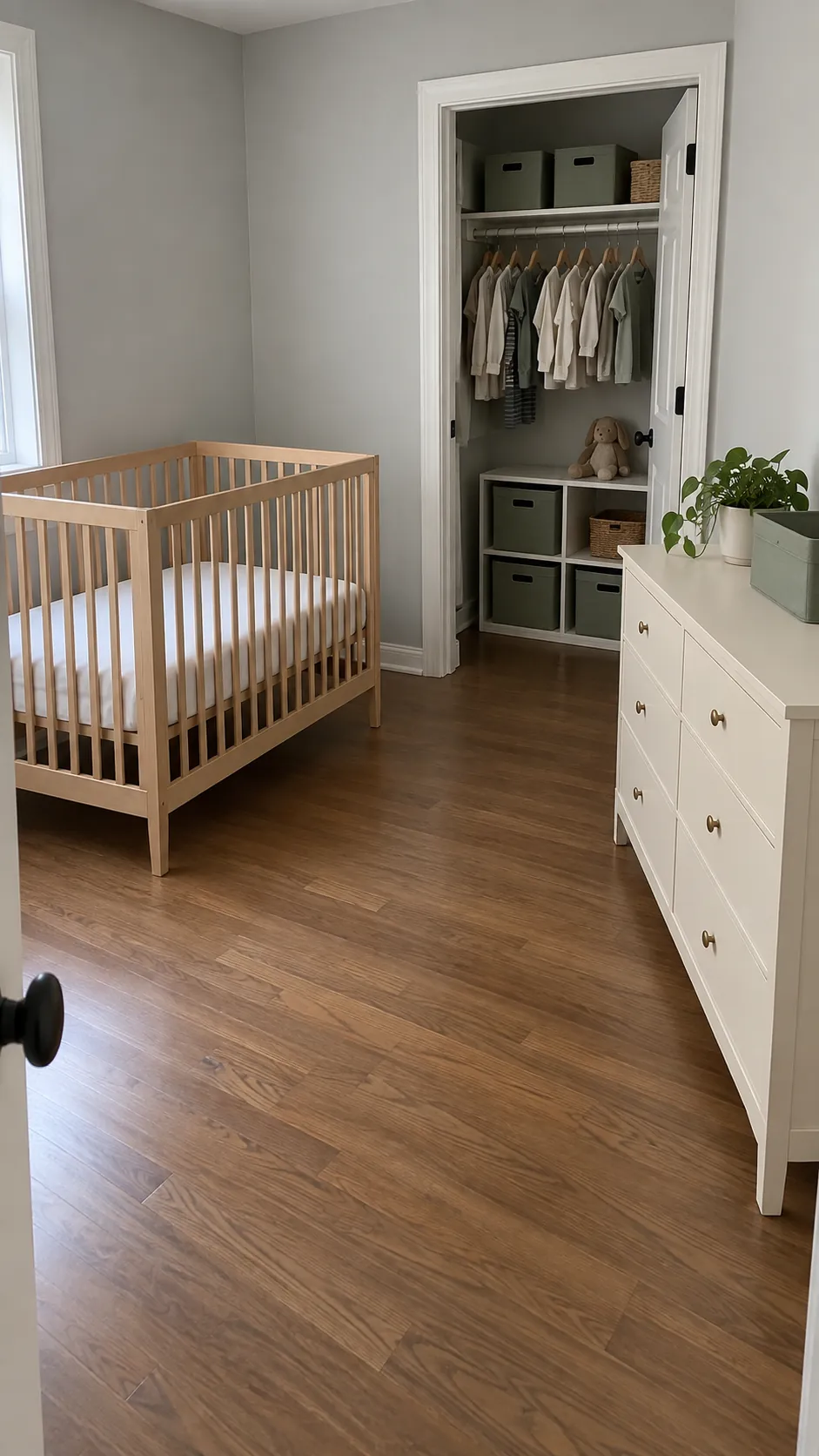
The room can gain storage and become harder to use at the same time. A deep shelf, an extra cart, and a basket beside the door each need access space as well as a footprint. Start by protecting the places you stand and walk, then fit storage around those movements.
Protect the floor route before adding storage
Walk from the doorway to the crib, changing area, and closet with all furniture in its normal position. Then open the drawers and move the chair through its full motion. A basket that fits in a photograph may still occupy the exact place your feet need to go.
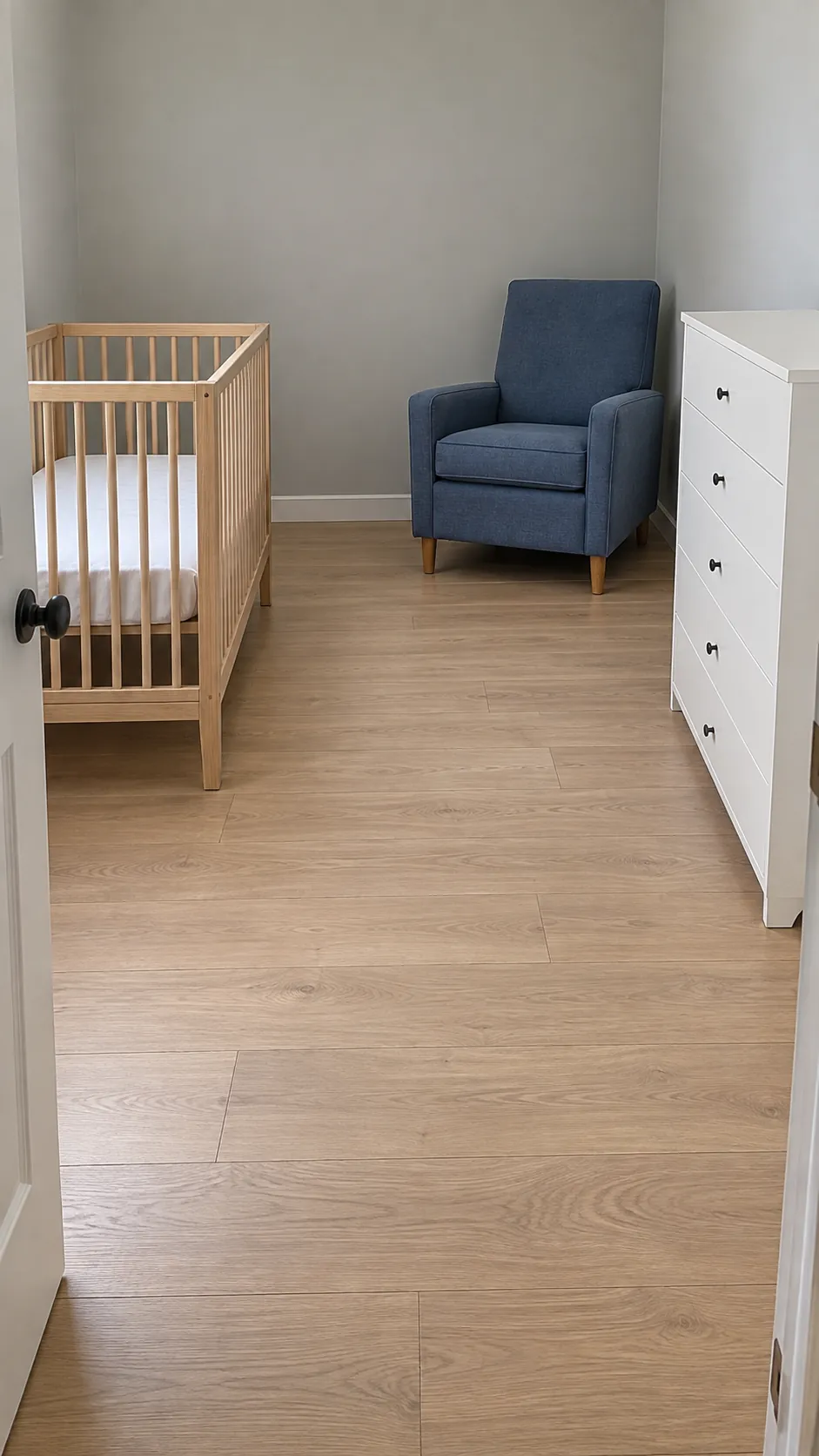
Remove the objects that interrupt those routes before buying another organizer. Keep doors, windows needed for emergency access, and heating or ventilation equipment unobstructed. Small nursery organization improves when storage stays within the furniture footprint rather than spreading into every gap.
If your baby shares your bedroom, you do not need to recreate a complete nursery suite beside the bed. The American Academy of Pediatrics recommends a separate infant sleep surface in the parents’ room for at least the first six months. Place practical supplies where the adults use them, while keeping the sleep area clear.
Use one suitable piece for changing and clothing
A compact changing station can reduce duplicate furniture, but only when the furniture and changing setup are designed to work together. Check the product’s intended use, compatible topper or pad, secure attachment method, and weight limits. Do not improvise a changing surface on a narrow shelf or unstable cabinet.
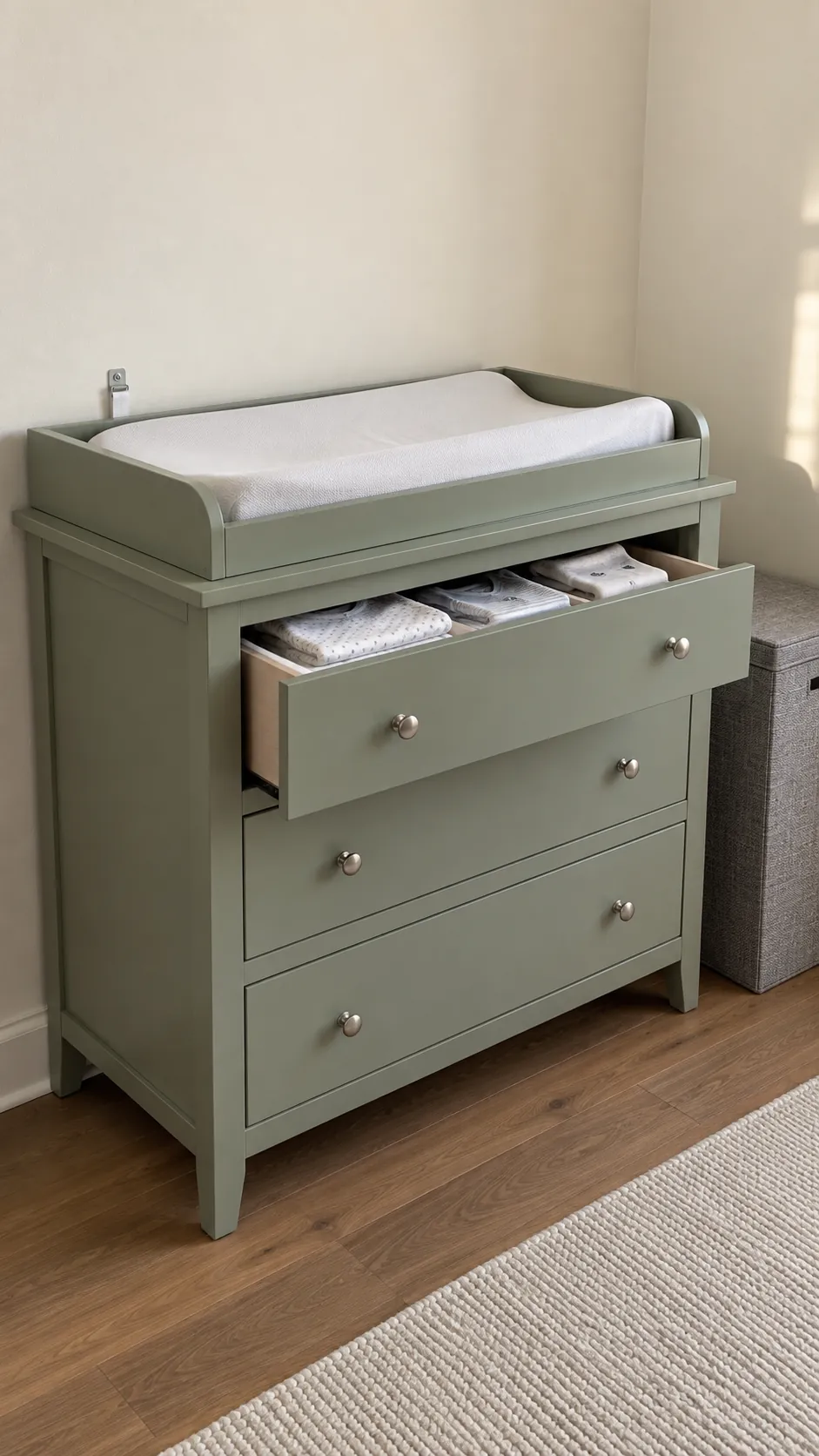
Anchor the dresser as instructed and leave enough room to stand in front of it with the drawers open. Store clothing and a small supply of changing items below, so a second freestanding unit is unnecessary. Keep one hand on your baby during changes and never step away, even when using the supplied restraint.
Measure the whole arrangement, including protruding handles and an open hamper lid. A shallower piece may help circulation, but the safe usable surface must still meet the product instructions. Choose the smallest suitable setup for your routine, not simply the smallest object sold.
Divide the closet by access, not just height
A nursery closet system should put frequent items where an adult can retrieve them comfortably. Use the easy middle area for current clothing and daily supplies, with less frequently used lightweight reserves above. Keep heavy items low and secure the system according to its instructions.
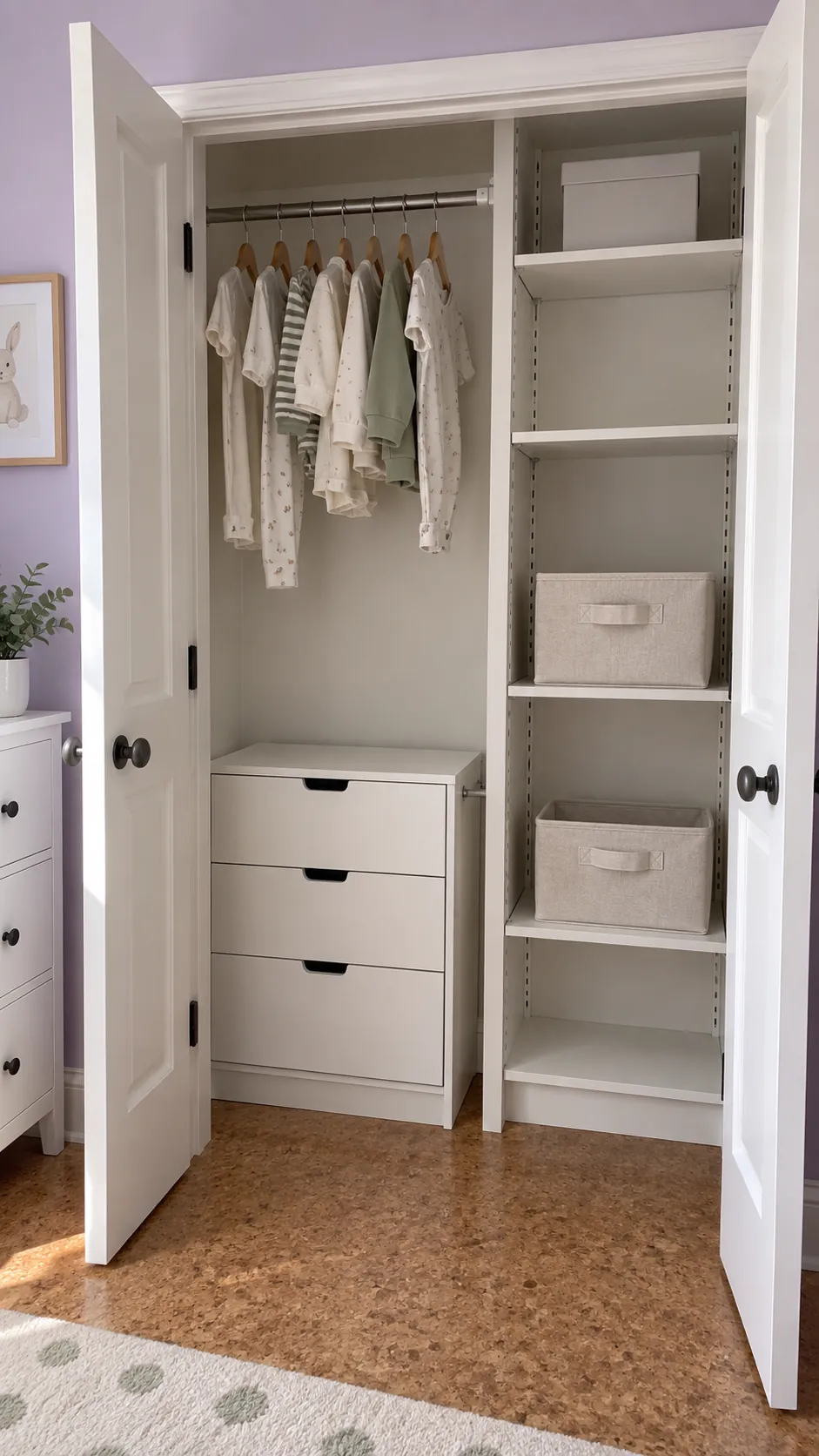
Measure the closet opening as well as the interior. A wide bin can fit inside yet become trapped behind a sliding door or hinge. Test one container before buying a full set, and check that drawers or baskets can come out without moving everything around them.
Short baby garments may leave useful space below the rail. A suitable anchored drawer unit or correctly installed additional shelf can use that area, provided it does not create an unstable stack. Leave room for longer clothes later instead of building the entire closet around newborn dimensions.
Choose vertical storage that stays useful and secure
Vertical nursery shelves can free floor space for lightweight books or adult accessed supplies. Install them with fixings appropriate to the wall and follow their load limits. Keep shelves, heavy decorations, and stored objects away from the crib and changing surface where they could fall or be pulled down.
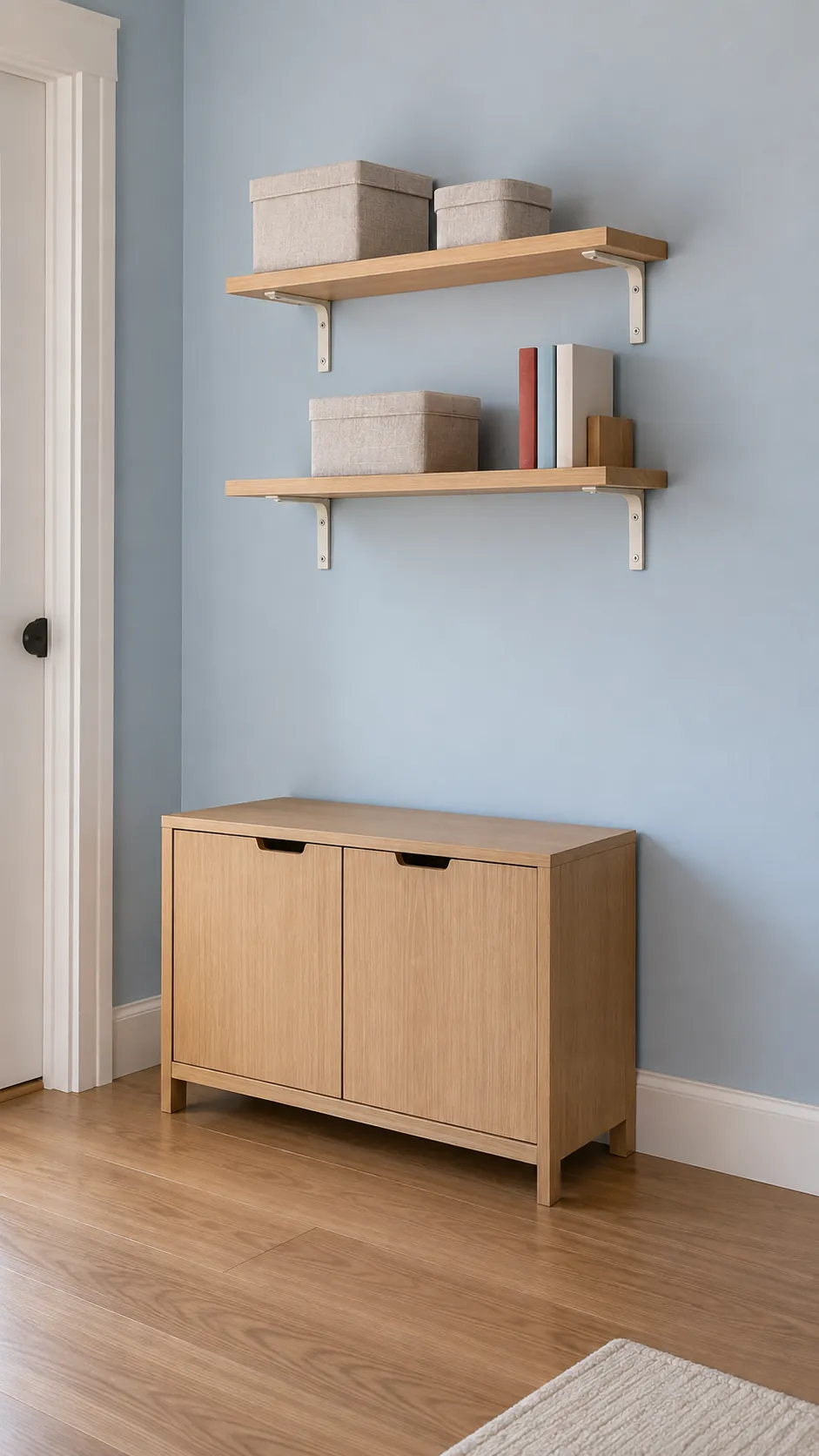
Use shallow shelves when deep storage would project into a walking route. Leave the most convenient shelf for the things you actually use, not a dense row of decorative objects. Avoid arrangements that encourage a child to climb furniture to reach an appealing item. In a rental, ask about approved fixings; an unsuitable adhesive mount is not a substitute for a secure installation.
Treat hidden storage as optional capacity
Under crib storage sounds like free space, but it must suit the crib manufacturer’s instructions and the crib’s changing mattress positions. Do not add attachments, alter the structure, or let a container interfere with moving parts, ventilation, or assembly. If compatibility is unclear, use a lower dresser drawer or another approved storage area instead.
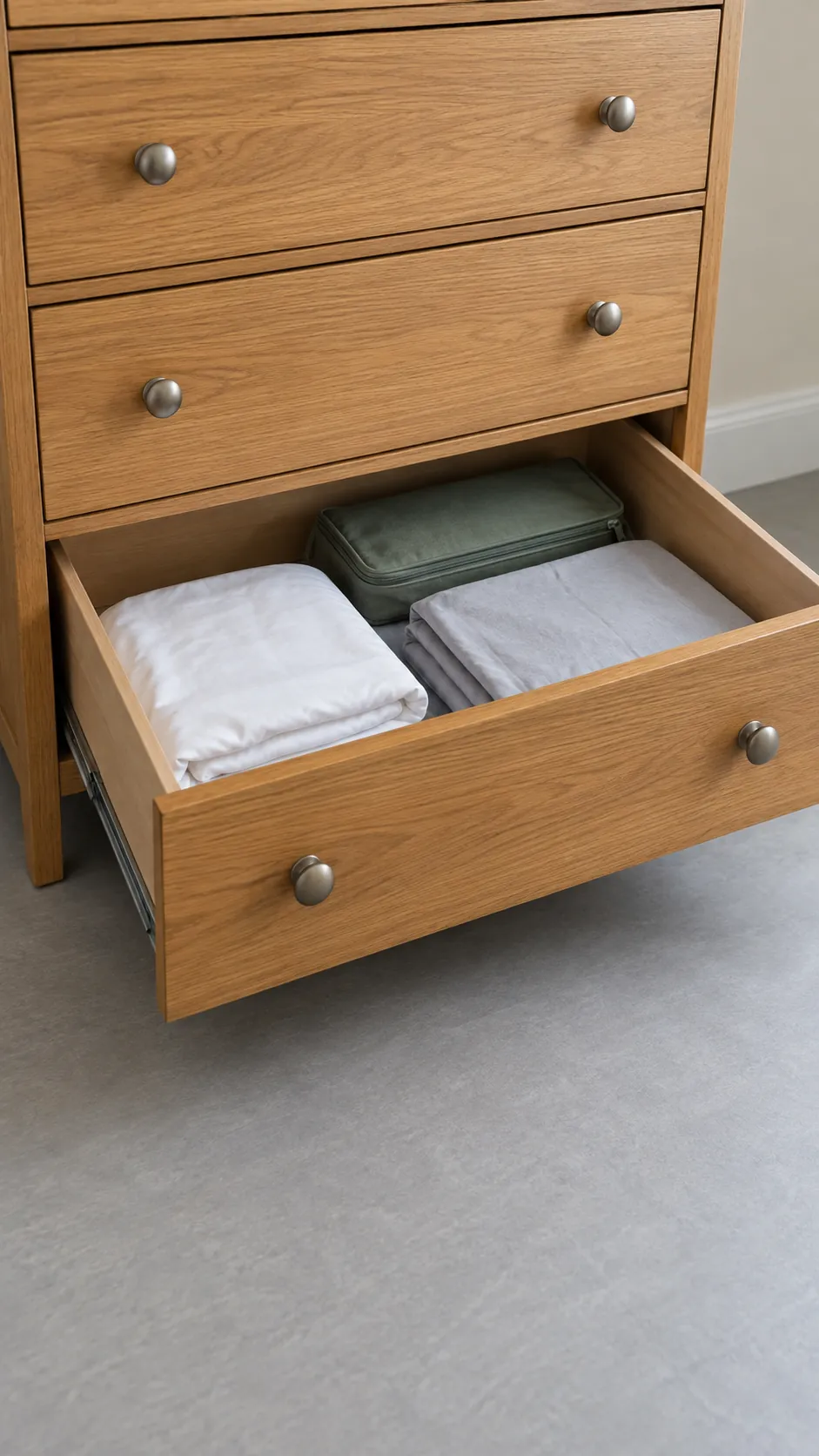
Crib storage ideas should never involve hanging bags, loose cords, or organizers from the rails unless the crib manufacturer specifically permits the accessory. Keep the sleep space limited to its firm, flat mattress and fitted sheet, without pillows, toys, bumpers, or loose bedding. The space beneath or beside a crib is not worth using if access becomes awkward.
For an appropriate low storage area, choose a shallow container you can remove without dragging furniture. Reserve it for occasional items rather than supplies needed during every change. Check for dust and inspect the storage again whenever the room setup or your child’s mobility changes.
Set a capacity limit for each category
Baby room storage baskets work best when each one holds a category you can name. Keep a basket for clean cloths or a shelf section for current clothing, and decide what happens when that space fills. Move outgrown items to a separate adult sorting area instead of compressing them into the active storage.
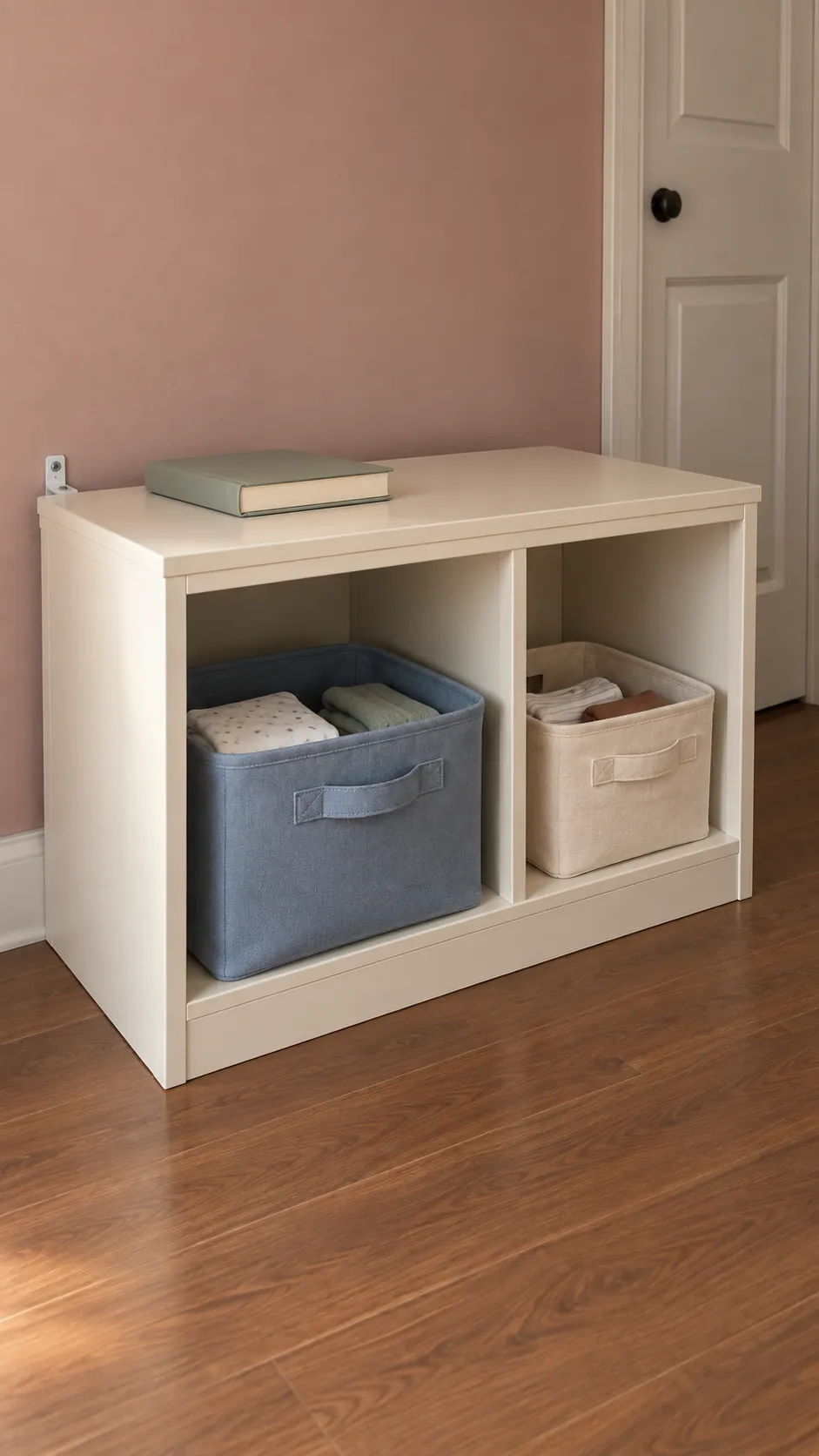
Leave some space empty on purpose. A shelf packed to its edge offers no easy place to return clean laundry or put away a new supply pack. If a category repeatedly overflows, reduce the amount stored in the nursery or choose a better location for reserves elsewhere in the home.
Finish by opening the closet, pulling the main drawer, and walking the nighttime route again. You should be able to use the room without first moving a basket. A room that stays accessible through an ordinary week has earned its storage choices.