
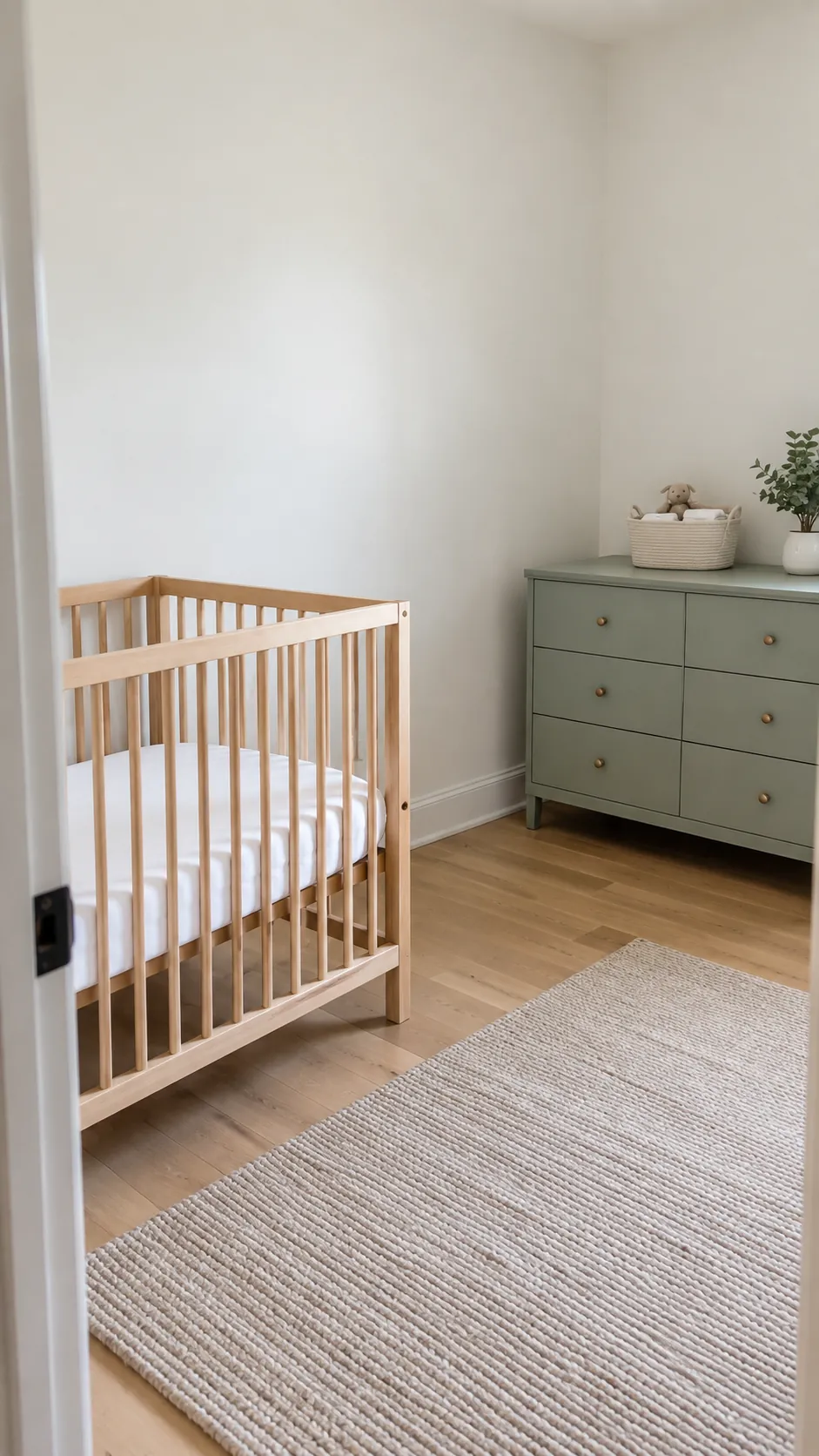
A beautiful chair is an expensive mistake if its rocking motion blocks the dresser. Start with the tasks you will repeat when you are tired, then give each one enough space. You can make the room feel personal after the layout works.
Decide where your baby will sleep first
A room can look finished and still make the first weeks harder. Before buying nursery furniture, decide where your baby will sleep, where you will change diapers, and where an adult can sit comfortably. Those tasks may happen in different rooms at first.
The American Academy of Pediatrics recommends room sharing without bed sharing, ideally for at least the first six months. Plan a separate crib or bassinet in your bedroom for that stage if it works with your living arrangements. A nursery can serve as storage and a changing space while that sleep setup is in use.
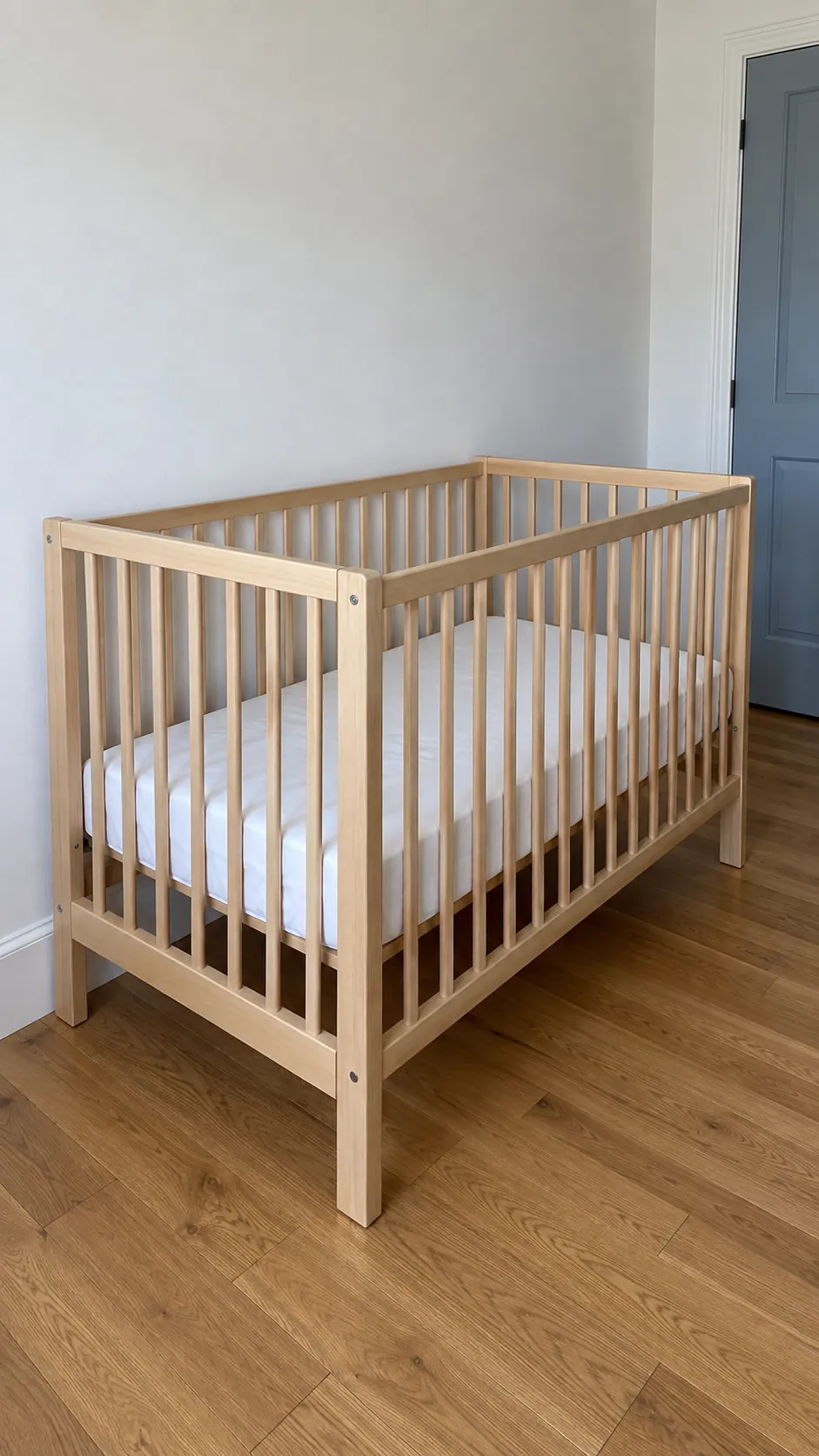
Use a firm, flat sleep surface in a safety compliant crib, bassinet, or play yard with its fitted sheet only. Keep pillows, blankets, bumpers, positioners, and toys out of the sleep space, and place your baby on their back for every sleep. Check current local safety guidance and the product instructions before using any sleep equipment.
Measure the room before choosing the furniture
Draw the room on paper and mark every door swing, window, radiator, vent, and outlet. Measure the usable wall lengths rather than estimating from the room dimensions alone. Include the closet opening, since a dresser that fits against a wall can still prevent a closet door from opening.
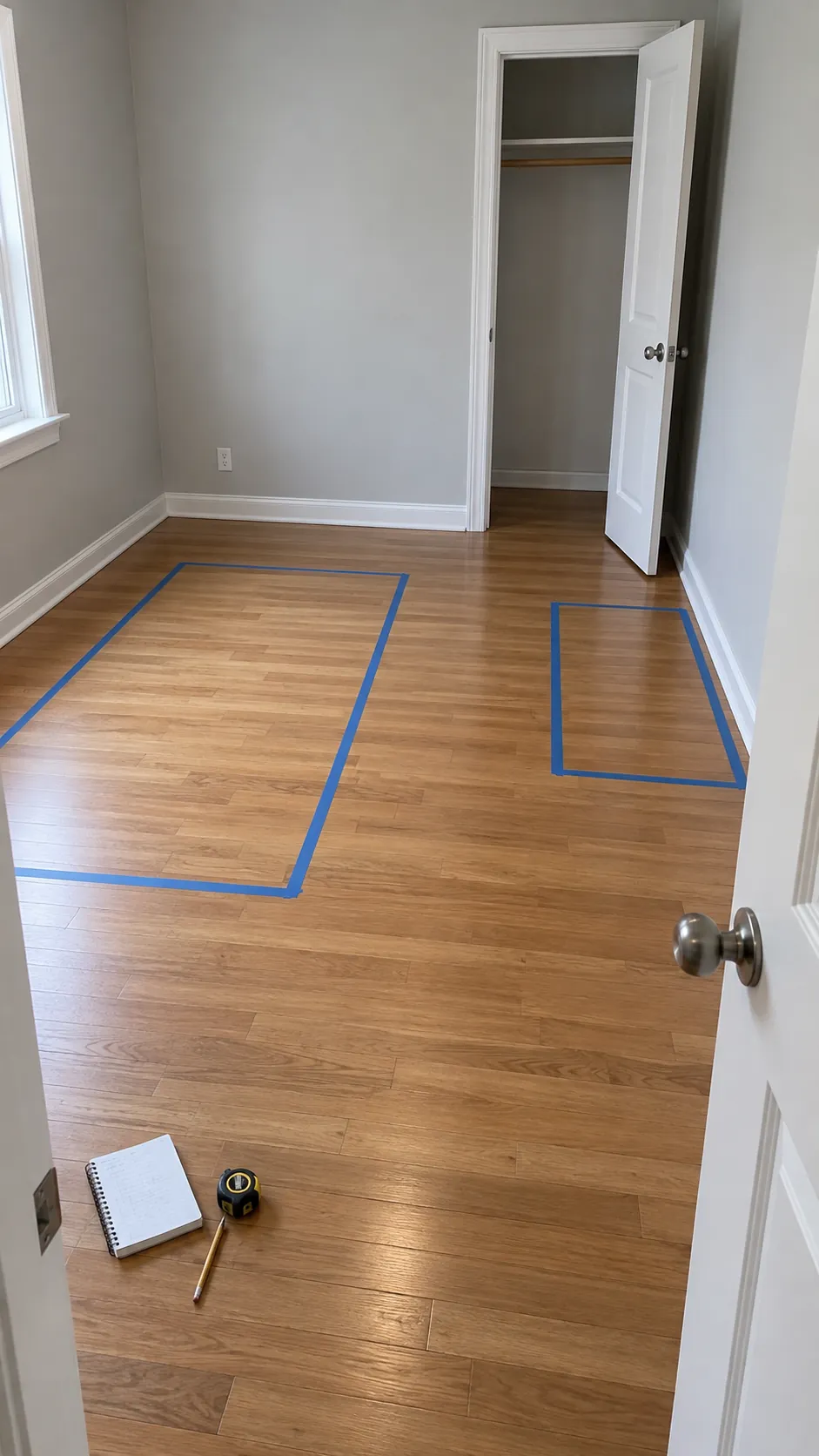
Use the actual outside dimensions of each furniture candidate, not the mattress size. Mark those footprints with removable tape, then open drawers and walk between the proposed crib and changing area. Test the glider at its full travel, leaving the clearance required by its manufacturer.
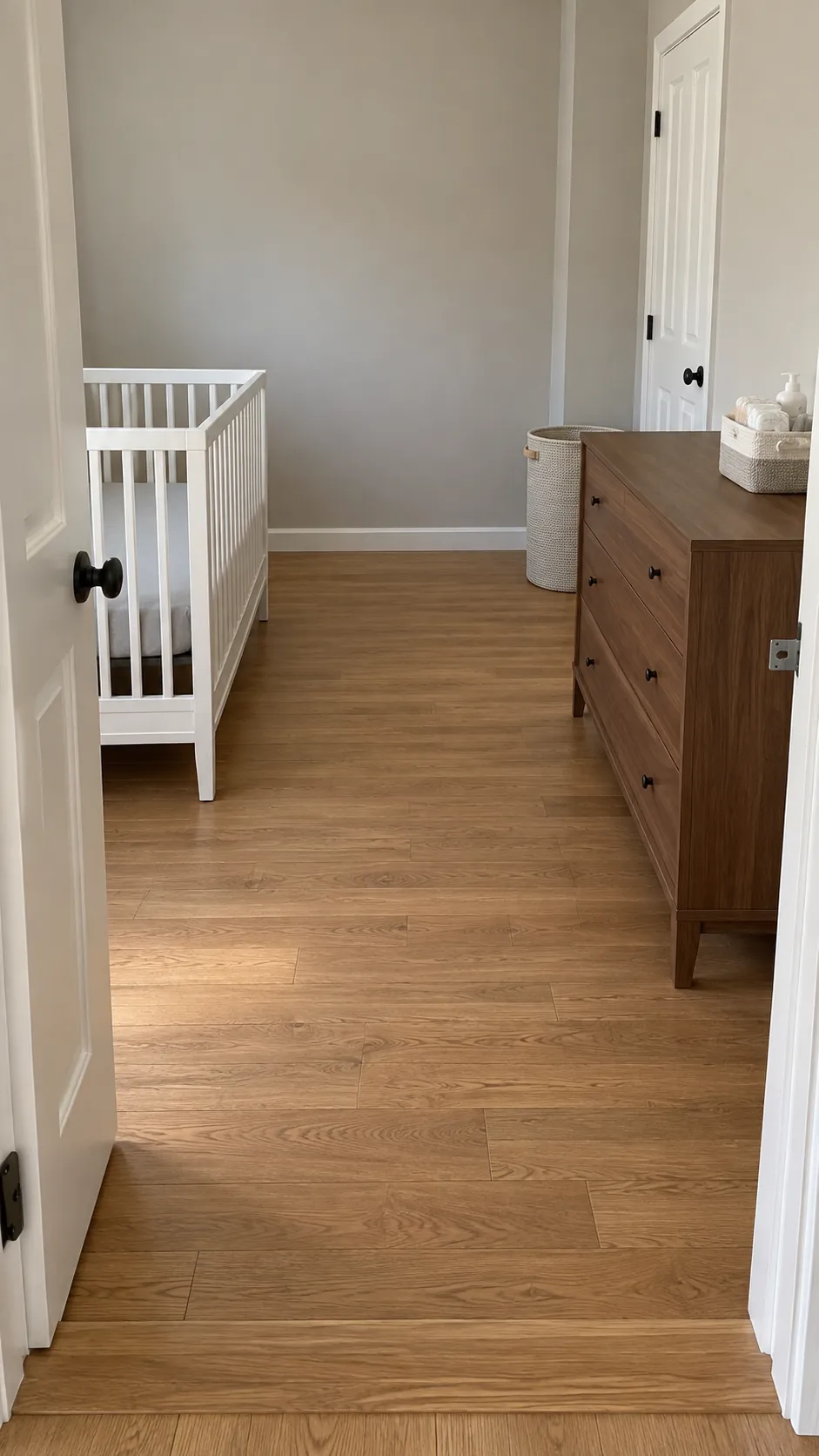
Put the crib away from windows, curtain cords, heaters, and reachable cables. Keep shelves and heavy decorations off the wall above it. Crib and dresser placement should preserve a clear route from the door, rather than forcing you to squeeze around a chair while carrying your baby.
For a small nursery, compare a crib plus dresser arrangement with one that also includes a chair. Move feeding to another suitable room if the chair blocks everyday access. A nursery layout planner can be as simple as a measured sketch and paper furniture shapes; accurate dimensions matter more than the software.
Set a budget around the jobs the room must do
Divide your baby room budget into essentials, useful extras, and decoration. Price the sleep setup, suitable mattress, fitted sheets, diaper supplies, furniture anchors, and necessary window coverings before choosing a theme. Include delivery and assembly costs so the apparent furniture price does not consume the whole allowance.
A coordinated set is optional. A sound dresser with compatible changing equipment may be more useful than a separate changing table, provided the manufacturer permits the arrangement and the equipment is secured as instructed. Check secondhand furniture for recalls, missing parts, damage, and current safety compliance; an unknown history is a reason to pass on sleep equipment.
Leave some money uncommitted until you know your routine. You may discover that a second small diaper basket is more useful than another cabinet. Choose one or two colors from items you already own for a nursery mood board, then use paint or washable textiles to connect them.
Keep changing supplies close and overflow elsewhere
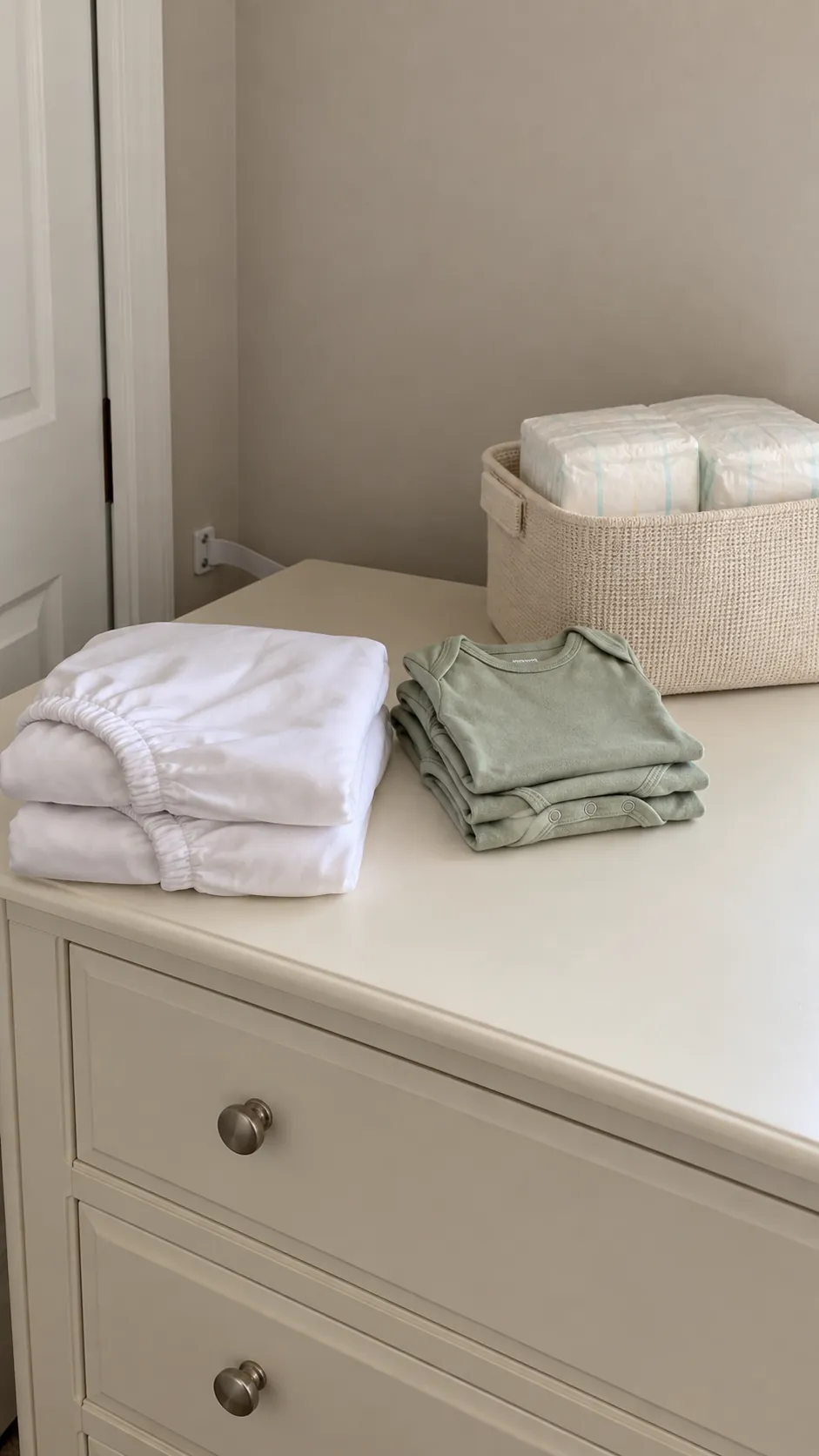
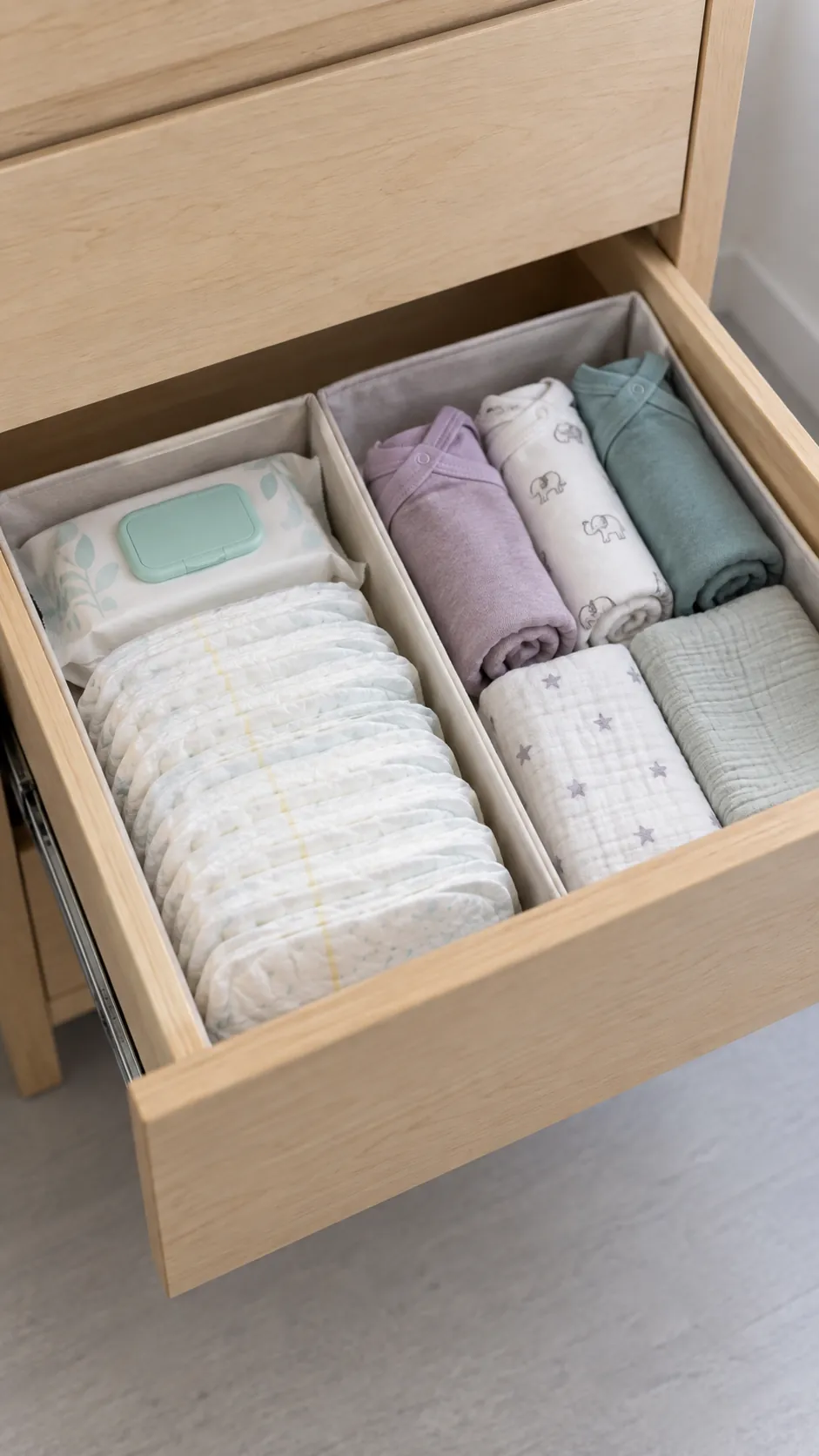
Arrange the changing area so diapers, wipes, and a clean outfit are reachable without stepping away. Keep a hand on your baby during changes and never leave them unattended on an elevated surface. Store creams and other potentially harmful items securely out of a child’s reach.
A shallow drawer can hold current size clothing in small groups, with the next size stored separately. Put spare sheets near the place you change bedding and move bulk diaper boxes to a closet if floor space is scarce. This nursery storage plan keeps daily supplies visible without asking the smallest room to hold every future purchase.
Anchor dressers and other tip prone furniture to the wall according to their instructions using hardware appropriate for the wall. A low cabinet is not automatically safe without anchoring. Keep storage away from the crib so it cannot become a climbing step as your child grows.
Plan light and cords around the evening routine
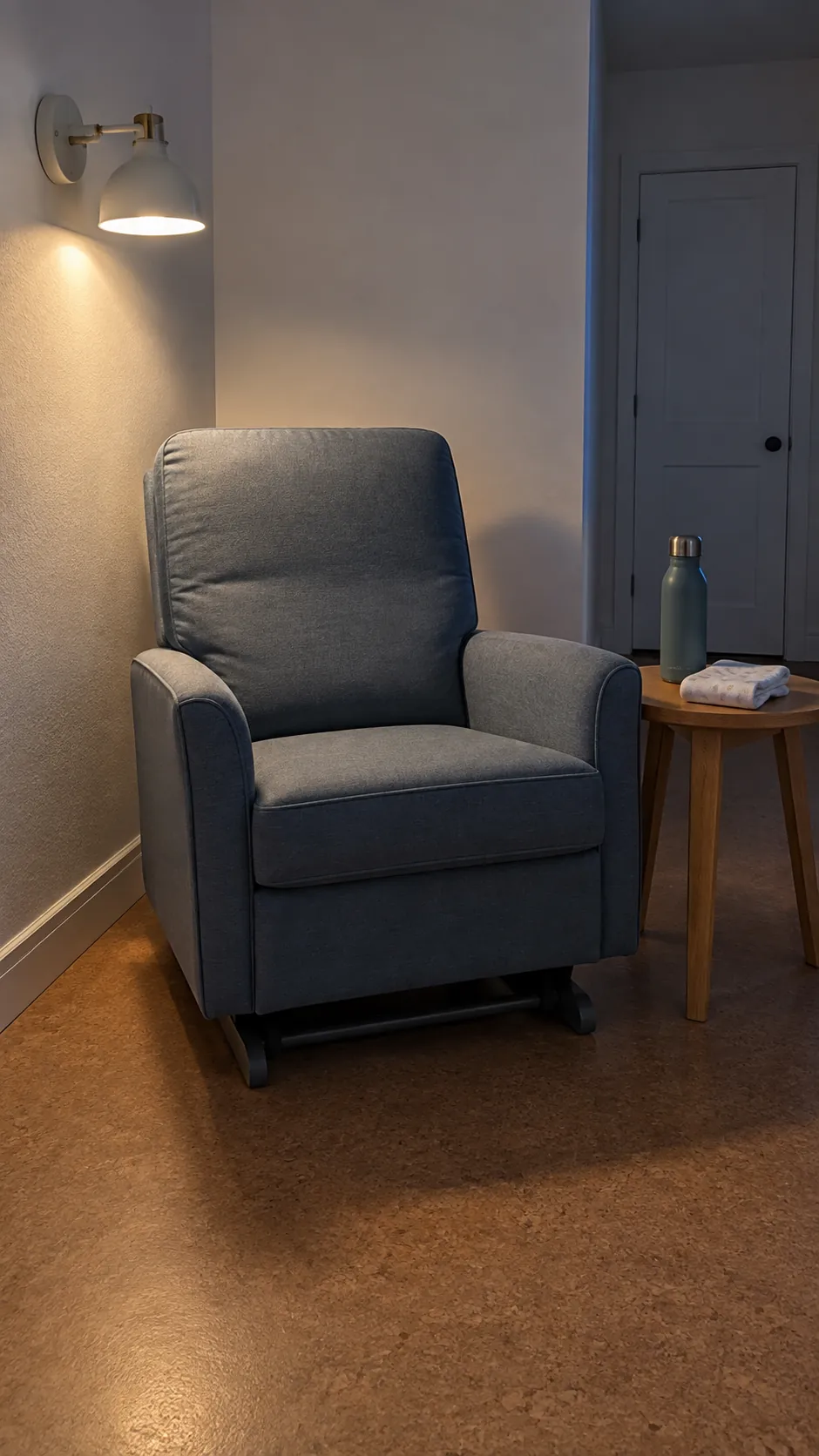
Test the room after sunset before buying another lamp. You need enough light to see a diaper change clearly, while a separate lower light may suit settling and feeding. Choose stable fixtures and route every cable away from the crib and any future climbing or grabbing spot.
Cordless window coverings remove a common cord hazard, but they still need correct installation. Keep the crib away from the window rather than treating a blind as the only protection. If a monitor has a cord, follow its placement instructions and keep the entire cord at least three feet from the crib and beyond your child’s reach.
For a feeding chair, check that your feet rest comfortably and that supplies sit within reach on a stable surface. A chair or sofa is not a safe infant sleep surface. If you feel sleepy, return your baby to their separate safe sleep space rather than planning to doze together in the chair.
Rehearse the room before calling it finished
Walk through a diaper change, a clothing change, and a bedding change without your baby. Open the doors, pull out the drawers, and check whether the hamper interrupts the route. Move whatever gets in the way before adding decorative pieces.
Use your baby nursery checklist to confirm the essentials: an appropriate empty sleep space, secured furniture, accessible daily supplies, safe cord placement, and a clear path. Check smoke and carbon monoxide alarms as appropriate for your home and local requirements. Revisit the setup when your baby starts reaching, rolling, sitting, and climbing, because yesterday’s out of reach shelf may become tomorrow’s target.
The useful test is not whether every corner looks decorated. It is whether you can find a clean sheet, reach a diaper, and put your baby down safely without moving three other things. Let that test decide which purchases can wait.
For current infant sleep guidance, see the American Academy of Pediatrics safe sleep advice. Check product recalls through the Consumer Product Safety Commission before using secondhand equipment.