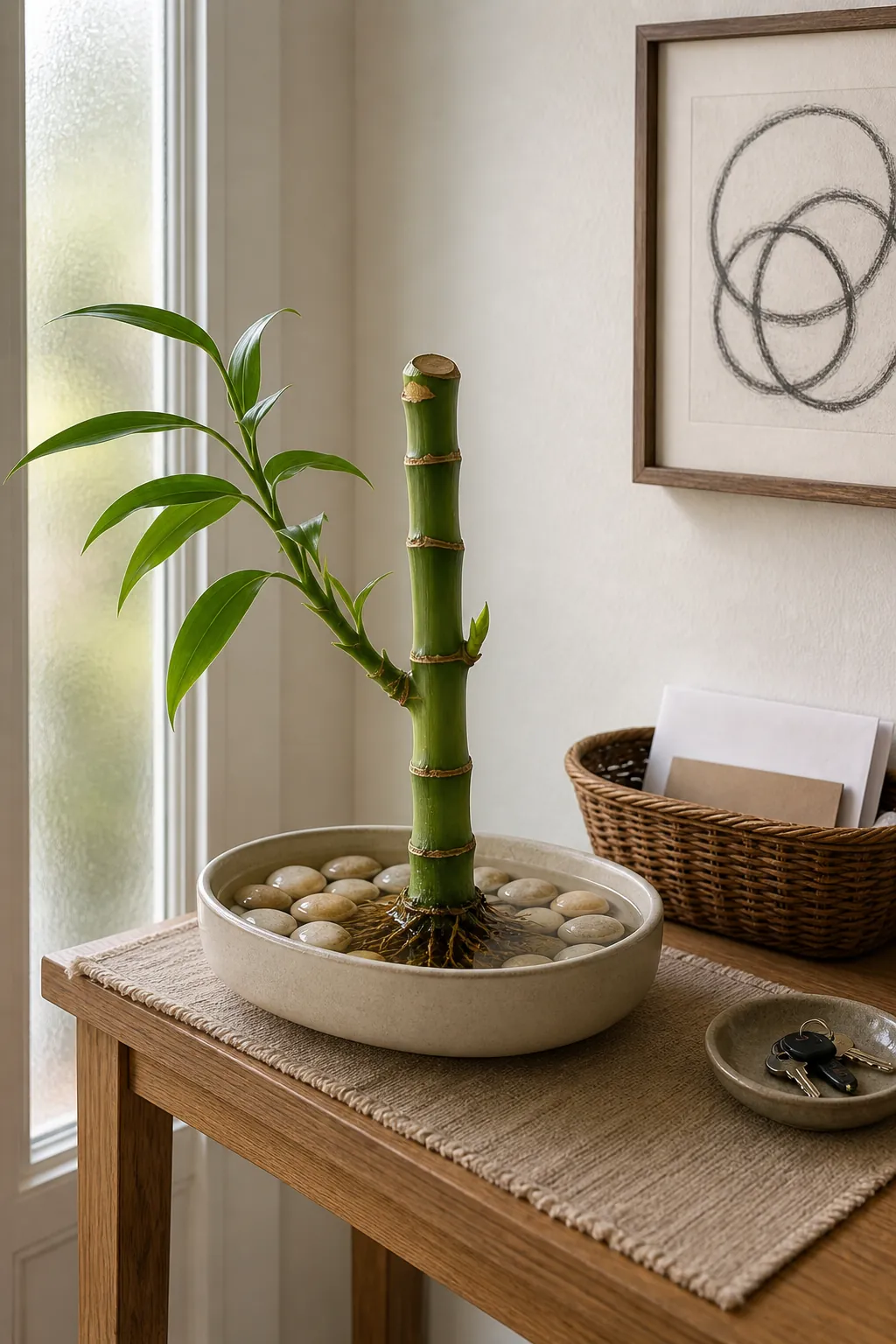
The hardest part of lucky bamboo propagation is not waiting for roots. It is deciding what to cut without sacrificing the healthy plant you already have. A good cutting includes living stem tissue and at least one usable node, while leaves alone cannot produce a complete new plant.
Choose a Vigorous Leafy Shoot
Select a fresh green side shoot that is firm, actively growing, and free from yellowing or soft tissue. A shoot several inches long is easier to handle and gives you room to keep leaves above the water. Avoid taking a cutting from a cane that smells sour, has black patches, or is declining from the base.
Locate the raised rings where leaves and roots can develop. Your cutting needs a node near its lower end because a plain leaf blade has no reliable growing point for a new plant. If the mother plant has sentimental value or only one healthy shoot, waiting for stronger growth is safer than making a hopeful cut too early.
Make One Clean Cut
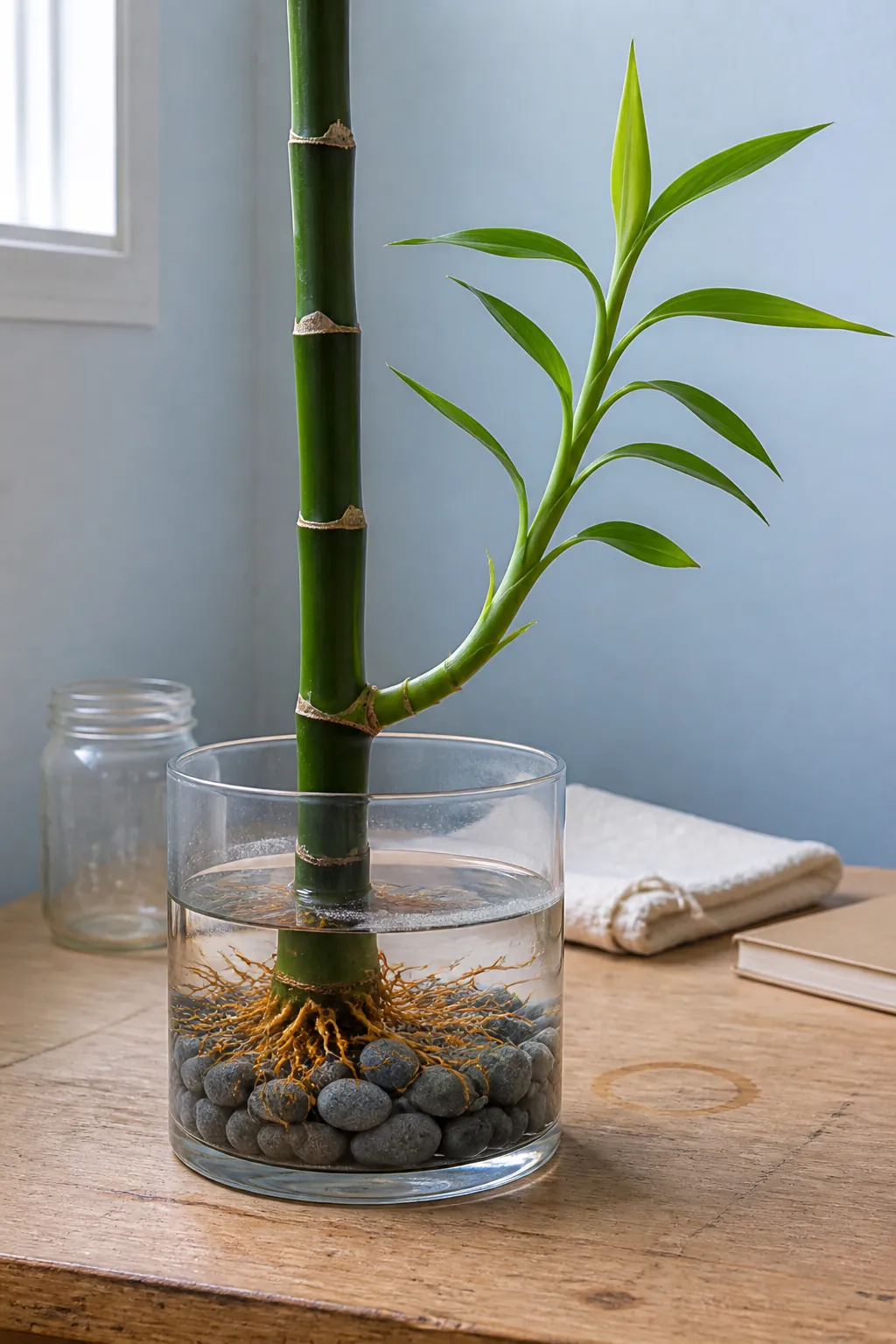
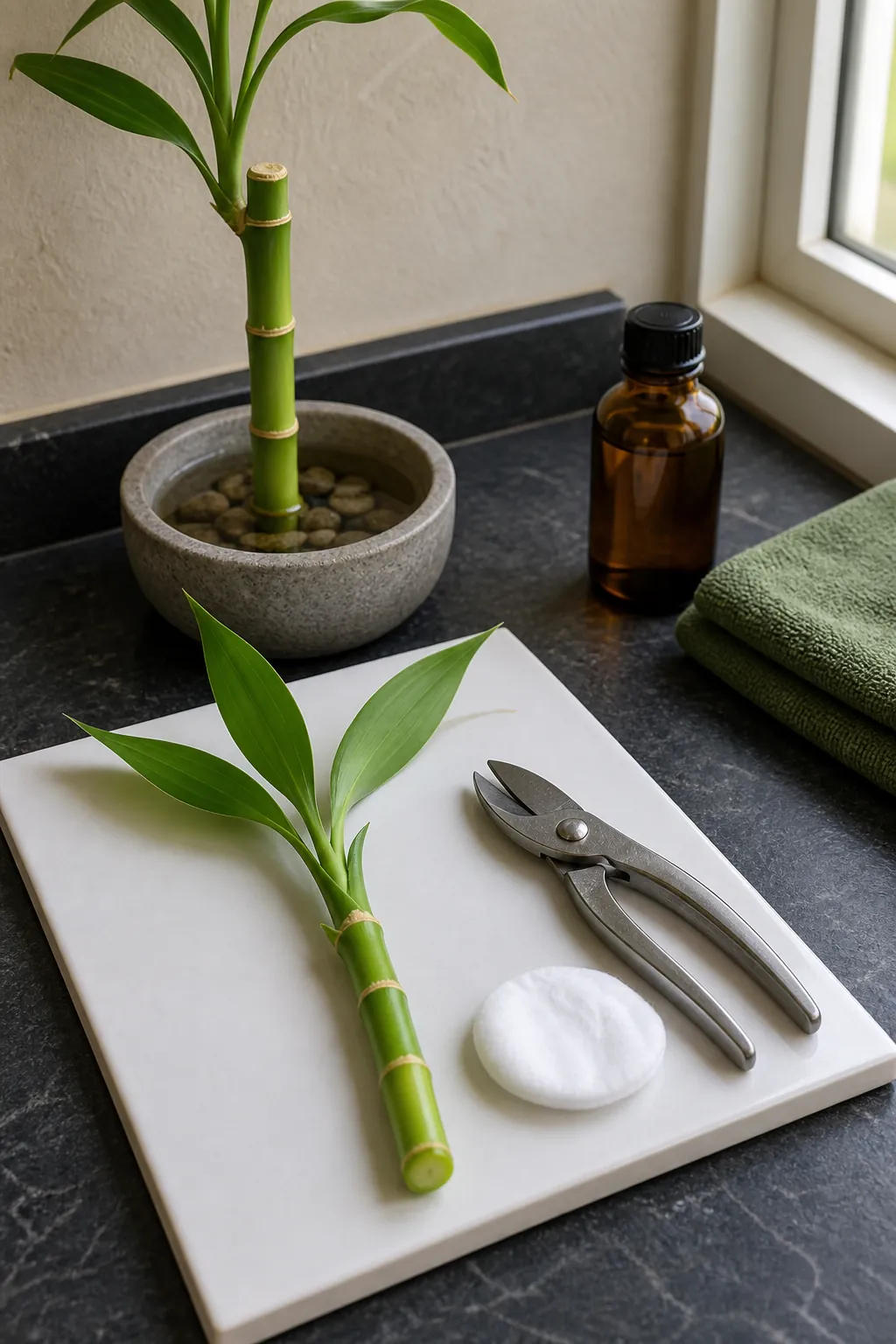
Clean a sharp pair of pruners with rubbing alcohol and let the blades dry. Cut the side shoot close to its connection with the main cane without gouging the cane itself. A smooth cut heals more predictably than a crushed or torn stem.
Remove any leaves that would sit below the future waterline, but keep the healthy top foliage. Set the cutting on a clean surface briefly so the cut stops dripping before it enters water. Do not coat the bottom of the cutting with wax, since that is the end that must form roots.
Root the Node in Clean Water
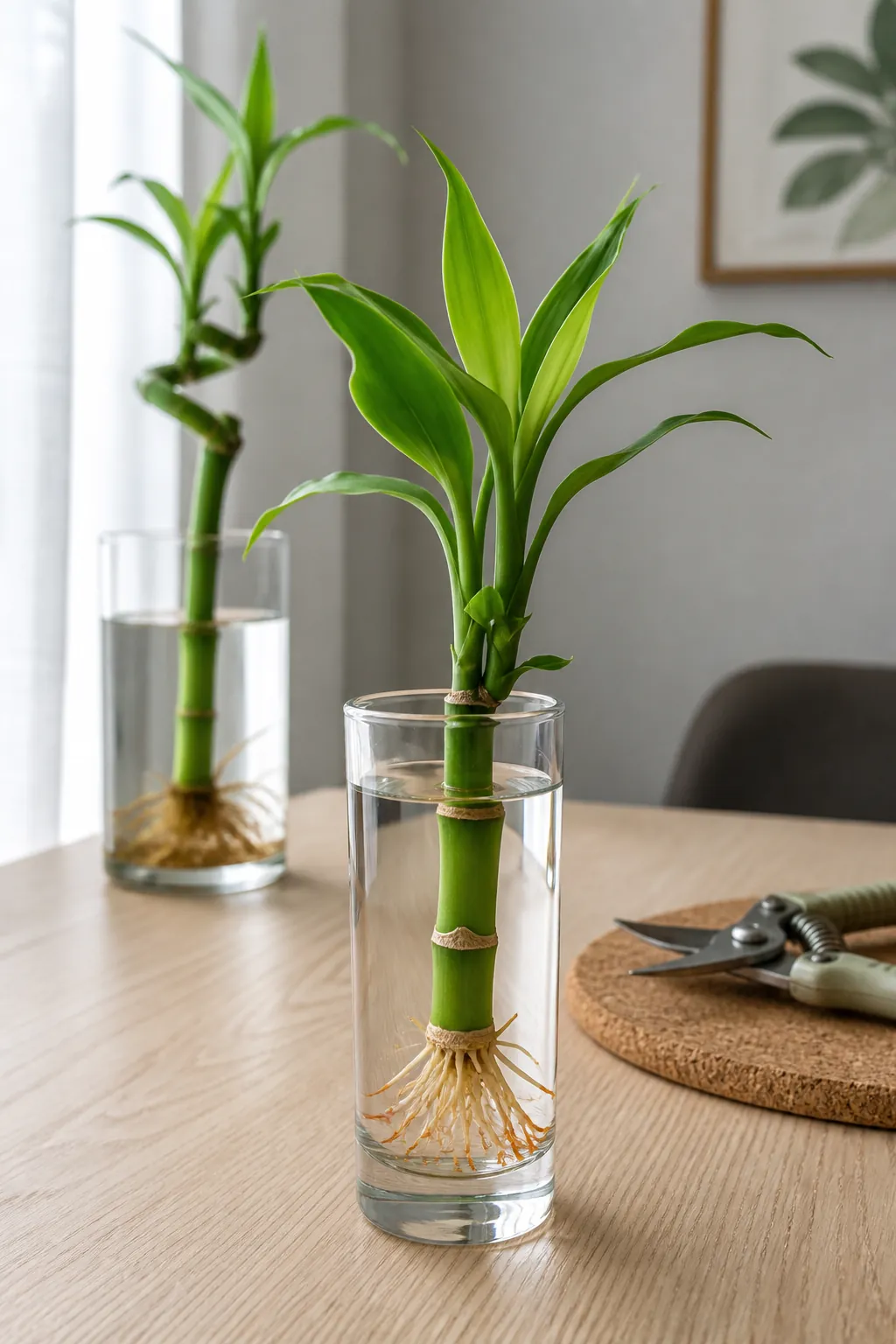
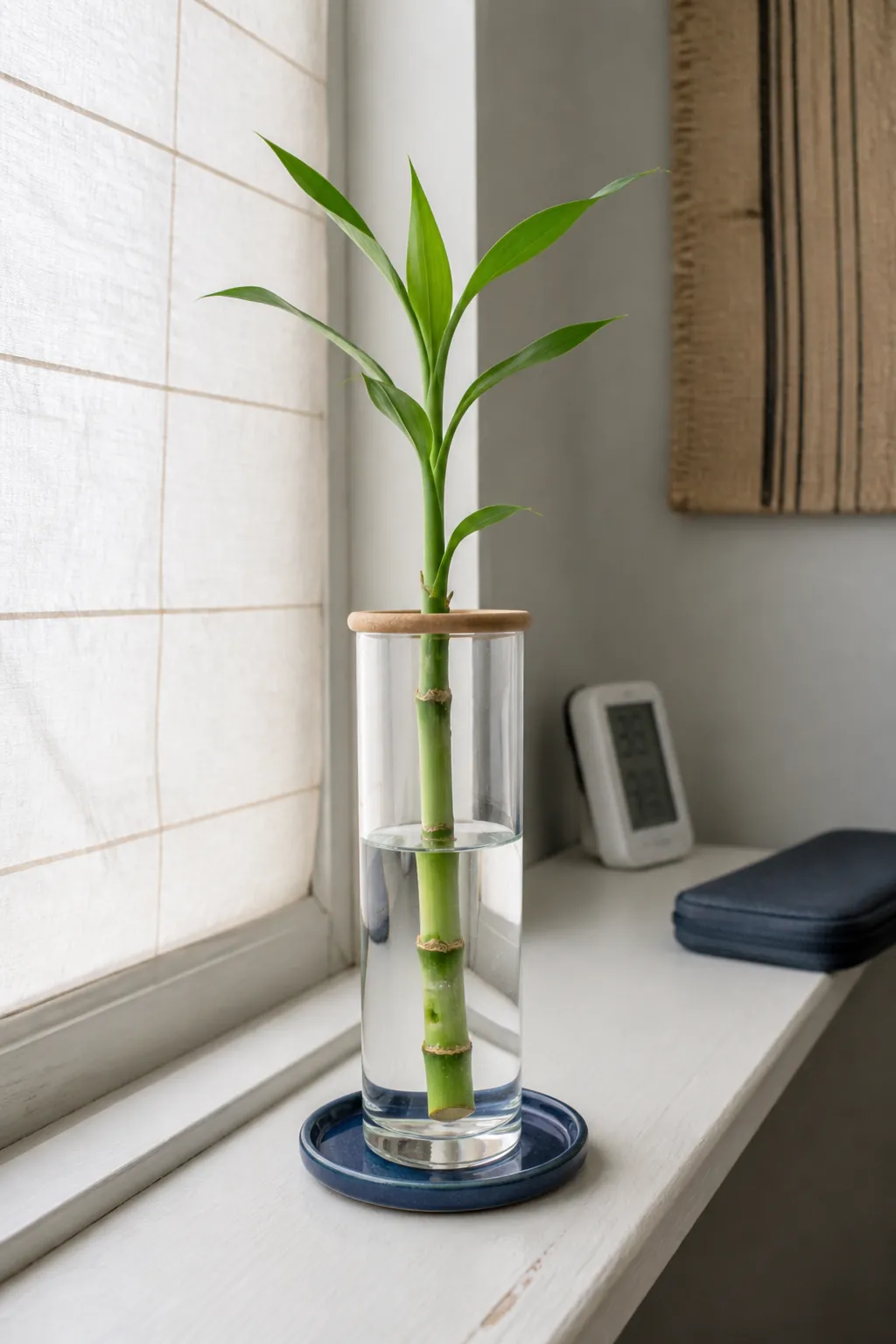
Place the cutting upright in a small clean glass with the lowest node beneath the water and every leaf above it. A narrow vessel helps support the shoot without packing stones tightly around tender tissue. Use filtered water or rainwater if your tap water regularly causes brown tips on dracaena.
Set the glass in bright indirect light and normal warm room conditions. Direct sun can heat the small water volume and stress a cutting that has no roots yet. Rooting hormone is optional for lucky bamboo in water, and clean conditions matter more than adding products to the glass.
Refresh Water While Roots Develop
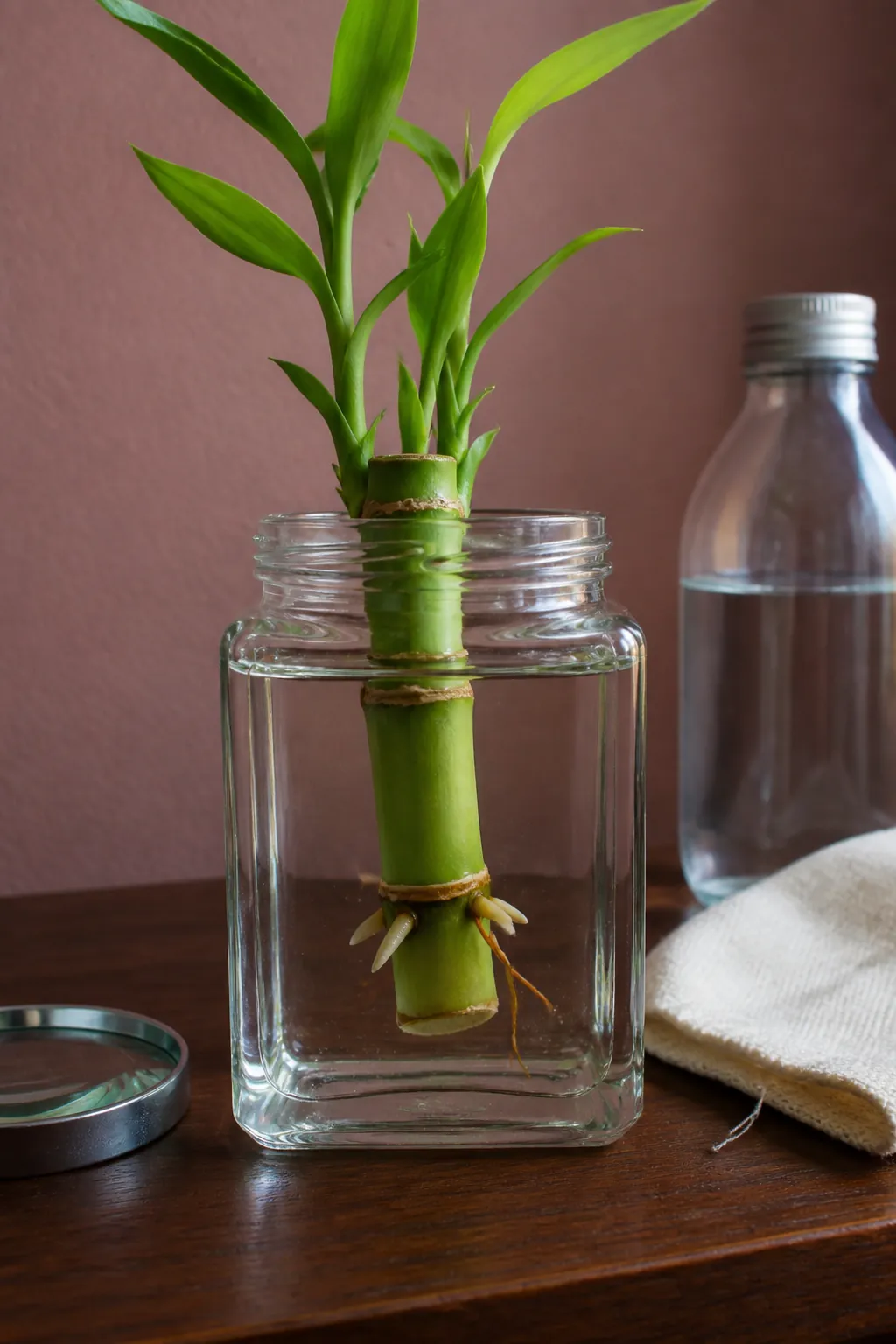
Check the glass every few days and replace water that becomes cloudy or develops odor. Rinse the vessel gently, then refill it to the same level so the node stays covered and the leaves stay dry. Do not pull the cutting out repeatedly to inspect every pale bump, because new root tissue is delicate.
Roots may appear in a few weeks, but temperature, season, and cutting vigor can change the schedule. Healthy progress begins with small pale nubs that extend into cream or orange roots. A soft dark base or rapidly yellowing stem signals rot, so remove damaged tissue with clean pruners and restart only if firm green stem remains.
Move the Rooted Cutting Carefully
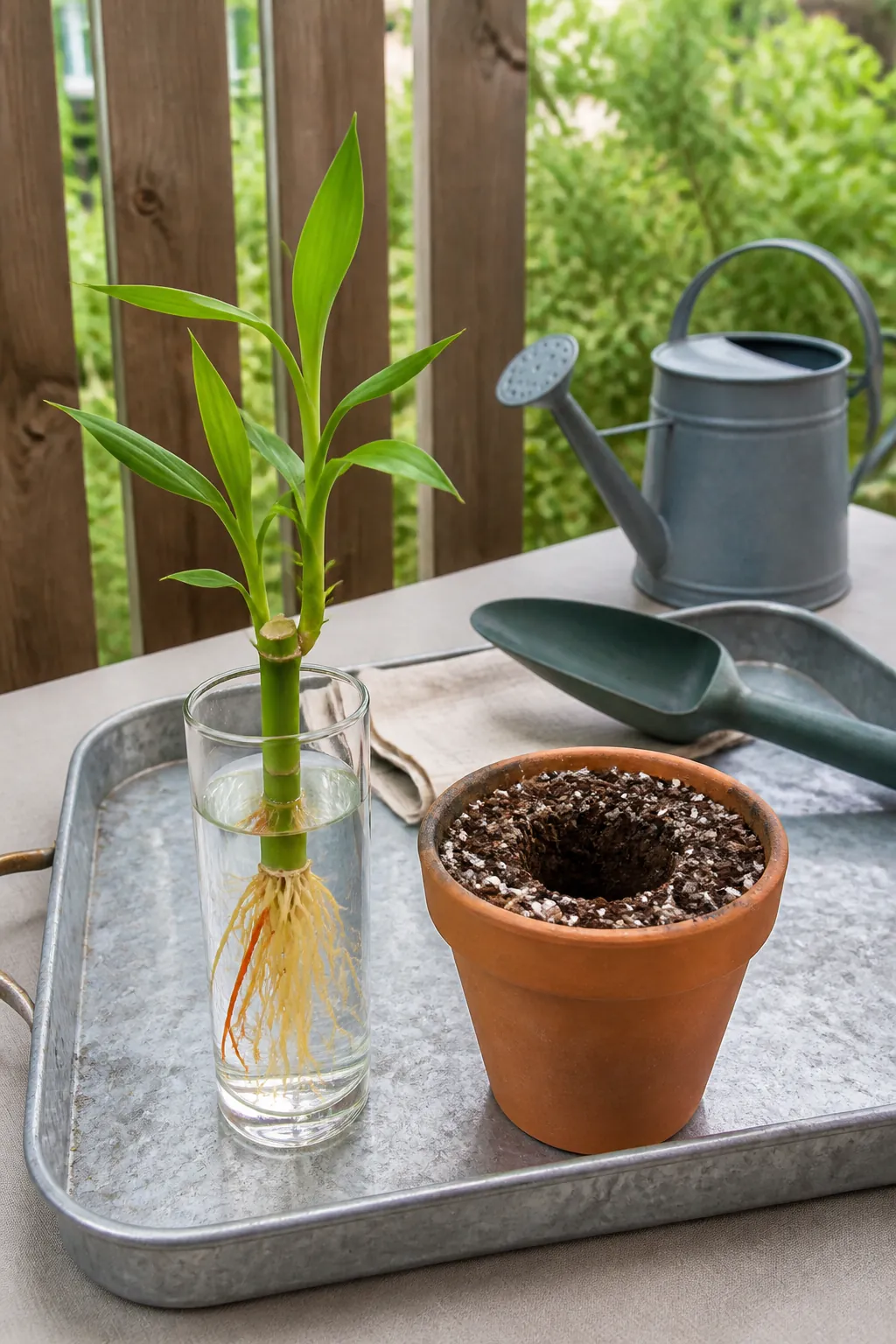
Once several roots are a few inches long, you can keep the new plant in water or transfer it to a small pot with a loose, well drained mix. Water grown roots are adapted to constant moisture, so keep the mix evenly moist during the first transition period. A pot only slightly wider than the root system is easier to manage than a large container that stays wet for too long.
If you keep the cutting in water, support it with a few smooth pebbles and maintain a level that covers the roots rather than a long section of cane. Continue using bright indirect light. Wait for obvious new leaf growth before feeding lightly, because fresh roots are more important than rapid top growth.
Support the Original Cane
The mother cane can remain healthy after its side shoot is removed. Keep its roots clean, protect it from direct sun, and watch the nodes below the cut for new growth. Avoid making several cuts at once, since the plant needs foliage and stored energy to recover.
A clean dry cut on the parent can be left to heal in a clean indoor setting. Keep the cut surface above the waterline and never let water collect inside a hollow damaged area. The most useful sign of success is not an instant sprout, but a firm green cane that remains stable while the separate cutting builds roots.