
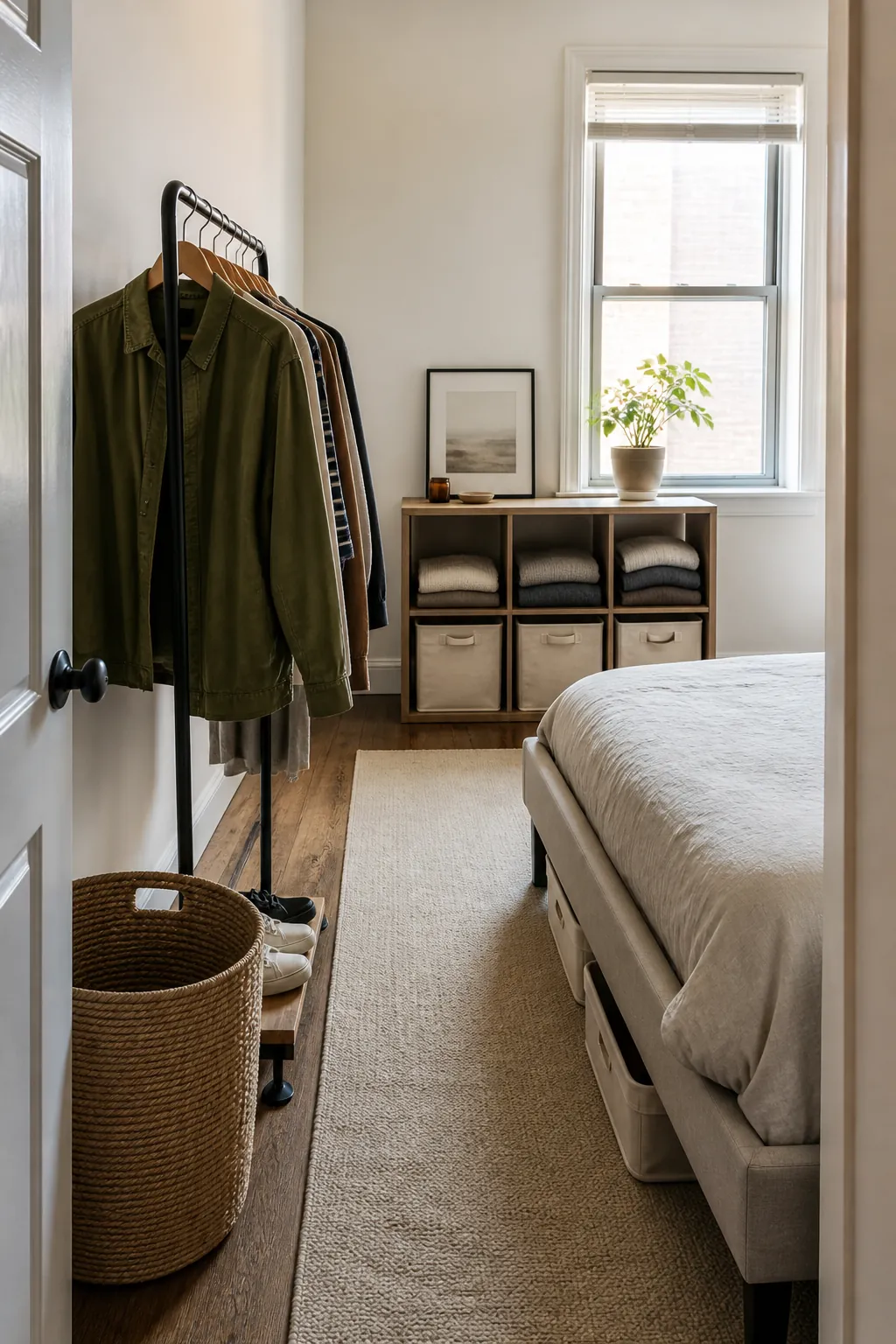
A missing dresser is not really a furniture problem. It is a sorting problem that becomes visible every morning, when folded clothes slide into piles, worn items land on a chair, and the one shirt you need disappears at the bottom of a bin. The useful fix is to give each clothing type a home that matches how often you reach for it and how carefully it needs to be stored.
The strongest no dresser storage setup is usually a small collection of simple zones, not one heroic replacement cabinet. Hanging space protects clothes that wrinkle, open containers make everyday basics easy to see, and closed storage keeps seasonal pieces out of the way. Build those zones around your real laundry habits and the room can stay calm without surrendering a large patch of floor.
Start With the Clothes You Actually Wear
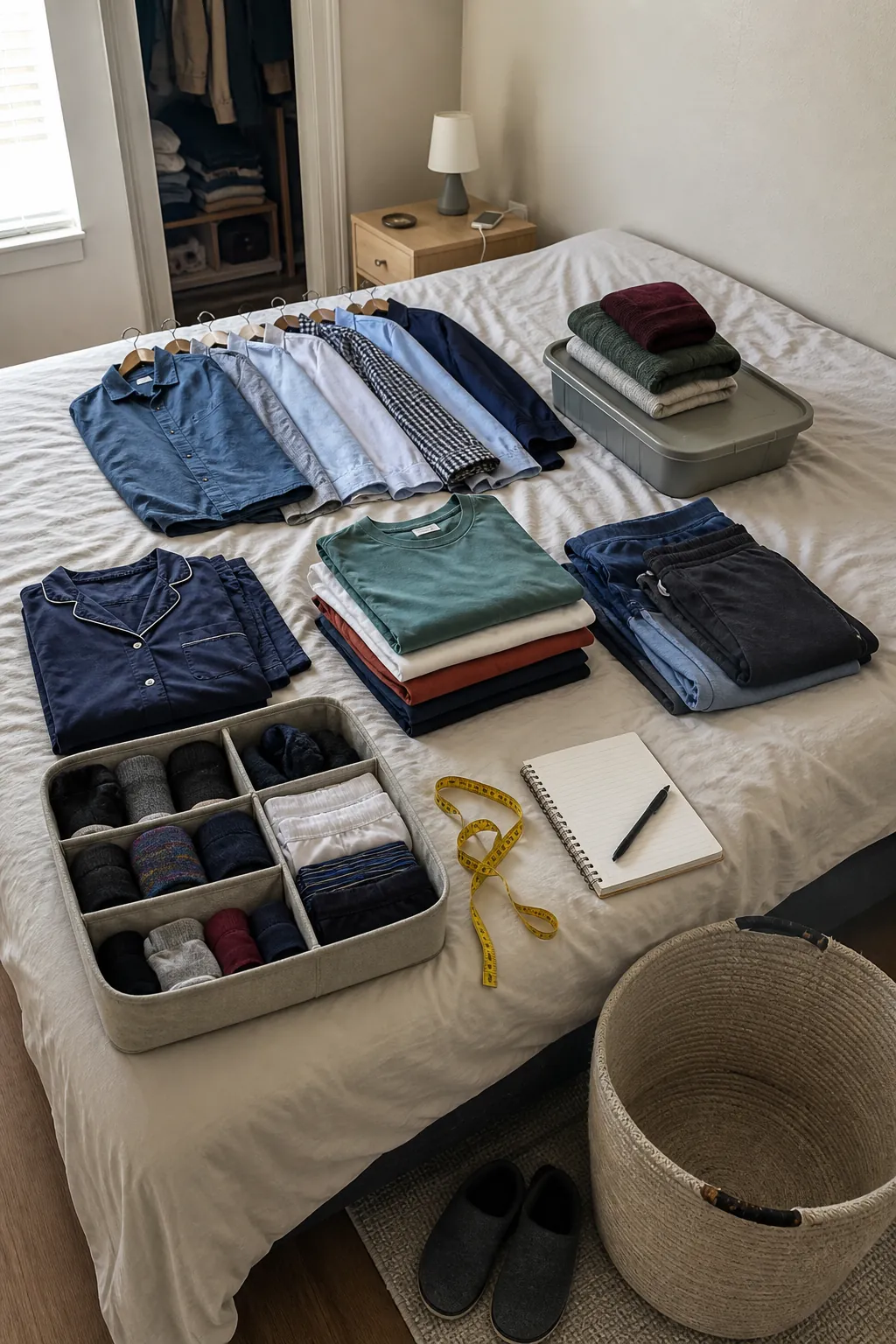
Before buying storage, separate the clothes that support your current week from the clothes that belong to another season, another size, or an imagined occasion. Keep enough everyday pieces to cover your normal laundry cycle, plus a sensible margin for delays. This creates a realistic capacity target and prevents a new rack or shelf from becoming another crowded holding area.
Sort by action rather than by broad category. Make one group for clothes that need hangers, one for soft pieces that fold well, one for underwear and socks, one for sleepwear, and one for items you plan to wear again before washing. That last group matters because it is often the source of the bedroom chair pile.
Measure the volume of each group after the edit. A short stack of shirts may need only one cube, while a work wardrobe may justify most of a garment rack. Let the kept clothes determine the storage instead of forcing every available possession into whatever organizer happens to fit.
Use a Garment Rack for Clothes That Need Air
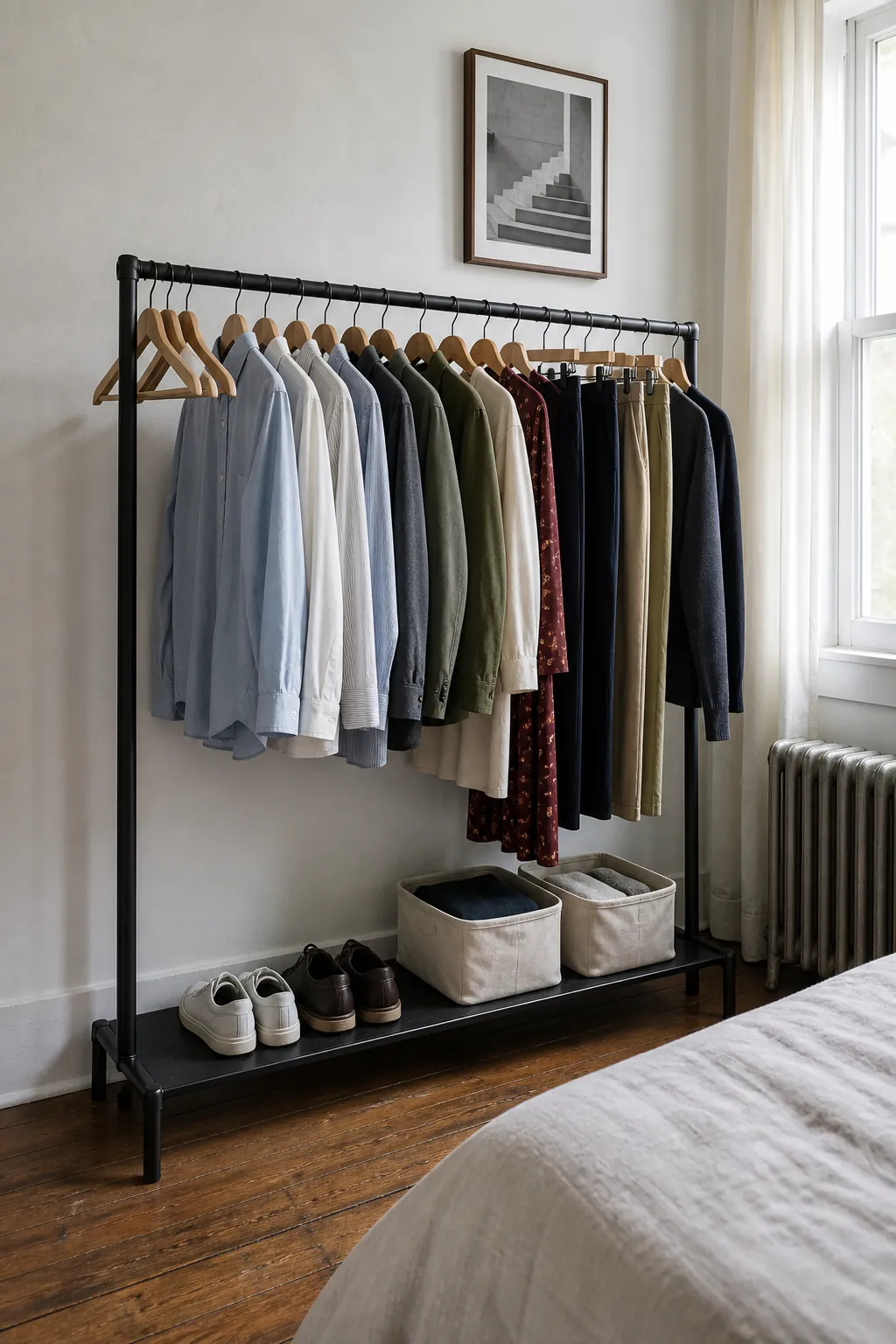
A garment rack is one of the clearest closet alternatives when dresses, shirts, jackets, or work clothes make up a large part of your wardrobe. Choose a stable rack with a useful lower shelf rather than the widest model you can squeeze into the room. A narrow rail that holds only current clothes is easier to live with than a packed rail that bows, wobbles, and hides every garment.
Use slim matching hangers to reduce visual noise and reclaim a little width. Keep the most frequently worn pieces near the easiest end of the rail, then place occasional garments farther back. Shoes or two low baskets can sit below, but leave enough open space that cleaning the floor does not require dismantling the whole system.
Open wardrobe storage works best when every hanger faces the same direction and empty hangers have one designated spot. The rail should not become a landing place for bags, laundry, and towels. If the room collects dust quickly, use breathable garment covers only for delicate pieces instead of wrapping the entire rack in a bulky enclosure.
Turn a Cube Shelf Into Visible Drawers
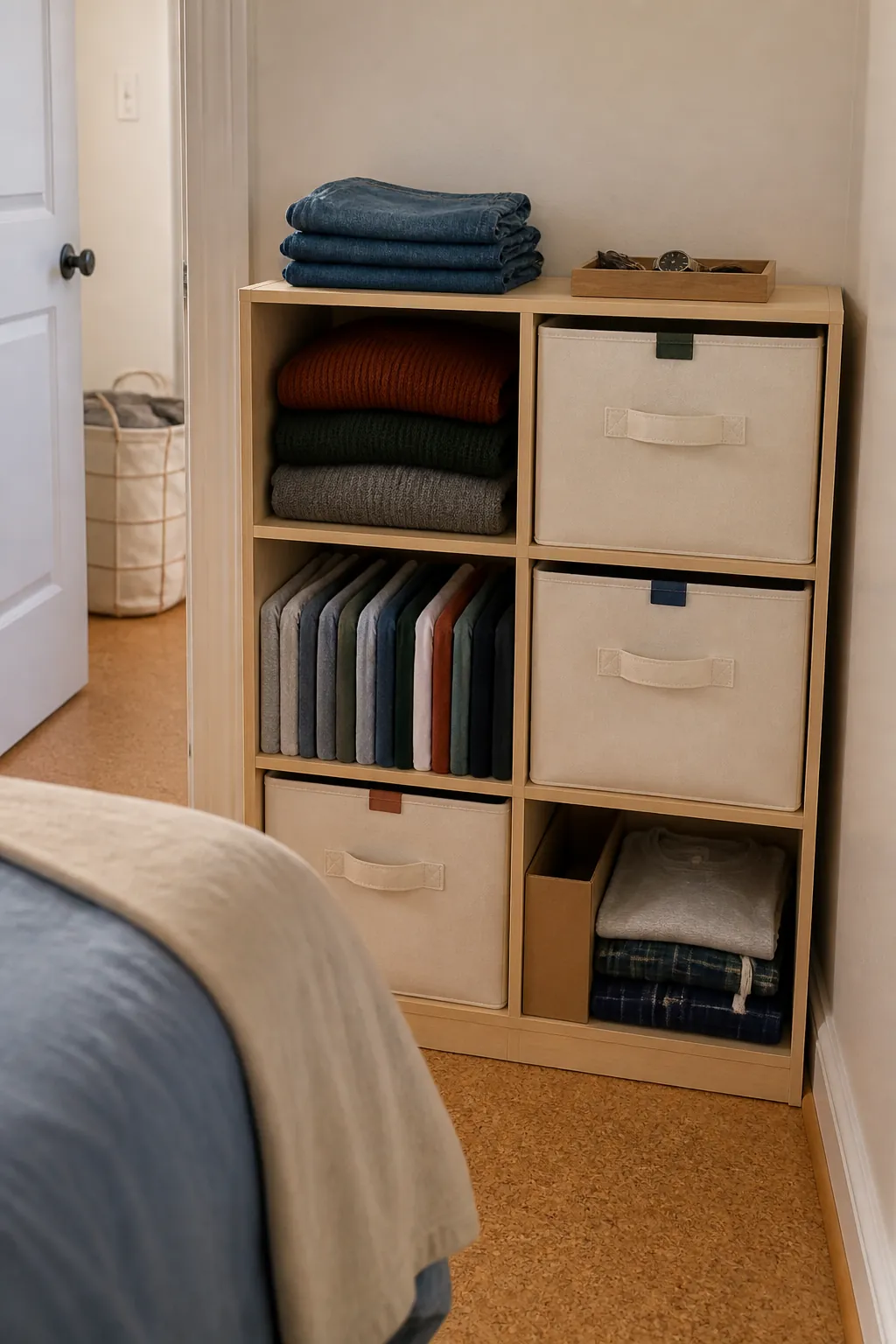
Cube shelving gives folded clothes boundaries without the depth and weight of a traditional dresser. Fabric bins can act as soft drawers for underwear, sleepwear, workout clothes, and casual tops. Open cubes are better for neatly folded jeans or sweaters that you want to recognize at a glance.
File folding keeps one item from disappearing beneath another, but the container must support the row. Small boxes or dividers work like bookends when a bin is not full. This matters because a half empty bin can become messy faster than a full one when every opening and closing motion lets the clothes collapse.
Give each cube one clear job and resist mixing unrelated categories. A label can be useful, but the placement should become intuitive enough that you do not need to read it. Put daily basics between knee and shoulder height, while less frequent items can occupy the lowest or highest cubes.
Claim the Space Under the Bed Carefully
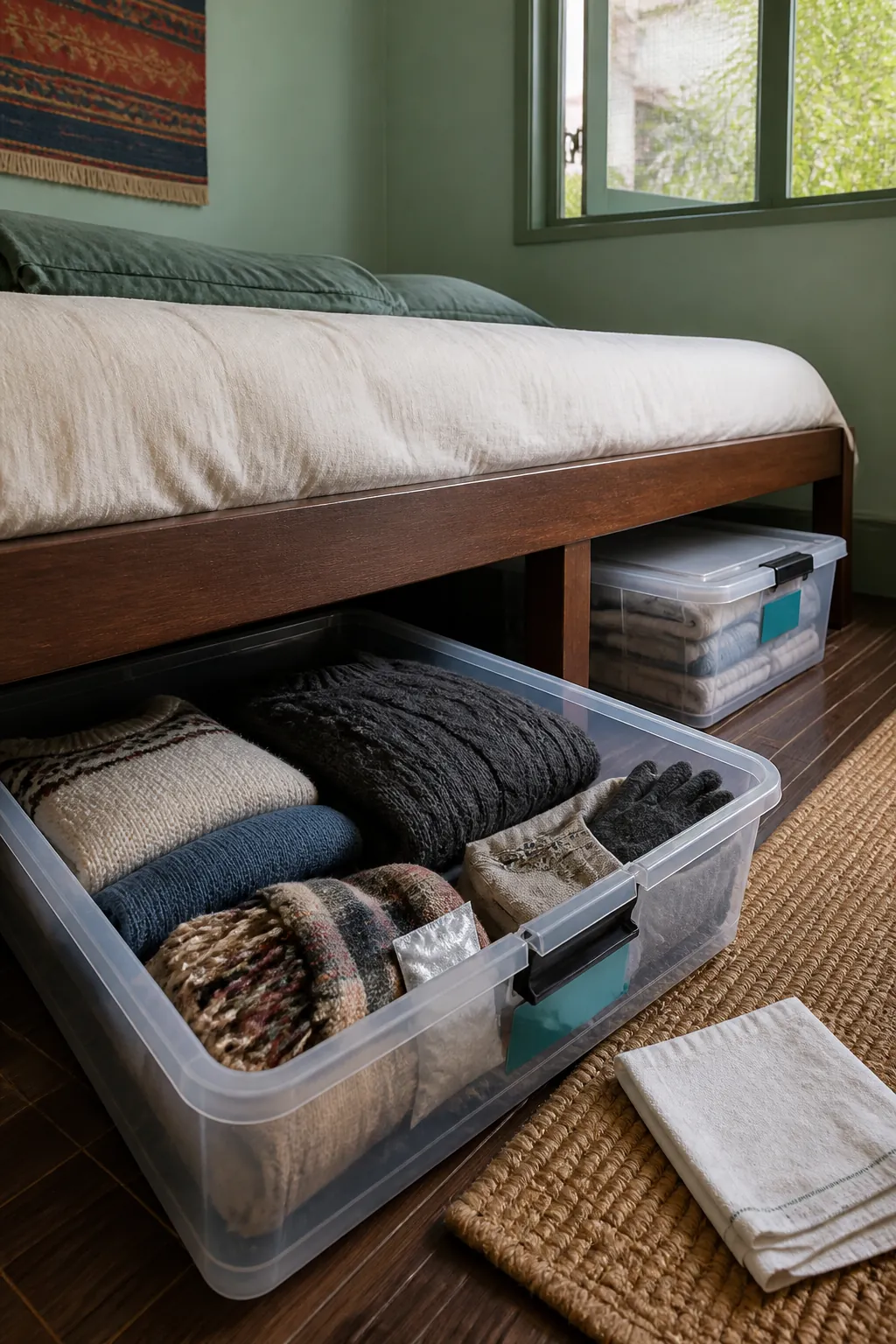
Under bed storage is valuable because it uses a wide area without adding another object to the room. It is best for seasonal clothes, spare bedding, formal pieces, or categories you reach for less than once a week. Daily socks stored beneath a low bed will become annoying long before the container becomes useful.
Choose shallow containers with lids and handles that pull from the foot or side you can actually access. Measure around bed supports before shopping, not just the height from floor to frame. A container that catches on a central leg will create dead space and encourage you to shove loose items behind it.
Clothes must be completely clean and dry before long storage. Add a simple label that states the category and season, then review the contents when the weather changes. Vacuum bags can compress bulky pieces, but rigid lidded bins offer better protection where dust, moisture, insects, or pets are a concern.
Build a Small Zone for Worn Again Clothes
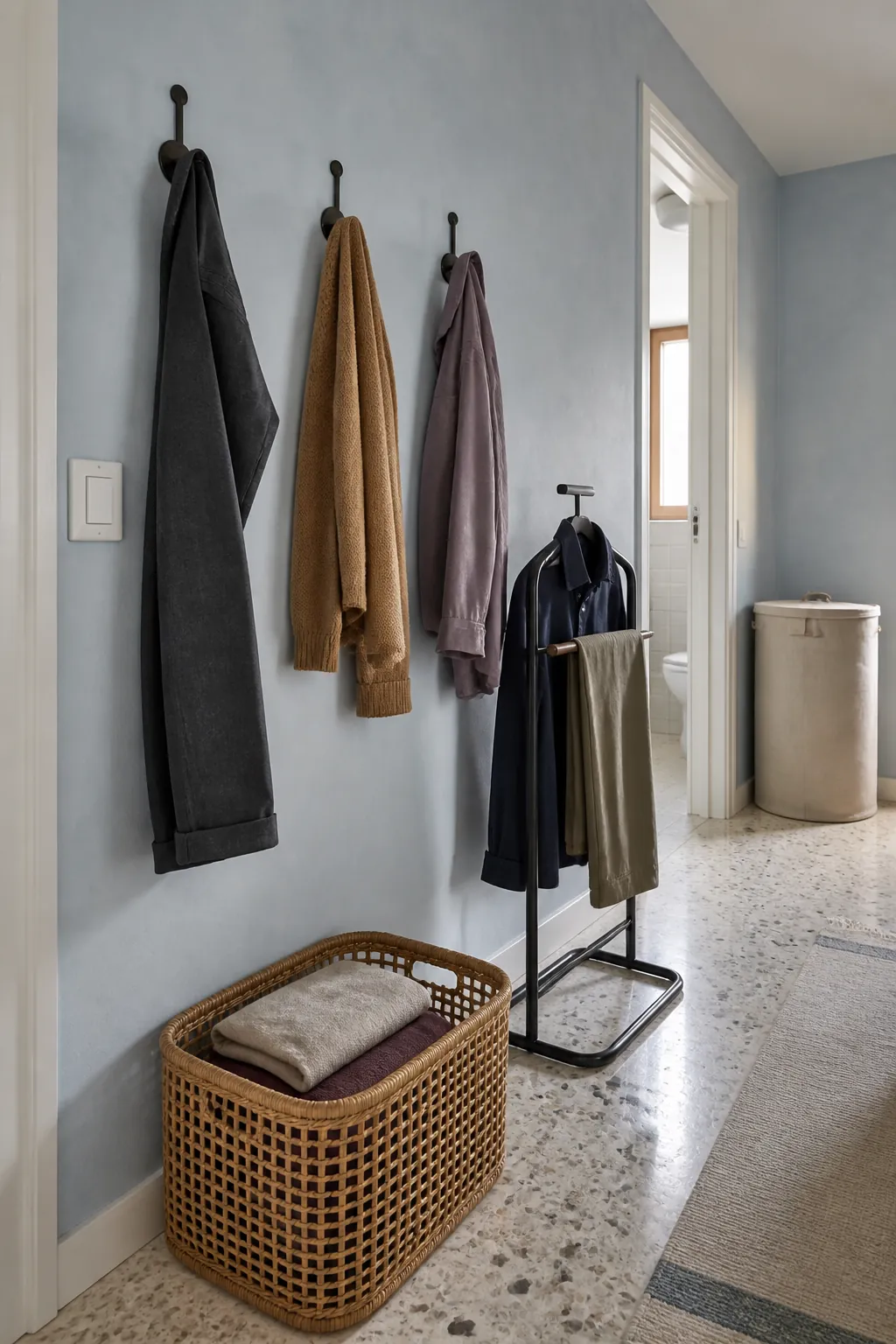
Clothes that are not freshly clean but not ready for laundry need their own landing place. Without one, they migrate to the bed, desk, chair, or floor even when the rest of the wardrobe is organized. A short row of hooks, a valet rail, or one ventilated basket can hold this middle category without confusing it with clean clothing.
Limit the zone so it cannot absorb a week of indecision. Three sturdy hooks may be enough for trousers, a sweater, and tomorrow’s outfit. A breathable basket works for soft lounge pieces, provided it is visually distinct from the dirty laundry hamper.
Reset this area whenever you start laundry. Return anything truly clean to its home, send the rest to the hamper, and leave only the pieces you expect to wear soon. That tiny rule prevents a temporary holding zone from becoming permanent clutter.
Make Vertical Storage Earn Its Footprint
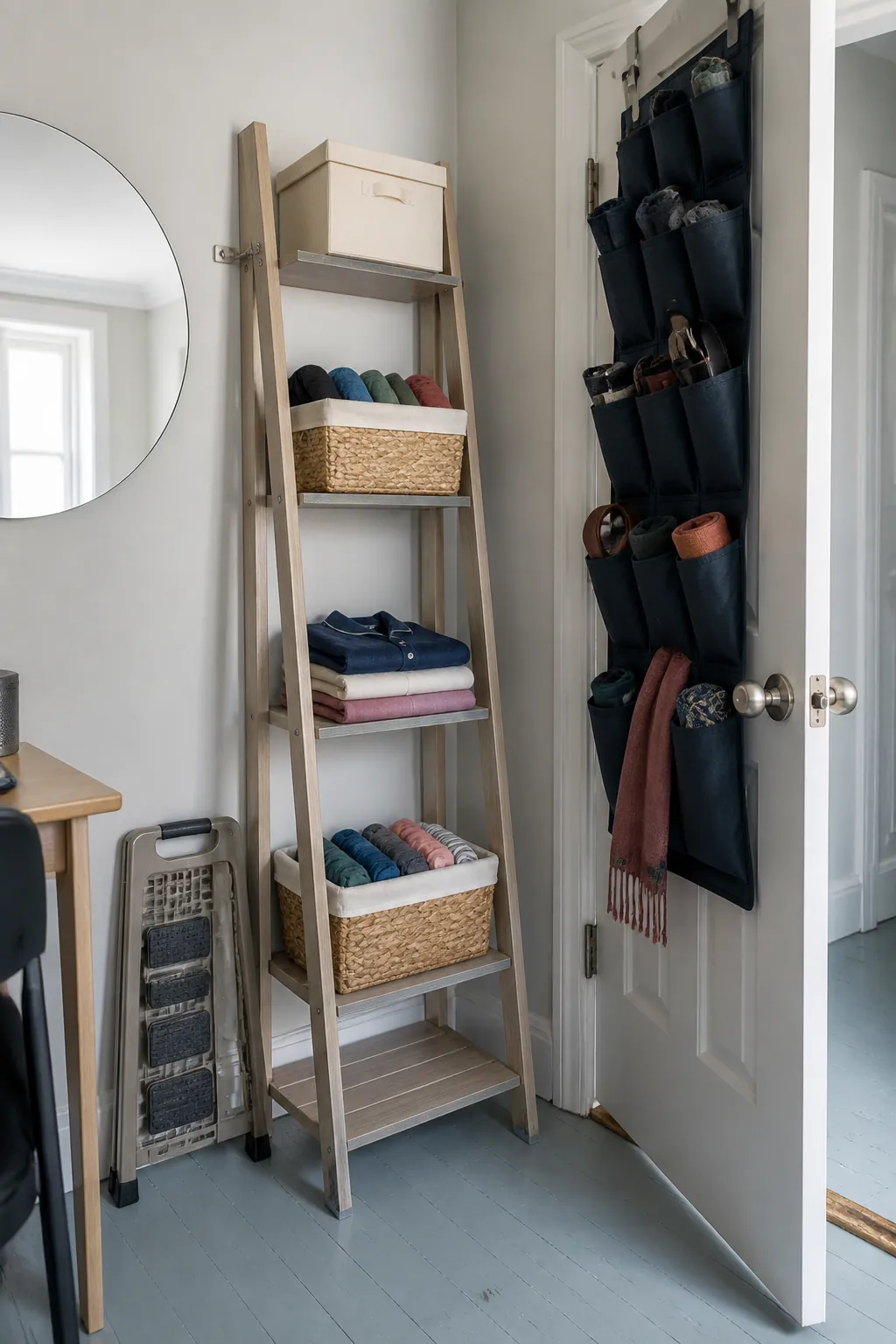
A tall narrow shelf, hanging fabric organizer, or secure wall rail can add meaningful bedroom storage without consuming dresser sized floor space. Vertical storage is most successful when the lower levels contain daily items and the upper levels contain light, occasional pieces. Heavy bins placed overhead are awkward and can be unsafe.
Renters can often use a tension system, a freestanding ladder shelf, or an over door organizer without making permanent changes. Check the weight rating and the door clearance before loading anything. A door that no longer closes or a tension rod that drops at night is not a storage improvement.
Use small compartments for accessories and rolled basics rather than deep stacks of clothing. Deep vertical pockets invite forgotten layers, while shallow pockets keep the contents readable. Leave some empty space around the organizer so the room still feels like a bedroom instead of a stockroom.
Keep the System Easy Enough to Reset
The best small bedroom storage system is the one you can restore in a few minutes. Keep the hamper near the place where you undress, store everyday clothes within comfortable reach, and avoid lids on containers you open several times a day. Every unnecessary step increases the chance that clean clothes will remain in a laundry basket.
Use laundry day as a capacity check. If one cube will not close or the rack has no free hanger space, decide what leaves before adding another organizer. Storage should preserve access to the clothes you value, not conceal the fact that the collection has outgrown the room.
A room with no dresser can still support a complete wardrobe when each zone has a narrow purpose. Hanging clothes stay smooth, folded basics stay visible, seasonal pieces stay protected, and worn again items stop drifting across the furniture. The result feels less like making do and more like a system designed for the space you actually have.