
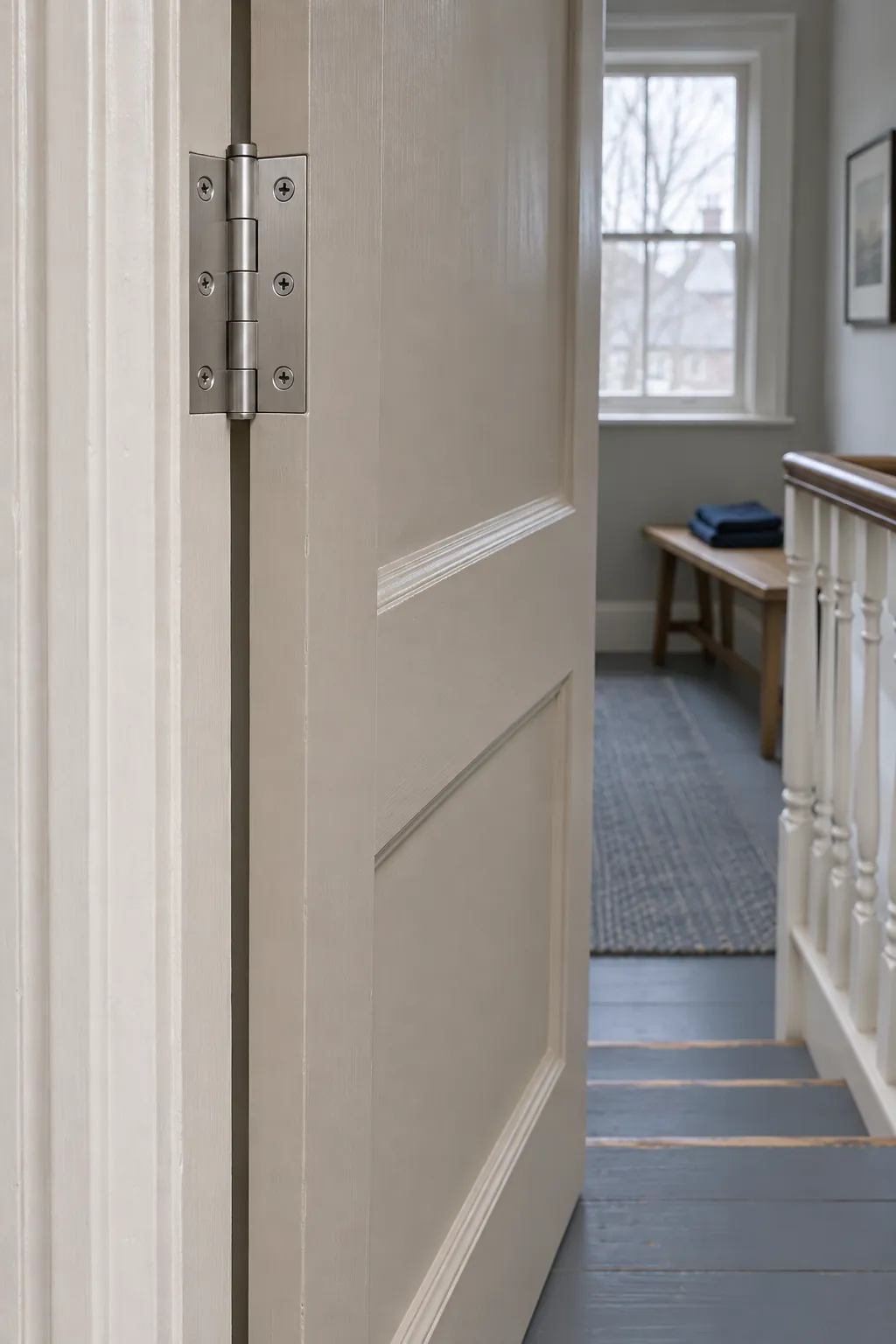
A door that wakes someone every time it swings can make a quick trip down the hall feel like a negotiation. Before you reach for a spray can, open the door slowly and find the point where it makes noise. A dry hinge, a loose screw and a door edge rubbing the frame can sound similar, but each needs a different fix.
Find the hinge that squeaks
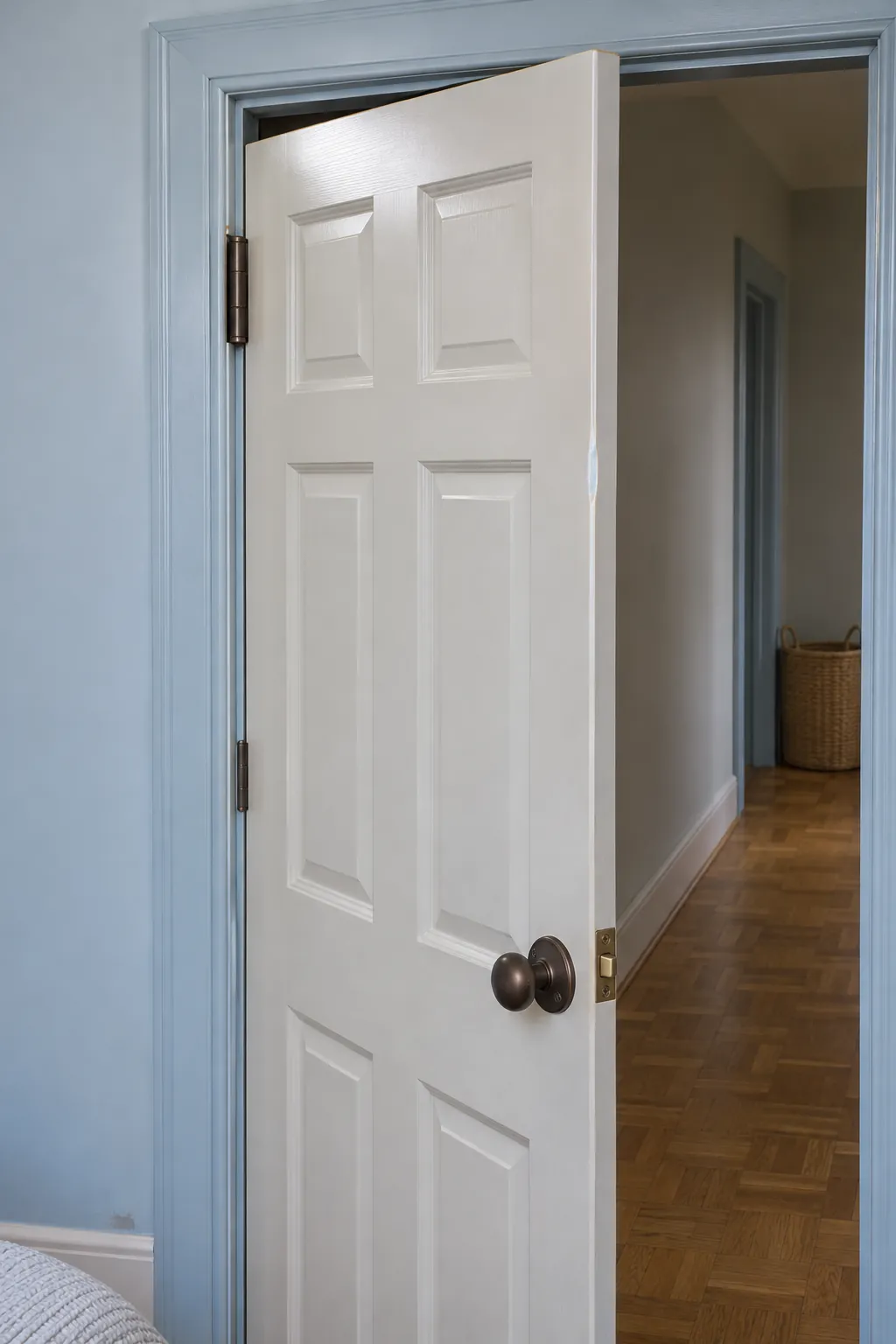
Open the door partway and swing it through the noisy stretch a few times. Listen near each hinge from the side of the door, with your fingers clear of the gap. A sound concentrated at the barrel, the stack of metal loops around the hinge pin, points to friction inside the hinge. A scrape near the top corner or a noise that starts only as the latch enters the strike plate calls for a closer look at those contact points.
Look for polished patches on the door edge and fresh marks on the jamb. Compare the gap along the top with the gap at the latch side. If the gap narrows toward a corner and the door catches there, check for a loose hinge before adding lubricant.
Tighten loose hinge screws first
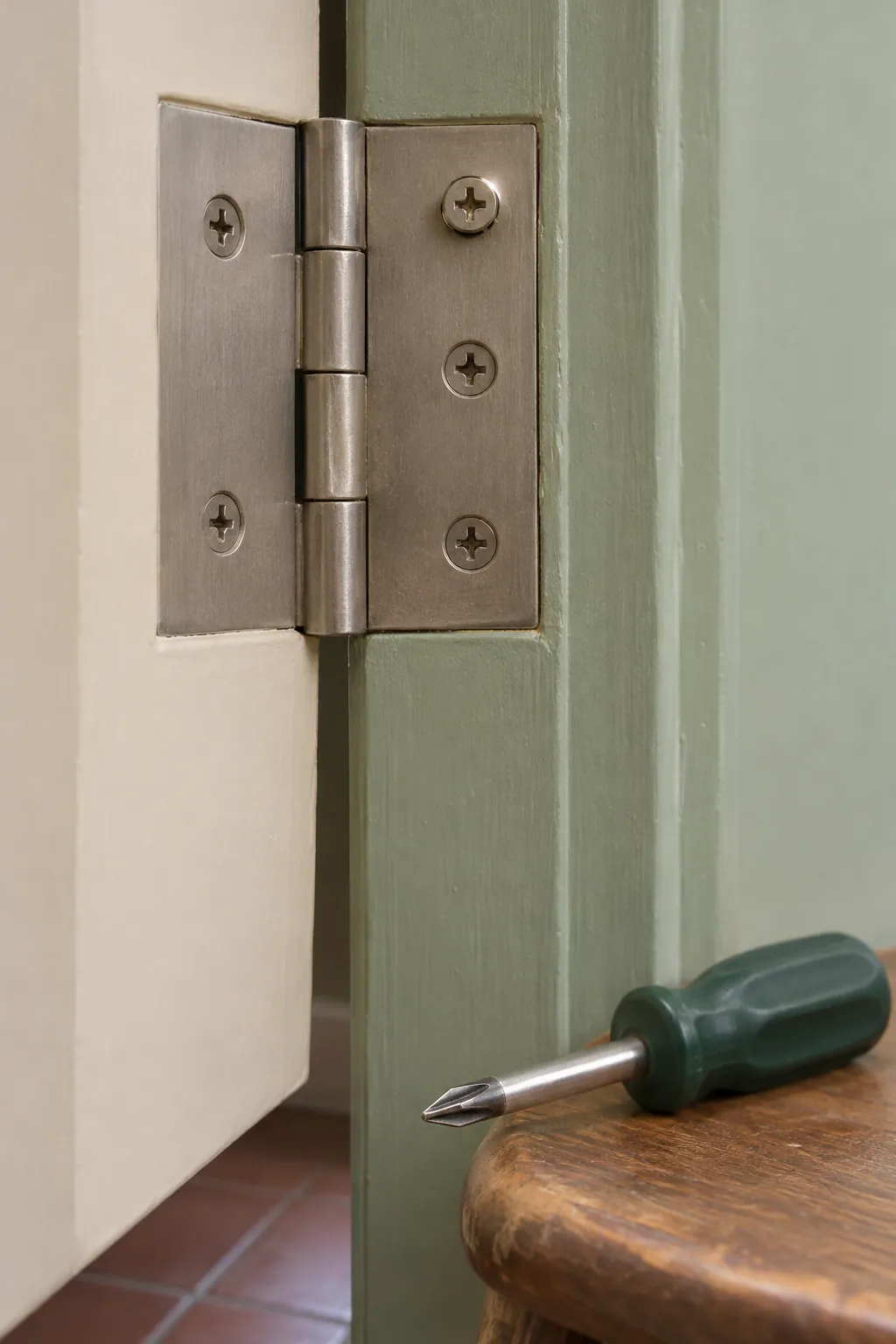
Watch the hinge leaf where it sits against the frame as you ease the door open. If the leaf shifts, use a screwdriver that fits the screw heads and snug the loose screws by hand. Stop when each screw sits flush and the leaf stays flat. A screw that spins without gripping needs its fastening point repaired before it can hold the door in alignment.
Choose a lubricant made for hinges
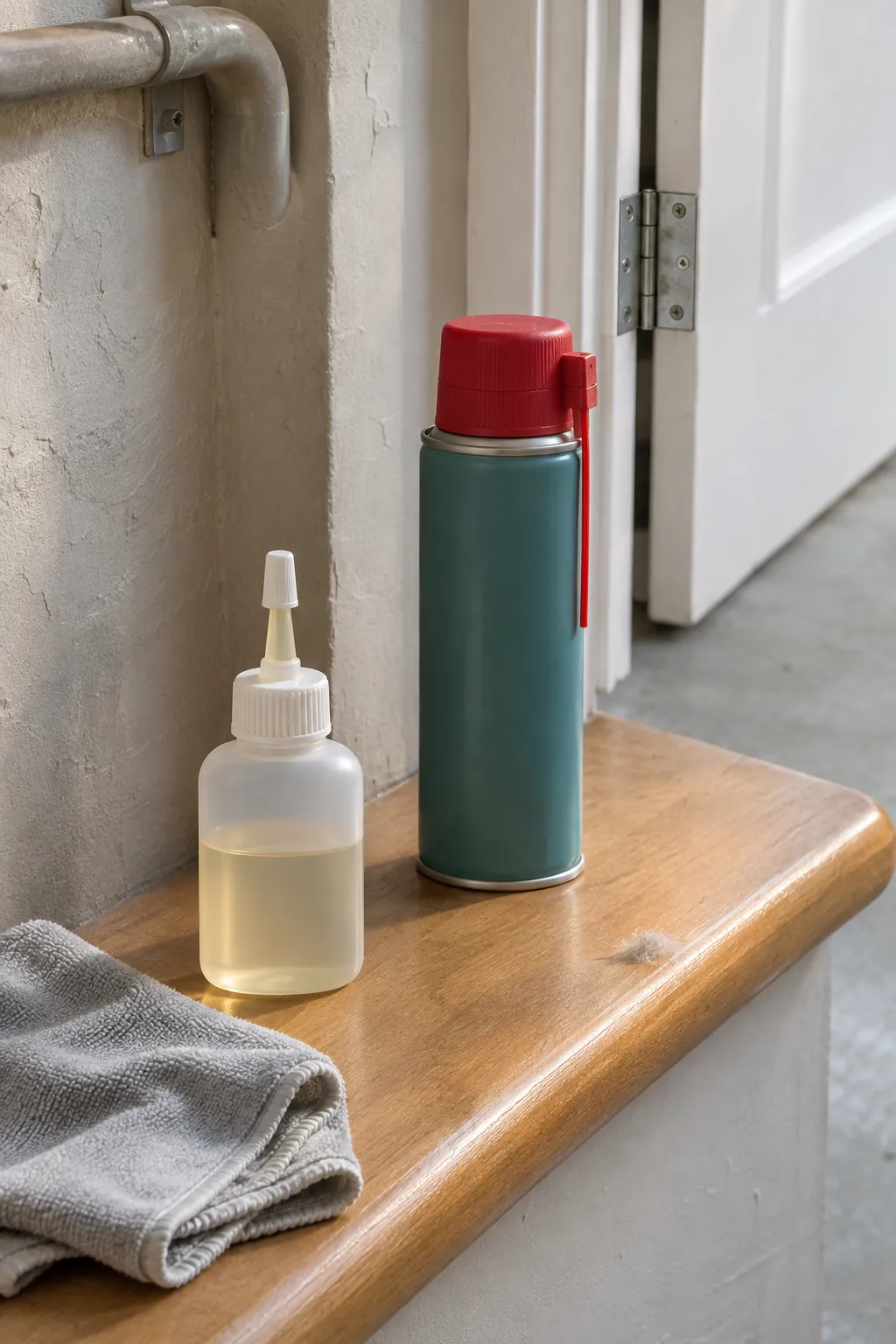
Check the hinge maker’s care instructions if you can identify the hardware. For an ordinary steel interior hinge, a light machine oil labeled for hinges is a practical starting point. A compatible dry film lubricant can make sense in a dusty area where exposed wet residue collects lint. Read the label for the surfaces the product can touch and the time it needs to dry.
Choose an applicator that lets you control the dose. A small dropper works well near painted trim, where an aerosol can leave a wider mark. Cooking oil can leave a sticky residue, and a water displacing spray that briefly quiets a hinge may still leave you needing a dedicated lubricant. Keep a cloth ready to catch drips.
Apply a little lubricant at the barrel
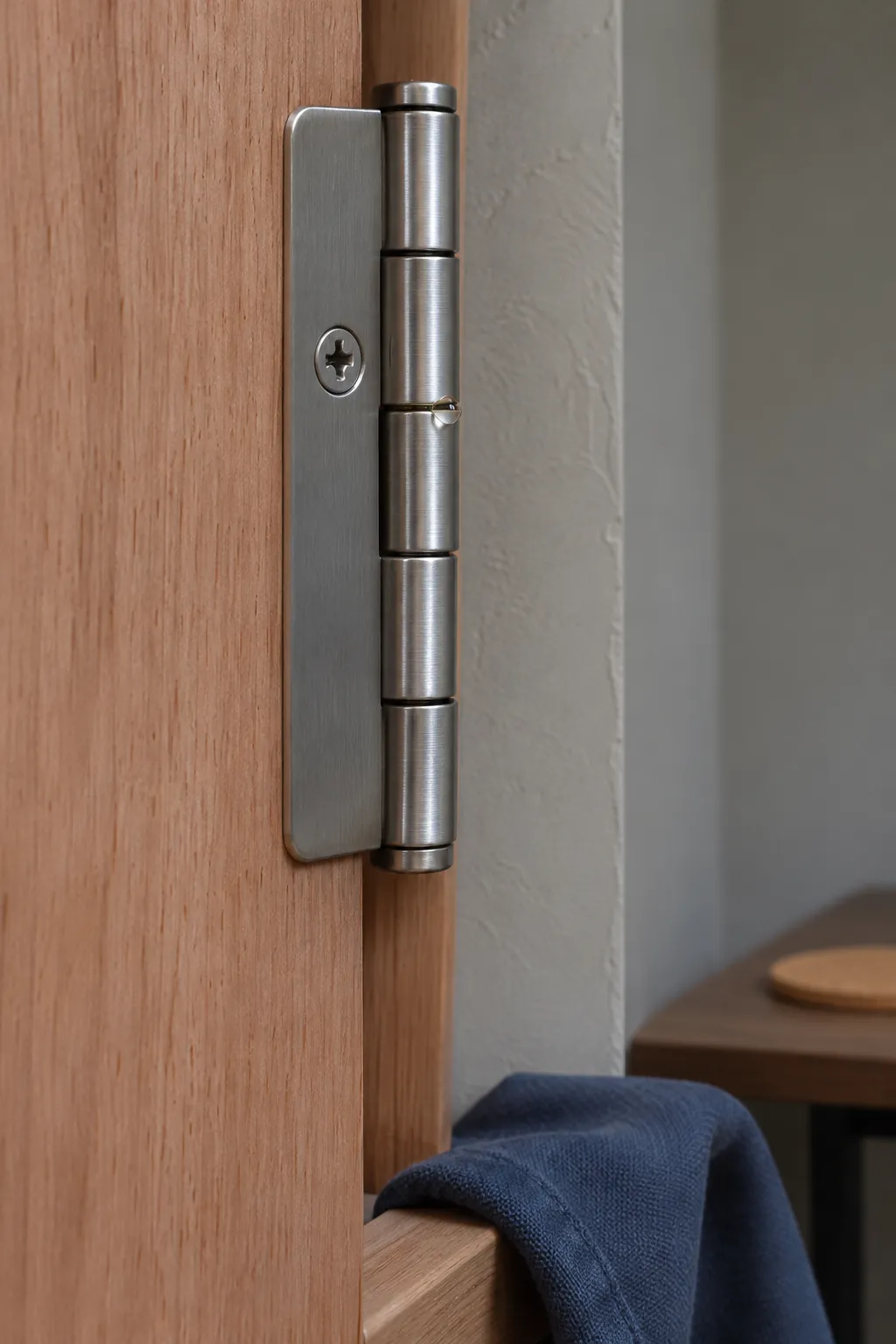
Wipe dust off the outside of the hinge. Apply a drop at a seam between two of the barrel loops, where it can reach the pin. If the product uses a spray straw, shield the nearby paint with a rag and follow the product directions for a short application.
Swing the door several times to spread the lubricant. Wipe off any excess and repeat the same slow swing that produced the squeak. Treat only the hinges you can hear. If the sound is unchanged, check the latch and door edge again before adding more.
Clean a removable pin if the noise returns
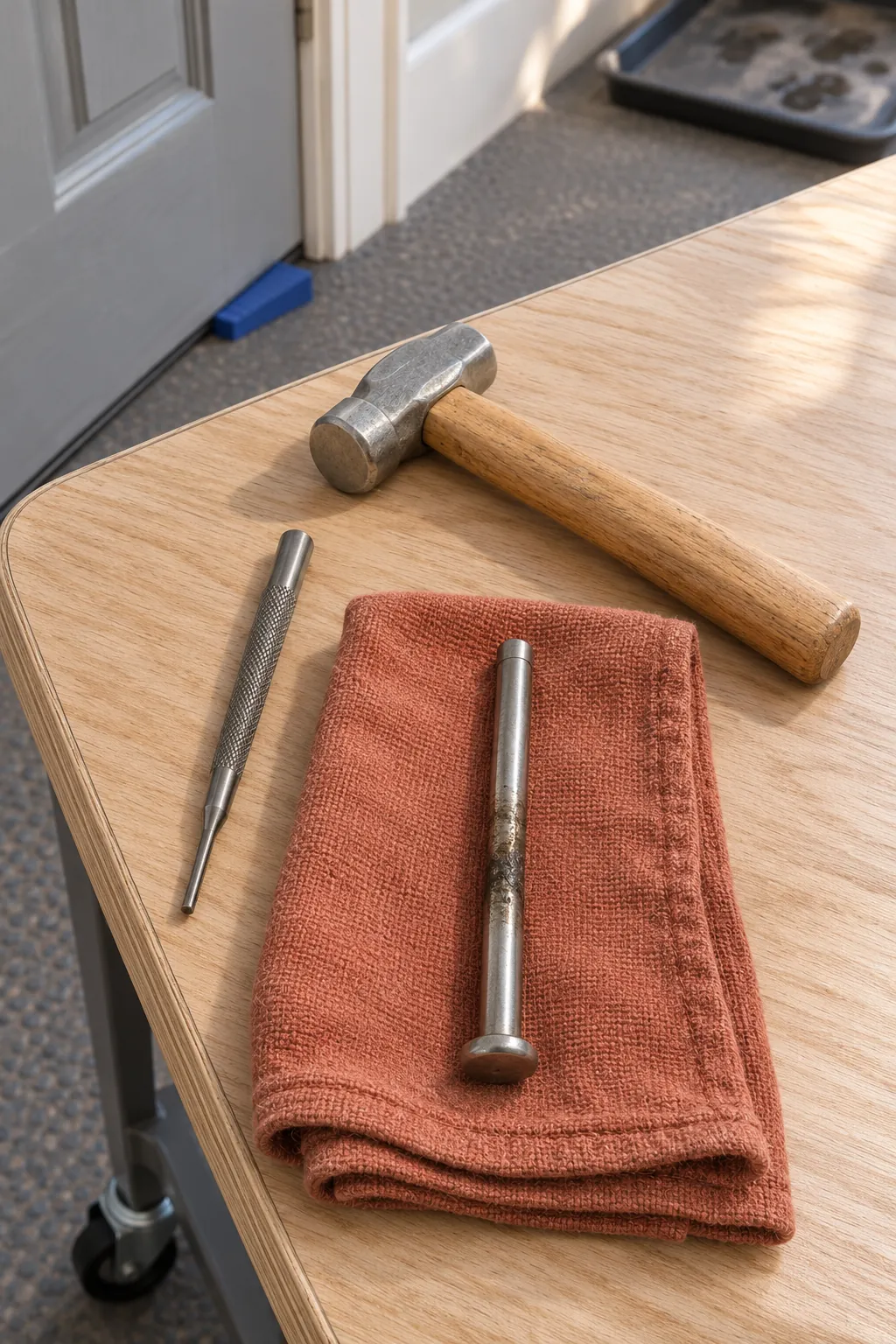
If a standard interior hinge quiets briefly and then squeaks again, old residue may be keeping fresh lubricant from reaching the bearing surfaces. Check that the hinge has a removable pin. Leave sealed, spring loaded, security and fire door hardware to the maker’s service instructions or a qualified repairer.
Close and support the door so it cannot swing, and work on one hinge at a time. For a conventional loose pin, a suitable pin punch and light hammer taps from below can raise the head enough to lift it out. Stop if the pin resists and check for a retaining screw or a fixed pin design. Wipe the pin with a cloth, look for rust or grooves, apply a thin coat of compatible lubricant, then reseat the pin fully before moving the door.
Check for wear when lubrication stops helping
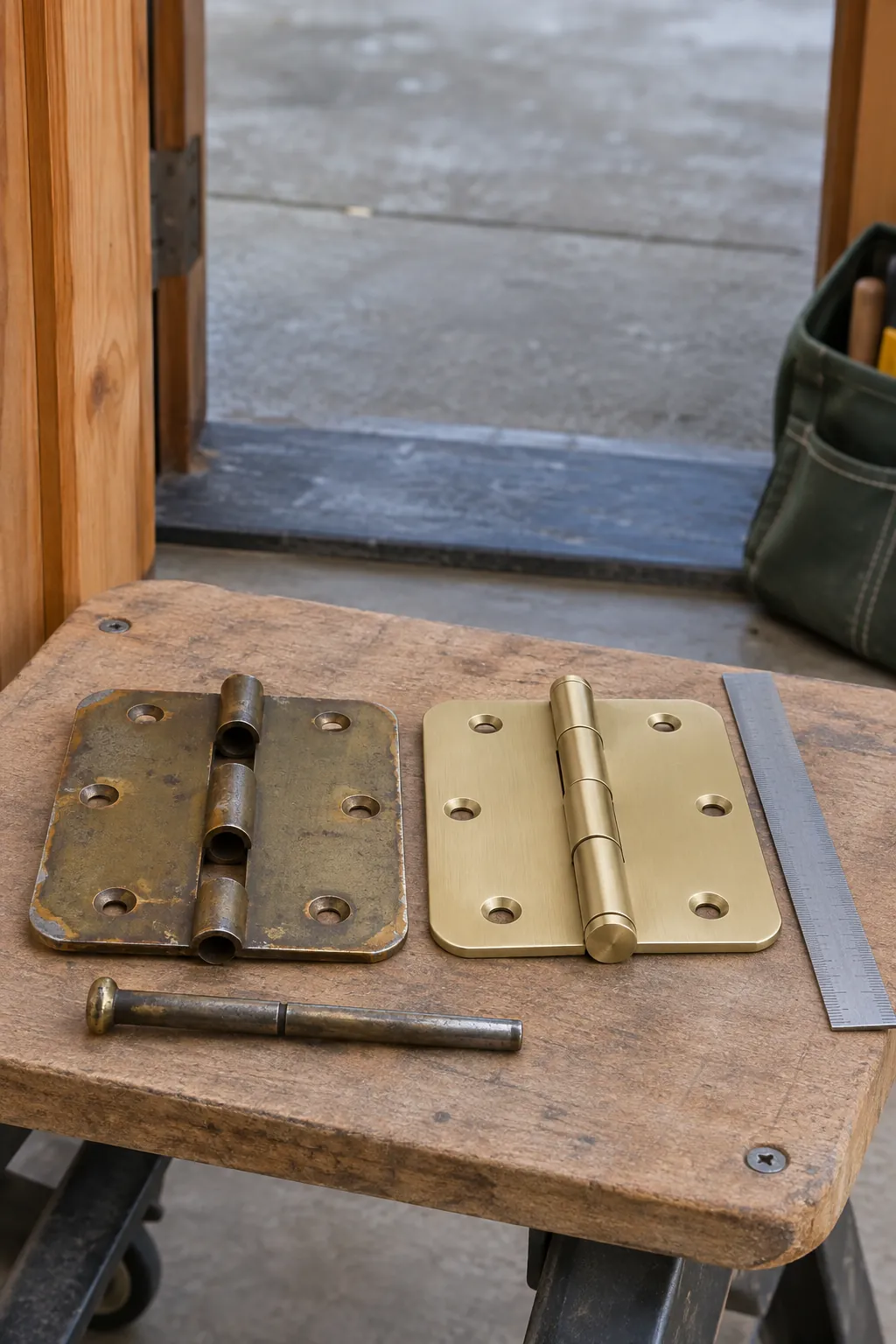
With the screws secure, watch the barrel as the door starts to swing. Visible play between the loops, a bent pin or deep wear on the pin suggests that new hardware may be needed. Match the old hinge’s height, open width, corner shape, screw pattern and load rating before buying a replacement. If the door is heavy or the frame itself moves, have someone qualified check the installation before taking the door off.
Make one last slow swing past the point where the noise started, then let the door latch. A quiet hinge and a door that closes without rubbing are the two checks that tell you the repair held.