
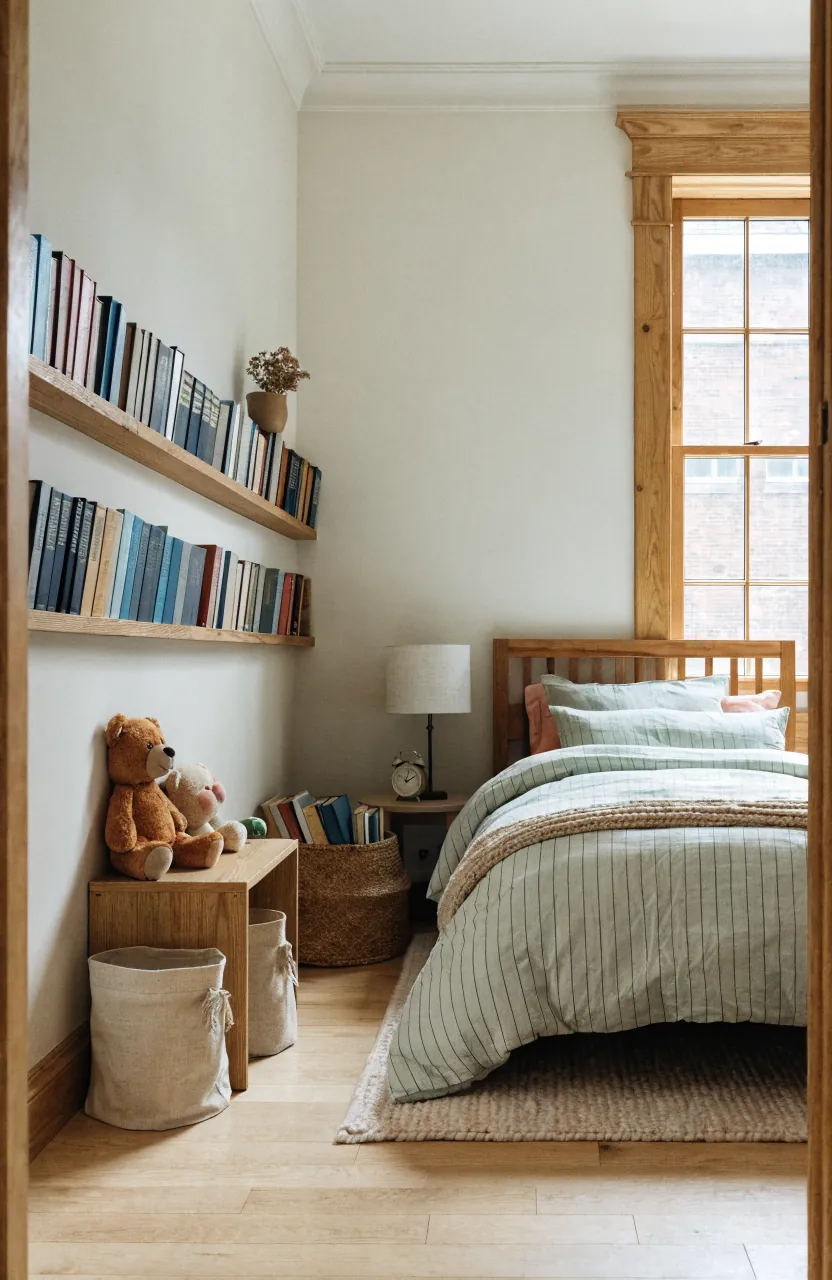
Books and toys are usually the two things that make a small kids bedroom feel full first. They are used every day, they come in awkward shapes, and kids need to reach them without emptying the whole room onto the floor.
The best storage plan is not one big toy bin and one crowded bookshelf. A small kids bedroom needs layers: low everyday storage, wall storage for books, hidden overflow, and a simple reset spot for the things that never seem to land anywhere.
Decide What Your Child Should Reach
Start by separating books and toys into two groups: what your child should reach every day and what can live higher, deeper, or outside the bedroom. This one decision keeps the room from turning into a constant cleanup project.
Everyday books should be easy to see and grab. Everyday toys should be stored in bins or baskets a child can pull out and return. Extra books, keepsake books, puzzles with many pieces, large sets, and backup toys can move to a closet shelf, under-bed bin, or hallway cabinet.
Use Low Storage for Daily Toys
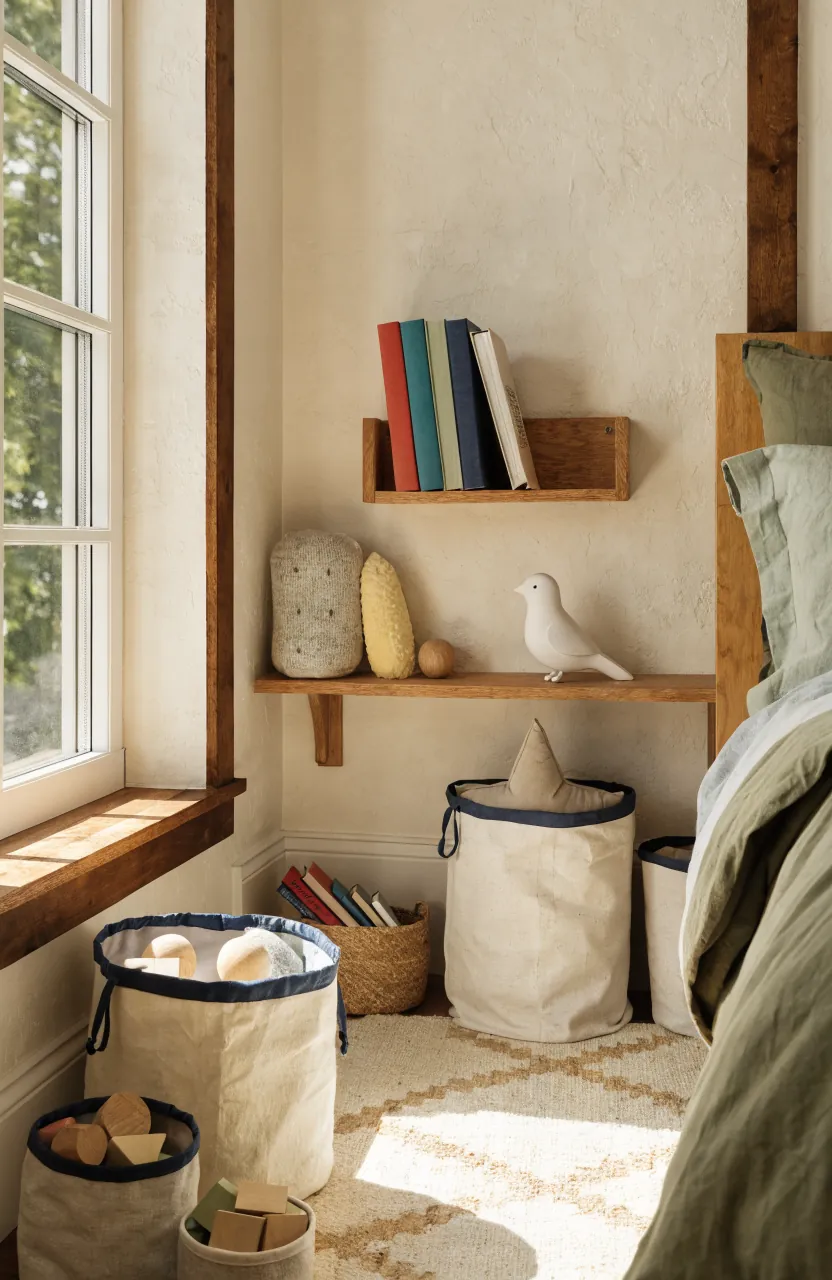
Low storage works because it gives kids ownership. A short cube shelf, two-cubby bench, low bookcase, or open basket row lets them put toys away without asking for help. That matters in a small room because cleanup has to happen often.
Use smaller storage bins instead of one deep toy chest. A deep bin hides everything, so kids dump it out to find one piece. Smaller bins make toy categories clearer: blocks, vehicles, pretend play, dolls, art supplies, puzzles, or soft toys.
Leave a little empty space. If every cube is packed full, the shelf looks messy even when everything is technically put away. A small room feels calmer when the storage looks like it can breathe.
Put Books on the Wall
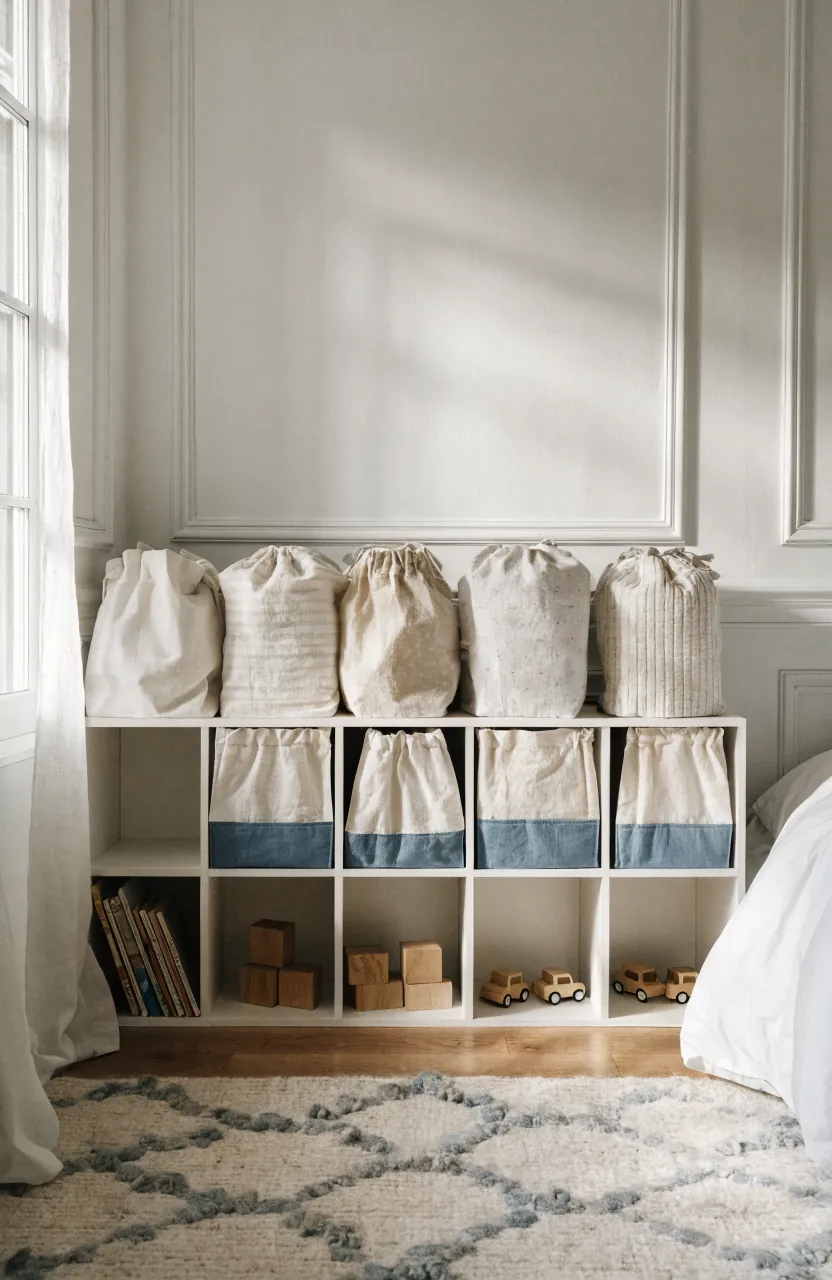
Wall shelves are one of the best small room storage ideas for kids books. A narrow picture ledge, book rail, or floating shelf keeps favorite books visible without using floor space. It also stops the main toy shelf from becoming half bookshelf and half overflow pile.
Keep wall book storage shallow and secure. Front-facing books are easy for younger kids to choose because they can see the covers. For heavier books, use a low shelf or basket instead of a high wall ledge. The wall is useful, but it should not create a safety problem or a shelf your child cannot actually use.
Hide Overflow Under the Bed
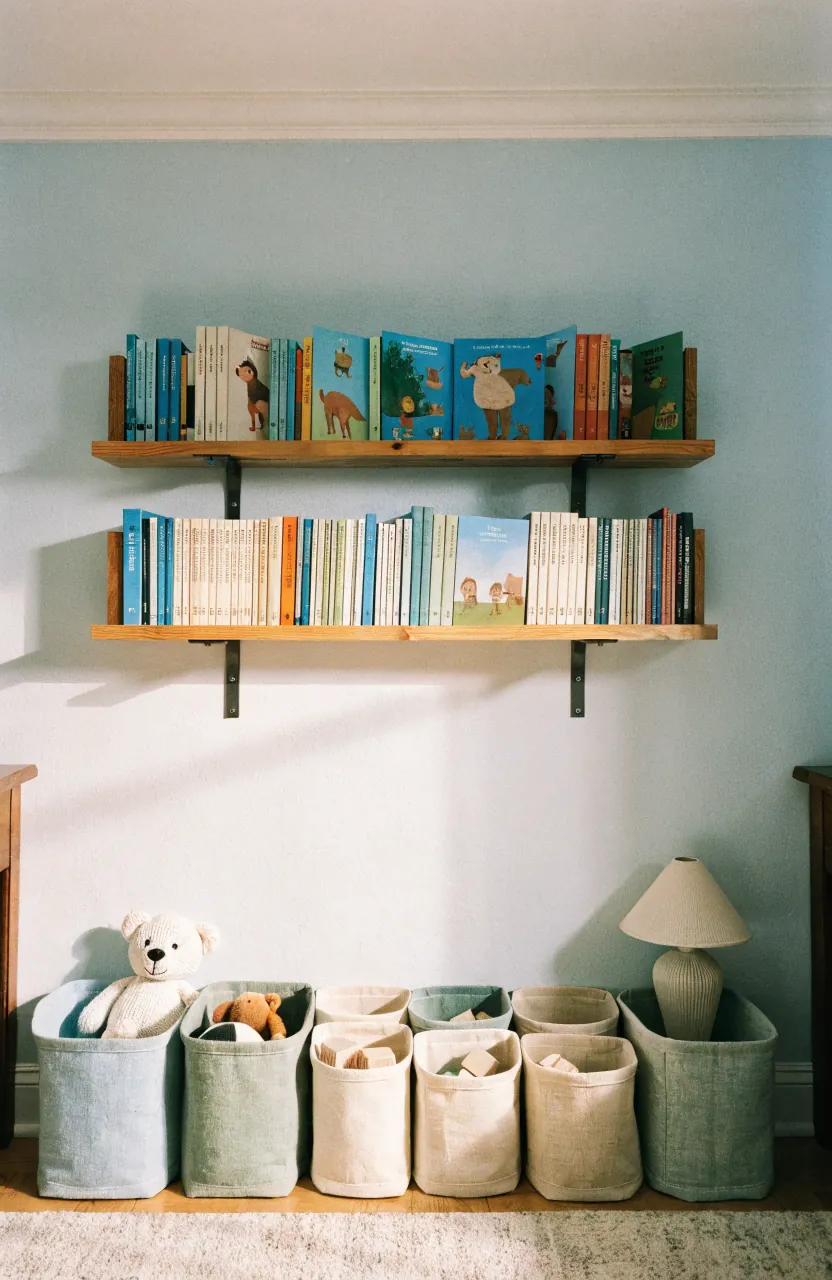
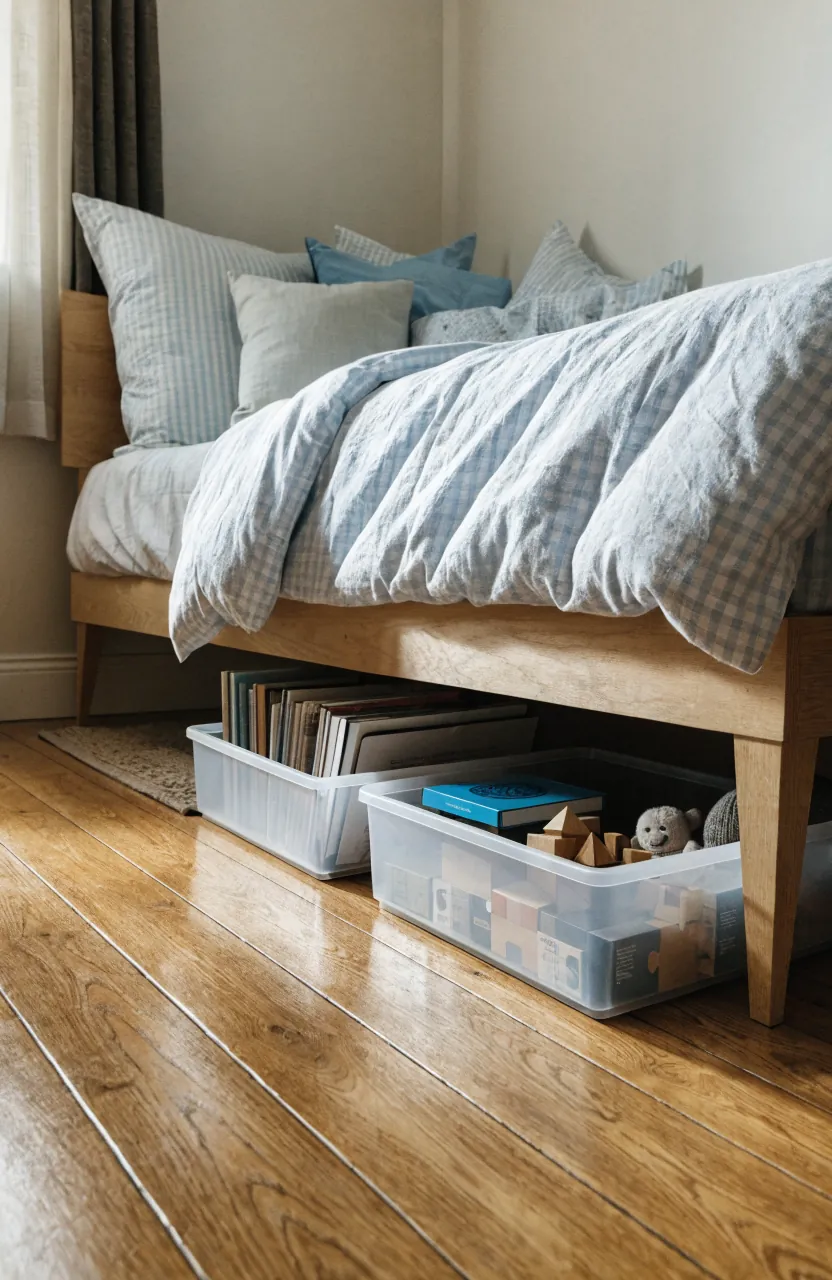
Under-bed storage is useful for toys and books that do not need to be out every day. Use shallow bins with lids or drawers that slide easily. This is a good place for seasonal books, larger building sets, extra stuffed animals, train tracks, puzzles, or toys waiting for the next rotation.
Do not use under-bed bins as a junk zone. If everything random goes under the bed, you will eventually stop opening the bins. Choose one category per bin and keep the contents light enough to pull out without dragging the whole bed skirt with it.
Give Bedtime Books a Separate Home
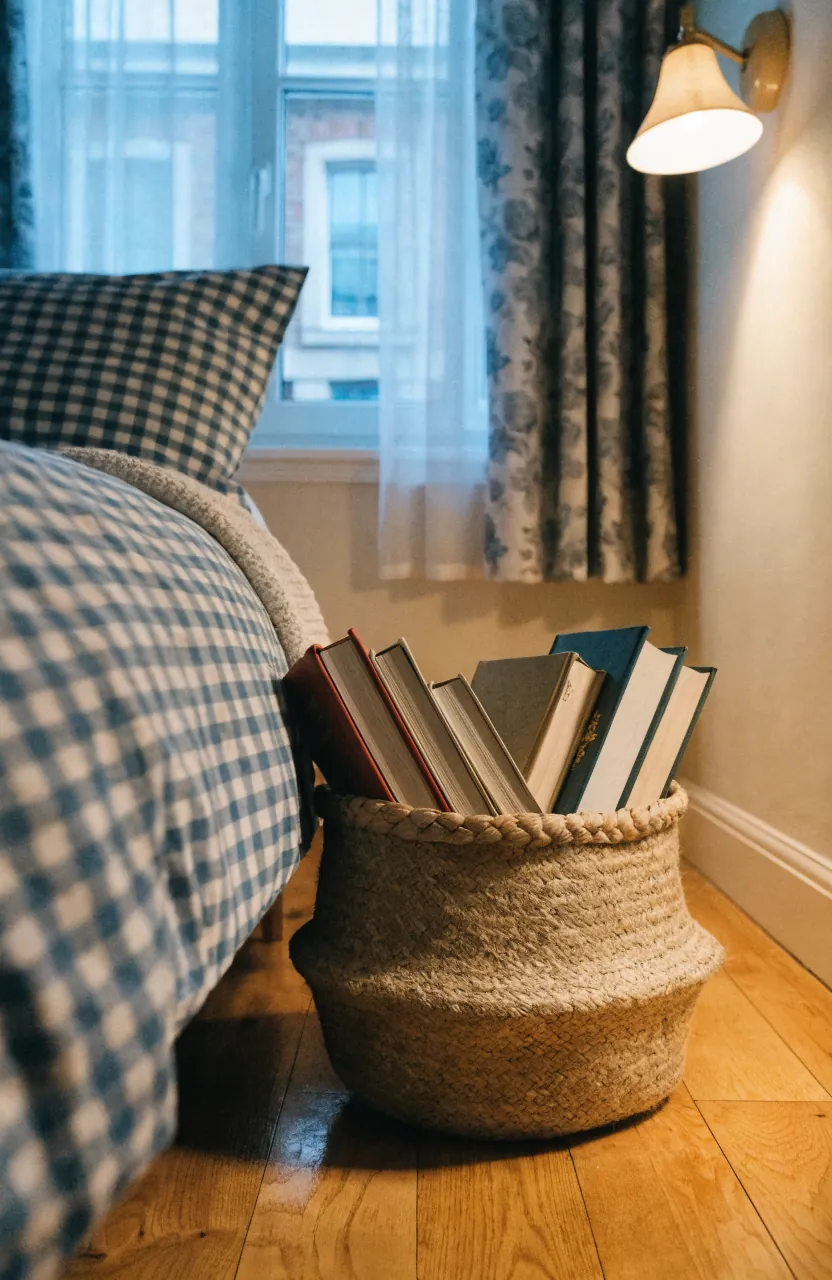
Bedtime books should not have to compete with every toy in the room. A small basket beside the bed, a wall pocket, or a narrow nightstand shelf keeps the current bedtime stack easy to find. This also prevents books from ending up under pillows, behind the bed, or mixed into toy bins.
Keep the bedtime basket small. When it fills up, return a few books to the main shelf before adding more. This simple limit keeps book storage from spreading across the whole bedroom.
Use the Closet for Backup Storage
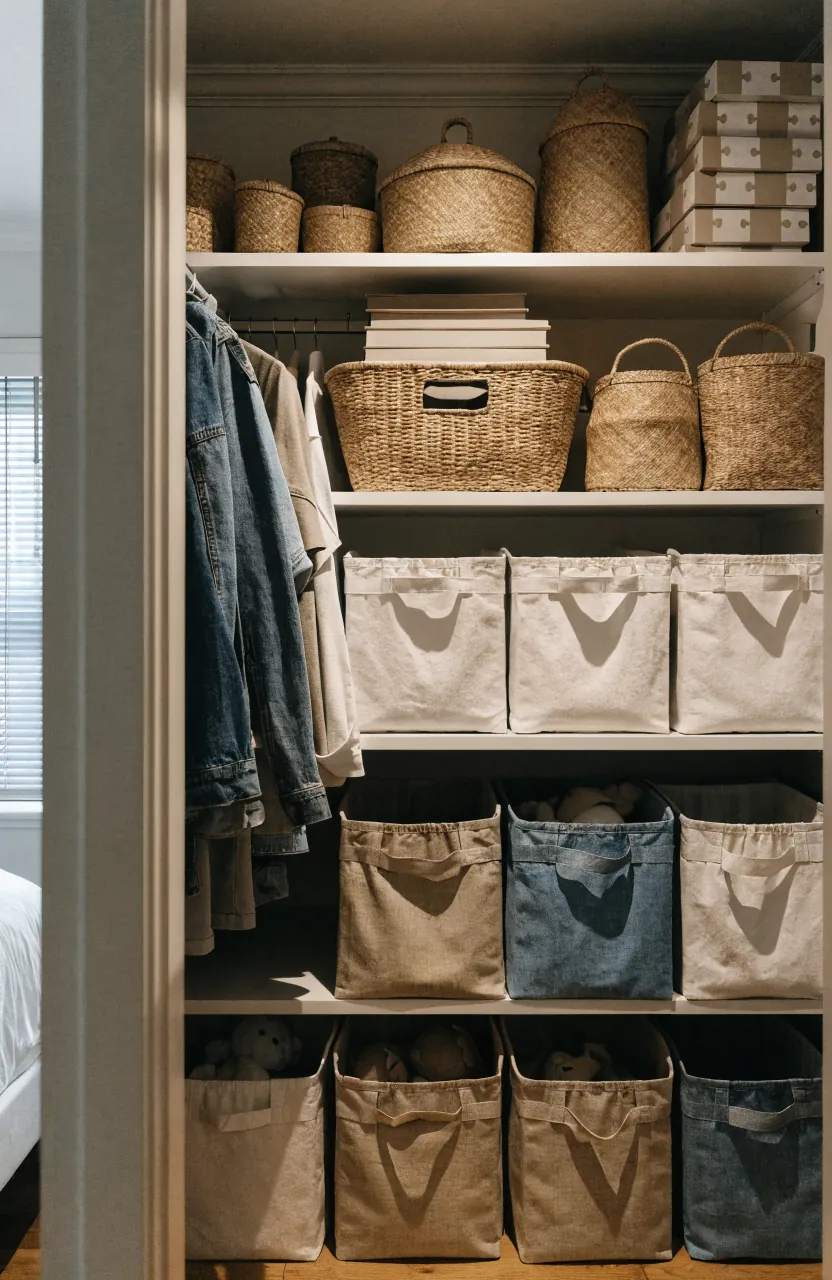
If the closet has even one spare shelf, use it for backup books and toy storage. Clear bins work well for extra toy sets because you can see what is inside. Fabric bins work well when you want the closet to look calmer. A shallow basket can hold library books or books waiting to be returned to the main shelf.
The closet is also where you can store things that need adult help: small-piece toys, art supplies, sentimental books, and toys with missing parts. Keeping these out of the daily reach zone makes the bedroom easier for kids to manage by themselves.
Corral Stuffed Animals Before They Take Over
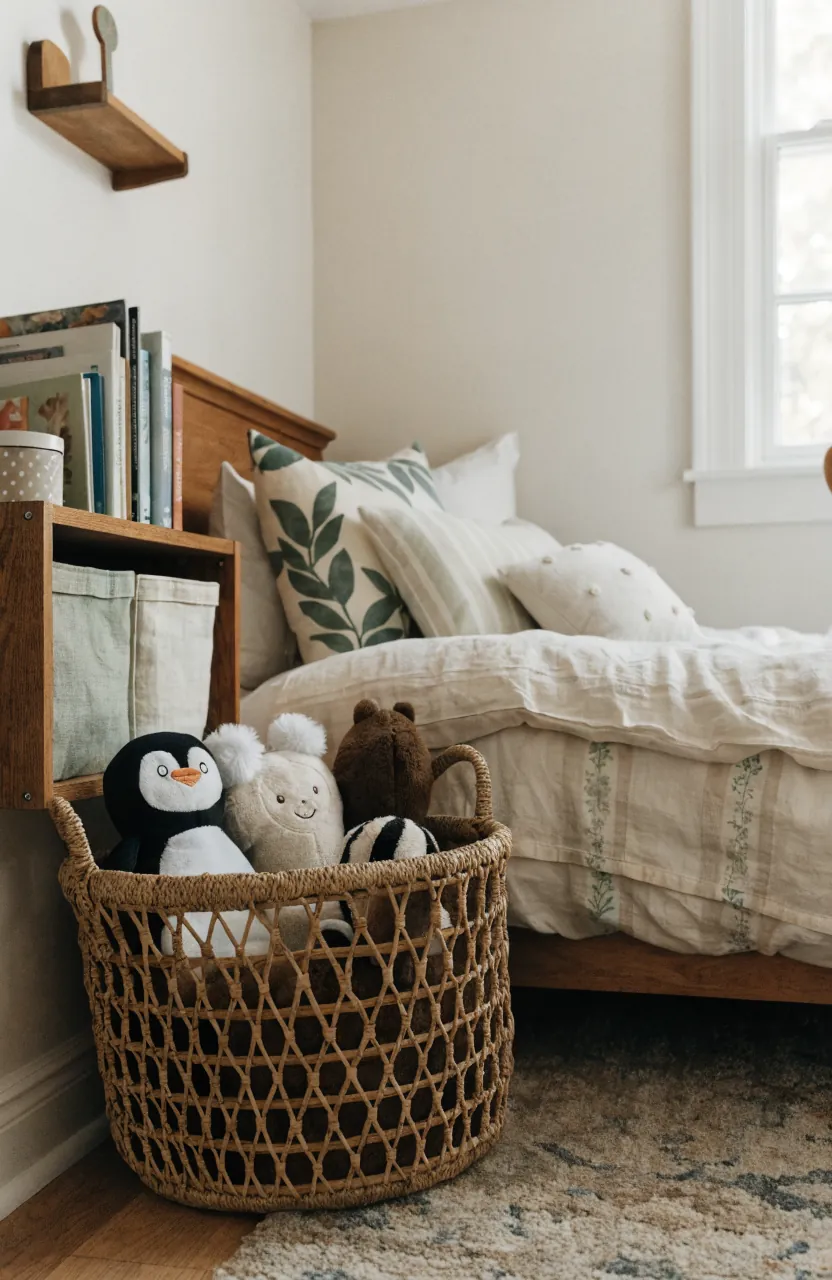
Stuffed animals can make a small kids bedroom feel crowded fast because they are bulky and hard to stack. Choose one corral: a soft basket, wall hammock, storage bench, or large floor bin. If the corral overflows, it is time to rotate, donate, or move a few to keepsake storage.
Keep only the favorites near the bed. The rest do not need to live on the pillow, the chair, and the floor. A visible limit is easier for kids to understand than a vague request to “clean up the animals.”
A Simple Storage Formula
- One low shelf: Daily toy storage bins and a few reachable books.
- One wall book zone: Favorite picture books or current reads.
- One hidden overflow zone: Under-bed or closet storage for extras.
- One bedtime book basket: A small stack that resets easily.
- One stuffed animal corral: A clear limit for bulky soft toys.
What to Avoid
Avoid tall shelves that young kids cannot use, huge bins that invite dumping, toy storage under a desk chair, and book stacks on the floor. Also avoid mixing books into every toy bin. Books need a home that protects them from bent pages and makes them easy to choose.
When books and toys each have a clear place, a small kids bedroom stops feeling like a storage problem. It becomes easier to read, play, clean up, and move through the room without stepping over everything your child owns.