
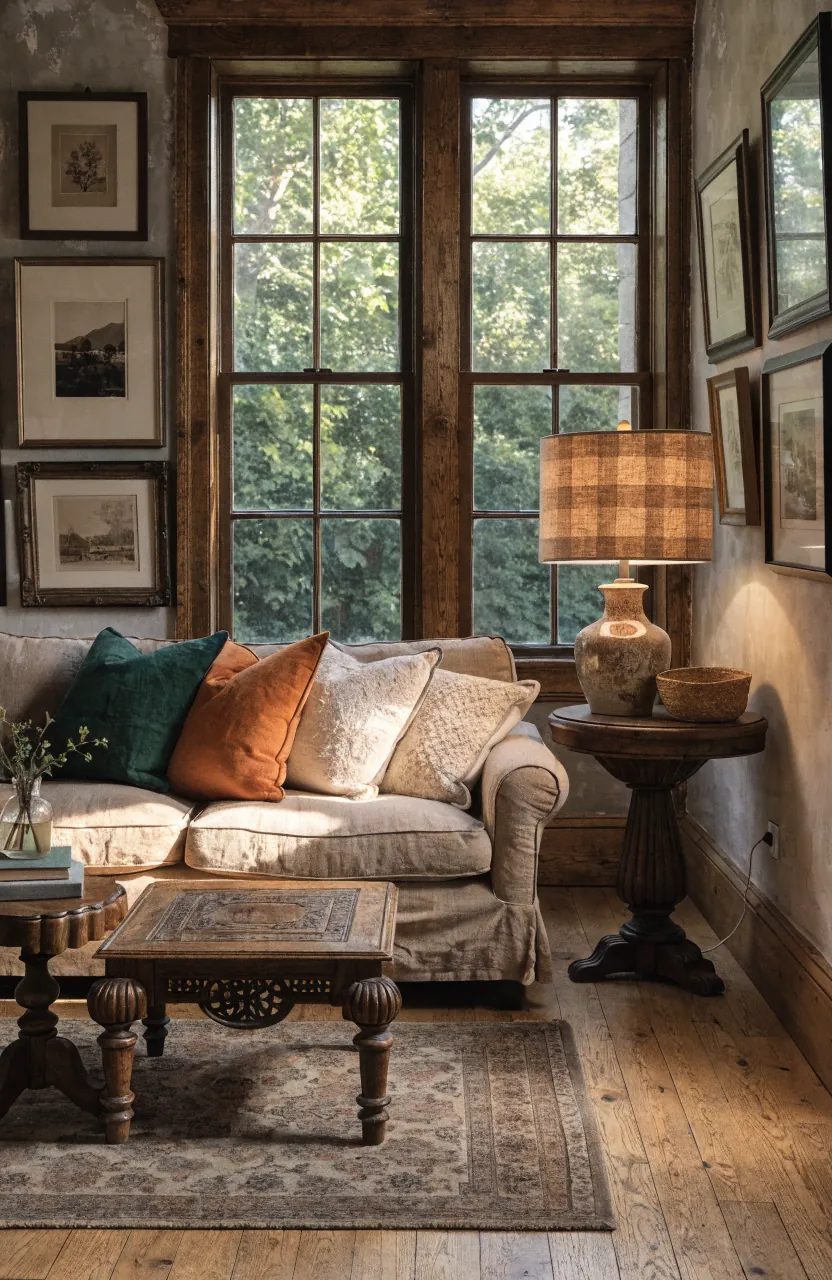
A good vintage living room should not feel like a room that got stuck in one decade. It should feel like a room with memory, comfort, and enough fresh contrast to make every old piece look chosen. The difference is editing. When a vintage living room works, the rug, sofa, art, lamps, and thrifted decor are not competing to prove they are special. They are helping the room feel layered, warm, and useful.
The easiest way to get there is to stop asking whether each piece is old enough, rare enough, or perfectly on theme. Ask whether it gives the room one of five things: scale, softness, function, story, or contrast. That filter keeps a collected home from tipping into clutter, and it makes retro home decor feel current instead of dated.
Anchor the Room With a Rug That Looks Found Over Time
A large vintage rug is often the fastest way to make mixed pieces feel intentional. It gives the sofa, chairs, and coffee table one shared foundation, which matters when your furniture came from different stores, family homes, thrift shops, or estate sales. If the rug is too small, the room can feel like separate objects floating around. If the rug is generous, even mismatched pieces start to look like part of the same conversation.
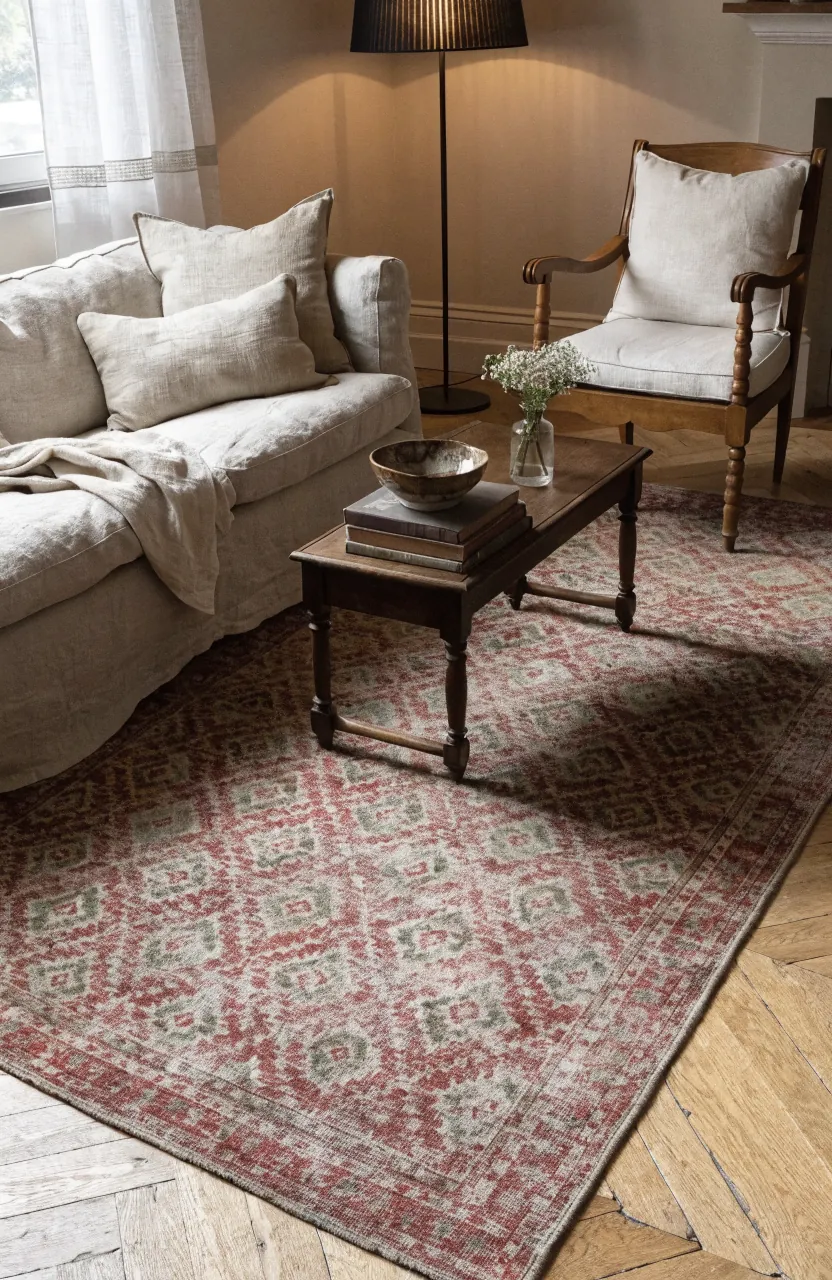
Look for a rug with a few faded colors you can repeat elsewhere: rust in a pillow, olive in a plant or print, cream in the sofa, dark brown in the wood. The repeats do not need to match perfectly. In fact, imperfect repetition is what makes vintage decor feel collected instead of decorated in one shopping trip.
Keep the Main Sofa Fresh and Let Older Pieces Add Character
If every major piece is vintage, the room can start to read like a time capsule. A clean-lined sofa or simple slipcovered base gives the eye somewhere calm to land. Then the older chair, carved table, antique cabinet, or retro lamp can bring the personality. This is the part many people miss: contrast makes vintage pieces look better. The newer base gives the older pieces context.
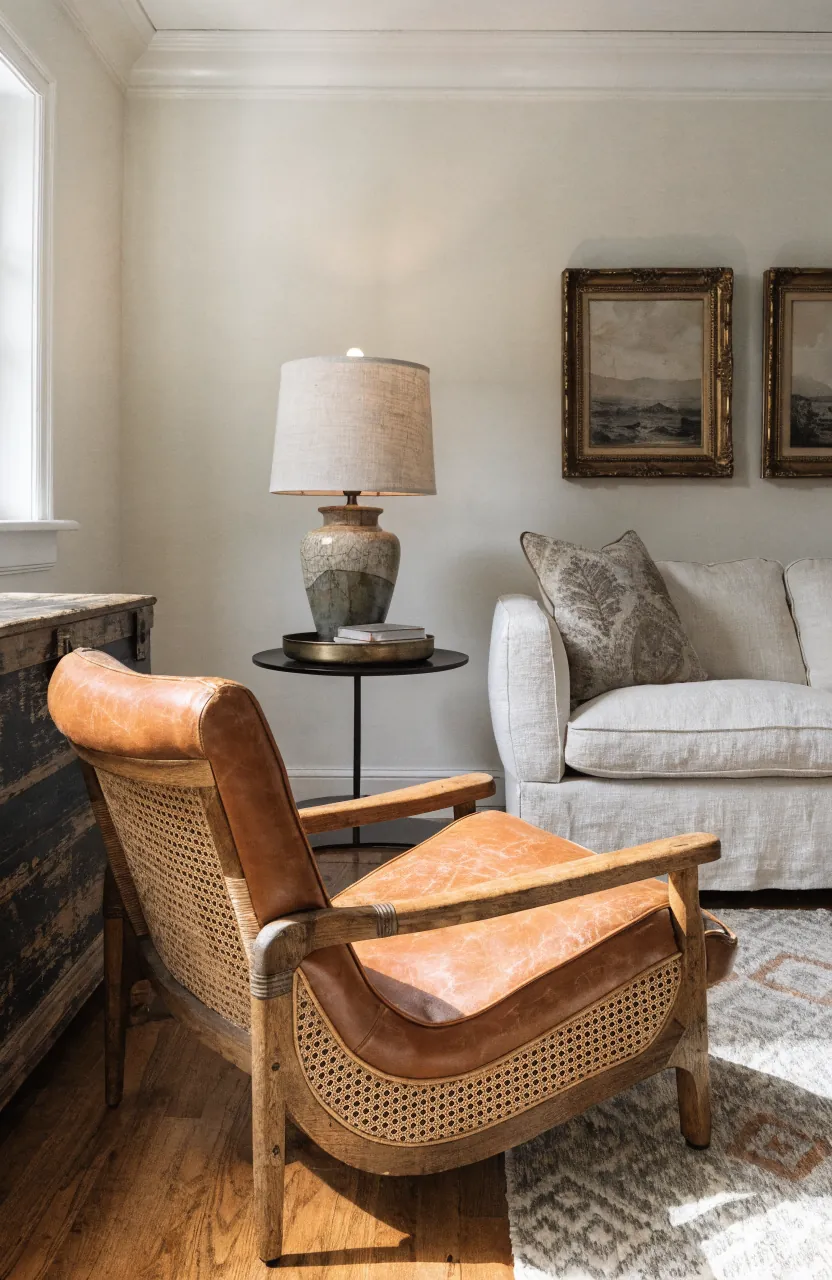
A cream sofa beside a worn wood chair, a plain black side table beside a curvy ceramic lamp, or a simple linen shade on an old lamp base can be enough. The goal is not to hide the age of the room. The goal is to keep the room from feeling like everything is from the same year.
Edit Shelves So They Show Taste, Not Every Find
Collected shelves are where a vintage living room can either become charming or chaotic. The temptation is to display every small object because every object has a story. The better move is to choose the pieces with the strongest shape, color, texture, or memory and leave space around them. Open space is not wasted. It is what lets the good pieces register.
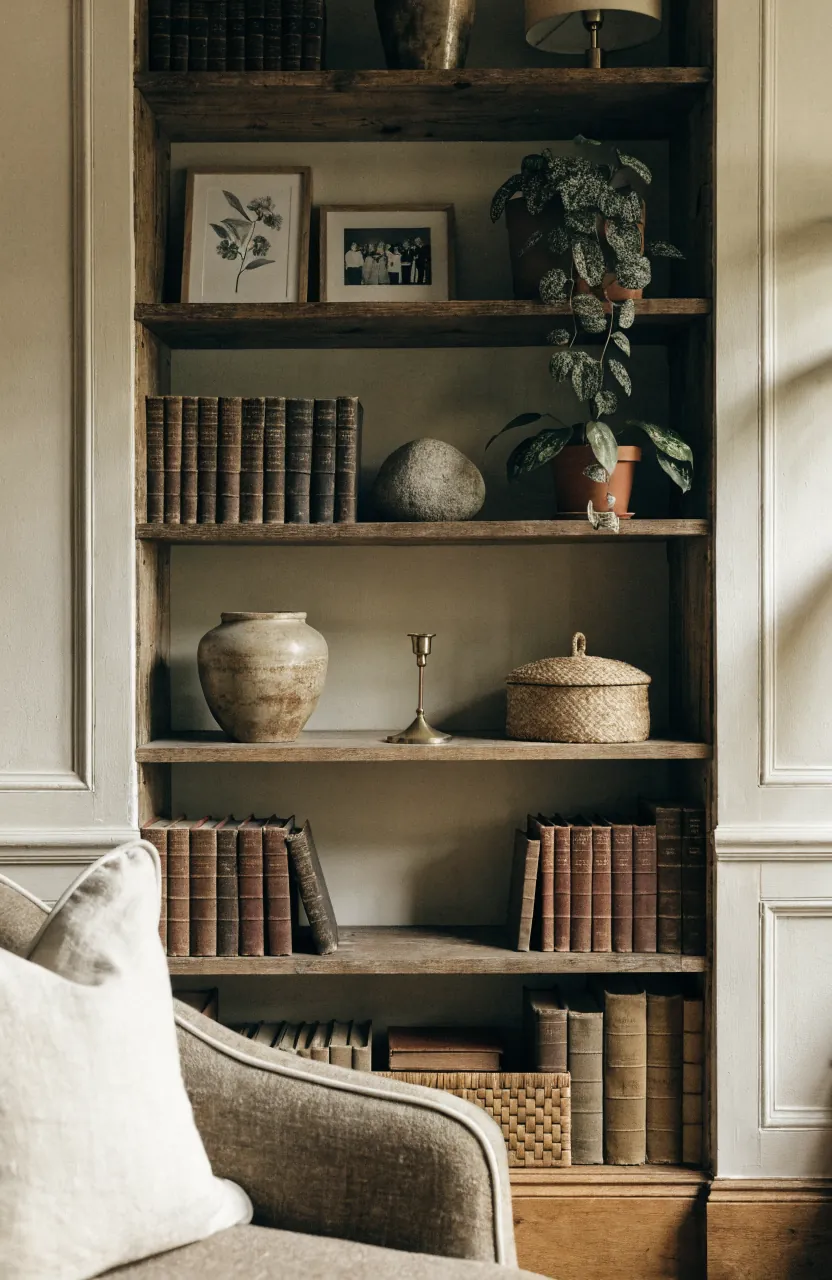
Use books as weight, framed art as height, ceramics as shape, and baskets as function. Then repeat one quiet element across the shelf, such as dark frames, warm wood, green pottery, or aged brass. That repeated thread is what makes eclectic decor look intentional. Without it, even beautiful thrifted decor can look like it is waiting to be sorted.
Use Lamps to Make Old Pieces Feel Warm, Not Heavy
Vintage rooms often fail because of lighting, not because of the furniture. Overhead light can flatten old wood, exaggerate dark corners, and make a cozy living room feel tired. Table lamps and floor lamps fix that quickly. They create smaller zones: a reading chair, a conversation corner, a shelf with art, a side table that feels useful after sunset.
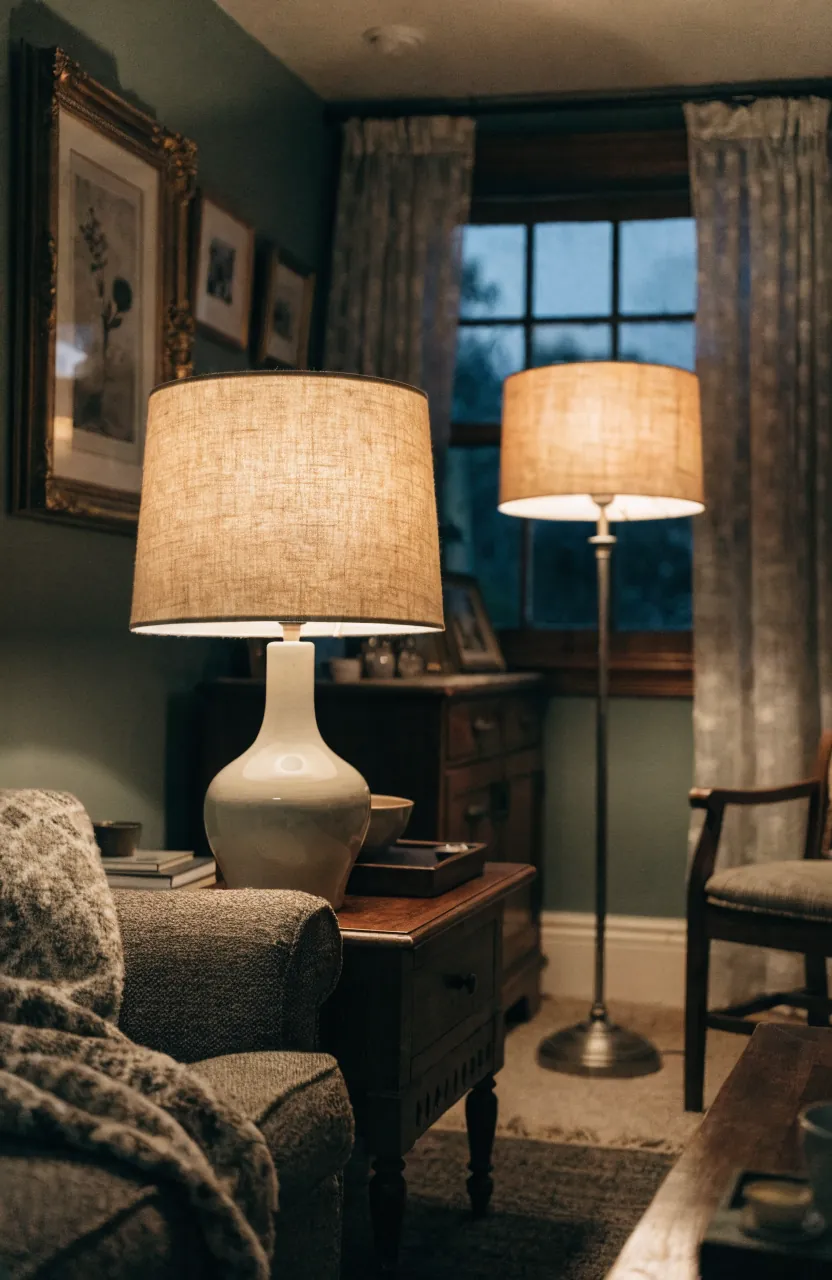
A vintage lamp base with a clean shade is one of the best bridges between old and new. The base brings story. The shade keeps the silhouette fresh. Use warm bulbs, but avoid anything too yellow. The room should glow, not turn orange.
Build an Art Wall Around One Repeated Color
Thrifted art is one of the easiest ways to make a room feel personal, but it can also make the wall feel random if there is no point of connection. Start with one anchor piece, then add smaller frames around it. The frames can be mixed: aged gold, dark wood, slim black, even one textile piece. What matters is that the art shares something, even subtly.
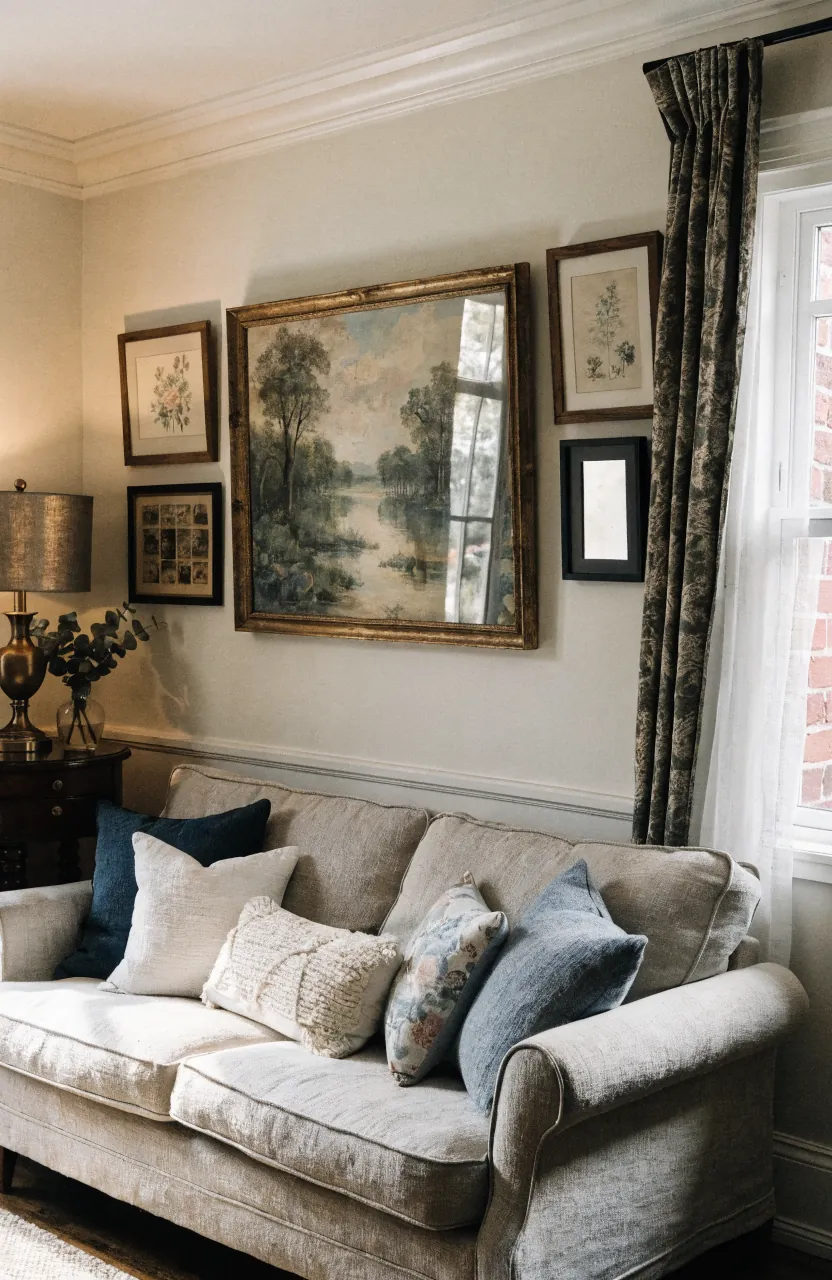
Repeat a faded green from a landscape in a pillow. Echo a rust tone from an old portrait in the rug. Let black frames speak to a black lamp or side table. These small repeats make the room feel like a collected home, not a wall of unrelated finds.
Style Tabletops With Function and Negative Space
A vintage coffee table can carry a lot of character, so the styling on top can stay simple. A tray, two books, a small ceramic dish, and one vase are usually enough. Leave part of the surface empty. That empty space tells the room it is still used for coffee, books, remotes, conversations, and ordinary life.
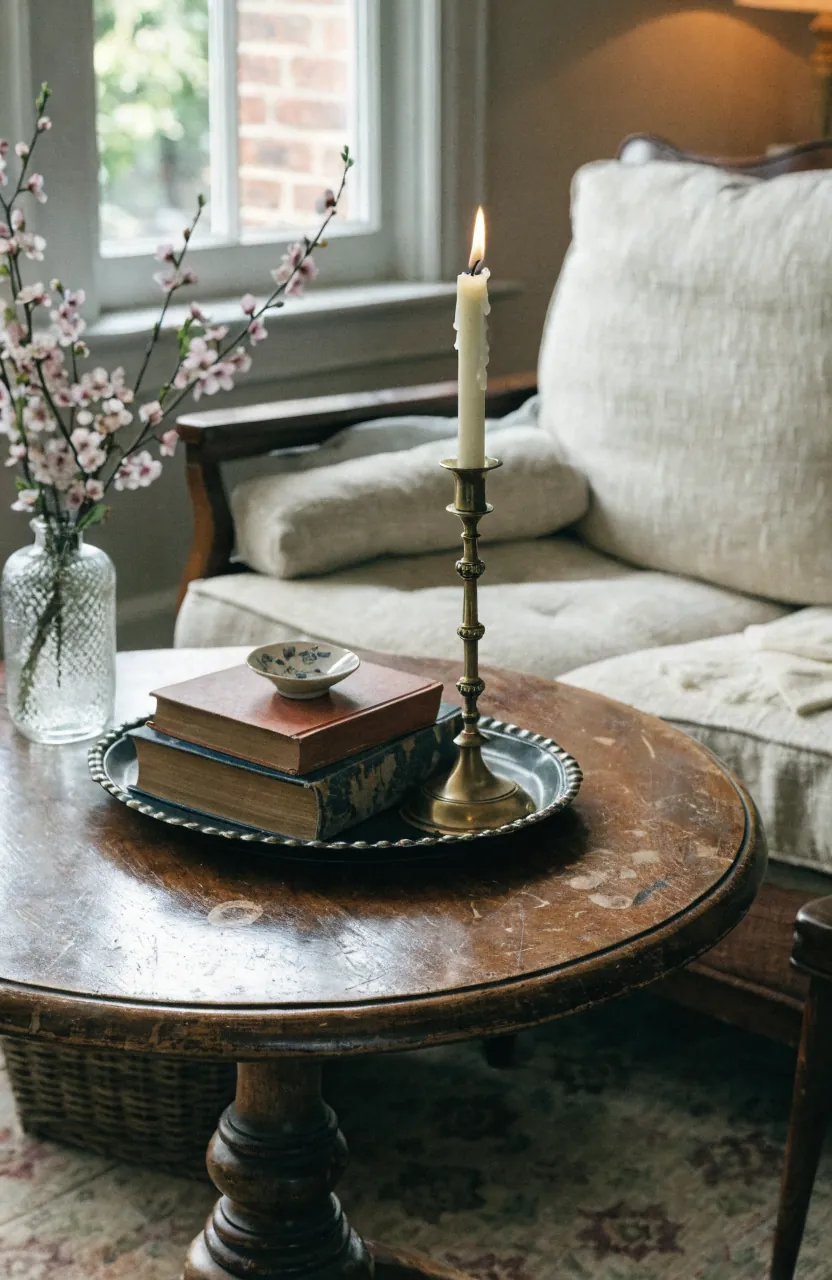
This is where many rooms accidentally become old-looking. Too many tiny objects on every surface can make even good pieces feel dusty. Fewer objects with better scale will usually look more expensive, more personal, and more relaxed.
Soften Dark Wood With Woven Storage and Clean Textiles
Old wood is beautiful, but too much of it can make a living room feel heavy. Woven baskets, linen cushions, cotton throws, and lighter rugs bring air back into the room. They also solve a practical problem: storage. A basket with blankets or magazines looks warm because it is useful, not because it is another object on display.
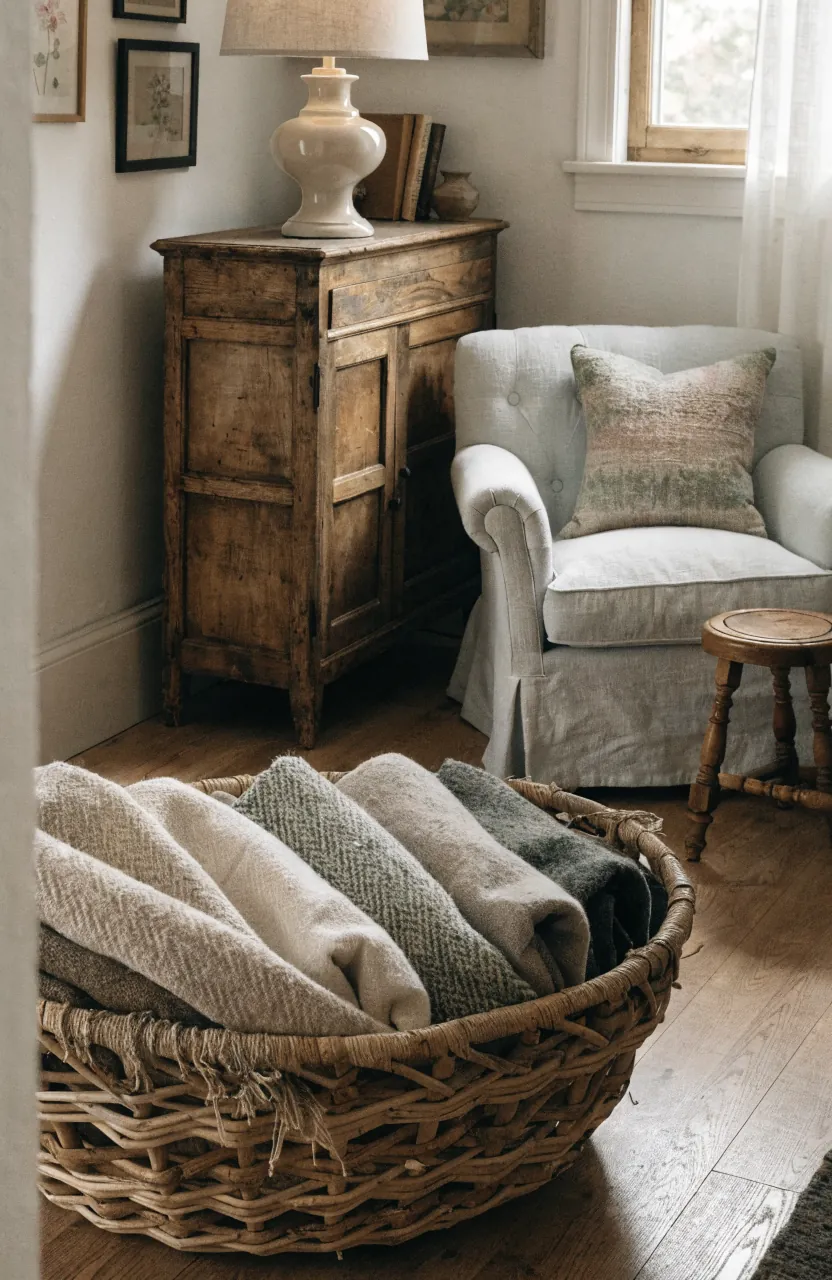
If a corner feels too brown, add texture before you add color. A woven shade, a pale pillow, a nubby throw, or a basket under a side table can change the weight of the whole space. The best personal home decor still has to support real life. When the room is useful, edited, and full of pieces with a reason to be there, vintage stops feeling old. It starts feeling like home.