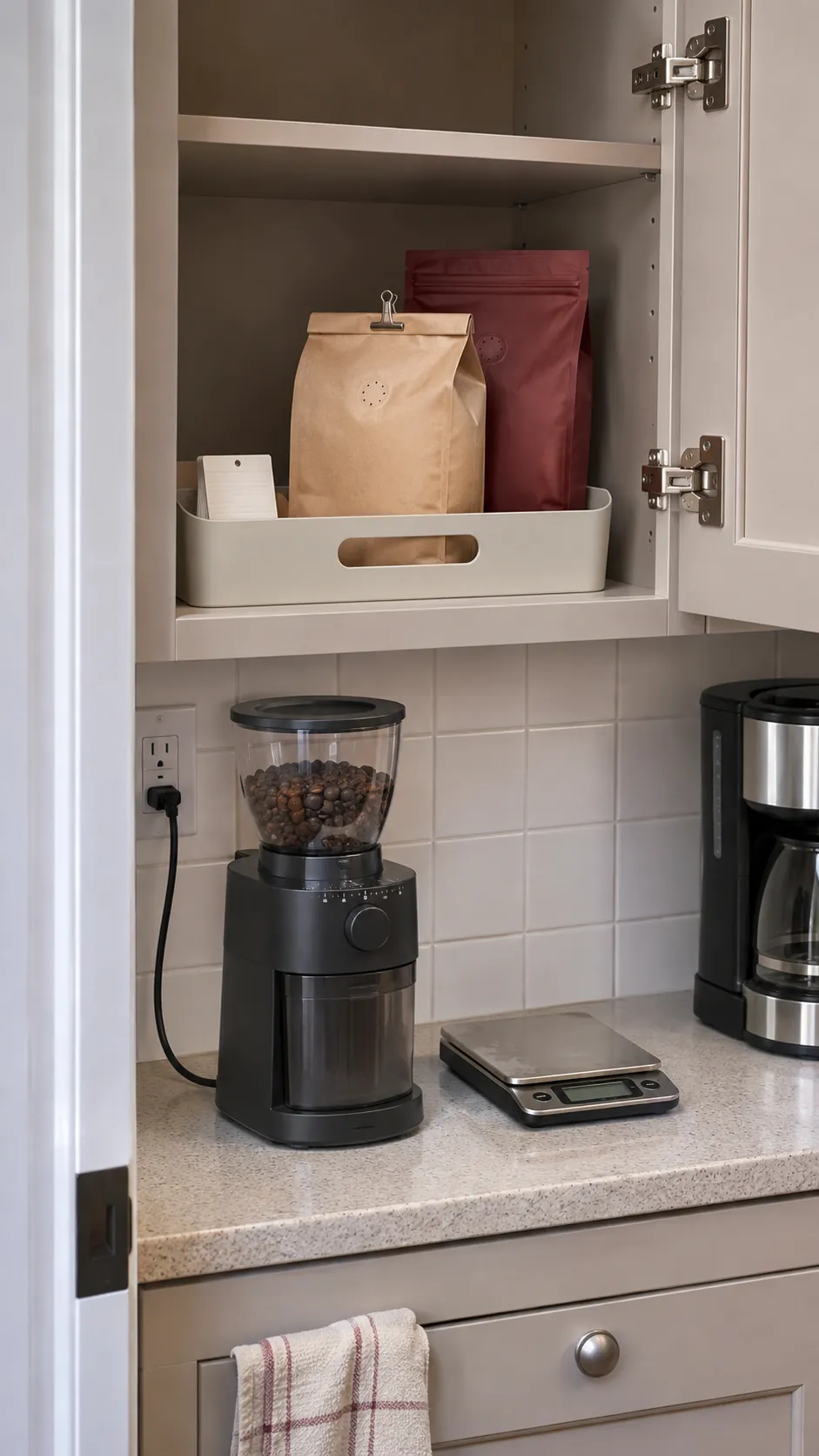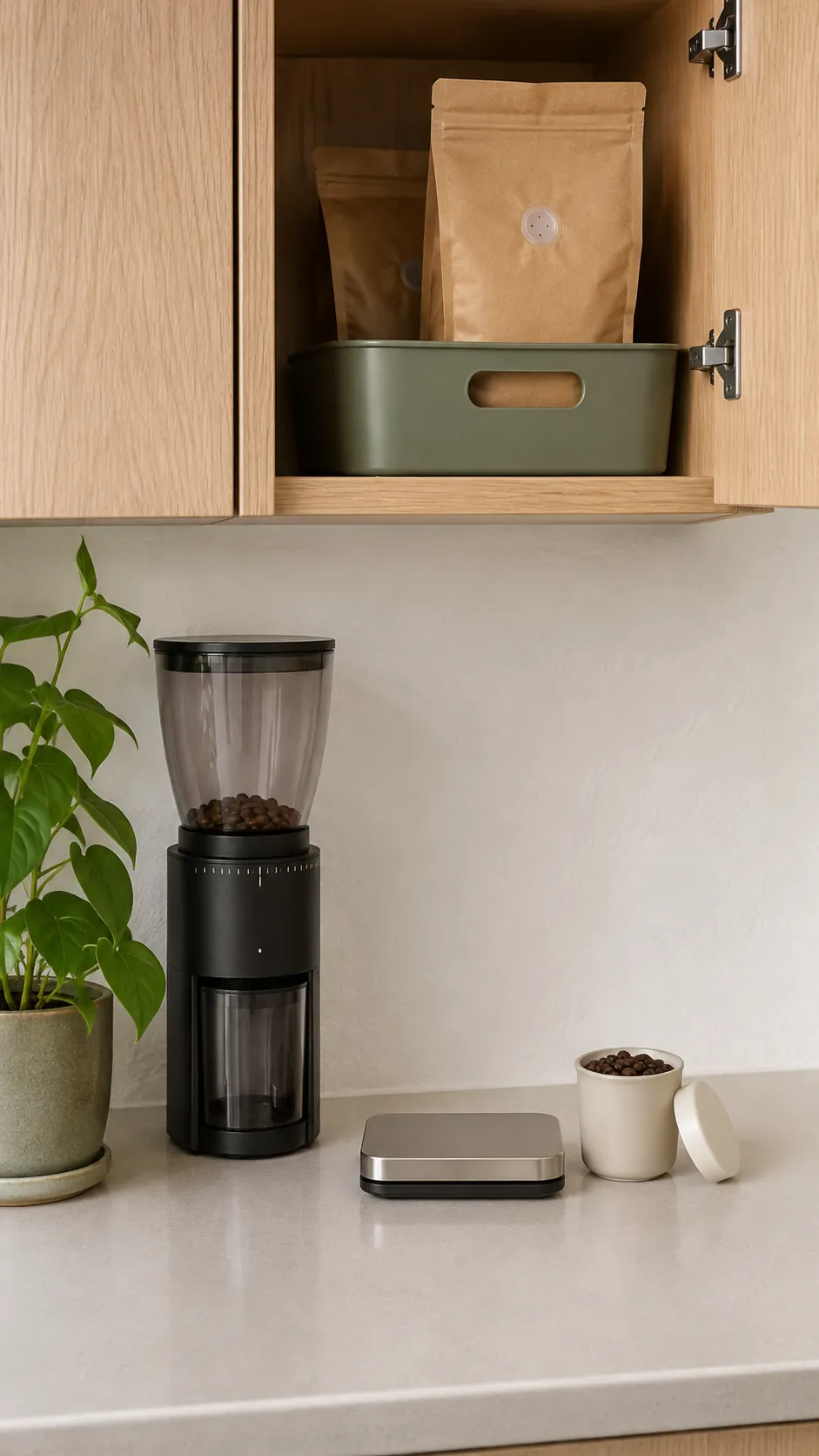
A coffee counter becomes crowded quickly when every roast gets its own container. Freshness depends more on limiting exposure to air, light, heat, and moisture than on displaying several matching vessels. A compact system can keep one active supply close to the grinder while the rest stays protected elsewhere.
Keep the active beans in their valve bag
A well made coffee bag with a secure closure and one way valve is already designed for roasted beans. Press excess air out gently after each use, close the seal completely, and fold the top only when the bag allows it. Do not leave the bag open while weighing or brewing.
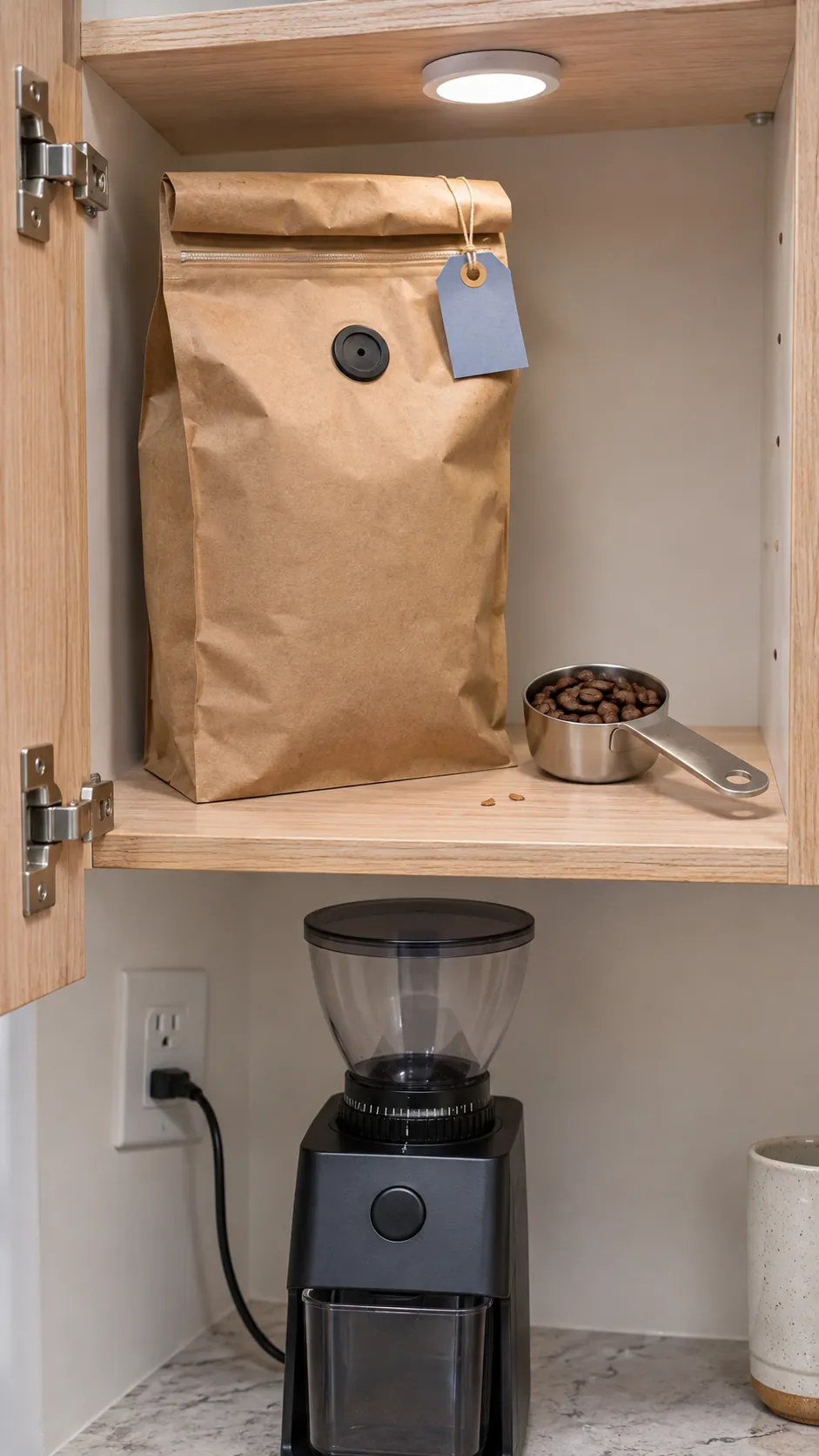
Write the roast date and opening date on a small removable tag rather than transferring the beans just for appearance. Keep the bag upright in a dark cupboard near the grinder. This preserves the original roast information and removes one bulky canister from the counter.
Create one dark cabinet zone
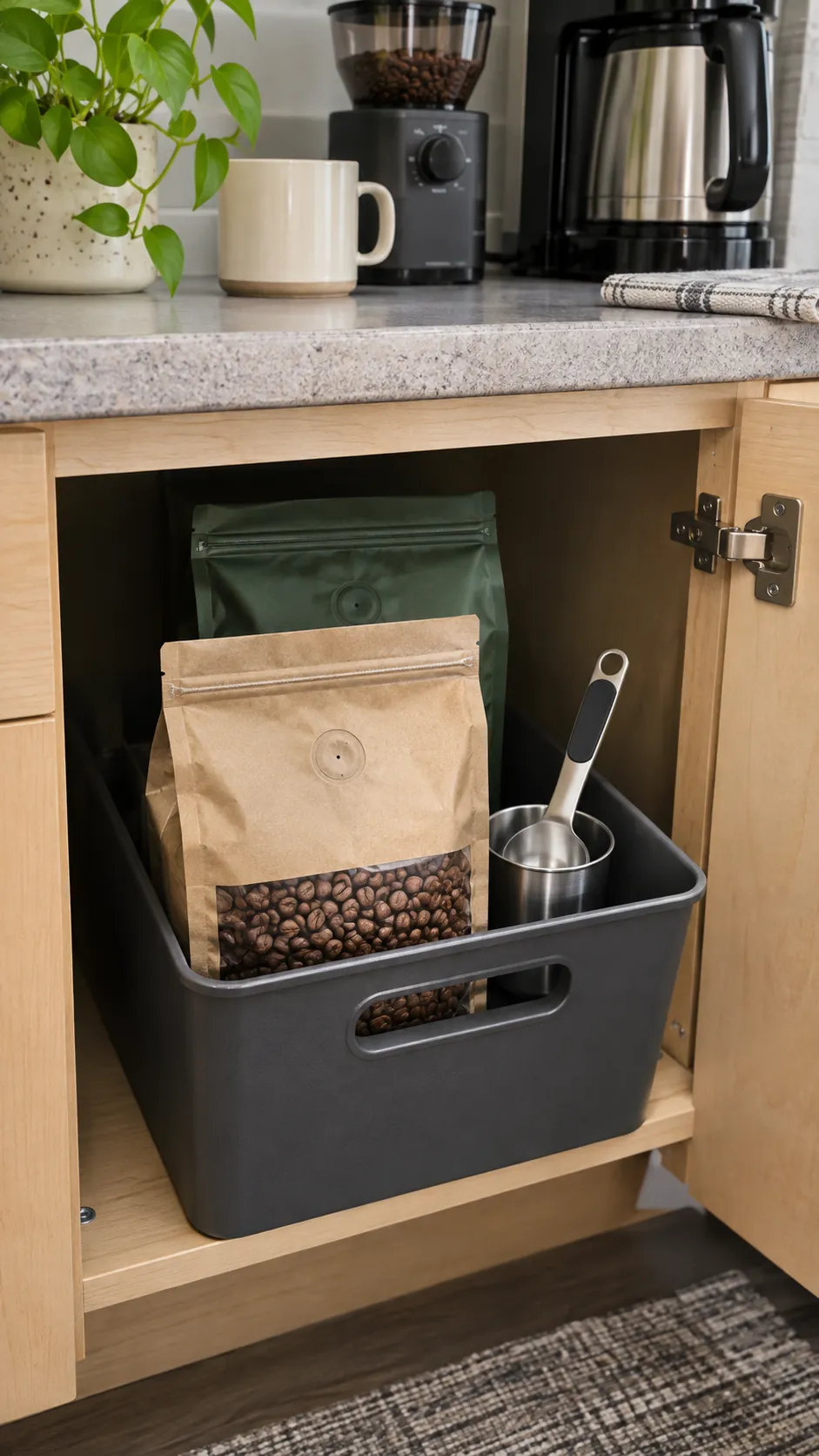
Choose a cupboard shelf away from the oven, dishwasher steam, and direct sun. A handled bin can hold the active bag, a scoop, and one backup bag without letting them spread across the shelf. The bin also makes it easy to lift the whole coffee supply down for cleaning.
Keep strongly scented foods and cleaning products in another area. Coffee packaging can pick up odors when it is not fully sealed, and a damp shelf is a poor storage place. Leave enough space above the bags so their closures do not bend open.
File multiple coffee bags upright
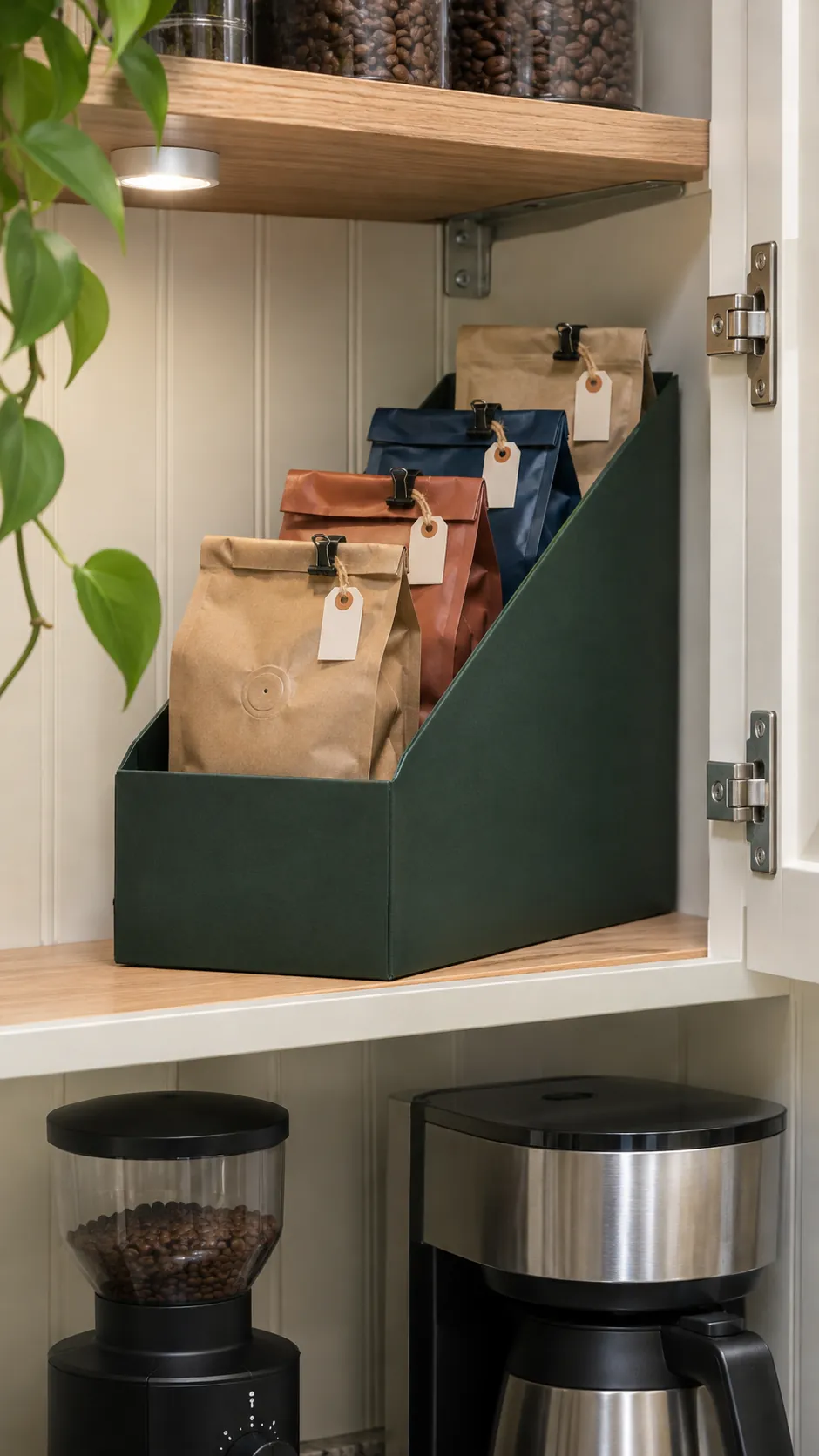
A narrow magazine file or shelf divider can store coffee bags upright like folders. Face the labels forward so you can see the roast and opening dates without pulling every bag out. This is especially useful for a coffee subscription that delivers several small bags.
Arrange the bags from oldest to newest and use the oldest suitable roast first. Avoid squeezing too many bags into the file because pressure can break a closure or valve. The organizer belongs in a cool cupboard, not on a sunny open shelf.
Measure a small daily portion
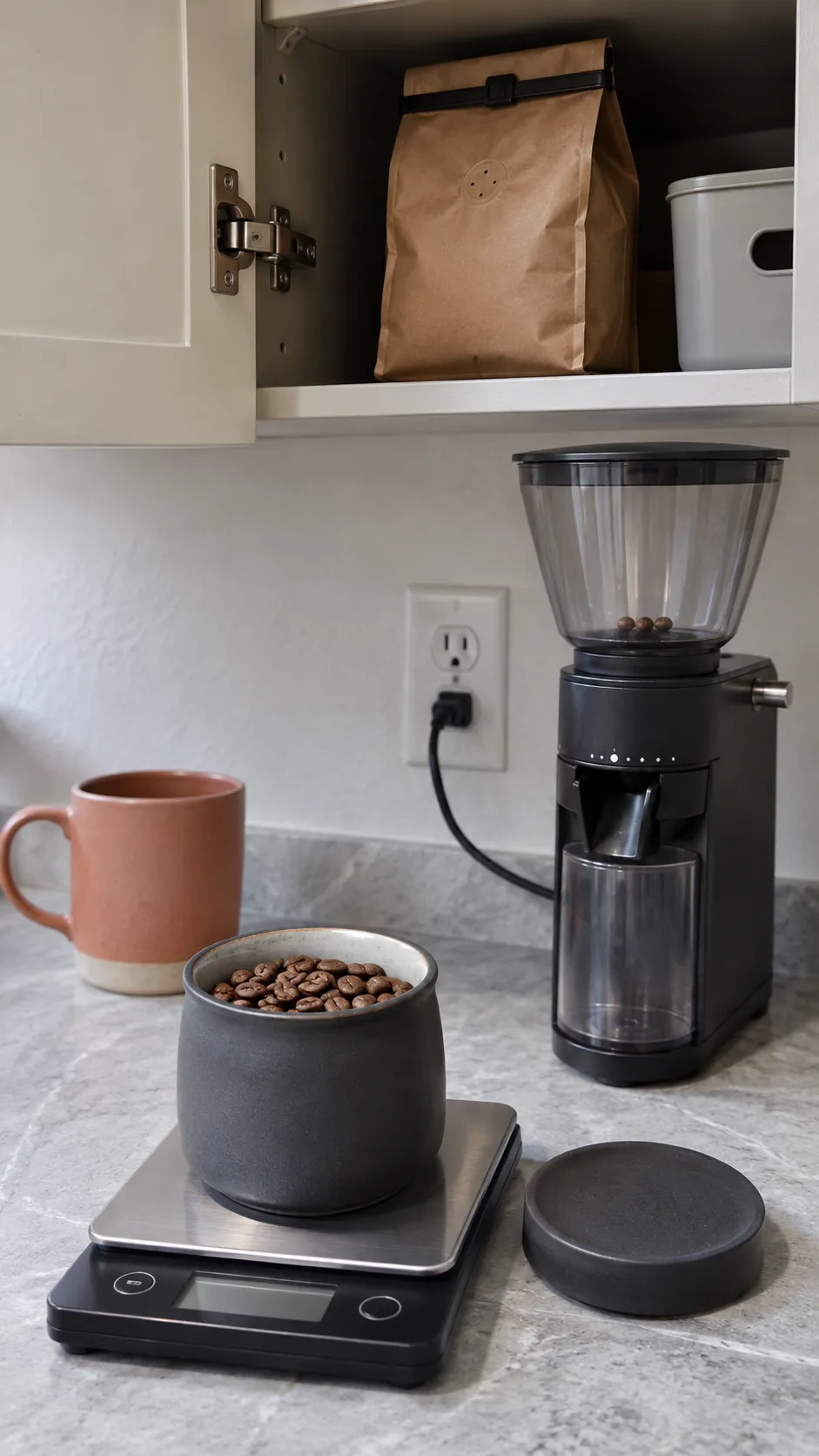
If opening the main bag several times a day is inconvenient, measure only a short daily supply into one small opaque container. Refill it from the protected bag as needed instead of storing the whole purchase beside the grinder. A container sized for one or two days uses far less counter space than a row of full canisters.
Wash and dry the small container completely before refilling it. Moisture and old coffee oils can affect the next batch. Keep the grinder hopper nearly empty between sessions unless the grinder instructions recommend another routine.
Freeze sealed excess in small portions
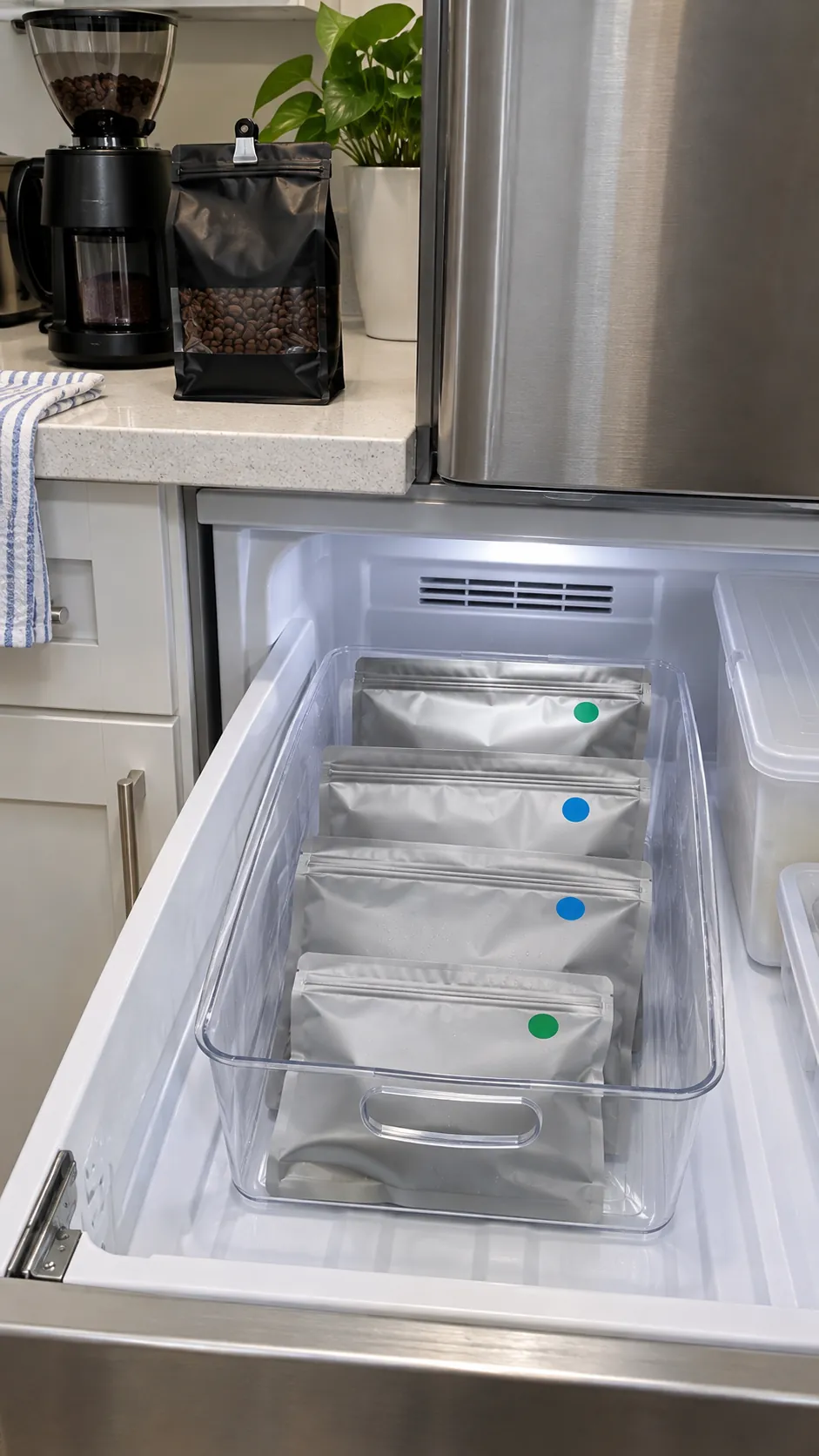
Beans that will not be used soon can be divided into well sealed portions before freezing. Use containers or bags made for freezer storage, remove excess air, and label each portion with the coffee and date. Small portions avoid exposing the entire reserve every time you need more beans.
Bring one sealed portion to room temperature before opening it so condensation forms on the outside rather than on the beans. Do not repeatedly thaw and refreeze the same package. Keep the active supply in the cupboard and treat the freezer as reserve storage, not the daily coffee station.
Match buying rhythm to storage space
The smallest storage system works when the delivery size matches how quickly the household brews. Track how long a normal bag lasts, then adjust a coffee subscription or shopping schedule so unopened bags do not accumulate. One active bag and one planned backup are easier to rotate than a deep stockpile.
Use a simple front and back arrangement in the cabinet, with the open bag in front and the next bag behind it. Check the reserve before ordering more and keep the counter limited to the grinder, scale, and current daily portion. This routine protects the beans while preserving the work surface for brewing.