
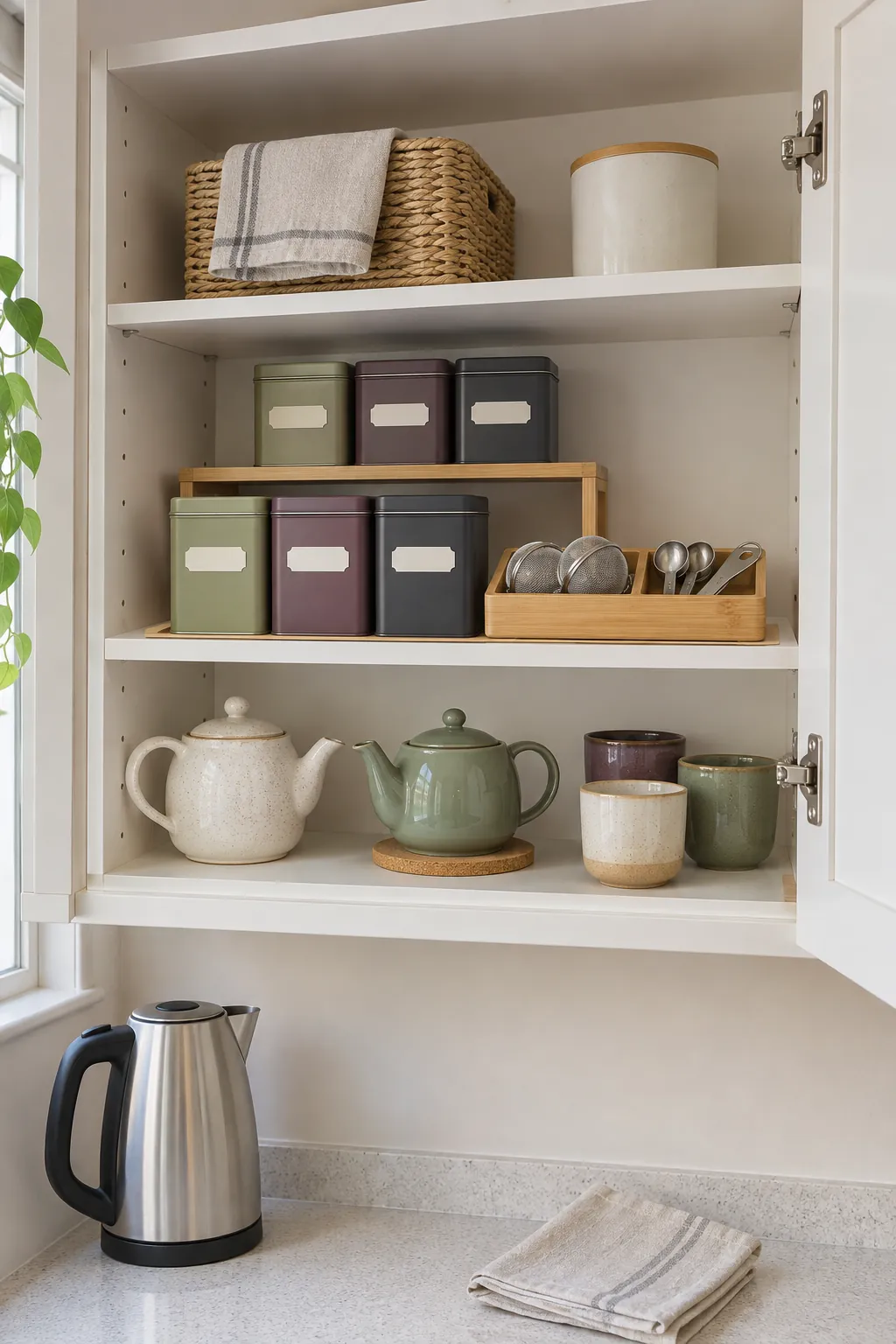
A tea cabinet becomes frustrating when every cup starts with moving tins, untangling infusers, and lifting a teapot from an unsafe stack. The best compact setup gives each object a stable home based on how often you use it. It also protects loose leaves from light, moisture, heat, and strong kitchen odors.
Measure the Cabinet Before Choosing Organizers
Measure the clear width, depth, and height inside the cabinet, not the outside frame. Note how far hinges, shelf supports, and the door project into the usable space. Record the height of your tallest teapot and the depth of its handle and spout. These measurements prevent a shelf riser or storage bin from blocking the door.
Place the largest teapot in the cabinet first and test whether you can lift it out without tilting it. Leave finger room above lids and around handles. A few centimeters of open space are more useful than a tightly packed shelf that makes delicate pieces difficult to retrieve.
Create Zones by Frequency of Use
Reserve the easiest shelf for the tea, infuser, and cup you use most often. Put occasional blends and serving pieces higher or farther back. Keep heavy teapots on a low shelf so you can lift them with both hands. This simple order reduces daily reaching and stops rarely used items from crowding the front.
Group each zone in a shallow tray or open bin. The container should slide forward without catching on the cabinet frame. Avoid deep baskets that hide small tins and encourage forgotten tea to collect at the bottom.
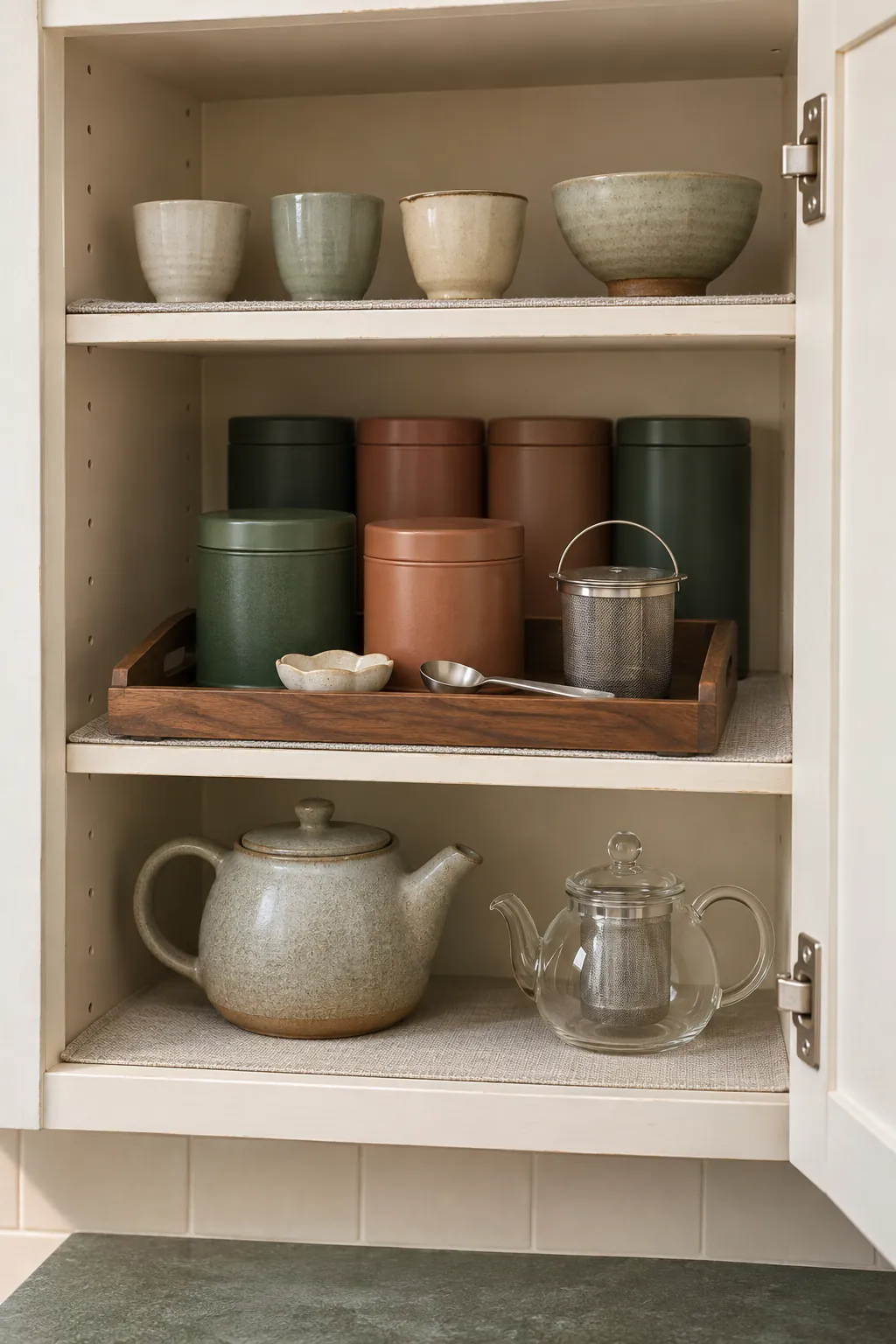
Protect Loose Tea in Airtight Tins
Transfer loose leaf tea from weak bags into opaque airtight tins that fit your shelf depth. Choose a few matching sizes rather than many decorative shapes. Square or rectangular tins use cabinet space efficiently, while round tins are easier to grip if they are not packed too tightly.
Write the tea name and purchase month on a removable label. Place the label on the front or lid according to the viewing angle in your cabinet. Keep fragrant blends such as mint or chai tightly sealed so their aromas do not affect delicate green or white tea. Store every tin away from the kettle, stove, dishwasher steam, and direct sun.
Corral Infusers and Small Brewing Tools
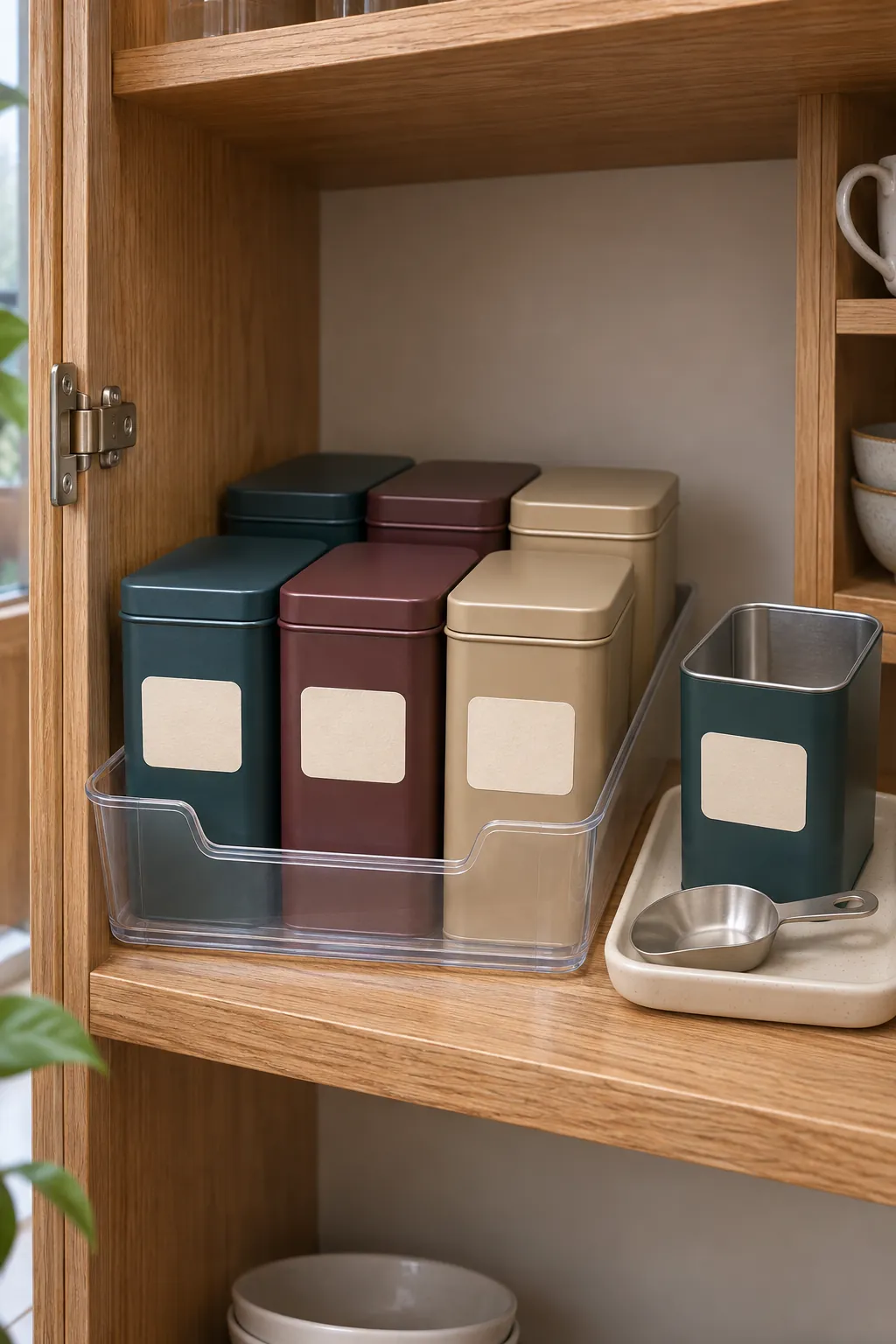
Infusers, measuring spoons, strainers, and tea clips disappear easily among larger objects. Give them one washable divided tray near the front of the daily shelf. Store mesh infusers only after they are fully dry, because trapped moisture can create odors and damage nearby tea.
Use one compartment for clean infusers, one for measuring tools, and one for small rests or drip dishes. A shallow tray lets you see every item without digging. If an infuser belongs to a specific teapot, keep it inside that dry pot only when it fits loosely and cannot scratch the glaze.
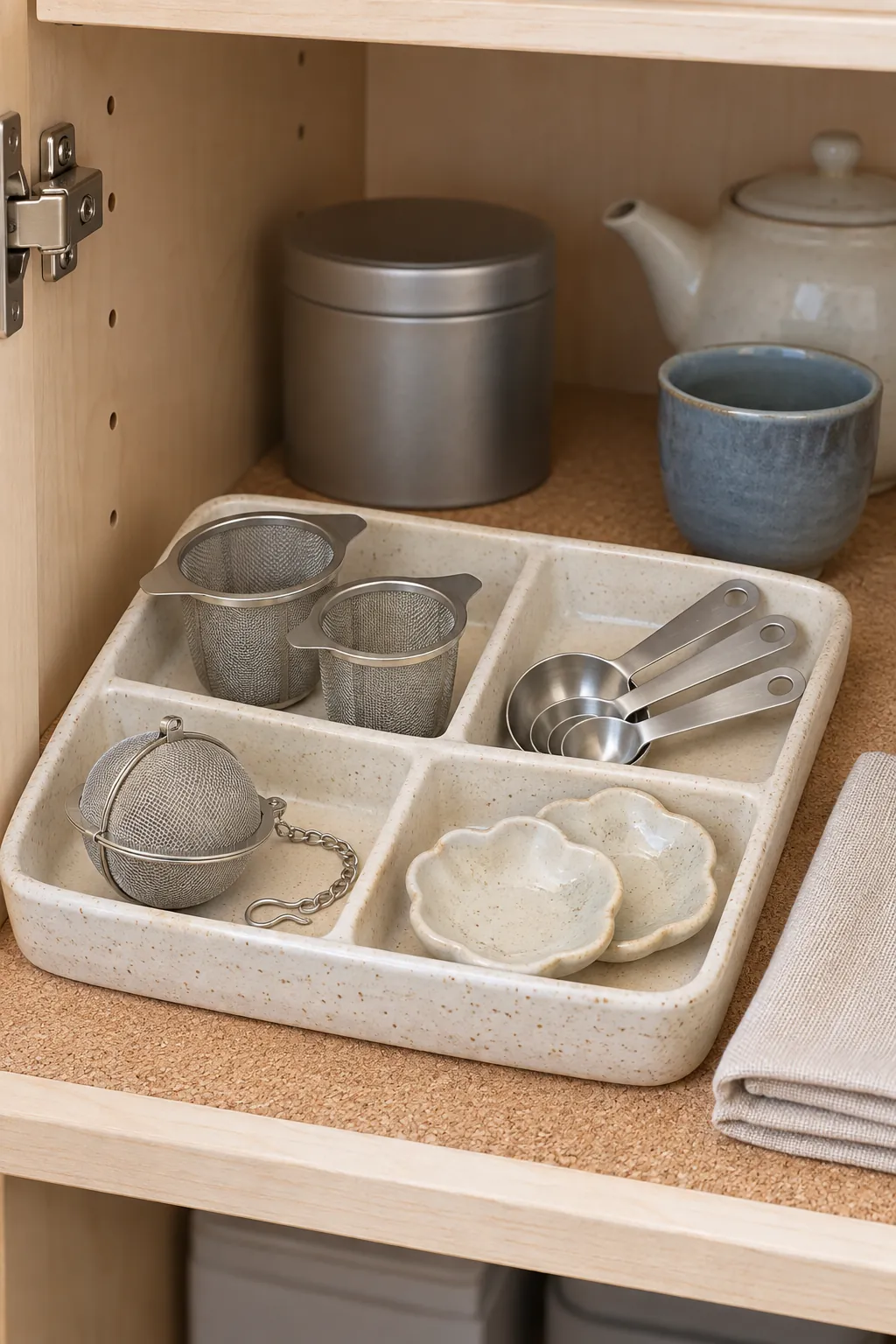
Store Teapots Without Risky Stacks
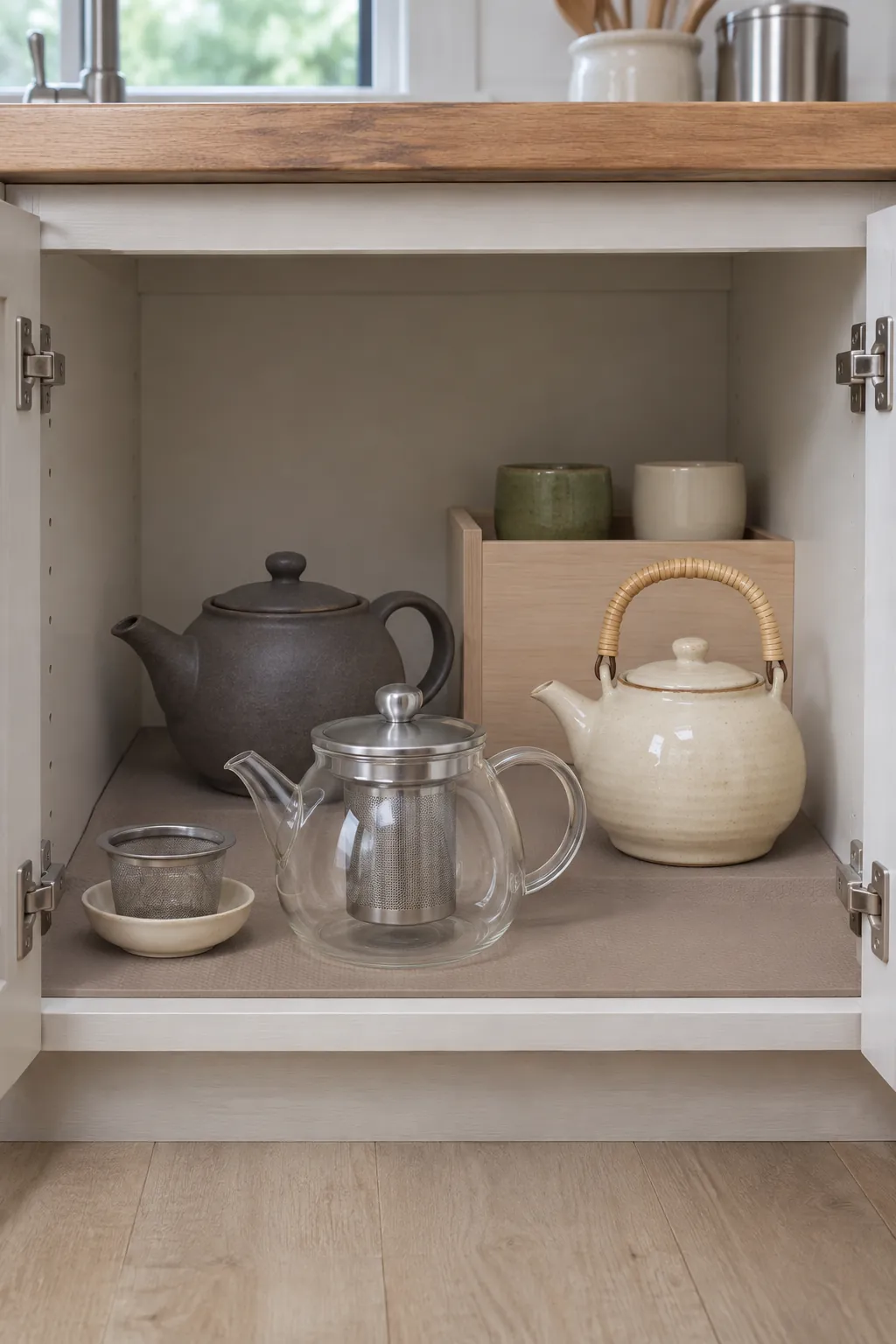
Teapots need stable individual spaces because handles, spouts, and lids create uneven pressure. Set each pot directly on a shelf or a thin nonslip liner. Turn the spout toward an open side where it will not strike another pot during removal.
If two pots must share one level, place the heavier pot toward the back and the frequent pot at the front. Never balance one teapot on another lid. A small lid rest beside the pot can be safer when the lid is loose, but keep each lid clearly paired with its vessel. Store cups separately if nesting them would press against a fragile rim.
Add One Shelf Riser for Vertical Space
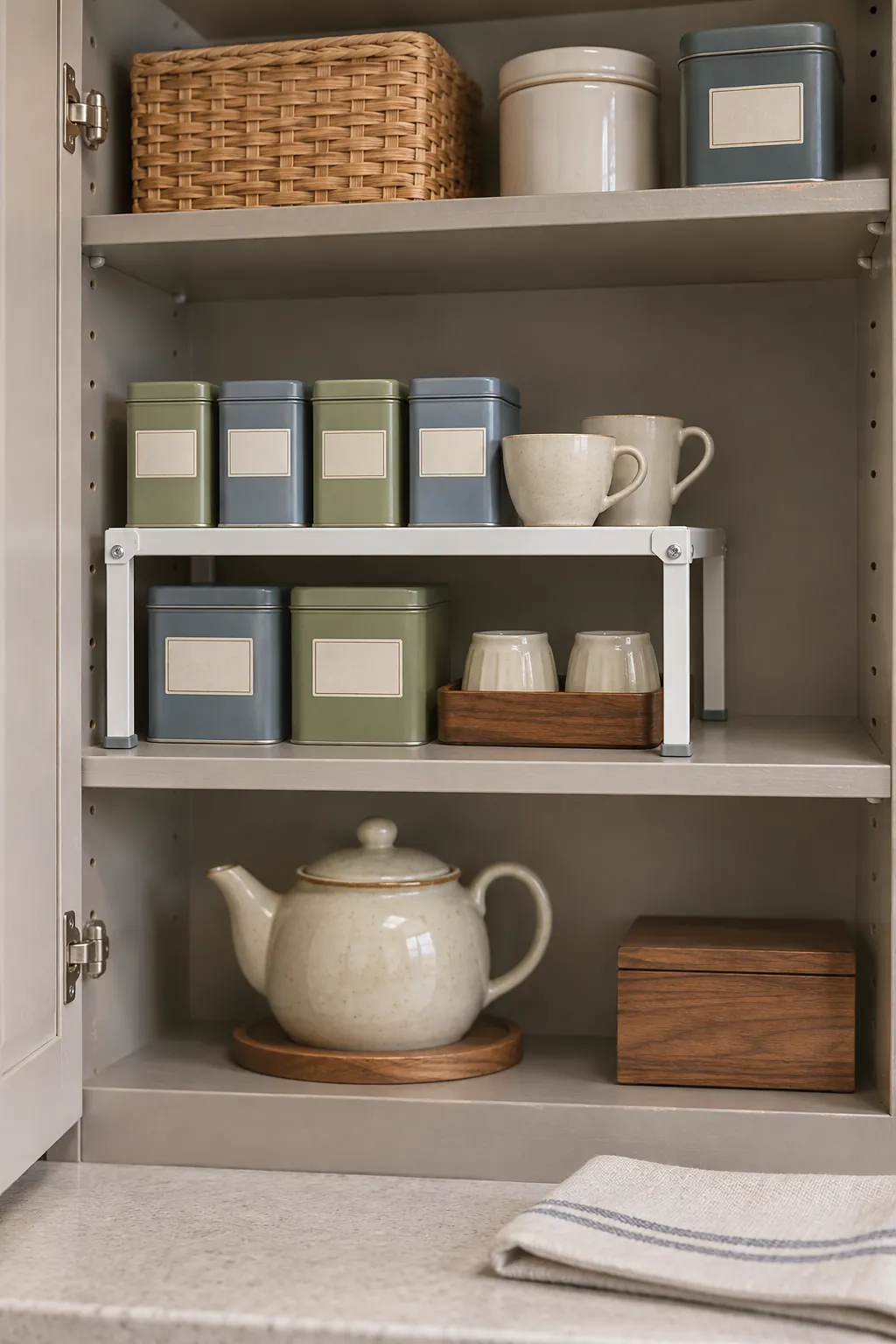
A sturdy shelf riser can separate short tins from cups without creating a precarious pile. Choose a riser that fits completely inside the cabinet and has feet that cannot slide. Test the clearance above and below before filling it.
Place light tins or cups on the upper level and heavier pieces below. Keep labels facing forward. Do not bridge a riser across uneven shelf supports, and do not let its legs rest on tea tins. One well fitted riser is usually more practical than several narrow platforms in a small cabinet.
Build a Daily Brewing Tray
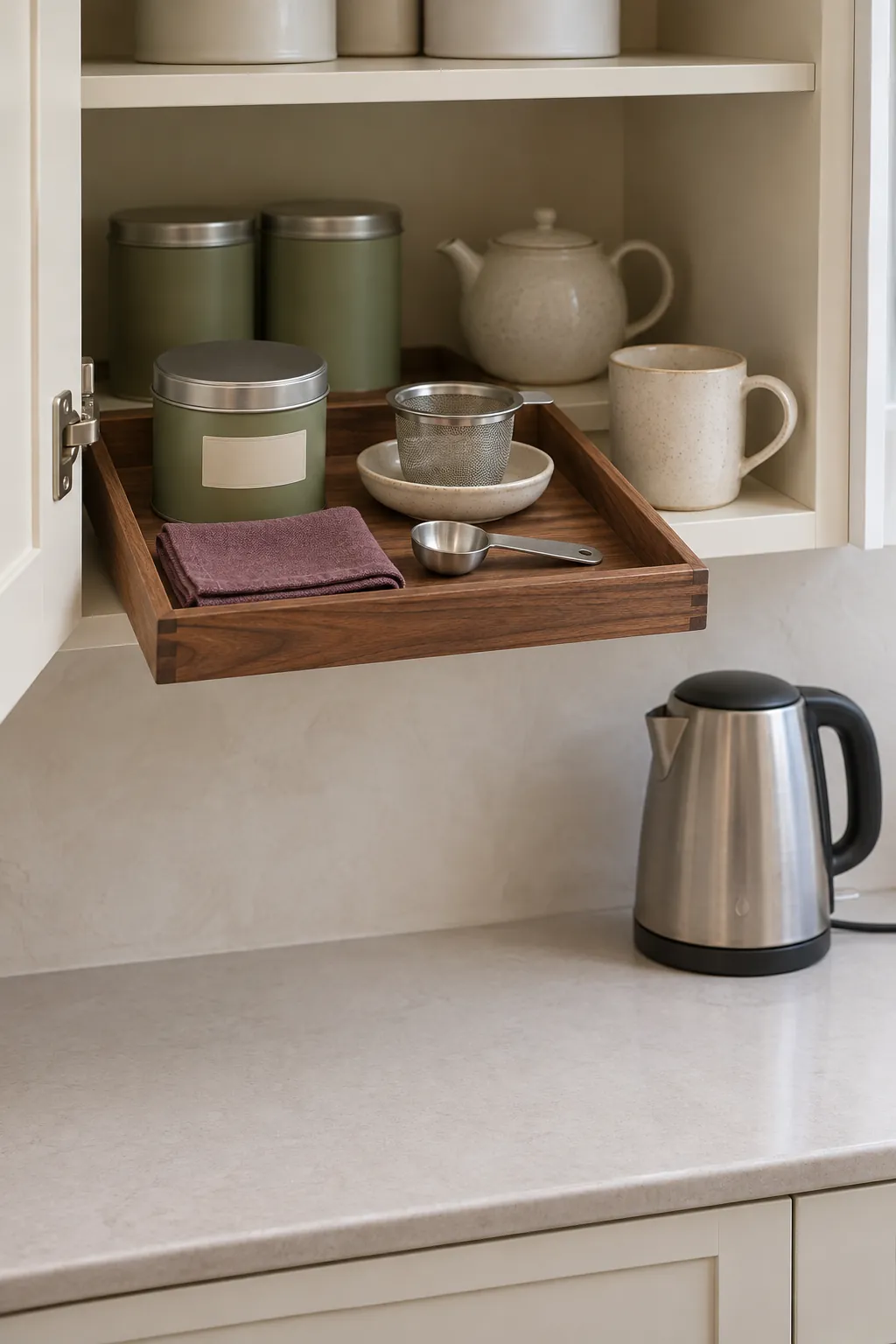
Place one everyday tin, one dry infuser, a measuring spoon, and a small drip dish on a compact tray. Slide the tray from the cabinet when you make tea, then return it after every piece is clean and dry. This keeps the counter clear while making the daily routine fast.
Choose a tray with low sides so labels remain visible. Leave the kettle outside the cabinet unless it is completely cool and dry. Change the featured tin when you want variety instead of keeping the whole collection at the front.
Keep Backup Tea Separate and Rotate It
Put unopened refill bags in one opaque lidded bin at the back or on the highest reachable shelf. Mark each package with the purchase month and place older tea toward the front of the bin. Refill a working tin only after it is empty, clean, and completely dry.
Review the bin every few months and remove blends you no longer enjoy. Avoid buying duplicate tea simply because the working tin looks low. A separate reserve zone makes the active collection easier to scan and helps you use tea while its flavor is still fresh.