Suitcases are bulky, awkward, and easy to forget between trips. A poor storage spot can leave them dusty, misshapen, or damp when you need them. The best location keeps each case clean, dry, supported, and easy to retrieve without moving half the room.
Start with the condition of the luggage, then choose a location based on moisture, heat, weight, and how often you travel. Space saving matters, but protection and safe access matter more.
Clean and Dry Every Suitcase
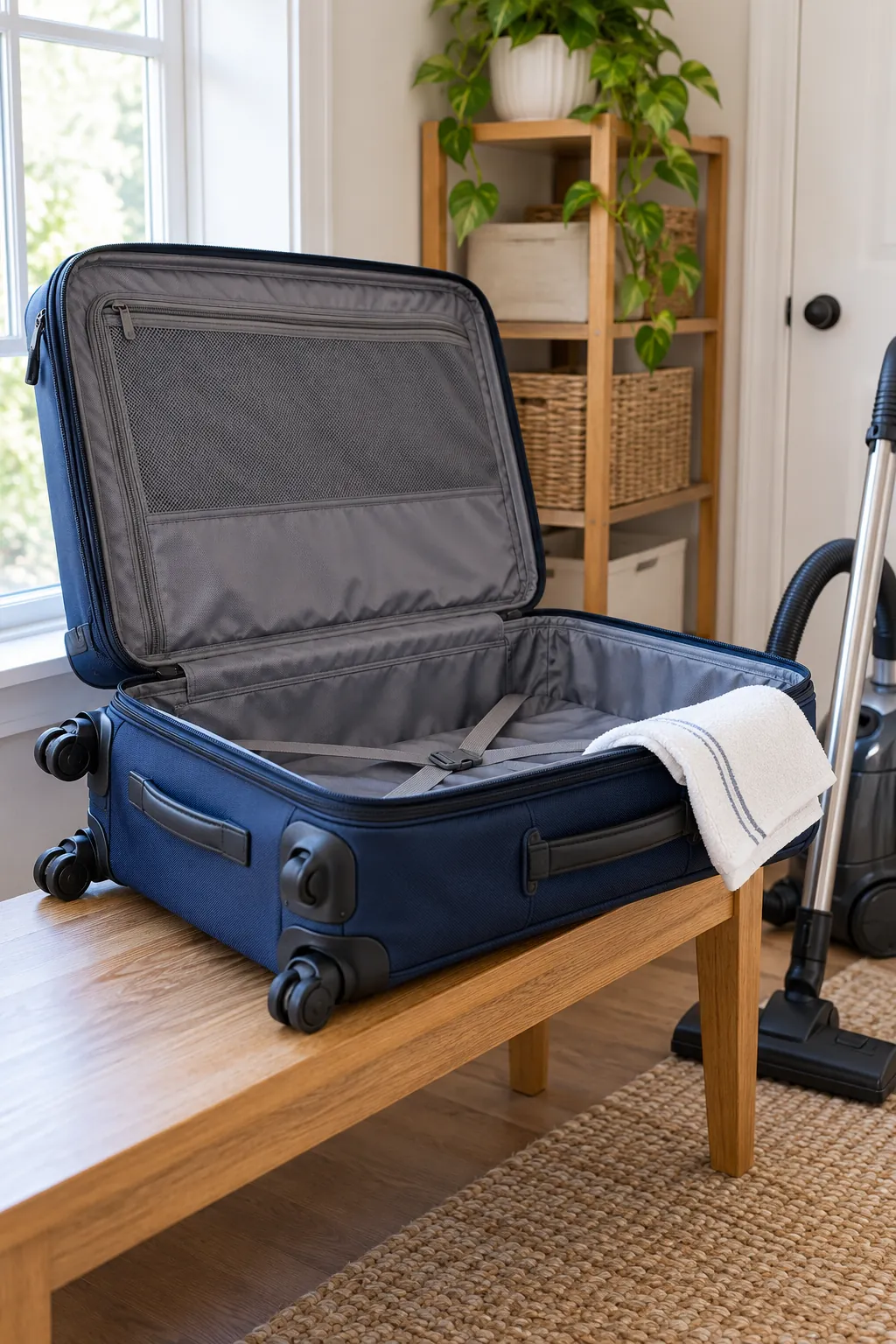
Empty every pocket and remove crumbs, receipts, and toiletries. Vacuum the lining with a soft attachment, then clean the shell according to its material and care instructions. Let every surface dry completely with the case open before storage.
Check wheels, handles, zippers, and seams while the suitcase is easy to inspect. Repair small problems before the next trip. A breathable dust cover protects the exterior, but never cover damp luggage or seal moisture inside.
Choose a Dry Indoor Location
A bedroom closet, hall closet, or dry storage room is usually safer than a damp basement, exposed balcony, or hot attic. Keep luggage away from leaking pipes, direct sun, heaters, and exterior walls that collect condensation. Leave a small air gap around the case.
Do not store luggage where it blocks an exit, electrical panel, or frequently used shelf. Match the location to travel frequency. A regular traveler needs an easy reach, while occasional luggage can use a higher or deeper position.
Nest Suitcases Without Losing Accessories
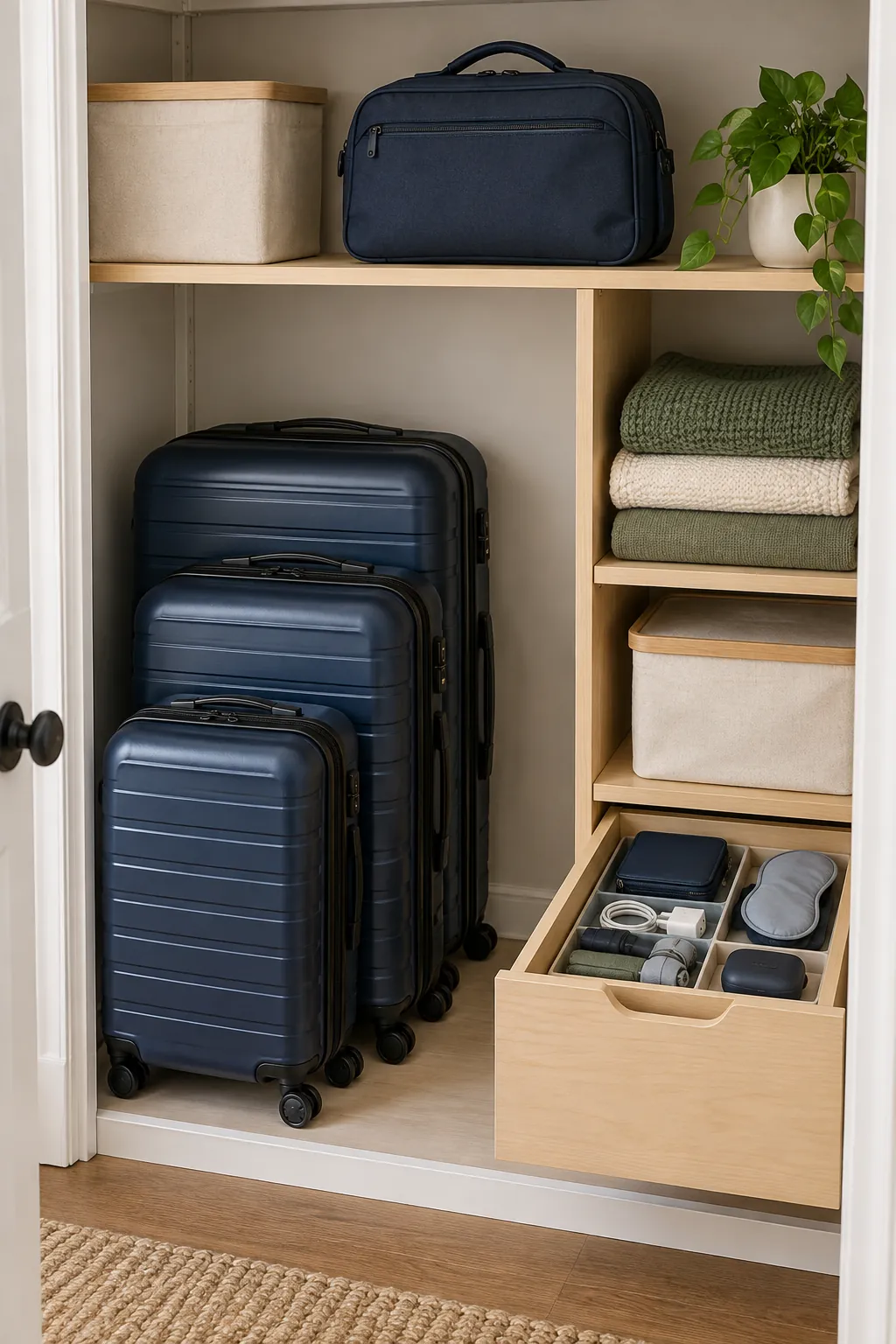
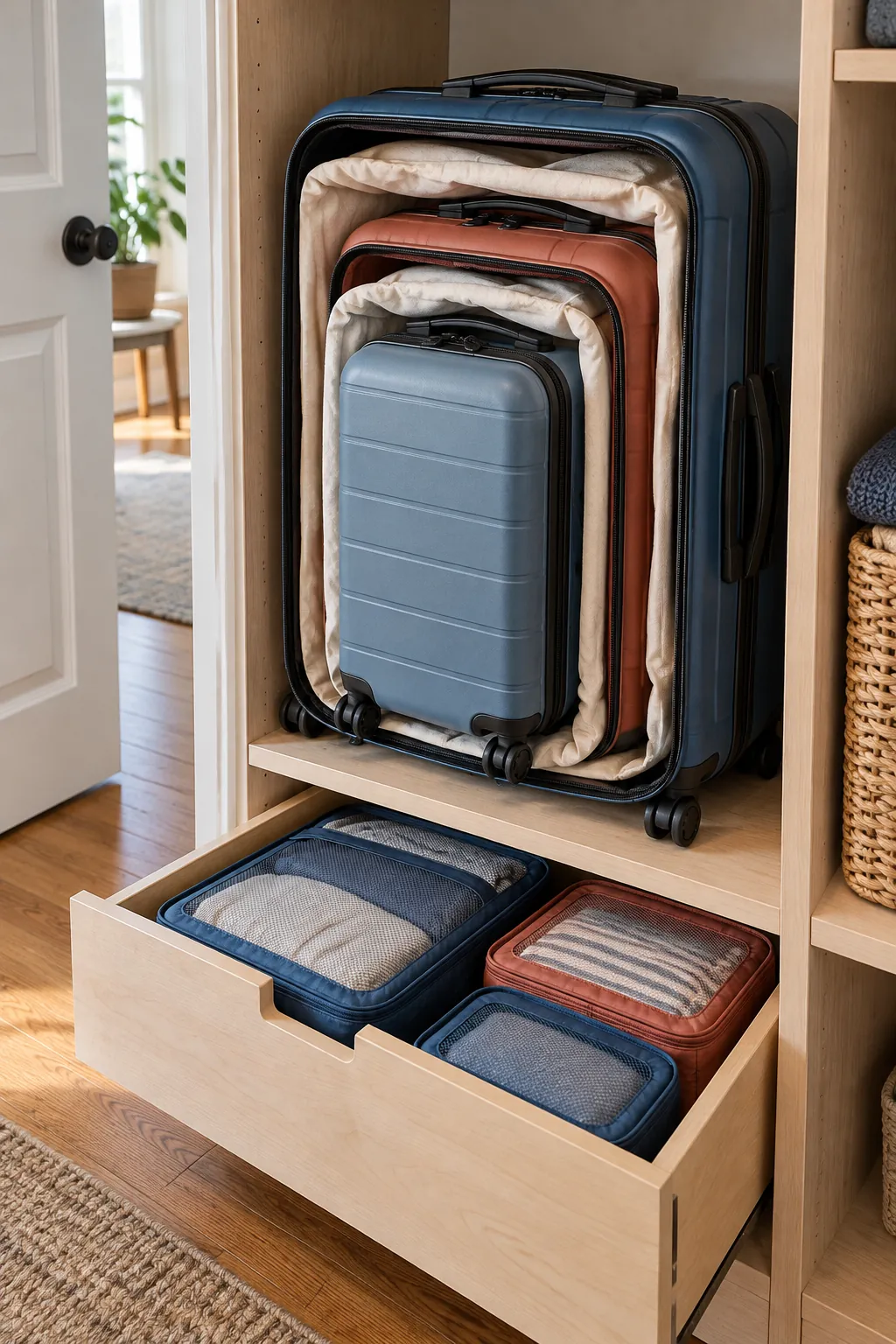
Nested suitcase storage can reduce the footprint when cases fit without force. Put the smallest clean case inside the next size and protect hard surfaces with a soft cotton cloth. Keep wheels and handles positioned so they do not press against a lining or zipper.
Store packing cubes, locks, adapters, and luggage scales in one separate travel drawer or a light pouch inside the smallest case. A separate visible drawer is often easier when you travel often. Never hide important documents, medicine, food, or liquids inside stored luggage.
Use Under Bed Storage With Care
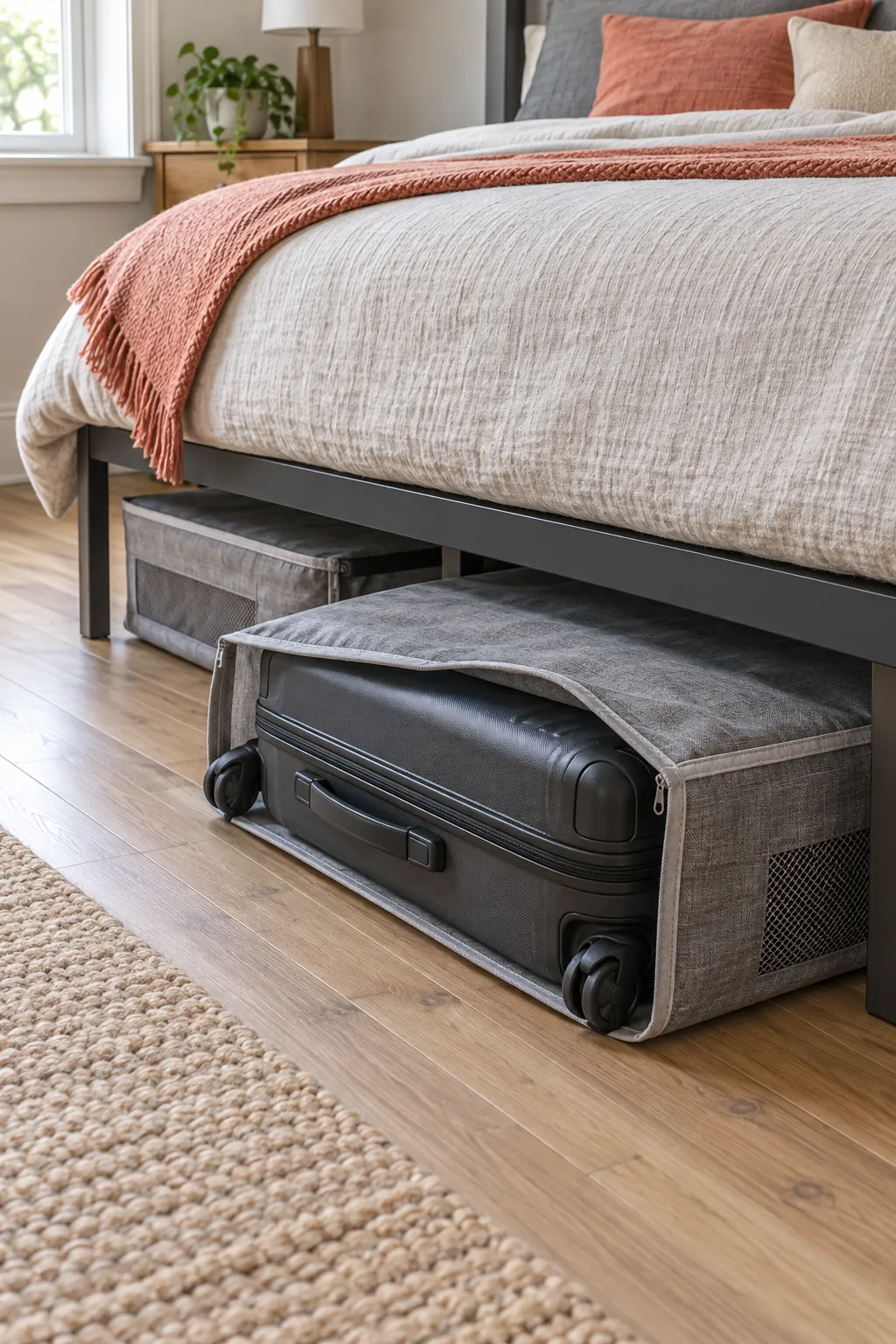
Luggage storage under a bed works when the clearance is sufficient and the floor stays dry. Measure the case at its tallest point, including wheels and handles. Use a low platform or a breathable cover to protect it from dust and floor scuffs.
Pull the suitcase out without scraping the frame. Do not wedge it beneath center supports or block heating vents. If the bed area is humid, choose a closet instead. Check the case every few months and after any leak, pest issue, or unusual odor.
Use Closet Shelves and Secure High Storage
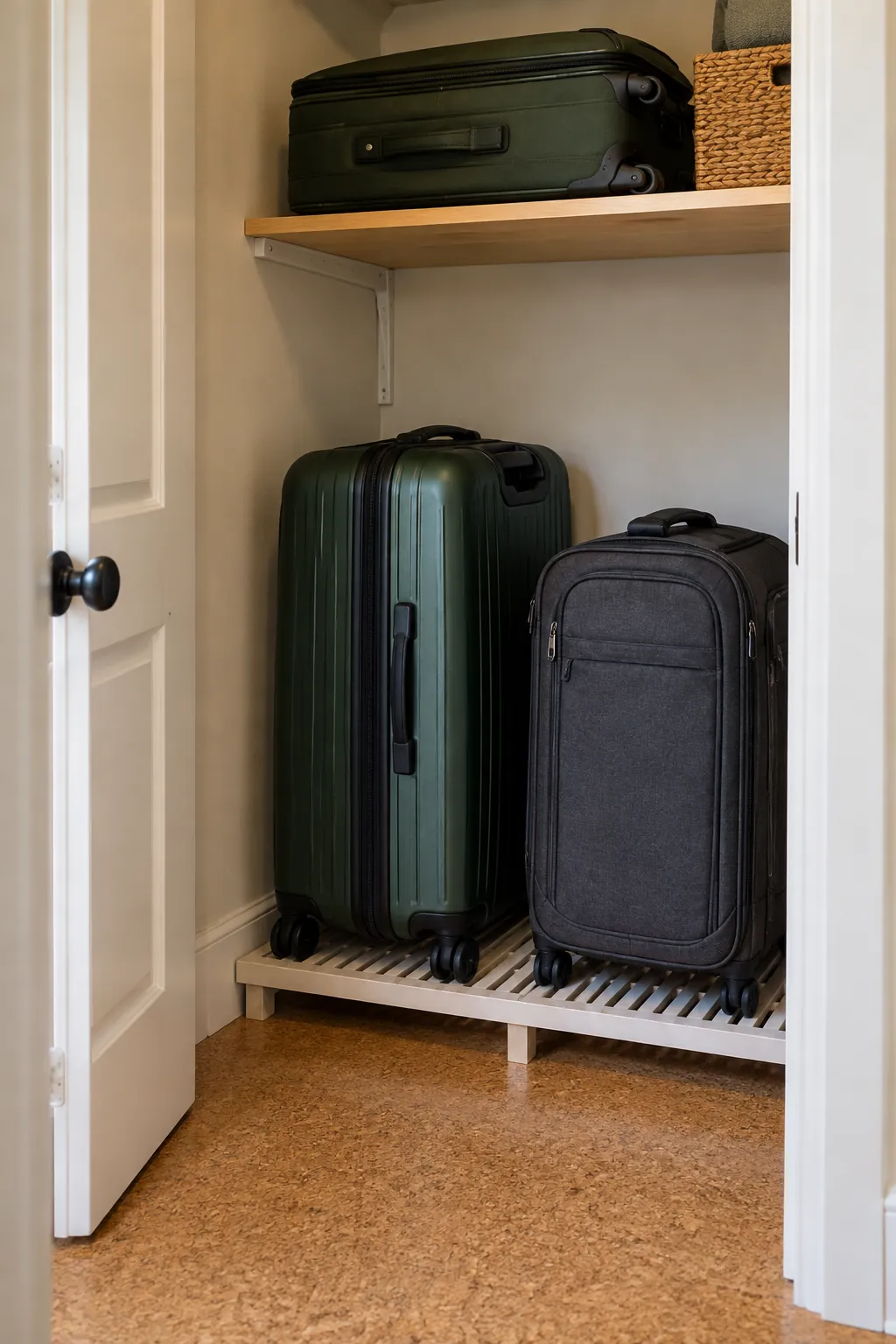
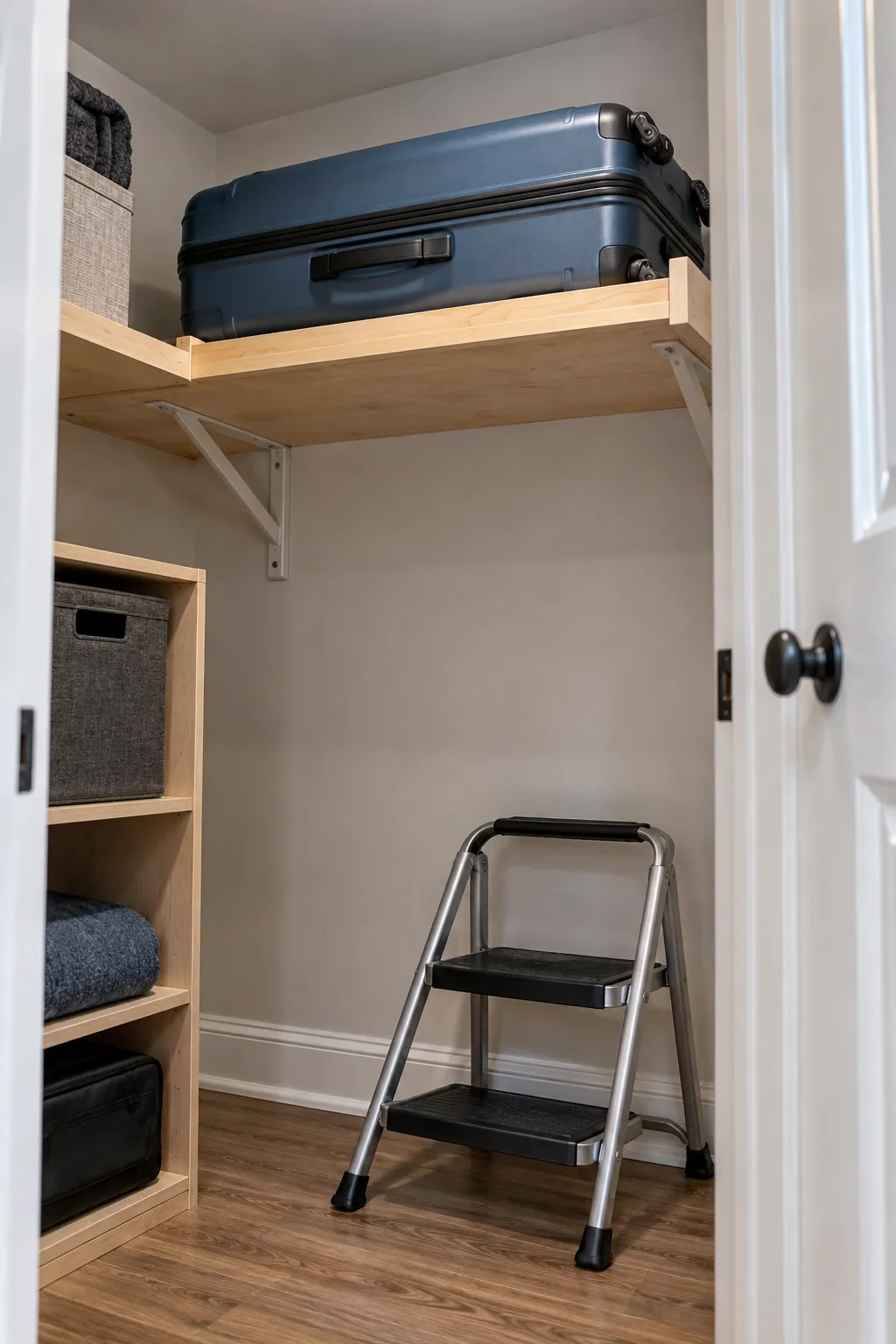
A closet shelf can hold light carry cases if the shelf is deep, anchored, and rated for the load. Place the suitcase flat with wheels facing the wall, or stand it only when it cannot roll forward. Keep a stable step stool nearby for safe access.
Overhead luggage storage should never sit loosely above a bed or busy walkway. Use a cabinet with a door, a fitted shelf lip, or a restraint designed for the system. Large heavy suitcases belong lower where one person can lift them without twisting.
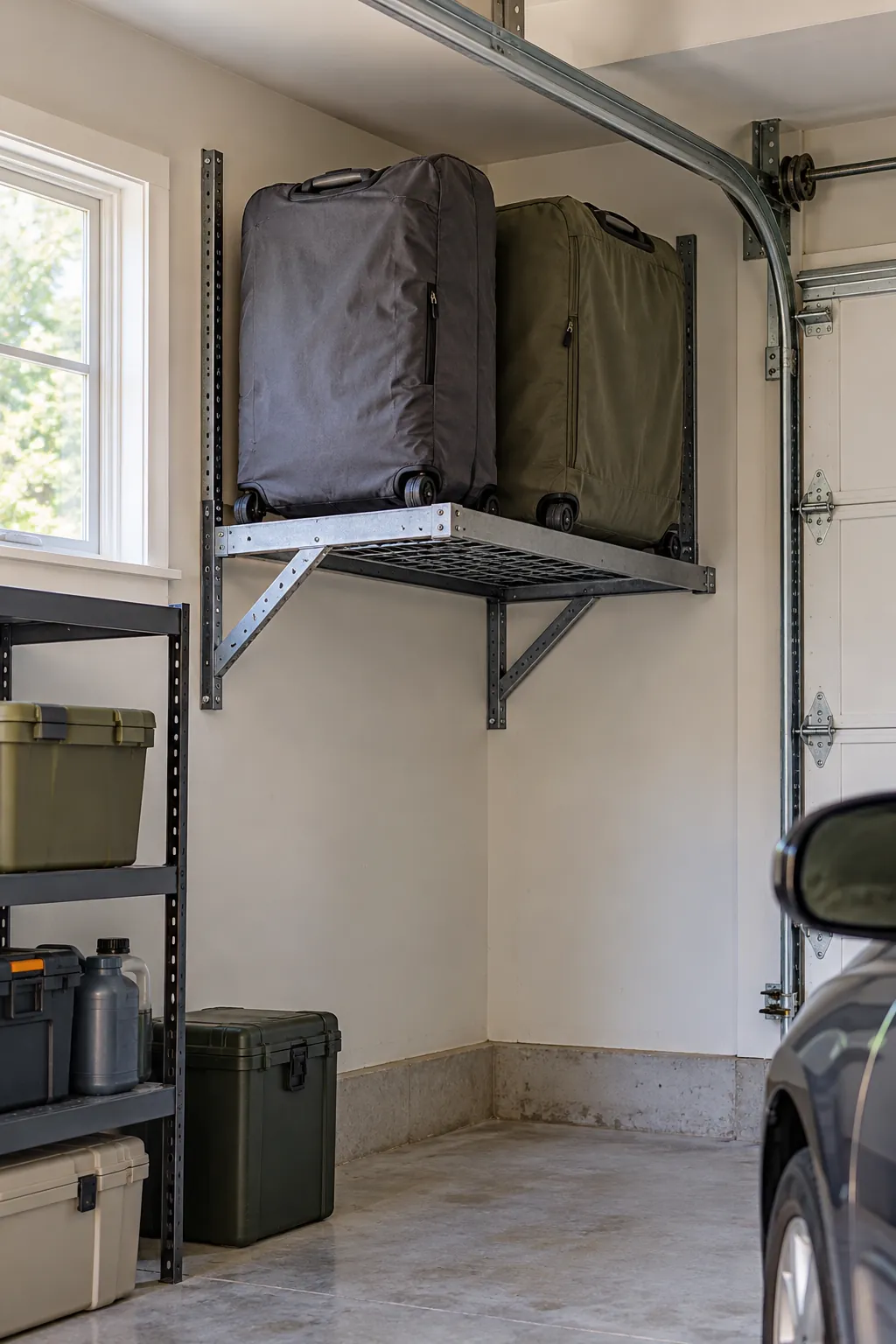
Store Garage Luggage Only in Stable Conditions
Garage luggage shelves can work in a clean, dry, climate stable garage, but many garages expose fabric, foam, adhesives, and wheels to heat, moisture, dust, and pests. Keep cases off concrete and away from vehicles, fuel, paint, and chemicals.
Use a breathable cover and inspect for dampness, mildew, droppings, and material changes. If the garage becomes humid or very hot, move luggage indoors. The small amount of indoor space a suitcase uses is often cheaper than replacing a damaged case before a trip.