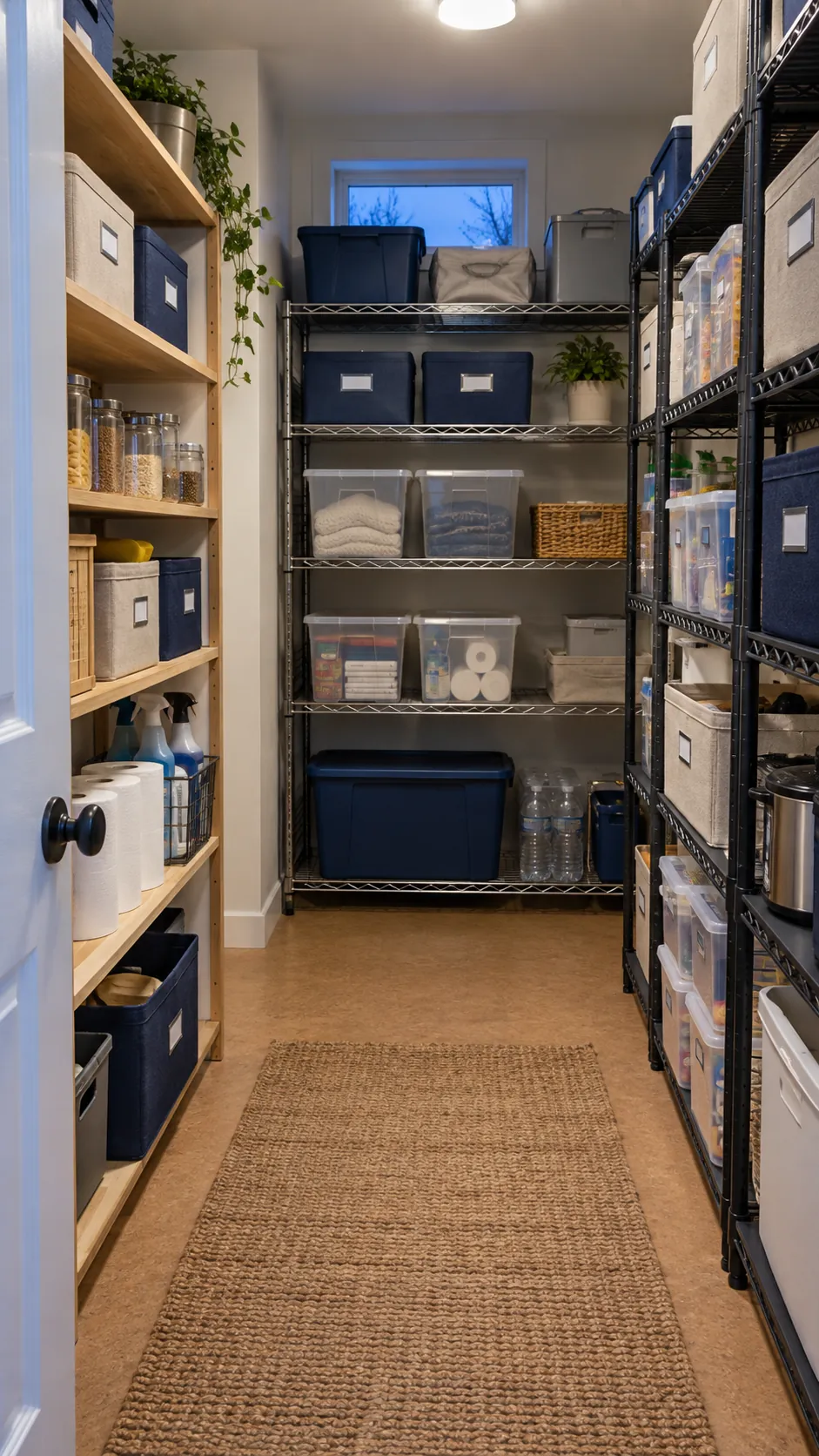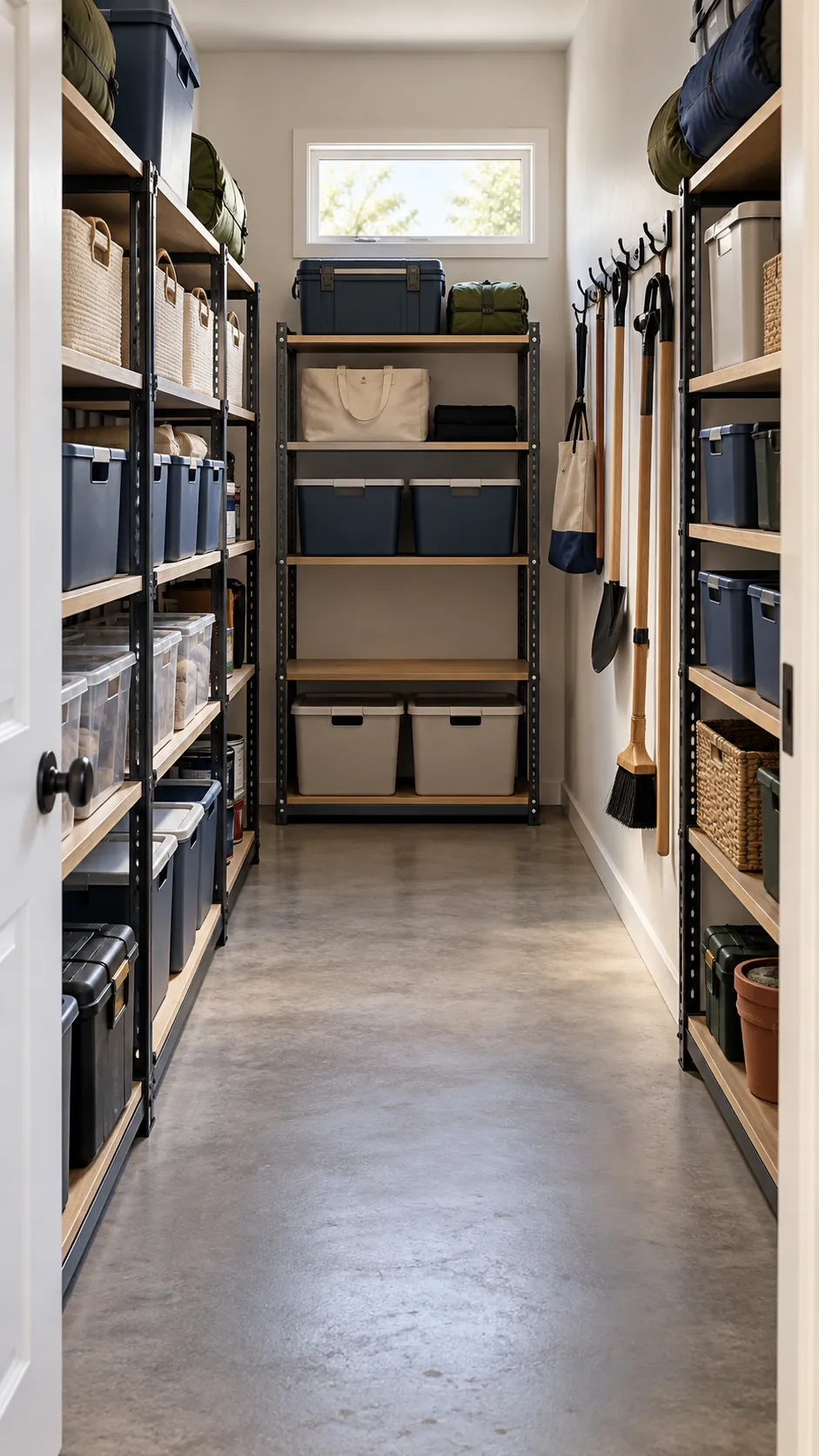
A small storage room can hold a surprising amount, but capacity is not the same as usefulness. If you must unstack three bins to reach one item, the room will drift back into disorder. The better goal is a clear aisle, visible categories, and storage that lets each container move on its own.
Plan the room before buying shelves or matching boxes. Measure first, reduce duplicates, and give the easiest positions to the things you use most often.
Empty and Measure the Room
Start by removing loose items from the floor and the first shelf only. Keep the doorway and one work surface clear while you sort. Measure wall width, shelf depth, ceiling height, door swing, and the narrowest point in the aisle. Record the largest container that can turn through the doorway before you buy anything.
Discard damaged supplies, donate useful duplicates, and move objects that belong elsewhere. Group the rest into broad categories such as tools, cleaning supplies, paper goods, seasonal decor, and household backstock. A category that exceeds its planned zone needs another edit, not another hidden pile.
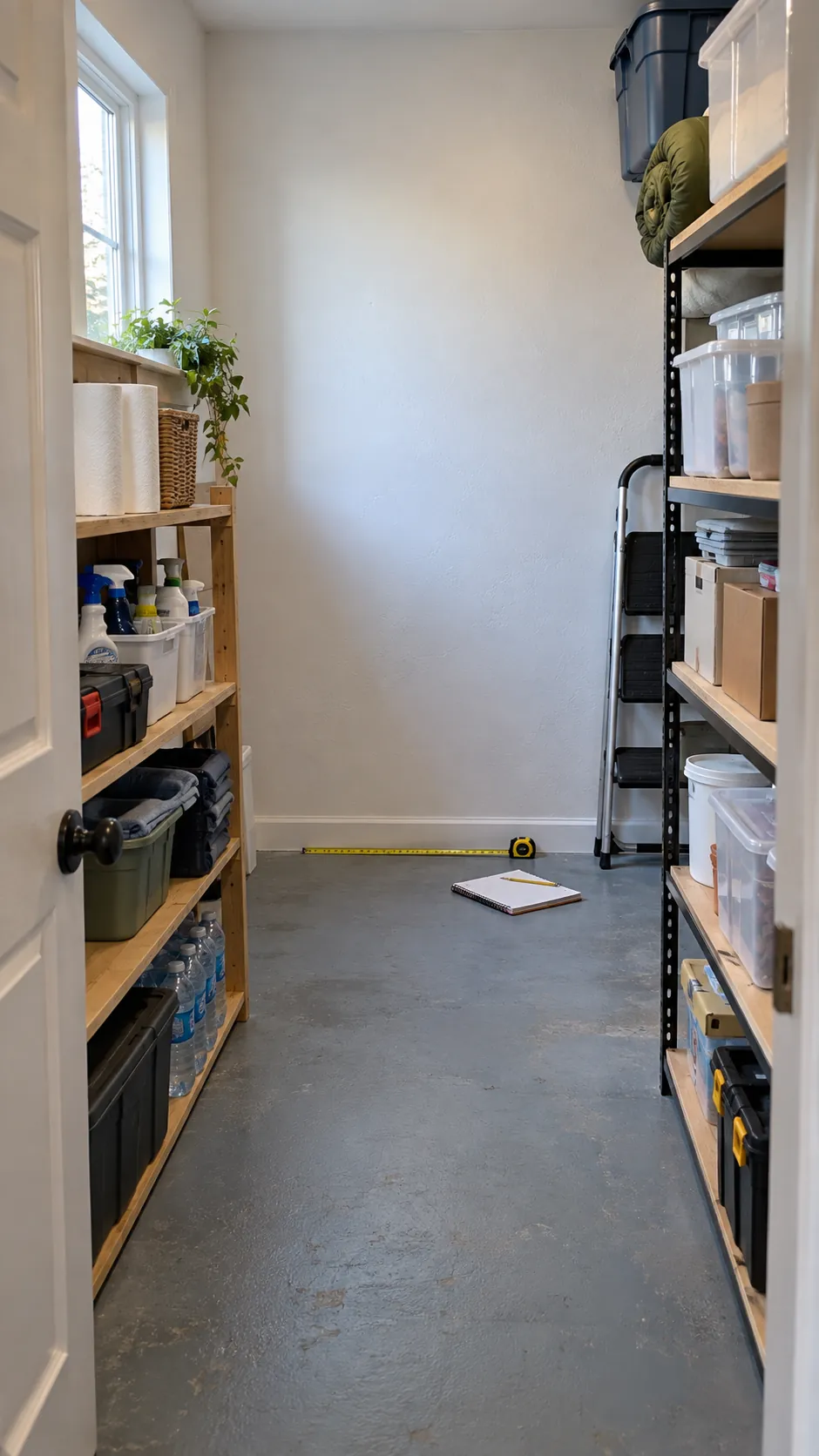
Create Storage Room Zones
Assign each wall or shelf run a purpose. Put daily and weekly supplies near the door and between knee and shoulder height. Place monthly items farther back or a little higher. Reserve the highest shelves for light seasonal goods, and keep heavy objects low so they are safe to lift.
Keep incompatible products apart. Household chemicals need secure storage away from food, children, pets, and heat sources. Leave access to electrical panels, shutoff valves, vents, and appliances. A useful storage room never sacrifices safety for one extra bin.
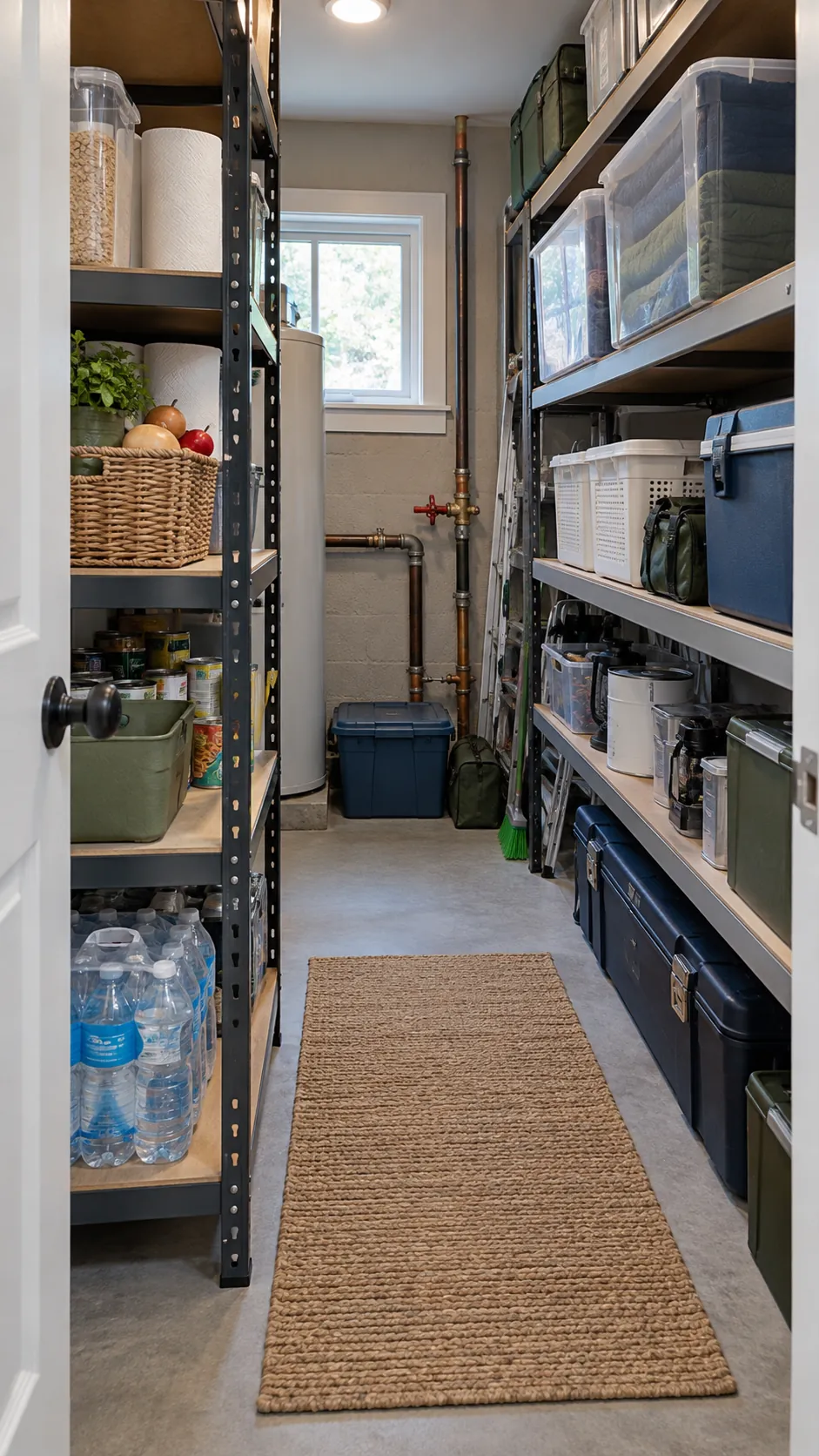
Choose Narrow Shelves With Full Access
Narrow storage shelves often outperform deep units because every item stays visible and reachable. Match shelf depth to what you store rather than filling the wall with the deepest rack that fits. Allow enough aisle width to carry a box and turn without hitting another shelf.
Use sturdy adjustable shelves so spacing can change with the category. Confirm each shelf load rating and anchor tall units according to the manufacturer instructions. Place the heaviest bins at waist height or below. Keep the top shelf well below any sprinkler head or ceiling equipment.
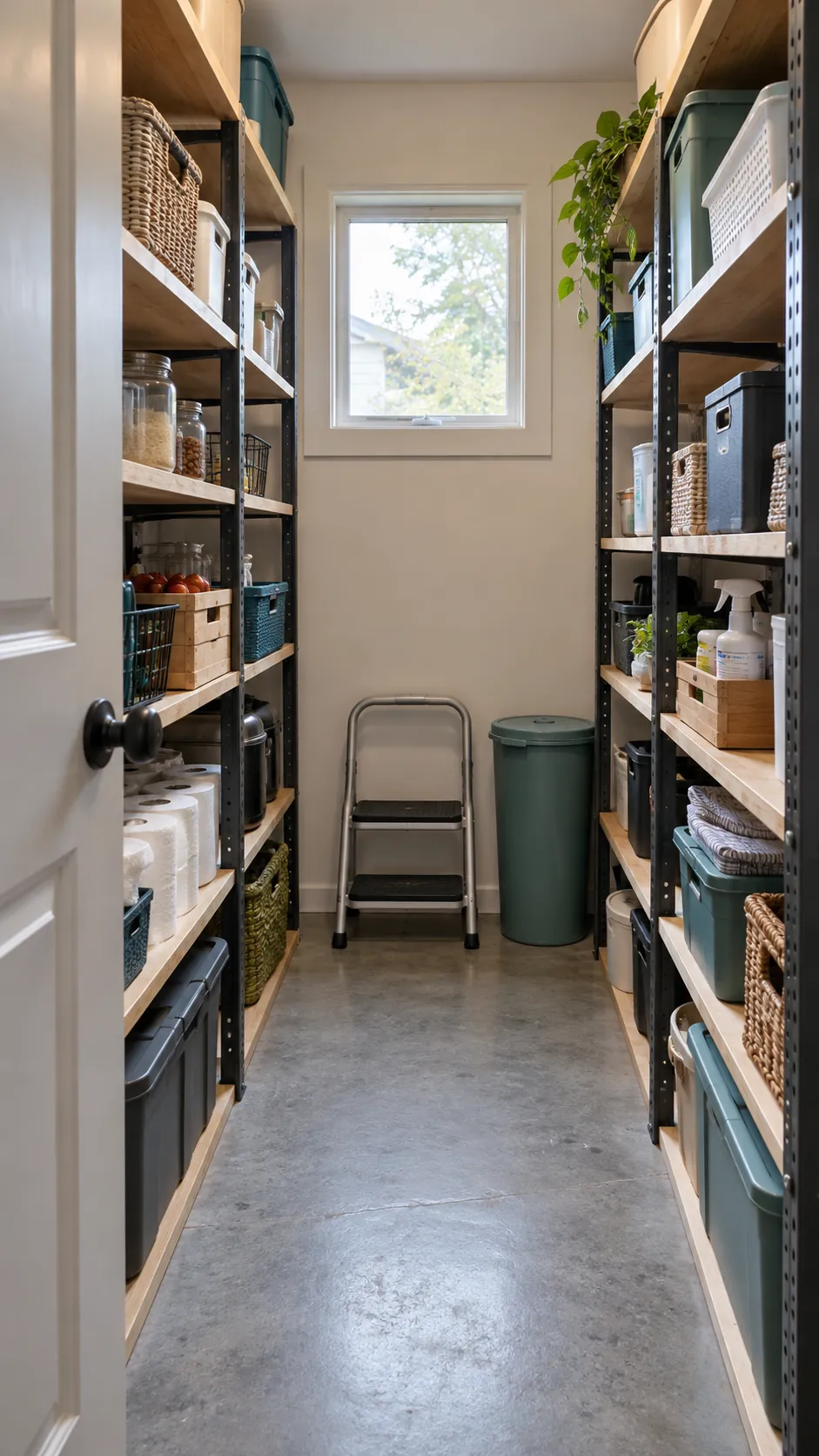
Use Pull Out Bins Instead of Tall Stacks
Vertical bin storage works only when each container can move without dismantling a tower. Put bins on separate shelves, rails, or low risers so one can slide out independently. Clear containers help with mixed supplies, while opaque containers calm visual clutter when labels are enough.
Choose a small set of container sizes that fit the shelving dimensions. Leave a hand gap above each bin and space in front for removal. Use large boxes only for light bulky goods. Small dense objects belong in smaller containers that remain safe to lift.
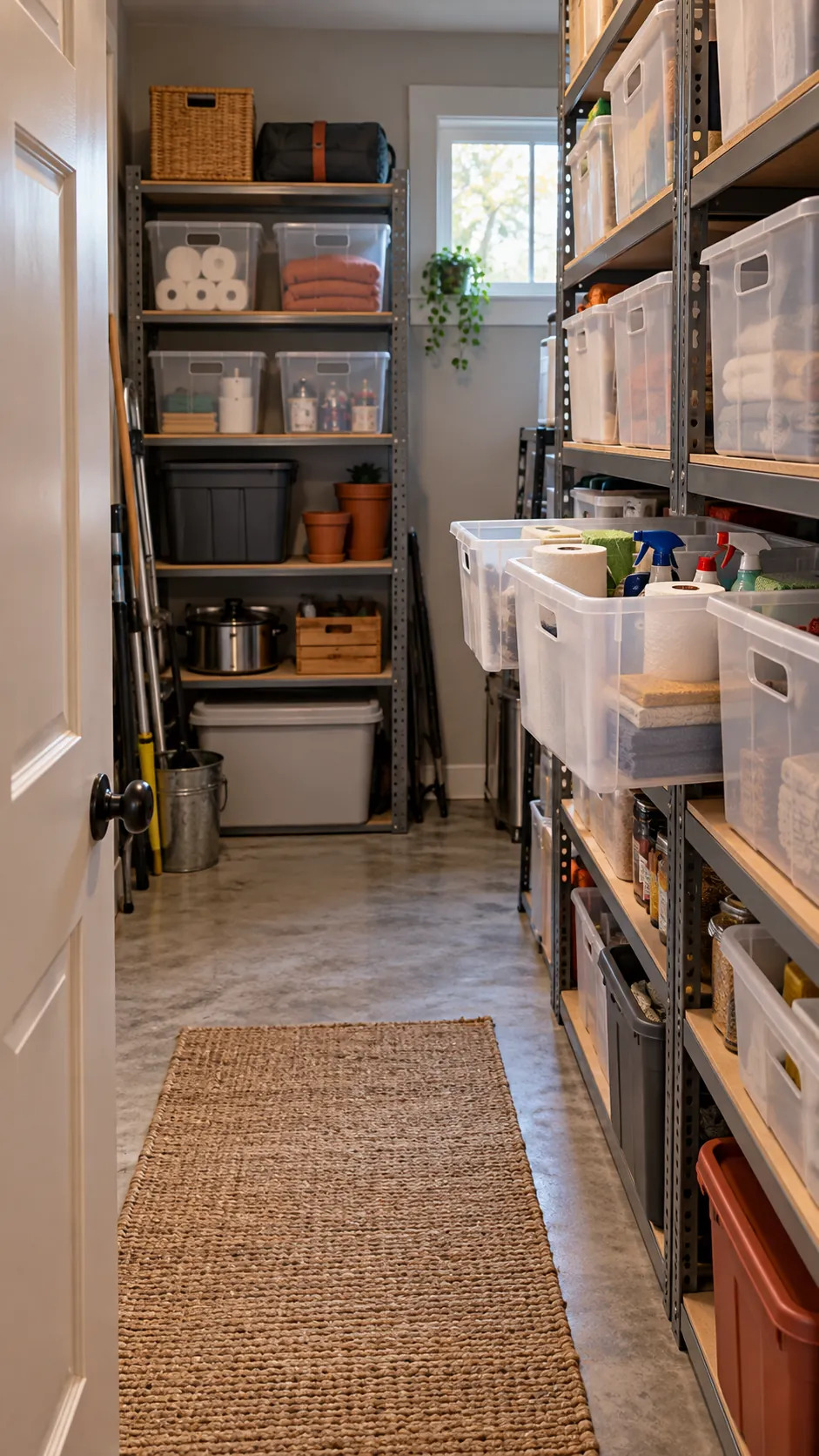
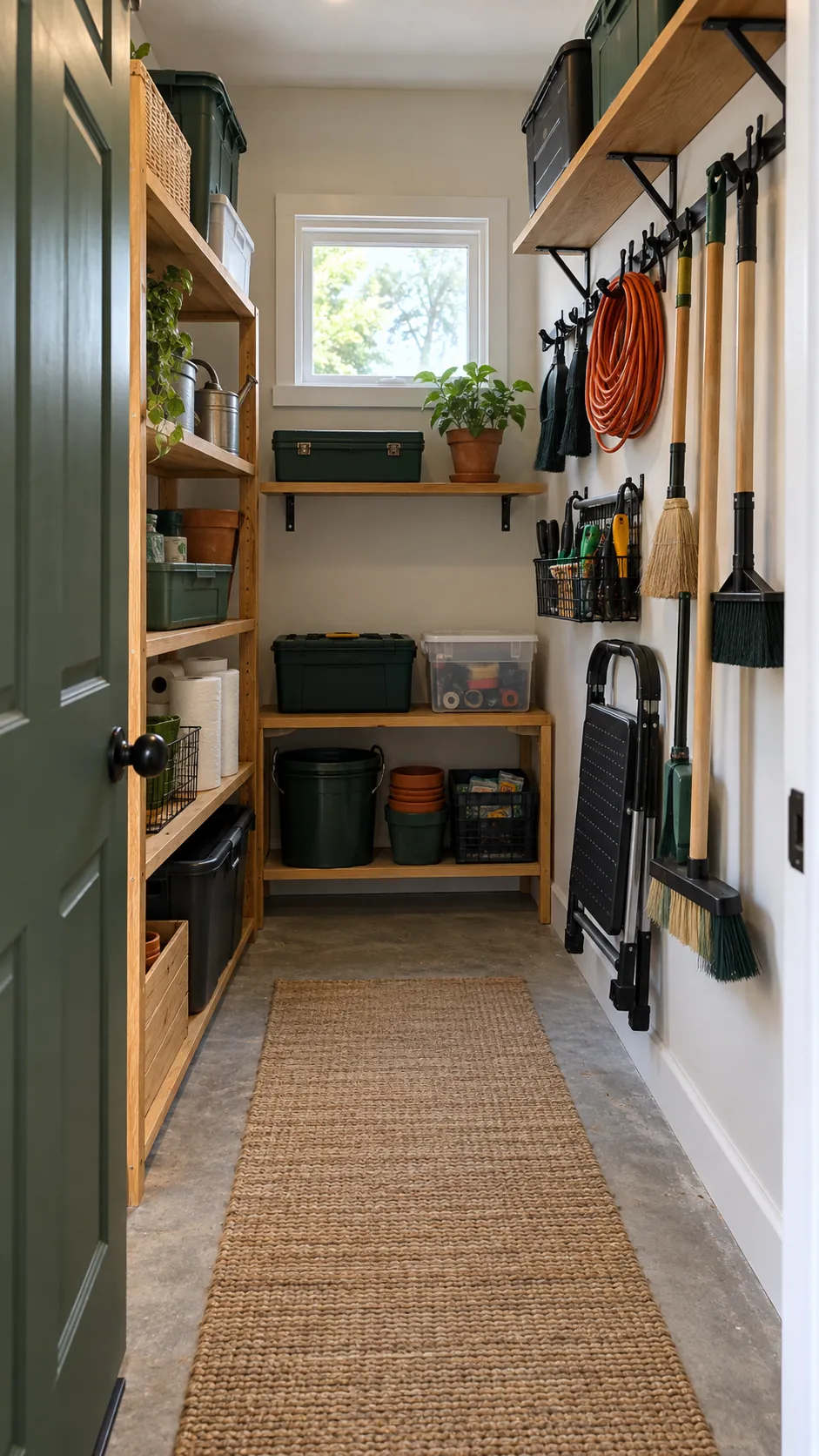
Use Walls and Doors for Shallow Items
A wall mounted storage system can hold brooms, folding chairs, extension cords, and small tools without stealing shelf space. Keep protruding objects outside the main aisle and mount every support for the expected load. Use the back of the door only when the added depth does not block its swing.
Place frequently used tools where their shapes are easy to recognize. Coil cords loosely on proper hooks and keep floor cleaning tools upright. Avoid filling every inch of wall. Visible gaps make missing items obvious and help prevent categories from spreading.
Label and Maintain the System
Labels should name a stable category, not a temporary collection of objects. Put the same label on the front and short side of a bin when either face may point toward the aisle. Add a simple inventory note for sealed seasonal containers so you do not open several boxes to find one item.
Set one empty return shelf near the entrance for things that need to be put away. Clear it during a short weekly reset. Review backstock before shopping and remove empty containers. The room will stay organized when every category has a limit and every bin can be returned in one motion.