
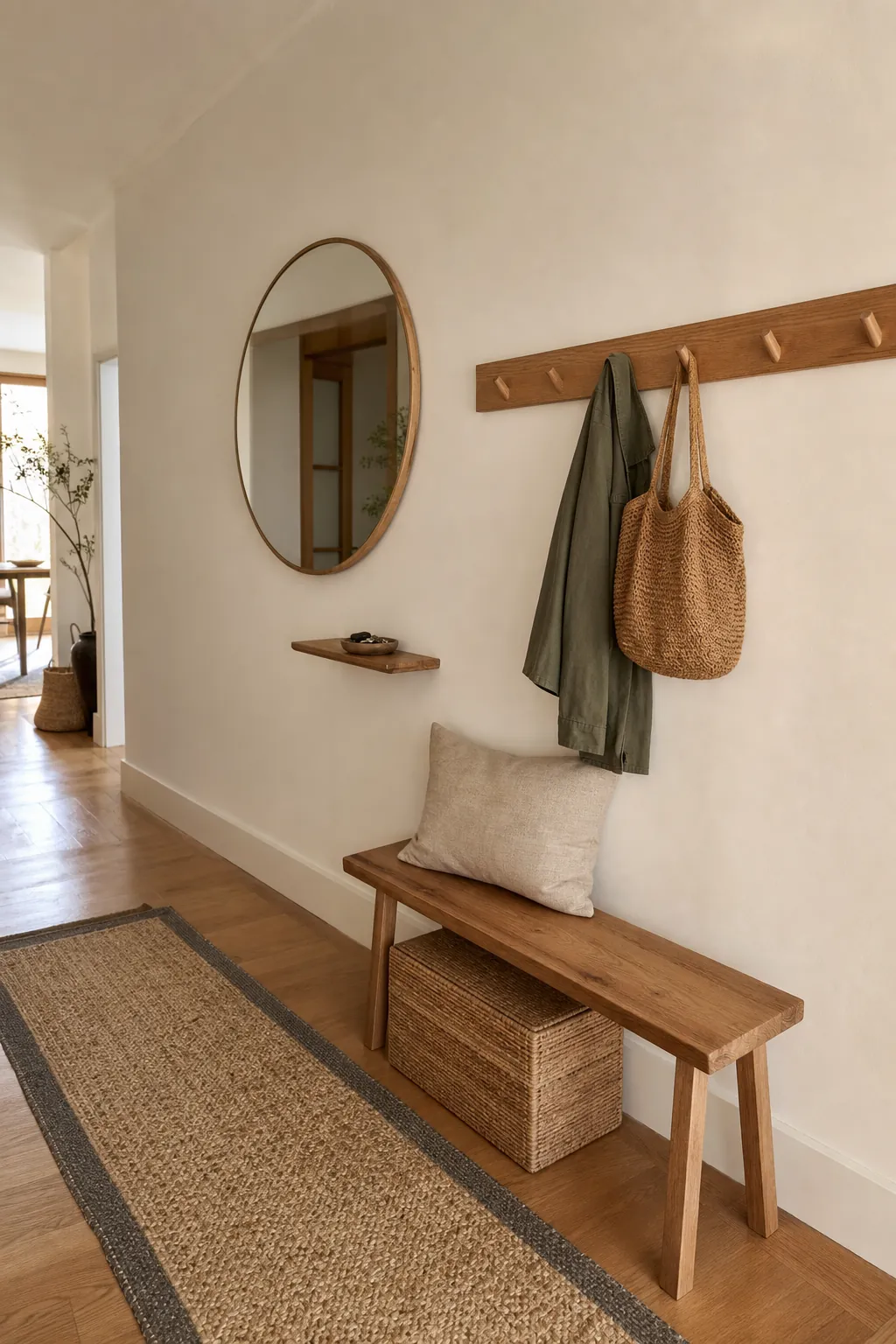
An entryway wall has to work harder than most walls in the house. It is the first thing people see, but it is also where keys, coats, bags, mail, shoes, leashes, and half-finished errands try to land. That is why many entryway decor ideas fail in real homes: they treat the wall like a display area when it is really a daily drop zone.
The cleanest entryways usually do one thing differently. They give every everyday item a visible, easy place to go, then leave enough empty wall around it so the space can breathe. The goal is not a bare wall. The goal is a wall that looks intentional after a normal weekday.
Start With the Doorway Habit, Not the Decor
Before buying wall hooks, a mirror, or a gallery wall set, stand at the door and notice what actually happens in the first thirty seconds after someone comes home. Do keys need a landing spot? Do bags end up on the floor? Do coats pile up because the closet is too far away? Does mail sit there because no one knows whether to open it, recycle it, or move it to an office?
This little audit keeps the entryway wall from becoming a pretty but useless arrangement. If your problem is coats, start with hooks. If your problem is visual noise, start with closed or low-profile storage. If your problem is an empty hallway that feels unfinished, use art, a mirror, or a runner rug to give the passage shape.
Choose the job first, then choose the style. A beautiful entryway wall that cannot hold the things your family actually carries will turn cluttered in a week.
Use One Strong Anchor Instead of Many Small Pieces
Clutter often starts when the wall has too many small ideas competing for attention: a tiny shelf, a sign, scattered hooks, a small mirror, a key rack, a basket, and three little frames. Each piece may be useful on its own, but together they make the entryway feel busy before anyone has dropped a bag.
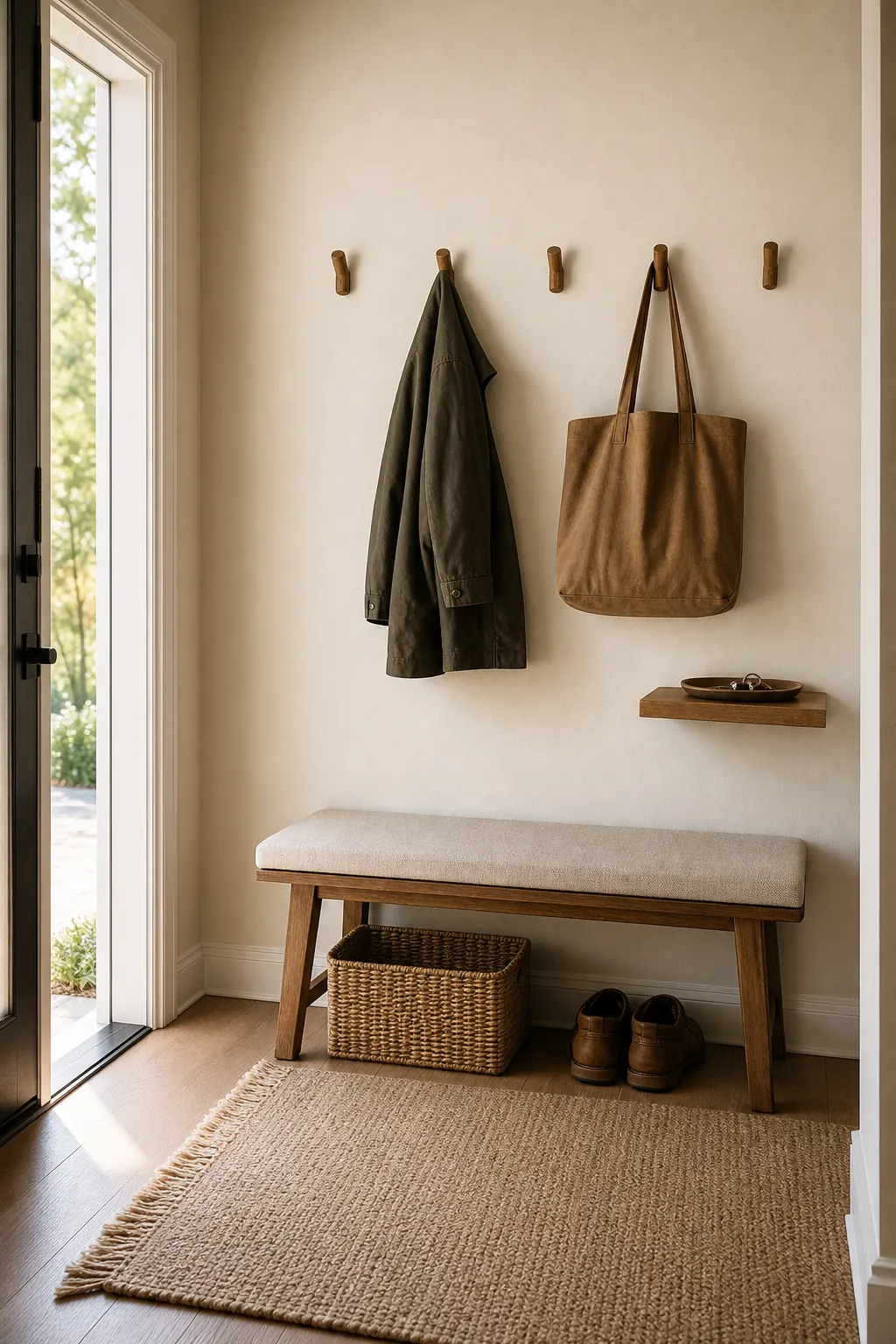
A calmer approach is to pick one anchor and let everything else support it. That anchor might be a long hook rail, a generous mirror, one framed art piece, a narrow console, or a simple wall-mounted shelf. In a small space decor plan, scale usually looks cleaner than quantity. A single long shelf can feel more organized than three small floating shelves. One tall mirror can feel calmer than a cluster of tiny ones.
For entryway wall decor, try this rule: one visual anchor, one storage move, one softening layer. For example, use a wood hook rail as the anchor, a shallow shelf for keys as the storage move, and a runner rug as the softening layer. That is enough.
Make Wall Hooks Look Designed, Not Accidental
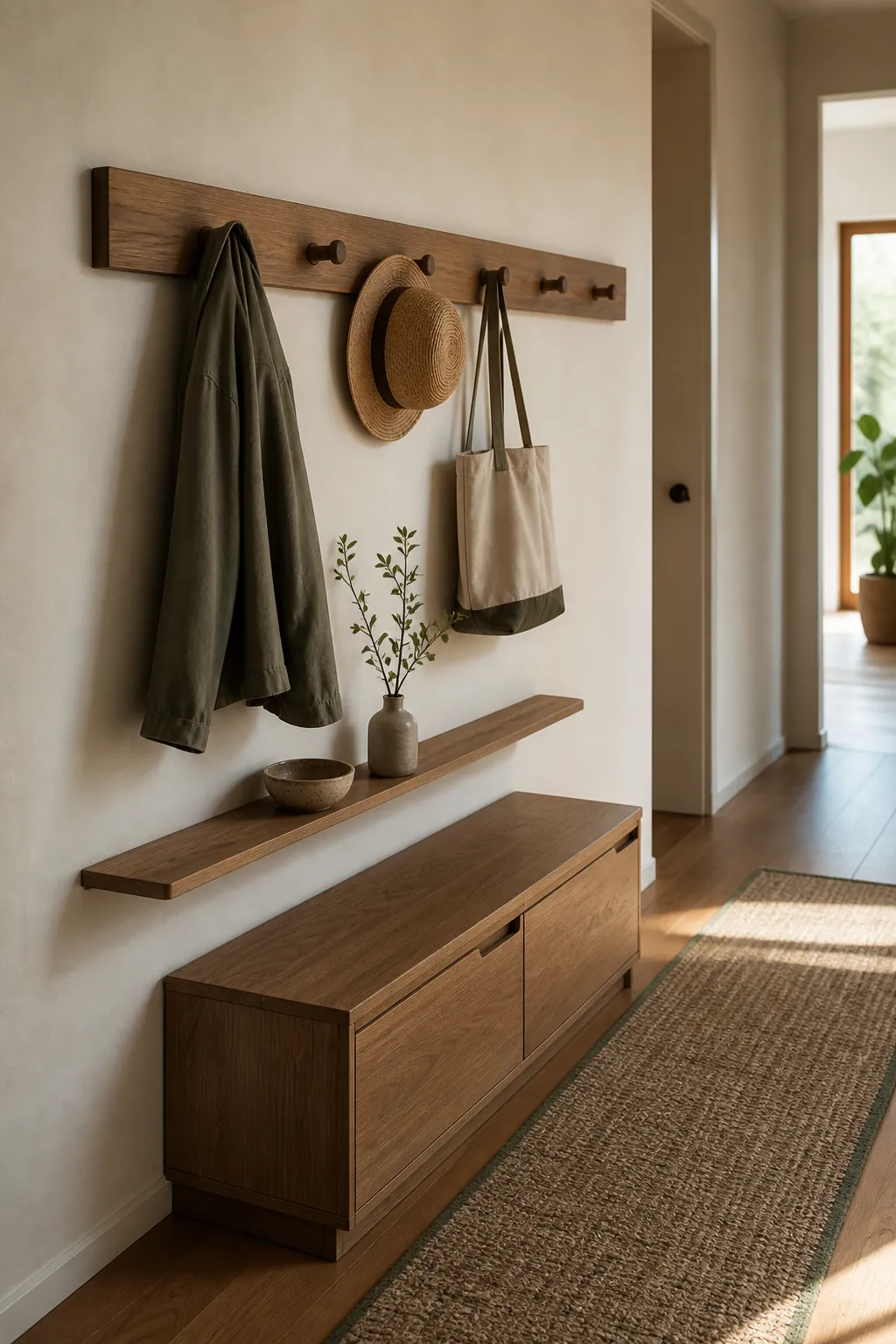
Wall hooks are one of the most useful entryway ideas, but they can also make a foyer look messy when every hook is full. The trick is to plan hooks for the real volume of daily items, then build in editing space. If your family needs eight hooks, installing four decorative pegs will only create overflow.
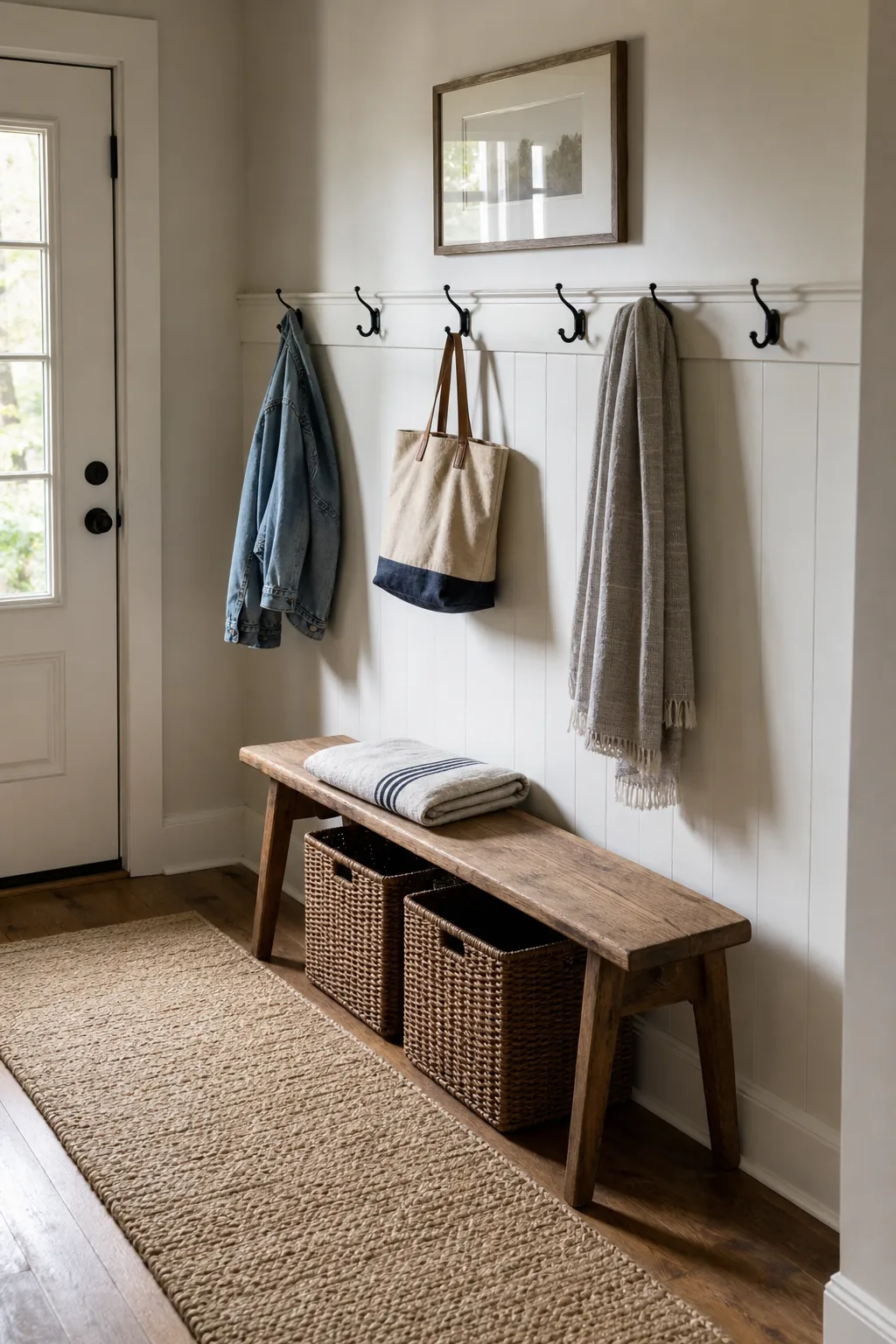
Use a straight hook rail when you want a tidy line, staggered hooks when different heights need to share the wall, and lower hooks when kids need to hang their own backpacks or jackets. Leave a few inches between hooks so coats do not merge into one bulky mass. If the entryway opens directly into the living room, choose hooks that match the room’s hardware or wood tones so they read as part of the decor.
- Keep one hook per everyday item type: coat, bag, hat, leash, or tote.
- Do not use hooks for long-term storage: seasonal coats and rarely used bags belong elsewhere.
- Give empty hooks permission to stay empty: the negative space is what keeps the wall from looking crowded.
Keep the Landing Strip Shallow
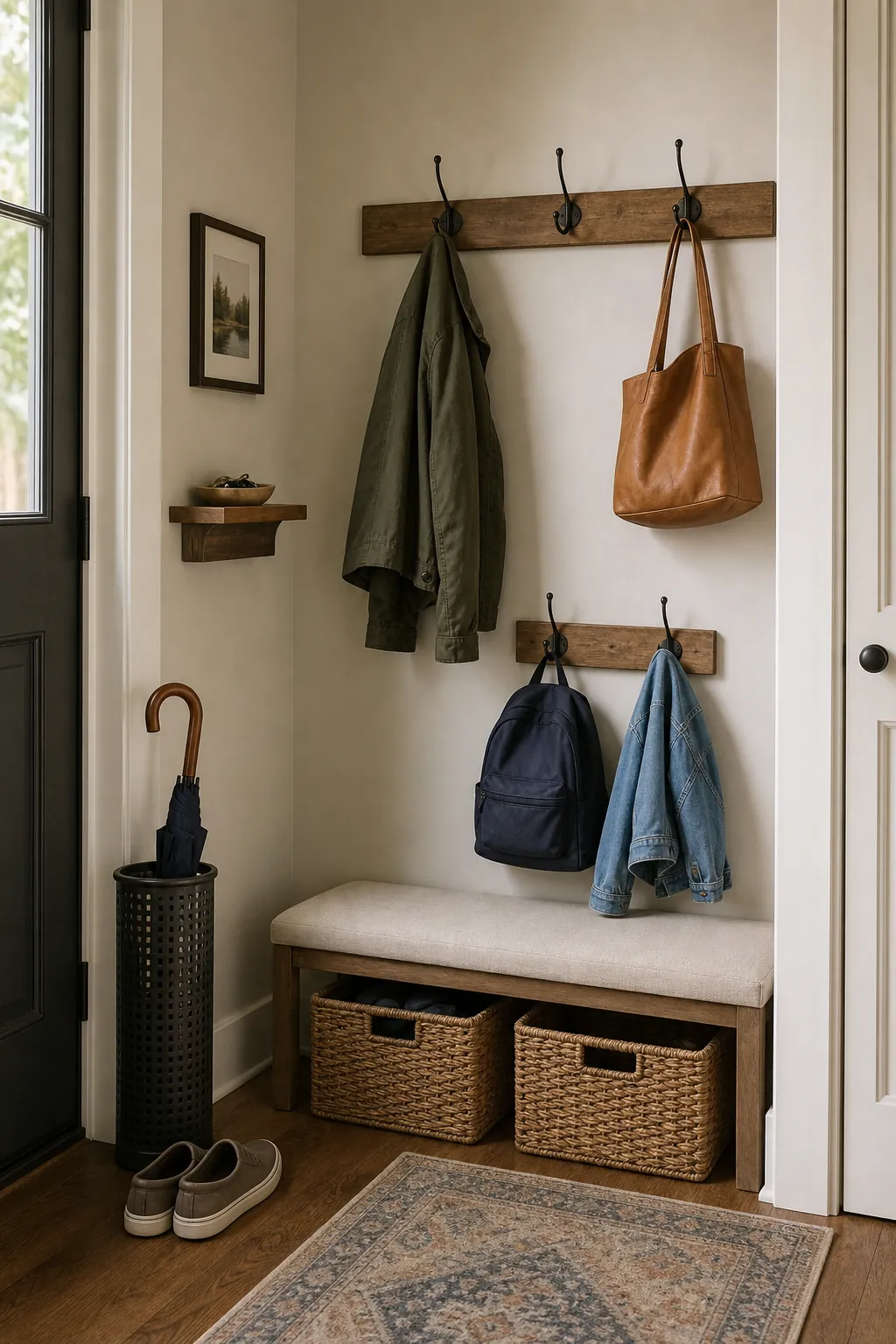
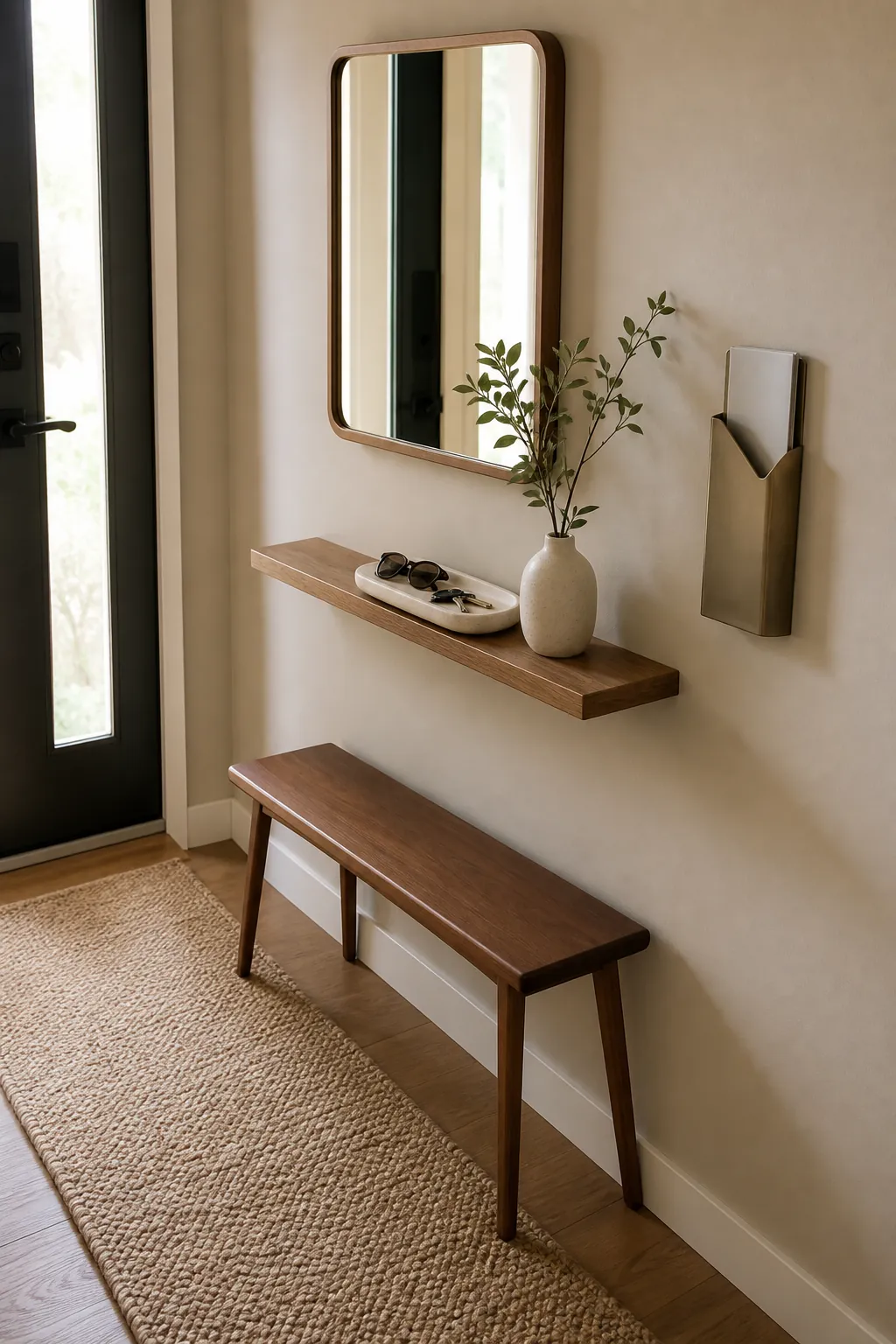
Most entryways need a landing strip, but a deep surface invites piles. A shallow wall shelf, small tray, or narrow ledge is usually better than a large table because it limits how much can collect. Keys, sunglasses, a wallet, and one small dish are fine. Unopened packages, stacks of mail, and random receipts need a different destination.
This is where home organization and hallway decor should work together. A slim shelf under a mirror gives the wall a finished look, but it also creates a habit: set down the essentials, check the mirror, and move on. If mail is the issue, use one vertical sorter with two sections only: action and outgoing. More categories usually mean more clutter.
The smaller the landing strip, the stricter it has to be. That is a feature, not a flaw. It keeps the entryway from becoming a storage room without walls.
If You Want a Gallery Wall, Give It Boundaries
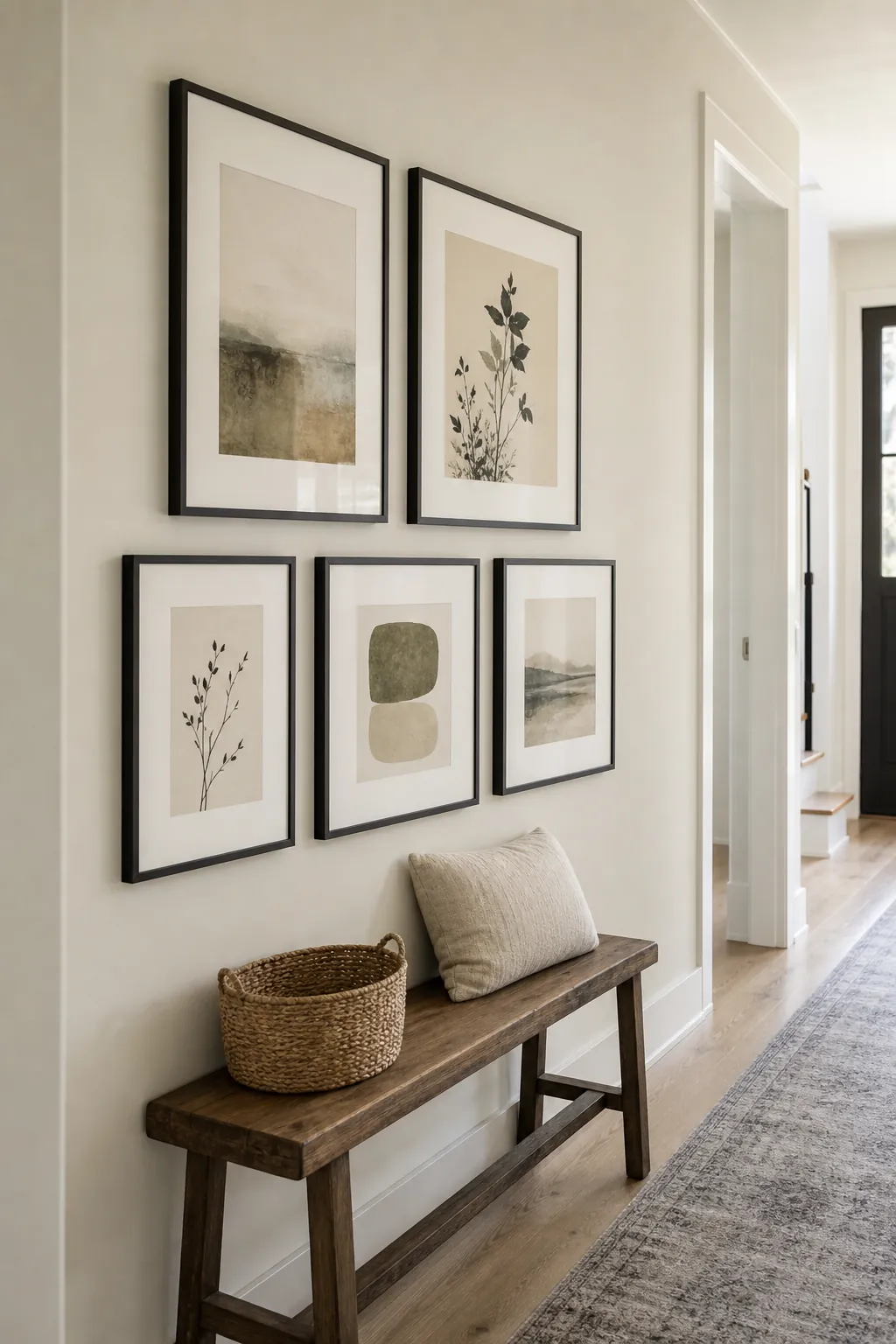
A gallery wall can work beautifully in an entryway, especially in a long hallway, but it needs tighter boundaries than it would in a living room. The space is narrow, people pass through quickly, and the wall is often competing with doors, trim, switches, and daily gear.
Keep the arrangement calm by choosing a limited frame color, repeating one mat style, and leaving clean space around the whole composition. Three larger pieces can look more polished than nine tiny frames. If you already have hooks or a shelf nearby, let the gallery wall sit on the opposite wall or above a simple bench instead of mixing every function in one crowded zone.
For family photos, use fewer images and print them larger. For art, stay within one mood: botanical prints, black-and-white architecture, quiet landscapes, or textured abstracts. A gallery wall feels uncluttered when the eye can understand the pattern quickly.
Use the Floor to Calm the Wall
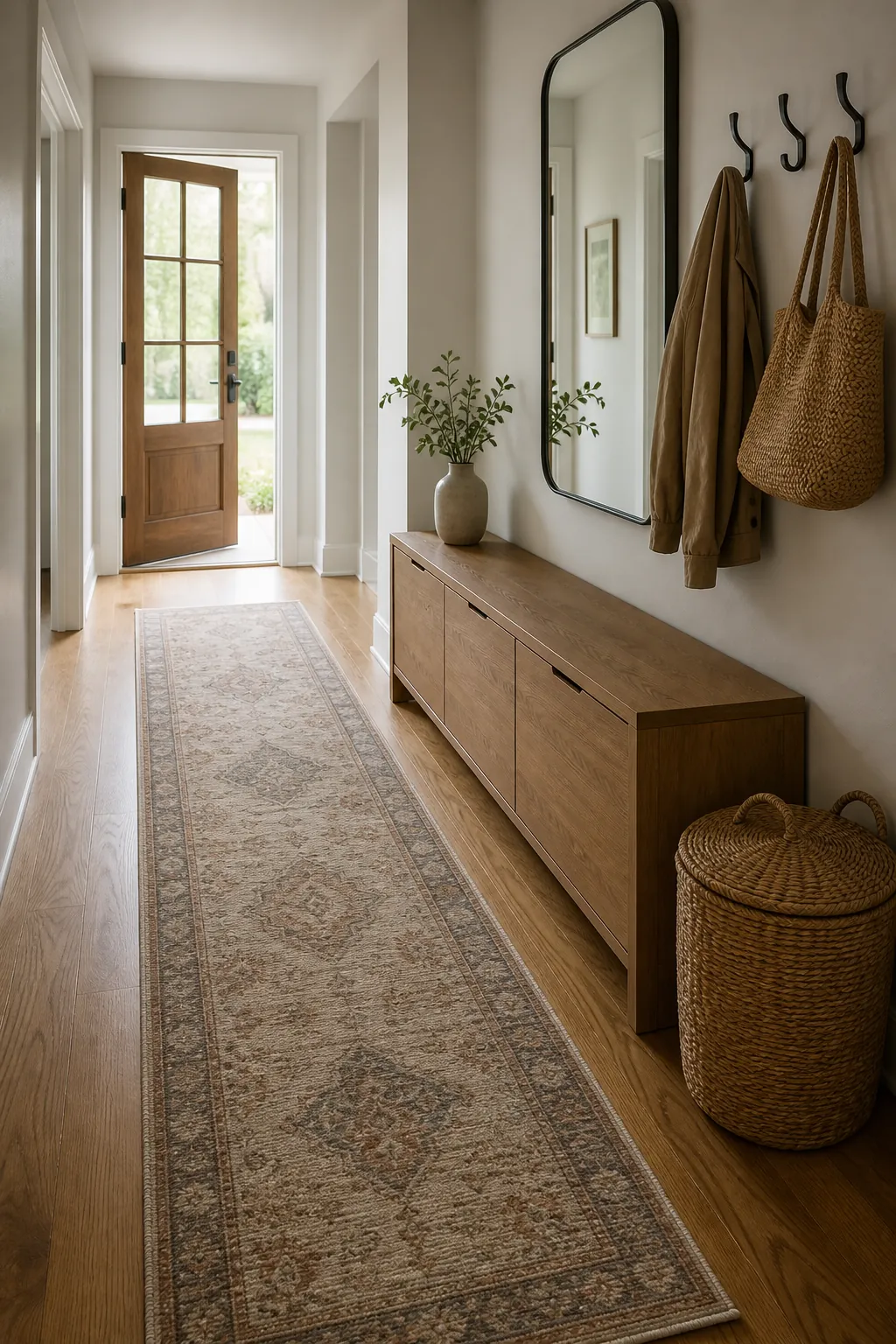
Sometimes the wall looks cluttered because the floor has no structure. Shoes drift, bags slide, and the whole entry zone feels undefined. A runner rug can solve more than one problem: it guides movement, softens hard surfaces, adds color or texture, and visually separates the entry from the next room.
Choose a runner rug that leaves a border of flooring visible on both sides, especially in a narrow hallway. Low-pile or washable styles are practical for real foyers. If your entry wall is already doing a lot with hooks, a gallery wall, or a mirror, keep the rug pattern quieter. If the wall is simple, the runner can bring in more personality.
For mudroom ideas or family-heavy entryways, pair the runner with a closed shoe cabinet, slim bench, or two baskets that fit completely under the seat. The goal is not to hide that people live there. The goal is to contain the evidence in clean, repeatable zones.
Edit the Wall Seasonally
An entryway wall is not finished forever. It has to change with weather, school schedules, guests, pets, and daily routines. That is why a light seasonal reset often matters more than a larger decorating project.
At the start of each season, remove everything from the hooks and landing shelf. Put back only what is used several times a week. Store extra coats, umbrellas, scarves, sports bags, and reusable totes somewhere else. Wipe the shelf, shake out the runner, and check whether the wall still has enough empty space.
This is the part many foyer ideas skip. A beautiful entryway needs maintenance, but it should not need constant styling. If the wall only looks good when no one uses it, the system is too fragile.
A Simple Formula for an Uncluttered Entryway Wall
If you want a quick starting point, build the wall from left to right in this order: one anchor, one daily storage feature, one personal layer, and one empty zone. The empty zone is not wasted space. It is what keeps the whole entryway from feeling crammed.
- Anchor: mirror, art, hook rail, shelf, or bench.
- Daily storage: wall hooks, tray, mail sorter, shoe cabinet, or basket.
- Personal layer: one plant, framed print, small lamp, family photo, or textured rug.
- Empty zone: open wall or floor space that keeps everything readable.
The best entryway decor is not the version with the most objects. It is the version that still looks calm after the door opens, shoes come off, bags land, and the day comes inside. Style the wall for that moment, and the entry will feel finished without becoming cluttered.