
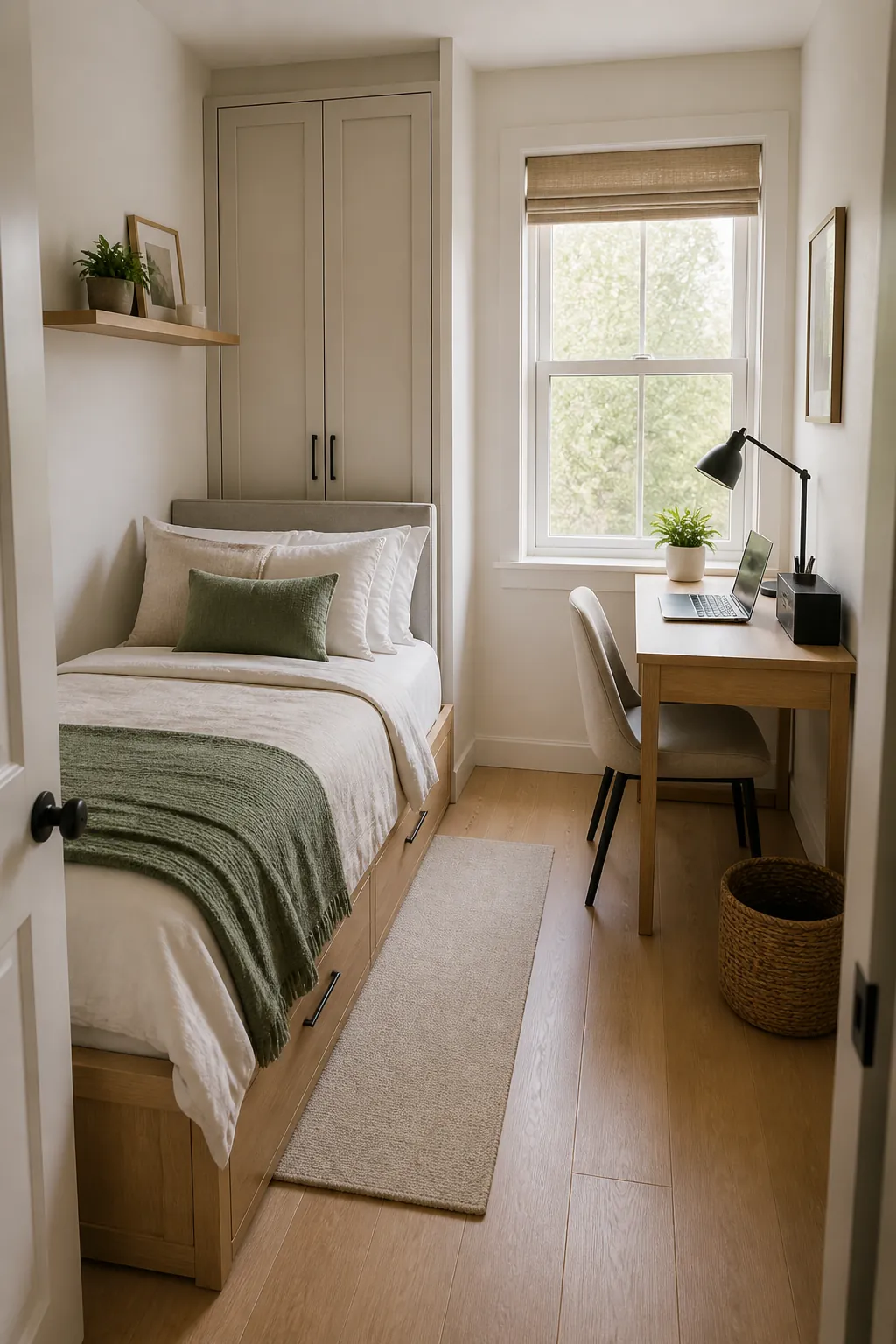
A small bedroom can hold a desk and a bed, but only if the room is planned like a living system instead of a furniture puzzle. The mistake most people make is trying to squeeze in a full office setup first, then wondering why the bedroom feels restless at night. The better move is to protect three things before you buy anything: a clear walking path, a desk depth that fits the room, and storage that keeps work supplies from spreading onto the bed.
These small bedroom ideas with a desk and bed in one room are built around that order. Start with the bed, choose the quietest place for the compact desk, then use simple boundaries so the space can work during the day and still feel like a bedroom after your laptop closes.
Start With the Walking Path, Not the Desk
The best small bedroom layout usually comes from the empty space, not the furniture. Before choosing a desk, measure the path from the door to the bed, the closet, and any drawers. If the chair blocks one of those paths, the room will feel irritating every day, even if the desk looks beautiful in a photo.
A useful target is to keep at least a narrow, uninterrupted lane beside or at the foot of the bed. In a very tight room, that might mean using a desk that is only 16 to 20 inches deep, choosing an armless chair, or moving the desk under a window instead of beside the bed. The desk should borrow space from a wall, not steal space from the room’s main route.
Use the Window Wall When You Need a Real Work Zone
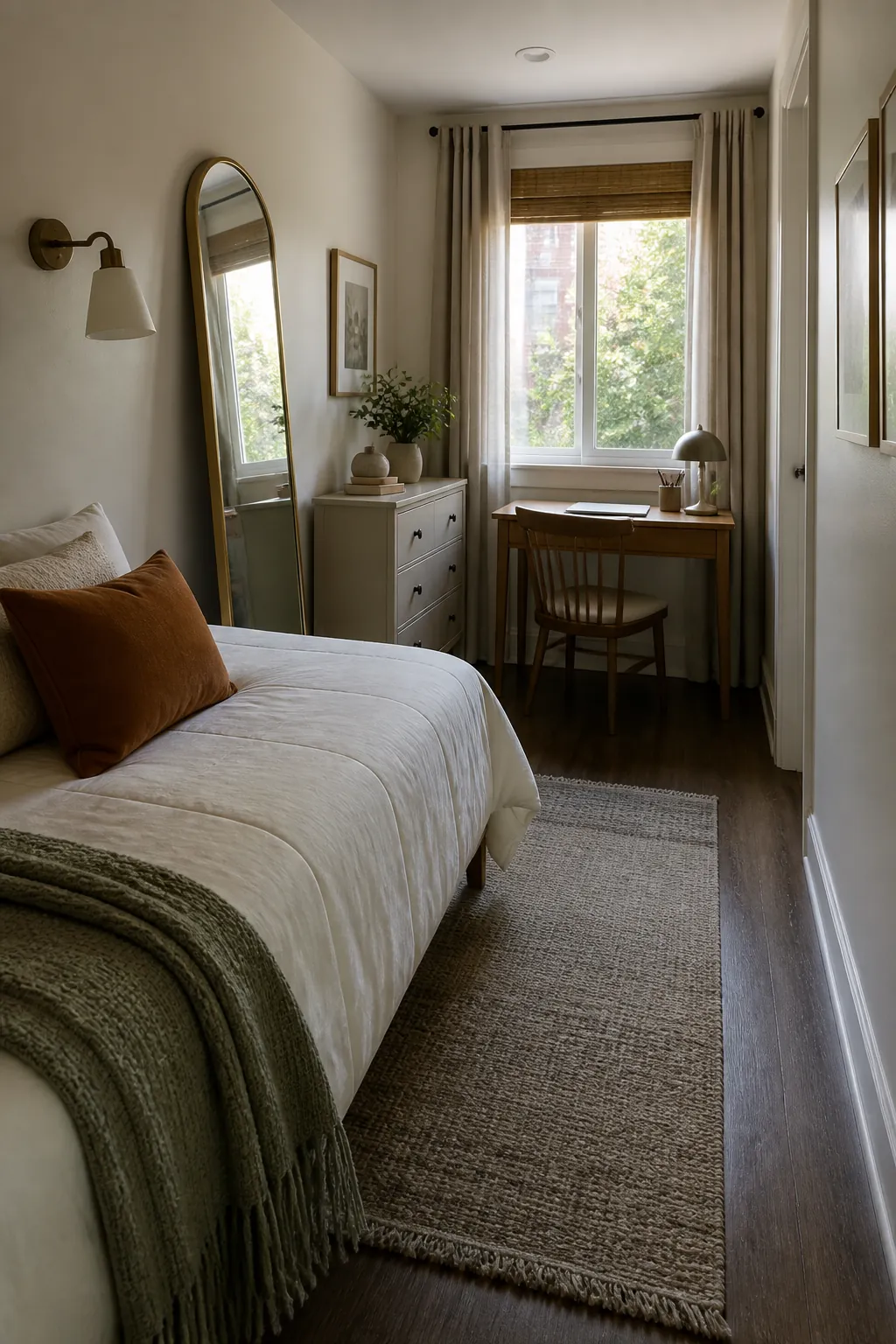
A window desk is one of the most reliable Bedroom Desk Ideas because it gives the work zone a natural reason to exist. The window becomes the anchor, the desk feels intentional, and the bed does not have to compete with a monitor, lamp, and office supplies.
Keep the desk no wider than the window or only slightly wider. Use a slim task lamp, a laptop stand if needed, and one tray for daily items. Avoid heavy drawer units on both sides because they turn the desk into a visual wall. If you work from home often, mount a small shelf, peg rail, or cabinet above the desk so papers and cords move upward instead of outward.
For a Small Bedroom Office, this is the difference between a corner that works and a corner that slowly becomes storage overflow. The surface should reset easily at the end of the day. If it takes ten minutes to clear, the system is too complicated.
Try a Floating or Fold-Down Desk for the Tightest Rooms
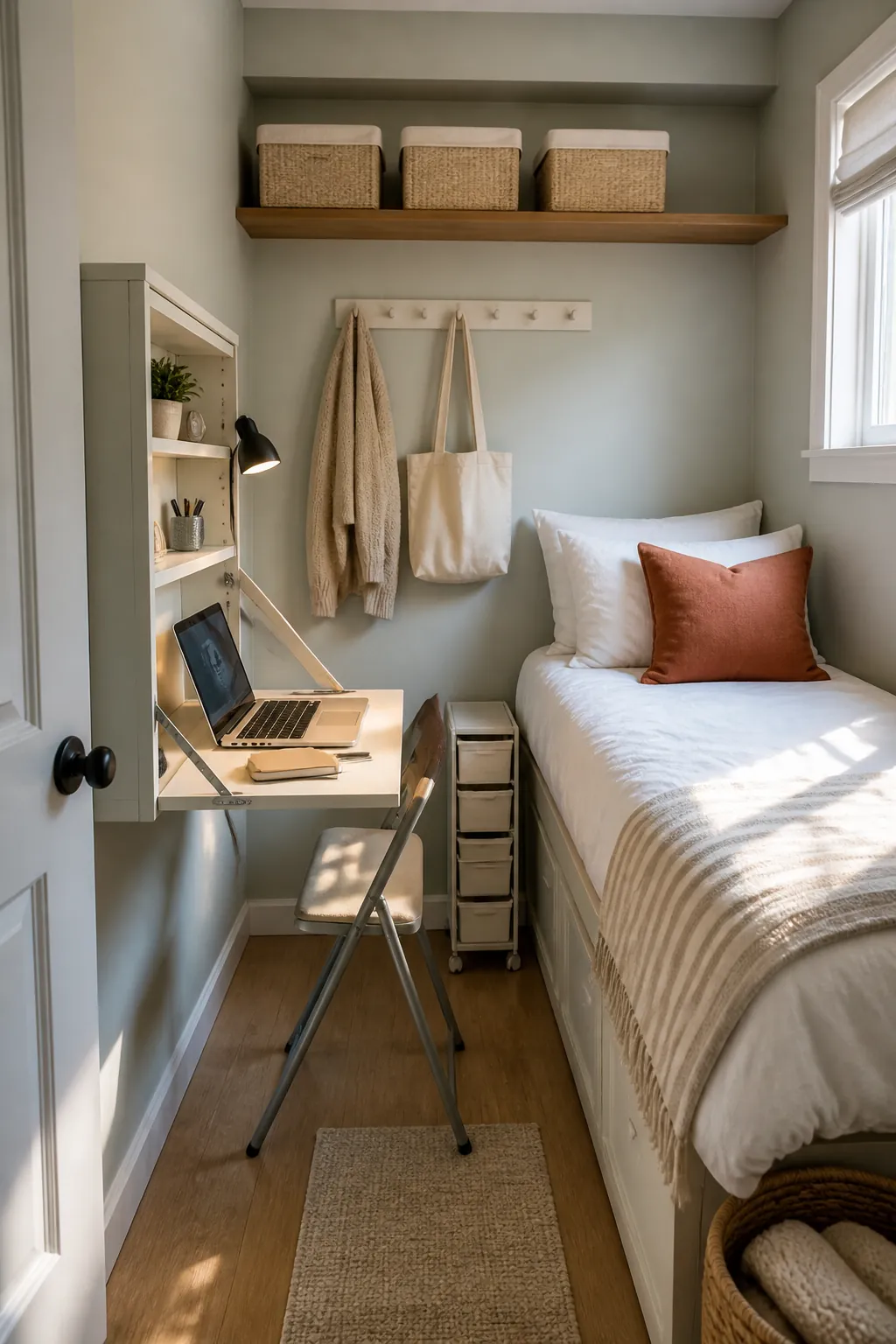
When the bed already fills most of the room, a normal desk may be the wrong tool. A floating desk or fold-down desk can give you the function without the permanent bulk. This works especially well for renters, narrow guest rooms, and any Multi Use Room that must shift between sleeping, working, and storage.
The key is discipline. A fold-down desk should hold only what you use in one sitting: laptop, notebook, lamp, charger, and perhaps one small cup for pens. Store extra supplies in a wall cabinet, closet bin, or under-bed drawer. If every item needs to stay on the open desktop, the desk will never actually fold away.
Let the Desk Replace the Nightstand When Space Is Limited
If one side of the bed has enough width for a small table, it may have enough width for a narrow desk. This is one of the most practical Desk And Bed Layout choices because it removes a furniture piece instead of adding one. The desk becomes the nightstand, charging spot, and occasional work surface.
For this to feel calm, keep the desktop at bedside scale. Use one lamp, one tray, and one laptop storage spot. A chair that slides fully under the desk matters more than a stylish chair that sticks out into the walking path. If you need a monitor, mount it on an arm or choose a small screen that can sit at the back of the desk without crowding the bedside surface.
Use the Foot of the Bed Only if the Chair Has Clearance
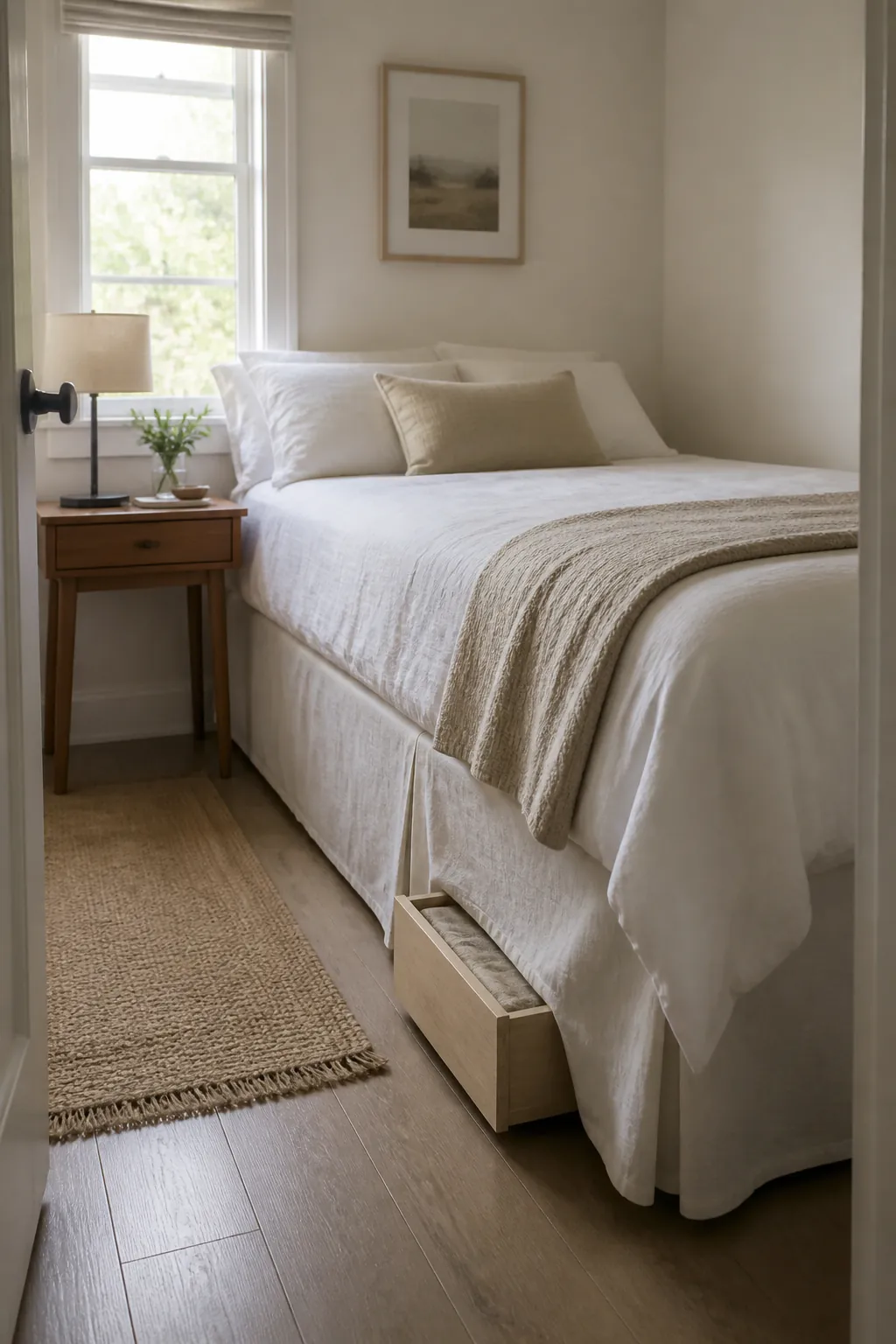
A desk at the foot of the bed can work, but it is the layout that fails fastest when measurements are ignored. You need enough room to sit, pull the chair out, and walk past without turning sideways every time. If the clearance is not there, choose a wall-mounted Compact Desk instead.
When the proportions do work, the foot-of-bed desk can create a useful boundary. A low storage bench, bookcase, or closed cabinet behind the chair can separate work from sleep without building a wall. Keep the desk visually light and avoid tall shelving directly at the bed’s foot, which can make the bed feel boxed in.
Hide the Bedroom Office When You Want Better Sleep
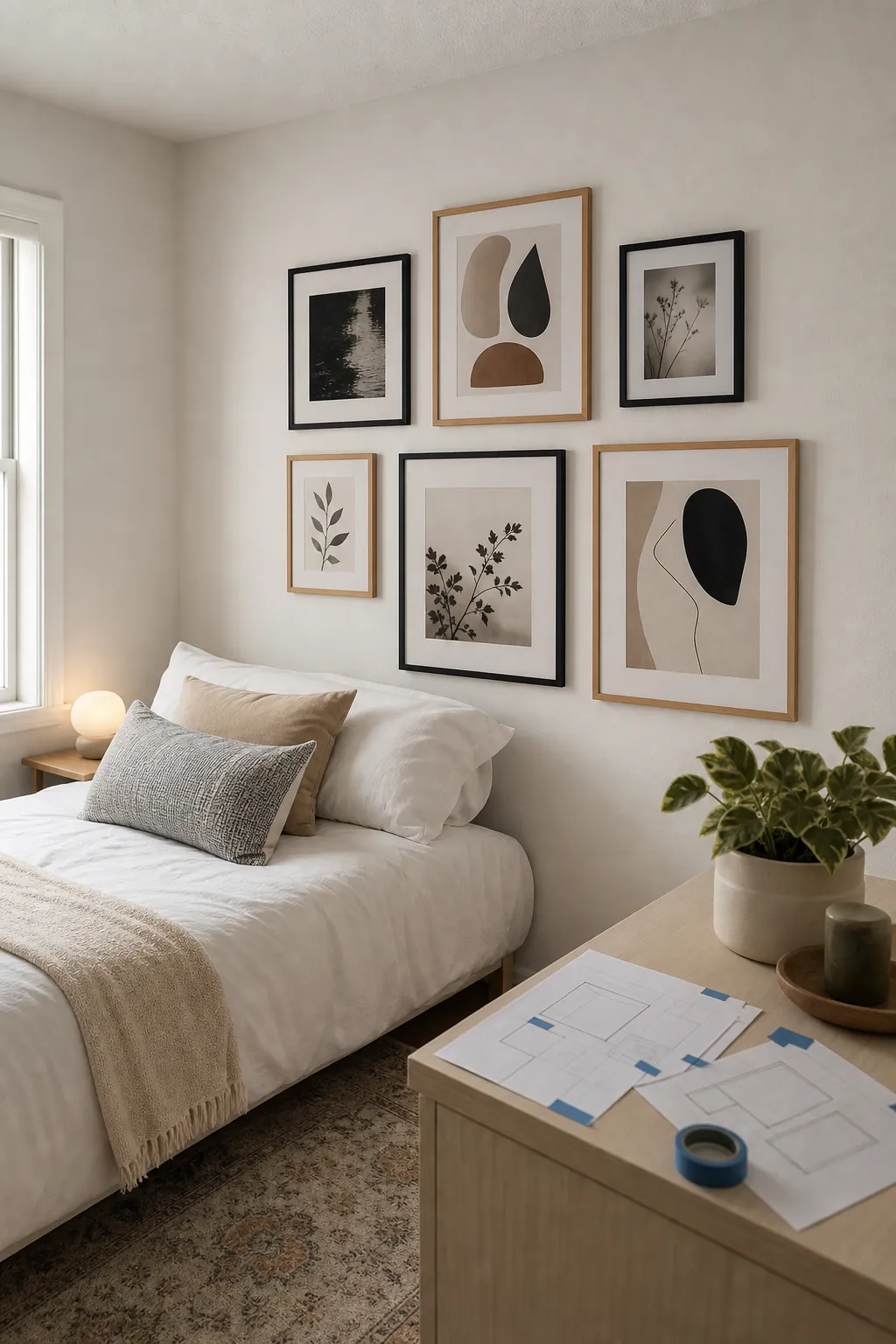
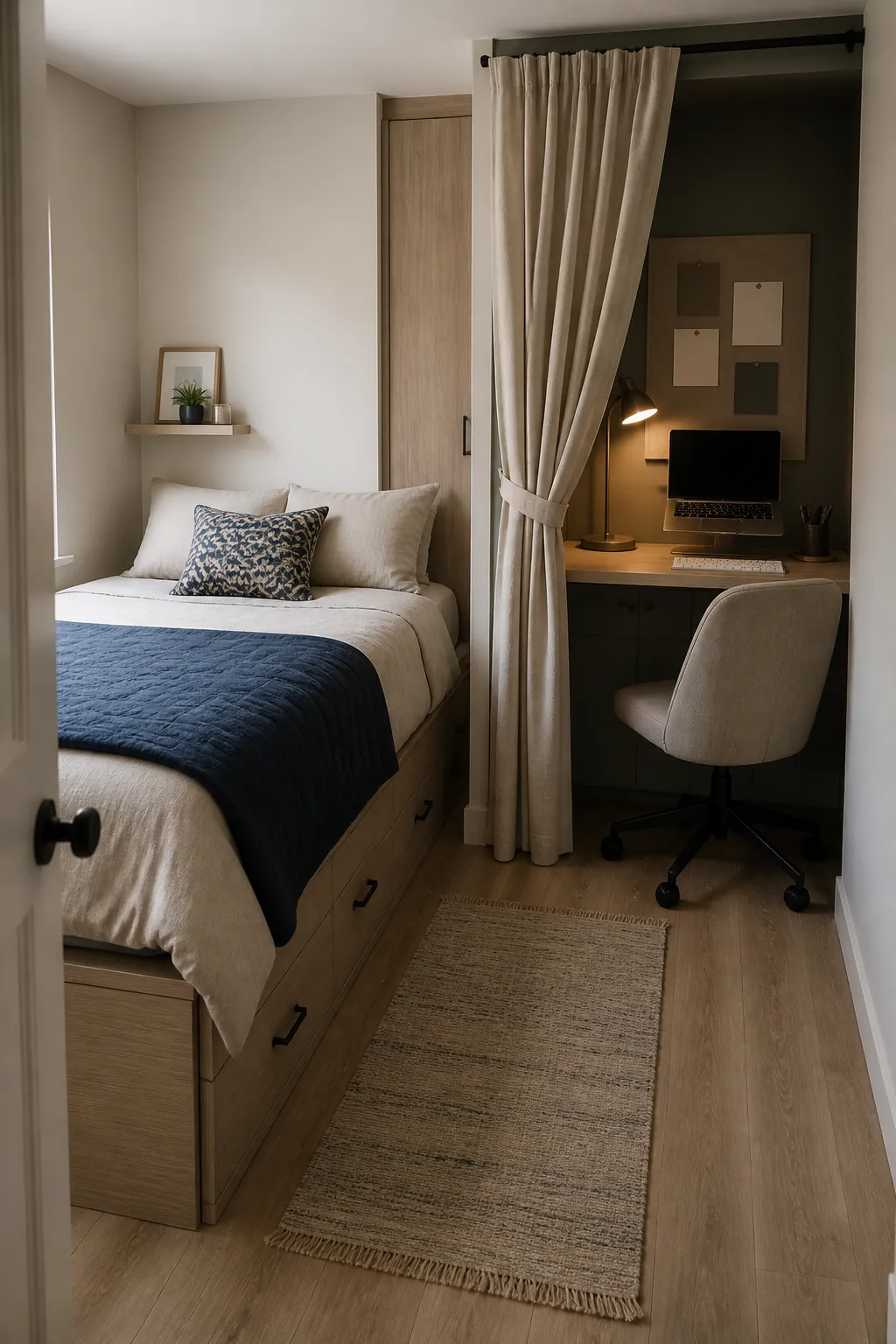
The biggest complaint with a Work From Home Bedroom is psychological, not visual. When the laptop, cables, and papers stay in sight, the room keeps reminding you about unfinished tasks. A curtain, folding screen, closet desk, or recessed nook can help the bedroom switch roles at night.
This does not need to be elaborate. A ceiling track curtain in front of a shallow desk nook can make the workspace disappear. A cabinet desk can close after work. Even a fabric panel beside the desk can soften the view from the bed. The goal is not to pretend the office is not there; the goal is to stop it from being the first thing you see when you rest.
Make Storage Do the Quiet Work
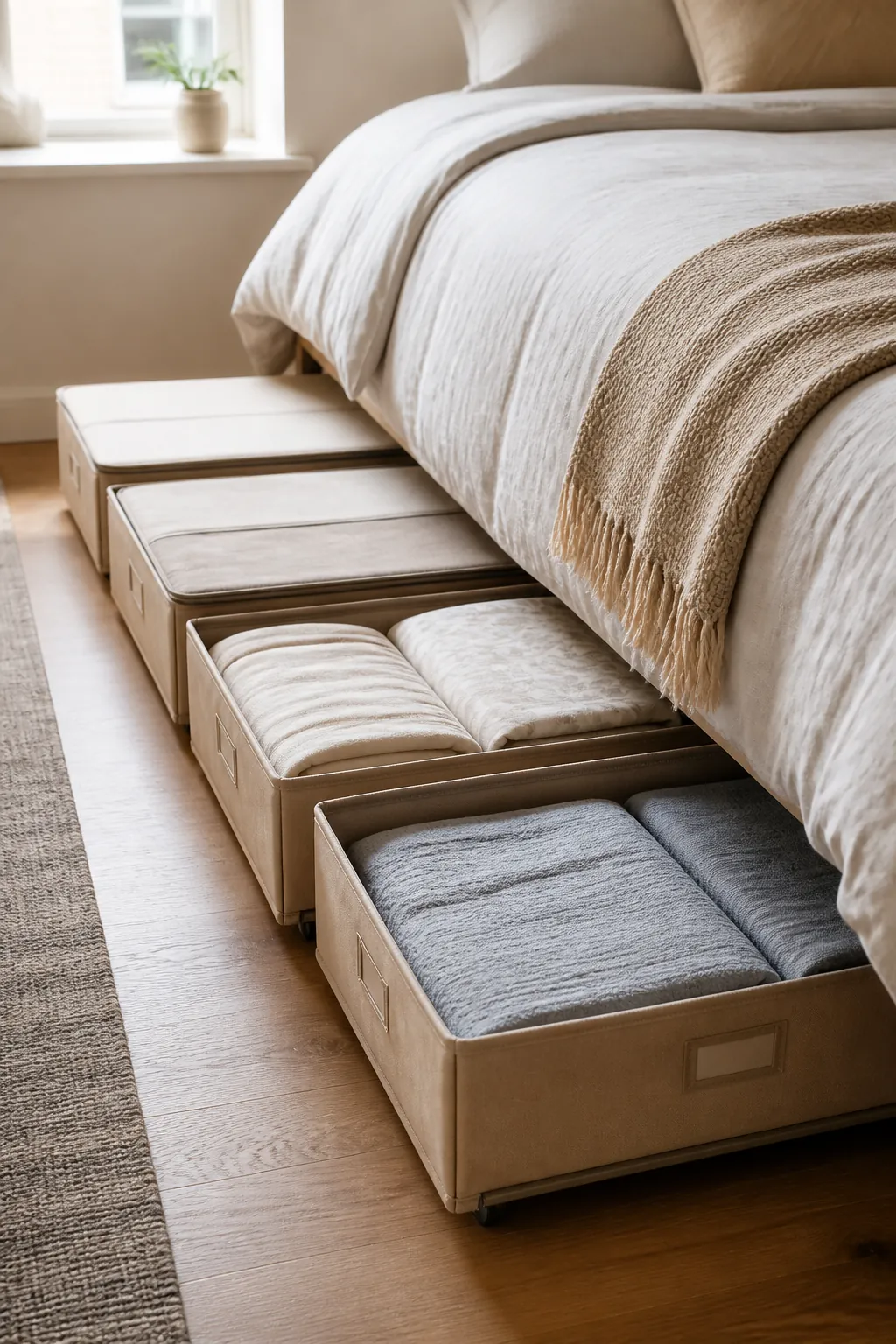
Bedroom Storage is what keeps a desk-and-bed room from collapsing into clutter. In a small room, anything without a home will land on the bed, the chair, or the desktop. That is why the best Small Bedroom Layout often includes less visible furniture and more assigned storage.
- Use under-bed drawers for bulky items like off-season bedding, extra throws, or rarely used office supplies.
- Add one closed bin or drawer for work items so the desk can reset quickly.
- Use vertical storage above the desk for shelves, a peg rail, or a small wall cabinet.
- Keep the chair clear because a buried chair turns the desk into a dumping zone.
A Simple Layout Formula That Works
If you are stuck, use this order: place the bed first, protect the walking path second, choose the desk third, and solve storage last. A good Small Space Living setup rarely comes from one clever product. It comes from several small decisions that reduce friction.
Choose the smallest desk that supports your real work, not your imagined perfect office. Put lighting where your eyes need it. Give cables and papers a closed home. Create one visual boundary between the desk and the bed. Then make the room easy to reset in less than five minutes.
That is the standard that matters. If the room can become a bedroom again at the end of the day, the desk belongs there.