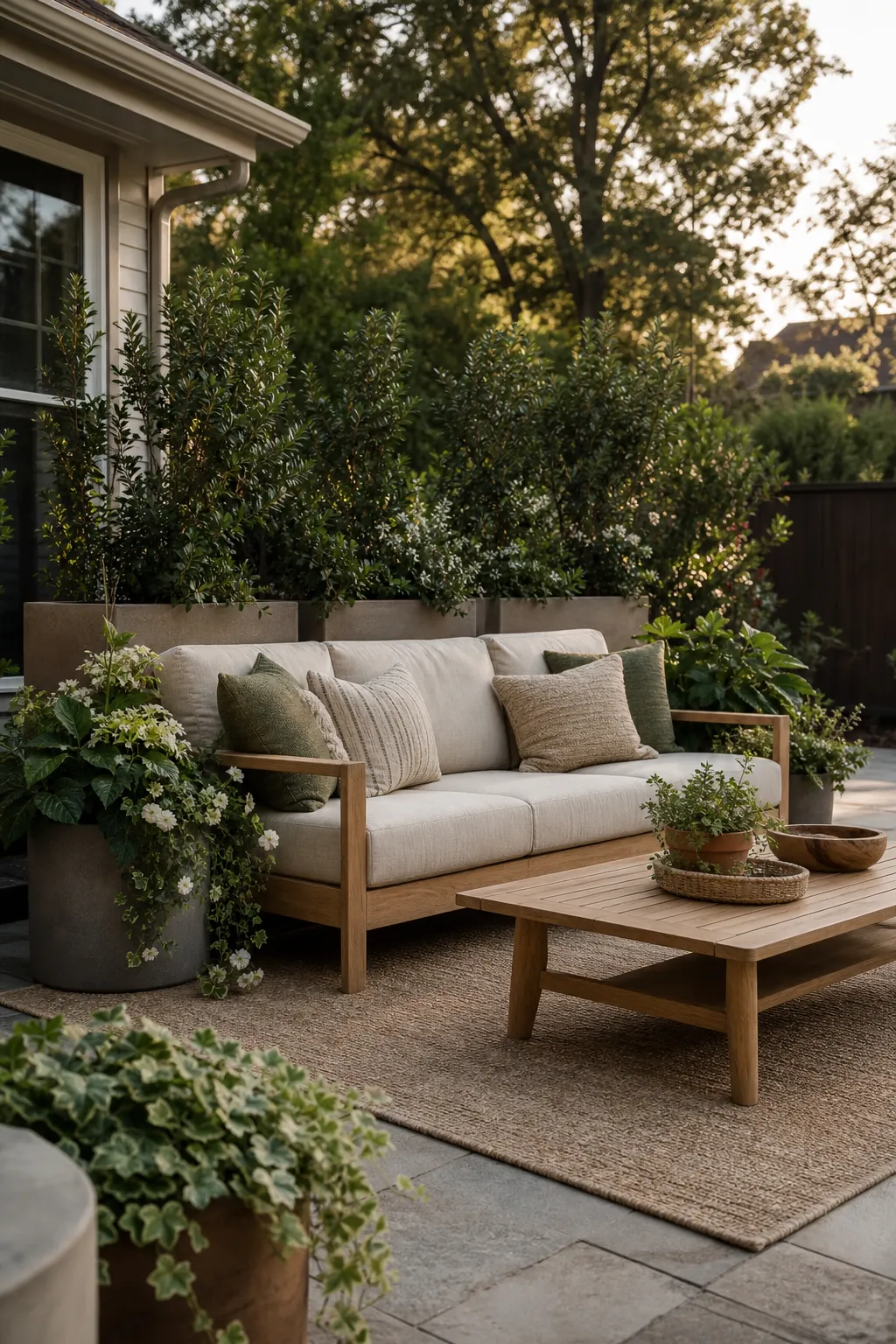
An outdoor sofa can look polished in a showroom and still feel stranded once it lands on the patio. The usual problem is not the sofa. It is the empty space around it: bare corners, exposed sightlines, mismatched pots, and a layout that looks comfortable but leaves nowhere natural for plants to live.
The best plant styling makes the sofa area feel like a real outdoor room. Plants should frame the seating, soften the hard edges, add privacy where it matters, and still leave the space easy to walk through. Start with the sofa as the anchor, then use containers, vertical greenery, and low planting layers to make the whole patio feel intentional.
Place the sofa before choosing the plants
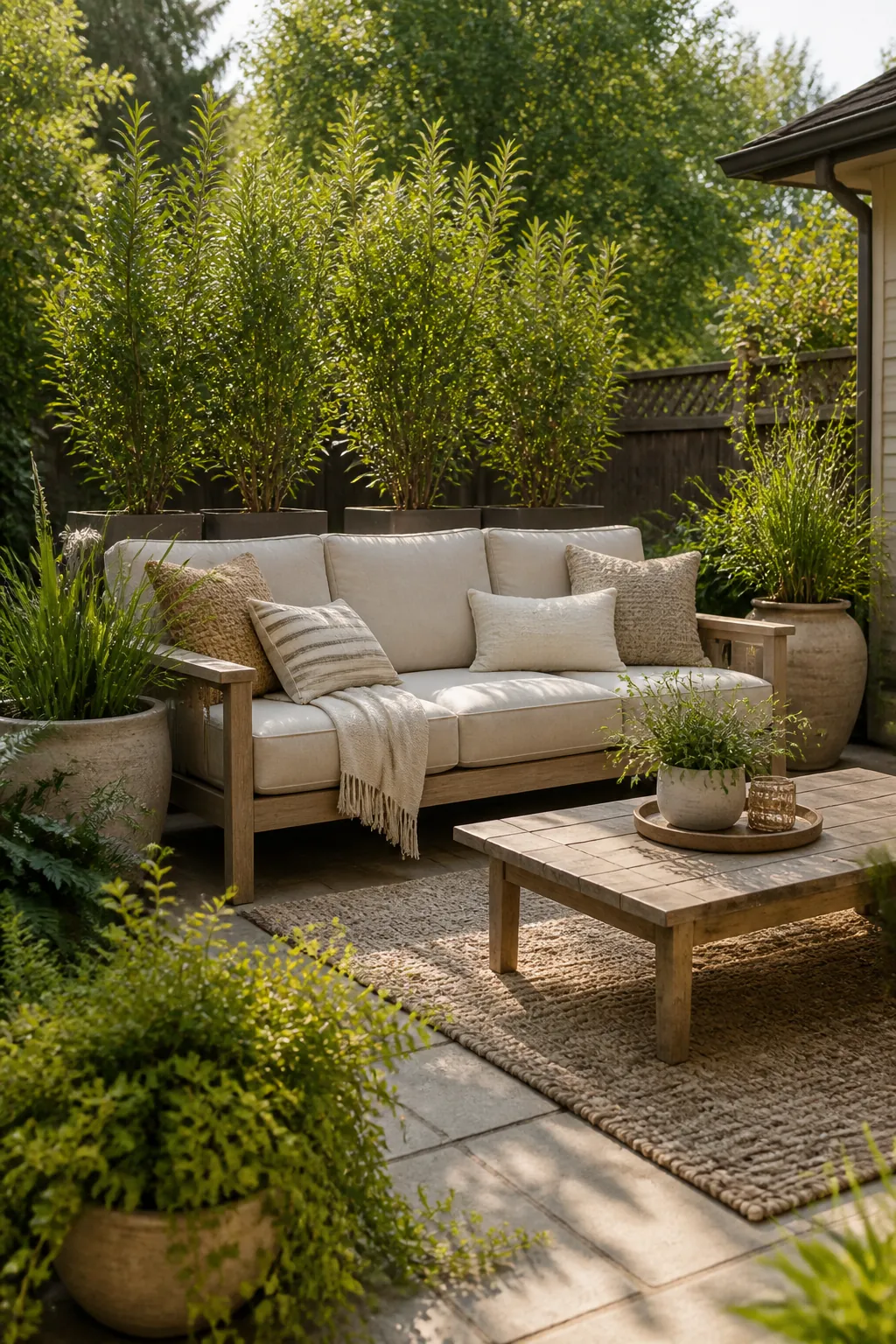
Before buying more patio decor, decide how the outdoor sofa should sit in the yard. A sofa pushed tight against a wall can feel efficient, but it often makes plants look like afterthoughts. A sofa floating in the middle of a slab can look elegant, but only if the planting gives it edges.
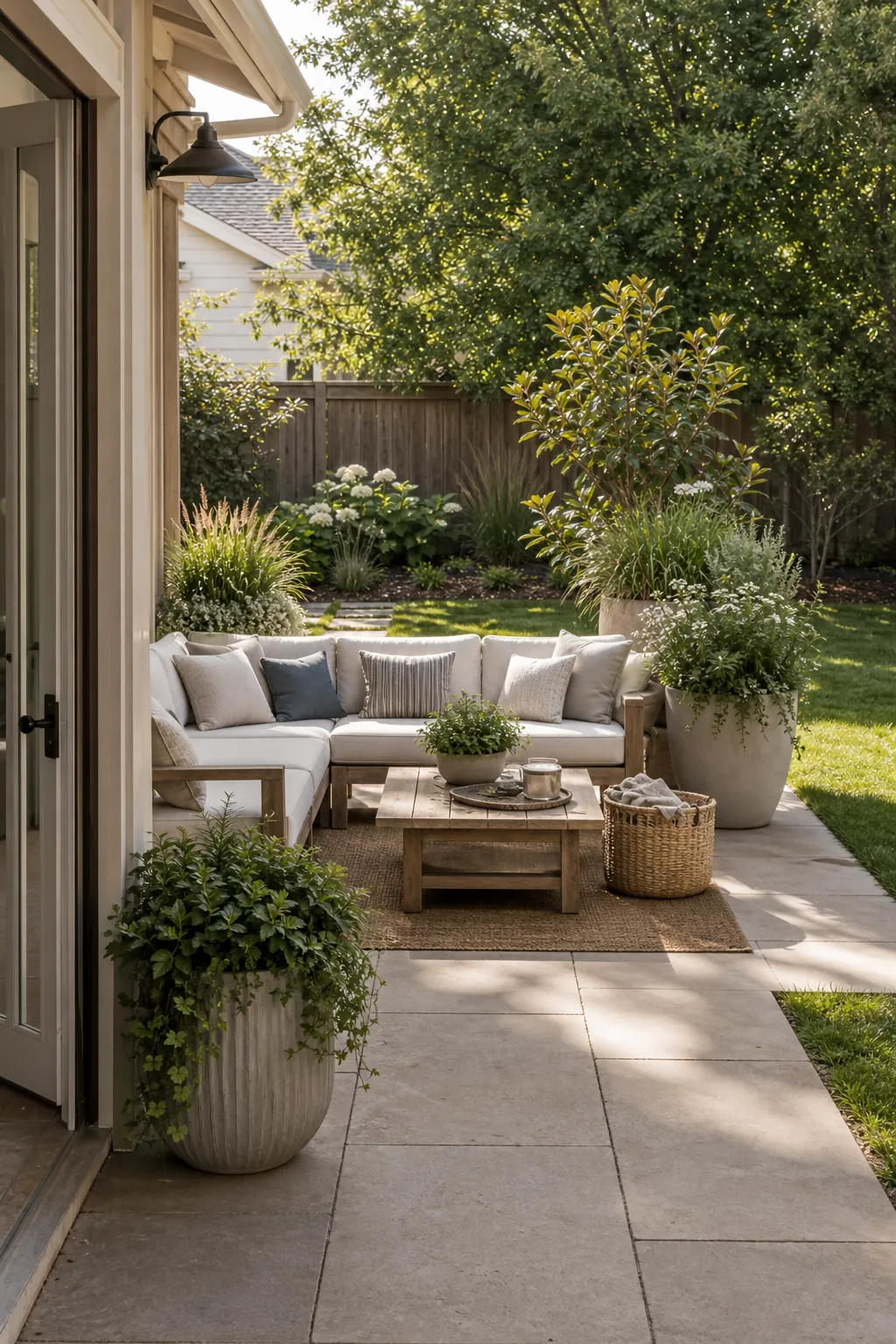
Use a simple rule: keep the main walking route clear, then plant the corners and backdrop first. The back of the sofa can handle taller containers, trellis planters, or a narrow raised bed. The front should stay lighter, with a coffee table, low planters, or a soft outdoor rug that does not fight the footpath.
If the patio is small, leave one side of the sofa visually open. If the backyard is large, use plants to create a boundary so the outdoor seating does not feel dropped into the middle of the lawn. This is where container size matters. Three larger planters usually look calmer than ten tiny pots scattered around the same area.
Build privacy with layers instead of a wall
Most privacy ideas fail when they try to block every view. A patio can start feeling smaller, darker, or boxed in. For an outdoor living area, privacy usually works better as selective screening: block the direct view from the road, neighbor window, or walkway, then keep the rest open for light and air.
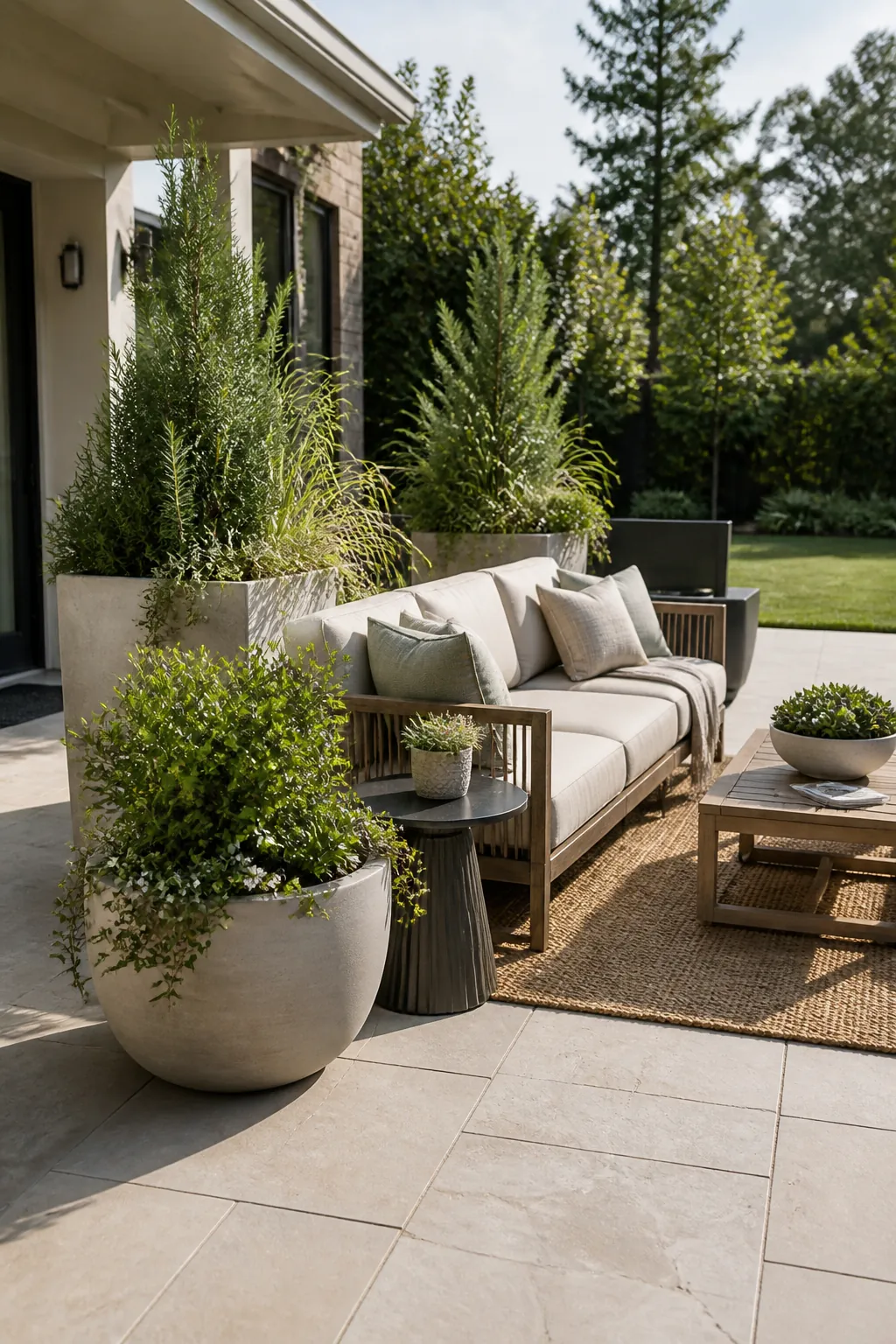
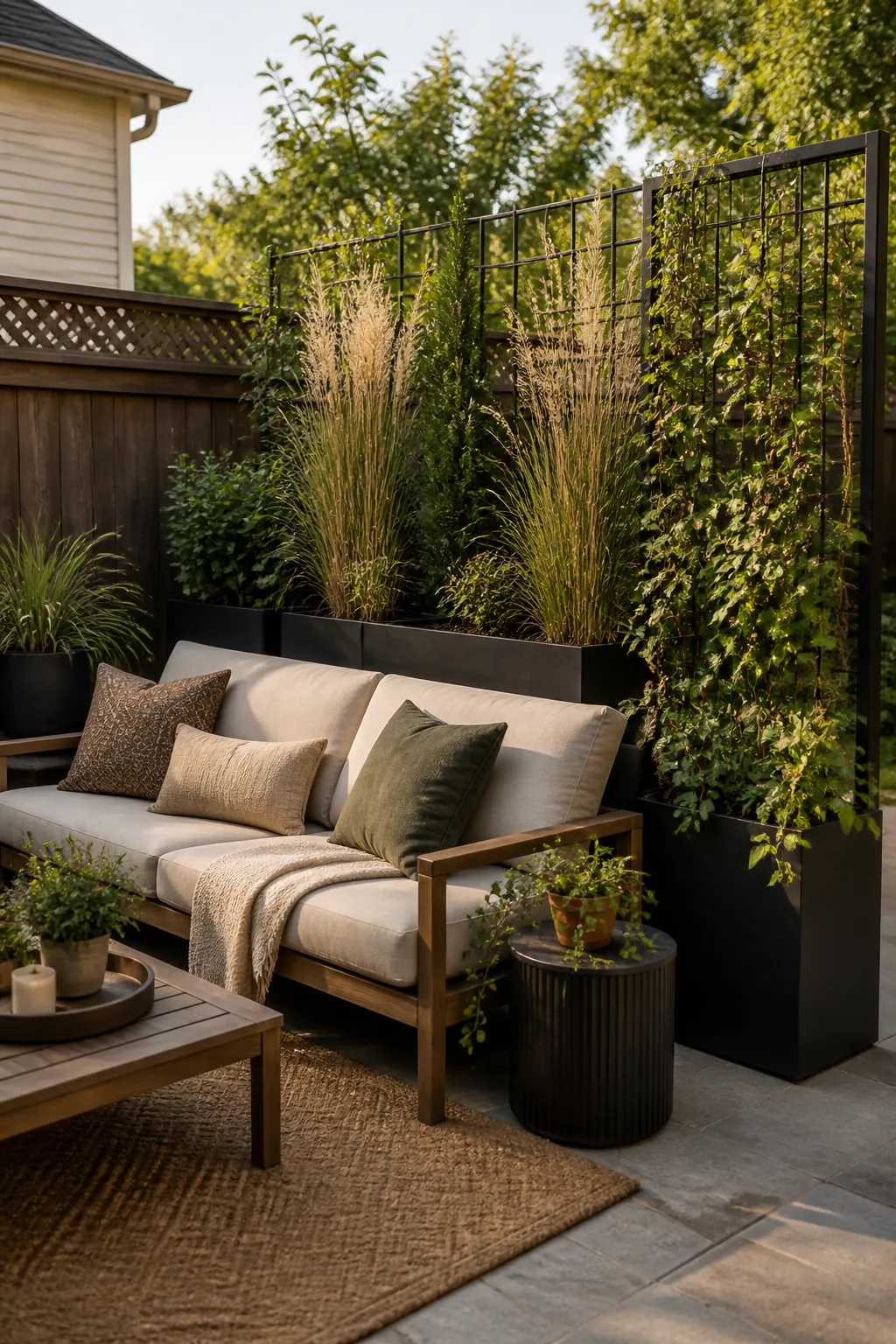
Think in layers. Put the tallest plants behind or beside the sofa, medium shrubs or grasses at the corners, and trailing plants where they can spill over edges. The goal is not a solid green fence. The goal is to interrupt sightlines while keeping the seating area breathable.
For containers, tall grasses, upright evergreens, large-leaf tropicals, and trellis-grown vines can all work depending on climate and sun. If you use bamboo, choose a contained clumping type suited to your region and keep it in a serious planter. For many patios, a trellis with star jasmine, clematis, or another suitable vine gives a softer privacy screen than a row of identical shrubs.
Match plants to the patio’s real light
A beautiful plant list means very little until you know the patio’s light. Outdoor plants beside a sofa often sit in tricky conditions: morning sun and afternoon shade, reflected heat from pavers, wind from an open yard, or deep shade under a pergola.
Spend one normal day watching the space. Notice which side gets harsh sun, which corner stays damp, and where the sofa casts shade. Group plants with the same light and water needs in the same container zone. Sun lovers and shade lovers may look good together on a mood board, but they rarely age well in the same pot.
For a sunny patio, try rosemary, lavender, salvia, ornamental grasses, compact citrus, succulents, or other heat-tolerant choices that suit your zone. For a shaded porch or covered deck, lean into ferns, hostas, heuchera, caladiums, shade-tolerant grasses, and glossy foliage. If the seating area gets both, place the tough sun plants around the exposed edge and reserve the shade plants for the sofa’s protected side.
Use the thriller, filler, spiller idea without making it fussy
Container design becomes easier when each pot has a job. A tall plant gives height, a rounded plant gives body, and a trailing plant softens the edge. Designers often call this thriller, filler, and spiller. Around an outdoor sofa, the same idea works at the whole-room scale.
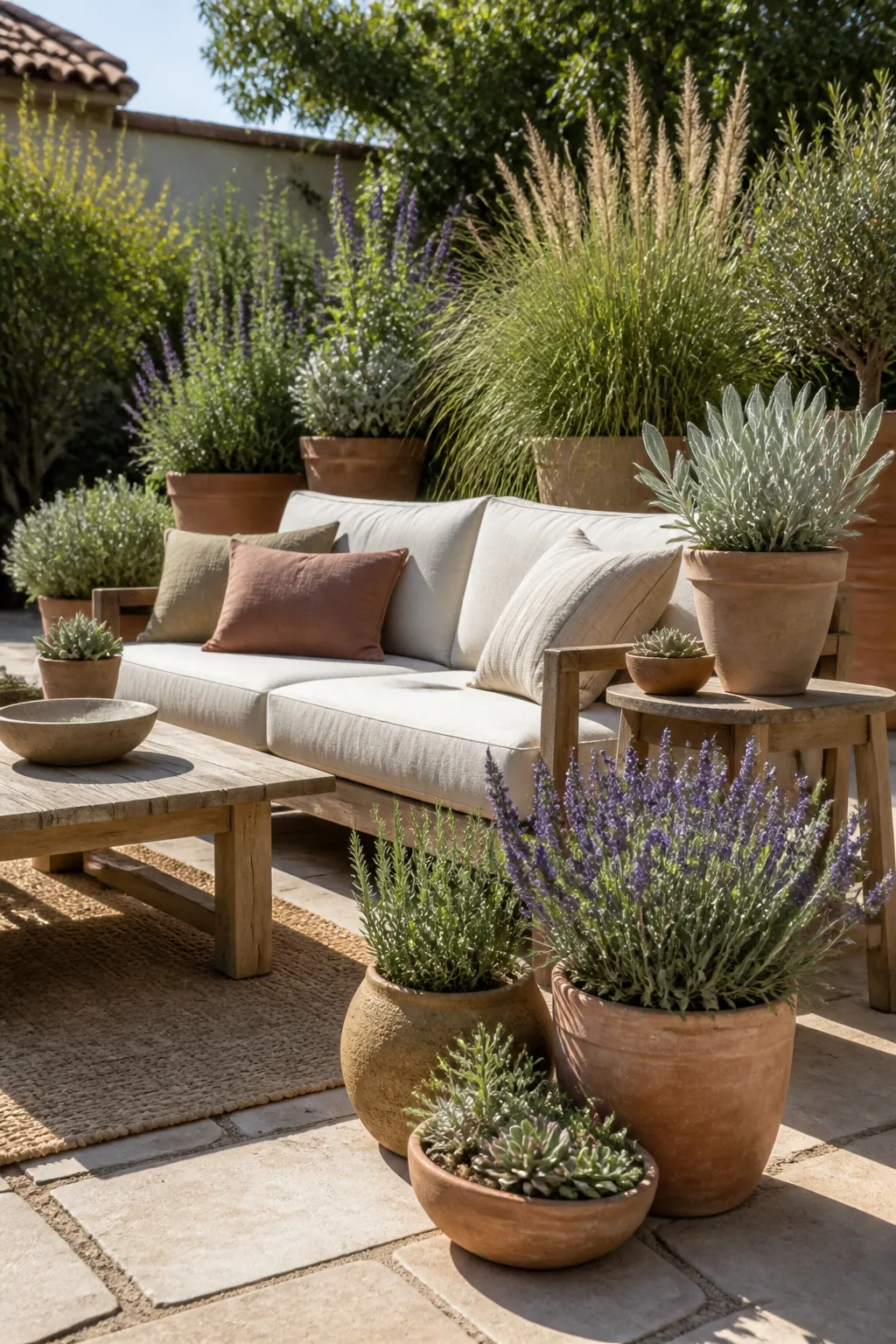
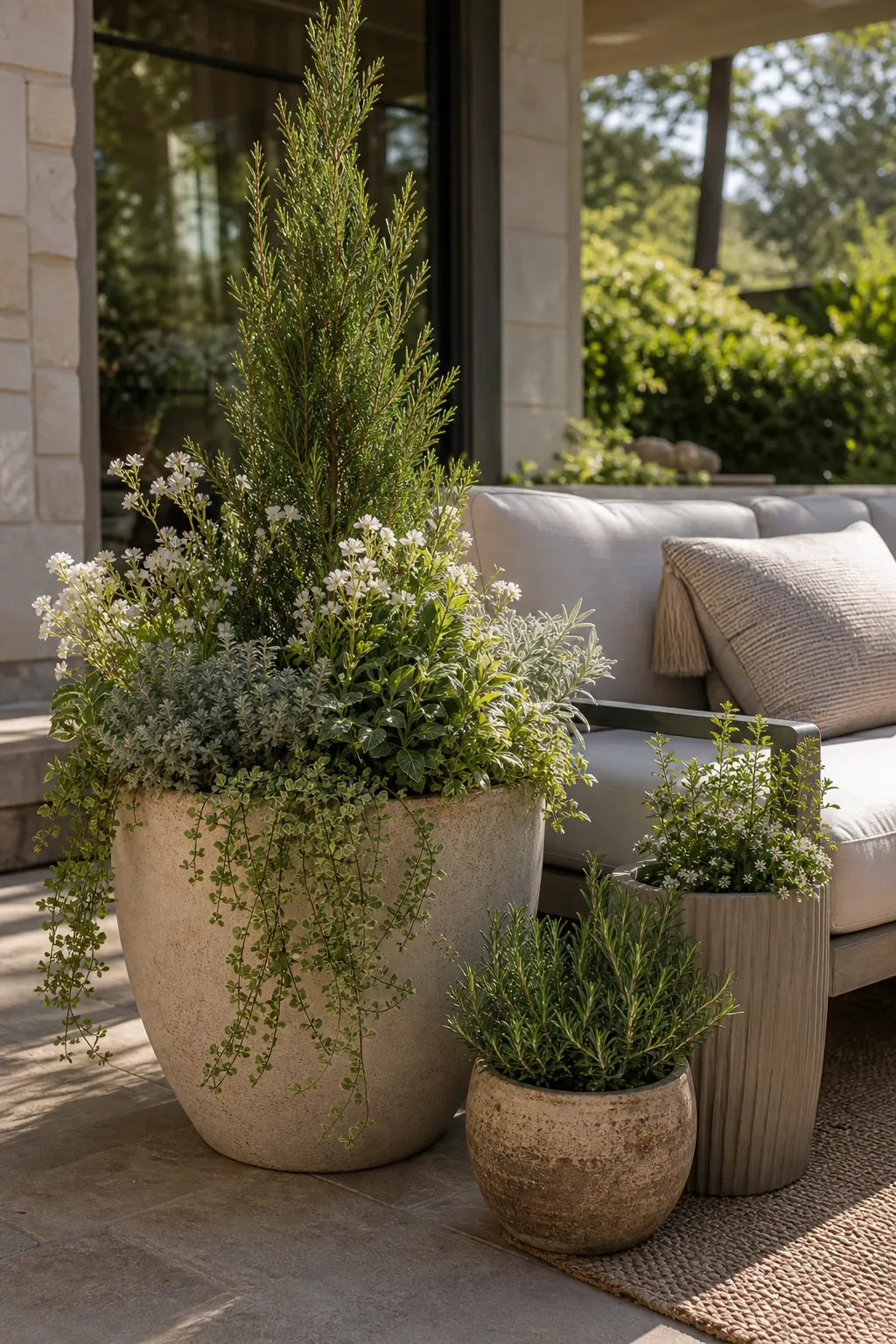
Use one or two tall planters as the thrillers near the back corners. Use full, mounded plants as fillers beside the sofa arms. Use trailing plants where they can fall from a raised planter, low wall, or side table without grabbing ankles. This mix keeps the patio furniture from looking hard and square.
Keep the palette disciplined. A family backyard can still feel calm if the planters repeat one finish and the plants repeat two or three dominant colors. Try green foliage, white blooms, and warm terracotta. Or pair deep green leaves with soft purple flowers and black planters. The outdoor sofa fabric, rug, and throw pillows should support the plant palette, not compete with it.
Make the coffee table and side tables part of the garden
The plants closest to the cushions should be the easiest to live with. Save thorny plants, messy berries, and very fragrant flowers for the edges. Near the sofa, choose herbs, compact foliage, and low arrangements that will not brush against guests every time someone sits down.
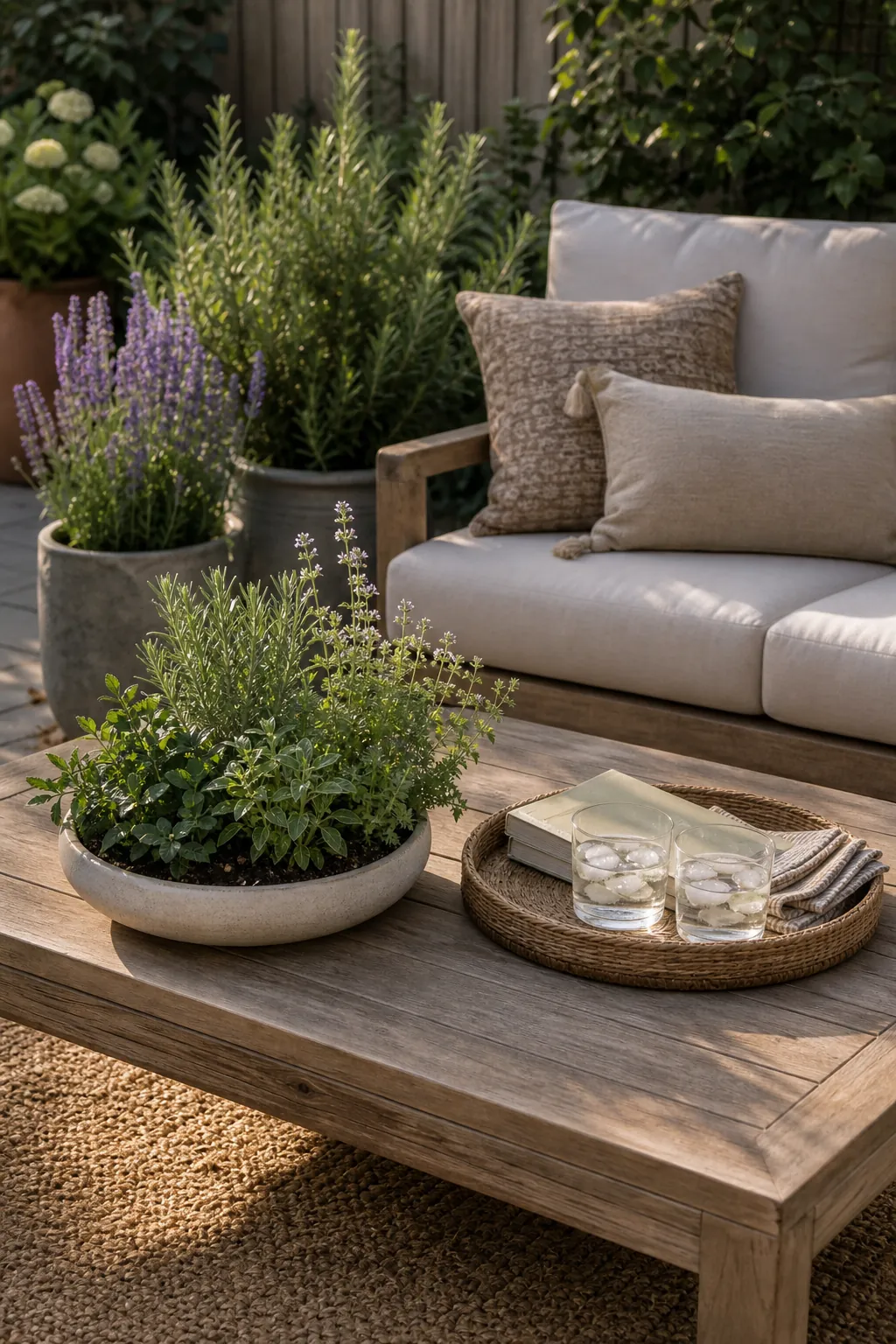
A small rosemary pot on a side table, lavender near a sunny corner, or mint in its own container can make the outdoor seating area feel fresh without overwhelming it. Use tabletop plants as accents, not as clutter. One strong bowl planter usually looks better than several little pots competing with drinks, books, and serving trays.
If you entertain often, keep the main table practical. Leave enough open surface for food and glasses, then place greenery on a lower shelf, nearby plant stand, or the far corner of the table. Patio furniture works harder when the plants support the way people actually use the space.
Keep a family backyard easy to move through
A sofa area can look lush and still be annoying if every path is blocked by pots. In a family backyard, circulation matters as much as style. People need to carry food outside, walk around the seating, reach the yard, and move cushions when weather changes.
Keep at least one clear route from the door to the sofa and one route from the sofa to the yard. Put heavy planters where you will not need to move them. Use lighter pots or rolling caddies only for pieces that genuinely need seasonal flexibility. The best backyard ideas feel relaxed because the layout is doing quiet work.
If children use the space, avoid placing delicate plants at knee height along the busiest path. Move fragile pots behind the sofa, into corners, or onto sturdy stands. Choose durable outdoor seating fabrics, washable cushion covers, and plantings that can handle the occasional bump.
Style a shaded sofa area with texture
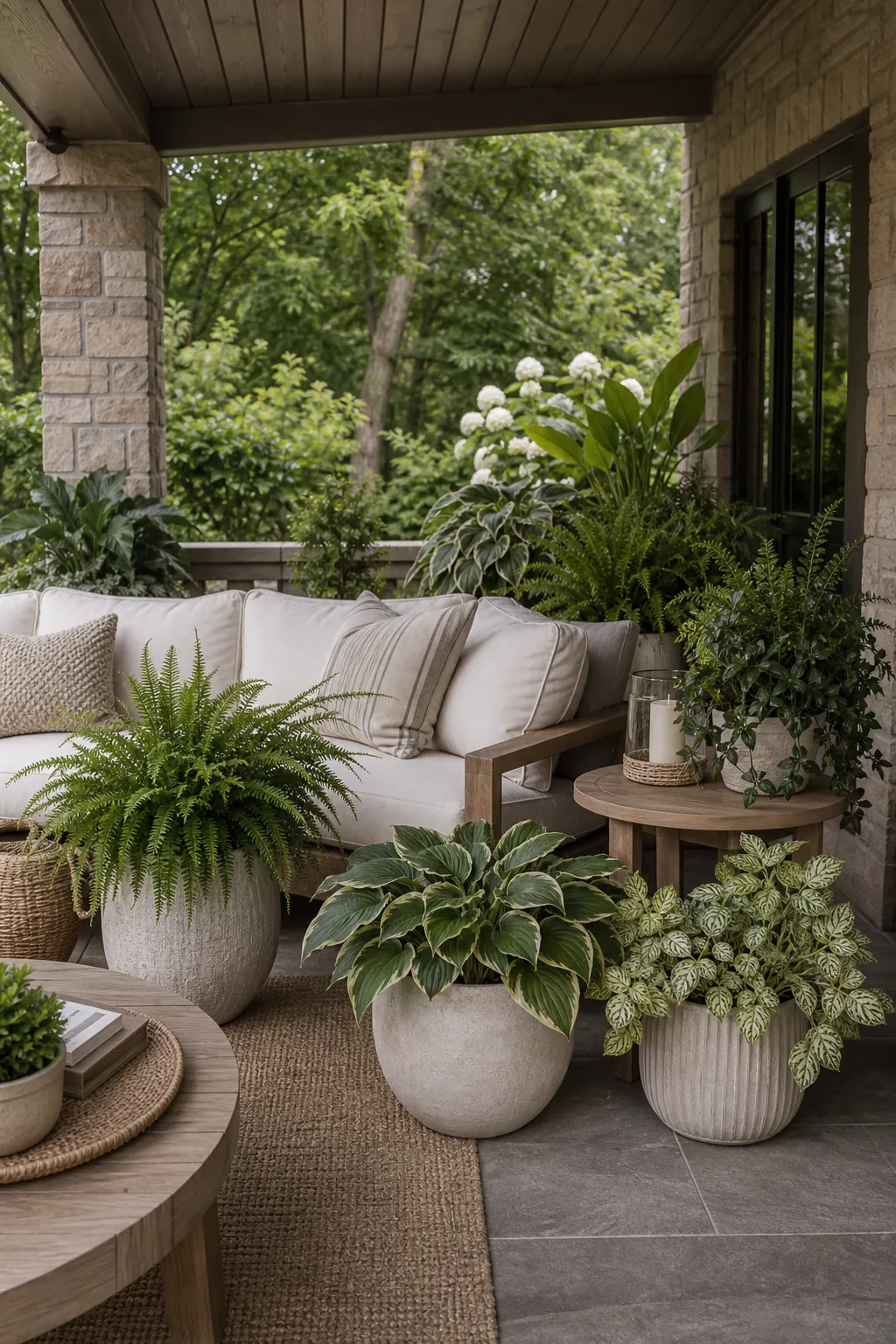
Shade can make an outdoor sofa area feel cool and private, but it can also look flat if every plant has the same leaf shape. In a covered patio, porch, or pergola corner, texture becomes the main design tool.
Mix fine fern fronds with broad hosta leaves, glossy foliage, and a few pale blooms. Use lighter planters or cushions if the area feels too dark. In shade, contrast matters more than flower count. A few sculptural leaves can do more for the seating area than a dozen small flowering pots struggling without enough sun.
Also watch moisture. Covered outdoor living spaces may get less rain than the open yard, so shaded plants can still dry out in containers. Check the soil by hand instead of assuming shade means damp.
Finish with evening layers
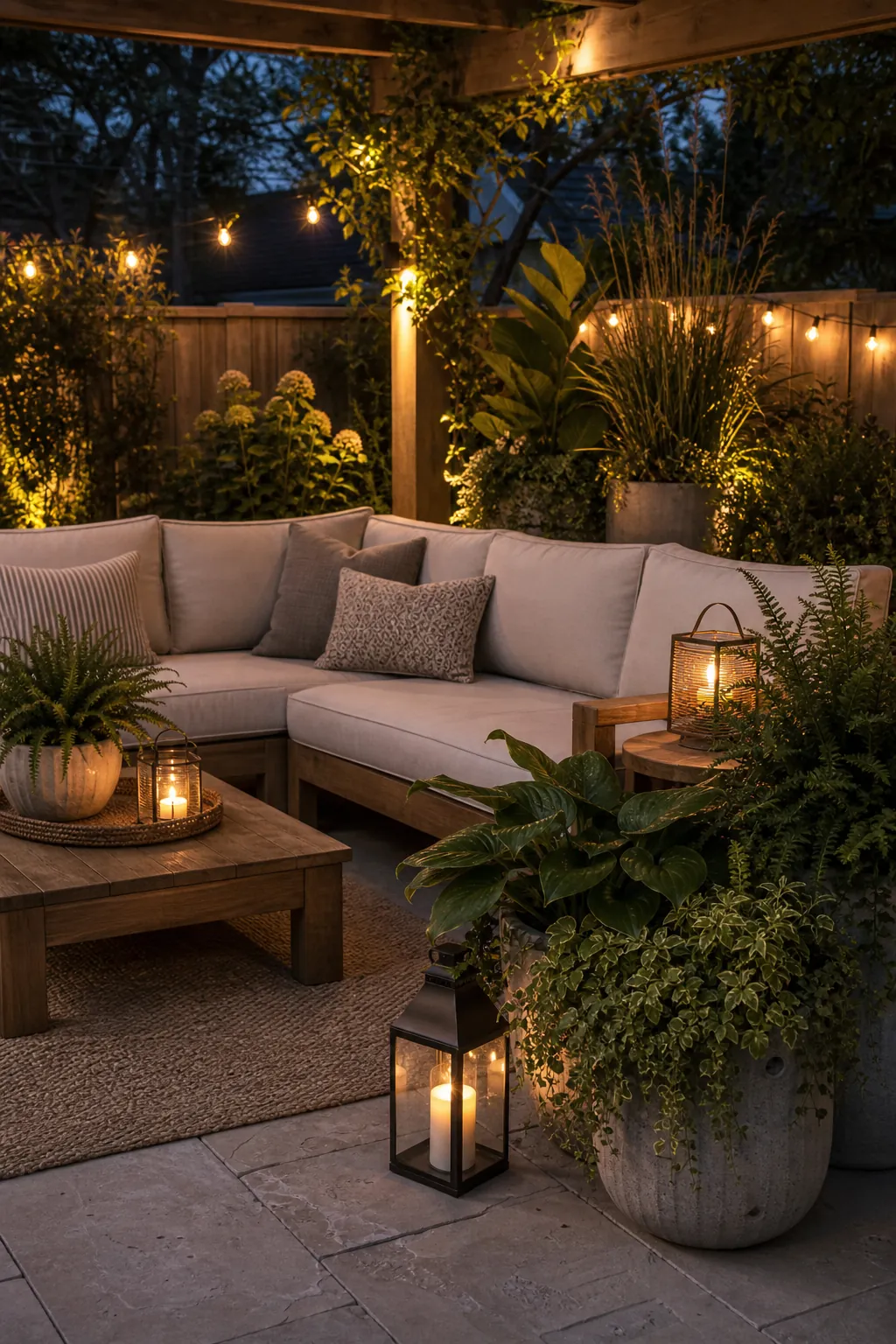
The sofa area should still feel good after sunset. Plants can help here too. Tall leaves catch warm light, grasses move softly in the breeze, and glossy foliage reflects candles or low lanterns. This is where patio decor earns its place.
Use warm, low lighting instead of one harsh overhead fixture. Tuck lanterns near large planters, run string lights along a pergola, or place a small lamp on a protected side table. Light the plants and the edges of the seating area, not just the cushions. The space will feel deeper, softer, and more finished.
End by editing. Remove any pot that makes the walkway awkward, any plant that needs conditions the patio cannot give, and any decor that has no job. A good outdoor sofa area is not the one with the most plants. It is the one where the plants make the sofa feel like it belongs outside.