
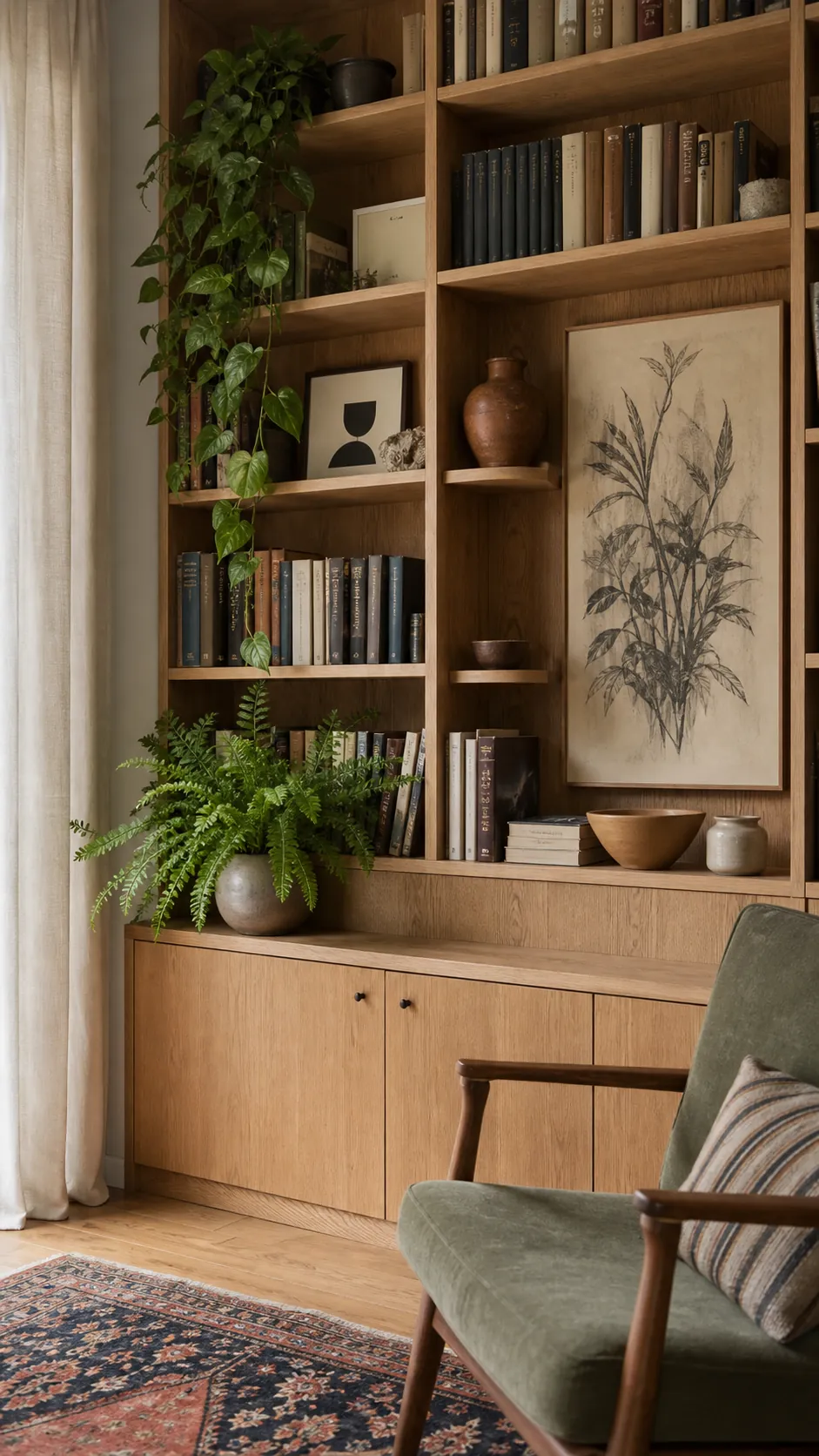
Plants and art can make bookshelves feel alive, but they can also compete with the books and with each other. A row of starter plants, several tiny frames, and scattered novels may contain everything you love while still reading as visual noise.
The fix is not to remove personality. It is to give each category a clear role. Books create visual mass, art creates a focal pause, and plants add organic movement. When those roles stay distinct, the shelves can feel collected and calm at the same time.
Choose One Artwork to Anchor the Shelf
Begin with the largest or most meaningful piece that fits comfortably inside a bay. A charcoal drawing, photograph, textile, or graphic print can set the visual direction for the surrounding shelves. Leave clear space around its edges so it reads as art rather than another object in a crowded row.
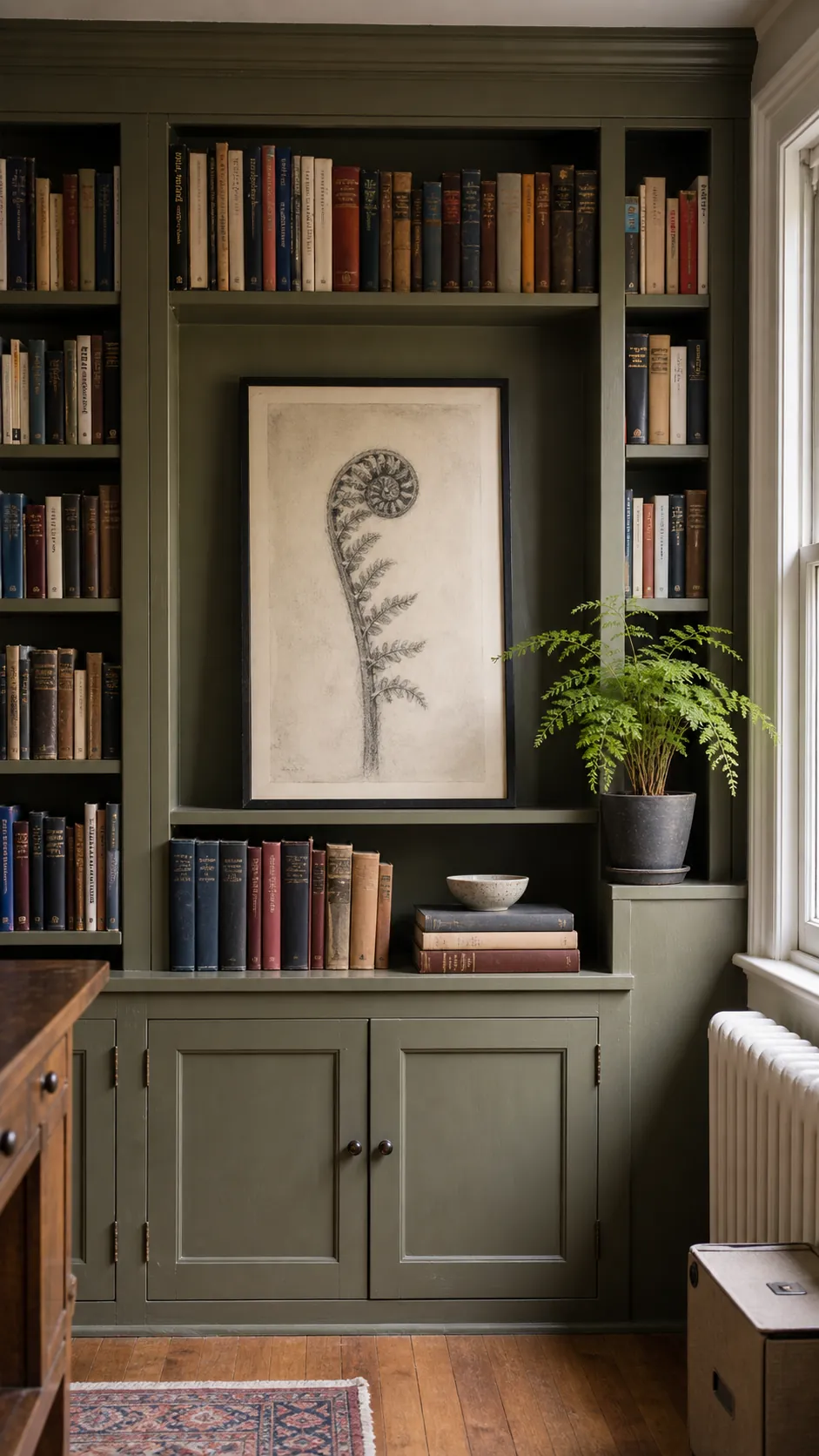
Build substantial book groups around the anchor instead of scattering three or four books in every cubby. Upright runs create strong vertical blocks, while one horizontal stack can lift a low object or bridge a height change. The books should frame the artwork, not disappear behind it.
Place Plants Where They Can Actually Thrive
Do not fill empty shelf spaces with plants before checking the light. Start at the window and notice which bays receive bright indirect light, which remain dim, and where hot direct sun falls. Choose plants for those conditions and give every pot a waterproof saucer.
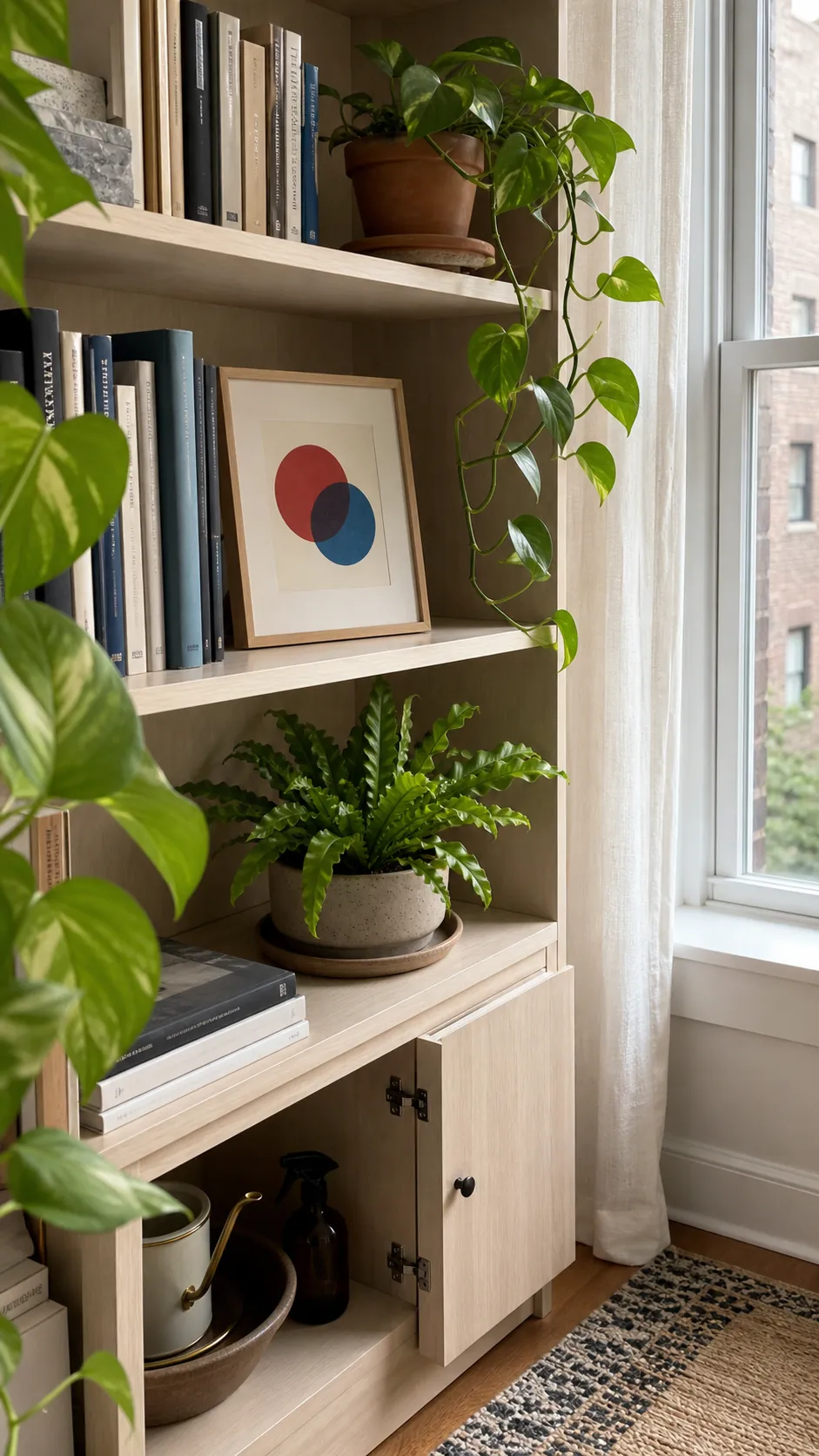
Keep plants and paper in separate zones. Place pots toward an outer edge and artwork farther inside, where watering splashes are unlikely. Leave room above foliage for new growth. If a plant must be squeezed beneath the shelf or moved every time you need a book, it belongs somewhere else.
Balance Large Shapes Before Small Details
Step back and read the shelf as a set of shapes. A broad artwork is one rectangle. A dense group of books is another. A rounded plant or bowl breaks up those hard edges. Arrange the largest shapes first, placing heavier visual masses lower or diagonally across the unit so one side does not feel overloaded.
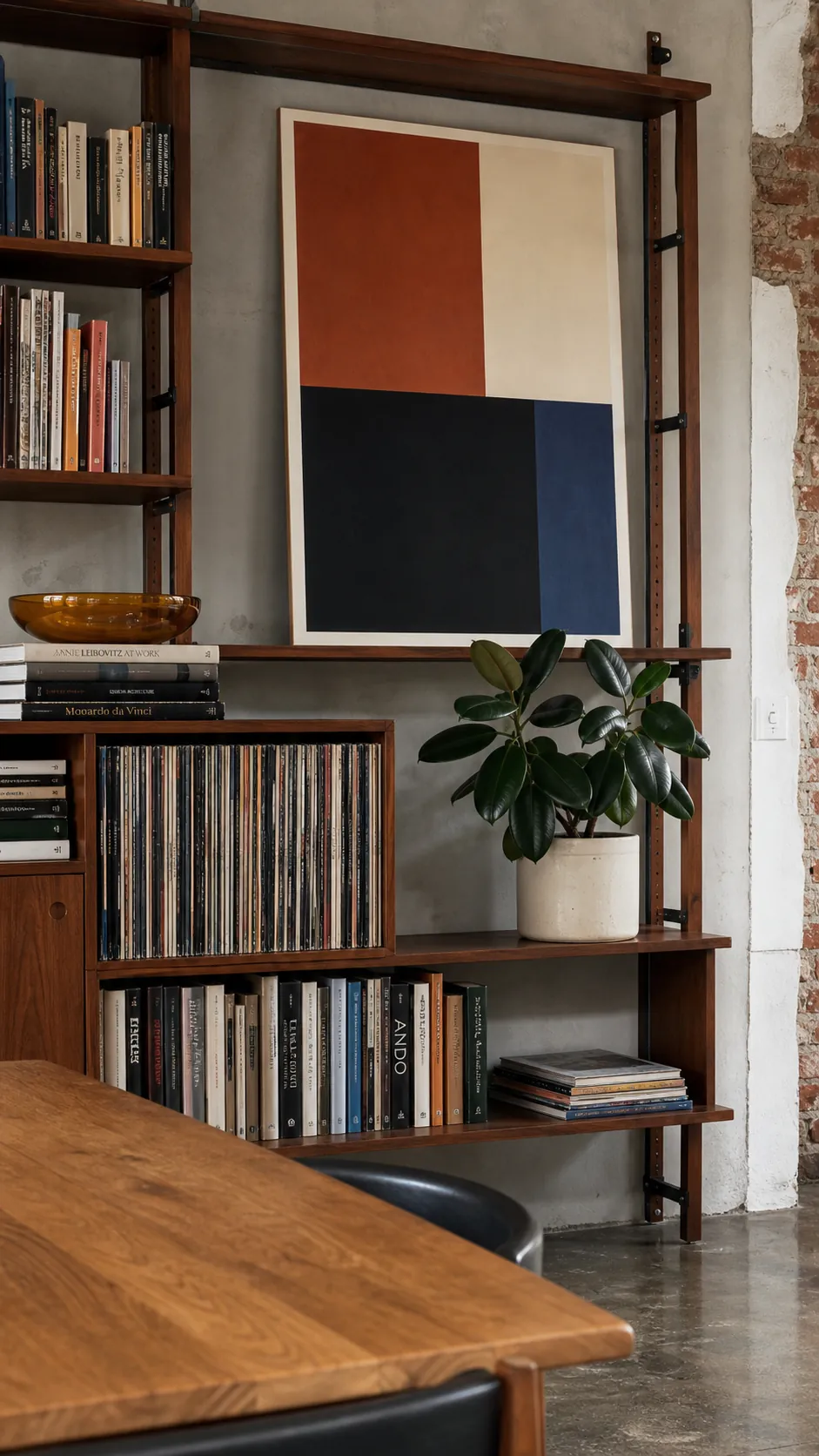
Only then add smaller objects, and use very few. One bowl, a keepsake, or a small frame can complete a grouping. Many similar-size accessories create a dotted line across the shelves and make art and plants less visible. Photograph the whole wall on your phone; the smaller view makes top-heavy or restless areas easier to spot.
Repeat Materials Without Buying Matching Sets
Mismatched pots and frames can feel intentional when two or three materials repeat. Terracotta can appear in one pot and in the rust color of a textile. A walnut frame can echo a wood bookcase. A charcoal pot can connect to black ink in a drawing.
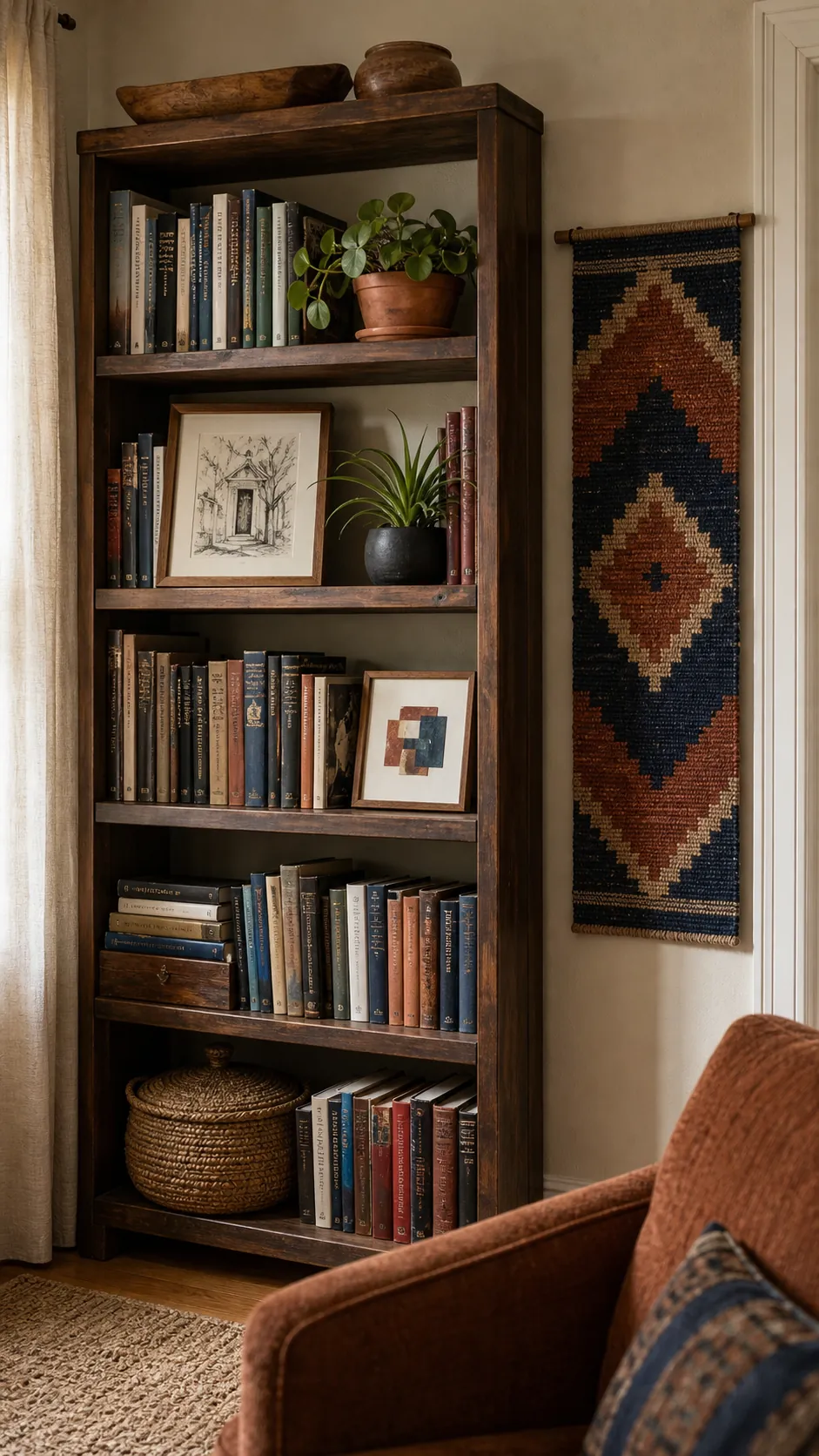
The repetition should be loose. Identical white pots and matching black frames can make a personal collection feel newly purchased. Cohesion comes from a relationship among materials, not from making every container and frame the same. Woven baskets on lower shelves can repeat natural texture while hiding plant supplies or loose household items.
Control Trailing Plants Before They Erase the Structure
A trailing plant can soften a bookcase, but several vines crossing every vertical stile make the whole wall feel tangled. Keep one strong trailing plant and guide it toward open air. Trim weak or excessive growth, rotate the pot for balanced light, and keep vines away from artwork and frequently used books.
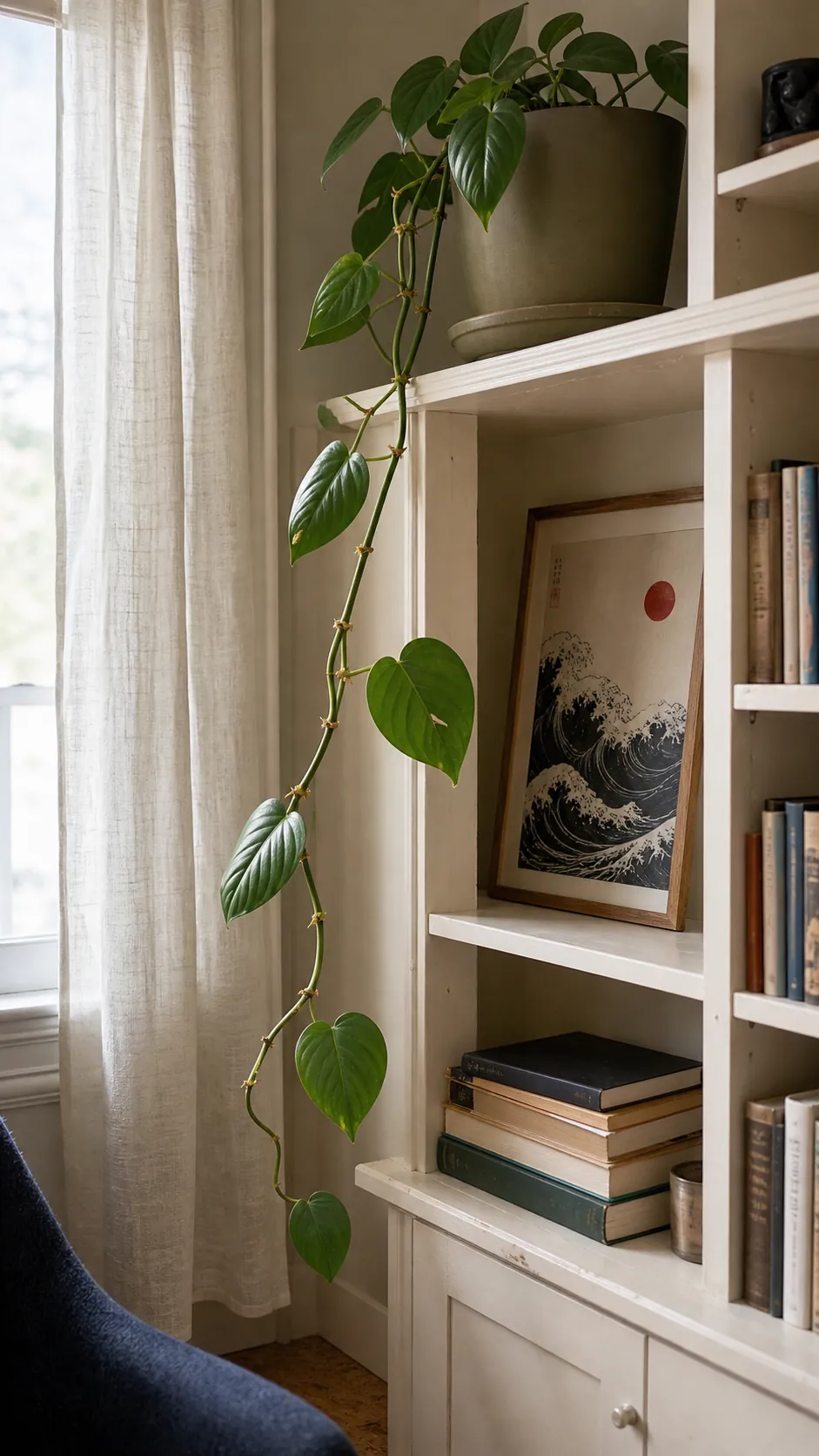
Let the furniture’s lines remain visible. Those uprights and shelf edges create the pauses that make greenery look lush rather than messy. Check leaves for dust, empty saucers after watering, and move any plant that repeatedly drips near paper. Healthy, maintained foliage adds more beauty than a larger number of struggling pots.
Light the Reading, Art, and Greenery Separately
At night, a small shaded shelf lamp can reveal frame texture and leaf shape, but it should not blast artwork or sit against paper. Use a cool-running LED, leave open clearance around the shade, and aim the glow across the display rather than directly into glass. Keep valuable or light-sensitive art away from intense, continuous illumination.
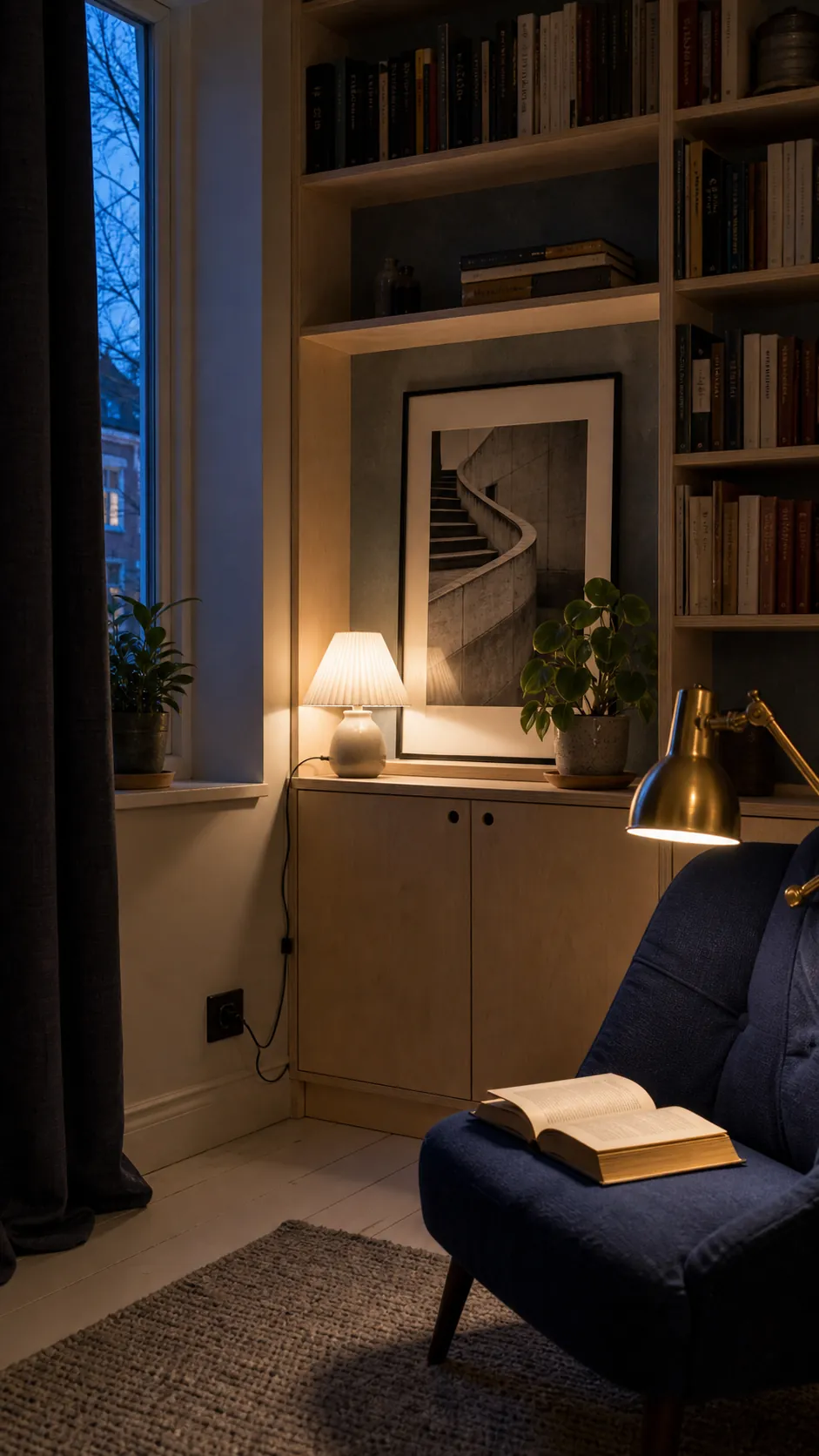
A separate adjustable lamp should light the book in the nearby chair corner. That separation keeps the shelf glow low and atmospheric while the page stays easy to read. When books, art, plants, and lighting each perform one clear job, the home library feels richer—not busier.