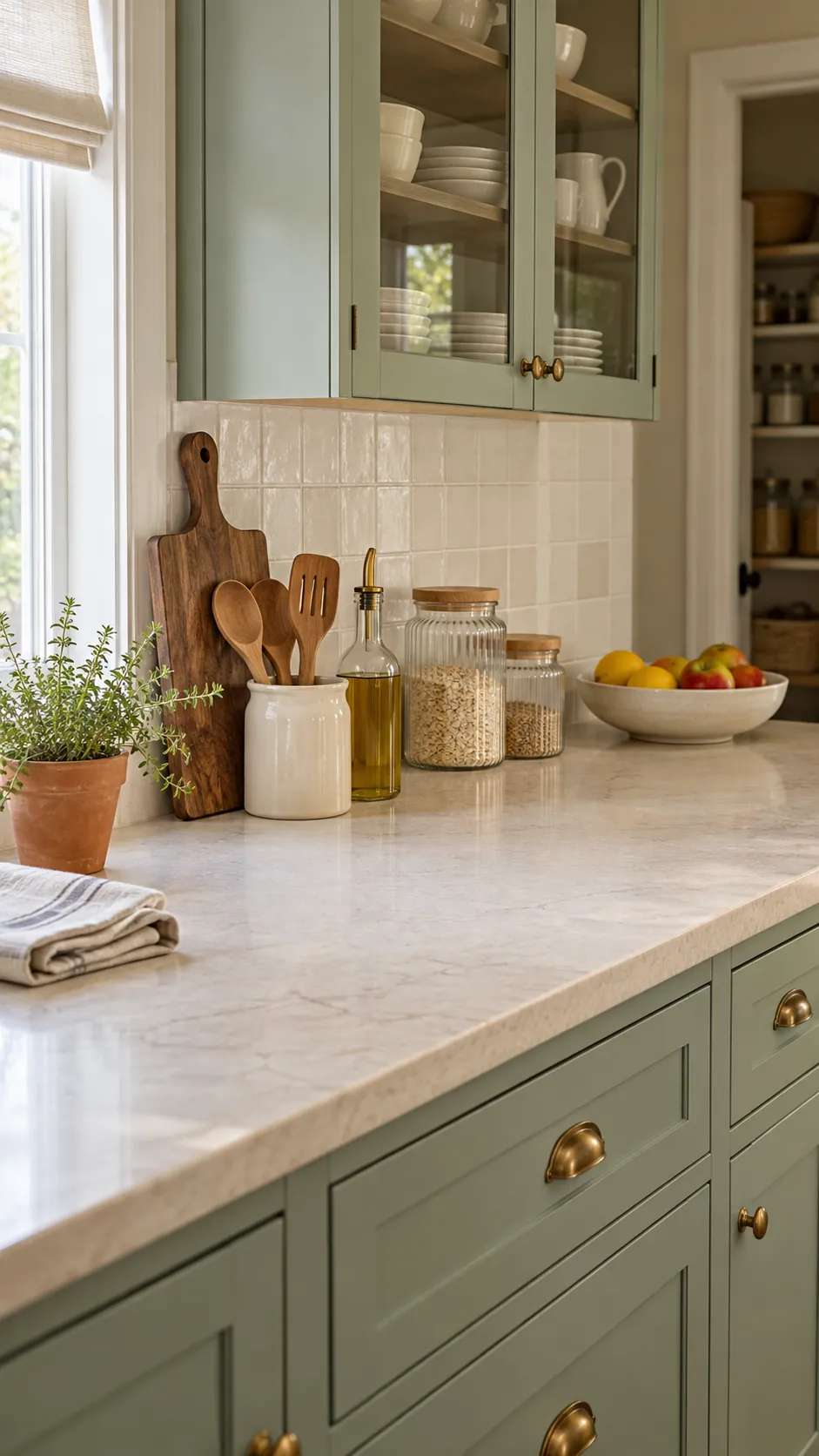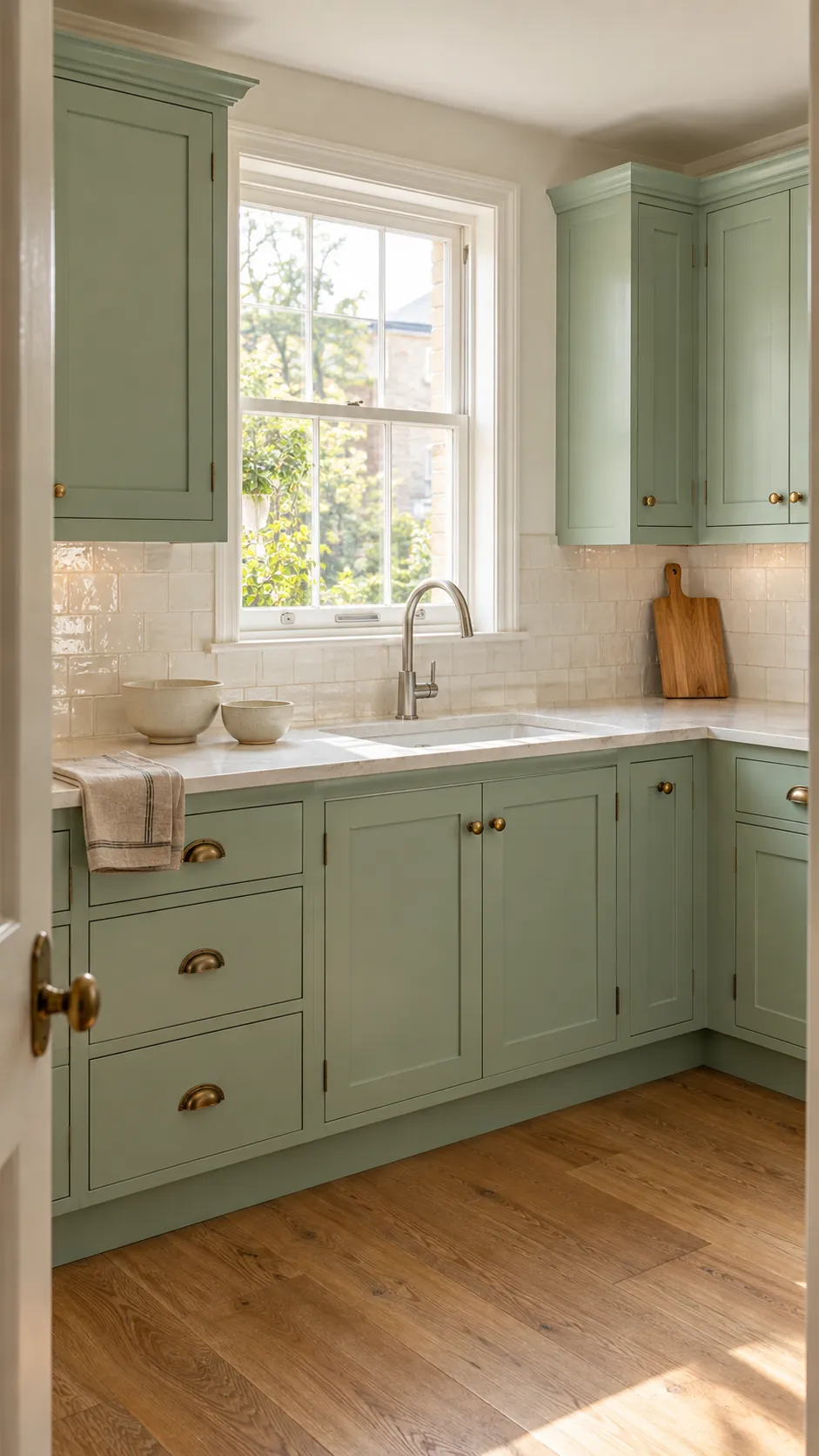
Mint cabinetry can feel fresh in one light and overly sweet in another. The safest way to control it is to treat the cabinets as the room’s main color, then give every other finish a clear job. Warm whites add space, wood adds depth, and a few dark or metallic details provide definition.
Pair Mint Cabinets with Warm White Stone
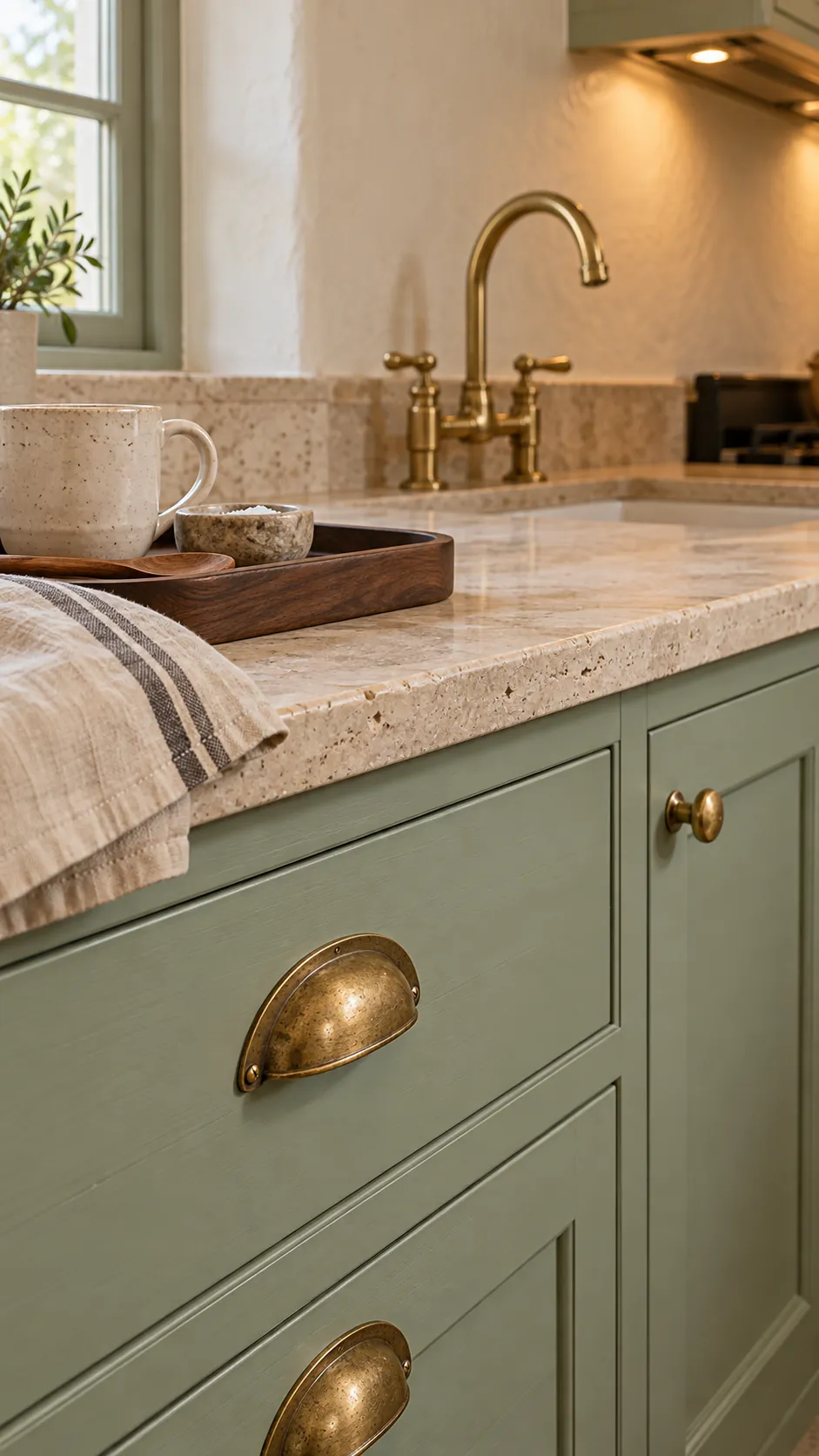
A warm white quartz or softly veined stone counter gives mint a clean base without making it look icy. Repeat that warmth in an off white backsplash, but vary the surface so the kitchen does not feel flat. Handmade tile, honed stone, or quiet ceramic glaze adds enough movement while keeping the cabinets in focus. Before ordering, place the cabinet sample beside the counter and tile in morning and evening light because cool white can push mint toward blue.
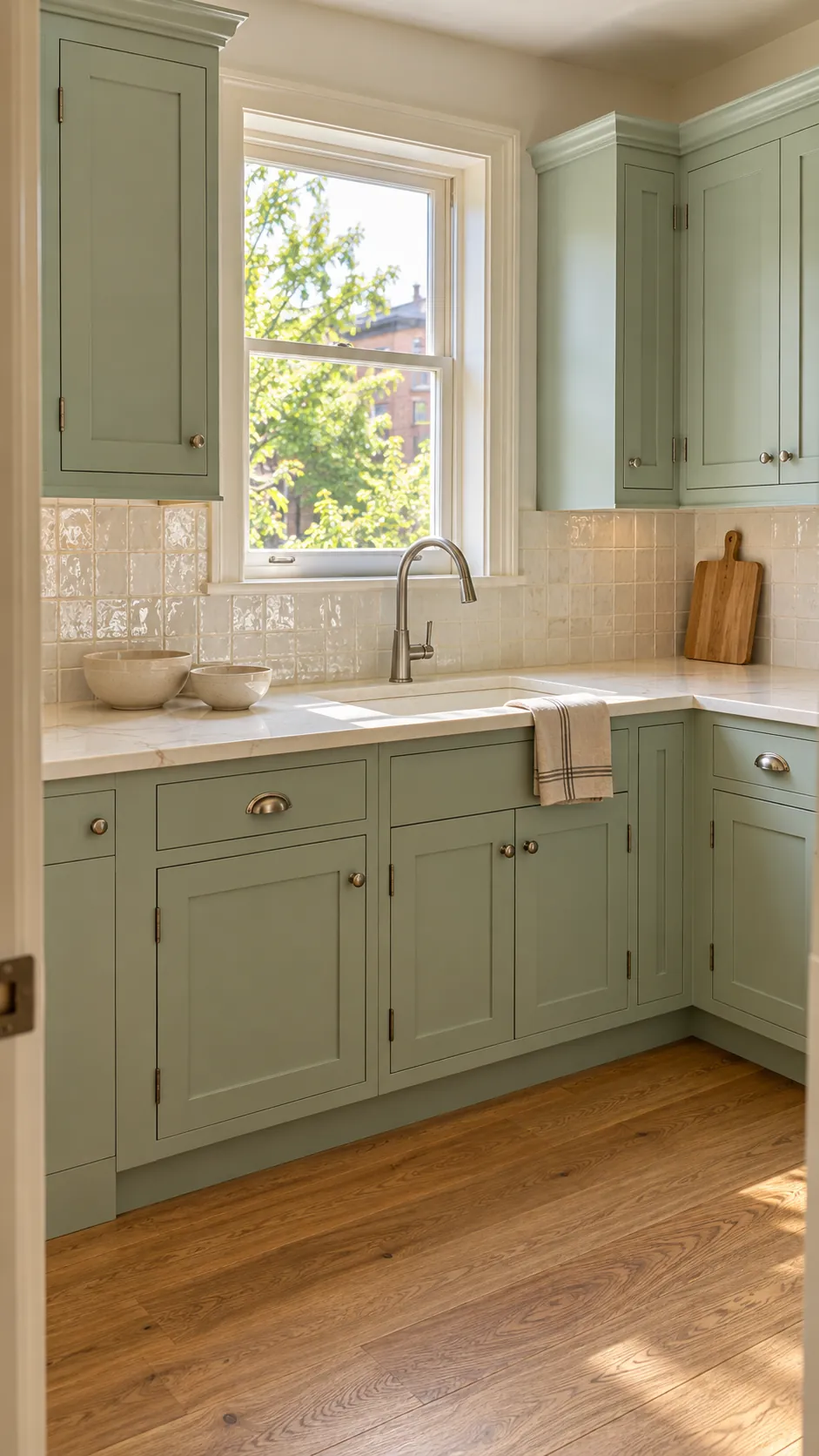
Bring in White Oak and Walnut
Natural wood keeps mint from reading like a themed pastel kitchen. White oak works well for open shelves, stools, or an island because its grain adds warmth without heavy contrast. Walnut is richer and suits a smaller accent, such as a pantry door, tray, or dining table. Choose one main wood tone and repeat it two or three times so the effect looks intentional rather than collected by accident.
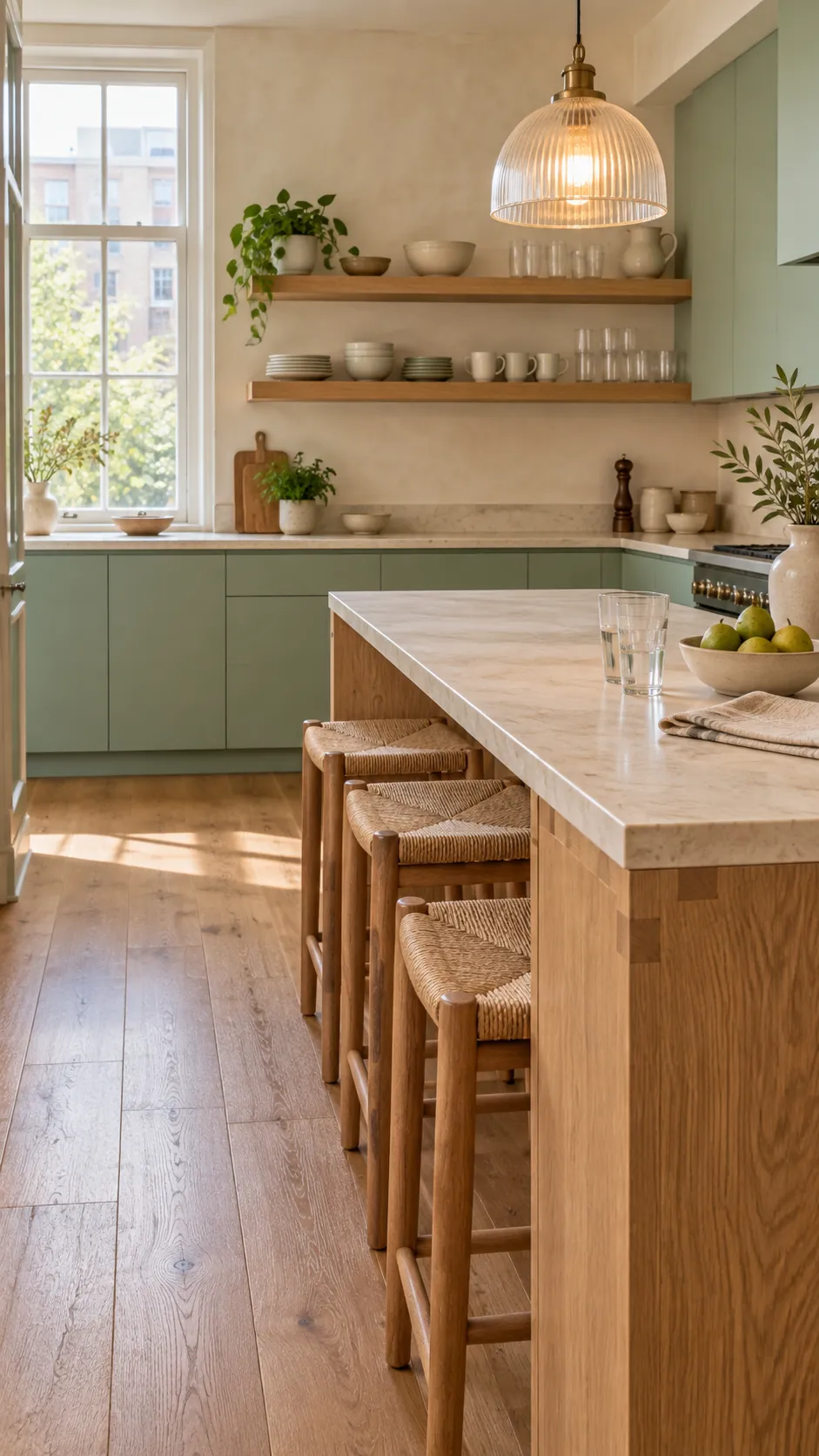
Use Aged Brass as a Small Warm Accent
Brass handles can warm mint, but the finish should not cover every visible surface. Use aged or brushed brass on cabinet pulls and perhaps one faucet or pendant, then let stainless appliances remain quiet. A muted finish looks more settled than mirror bright gold and is easier to combine with wood. Keep the pull style simple, and test its scale on a real door before drilling every front.
Add Earthy Color through the Floor
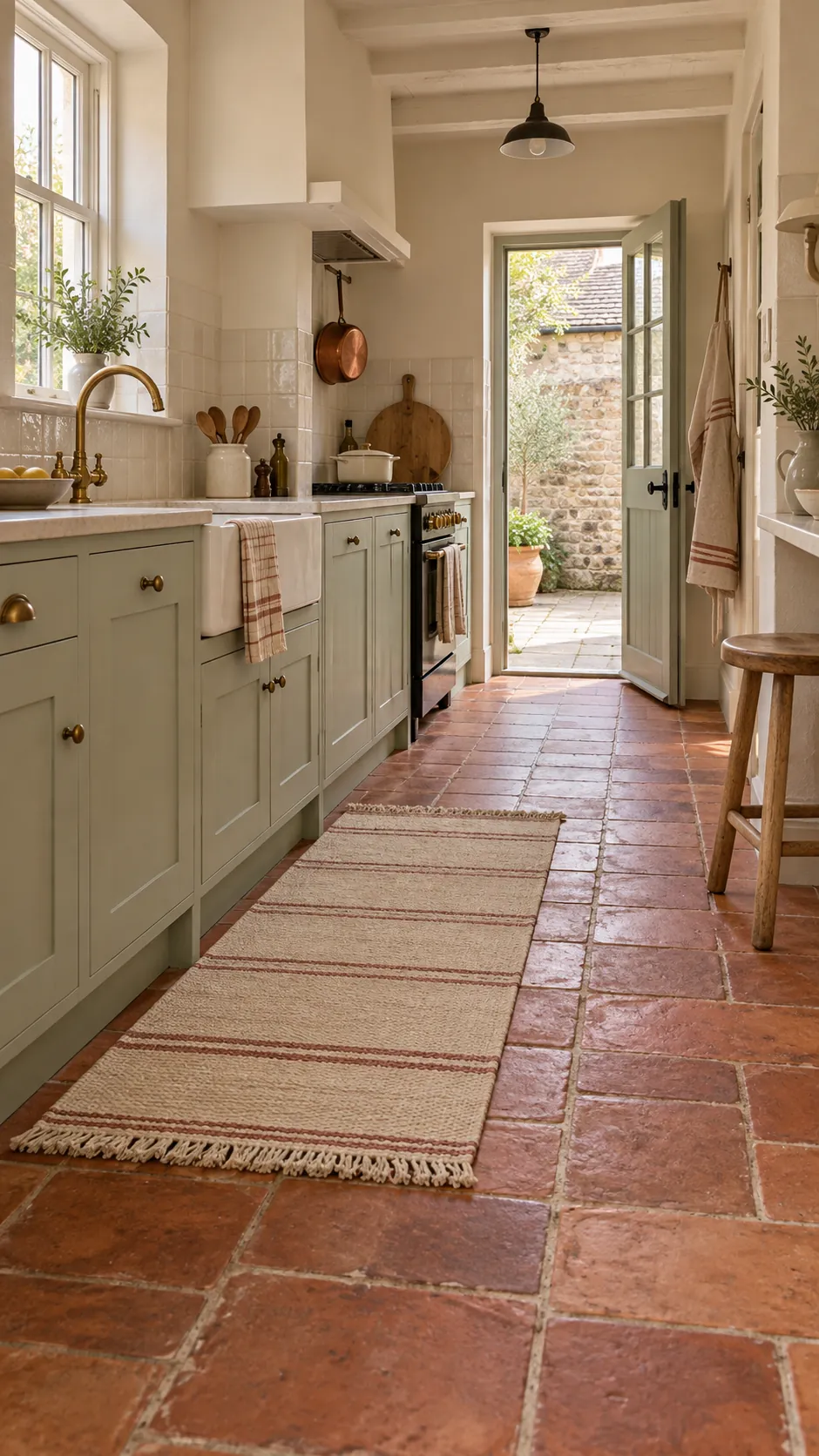
Terracotta, brick, and warm checkerboard floors give pale green a grounded foundation. Their earthy red and brown notes provide contrast, while cream in the pattern can connect back to the counter and walls. If the existing floor is already busy, use a simple runner instead of adding another patterned surface. Keep the backsplash quiet so the eye can move between cabinets and floor without competing focal points.
Define the Palette with Charcoal Details
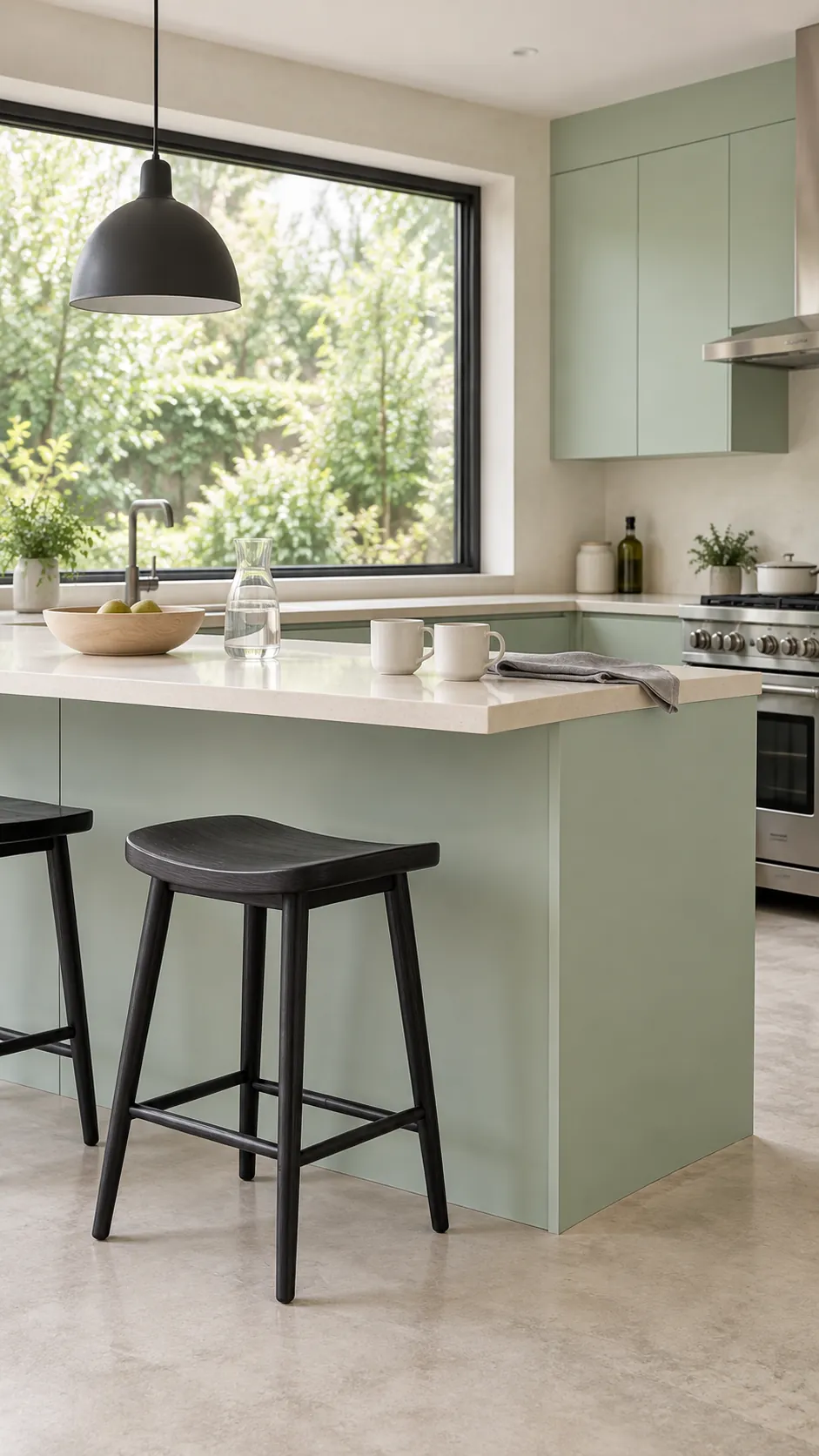
A narrow line of charcoal or soft black can stop mint and white from blending together. Window frames, a range hood, two stools, or a slim light fitting can provide that structure without darkening the kitchen. Repeat the dark note in no more than a few separated places, and avoid turning the counter or full backsplash into another large color block. This approach is especially useful when stainless appliances already introduce cool gray.
Style the Counters with Useful Natural Pieces
Finish the room with objects that earn their space instead of filling every counter. A wood board, cream stoneware, clear glass, linen towels, and one herb pot add texture while staying inside the palette. Leave broad work areas empty, especially beside the sink and hob, so the kitchen still functions well. When the useful pieces share warm natural materials, mint cabinets feel relaxed and grown up rather than decorative for its own sake.