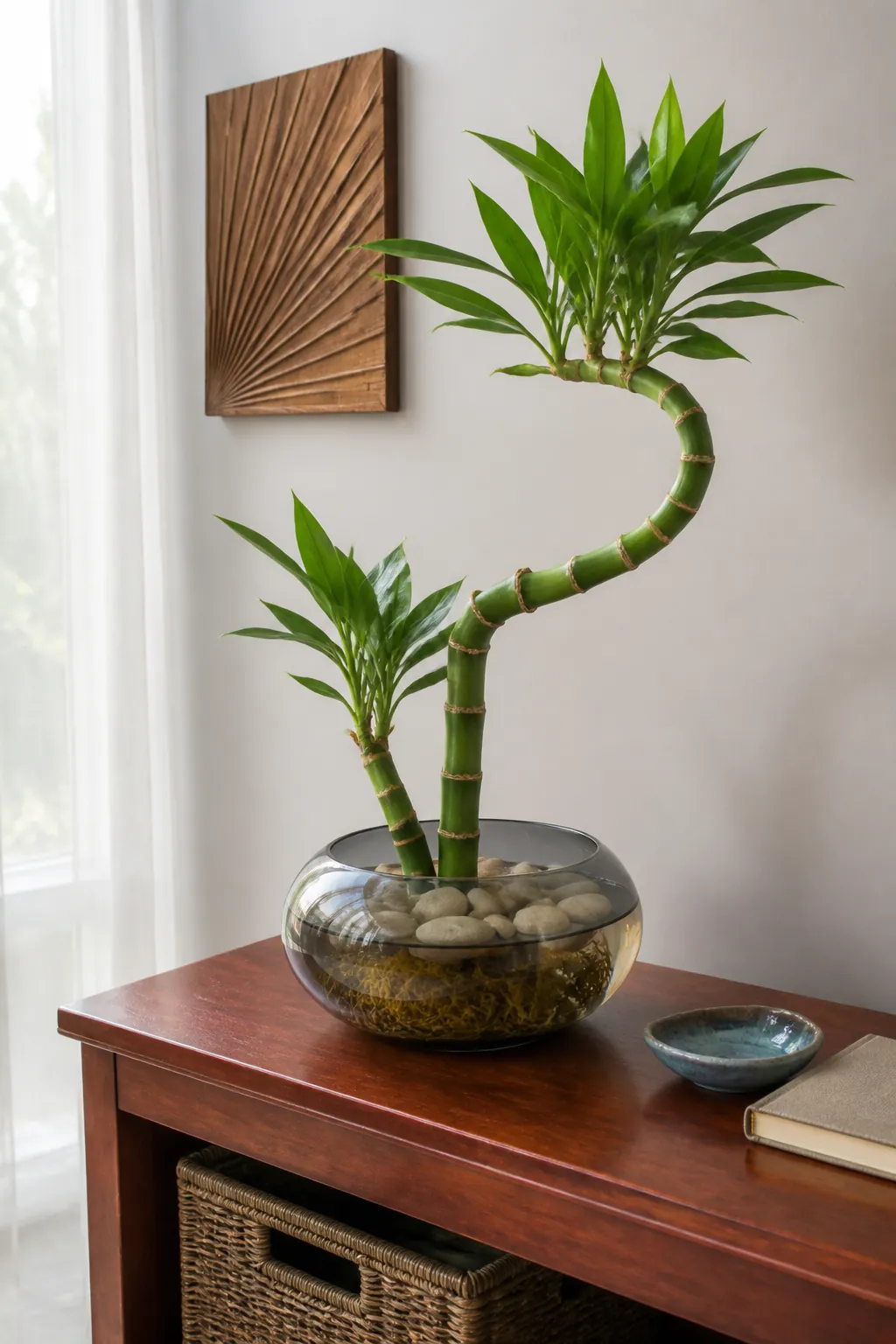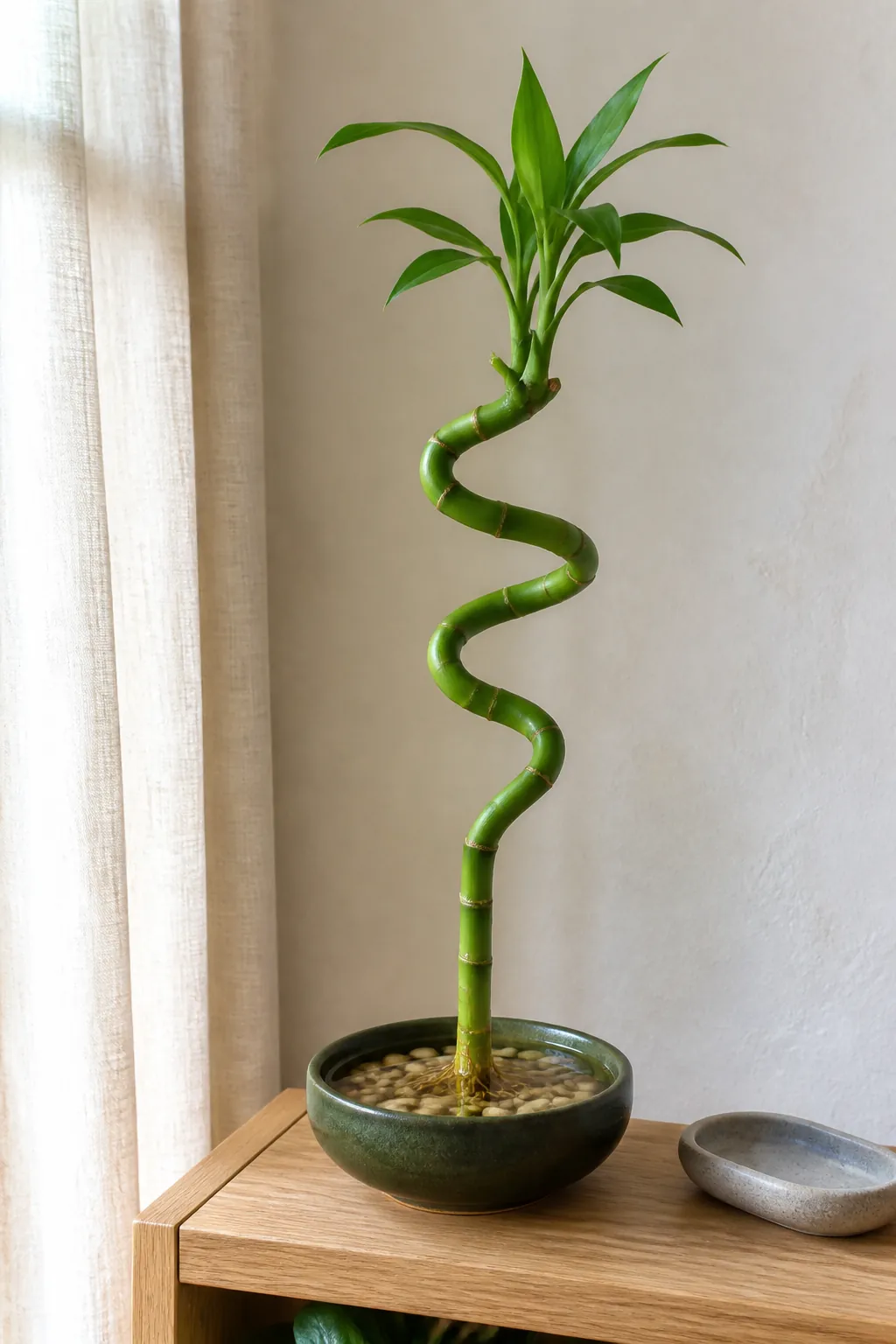
Lucky bamboo training works by guiding growth that has not happened yet. A mature cane is already fixed, so trying to bend it into a new shape risks a permanent crease or break. The useful tools are directional light, patient rotation, selective pruning, and gentle support for flexible shoots.
Choose One Clear Training Goal
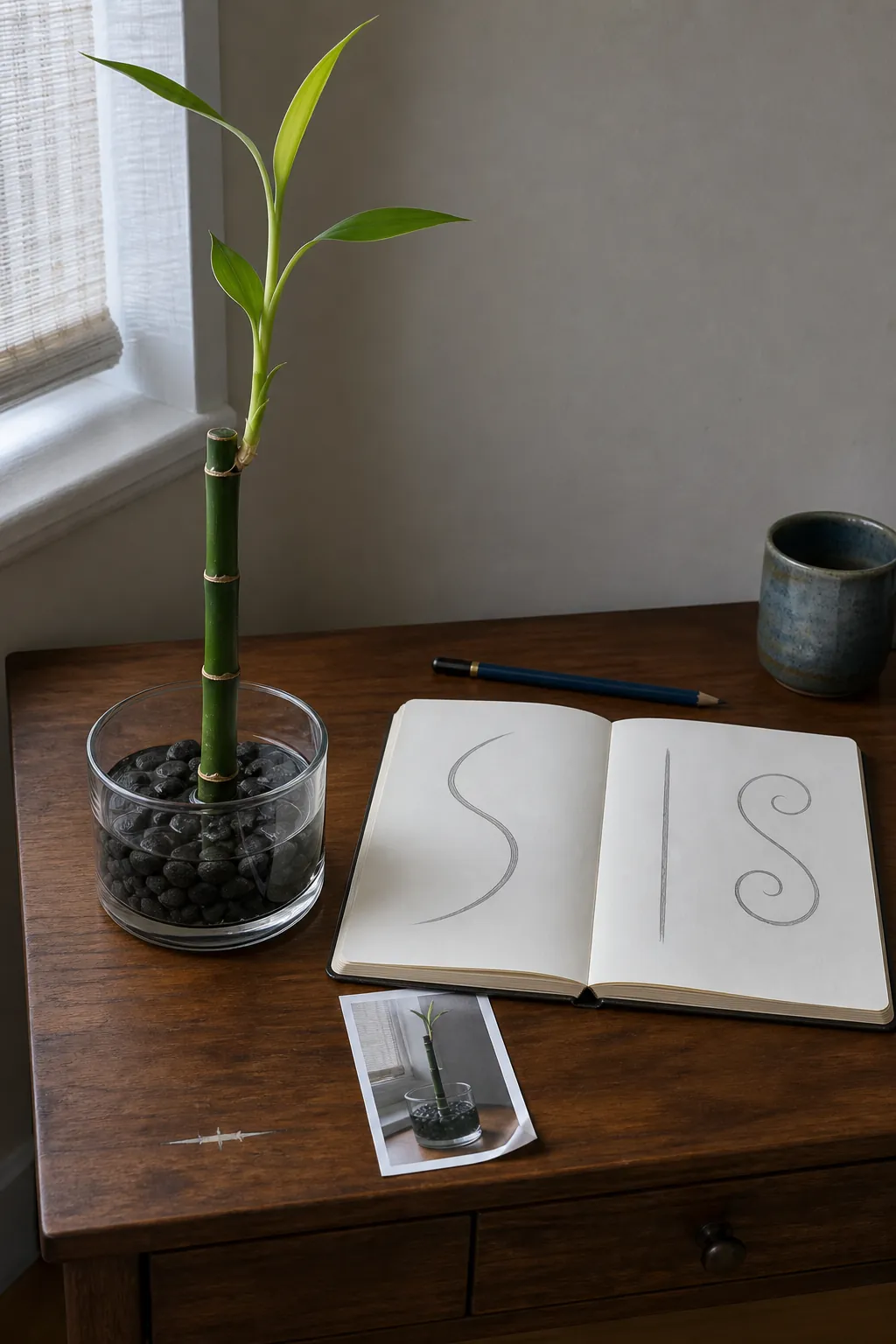
Decide whether you want a curve, an upright leafy shoot, a fuller branch pattern, or a balanced group arrangement. Each result uses a different action, and combining every technique at once makes progress difficult to read. A simple sketch and a monthly photograph can keep a long project consistent.
Study where the rigid cane ends and soft green growth begins. Light can redirect that new growth, while pruning can encourage buds below a cut to develop. Existing mature curves should be treated as finished structure rather than material that can be reshaped.
Stabilize the Roots and Cane
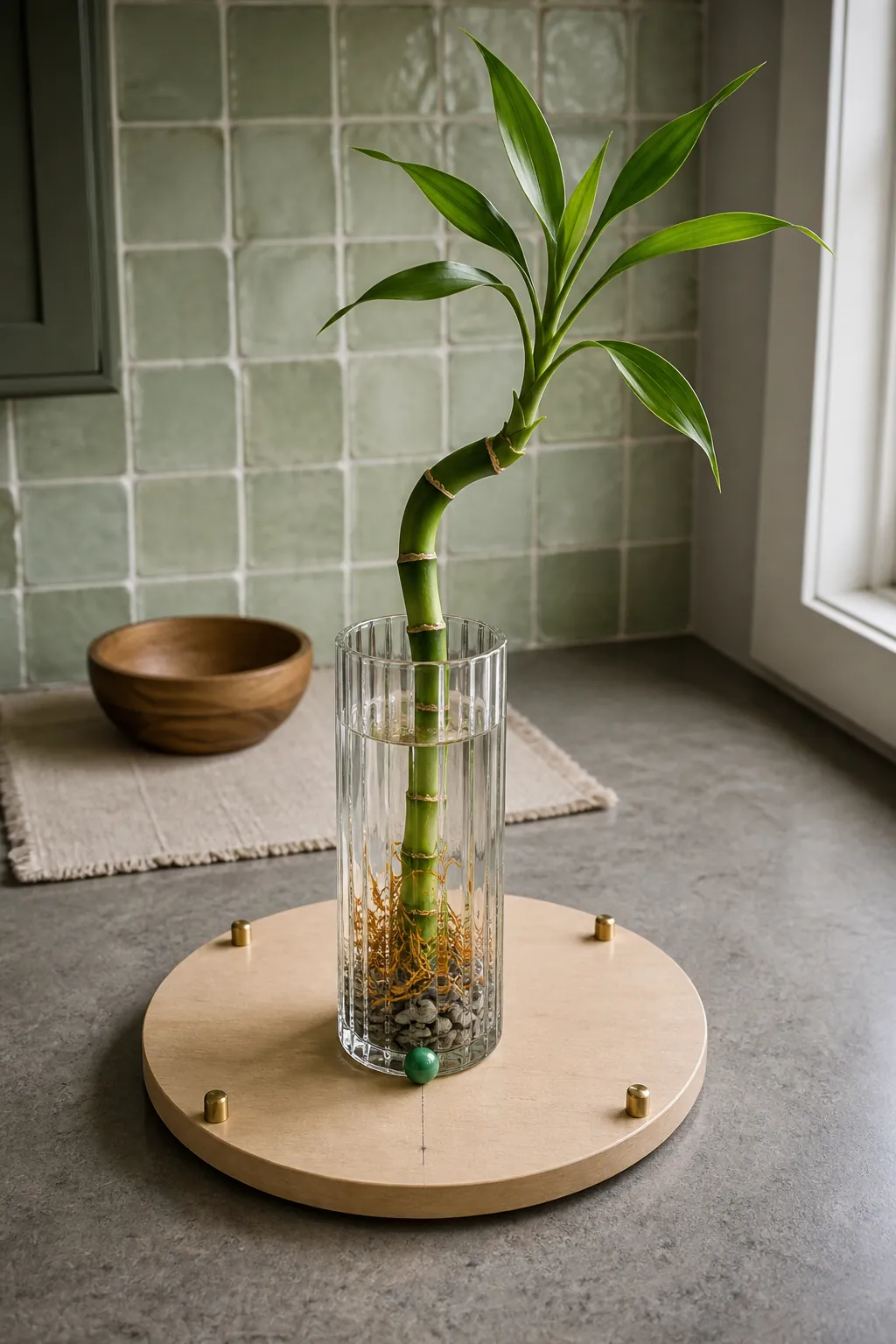
A plant cannot make controlled new growth if its base shifts every time you rotate it. Use a vessel with enough weight, support the cane with smooth pebbles, and keep roots covered by clean water while most of the cane remains dry. For soil grown plants, choose a pot that drains and does not tip under the leafy top.
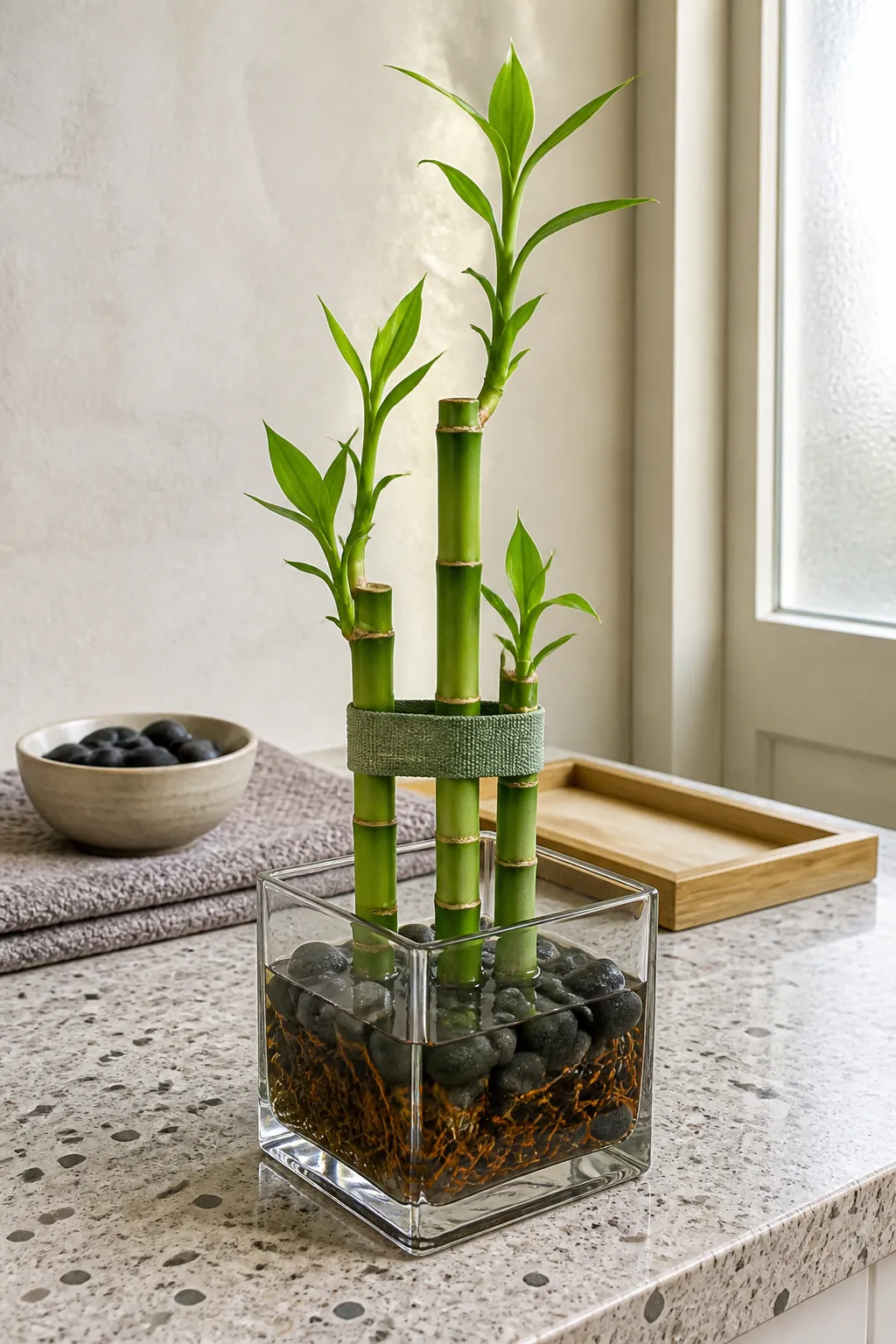
Remove decorative ties that are tight, wet, or cutting into the cane. A loose tie can hold several canes in an arrangement, but it should leave room for growth and airflow. Check every contact point often, because a support that began loose can become restrictive.
Direct New Growth With Light
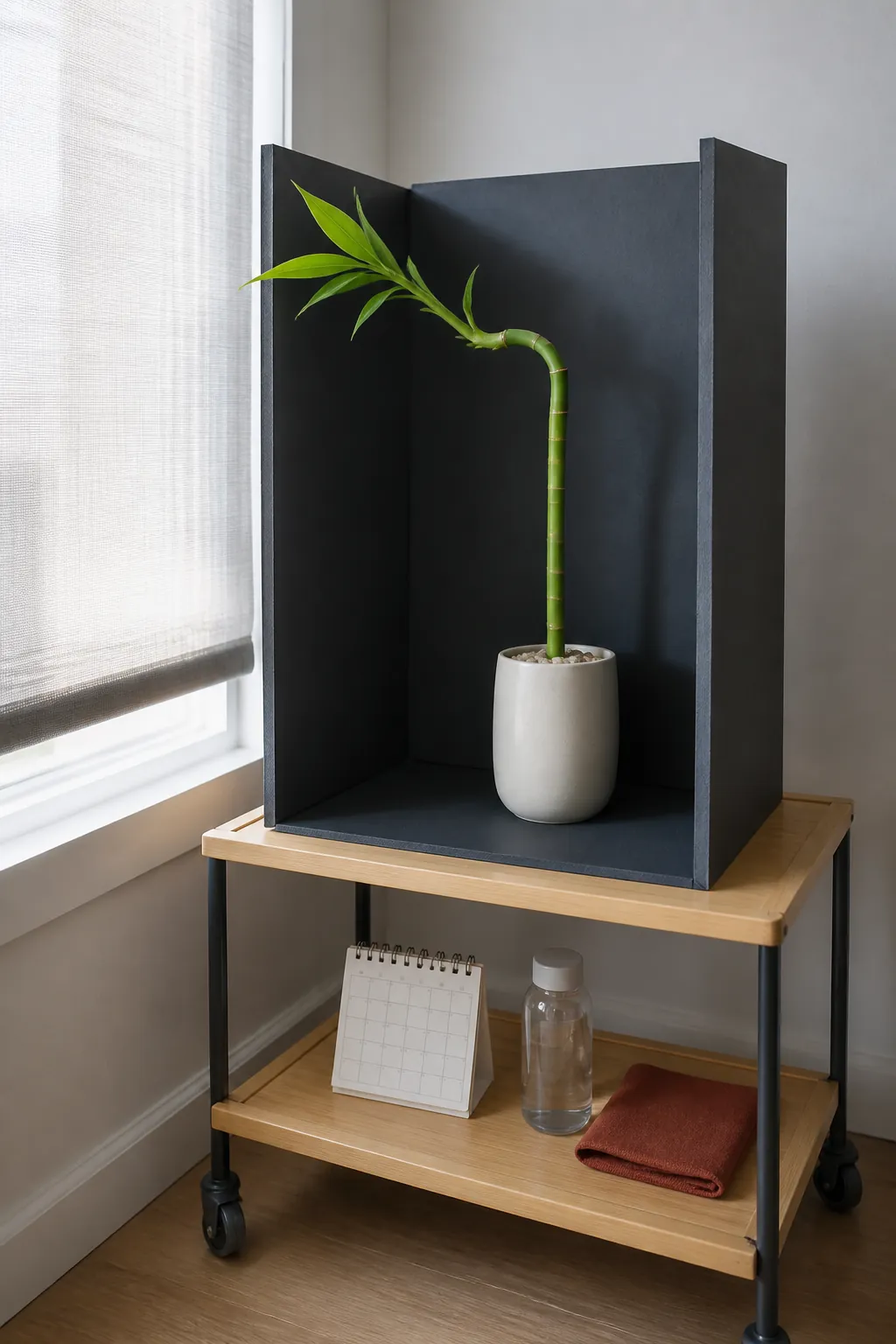
Place the plant where bright indirect light reaches it mainly from one side. A tall box with one open face can strengthen this direction while shielding the other sides from competing light. Leave ample clearance around every leaf and keep the opening away from hot direct sun.
The tip will gradually lean toward the brighter opening as it extends. Wait until a real bend is visible before changing the plant position. Daily turning prevents a clear response and often produces a loose wobble rather than an intentional curve.
Rotate After Each Visible Bend
When the shoot has committed to the light direction, rotate the container by a measured amount. A quarter turn produces an easy sequence for a spiral, while smaller turns can build a broad gradual curve. Mark the container base so every move remains intentional.
Use growth rather than dates as the trigger for the next rotation. Warmth, season, and light intensity change how quickly each section forms. Similar bend lengths create a regular shape, while varied intervals produce a more organic result.
Guide Upright Shoots Gently
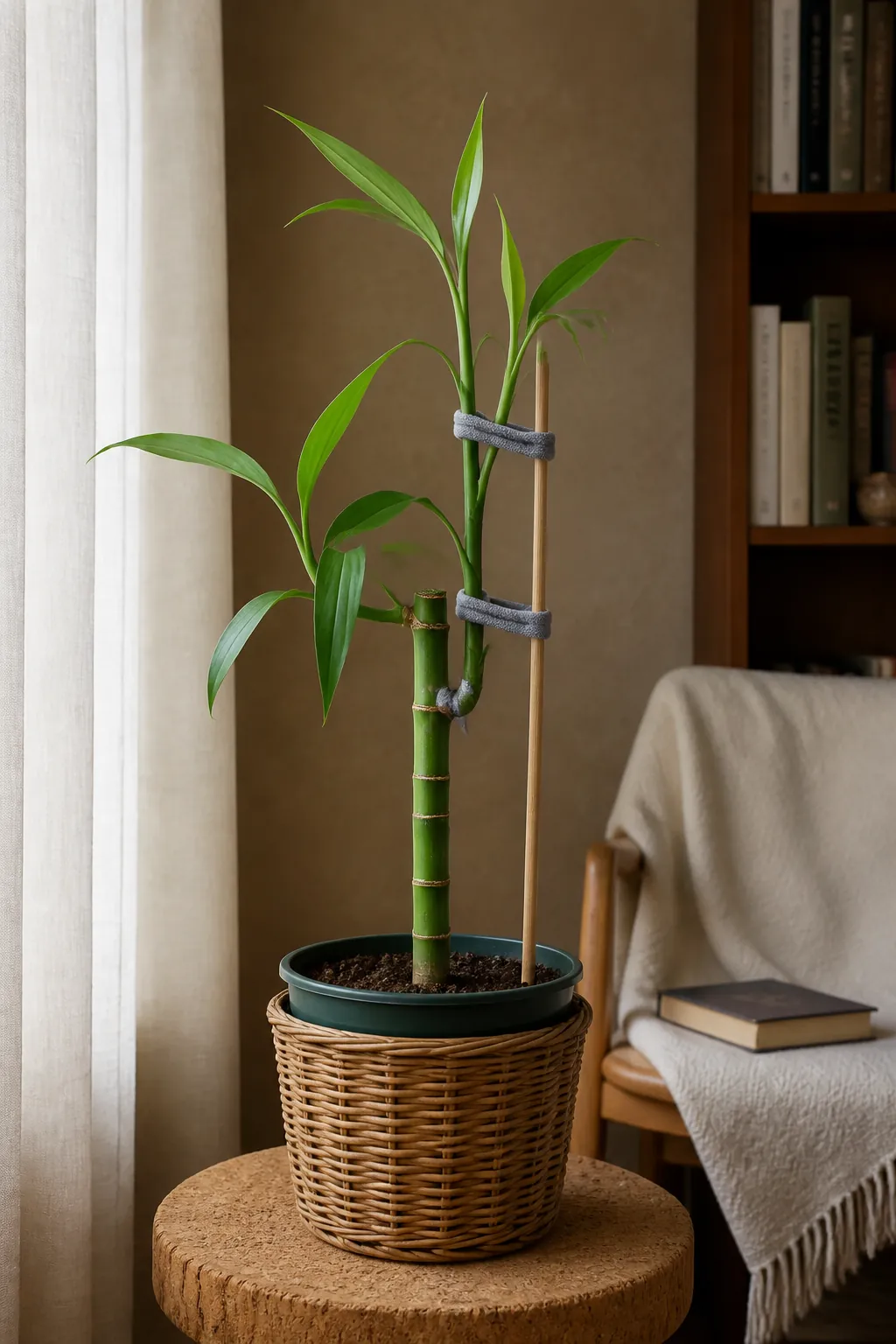
A soft plant tie can keep a young shoot close to a slim stake when the goal is upright growth. Form a loose loop that supports rather than squeezes, and place it on flexible tissue without rubbing a leaf joint. This method guides position but should never be used to force a mature cane into a curve.
Inspect the tie every week and loosen it as the stem thickens. Remove the stake once the shoot holds its direction. Wire wrapped tightly around living tissue can leave scars, trap moisture, and create a weak point, so the safer approach uses minimal contact for the shortest useful period.
Maintain the Shape Through Healthy Growth
Training can take many months, so steady care matters more than a clever device. Keep the plant warm, give it bright indirect light, refresh water before it becomes stale, and protect it from drafts. Pause every training change if leaves scorch, roots darken, or the cane begins to yellow.
When the shape is complete, return the plant to balanced indirect light and remove temporary supports. New growth will continue toward the available light, so occasional ordinary rotation can preserve a balanced leaf crown. The best trained lucky bamboo still looks alive, with natural spacing and small variations that record how it grew.