
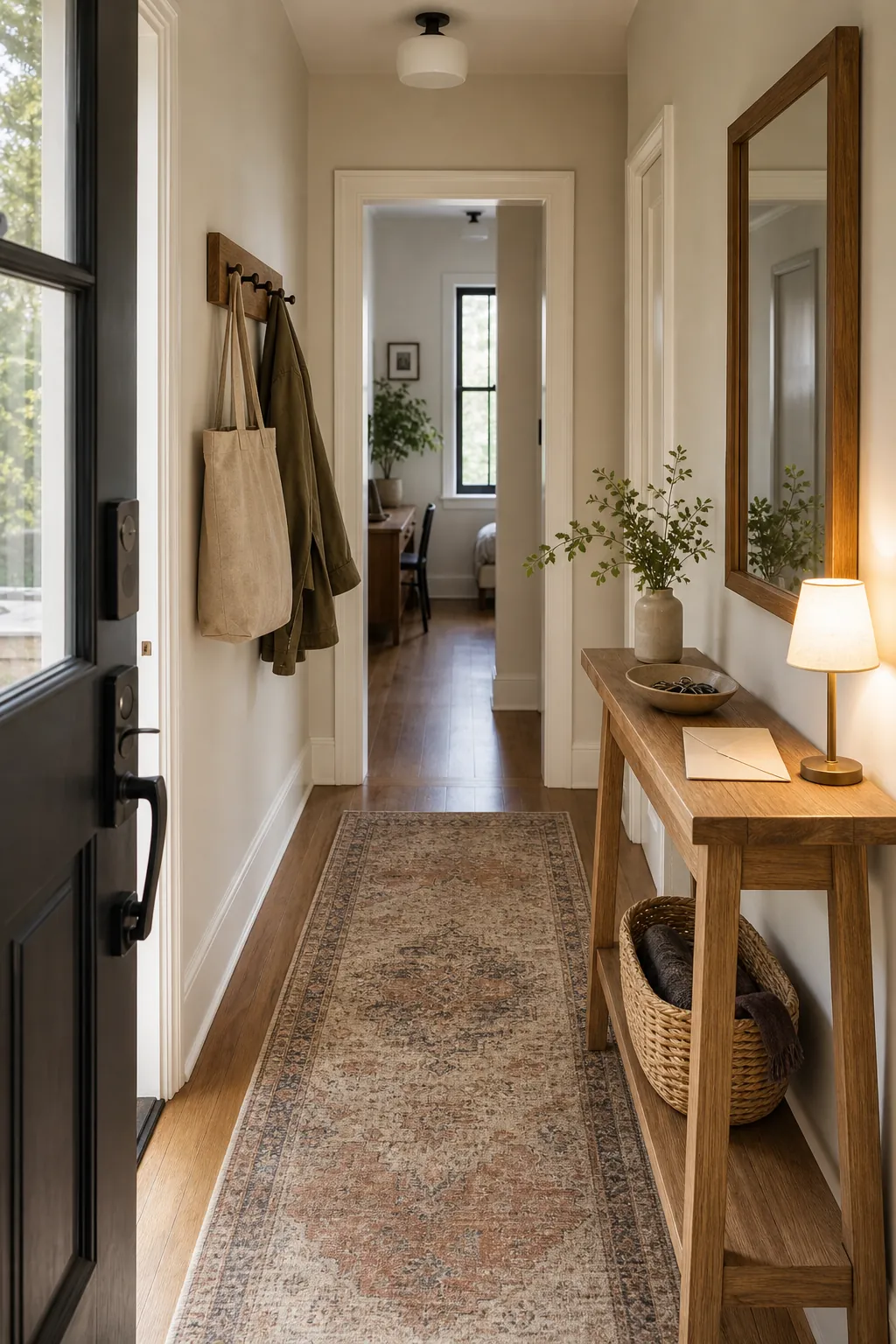
A small foyer does not have to announce itself with a grand staircase or a deep console. It has one more useful job: make the first thirty seconds at home feel easier. If the door can open fully, shoes have a place to land, keys are not drifting across the house, and the lighting feels kind, the space already feels welcoming.
The mistake is treating a small foyer like a miniature version of a large one. In a tight entry, every inch has to earn its keep. The best Small Foyer plans start with movement, then storage, then Foyer Decor. That order keeps the entry pretty without turning it into a narrow obstacle course.
Start With the Landing Zone, Not the Decor
Before buying an Entryway Table or a new mirror, stand at the door with your normal routine in mind. Where do shoes actually come off? Where does mail drop? Which wall can hold keys without catching your shoulder? A welcoming foyer starts when the daily mess has a predictable place to go.
- Keep the door swing clear. If the door hits the rug, shoe tray, or basket, the layout will feel annoying every day.
- Leave a walking lane. In a tight Entryway Decor plan, a clear path matters more than another accent piece.
- Use one visible tray. A boot tray or low basket makes shoes look intentional instead of abandoned.

Choose a Runner Rug That Guides the Eye
Runner Rugs are one of the easiest ways to make a tiny entry feel finished, but the size is where many foyers go wrong. Too small, and the rug looks like a doormat that wandered inside. Too wide, and it crowds the baseboards. The sweet spot is a runner that follows the direction of travel and leaves a visible border of floor on both sides.
For a Small Space Decor win, choose a low-pile, washable, or indoor-outdoor rug with enough pattern to hide daily dirt. A muted stripe, faded vintage motif, or small geometric pattern can add Hallway Decor without demanding attention. The rug should make the entry feel longer and calmer, not busier.
Use a Slim Entryway Table Only If It Solves a Problem
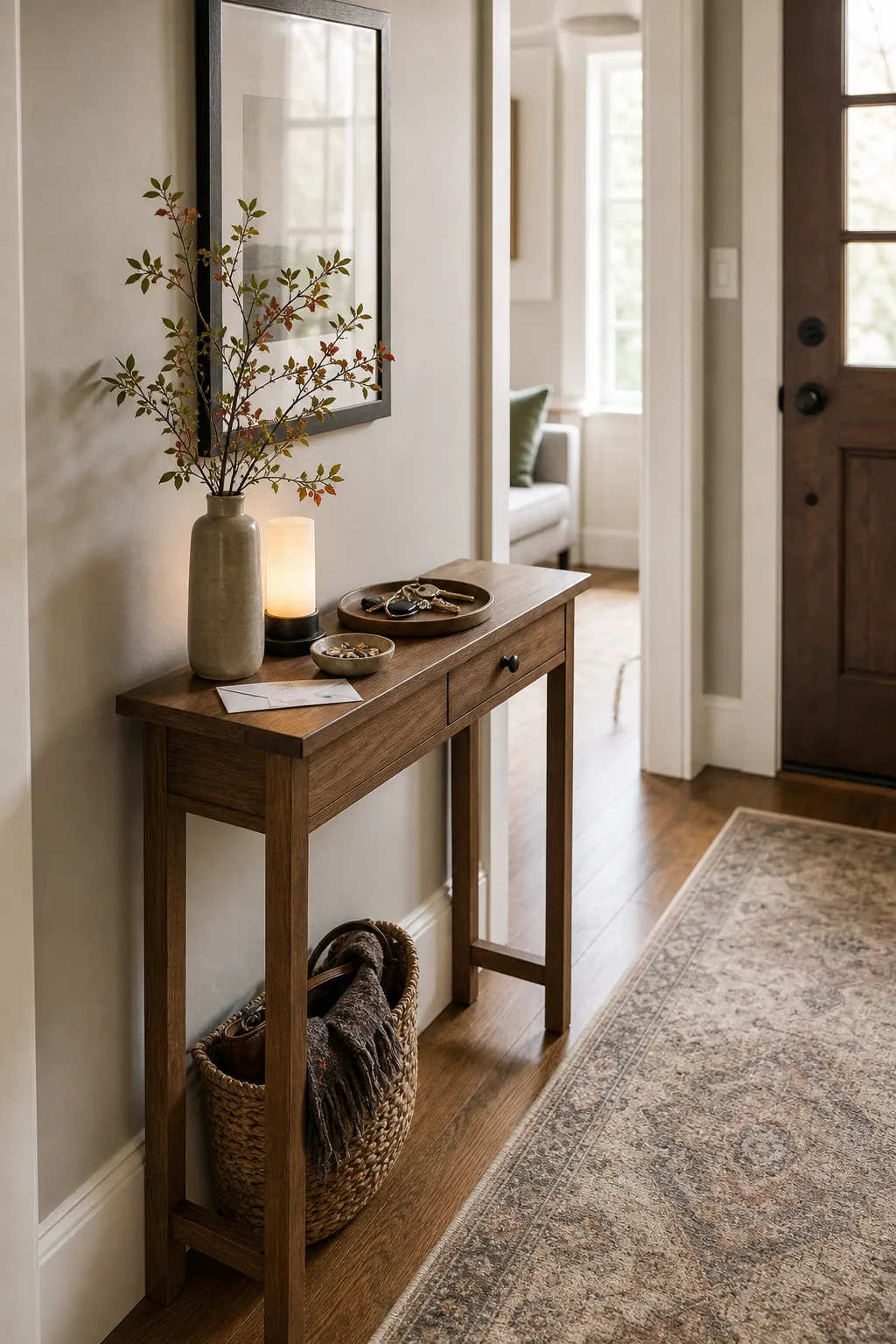
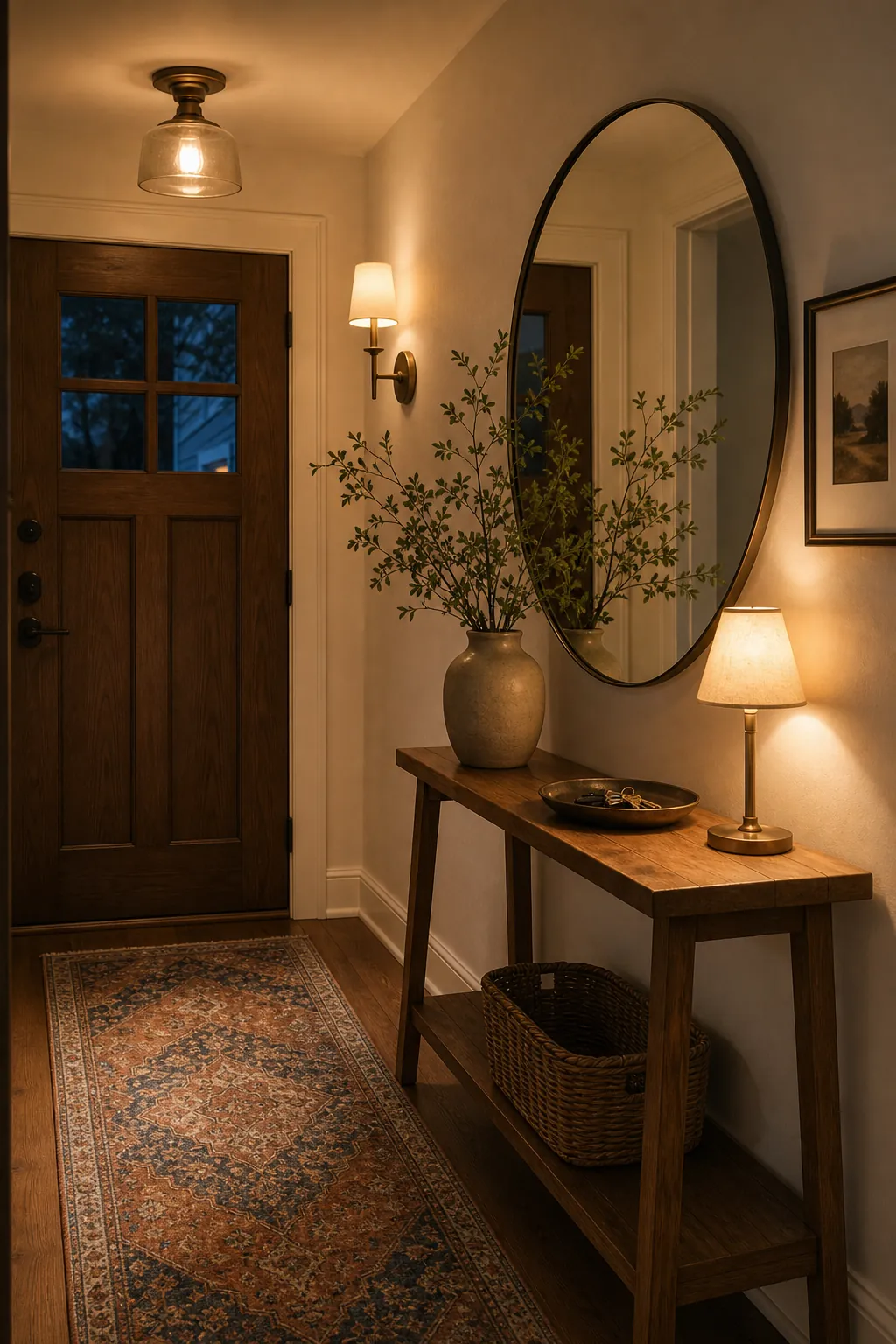
A table is not mandatory in a small foyer. If a console blocks the walkway, skip it and use a wall shelf instead. But when there is enough wall depth, a slim Entryway Table can make the whole space feel more settled because it gives keys, mail, sunglasses, and a small lamp one controlled home.
Look for a piece around ten to twelve inches deep. Style it with restraint: a tray, one lamp, one vase, and a basket underneath are enough. This is where Foyer Ideas often become more useful when you subtract. A narrow table with breathing room looks more welcoming than a wide table covered in small objects.
Move Storage Up the Wall
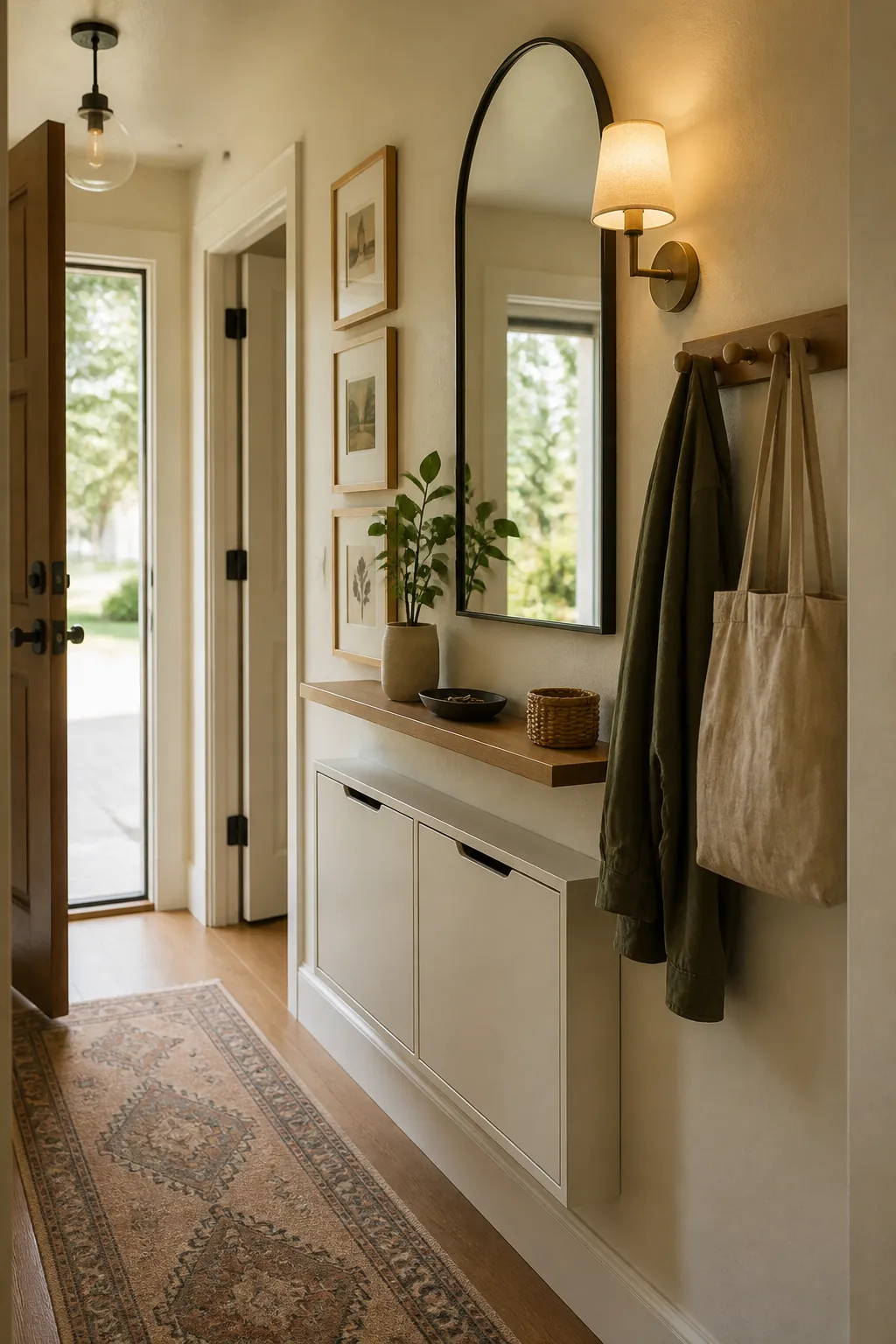
When the floor plan is tight, the wall is your best storage surface. Hooks, peg rails, mirrors, shelves, and shallow cabinets can create a working entry without using the depth of a bench. This is especially helpful in a foyer that doubles as a narrow hallway.
The key is editing. Two hooks with room around them usually look better than six hooks overloaded with coats. A tall mirror can bounce light and give guests a final check before leaving. A small shelf can handle keys without becoming a mail dump. Vertical Home Organization works when each item has a limit.
Hide the Shoe Clutter Before It Becomes the Room
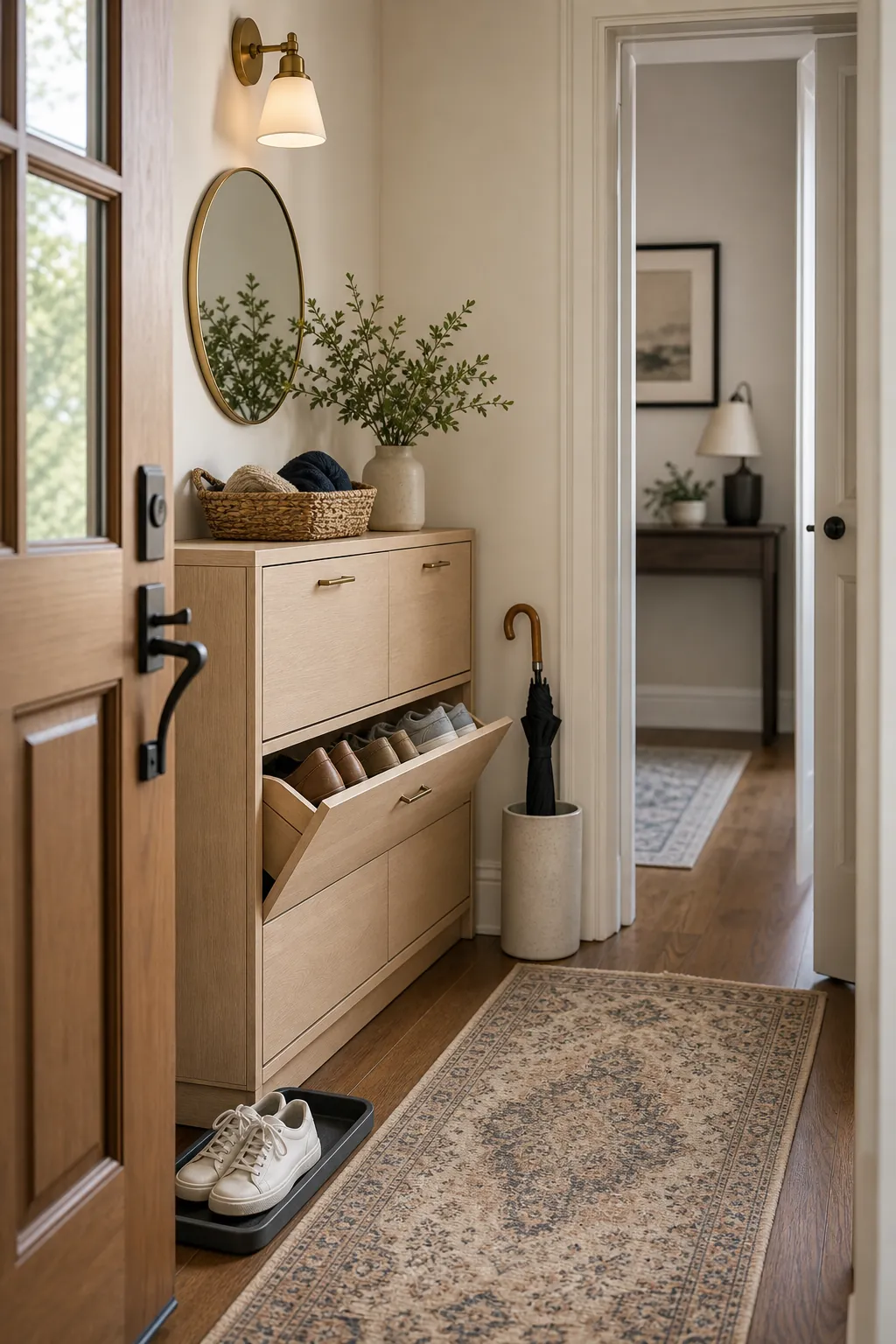
Shoes are usually the real reason a small entry stops feeling welcoming. Open racks can work in a mudroom, but in a tiny foyer they often become the first thing guests see. A shallow closed cabinet, tilt-out shoe storage, or lidded basket can make the entry feel calmer instantly.
Keep one pair accessible if that matches your routine, then hide the rest. If the household needs more capacity, add a weekly reset: move extra shoes back to closets every Sunday or before cleaning day. The foyer should hold the current routine, not the entire family shoe collection.
Make the Light Feel Warm and Intentional
Lighting changes how every Small Foyer feels. A single harsh ceiling bulb can make even good Entryway Decor look flat. A lamp, sconce, or warm bulb near a mirror gives the entry a softer welcome and makes the space feel designed instead of leftover.
If there is no outlet, try a cordless lamp on a narrow table or a battery sconce near the mirror. Keep the mirror large enough to reflect light, but not so ornate that it overwhelms the wall. In a small foyer, glow is often more persuasive than more decor.
Borrow Mudroom Ideas Without Building a Mudroom
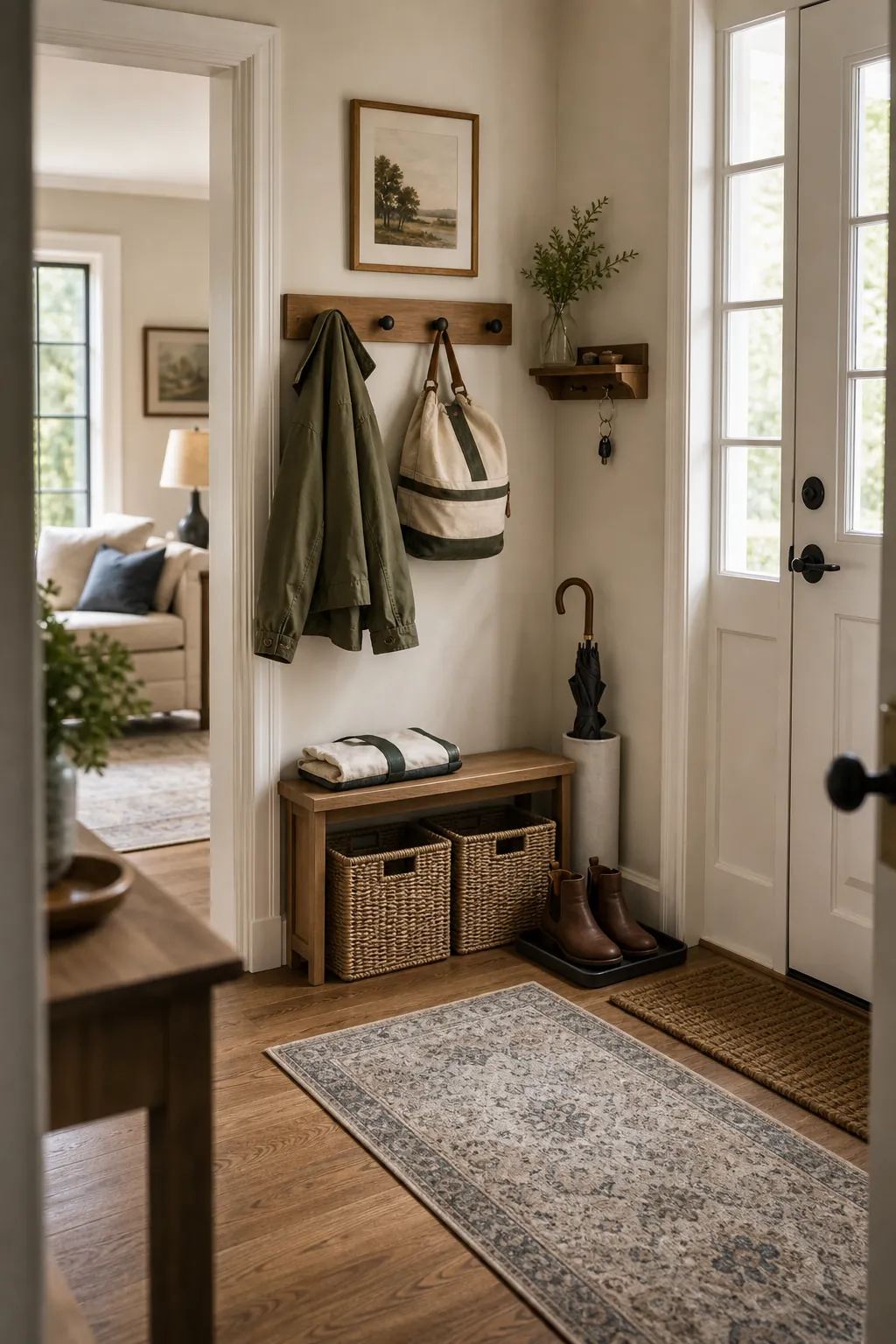
A full mudroom is nice, but most small foyers only need a scaled-down routine. Think in zones: one spot for shoes, one spot for bags, one spot for keys, one spot for quick outerwear. That is enough structure to make the entry feel calmer on busy mornings.
A shallow bench can work if it does not steal the walkway. Closed baskets under it are better than open clutter. A hook rail above it should hold only the pieces used today or this week. The result is a foyer that borrows the best Mudroom Ideas while still looking like part of the home.
Use Decor to Connect the Foyer to the Rest of the Home
The smallest entries feel more generous when they echo the rooms around them. Repeat one wood tone, one metal finish, or one rug color from the nearby hallway or living room. This makes the foyer feel like the beginning of the home, not a cramped pause before the real rooms start.
Keep the final layer simple: a mirror, a runner, a lamp, one piece of art, and one living detail such as branches or a plant. That is enough Foyer Decor for most small entries. The goal is not to fill the foyer. The goal is to make coming home feel smooth, warm, and organized.
A Simple Small Foyer Formula
- Clear the door swing and walking lane first.
- Add one runner rug that fits the length and leaves visible floor at the sides.
- Choose either a slim table, wall shelf, or shallow cabinet as the drop zone.
- Use vertical hooks or peg rails sparingly.
- Hide most shoes and keep only the daily pair visible.
- Add warm light and a mirror before adding more accessories.
When these pieces work together, even the smallest foyer can feel welcoming. Not grand. Not overdecorated. Just ready for real life.