

A moody green bedroom works best when you stop treating the dark walls as a problem to cancel out. The goal is not to make the room look bright at midnight. The goal is to make it feel restful, layered, and easy to live in, with warm lighting doing the softening that daylight cannot always do.
That is the real tension behind most dark green bedroom questions: people love the cocoon effect, but they worry the room will turn flat, gloomy, or visually smaller than expected. The safest answer is not always lighter paint. Often, it is better lighting, better contrast, and a few calm materials that let the green walls feel intentional.
Lean Into the Mood Instead of Fighting It
The most convincing moody green bedroom ideas start with acceptance: dark green is supposed to feel enveloping. If the room has one small window, north-facing light, or heavy shadows by late afternoon, trying to force a bright-and-airy look usually creates a mismatch. The room still reads dark, but now the decor feels apologetic.
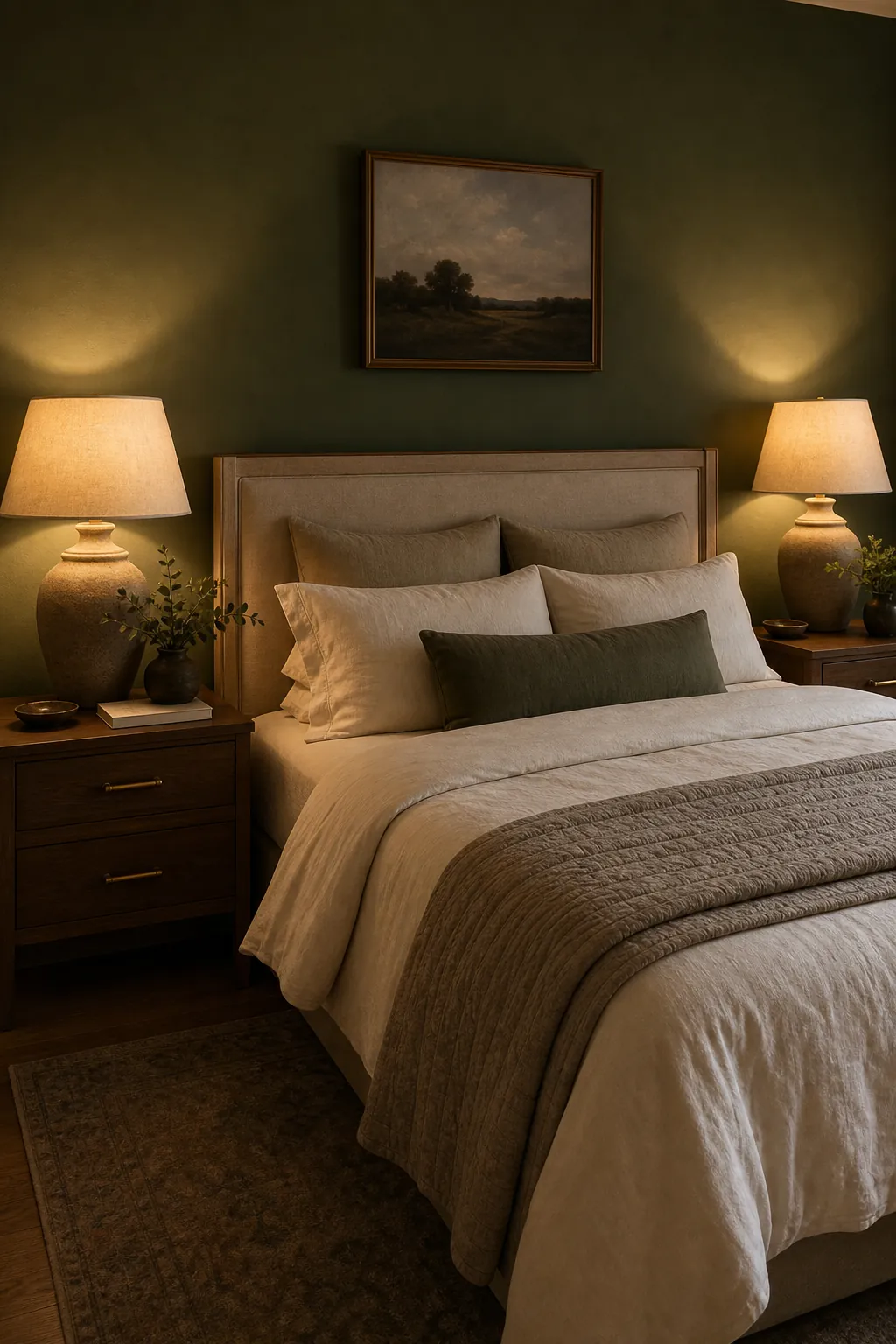
Instead, build around the strengths of the color. Deep olive, forest, moss, and blackened green walls can make the bed feel grounded, make white bedding look crisp, and give brass, walnut, rattan, and linen more presence. The trick is to create pools of warm light, not one harsh wash of brightness from the ceiling.

Test the Green in the Light You Actually Use
Green changes fast. A shade that looks soft and earthy in a staged photo can look gray, blue, yellow, or almost black once it hits your walls. Before committing to a full room, test the color near the bed, near the window, and in the darkest corner. Look at it in morning light, overcast daylight, lamp light, and evening light.
If your main light source after work is warm bulbs, a cooler deep green can become calmer and less muddy. If your furniture is warm wood and your room gets gloomy, a slightly warmer green can feel richer and more connected. Choose the green beside the furniture and lighting you already plan to use, not from a paint chip held under store lighting.
- Use a larger sample board when possible, not a tiny square on the wall.
- Check the sample next to bedding, curtains, wood tones, and metal finishes.
- If the room has low ceilings, test the ceiling separately before painting it green.
- If the color turns nearly black at night, go one step lighter or add more lamp layers.

Use Three Layers of Warm Lighting
A dark green bedroom usually fails when it has only one overhead fixture. Ceiling light can make the walls look flat and cast shadows where you want softness. Warm lighting works better when it is layered at different heights: a bedside lamp, a wall sconce, a floor lamp, and maybe a small accent lamp on a dresser or shelf.
Think in zones. The bed needs a calm glow. The getting-ready area needs enough clear light to function. The far corner needs a lamp so it does not disappear. A dimmer makes the whole room more flexible, but the bulb temperature matters too. For most cozy bedroom schemes, warm white bulbs around 2700K are a useful starting point.
Use shades that diffuse light instead of spotlighting the wall. Linen, paper, opal glass, pleated fabric, and drum shades soften a dark green bedroom more naturally than exposed bulbs or narrow downlights. Warm, diffused light is what turns green walls from heavy to restful.

Give the Bed and Windows Some Breathing Room
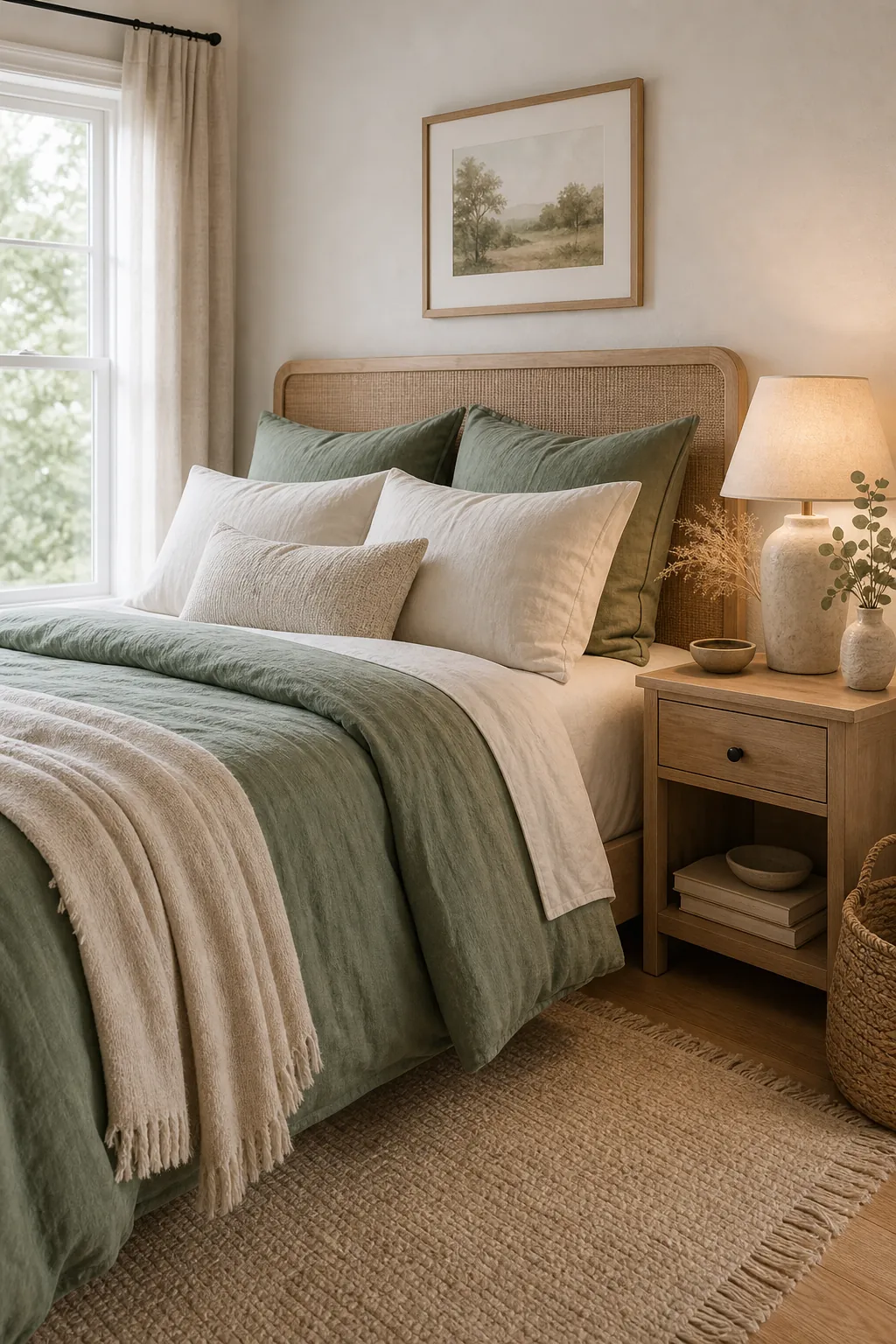
Dark walls can handle pale contrast. Cream bedding, ivory sheets, oatmeal throws, soft white curtains, and a light rug keep the room from becoming one solid block of color. This does not mean everything has to be stark white. In fact, bright optic white can look harsh against deep green. Softer whites and warm neutrals are easier to live with.
If the room already has white trim, use that as part of the composition. Repeat the light tone in two or three places: curtains, pillow shams, art matting, a lampshade, or a rug border. The repeated contrast makes the green walls feel designed instead of accidental.
For a low-light bedroom, window treatments matter more than people expect. Heavy dark curtains can be beautiful at night, but they may make the room feel sealed during the day. Light linen or cream curtains soften the edge of the window and reflect lamp glow back into the room.
Warm Up the Room With Wood, Brass, and Texture
A moody green room can look expensive very quickly, but it can also look flat if every surface is smooth and dark. Texture is the difference. Bring in wood grain, woven baskets, a nubby throw, a wool rug, a cane chair, linen lampshades, ceramic vases, and art with a visible paper texture.
Wood tones are especially useful. Walnut, oak, teak, pine, and even painted wood can all work, but the undertone should feel deliberate. Warm wood makes green feel earthy; black furniture makes it more dramatic; pale oak keeps it Scandinavian and calm. If the woods in the room are hard to match, choose a nightstand in painted wood, metal, glass, or cane rather than forcing another near-match.
Brass and aged gold are natural partners for green, but use them as accents. A brass sconce, lamp base, curtain rod, frame, or drawer pull is enough. The best bedroom decor in this palette feels collected, not themed.

Make Nightstand Lamps Do Real Design Work
In a moody bedroom, nightstand lamps are not just practical. They are the visual anchor of the whole room after sunset. Choose lamps with enough height to spread light over the bedding and enough shade width to soften the wall behind them. Tiny lamps can make a dark wall feel even larger and heavier.
If you like a hotel feeling, use matching lamps on both sides of the bed. If the room is more relaxed, mix a table lamp on one side with a plug-in sconce on the other. The important part is balance: both sides should create a similar amount of glow, even if the fixtures are different.
Do not overlook the shade. A warm linen shade, pleated shade, or milky glass globe can change how the paint reads at night. It gives the walls depth and lets the bed feel like the softest part of the room.
Small-Room Rules for a Relaxing Bedroom
A small bedroom can still go dark green, but it needs a clearer plan. If the room has low or slanted ceilings, consider keeping the ceiling white or a softened off-white. If you want the full color-drenched look, make sure the room has enough lamp light, light bedding, and reflective contrast to keep the effect intentional.
- Use one dark accent wall if the whole room feels too risky.
- Keep the largest textile surfaces light, especially bedding and curtains.
- Add a mirror where it reflects a lamp or window, not a dark blank wall.
- Choose legs over heavy bases for nightstands, benches, and accent chairs.
- Leave negative space around art, lamps, and the bed so the styling can breathe.
The best test is how the room feels at the time you actually use it. If you mostly enter the bedroom at night, the lamp glow matters more than the paint sample at noon. If you read in bed, prioritize a shaded bedside lamp or sconce before buying more decorative objects.
The Final Balance
A relaxing bedroom does not need to be pale. A green bedroom can be quiet, warm, and deeply cozy when the light is planned with the same care as the paint. Choose a green that works with your real light, soften it with cream textiles, anchor it with wood, and let lamps create the atmosphere. That is where moody stops feeling gloomy and starts feeling like a room you want to disappear into at the end of the day.