
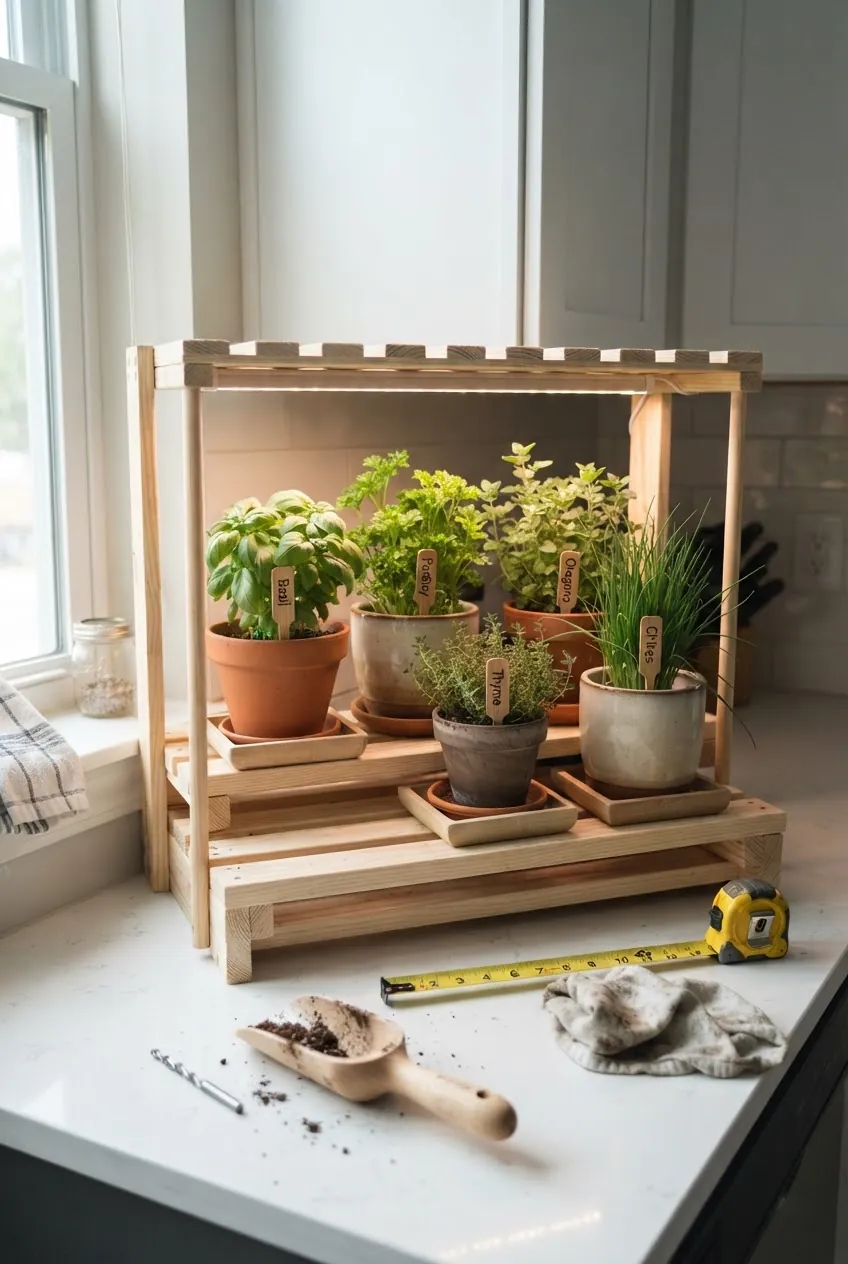
An indoor herb garden DIY project should solve plant problems before it solves decor problems. The planter has to drain. The herbs need enough light. The pots need to be easy to rotate, prune, and clean. If those basics are missing, even the prettiest kitchen herb garden becomes wet soil and tired leaves.
The best DIY version is small, sturdy, and repairable. Build a setup around separate pots first, then make it look intentional with a rail, shelf, tray, or simple planter box.
Build Drainage Into The Design First
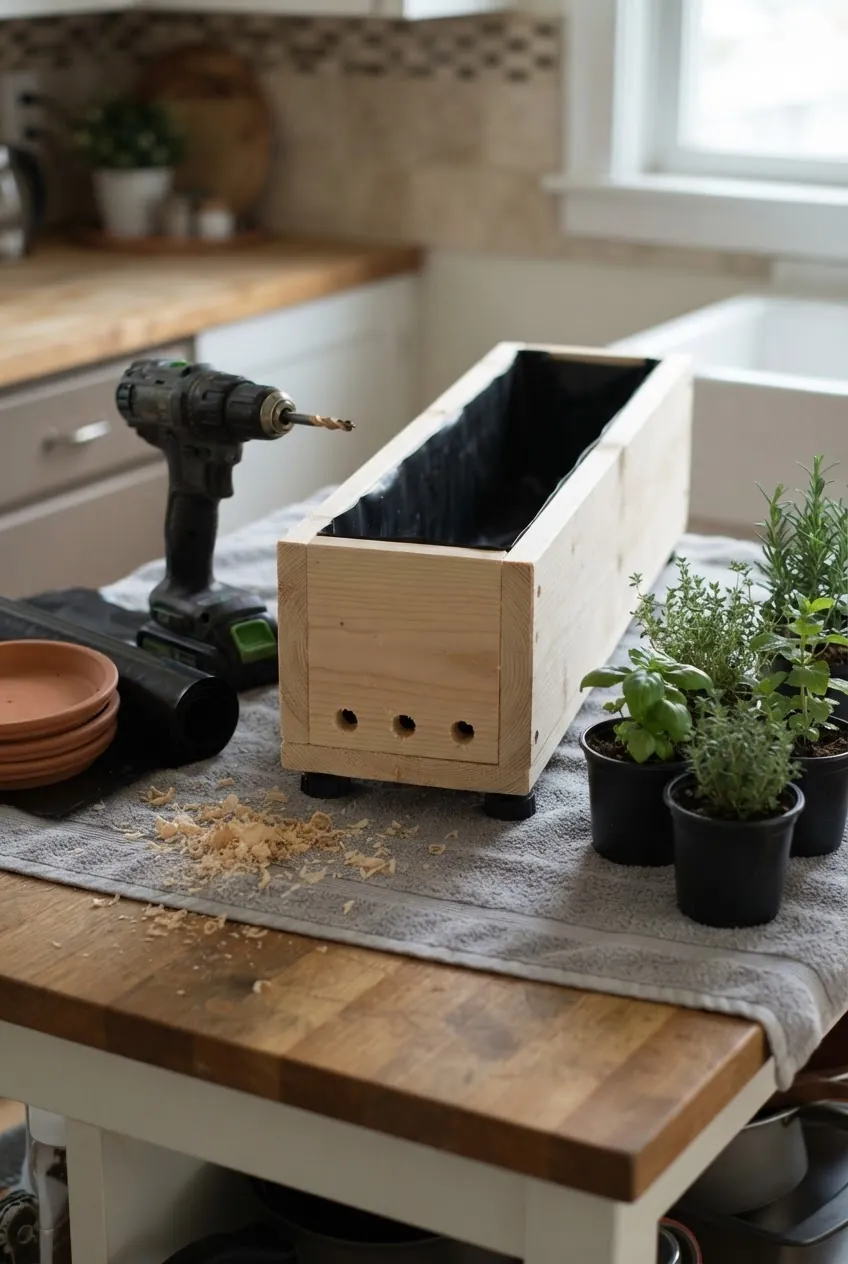
Drainage is the line between a useful DIY herb planter and a container that slowly drowns roots. Any box, trough, tin, or shelf can work only if water can leave the soil and you can empty the runoff. Drill holes where the container allows it, use removable nursery pots inside decorative boxes, and add saucers or a waterproof tray under every plant.
Do not rely on rocks at the bottom of a sealed container. That makes a hidden wet zone, not drainage. If you cannot see where excess water goes, the design is not finished.
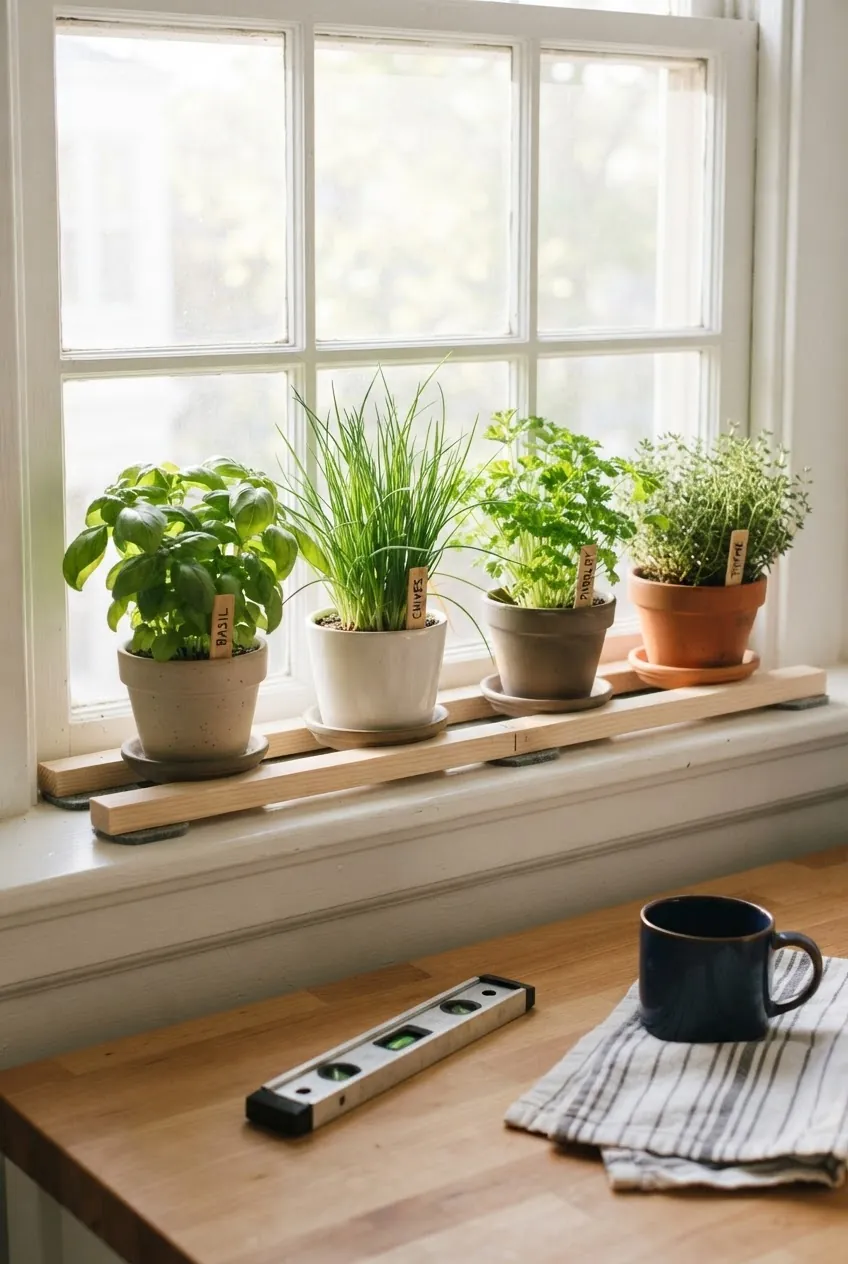
Try A Windowsill Rail For A No-Drill Apartment Setup
For apartment herb gardens, a low windowsill rail is one of the simplest indoor herb garden ideas. Two wood strips can keep pots aligned without trapping water. Felt pads protect the sill, and separate pots let you move basil closer to light or pull thyme away from a damp tray.
This works better than fragile hanging hacks when the plants are wet and heavy. Keep the rail low, keep the pots removable, and avoid anything that depends on a tension rod holding several watered containers overnight.
Add A Grow Light When The Window Cannot Carry The Garden
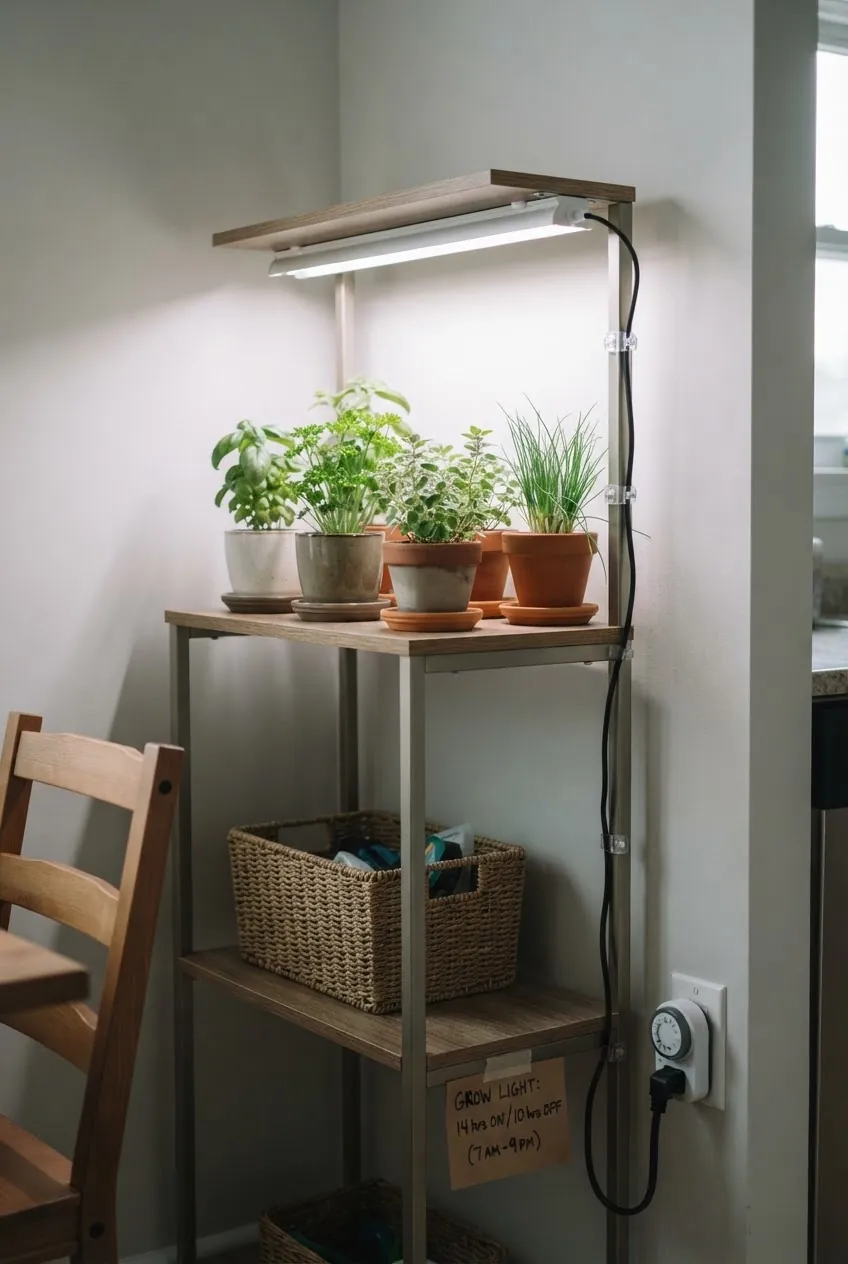
A DIY shelf becomes much more reliable with a small grow light. Herbs often need more brightness than a normal room provides, especially in winter or in a north-facing kitchen. Mount the light close enough to reach the leaves, then use a timer so the schedule is consistent.
Look for steady growth, not dramatic equipment. A slim LED bar, cord clips, and a timer can be enough for inside herb garden ideas that only need basil, parsley, chives, oregano, or thyme. The goal is usable light, not a complicated indoor vegetable gardening system.
Use Self-Watering Only For The Right Herbs
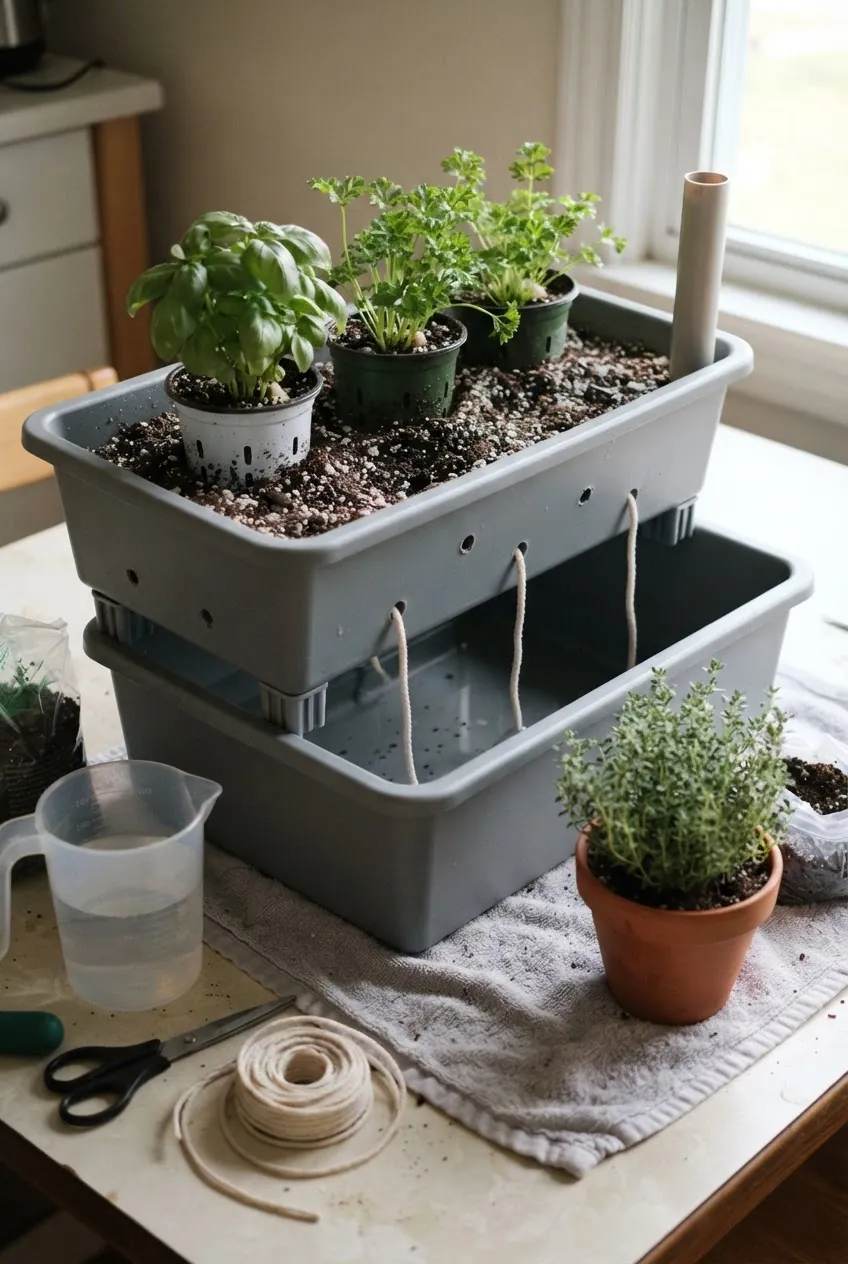
A self-watering trough can help if you forget to water leafy herbs, but it is not automatically better for every plant. Basil and parsley may appreciate steadier moisture. Thyme, oregano, rosemary, and sage usually want a drier rhythm. Keep those dry-loving herbs out of the reservoir system.
If you build a wick planter, create a real reservoir gap, add a fill tube, and use a light potting mix. Top-water new plants at first until roots can reach the wick zone. A self-watering planter still needs drainage logic and herb grouping.
Mix A Light Potting Medium Instead Of Using Garden Soil
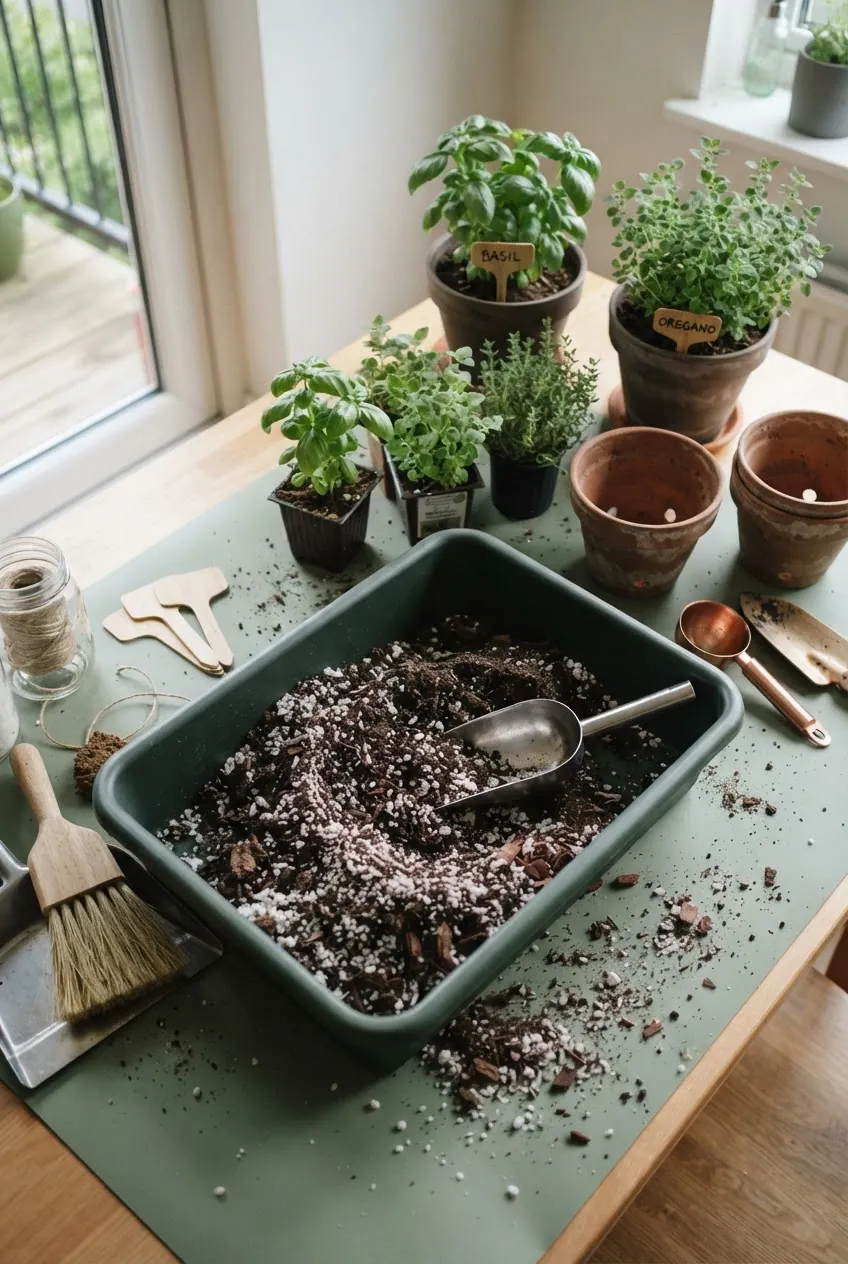
Growing herbs in pots indoors is different from planting in a yard. Garden soil can compact, stay wet, and bring pests inside. Use a quality potting mix and loosen it with perlite. For herbs that prefer drier roots, a little fine bark can improve air space.
Fill pots lightly, water once to settle the mix, then top up if needed. Do not pack the soil hard around the roots. Indoor herb roots need oxygen as much as they need water.
Design The Finished Garden Around Maintenance
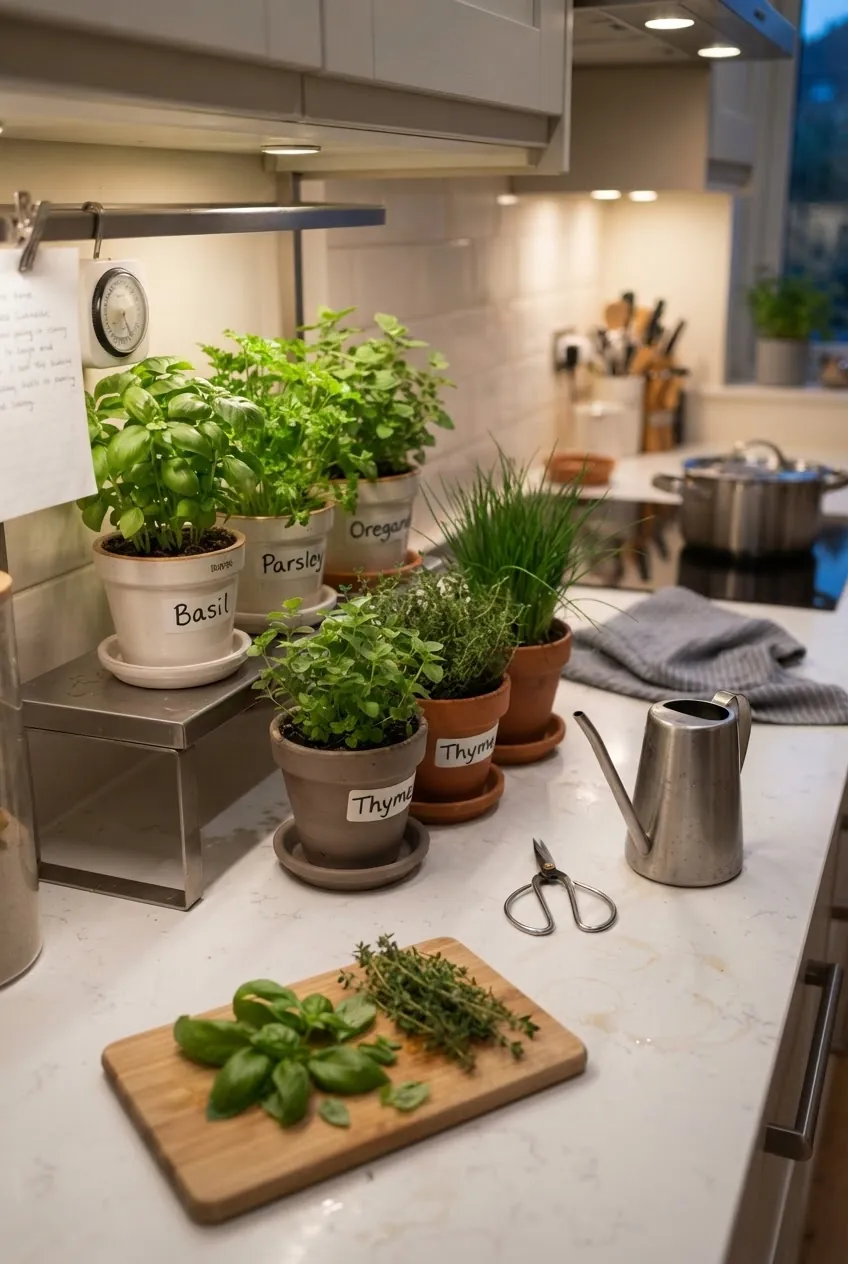
The final herb garden design should make care obvious. Keep pruning scissors near the plants. Leave room to lift each pot. Put the watering can where you will use it, but do not let pots sit in runoff. Label herbs if you are starting from seedlings.
Decor can come last: matching saucers, bamboo labels, a simple tray, or a neat wood rail can make herb planter ideas indoor feel finished. But the setup should still be easy to clean after watering and easy to harvest while cooking. A good DIY indoor herb garden is a working kitchen tool.
Start with one rail, shelf, or tray and four to six separate pots. Once you know how your light, soil, and watering routine behave, you can expand the DIY setup without rebuilding the same mistakes at a larger scale.